7 Victorian Terrace Garden Ideas to Transform Small Urban Spaces
You can bring Victorian charm to your terrace without losing modern comfort. This article shows simple, practical ways to add formal shapes, vintage details, and year-round interest so your outdoor space looks and feels classic.
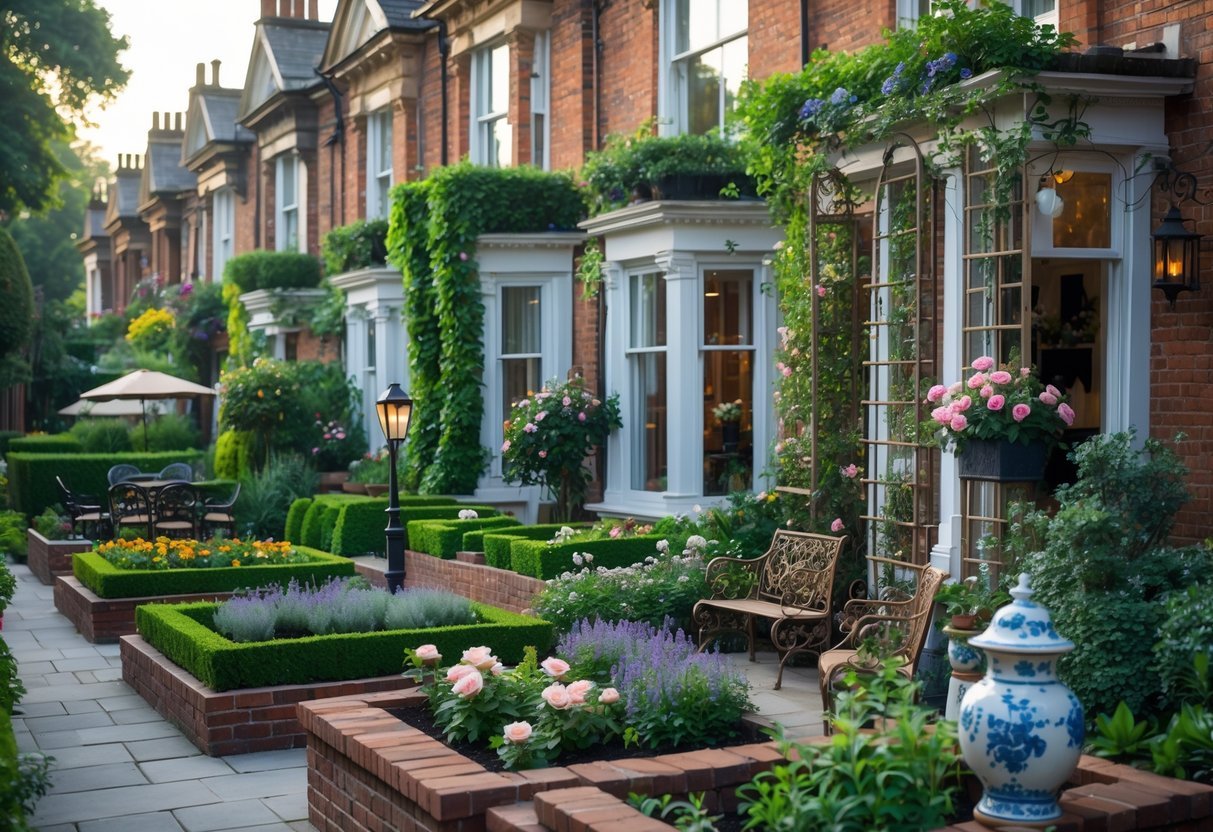
You will learn how to combine flower beds, wrought iron, stone paths, small fountains, boxwood structure, climbing roses, and vintage benches into a cohesive Victorian terrace that suits your home. Follow clear design principles and upkeep tips to keep the look authentic while fitting today’s lifestyle.
1) Symmetrical flower beds with seasonal blooms
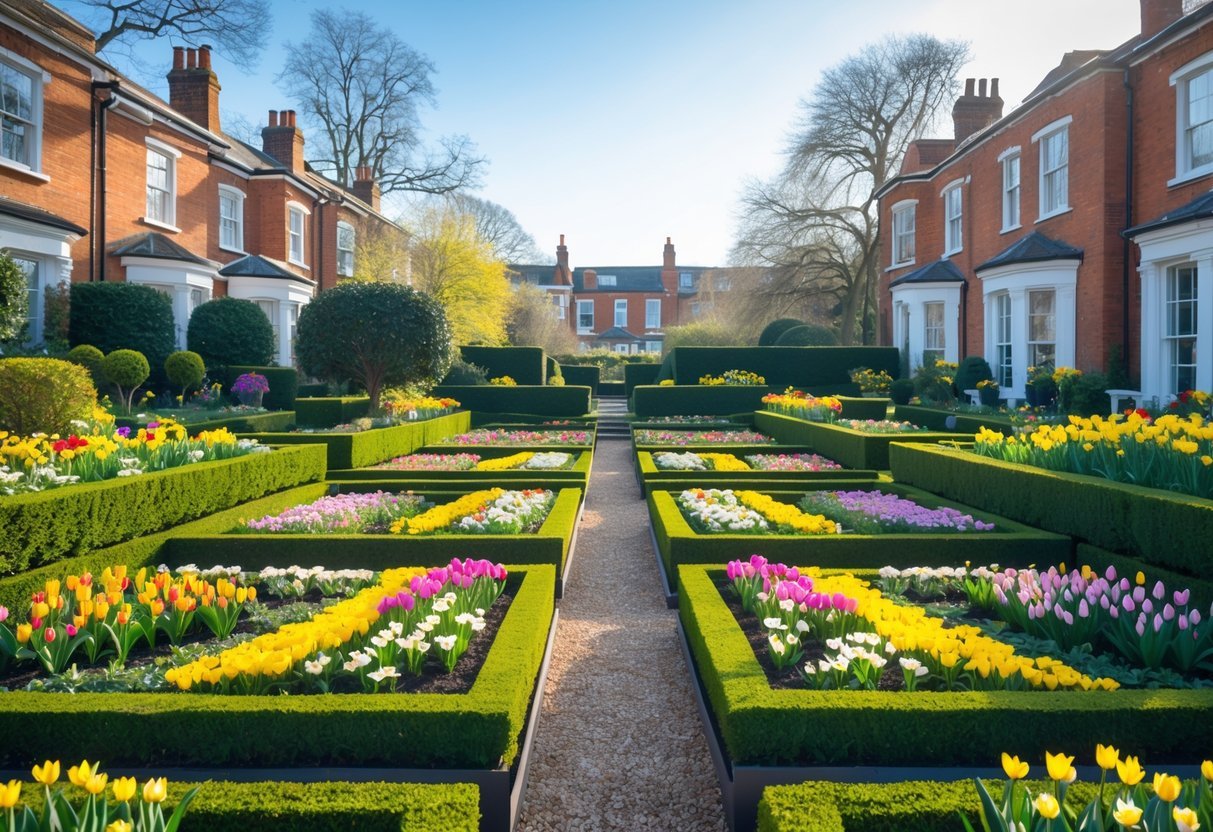
Place matching flower beds on either side of a path or doorway to create balance and clear lines in your terrace garden. Symmetry makes small spaces feel ordered and calm.
Choose plants that peak in different seasons so your beds change through the year. Mix spring bulbs, summer perennials, and late-season shrubs for steady color.
Keep beds low and well-trimmed to preserve the formal look. Swap annuals each season to refresh color without changing your layout.
2) Ornate wrought iron garden fencing
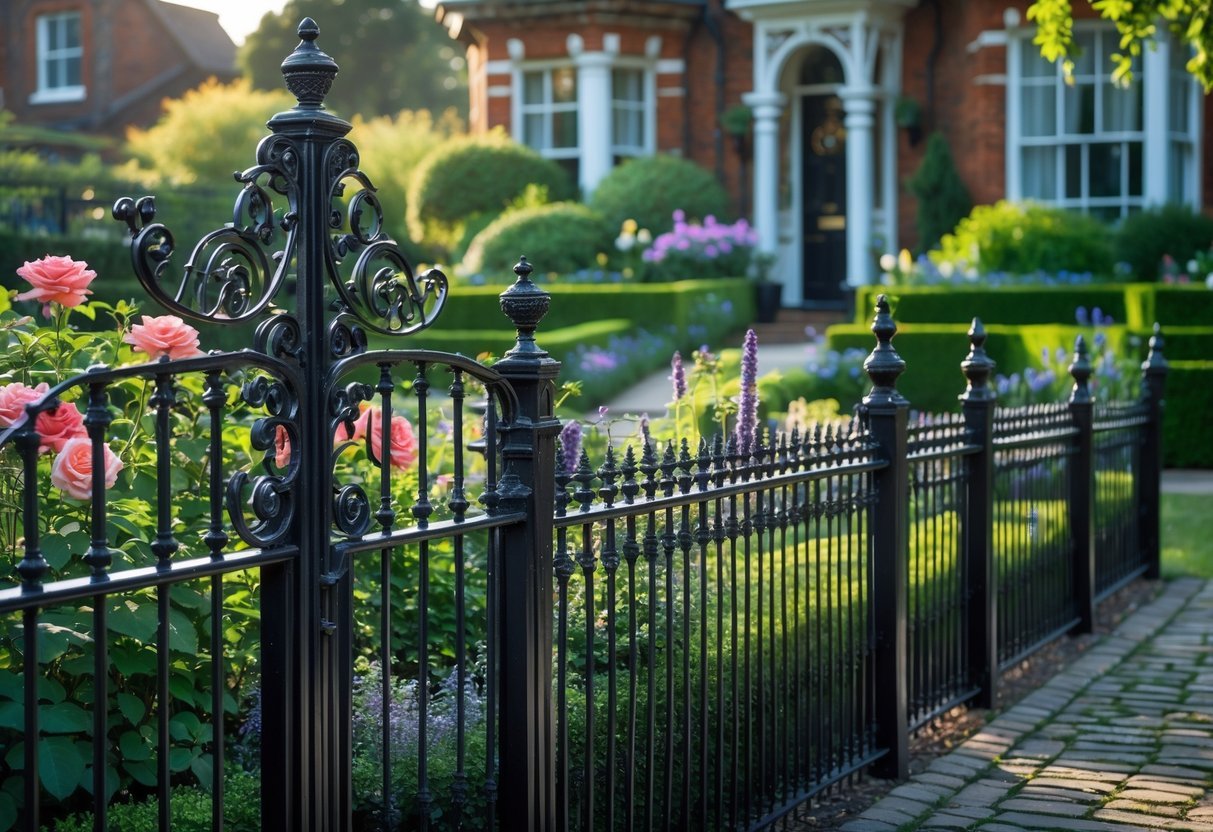
You can use ornate wrought iron fencing to frame your terrace garden with Victorian charm. It adds structure without blocking views and lets climbing plants weave through the metalwork.
Choose simple scrolls or more detailed floral motifs to match your home’s style. The fence also improves security and defines paths and borders clearly.
3) Vintage-style stone pathways
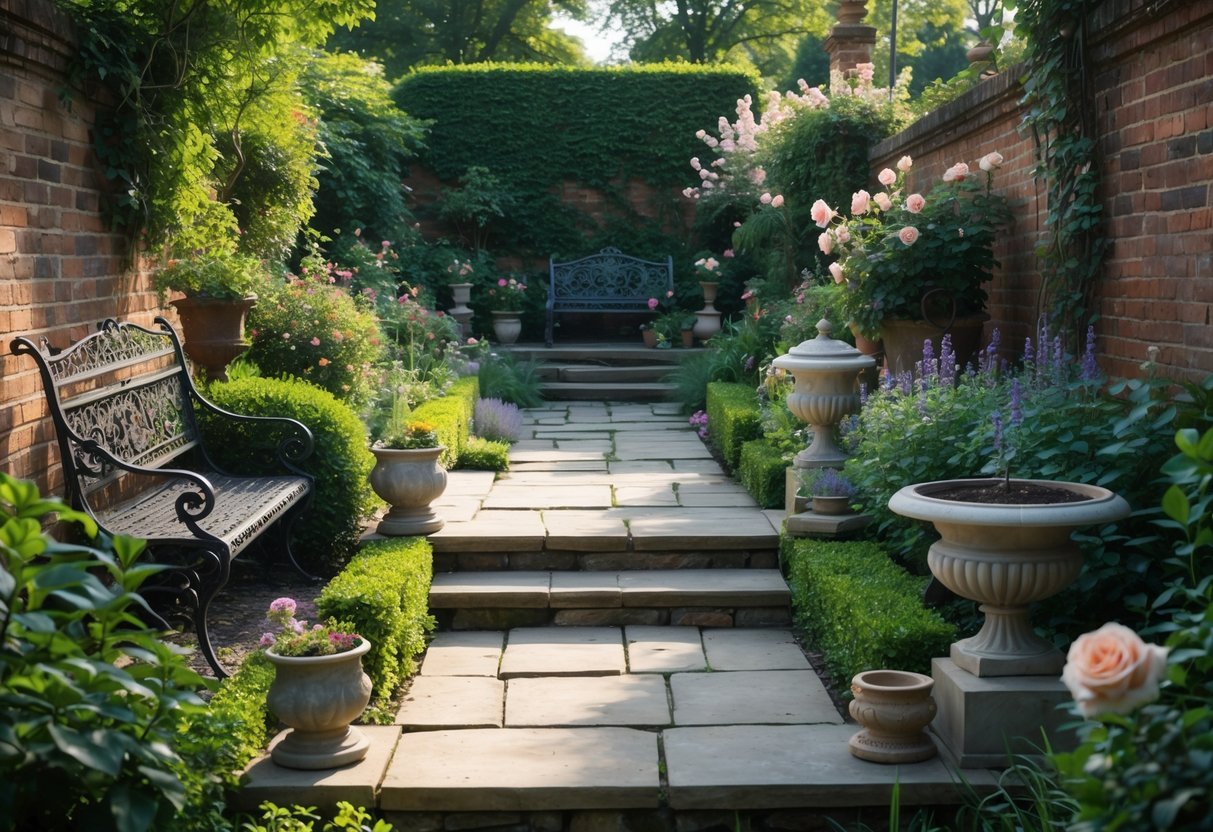
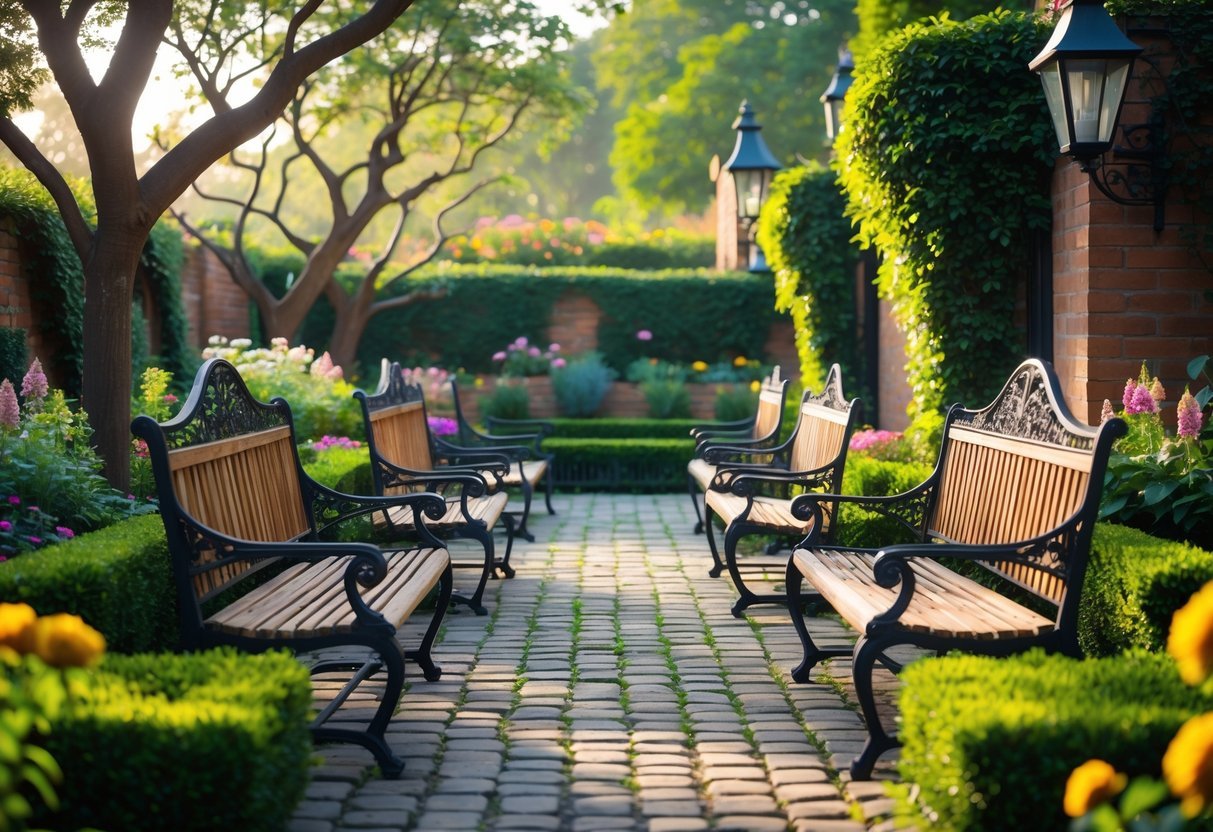
Choose irregular natural stone or reclaimed flagstones to give your terrace an aged, authentic look. You can lay them with narrow gaps and fill them with moss or low groundcover for a softer, lived-in feel.
Keep the path width readable and avoid tight curves so movement stays easy. Mix in brick or cobble edging to echo Victorian textures without overwhelming the space.
4) Small ornamental fountains

A small fountain adds calm sound and a focal point without crowding your terrace. Place it near a seating spot or among clipped boxwood for a classic Victorian feel.
Choose materials like stone or aged metal to match vintage style. A tiered or urn design fits well in tight spaces and needs little maintenance.
Keep the pump hidden and use hardy plants around the base to soften edges. This lets the fountain look like a natural part of your garden.
5) Boxwood hedges for structure
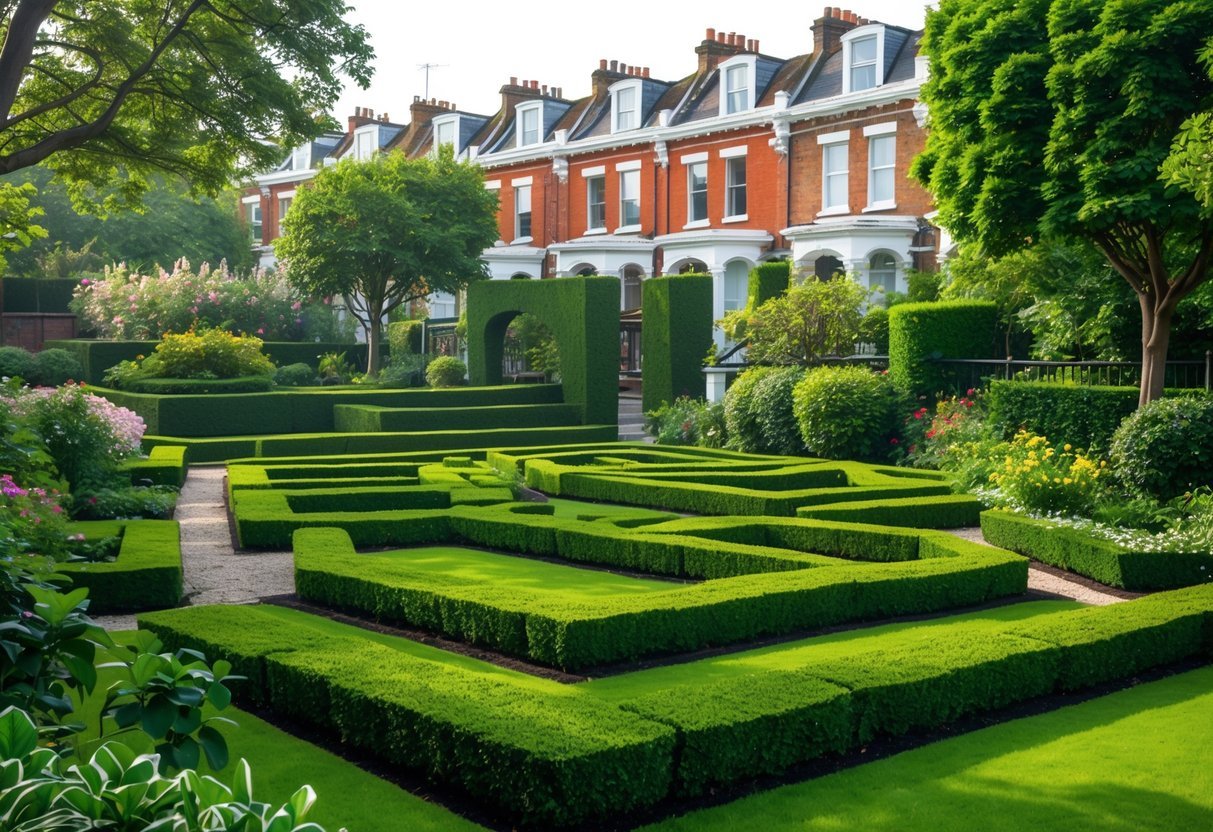
You can use boxwood hedges to give your terrace clear edges and form. Their dense evergreen leaves hold a neat line through all seasons.
Trim them into low walls or taller screens to frame paths, beds, or a seating area. Regular pruning keeps the shape crisp and fits Victorian symmetry.
Plant them in a row or paired flanking an entry for a classic look. Choose slow-growing varieties for easier maintenance and long-term structure.
6) Climbing roses on trellises
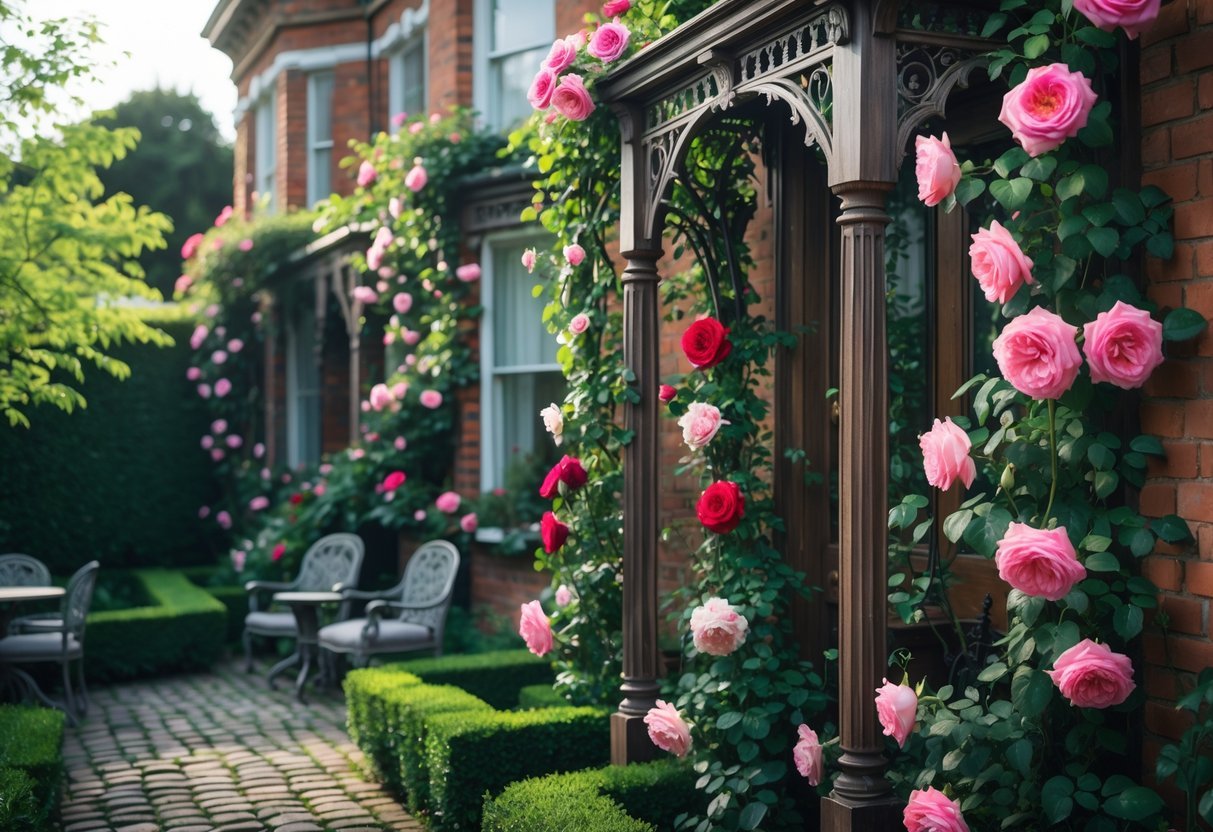
Plant climbing roses near a trellis to add height and scent to your terrace. Choose disease-resistant varieties and strong supports so stems stay secure.
Train and tie canes horizontally to encourage more blooms along the trellis. Prune lightly each year to shape growth and remove dead wood.
Use wood or metal trellises that match your Victorian style. You can also grow roses in containers by a narrow trellis if space is tight.
7) Victorian-style garden benches
Choose a wrought-iron or wooden bench with ornate details to match Victorian charm. You can place it under a climbing rose or near a small fountain for a restful spot.
Pick muted colors like dark green, black, or cream to keep a period feel. Add a simple cushion in a floral print for comfort without losing the historic look.
Position the bench to face a focal point, such as a path or flowerbed. That gives you a quiet place to sit and enjoy your terrace garden.
Victorian Terrace Garden Design Principles
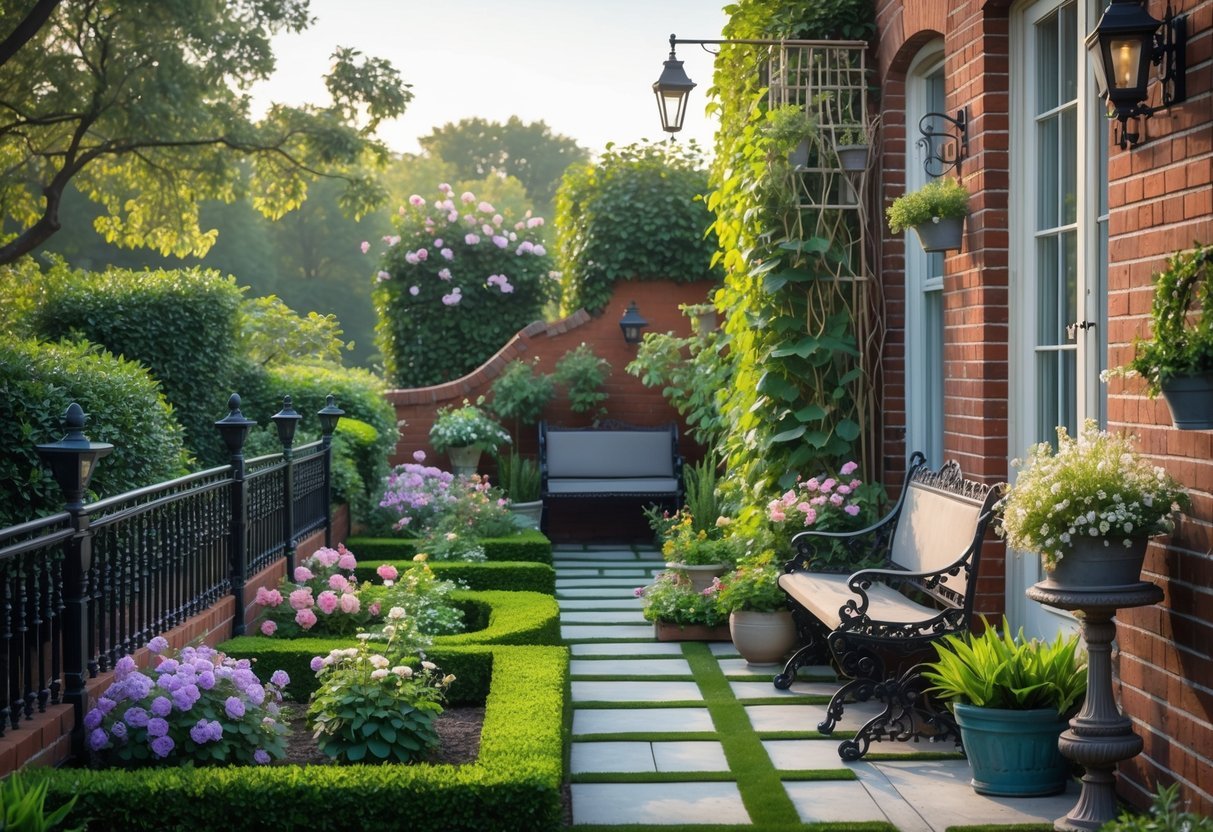
These ideas show how to pick real Victorian materials and make tight spaces feel organized and full. Focus on durable finishes, classic shapes, and smart layouts that fit a narrow terrace.
Incorporating Period-Appropriate Materials
Use cast iron, encaustic tiles, and reclaimed brick to match Victorian character. Cast-iron railings and planters give vertical interest and stand up to weather. Encaustic or patterned tiles on steps and entrances create the historic look while being hard-wearing.
Choose reclaimed or handmade bricks for low walls and raised beds to match original textures. Use lime mortar for repairs so walls can breathe and last longer. For paths, choose compacted gravel or narrow stone slabs laid in a running bond to echo Victorian paving without overwhelming the width.
Keep wood accents simple and painted in muted tones like deep green, cream, or black. Pick hardware with turned or fluted details. These materials work together to create an authentic feel that also resists regular outdoor wear.
Maximizing Small Outdoor Spaces
Start by planning clear sightlines: a single focal point such as a small fountain or urn draws the eye and makes the space feel larger. Place taller elements like espaliered fruit trees or trained climbers at the back to add height without blocking light.
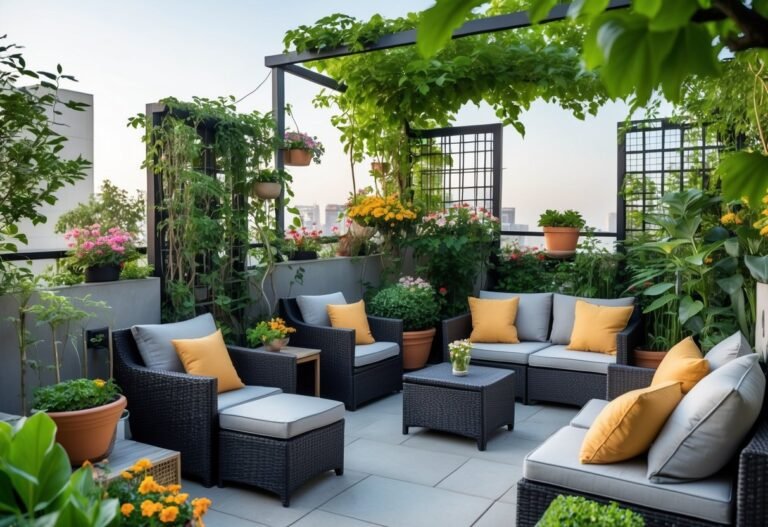
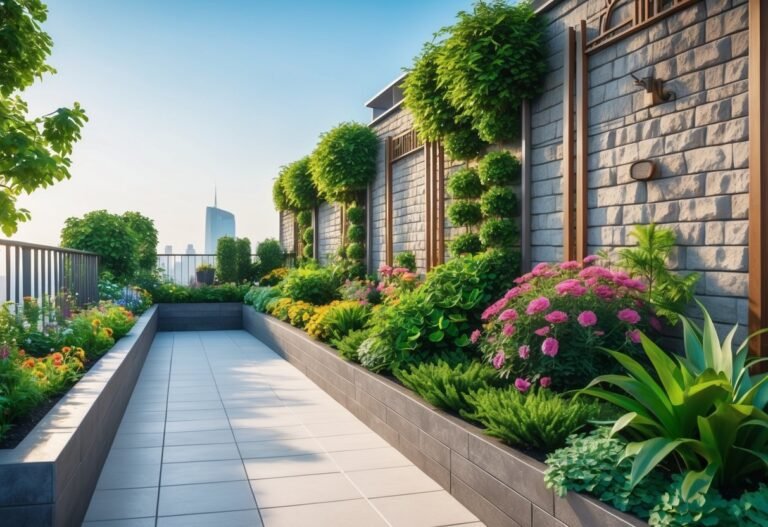
Use narrow raised beds along the walls to increase planting area and reduce maintenance. Incorporate built-in seating with storage under benches to save floor space. Choose compact furniture—bistro sets, folding chairs, or a slim bench—to keep circulation paths open.
Layer planting vertically with hanging baskets, wall-mounted pots, and trellises. Stick to a restrained palette of two to three plant colors to avoid visual clutter. Add mirrors or pale paving to bounce light into shaded spots and make the terrace feel brighter.
Maintaining Authenticity in Modern Settings
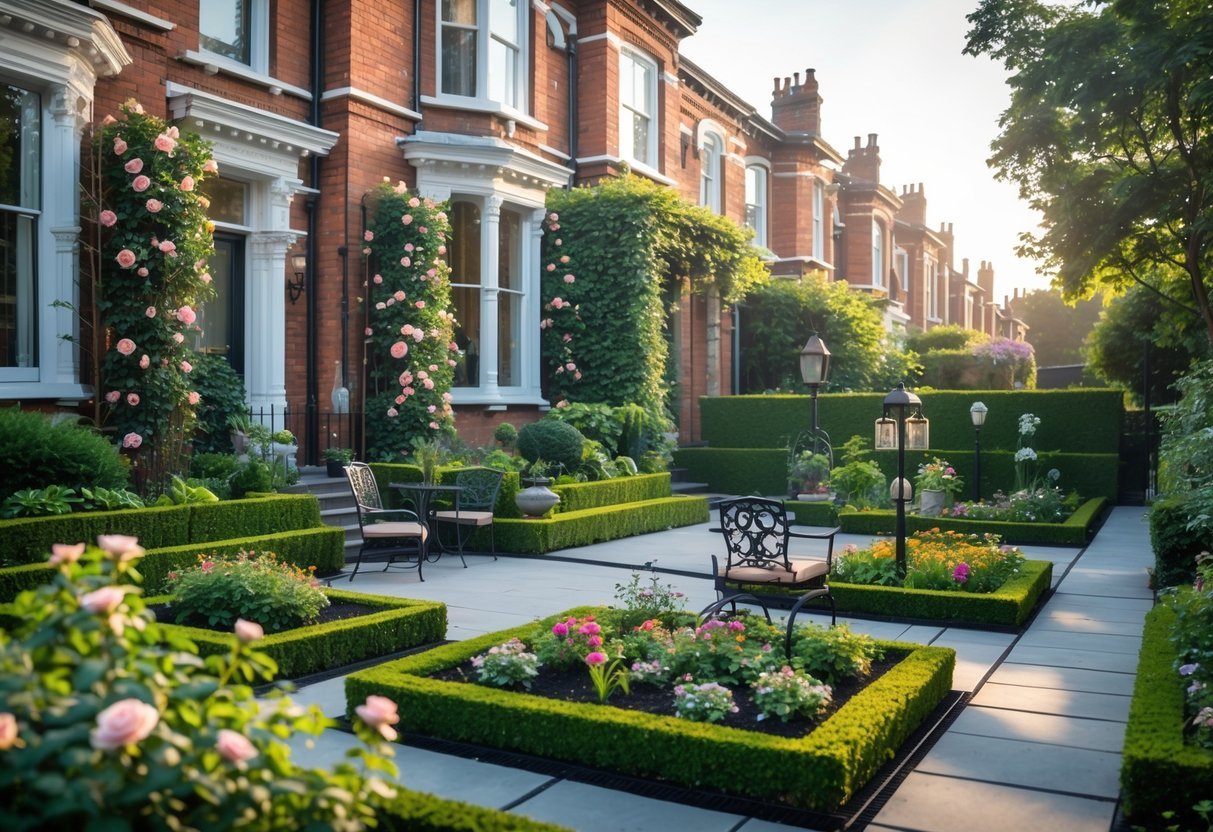
You can keep a Victorian terrace garden feeling authentic by choosing a few strong period features and adapting them to today’s needs. Focus on materials, small architectural pieces, and plant types that match Victorian tastes while fitting modern care and space limits.
Balancing Vintage and Contemporary Elements
Pick one or two vintage focal points — for example, a cast-iron bench, an ornate fountain, or a low brick wall — and place them where they draw the eye. Use these pieces as anchors, then add modern items that serve a clear purpose: weatherproof cushions, LED path lights, or a compact rain barrel that hides behind a climbing rose.
Match finishes and colors: dark greens, deep brick red, and aged bronze work well together. Keep scale in mind; a full-size Victorian obelisk can overwhelm a small terrace, so choose reduced-size ornaments or cluster small items for the same effect.
Use contemporary materials that mimic old ones when needed. Powder-coated metal looks like aged iron but resists rust. Reclaimed bricks give the right texture without costly restoration. These choices let you keep the Victorian look while reducing upkeep.
Plant Selection for Victorian Theme
Choose plants that were popular in the Victorian era and that grow well in your microclimate. Good options include heirloom roses, lavender, foxgloves, and primroses. Plant roses against walls or in containers to save space while keeping that classic scent and form.
Layer plants for structure: evergreen boxwood or yew for clipped shapes, mid-height perennials like delphinium for color, and low groundcovers such as thyme or aubrieta. This creates the formal beds and dense planting Victorians favored, but in a compact footprint.
Prefer disease-resistant cultivars and hardy varieties to reduce fuss. Label plants and rotate annuals seasonally to keep beds full without extensive replanting. Use slow-release fertilizer and mulching to mimic the rich soils Victorians prized, while cutting down on daily care.
Frequently Asked Questions
This section answers practical questions about adding symmetry, wrought iron fencing, stone paths, small fountains, and boxwood hedges to a terrace garden. You will find simple steps for plant choices, layout tips, budget options, and authentic Victorian details.
How can I design a Victorian-inspired garden in a small terrace space?
Start with a central focal point like a small ornamental fountain or a compact stone birdbath. Surround it with symmetrical flower beds and low boxwood hedges to create a formal, balanced look.
Use vertical elements to save space. Add wrought iron fencing or a trellis for climbing roses and clematis. Keep paths narrow and straight to fit Victorian style without crowding the area.
What are the key features of a traditional Victorian garden?
Victorian gardens emphasize symmetry and formal structure. Think paired beds, straight paths, and clipped boxwood borders.
They use a mix of seasonal blooms for continuous color. Ornate wrought iron fencing, stone pathways, and small fountains are common decorative elements.
How do I create a low-maintenance Victorian garden on a budget?
Choose hardy, low-care plants and group them by water needs to cut watering time. Use boxwood hedges for long-lasting structure that needs only occasional trimming.
Install a small prefabricated fountain and recycled stone slabs for paths to save money. Use container plants and match fencing height with neighbors to avoid costly custom work.
What plants are typically found in a Victorian terrace garden?
Plant seasonal flowering perennials and annuals for steady blooms. Popular choices include roses, lavender, and geraniums for scent and color.
Add boxwood for formal edging and small shrubs for year-round shape. Include a few climbers like clematis on wrought iron supports to add height.
What are some authentic Victorian garden decorations and elements?
Use ornate wrought iron fencing and vintage-style stone pathways for an authentic look. Small ornamental fountains and cast-iron benches add period charm.
Add terracotta pots, stone urns, and statues in restrained numbers. Keep decorations balanced and aligned with the garden’s symmetry.
How should I plan the layout for a Victorian terrace garden to maximize space?
Draw a simple plan with a central axis and mirror-image beds on either side. Place the fountain or focal piece at the axis center to anchor the design.
Keep paths straight and narrow to preserve planting area. Use vertical planting and wall-mounted pots to increase green space without widening the terrace.