Rooftop Terrace Design: Practical Strategies for Stylish Urban Outdoor Living
You can turn a bare rooftop into a useful, beautiful outdoor room that fits your life and budget. Think through layout, weather, and plant choices first, and you’ll create a rooftop terrace that looks great and works for relaxing, dining, or entertaining.

This post walks you through simple design moves, smart material picks, and easy ways to add comfort and privacy so your rooftop becomes a true extension of your home. You’ll find practical ideas whether you want a lush garden, a low-maintenance hangout, or a sleek city escape.
Key Takeaways
- Plan the layout and zones so the space serves clear purposes.
- Choose durable materials and plants that suit your climate.
- Include easy-care systems and legal checks to keep the terrace safe and usable.
Key Elements of Rooftop Terrace Design
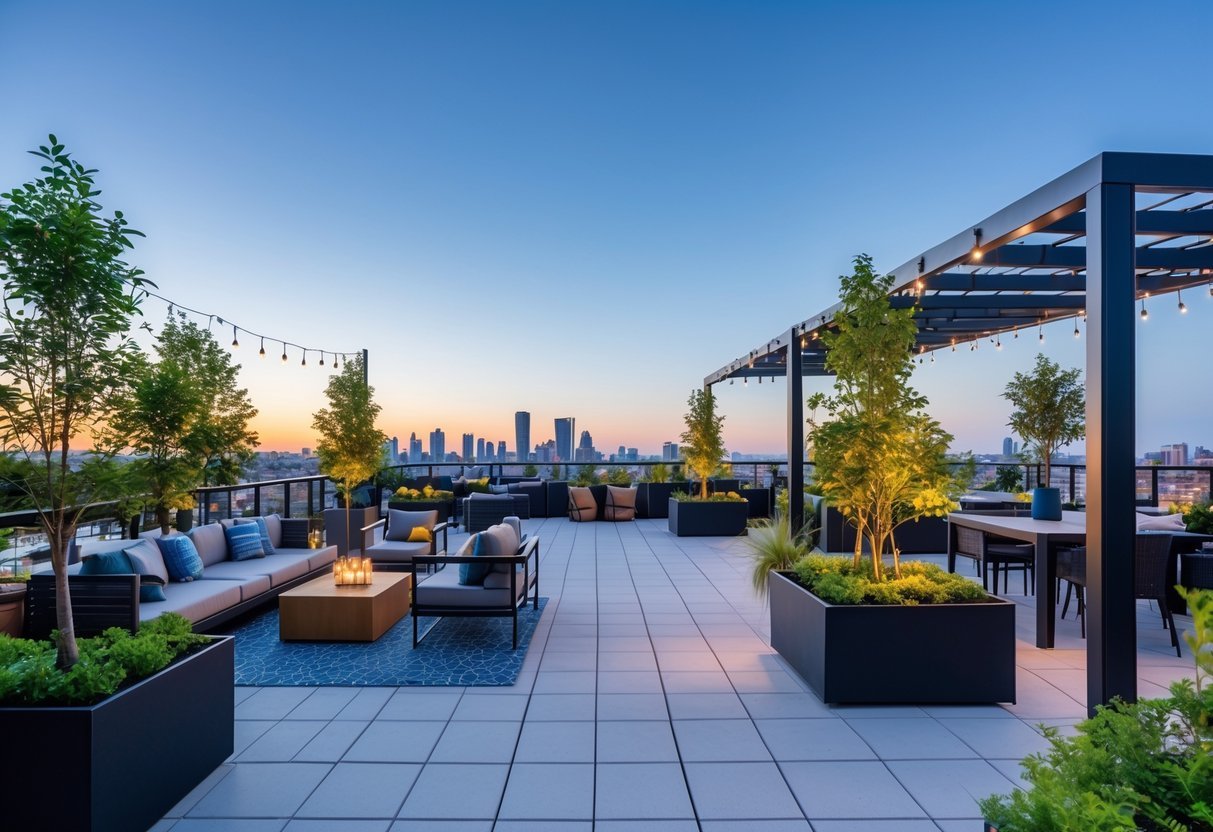
Plan layout for clear traffic paths, usable zones, and service access. Choose durable materials that resist weather and foot traffic. Prioritize guardrails, drainage, and waterproofing for safety and longevity.
Space Planning and Layout
Map your terrace with zones for dining, cooking, lounging, and plants. Measure available square footage and mark a 3–4 foot circulation path around major furniture to keep movement easy. Place heavy items like planters and grills near structural support or load-bearing walls.
Think about sightlines. Orient seating toward views and position lighting to avoid glare. Include storage under benches or in modular units to keep clutter off walking areas.
Plan utilities early. Route gas, water, and electrical lines where installers can access them. Reserve a service corridor for maintenance of rooftop equipment and waterproof membranes.
Material Selection for Durability
Pick materials rated for outdoor rooftop use and UV exposure. For flooring, consider porcelain pavers, composite decking, or sealed concrete — all resist moisture and fade. Use stainless steel, powder-coated aluminum, or marine-grade wood for furniture and fixtures.
Choose plants and planters that tolerate wind and shallow soil. Lightweight, frost-resistant planters reduce load and lower maintenance. Specify outdoor fabrics with high UV and mildew ratings for cushions and umbrellas.
Protect surfaces with proper finishes: sealants on wood, anti-slip coatings on tile, and rust inhibitors on metal. Match material choices to maintenance you can commit to, not just how they look.
Safety Considerations
Install guardrails that meet local code for height and load. Use glass, metal, or cable railings with top rails that resist lateral force. Check openings to prevent small children or pets from slipping through.
Design drainage to avoid ponding. Slope surfaces toward drains at a minimum of 1–2% and keep scuppers and gutters clear. Waterproof membranes must be continuous under all finish materials and inspected during installation.
Plan for fire safety and egress. Keep grills away from combustible finishes and allow clear exit routes. Provide adequate lighting along paths and steps to prevent trips at night.
Functional Zoning and Layout Ideas
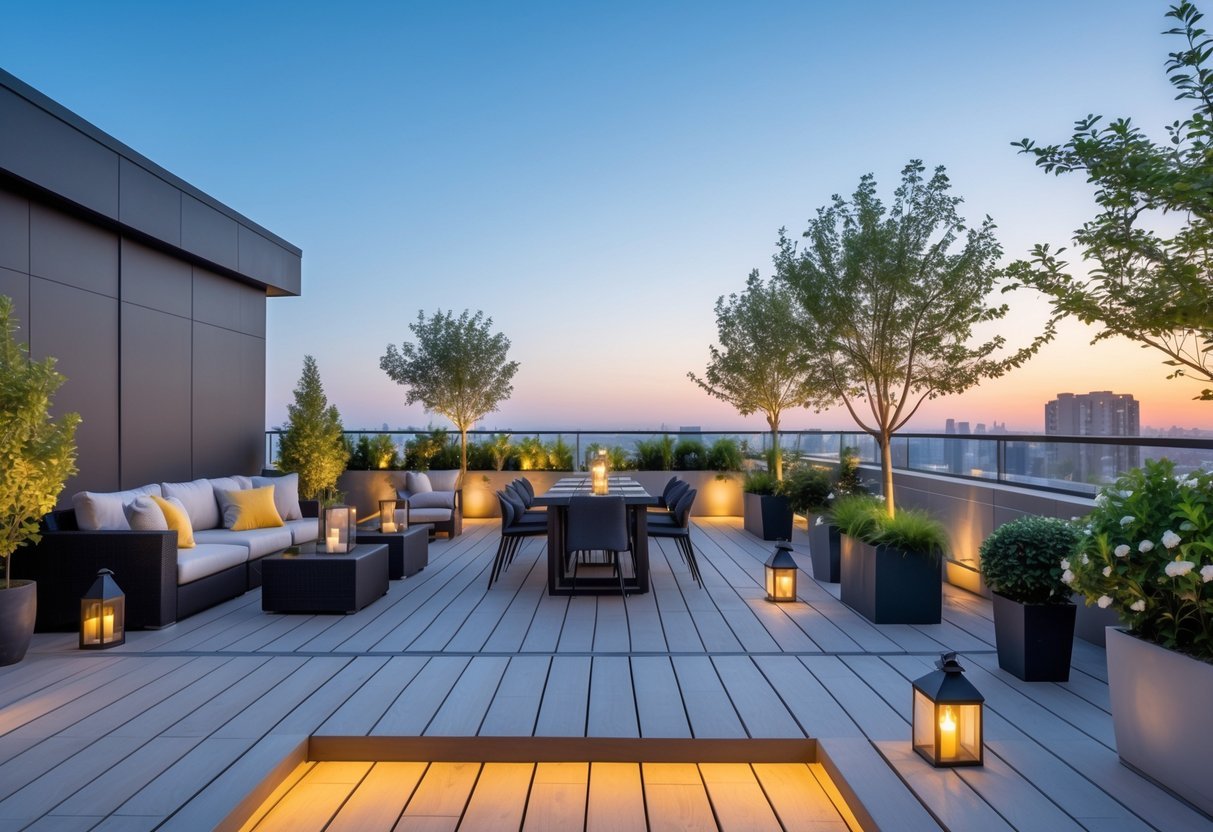
Plan distinct areas for lounging, dining, and quiet retreat so each function works without crowding the others. Use furniture, planters, and surface changes to guide movement and define each zone.
Outdoor Living Areas
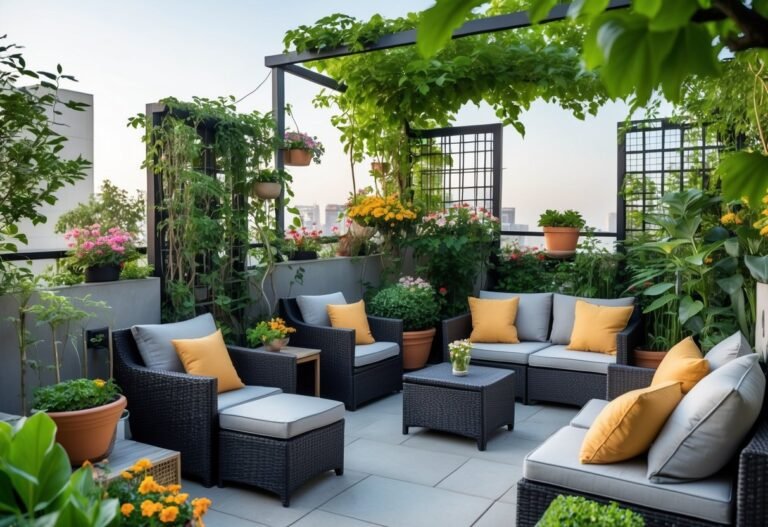
Place a weatherproof sofa or modular seating near a windbreak such as a glass balustrade or tall planter. Arrange seating to face the best view or a focal point like a firepit or vertical garden.
Include a low coffee table and side tables so people can set drinks and devices down easily. Use outdoor rugs to anchor the group and signal a single living area.
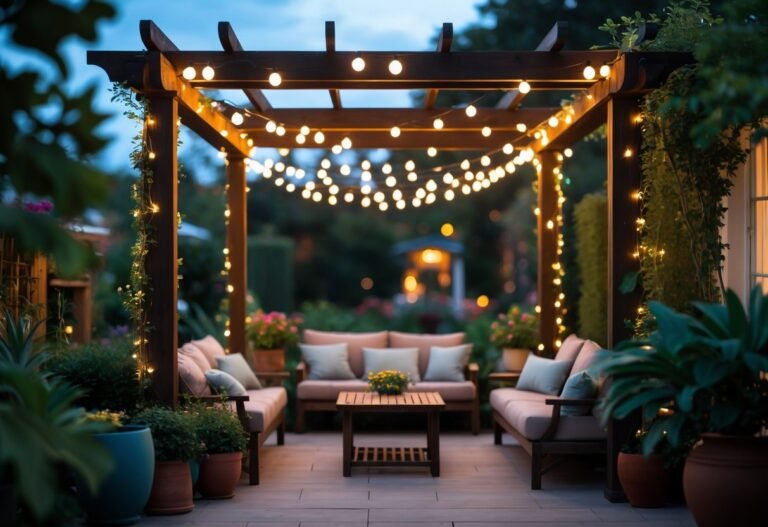
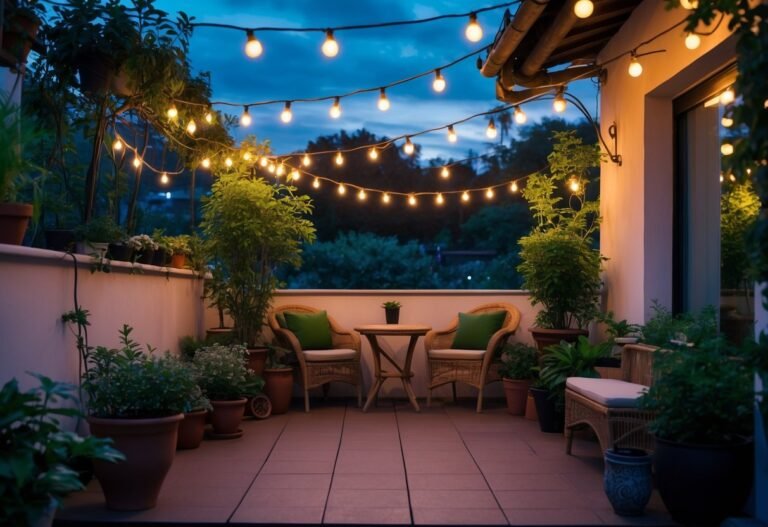
Think about sun and shade: pair seating with a pergola, retractable awning, or large umbrella. Add layered lighting — string lights plus a few task lamps — for evening use. Keep storage nearby for cushions and throws.
Dining and Entertaining Zones
Pick a location with easy access to the kitchen or building elevator to simplify food delivery and clean-up. Choose a dining table sized for your usual guest count: a 6–8 person table for regular gatherings, or a small bistro set for casual meals.
Use durable, non-slip flooring under the table — composite decking or stone pavers work well — to handle spills and heavy chairs.
Install a compact outdoor kitchen or a built-in grill with a prep counter if you host often. Provide clear circulation space (minimum 90–100 cm / 36–40 in) around the table so guests can move freely. Add ambient and task lighting over the table for comfortable evening dining.
Private Retreat Corners
Create a quiet corner with a chaise lounge, hammock, or daybed tucked behind tall planter boxes or a privacy screen. Plant dense shrubs or tall grasses to buffer wind and noise while keeping sightlines open.
Include a small side table and a soft mat or cushion for comfort. Consider a folding screen or trellis with climbing vines if you need movable privacy.
Position this zone away from the main traffic path and louder areas. Add a dimmable spotlight or a low lamp for reading, and choose textiles that resist moisture and fading so the retreat stays cozy with low upkeep.
Landscaping Strategies for Rooftop Terraces
A good rooftop landscape balances weight, water management, and plant choice. Focus on lightweight containers, layered soil systems, and drought-tolerant species to keep the terrace safe and low-maintenance.
Container Gardening
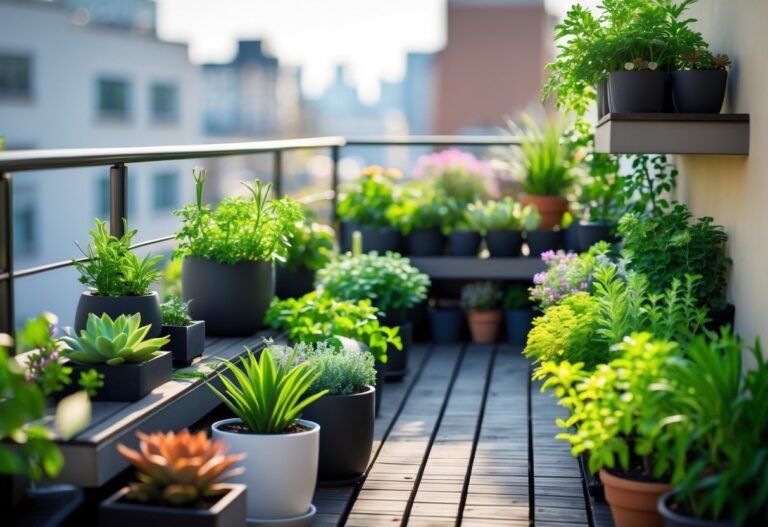
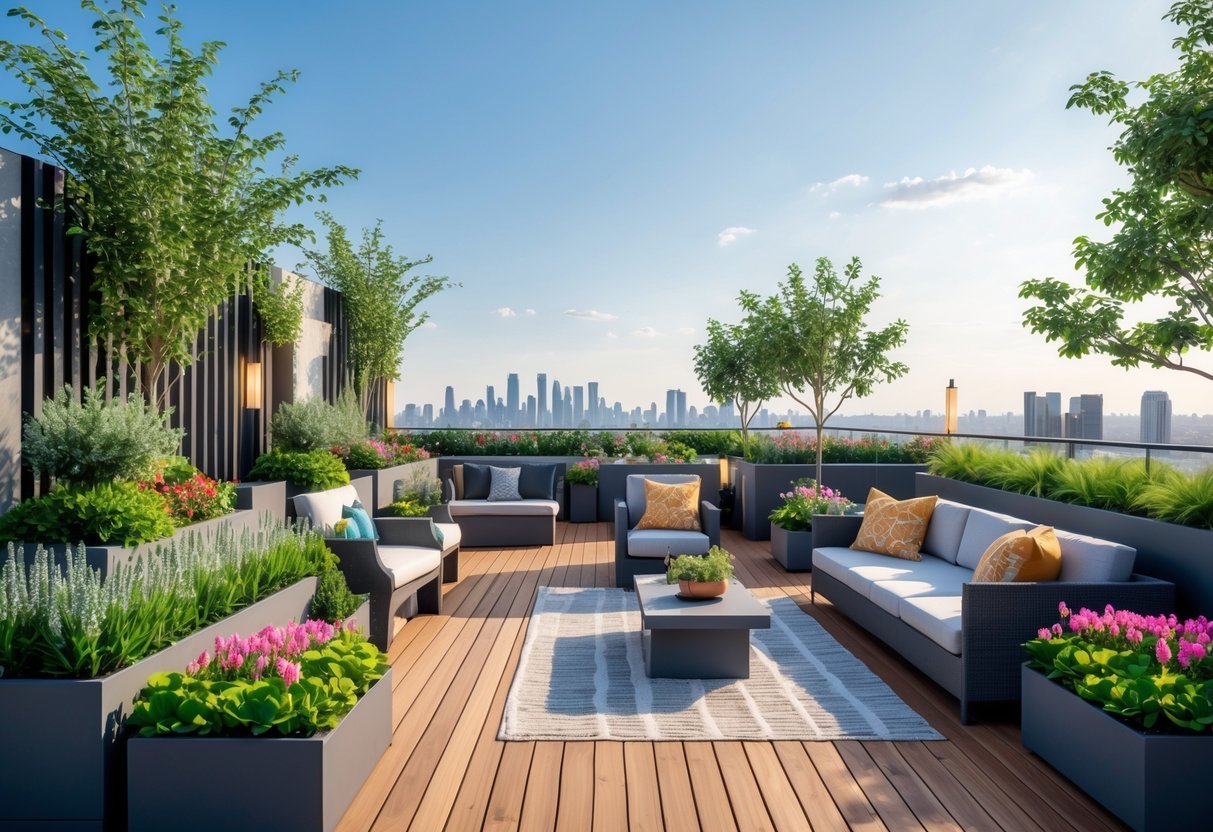
Use containers to control weight and soil depth. Choose lightweight materials like fiberglass, resin, or aluminum. Match pot size to plant root systems—small pots for herbs, large wide pots for small trees or shrubs. Include a drainage layer (gravel or foam) and a well-draining potting mix to avoid waterlogging.
Place pots on trays or raised stands to protect the roof membrane and allow airflow. Group containers by irrigation needs to simplify watering. Consider built-in bench planters or modular container systems if you want a clean, repeated look.
For wind protection, use heavier bases or windbreak planting. Secure tall pots and use lower-profile plants at the edges to reduce wind stress. Add plant supports for climbers and fast-growing vines to create shade and privacy.
Green Roof Applications
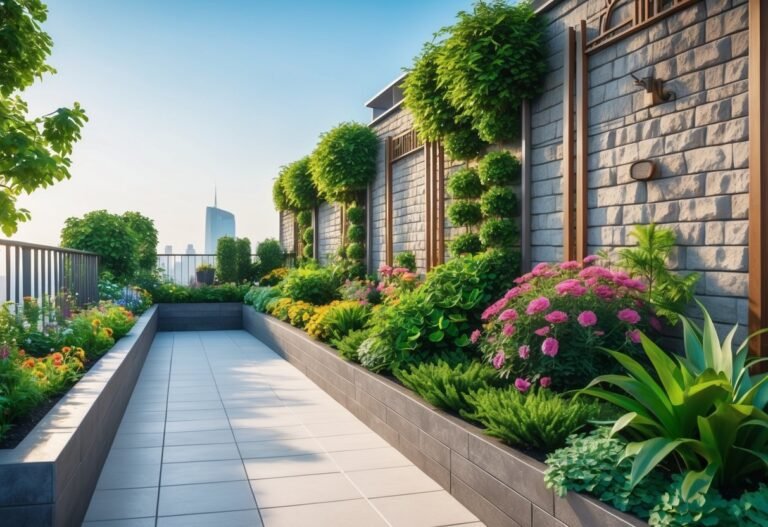
Decide between extensive and intensive green roofs based on weight allowance and purpose. Extensive systems are shallow (2–6 inches of growing medium), weigh less, and suit sedums, grasses, and succulents. Intensive roofs hold more soil (6+ inches), support perennials, shrubs, and small trees but require structural review and more maintenance.
Install a layered system: root barrier, waterproof membrane, drainage layer, filter fabric, and engineered growing medium. Use lightweight engineered soils to lower load while keeping nutrient capacity. Include an overflow and edge detailing to manage runoff safely.
Plan access for maintenance and irrigation. For extensive roofs, use low-frequency irrigation or drought-tolerant mixes. For intensive roofs, integrate drip irrigation and easy access paths for care and occasional replanting.
Low-Maintenance Plant Solutions
Choose plants that tolerate wind, sun, and shallow soil. Succulents, ornamental grasses, sedums, lavender, and rosemary work well in exposed rooftop conditions. Select native species when possible to benefit local climate resilience and pest resistance.
Group plants by water needs to avoid overwatering drought-tolerant species. Use mulch or decorative stones to reduce evaporation and limit weeds. For seasonal interest, mix evergreen shrubs with perennials that offer flowers in spring and seed heads in fall.
Include a few self-sustaining features: drip irrigation on timers, slow-release fertilizers, and removable protective covers for winter. These steps cut routine work and protect plants from harsh weather without sacrificing a lush look.
Furnishing and Decor Choices
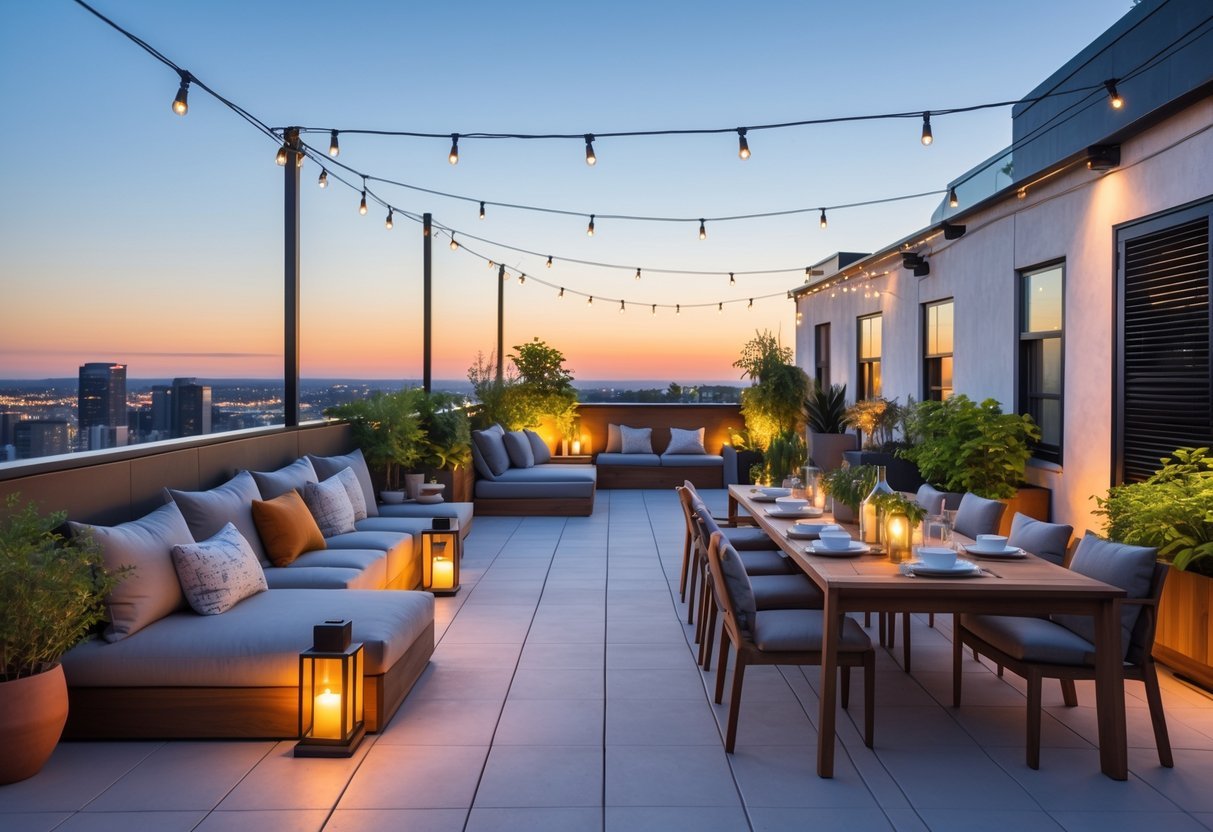
Pick pieces that last in sun, wind, and rain. Aim for durable materials, breathable textiles, and layered light so your terrace works day and night.
Weather-Resistant Furniture
Choose furniture made from aluminum, teak, powder-coated steel, or all-weather wicker. These materials resist rust, rot, and fading. Look for UV-stable finishes and marine-grade hardware if you live near the coast.
Buy cushions with quick-dry foam and removable covers rated for outdoor use (look for solution-dyed acrylic or polyester). Elevate heavy items on small feet or pavers to avoid trapped moisture under legs.
Measure wind loads: use furniture weights or anchors for high-wind areas. Select multi-use pieces like storage benches or folding tables to protect items when storms come. Prioritize modular seating so you can rearrange for sun, shade, or entertaining.
Textiles and Rugs for Outdoor Spaces
Pick fabrics labeled outdoor or performance, such as Sunbrella or similar solution-dyed acrylics. These resist fading, mildew, and stains better than indoor fabrics.
Use rugs made from polypropylene or recycled plastic fibers. They handle moisture and scrub clean with a hose. Choose rug sizes so furniture legs sit either fully on or fully off the rug to keep things stable.
Layer textures: mix woven throws, outdoor pillows with different fills, and a low-pile rug for comfort. Store soft items in ventilated boxes when heavy rain or winter arrives. Add non-slip pads under rugs to prevent sliding on hard surfaces.
Lighting Solutions
Combine three light types: ambient, task, and accent. Ambient lighting comes from string lights or low wall sconces. Task lighting should illuminate dining or cooking areas with focused LED fixtures.
Use warm LEDs (2700–3000K) for a cozy tone. Choose IP65-rated fixtures for exposed spots and IP44 for covered areas. Solar path lights and integrated LED strips cut wiring needs but check charge performance in your climate.
Mount dimmers or smart controls so you can adjust brightness for parties or quiet evenings. For safety, add step or perimeter lights and avoid glare by shielding bulbs or using frosted diffusers.
Climate and Environmental Considerations
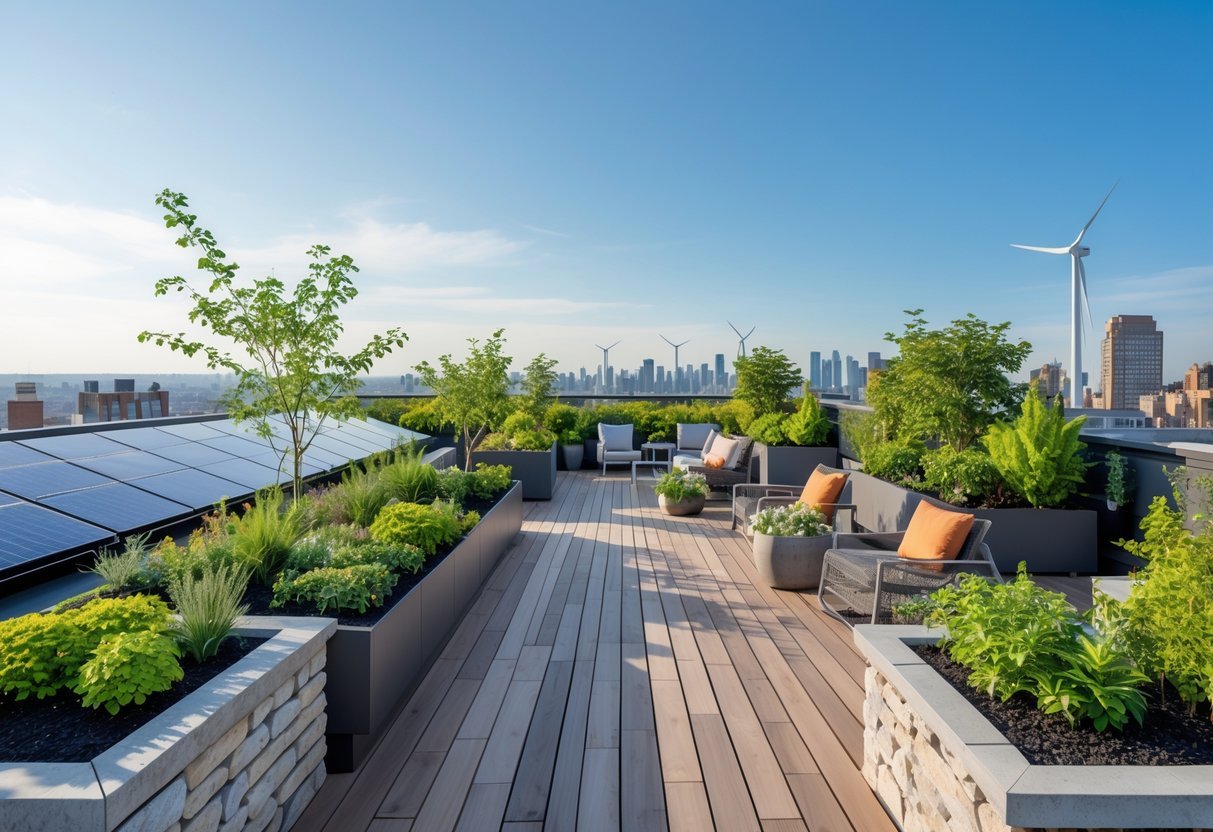
Plan for sun, wind, and privacy to keep the terrace usable year-round. Choose durable materials and simple systems that match your climate and maintenance ability.
Shade Structures and Pergolas
You should pick shade that blocks high summer sun while allowing winter light. Fixed pergolas with slatted roofs work well if you orient slats to the sun path; adjustable louvers give control on sunny or cloudy days. Use materials rated for outdoor use—aluminum for low maintenance, cedar for warmth, or powder-coated steel for strength.
Add climbing plants or retractable fabric for extra cooling and softer light. Vines like clematis or trained grapevines reduce surface temperatures and add shade without heavy structure. Include gutters or slight roof pitch so rain sheds away from seating and planter edges.
Consider solar panels on top for dual use: they provide shade and generate energy. Ensure any added weight meets the roof’s load limits and arrange for easy access for cleaning and maintenance.
Wind and Privacy Screening
Place wind screens where prevailing winds hit most strongly, usually on the windward side. Solid glass or perforated metal panels cut wind without creating dangerous turbulence; perforated screens reduce wind loads while preserving some airflow. Height matters—screens around 3–4 feet block gusts at seating level; taller sections may be needed if you have standing areas.
Use dense planter walls or trellis screens with evergreen shrubs to add privacy and soften noise. Evergreen species like boxwood or laurels provide year-round screening and help reduce reflected heat. Anchor screens and planters securely to the terrace surface and check structural limits before adding heavy masonry or wet soil loads.
For rooftop safety and comfort, combine fixed screens with movable fabric panels or roll-up blinds so you can adapt to changing wind and sightlines.
Sustainable Design Approaches
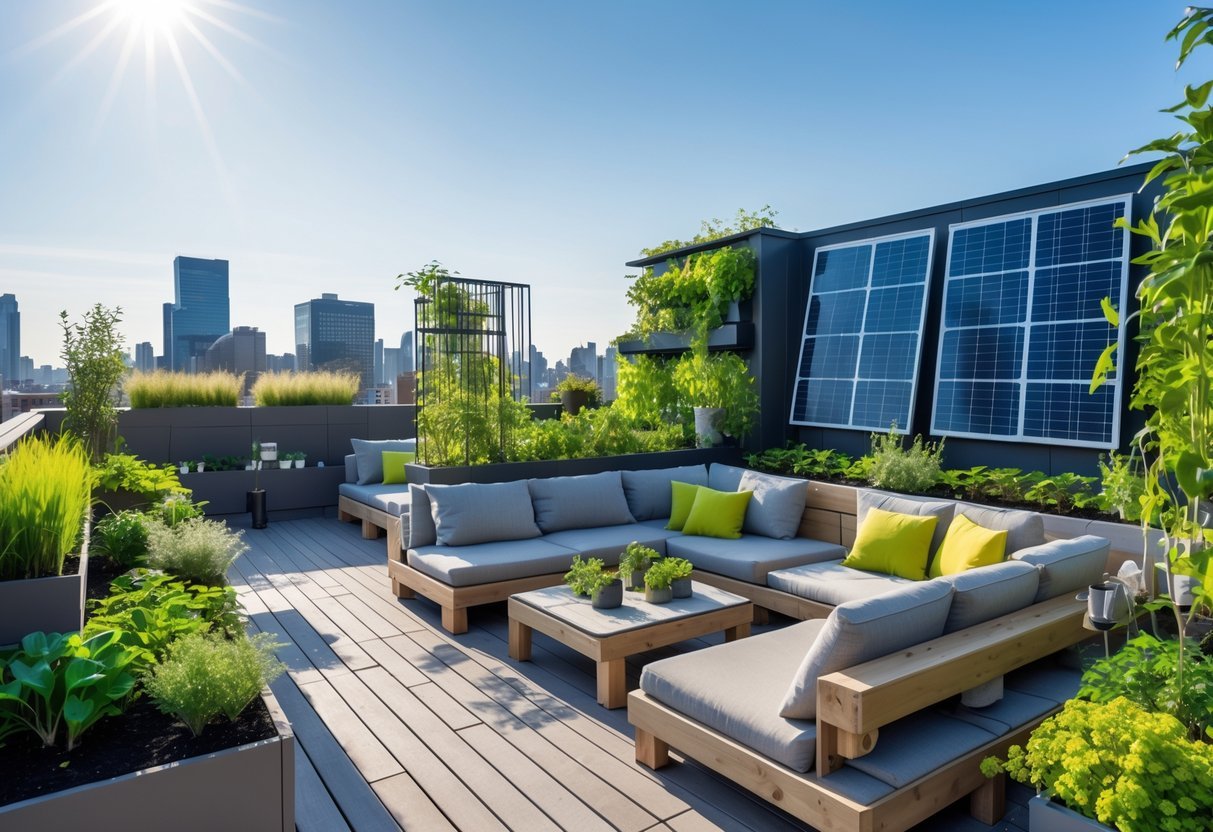
Focus on materials that cut waste and reduce weight, and on systems that save water and fit limited rooftop space. Prioritize choices that lower long-term costs and need little maintenance.
Eco-Friendly Materials
Choose lightweight, durable materials to protect your roof and reduce structural loads. Use composite decking made from recycled plastic and wood fiber, or reclaimed timber treated for outdoor use. These options resist rot and need less frequent replacement than untreated wood.
For surfaces, pick permeable pavers or modular green roof trays to reduce runoff and heat gain. Insulation matters: rigid foam boards under decking improve thermal performance and lower cooling costs. For furniture, select powder-coated aluminum or FSC-certified wood — both stand up to weather with minimal upkeep.
Specify low-VOC paints and sealants to keep rooftop air healthy. Ask your contractor for material weight ratings, recycled content percentages, and maintenance intervals before buying.
Rainwater Harvesting Integration
Plan a system sized for your roof area and intended use, such as irrigation or gray-water flushing. You can collect runoff into a 200–500 gallon tank for plant irrigation on medium roofs; for small terraces, a 50–150 gallon barrel often suffices. Match tank size to your local rainfall patterns.
Install a first-flush diverter to keep debris and roof contaminants out of storage. Use a mesh leaf screen at gutter inlets and a simple pump with a timer or drip emitters for efficient watering. If you want potable water, add filtration and a UV or carbon treatment and follow local codes.
Place tanks and pumps where they balance weight across the roof. Label valves and include an overflow tied to safe drainage to avoid roof damage.
Smart Features and Technology Integration
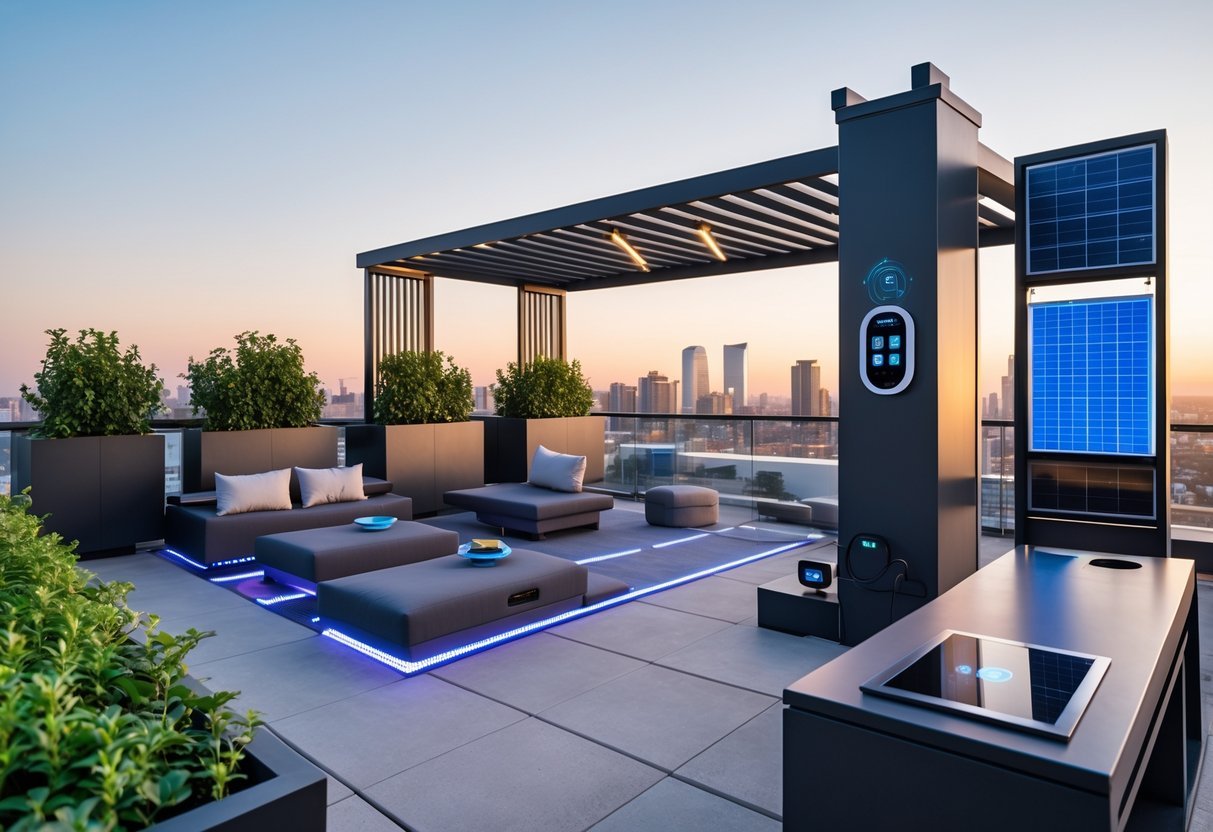
Smart tech can make your rooftop easier to maintain and more fun to use. Focus on systems that save water, protect plants, and deliver clear sound and video without clutter.
Automated Irrigation Systems
Install a drip irrigation network with pressure regulators and a weather-based controller to save water and keep plants healthy. Connect the controller to local weather data so it skips watering after rain or adjusts for seasonal changes.
Use soil moisture sensors in planter beds to prevent overwatering. Place one sensor per planter size or distinct microclimate. Set thresholds in the controller app so watering runs only when soil falls below your chosen moisture level.
Choose freeze-protection features if your climate drops below freezing. Look for valves and tubing rated for outdoor exposure and UV. For power, use low-voltage transformers or solar-backed controllers to avoid major wiring runs.
Plan for maintenance: add manual shutoffs and easy-access filters. Label zones in the app and near valves so you can find and repair leaks quickly. These steps cut water waste and reduce plant stress.
Outdoor Audio-Visual Components
Mount weatherproof speakers with a defined zone map so you control sound levels for dining, lounging, or a party. Use in-ground or wall-mounted speakers rated IP66 or higher for rain and dust protection.
Pick an outdoor TV with anti-glare screen and a marine-grade enclosure if exposed to wind-driven rain. Hard-mount the TV on a swivel bracket for safe viewing angles and easy servicing. Route cables through conduit and use outdoor-rated HDMI and power accessories.
Use a central media controller or smart home hub to group audio and video zones. Enable voice control and app-based presets like “Dinner” or “Movie Night.” Add a dedicated outdoor amplifier with cooling vents and a surge protector to protect equipment.
Plan wiring and power early in design. Put equipment in a ventilated cabinet near the terrace or inside an adjacent room. Label all connections and keep backup fuses or batteries on hand for quick fixes.
Legal, Structural, and Accessibility Factors
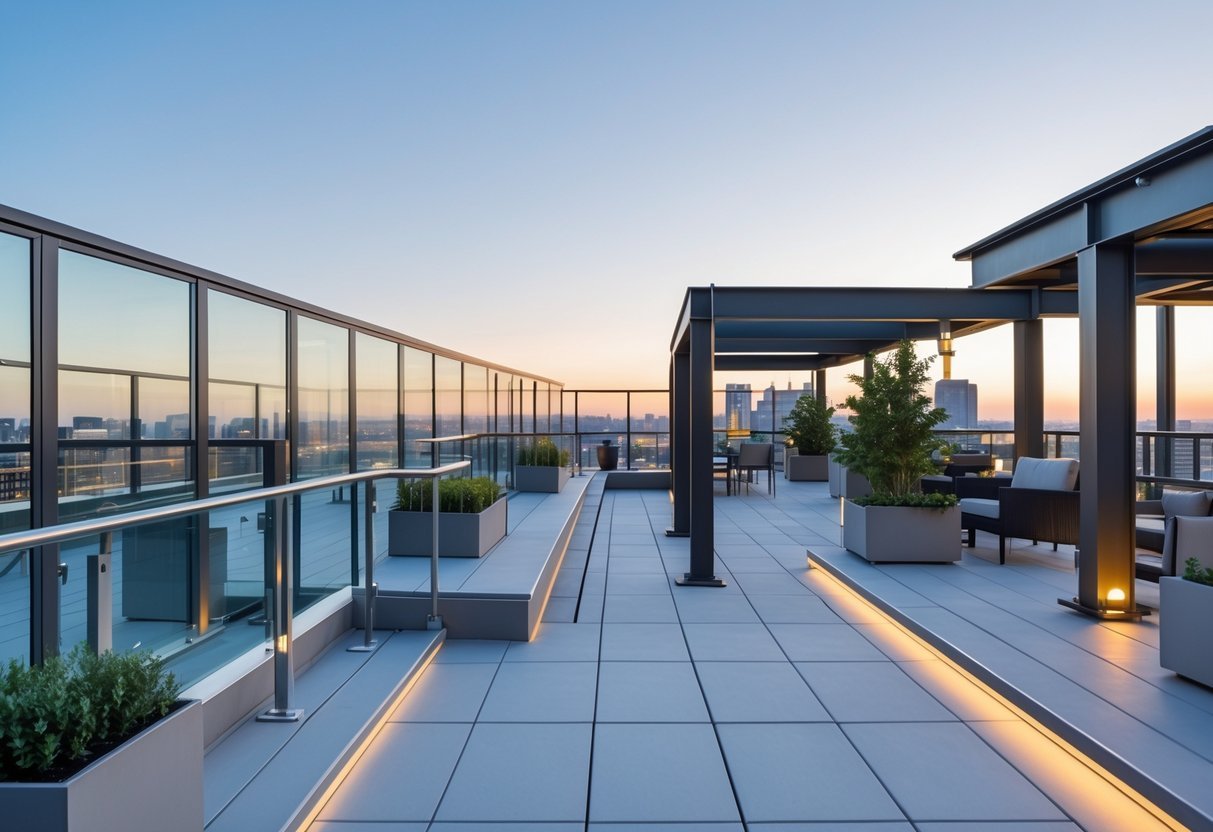
You must check local laws, confirm the roof can carry added weight, and plan safe, barrier-compliant access. Permit, loading, and access rules shape what you can build and how you use the terrace.
Building Codes Compliance
You must obtain necessary permits before construction. Submit drawings that show structural plans, guardrail details, waterproofing, and egress paths. Local building codes often reference national standards and may require inspections at stages like framing, waterproofing, and final occupancy.
Focus on these code items:
- Permits and plan review timelines.
- Guardrail and balustrade heights and openings.
- Fire-rating and separation from adjacent occupancies.
- Drainage and waterproofing details to prevent water intrusion.
Keep documentation on site for inspectors. If you change the design after approval, get amended permits to avoid enforcement or liability.
Structural Load Requirements
You must design for dead load plus live loads for the terrace use you plan. Typical live-load design values vary: pedestrian terraces often use 40–100 psf depending on occupancy and planters, while assembly or restaurant terraces require higher values. Include concentrated loads for heavy planters, furniture, or mechanical equipment.
Address these elements:
- Roof membrane protection and insulation under pavers or planters.
- Load paths from terrace finishes down to the primary structure.
- Wind uplift and lateral loads for screens, pergolas, and parapets.
- Drain locations and overflow capacity to avoid ponding.
Have a licensed structural engineer calculate loads and specify reinforcement, deflection limits, and attachment details.
Accessibility Considerations
You must provide accessible routes and features when the terrace is a public or multi-unit amenity. That includes an accessible entrance, level landings, and compliant thresholds at doors. Elevators or ramps may be required instead of only stairs.
Plan for these specific items:
- Clear width and slope limits for ramps and paths.
- Door hardware, thresholds, and maneuvering clearances at entries.
- Accessible seating and tables, and clear turning space.
- Tactile warnings or visual contrast at level changes and edges.
Coordinate accessibility requirements with code officials early to avoid costly retrofits.
Maintenance and Upkeep
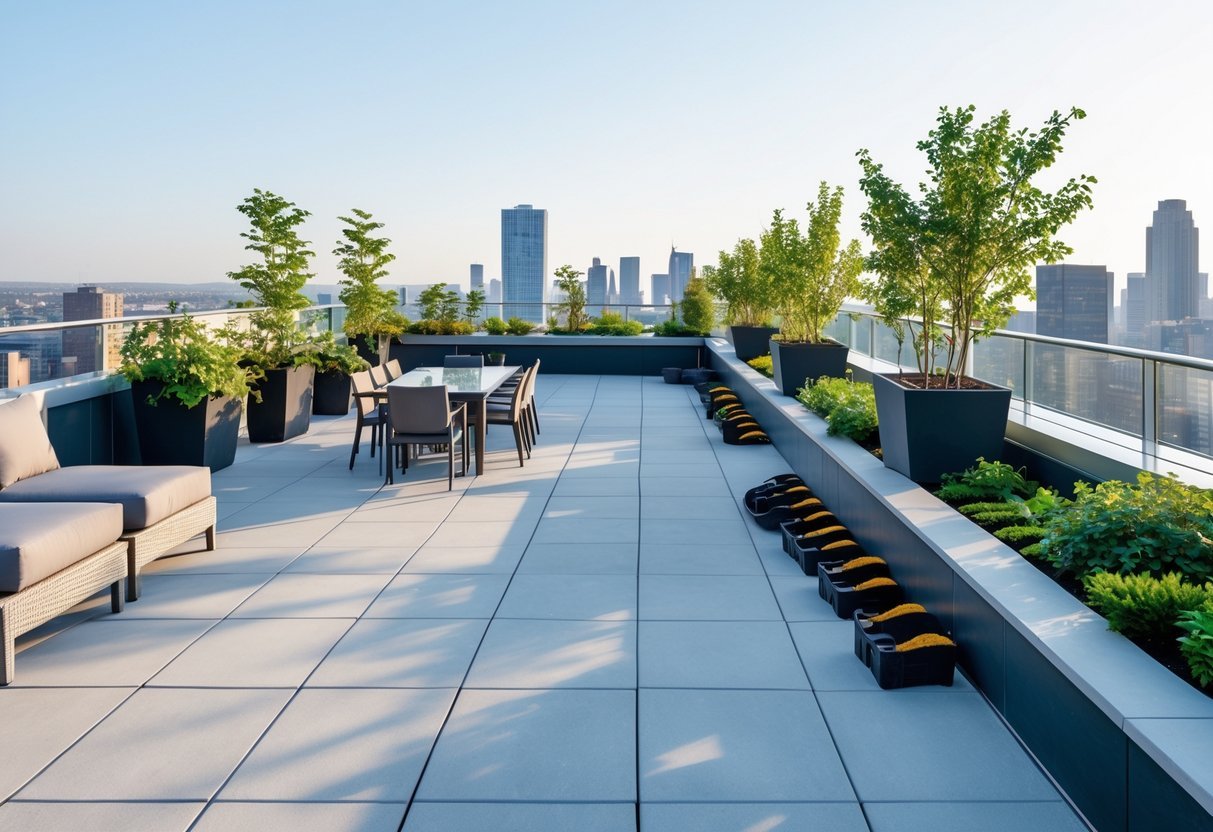
Keep your rooftop terrace safe, clean, and ready to use year-round by focusing on regular cleaning, seasonal checks, and long-term care for plants, finishes, and drainage.
Seasonal Cleaning Routines
Spring: Remove winter debris, clear gutters and scuppers, and check for moss or algae on pavers. Sweep and power-wash hard surfaces; reseal wood decking if the finish has worn thin. Inspect cushions and fabrics; wash or store them to prevent mildew.
Summer: Clean frequently to remove pollen and bird droppings. Trim plants and deadhead flowers weekly. Hose down planters and check irrigation lines for clogs or leaks. Tighten loose screws on furniture and oil any metal that shows surface rust.
Fall: Clear leaves from drains and under planters. Move sensitive plants or cover them for frost protection. Empty and store small accessories and cushions you won’t use in cold months. Check lighting fixtures and replace burnt bulbs.
Winter: Remove snow promptly to avoid excess load and ice damage. Avoid using metal shovels on decking; use plastic shovels and ice-melt safe for your surface. Leave a path for drainage and inspect parapet seals after thaw cycles.
Long-Term Care Tips
Protect finishes: Reapply sealant on wood and stone every 1–3 years depending on sun and foot traffic. For composite decking, follow manufacturer cleaning guides to avoid voiding warranties.
Check waterproofing: Inspect membrane seams, flashings, and roof-to-parapet joints twice a year. Repair small cracks or blisters immediately to prevent leaks into the building below.
Plant care: Refresh potting soil yearly and repot when roots become crowded. Use slow-release fertilizer in spring and adjust watering seasonally. Choose rot-resistant planters and lift them off the deck to allow airflow.
Furniture and systems: Service irrigation timers and pumps annually. Tighten and replace hardware on furniture before it fails. Store or winterize grills and heaters per the maker’s instructions to extend their life.