Small Backyard Garden Ideas for Maximum Yield in Limited Space
You can turn a tight backyard into a calm, useful outdoor spot that fits your lifestyle and budget. This article shows how to make the most of small space with smart layouts, compact plantings, and simple features that add beauty and function.
You’ll explore ideas like vertical planting, raised beds, water accents, pet-safe planters, lighting, and seating so you can pick what fits your space. Use these ideas to plan a small garden that feels bigger, stays manageable, and reflects your taste.
1) Vertical garden with cascading plants
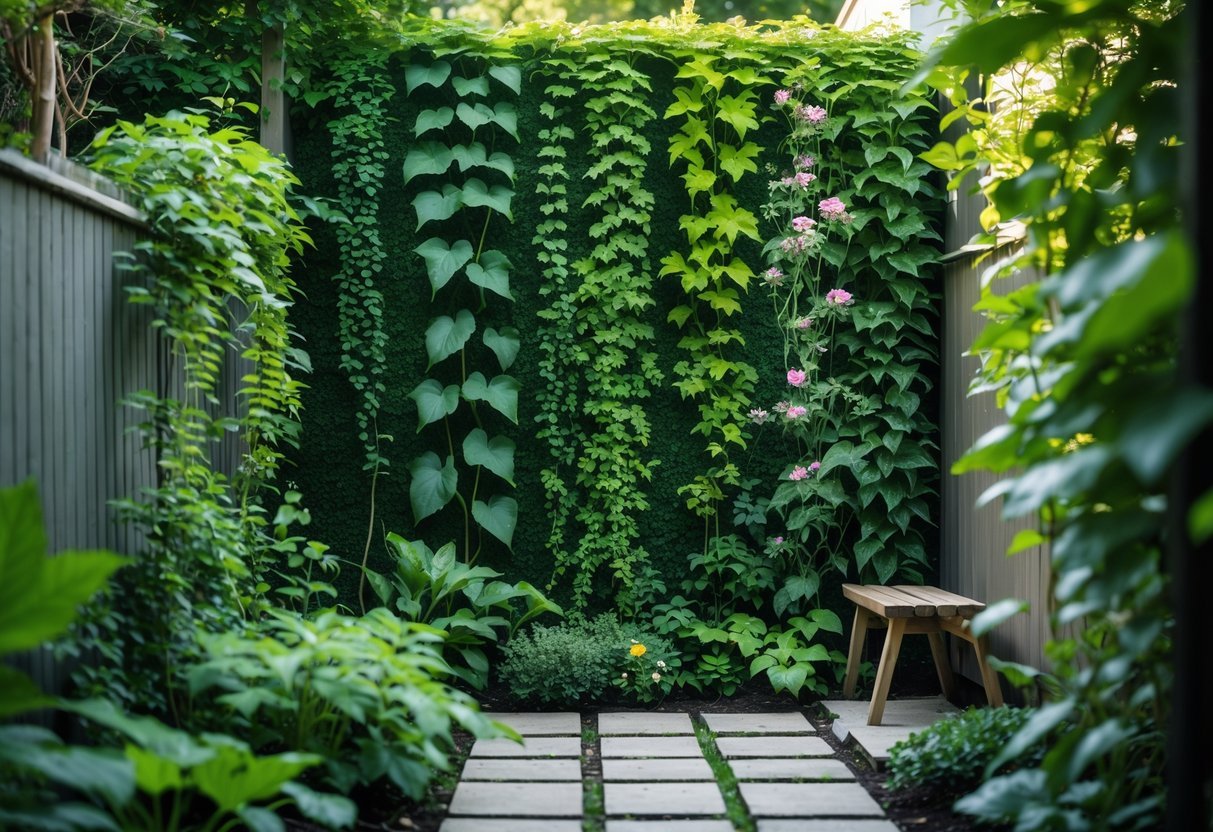
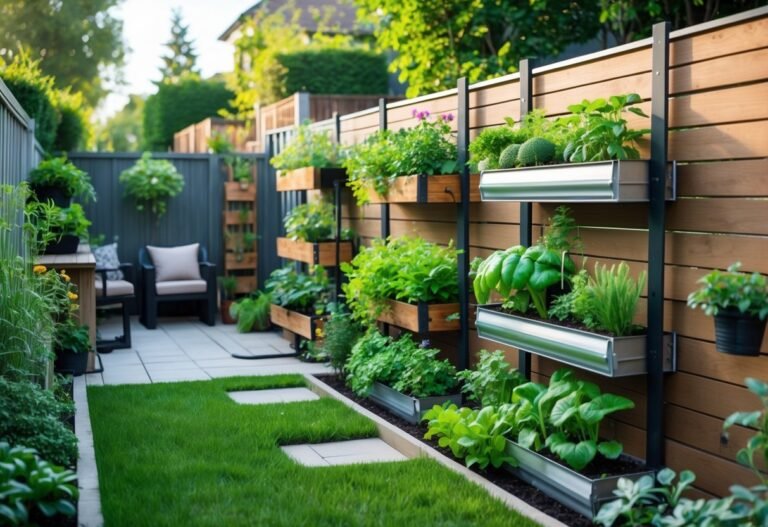
A vertical garden uses wall space so your backyard feels bigger. You can hang pockets, shelves, or wooden frames to hold cascading plants like ivy, ferns, or trailing petunias.
Place taller plants at the top so water flows down to lower pots. This setup saves ground space and creates a lush, green focal point for your yard.
2) Compact raised garden beds
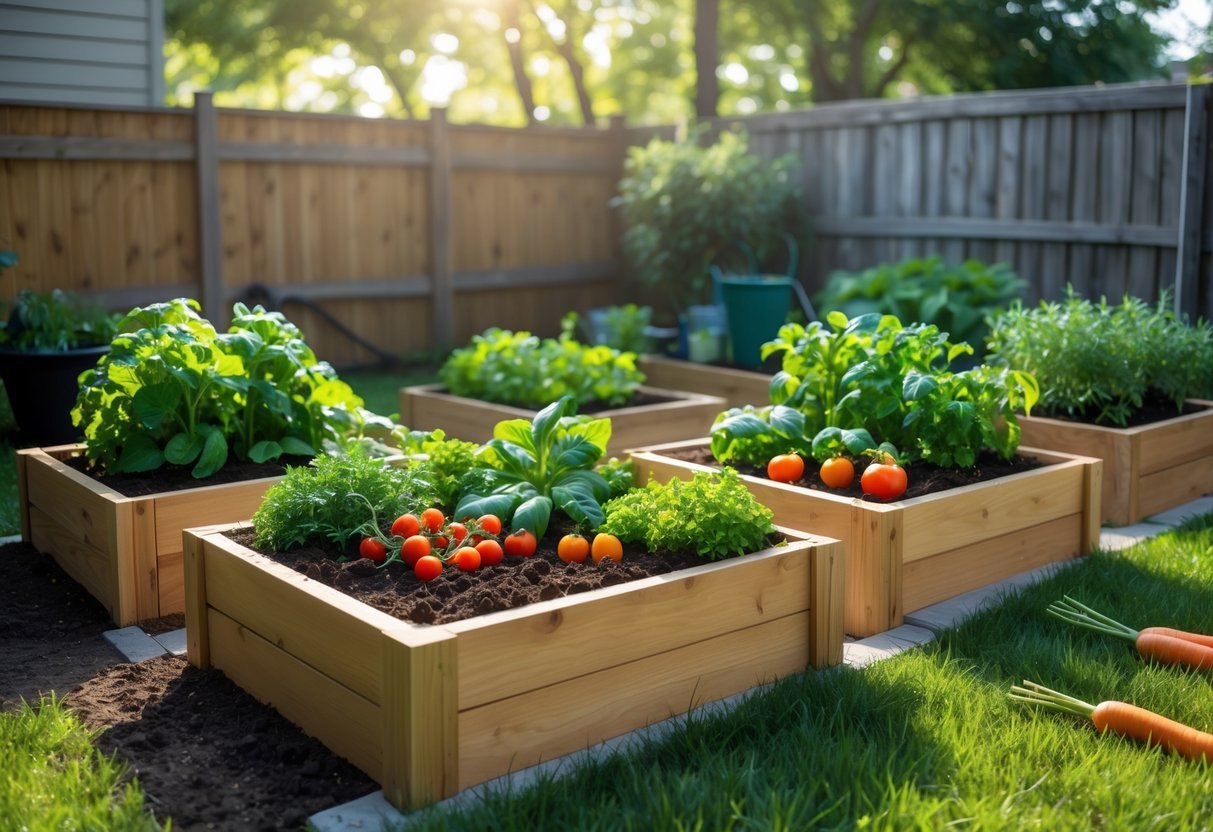
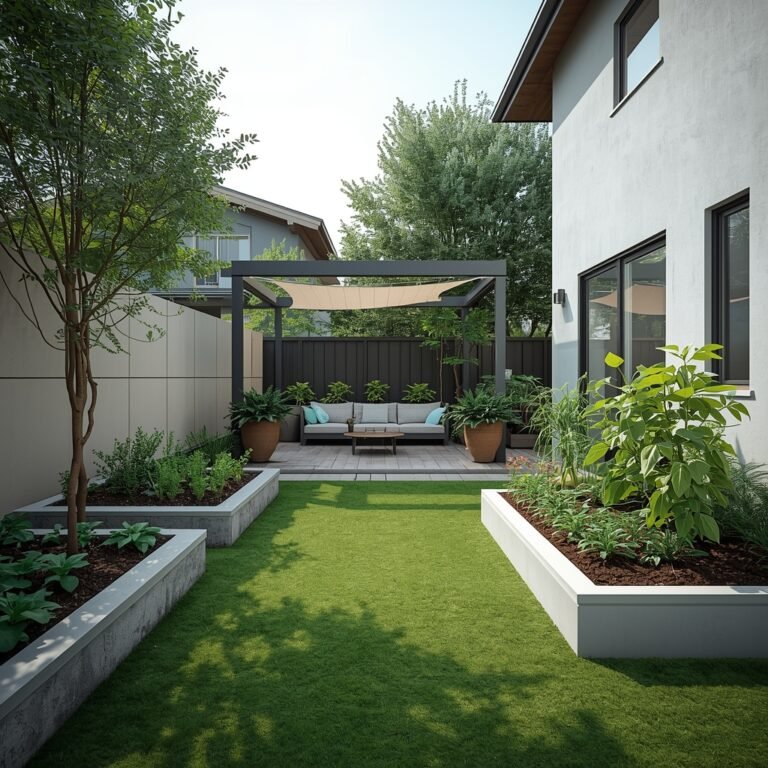
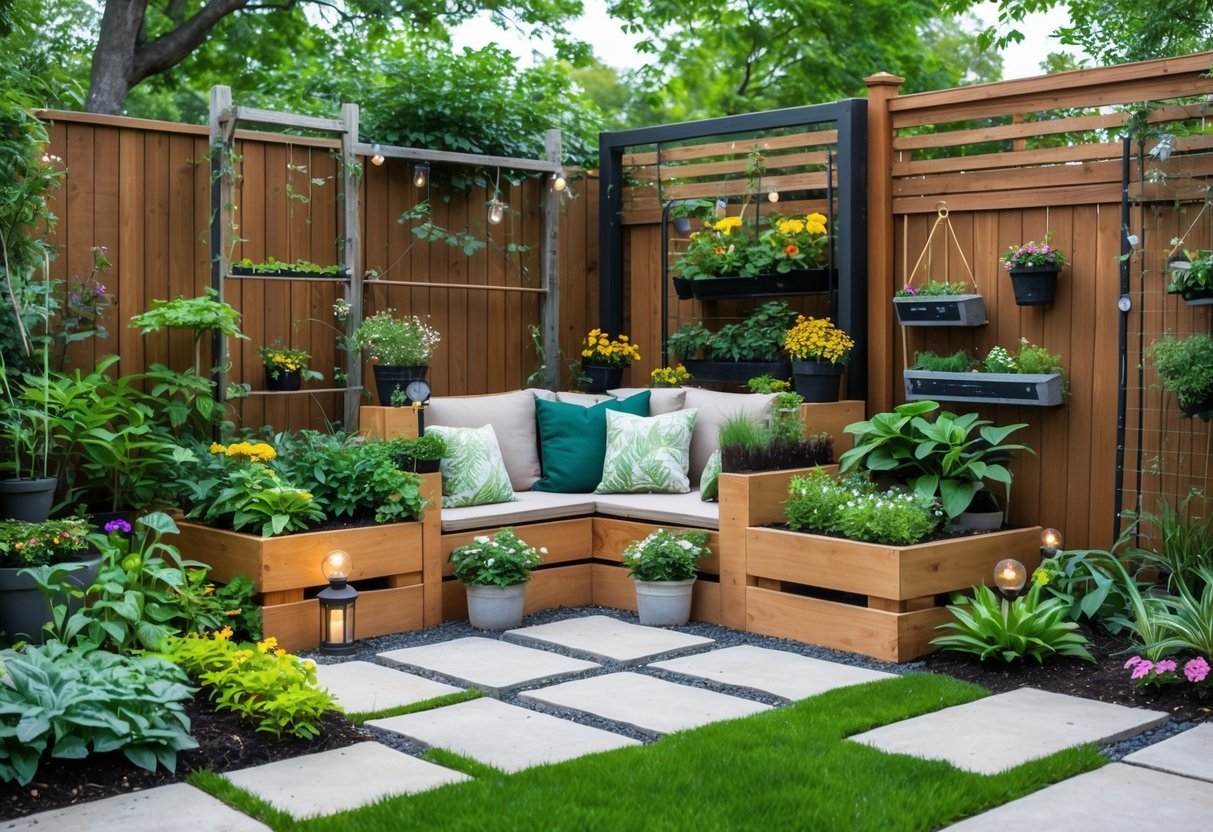
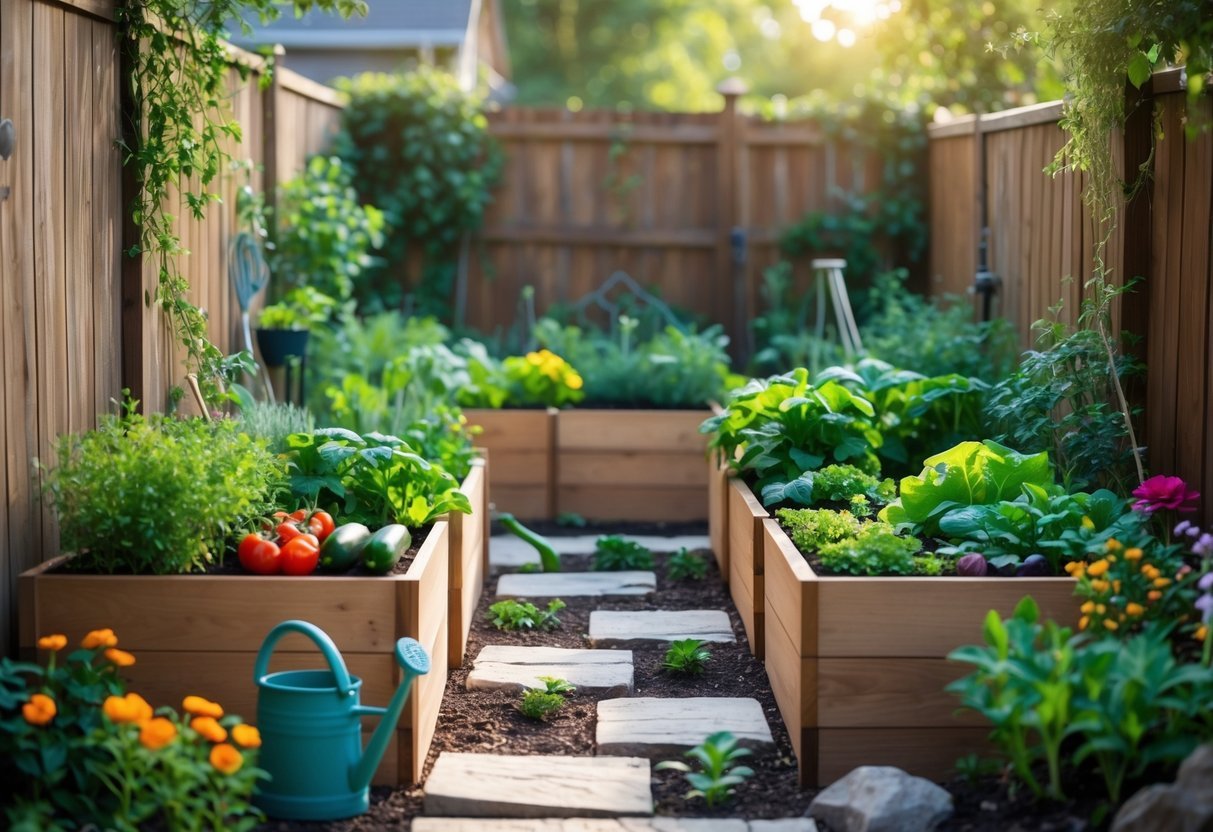
Choose raised beds to make planting easier in a small backyard. They give you control over soil, drainage, and spacing so you can grow more in less area.
Use narrow or modular beds that fit paths and corners. Stackable or tiered designs add vertical space for herbs, salad greens, and compact vegetables.
Place beds where they get sun and allow room to reach plants for watering and harvesting. You can build them from wood, metal, or recycled materials to match your yard.
3) Miniature water feature or pond
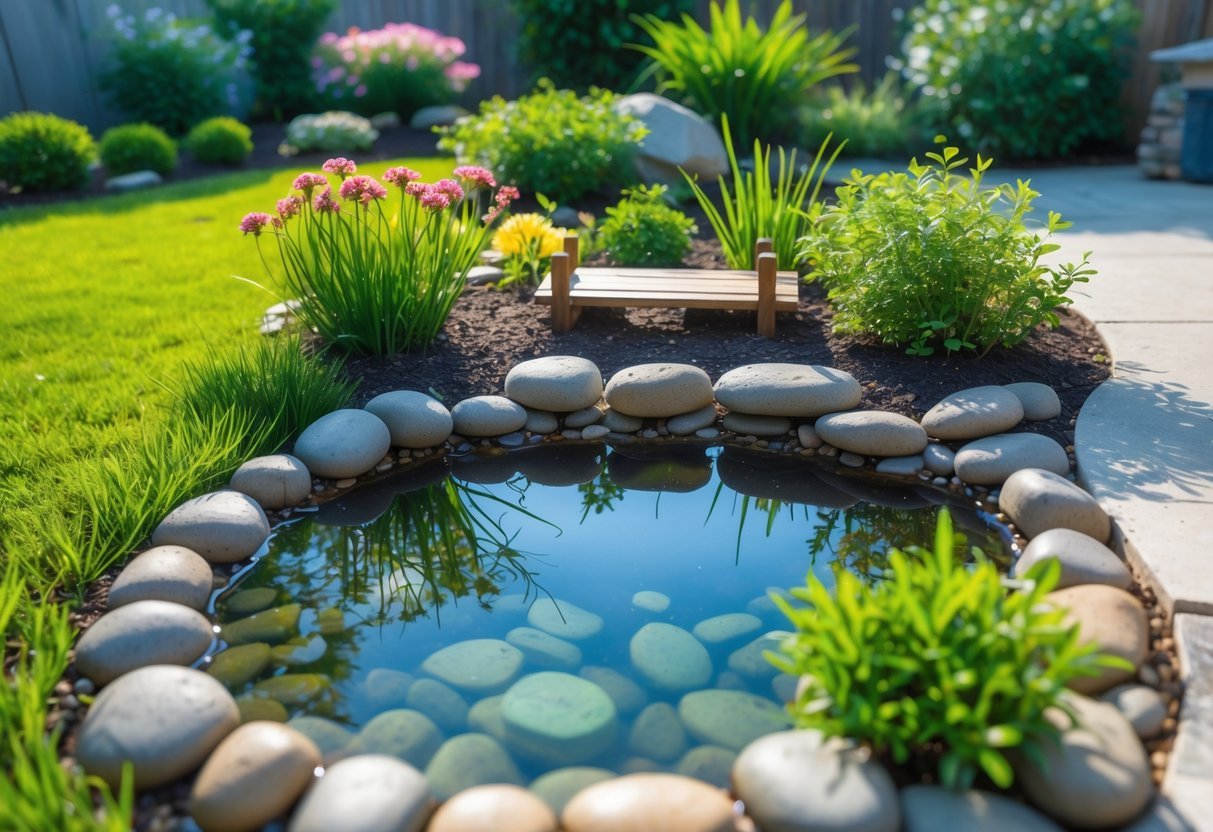
Add a small pond or container water garden to bring calm and wildlife to your yard. You can use a large pot, whiskey barrel, or preformed liner to fit tight spaces.
Include floating plants and a tiny pump for gentle movement and clearer water. Position it near seating so you can enjoy sound and sight.
Keep it simple to limit maintenance; change water seasonally and remove excess algae. A mini pond adds interest without needing a big yard.
4) Pet-friendly planter boxes
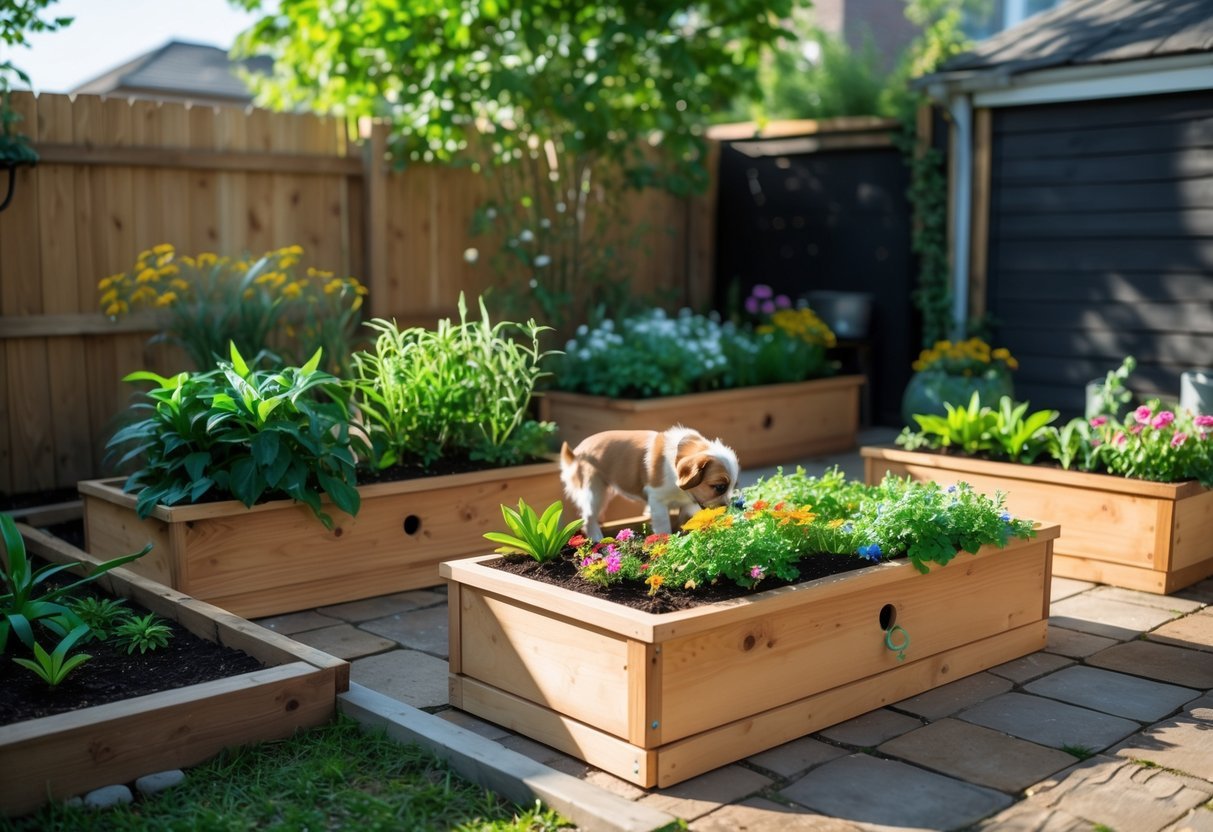
Choose non-toxic plants like basil, rosemary, and catnip so your pets stay safe. Place planter boxes out of reach or use taller raised beds to reduce nibbling.
Use sturdy, chew-proof materials and secure lids for any soil that might tempt pets. Add pathways or gravel edges so your pet can pass without trampling plants.
5) Multi-level plant shelving
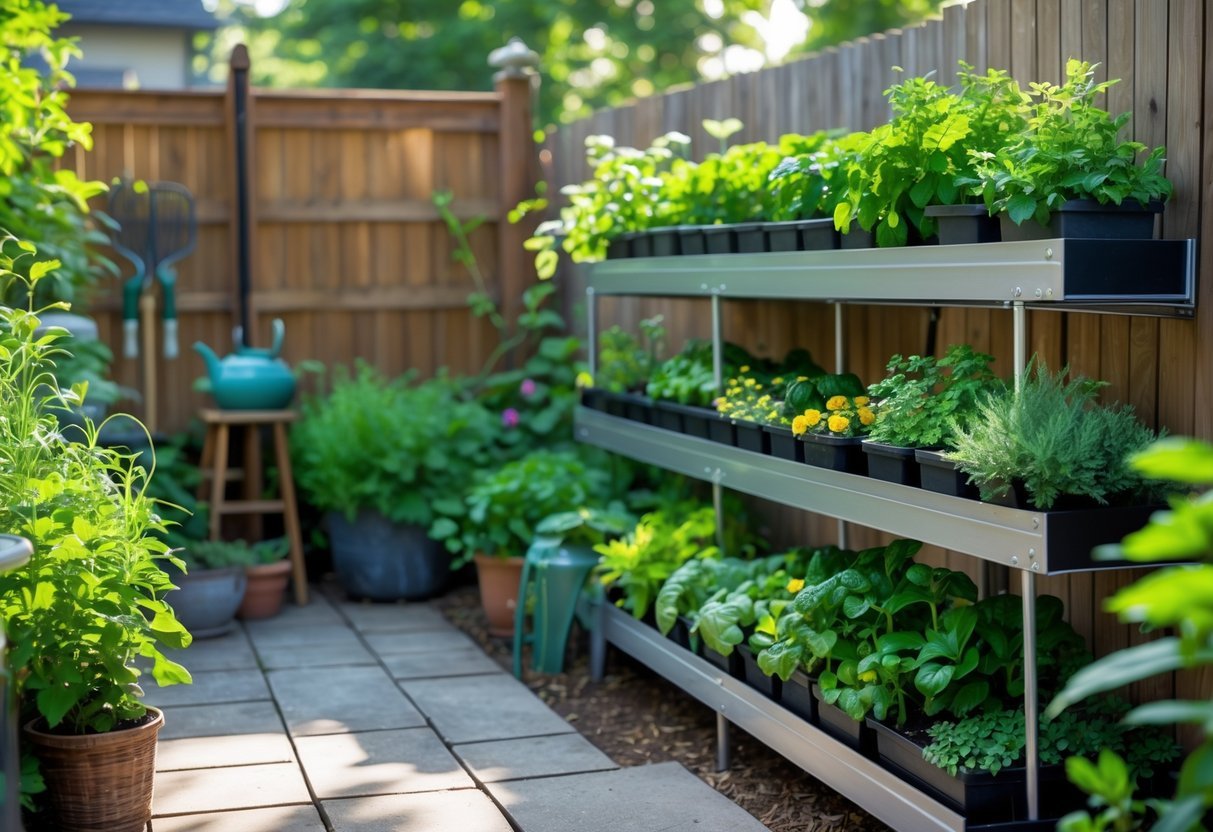
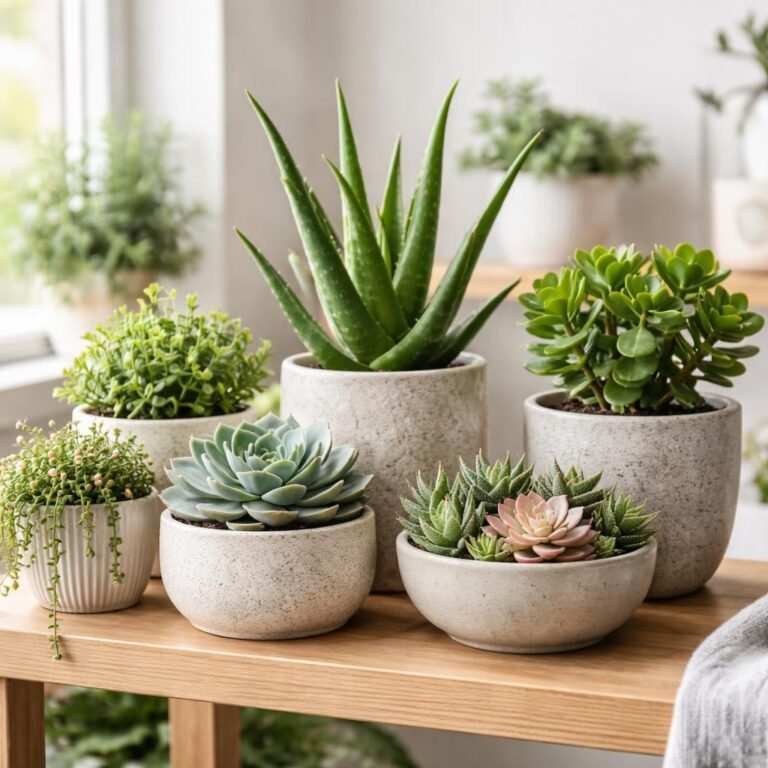
Use multi-level shelving to add height without taking much ground space. You can fit herbs, succulents, and trailing plants on different tiers for easy care.
Choose weatherproof materials like treated wood or metal so shelves last outdoors. Place taller plants on top tiers for light and smaller pots below to create a layered look.
Group plants by water needs to avoid over- or under-watering. Shelves also make watering and pruning quicker, saving you time.
6) Herb garden in repurposed containers
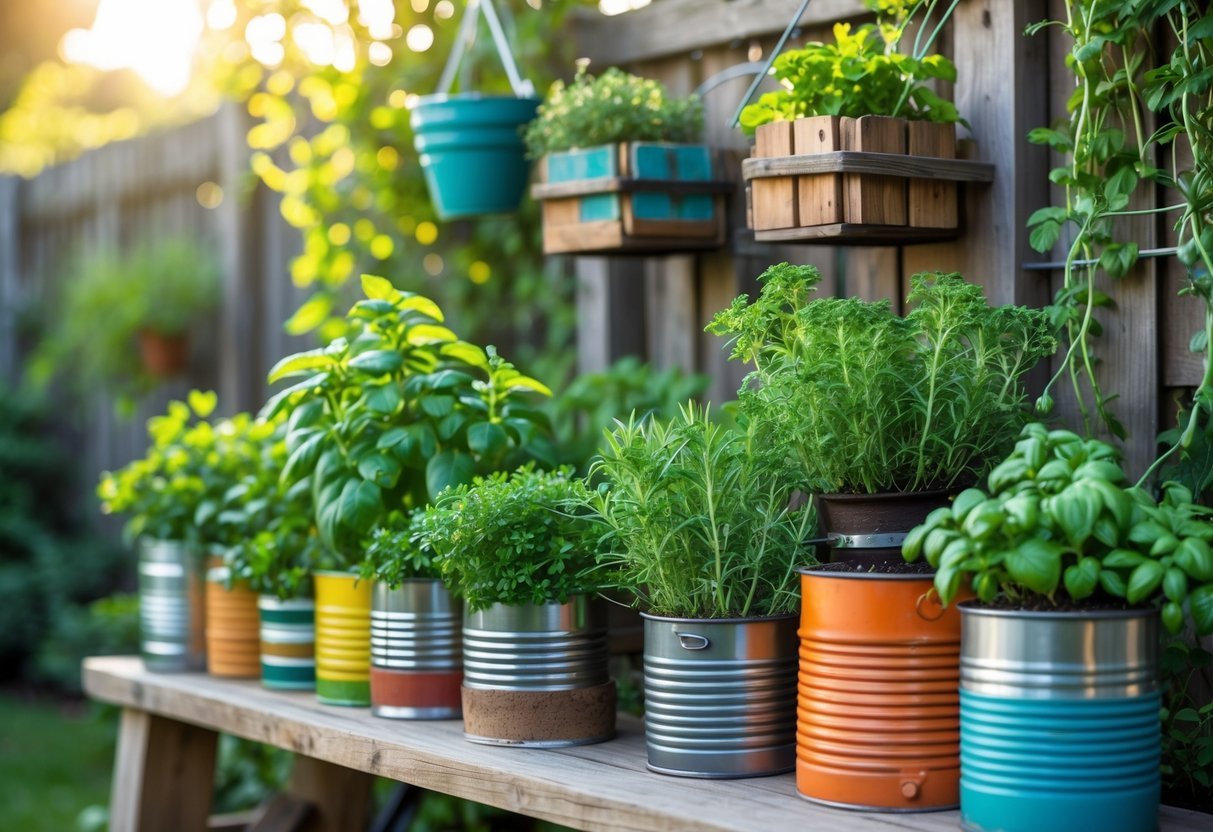
You can turn old tins, mason jars, or wooden crates into neat herb planters that fit small yards. Use containers with drainage holes and a lightweight potting mix for healthy roots.
Place pots where herbs get 4–6 hours of sun, and group plants with similar water needs. Rotate containers seasonally and harvest regularly to keep herbs productive and compact.
7) Colorful flowering wall
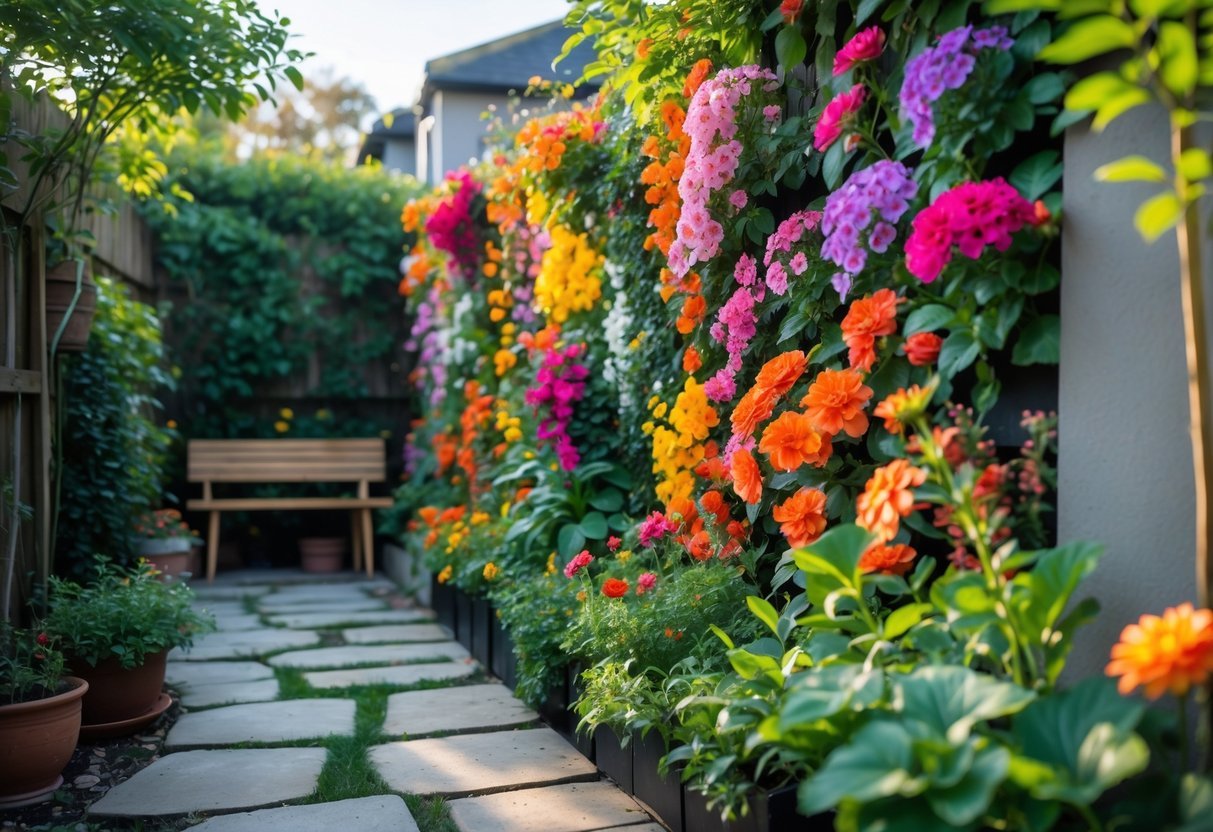
You can turn a plain fence or wall into a bright flower display that saves ground space. Use pockets, hanging pots, or a trellis to hold mixed annuals and perennials.
Choose plants with staggered bloom times so color lasts through the season. Include trailing plants to soften edges and compact varieties to fit small pockets.
Mount the system at a reachable height for watering and deadheading. This keeps plants healthy and makes upkeep quick.
8) String lights for ambiance
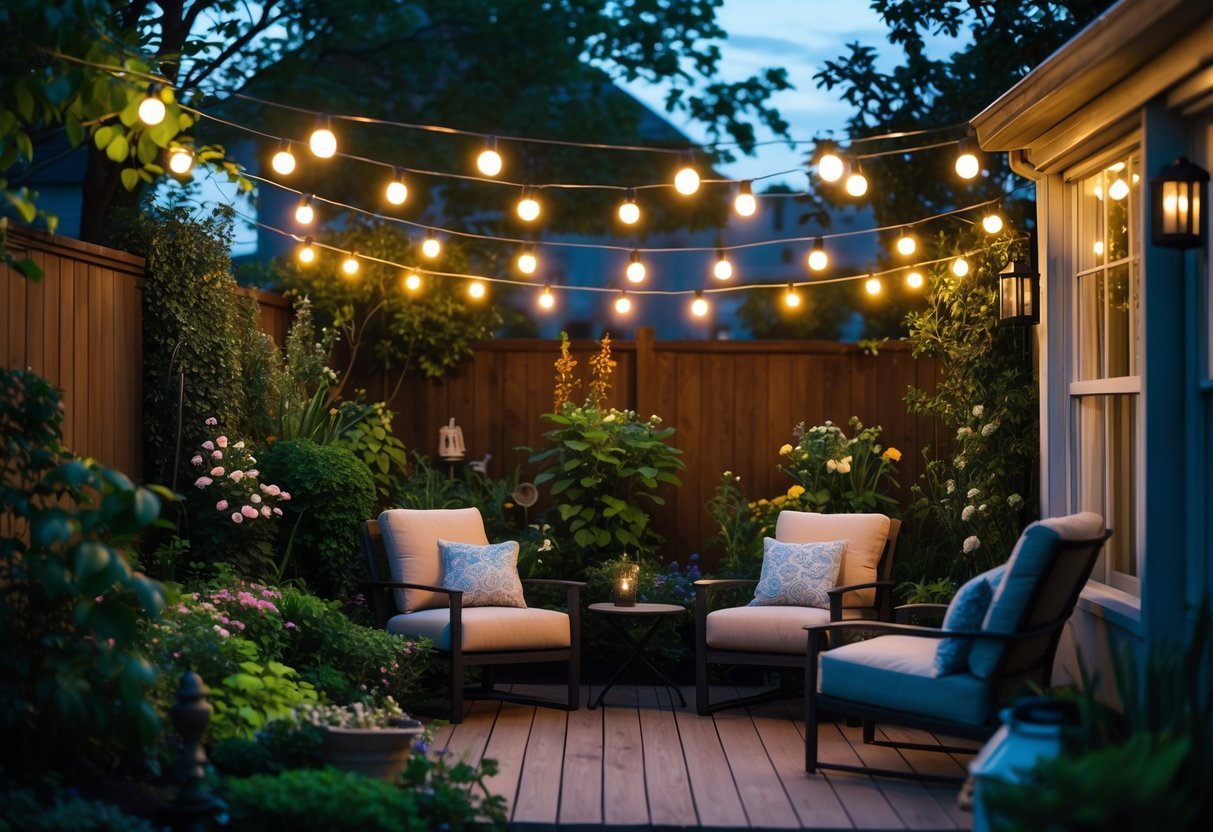
String lights add soft, even light that makes small yards feel cozy and usable after dark. You can drape them overhead, wrap them around railings, or string them along a fence for instant warmth.
Choose LED bulbs for lower energy use and longer life. Position lights to avoid glare and leave clear paths for safe walking.
9) Small patio with seating nook
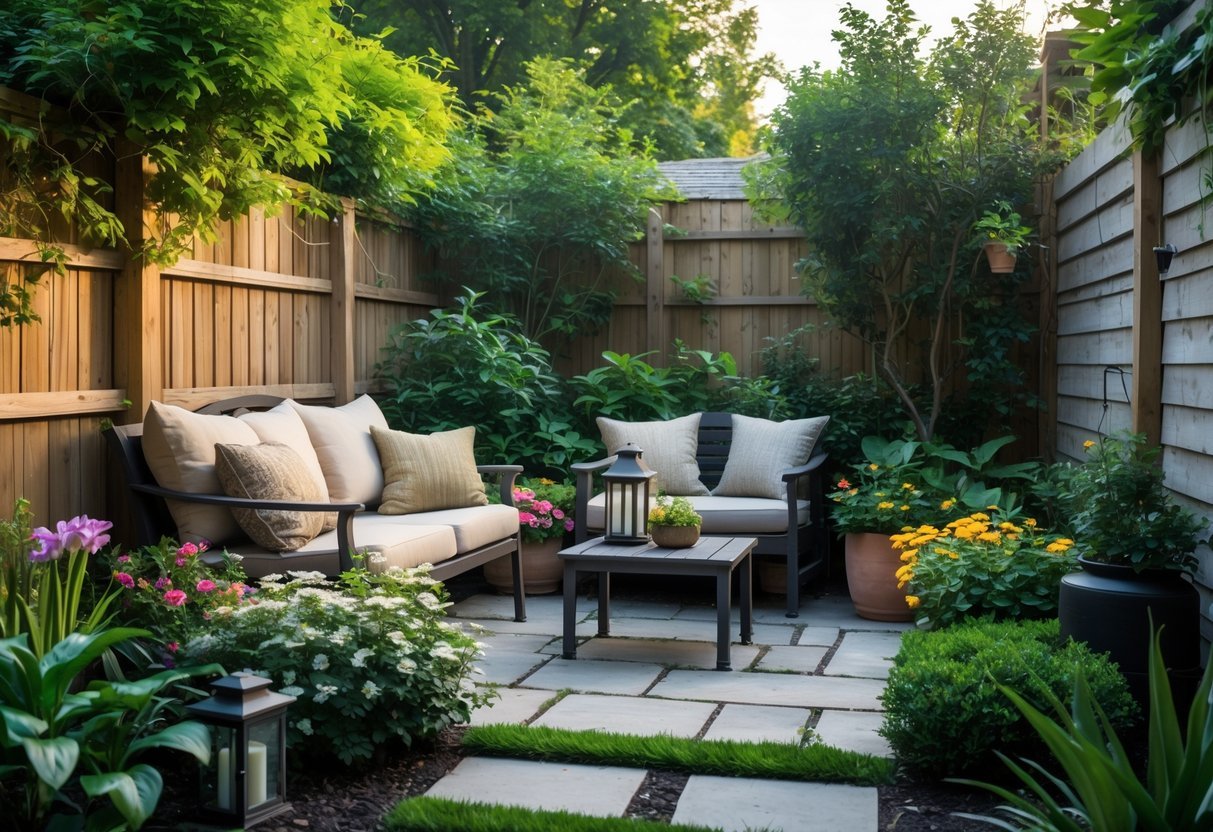
Create a cozy seating nook on your small patio by placing a compact bench or two foldable chairs against a wall. Add weatherproof cushions and a small side table for drinks or plants.
Use vertical planters or hanging pots to save floor space and add greenery. Soft string lights or a wall sconce make the nook usable after dark.
Keep pathways clear so the area feels open and easy to move through. Choose durable, low-maintenance materials for long-lasting comfort.
10) Decorative gravel pathways
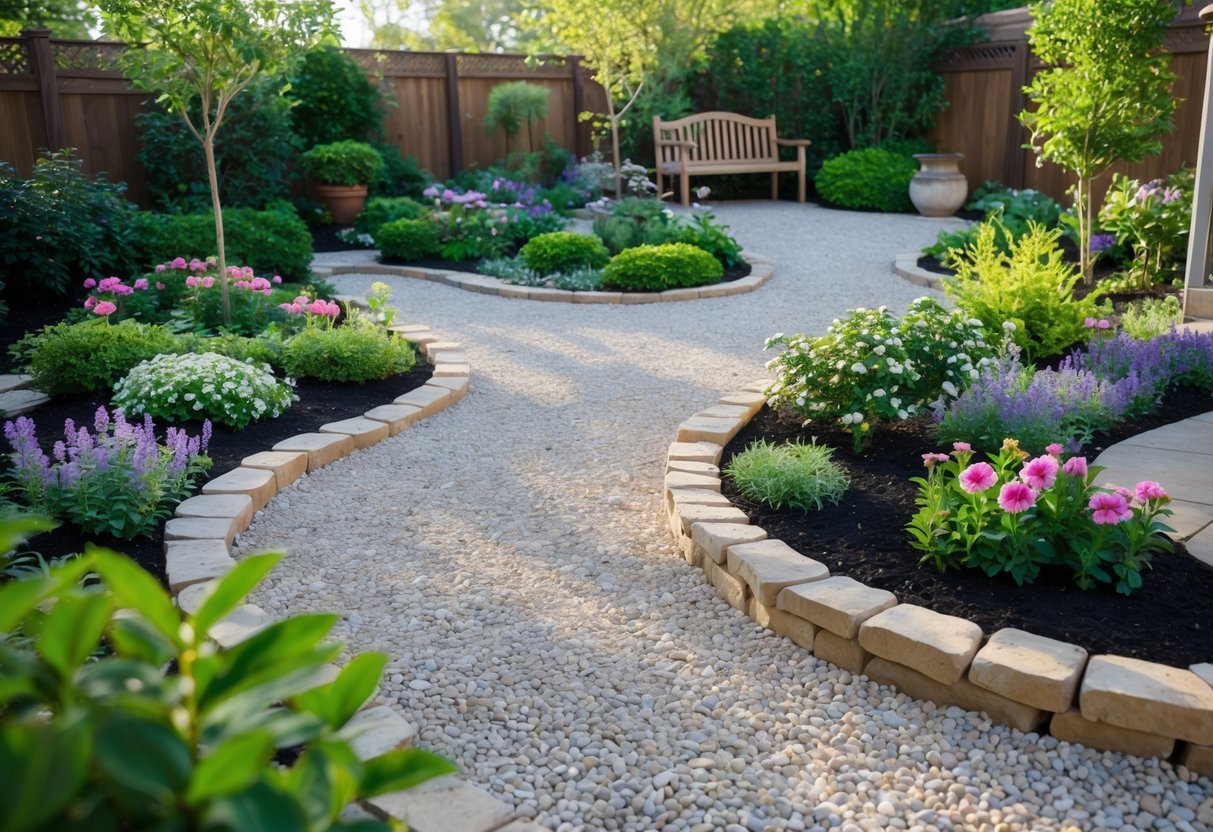
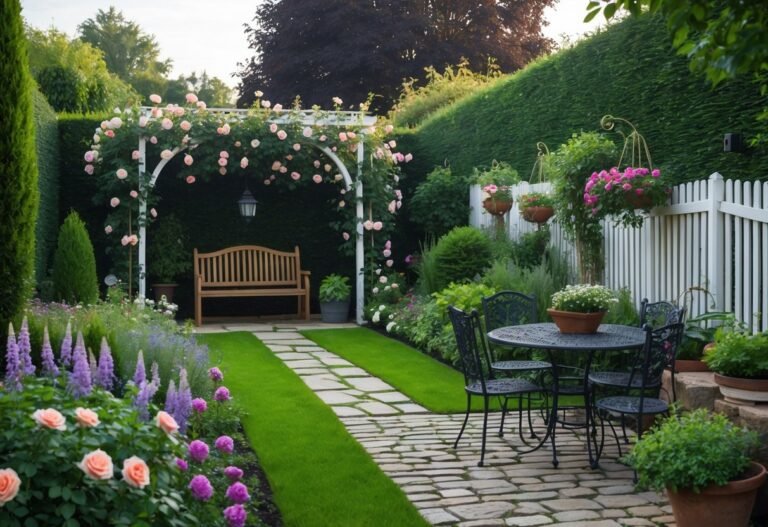
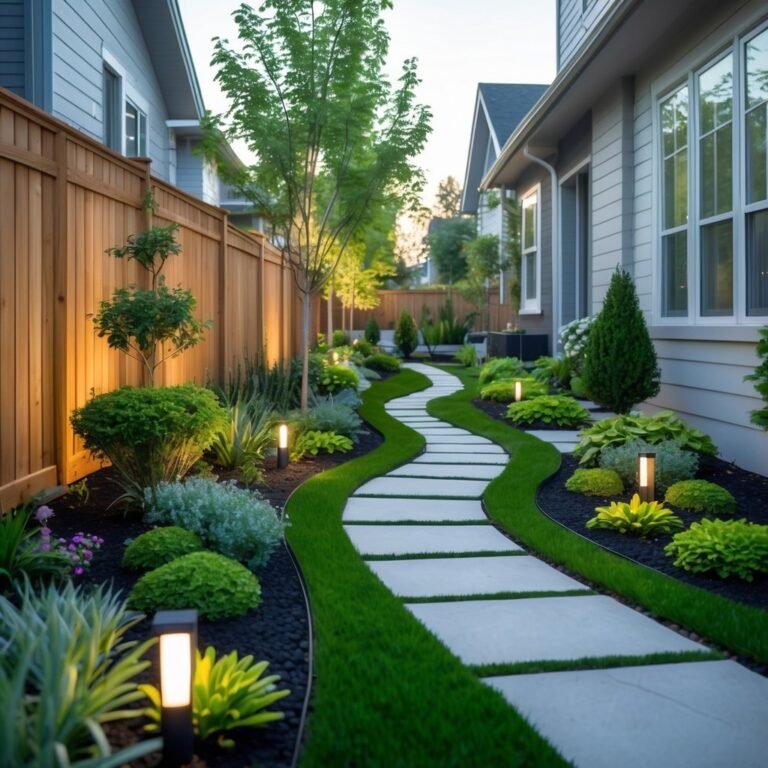
You can add a gravel path to guide movement and shape small spaces without crowding them. Gravel stays low‑maintenance and drains well, so you won’t deal with puddles.
Use edging like metal, wood, or stone to keep gravel contained and neat. Mix gravel sizes or colors for visual interest and pair paths with potted plants or groundcover to soften edges.
Planning Your Small Backyard Garden
Decide what you want to grow, where plants will get light, and how you’ll use every square foot. Measure your space and note sun, soil, and access points before buying plants or materials.
Assessing Sunlight and Soil
Track sunlight for a full week. Note hours of direct sun in each area: full sun (6+ hours), partial sun (3–6 hours), and shade (less than 3 hours). Use a simple chart or phone photos taken at the same times each day to map patterns.
Test soil texture by digging a small hole and feeling the soil. Sandy soils drain fast; clay holds water. Take a pH test with a kit or send a sample to a local extension office for accurate results.
Amend soil based on findings. Add compost to improve texture and nutrients. For heavy clay, mix in coarse sand and aged compost. For sandy soil, add compost and peat to increase water retention. Mulch 2–3 inches around plants to conserve moisture and reduce weeds.
Maximizing Limited Space
Use vertical surfaces: trellises, wall planters, and hanging baskets free floor space. Place tall structures on the north side so they don’t cast shade on smaller plants.
Choose multi-use items like bench planters or a raised bed with storage underneath. Arrange containers in clusters to create microclimates that retain humidity and reduce watering needs.
Follow this simple layout checklist:
- Path width: at least 24 inches for access.
- Raised bed depth: 12–18 inches for vegetables.
- Container size: minimum 3–5 gallons for most herbs; larger for tomatoes and peppers.
Think seasonally. Swap cool-season crops for warm-season ones to keep beds productive year-round. Group plants with similar water and light needs together to simplify care.
Choosing the Right Plants
Select compact or dwarf varieties labeled “patio,” “compact,” or “bush.” These take up less room and still produce well. For annuals, pick high-yielding, space-efficient crops like cherry tomatoes, bush beans, and leaf lettuce.
Match plants to your light map. Put sun-loving peppers and tomatoes where you recorded 6+ hours. Place hostas or ferns in consistently shady spots. Use herbs like rosemary and thyme in sunny containers near the kitchen for easy harvest.
Prioritize perennials and small shrubs to reduce replanting. Add at least one pollinator plant—lavender or bee balm—to attract beneficial insects. Keep a planting calendar and rotate crops in containers and beds to prevent disease buildup.
Design Principles for Small Gardens
Use height, focal points, and dual-purpose elements to save space and boost function. Choose plants and fixtures that work together so your garden feels larger, more useful, and easier to maintain.
Incorporating Vertical Gardening
Think upward instead of outward. Install wall-mounted planters, trellises, or a sturdy shelving unit to hold herbs, trailing plants, and compact vegetables. Use 12–18 inch deep containers for most herbs and annuals; deeper boxes for small shrubs or root crops.
Mix plant heights and textures on the vertical plane to hide walls and add depth. Alternate a few flowering pots with green foliage to create contrast. Secure heavy items to studs or use anchors rated for outdoor use.
You can also use a living screen for privacy. Fast-growing climbers like clematis or a trained honeysuckle on a trellis will cover a small wall in a season. Watering needs change with containers, so add drip irrigation or self-watering inserts to keep maintenance low.
Creating Focal Points
Pick one clear focal point to draw the eye and make the space feel larger. That could be a small water feature, a bold container, a sculptural chair, or a single specimen tree in a 24–30 inch pot.
Place the focal point at the visual center or at the end of a sight line to lead movement through the garden. Use contrasting color, light, or texture so the focal point stands out against the background plantings.
Balance the focal point with simple surrounding planting. Avoid too many competing elements; keep nearby beds low and uncluttered so the main feature remains prominent. Add a small spotlight or uplight for evening emphasis.
Utilizing Multi-Functional Features
Choose furniture and structures that serve more than one purpose. A bench with built-in storage, raised beds with integrated seating edges, or a fold-down table against a fence saves floor space and adds utility.
Combine functions in planters: use wide raised beds that act as a border and a seat, or a planter box that conceals compost bins. For lighting, pick solar fixtures that also act as garden accents.
Think seasonally. Move lightweight containers to create flexible zones: dining, planting, or lounging. This lets you adapt the space for guests or tasks without permanent changes.
Frequently Asked Questions
This section gives clear, practical steps you can use right away. It covers cheap materials, simple layouts, space-saving plants, no-grass solutions, easy care methods, and ways to fit seating and dining into a tight yard.
How can you landscape a small backyard on a budget?
Use reusable and low-cost materials like cinder blocks, pallets, and gravel. Build a compact raised bed from reclaimed wood and place it along a wall to save space.
Choose low-cost plants such as herbs, native perennials, and seedlings from a local swap. Plant vertically on a trellis or wall-mounted planters to reduce the number of pots you need.
Limit hardscaping to one small focal path or patio area made from pavers set in sand. Add mulch to suppress weeds and cut maintenance costs over time.
What are some simple landscaping ideas for small backyards?
Create a vertical garden with cascading plants on an unused wall. That adds green without taking floor space.
Install multi-level plant shelving for pots and herbs to create height and visual interest. Use a compact raised garden bed for vegetables and flowers to keep plants organized.
Add a miniature water feature or pond in a corner for sound and a focal point. Keep the footprint small and use a preformed liner to save time.
What plants are ideal for limited space in a small backyard garden?
Pick compact, slow-growing shrubs like dwarf boxwood and compact hydrangea. They give structure without crowding.
Use herbs and salad greens in container stacks or vertical planters. Tomatoes, peppers, and bush beans work well in compact raised beds.
Choose cascading plants such as nasturtiums or trailing petunias for vertical gardens. They soften walls and spill over shelves or planters.
How can you create an attractive small backyard with no grass?
Cover the ground with gravel, decomposed granite, or pea stone for a low-cost, low-maintenance base. Add stepping stones or a small paver patio for seating.
Install raised planter boxes and multi-level shelving to add plants and color. Place a few potted trees or large planters to create shade and privacy.
Include a small water feature or decorative container fountain to add interest without a lawn. Use outdoor rug and compact furniture to define a seating area.
What are low-maintenance landscaping techniques for small backyards?
Group plants with similar water needs together to simplify irrigation. Use drip irrigation or soaker hoses on a timer to reduce watering time.
Apply 2–3 inches of mulch in beds and containers to retain moisture and cut weeds. Choose native and drought-tolerant plants to reduce pruning and feeding.
Keep plant choices compact and prune lightly each season instead of heavy trimming. Use durable materials for paths and furniture to avoid frequent repairs.
What design strategies can maximize space for entertaining in a small backyard?
Create one clear focal area for seating, like a small patio or deck that fits a table for four. Position seating against a wall or raised bed to free up central space.
Use foldable or stackable furniture you can stow when not in use. Add built-in bench seating with storage under the seat to save space and hide cushions.
Incorporate vertical elements—shelving, trellises, and hanging planters—to keep the floor clear. A mini water feature or corner planter can provide ambiance without blocking movement.