Wildflower Garden Front Yard Design Ideas for Low-Maintenance, Pollinator-Friendly Landscapes
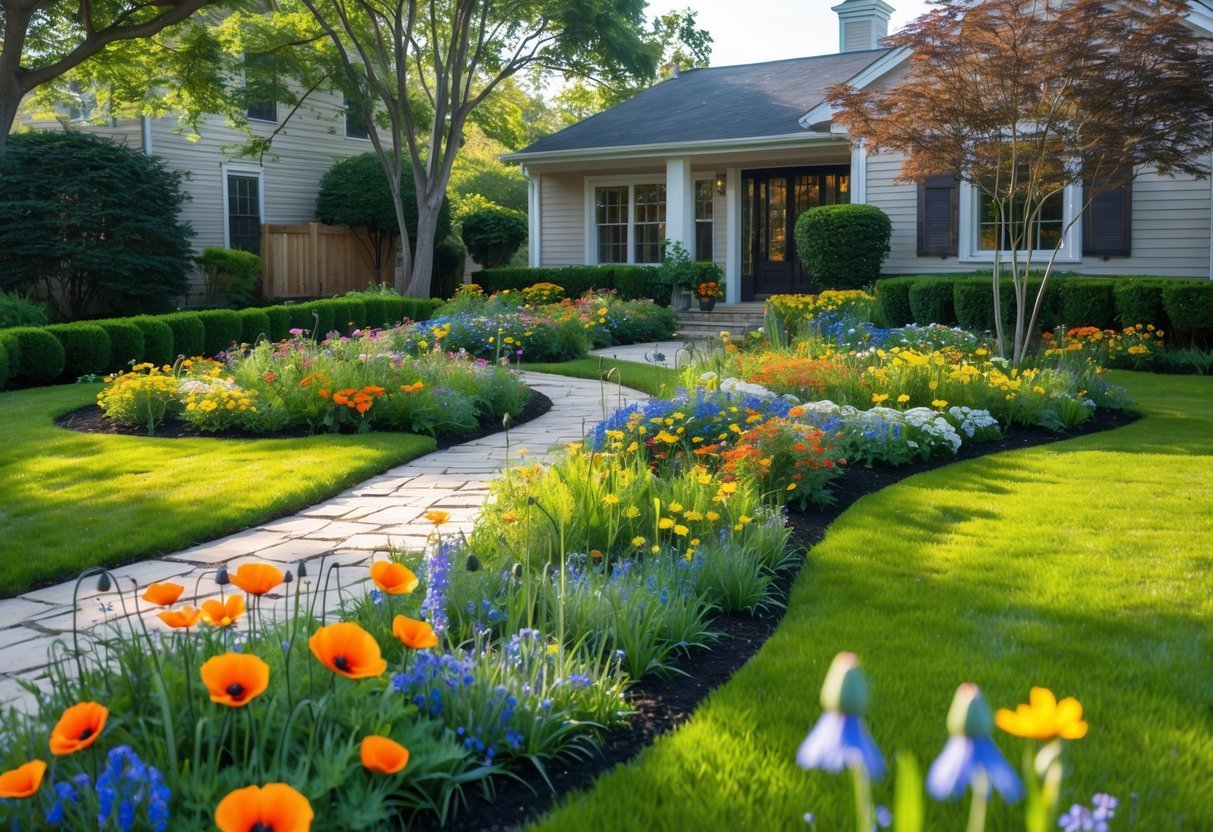
You can turn your front yard into a bright, low-maintenance wildflower display that welcomes guests and helps bees and butterflies thrive. Choose a mix of native, easy-care wildflowers and place them in informal drifts or defined beds to create a natural look that still feels tidy.
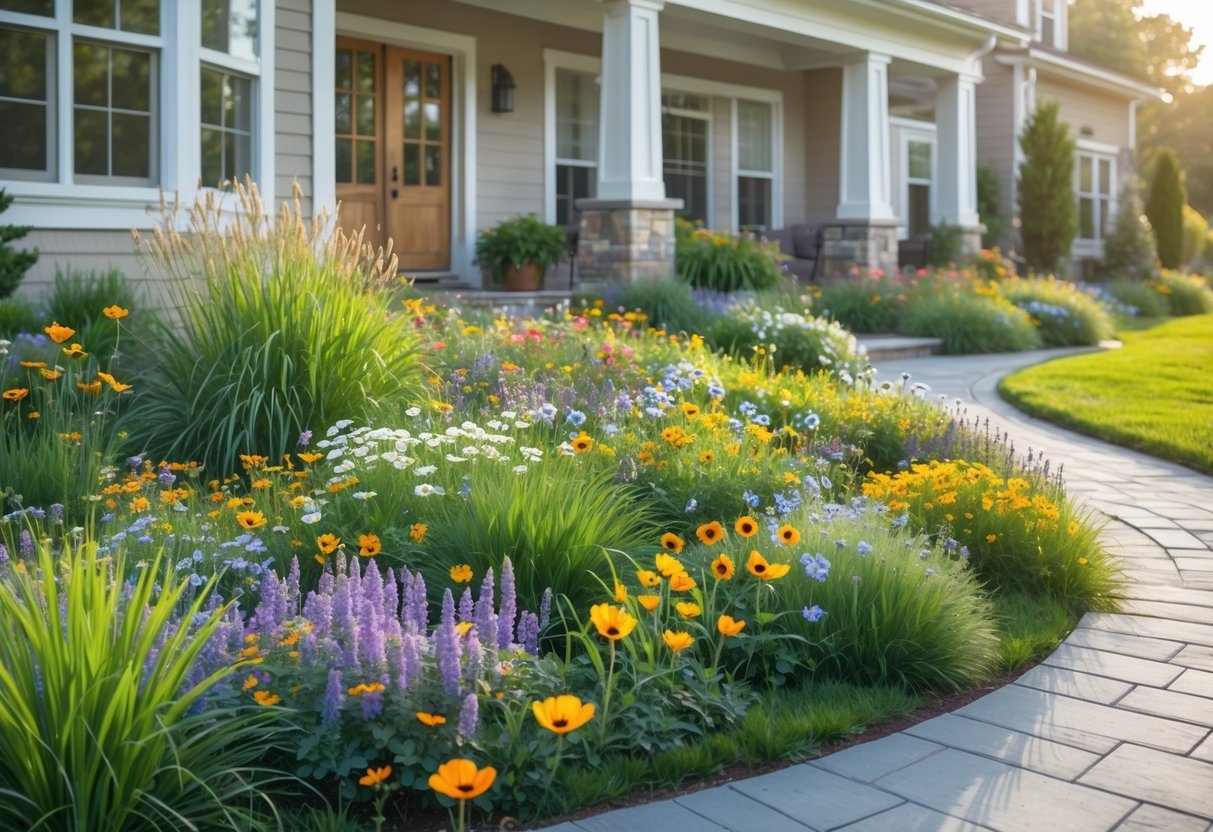
Start by matching flower choices to your soil and sun, then use color blocks, paths, and edging to guide the eye and protect walking areas. Small design moves—like a pop of height near the house or a repeated color at the entry—make a big curb-appeal impact without extra work.
Key Takeaways
- Plan plant choices around your site conditions to ensure success.
- Use simple layout tricks to balance wildness and neatness.
- Pick native, low-care flowers to attract pollinators and cut maintenance.
Planning Your Wildflower Garden Front Yard
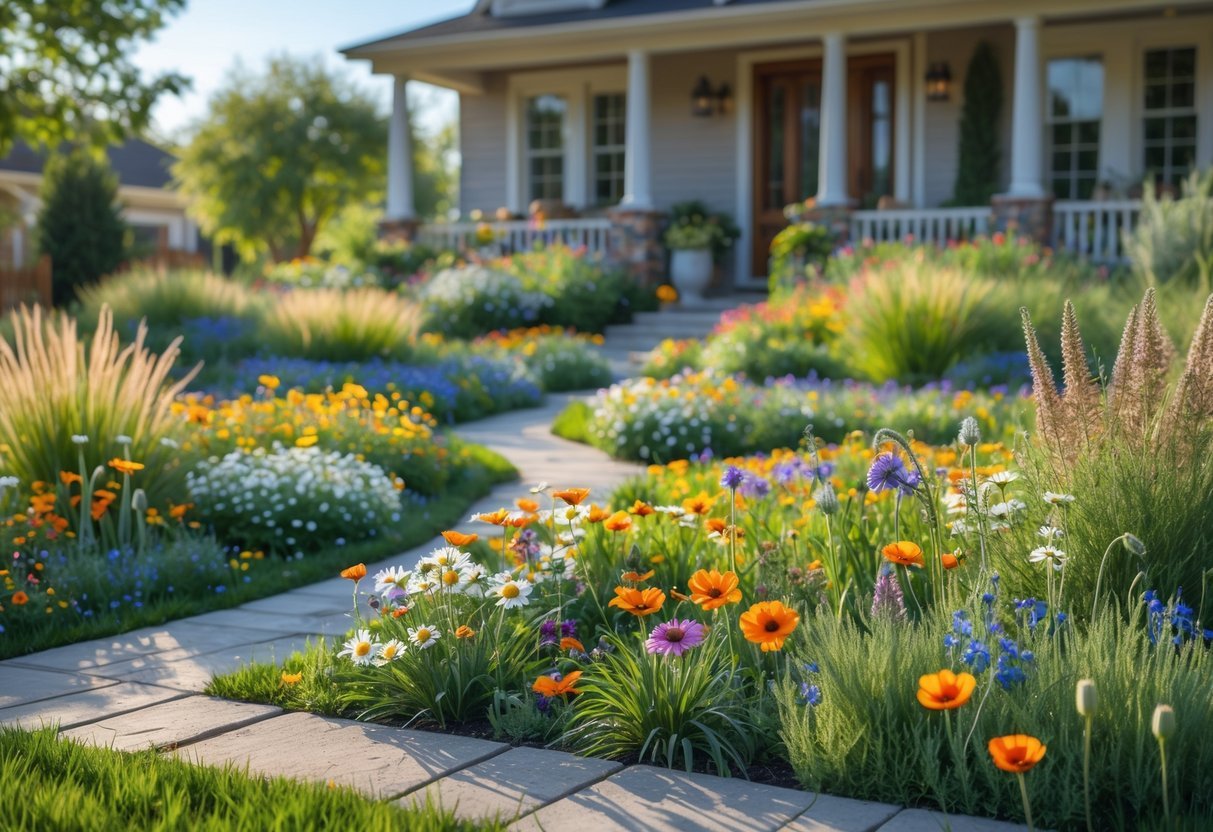
Decide which flowers fit your climate, how much sun and soil type your yard has, and a layout that matches paths, driveways, and sightlines. Focus on plants that bloom at different times, suit your soil pH and drainage, and keep edges neat where neighbors see them.
Choosing the Right Wildflower Varieties
Pick native species first. Native wildflowers use less water, resist local pests, and attract bees and butterflies. Check local extension services or seed mixes labeled for your state or region.
Aim for a mix of bloom times. Include early bulbs, spring annuals, summer perennials, and late-season asters or goldenrods. This gives color from spring through fall and steady nectar for pollinators.
Match plant height to placement. Put taller plants 2–4 feet back from walkways and shorter ones near the curb. Note mature heights on seed packets and plant labels to avoid blocking views.
Consider maintenance needs. Low-maintenance choices include coneflowers, black-eyed Susans, and native grasses. If you want annual bursts, add foxglove or poppies, but plan to reseed or replace them yearly.
Assessing Sunlight and Soil Conditions
Map sunlight across your front yard. Spend one full day noting sun and shade patterns every two hours. Full sun means six or more hours; partial sun is 3–6 hours; shade is less than 3.
Test your soil texture and drainage. Do a simple jar test: shake soil with water, let it settle, and read the layers. Sandy soils drain fast; clay holds water. Adjust with compost for clay and organic matter for sand.
Measure soil pH. Use a basic kit to see if soil is acidic, neutral, or alkaline. Most wildflowers prefer neutral to slightly acidic soil (pH 6.0–7.0). Amend with lime for acidity or sulfur for high pH only if needed.
Check for compaction and root barriers. Press a screwdriver into the ground; if it’s hard to push, aerate or double-dig beds. Avoid planting too close to tree roots where competition limits water.
Front Yard Wildflower Garden Layouts
Choose a design that fits how people use the space. For a linear strip by the sidewalk, plant shorter species in front and layer taller ones behind. Keep a 12–18 inch clear edge for mowing.
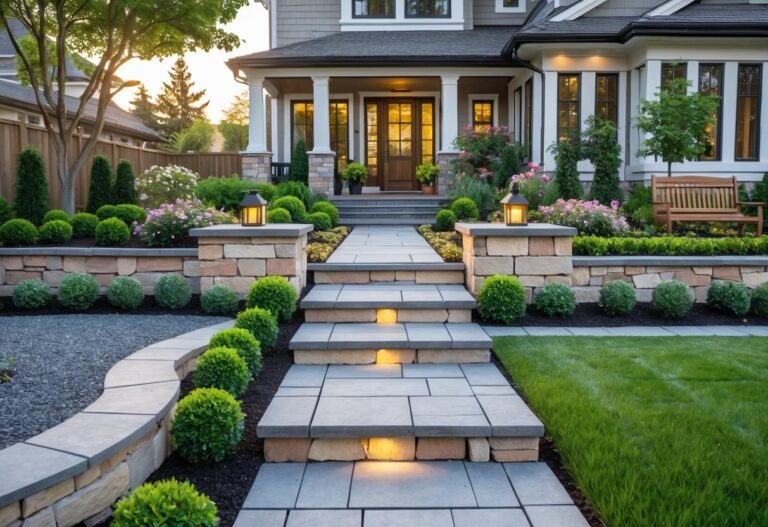
Use island beds to break up lawn areas. Shape islands with gentle curves to soften the hard lines of driveways. Include a focal plant or small native shrub for structure and winter interest.
Try a meadow-style patch for a natural look. Sow a diverse seed mix in a 6–10 foot area and mow once a year to renew growth. Mark the area so visitors know it’s intentional.
Add paths and access points. Gravel or mulch paths let you reach plants for weeding and deadheading. Space paths every 6–10 feet in larger beds so you can tend plants without trampling them.
Design Ideas for Wildflower Garden Front Yards
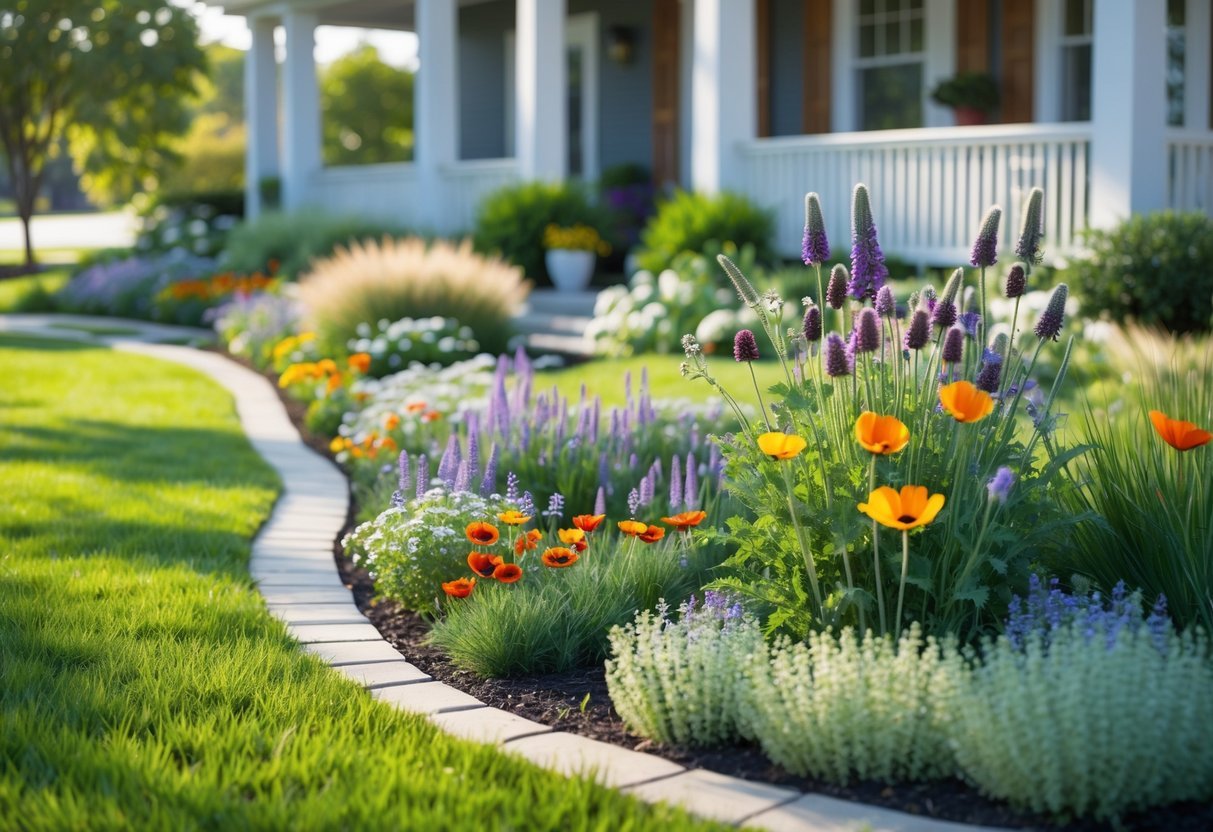
Focus on plant placement, maintenance needs, and how people will use the space. Choose durable native species, plan low edges, and add simple paths so the yard looks tidy and stays easy to care for.
Naturalistic Borders and Edges
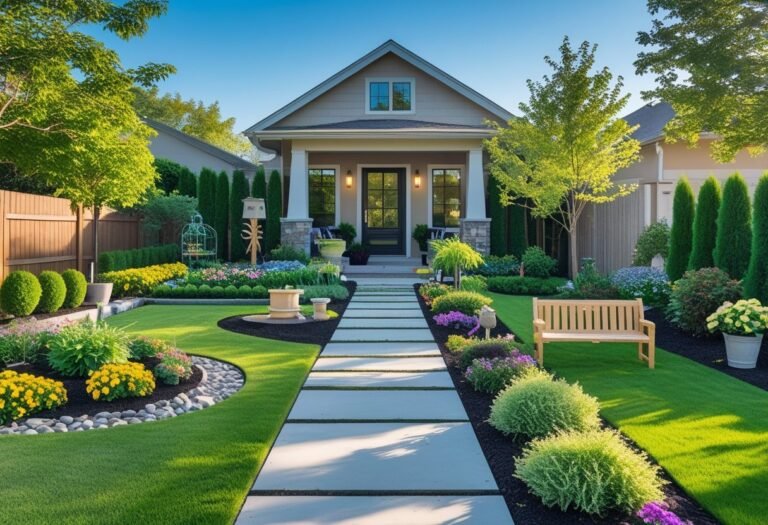
Use curved, informal edges to make the planting look like a natural patch rather than a strict bed. Plant a mix of low-growing grasses (blue fescue, carex) and short wildflowers (coreopsis, wild geranium) at the front to create a soft border that won’t block the sidewalk view.
Add a narrow mulch or gravel strip between the lawn or pavement and the plants to stop mud and reduce weeds. Place taller species (black-eyed Susan, coneflower) toward the back or center so sightlines remain open from the street.
For neatness, use simple anchors like boulders or low timber edging at corners. These elements keep the bed contained without a formal curb and give volunteers a clear place to prune or tidy.
Wildflower Lawn Alternatives
Replace part of the turf with a mixed meadow strip or patch for a softer look and less mowing. Choose clover, self-heal, and low-growing daisies for a green carpet that tolerates light foot traffic and needs one to three cuts per season.
If you want more color, plant a seed mix with 30–50% native perennials and the rest annuals for quick blooms. Prepare soil by removing existing grass, scarifying lightly, and sowing at the recommended rate to avoid dense bare spots.
Mow on a higher setting to leave seedheads for birds and pollinators. Use edging where the meadow meets the driveway to keep it from spreading into paved areas.
Pathways and Walkways Integration
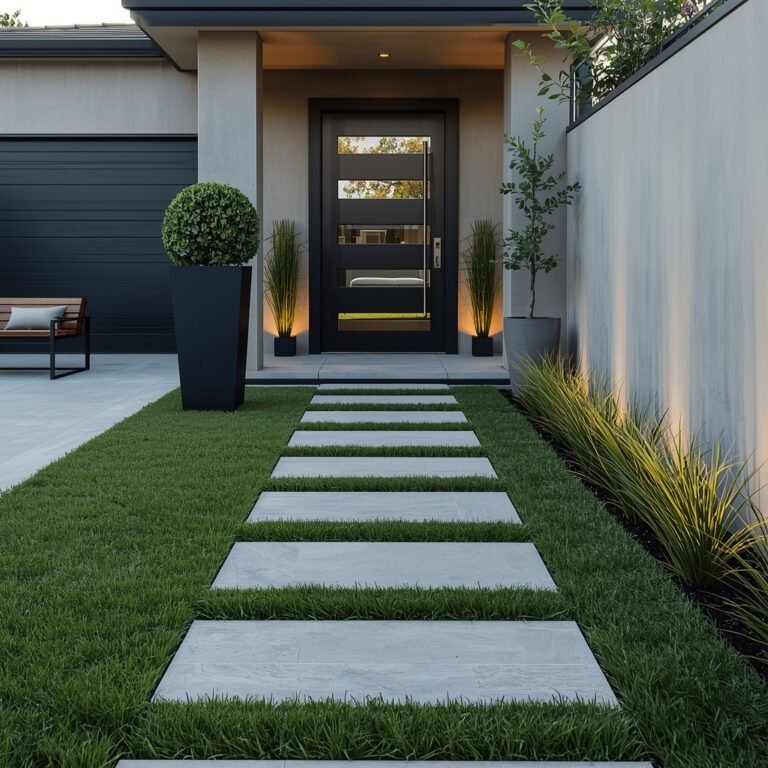
Make paths visible and purposeful. Place stepping-stone or gravel walkways to lead visitors from the sidewalk to the door without trampling flowers. Keep a 3–4 foot width for comfortable two-way walking and wheelchair access.
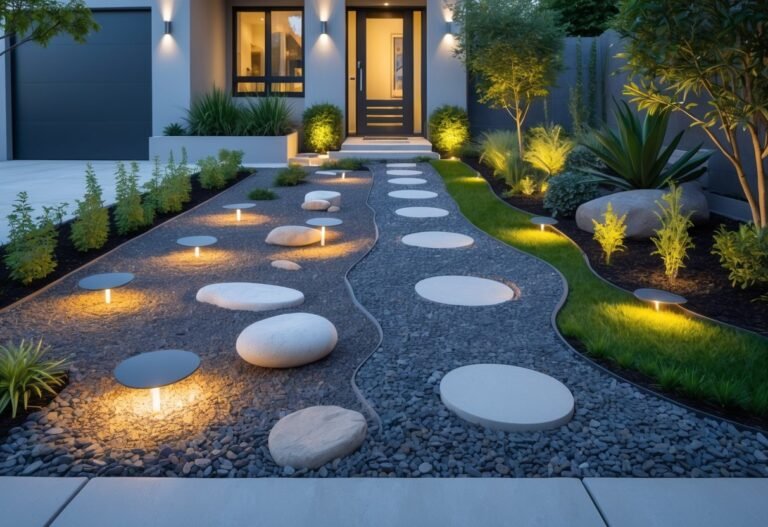
Line the path with low, hardy plants like thyme, lavender, or dwarf salvia to provide scent and a clear edge. Use permeable materials so water soaks into the soil and supports nearby plants.
Add a bench or small landing area along longer paths. A simple paved pad stops soil compaction and gives a place for you to enjoy pollinators without disturbing the bed.
Mixing Perennials with Annuals
Combine long-lived perennials (salvia, echinacea, yarrow) for structure and annuals (cosmos, poppies, zinnias) for bursts of color. Perennials form the backbone and reduce replanting, while annuals fill gaps and give season-long interest.
Group plants by bloom time and height to avoid bare patches. Plant in drifts of 5–15 of the same species so pollinators find them easily and color looks cohesive from the street.
Deadhead spent annuals to keep blooms coming, but leave some perennial seedheads through winter for birds. Replace or thin plants in spring to maintain balance and prevent any one species from dominating.
Enhancing Curb Appeal with Wildflowers
Use color, texture, and eco-friendly features to make your front yard look inviting and low-maintenance. Thoughtful plant choices, timed blooms, and simple habitat elements will boost your home’s first impression.
Color Combinations and Bloom Timing
Pick a 2–3 color palette to keep the look cohesive. For a bright display, combine red coneflower, purple lupine, and yellow coreopsis. For softer tones, choose pink gaura, blue chicory, and white yarrow.
Stagger bloom times so something blooms from spring to fall. Plant early bloomers like California poppy and lupine, mid-season flowers like blanketflower, and late-season asters and goldenrod. Group plants in drifts of 7–15 to read as a bold patch from the street.
Use repetition along walkways and near the porch for visual flow. Add short marker plants (lavender or dwarf salvia) at edges to tidy the transition to lawn or path.
Adding Native Grasses and Complementary Plants
Mix native grasses with wildflowers for texture and year-round structure. Choose ornamental grasses such as little bluestem, prairie dropseed, or switchgrass to add vertical lines and seed heads.
Place grasses in small groups behind lower wildflowers. This gives depth and hides spent blossoms without constant deadheading. Add complementary shrubs like dwarf sumac or low-growing manzanita for seasonal contrast and winter interest.
Use a simple planting plan: grasses 18–36 inches tall in the back, medium wildflowers in the middle, and low groundcovers or edging plants in front. This layered layout keeps sightlines clear and looks neat from the sidewalk.
Eco-Friendly Garden Features
Install a shallow water dish or small bird bath to attract birds and pollinators. Keep it clean and change water weekly in summer. Add flat rocks for bee basking and small brush piles or hollow stems for solitary bees.
Use a thin mulch layer of shredded bark or gravel to suppress weeds and keep soil moisture. Avoid heavy synthetic fertilizers; instead add compost once a year to boost soil health naturally.
Place a narrow mulch or gravel path to guide visitors and reduce trampling. Use native seed mixes labeled for your region to support local insects and reduce maintenance needs.
Frequently Asked Questions
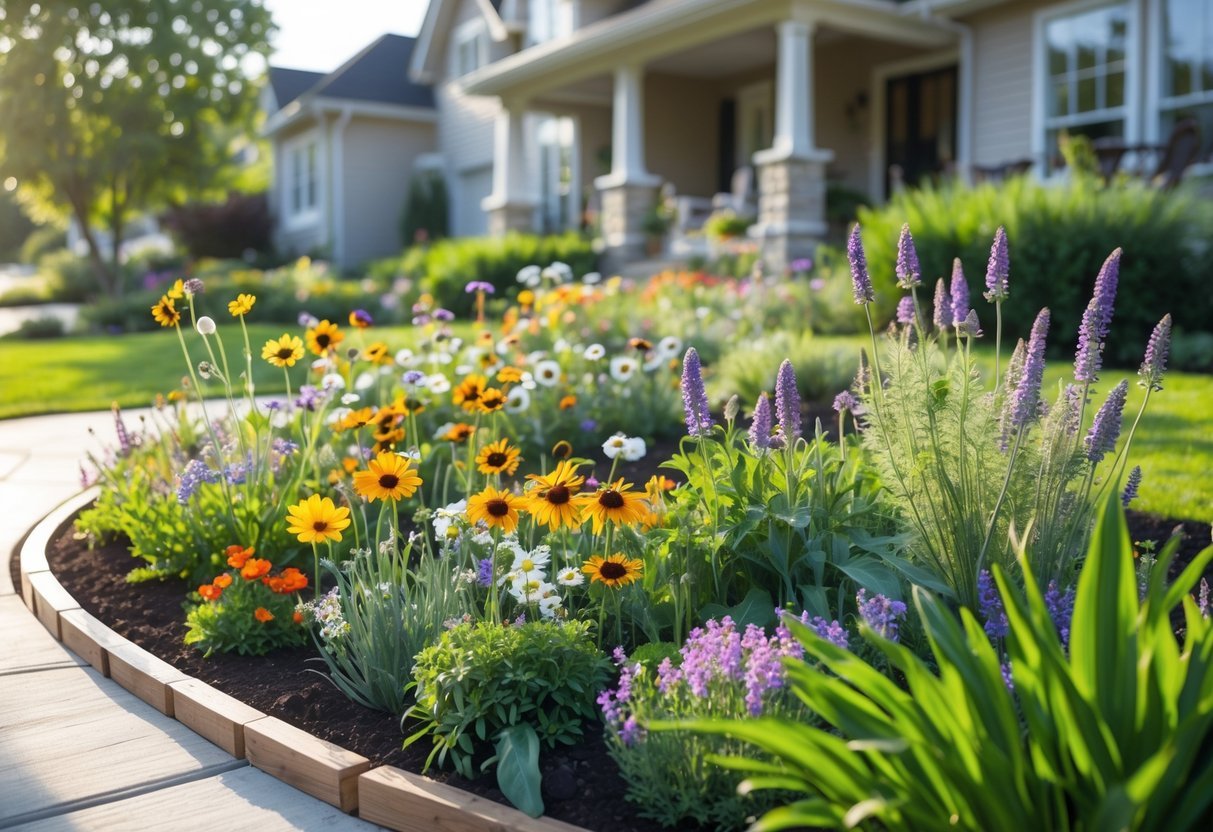
These answers focus on practical steps and clear choices: seed mixes, soil prep, planting timing, and simple layouts that fit small and large front yards. You’ll find ways to save time, attract pollinators, and start wildflowers from seed or plugs.
What are some low maintenance wildflower garden designs for front yards?
Choose native seed mixes suited to your hardiness zone to reduce watering and feeding. Mix grasses with long-lived perennials like coneflower and black-eyed Susan for structure.
Use drip irrigation or water only during the first season to establish plants. Mulch sparingly with gravel or coarse mulch to suppress weeds without smothering seedlings.
Group plants by bloom time and height to simplify pruning and deadheading. Leave narrow mown paths for easy access and tidy edges to keep the look intentional.
How do I create a small wildflower garden in my front yard?
Pick a sunny 4–6 foot-wide bed or a few containers near the entry. Sow a small packet of annuals and perennials designed for compact spaces.
Prepare the soil by removing turf and weeds, loosen the top 3–4 inches, and mix in a little compost. Water lightly after sowing and keep the soil moist until seedlings establish.
Use edging or low border plants to define the area and prevent grass creeping in. Re-seed bare spots each year instead of renovating the whole bed.
What layout considerations should I take into account for a front yard wildflower garden?
Plan with sightlines from the street and entry so taller plants don’t block views. Place short plants at the front and taller clumps toward the back or center.
Consider seasonal interest: include early, mid, and late bloomers for continuous color. Add a focal point like a bench, path, or clump of ornamental grass.
Factor in soil drainage and sun exposure; keep water-loving mixes away from dry, sandy spots. Design paths and maintenance access to allow mowing edges and removing spent plants.
Can wildflowers thrive in a perennial garden setting?
Yes. Many wildflowers are perennials or self-seeding annuals that fit mixed borders. Choose species known to coexist with garden perennials, such as coreopsis and gaura.
Avoid aggressive, invasive species that overrun neighbors. Monitor the bed the first two seasons and remove volunteers that crowd desired plants.
Mixing natives with traditional perennials gives structure and winter interest. You’ll get reliable returns if you match plant needs to site conditions.
How can I successfully establish a wildflower area in an existing lawn?
Kill or remove the turf in the chosen area first. Solarize with clear plastic for several weeks, smother with cardboard, or dig and remove sod.
Rake and level the soil, then sow seed at the right time for your zone—usually spring or fall. Keep the area watered until seedlings set, and mow low once or twice in year one to reduce annual weeds.
Replace sections gradually if you want to keep some lawn. Edge the new bed to stop grass runners and keep maintenance simple.
What steps are necessary for planting wildflowers in a front yard garden?
Test soil pH and texture so you pick compatible seed mixes. Remove weeds and loosen the top 3–4 inches of soil; add a light layer of compost if needed.
Choose a seed mix for sun/shade and your climate. Sow seeds at the recommended rate, press them into the soil, and keep evenly moist until germination.
Thin dense patches and spot-seed gaps in the second year. Use light, targeted watering and minimal fertilizer to favor wildflower growth over aggressive weeds.