English Cottage Garden Design Ideas: Timeless Planting Plans and Layout Tips
You can create an English cottage garden that feels effortless and full of life by mixing structure with a generous tangle of flowers, herbs, and small shrubs. Focus on layered planting, a mix of perennials and annuals, and a few climbing roses or clematis to build color, scent, and year‑round interest.
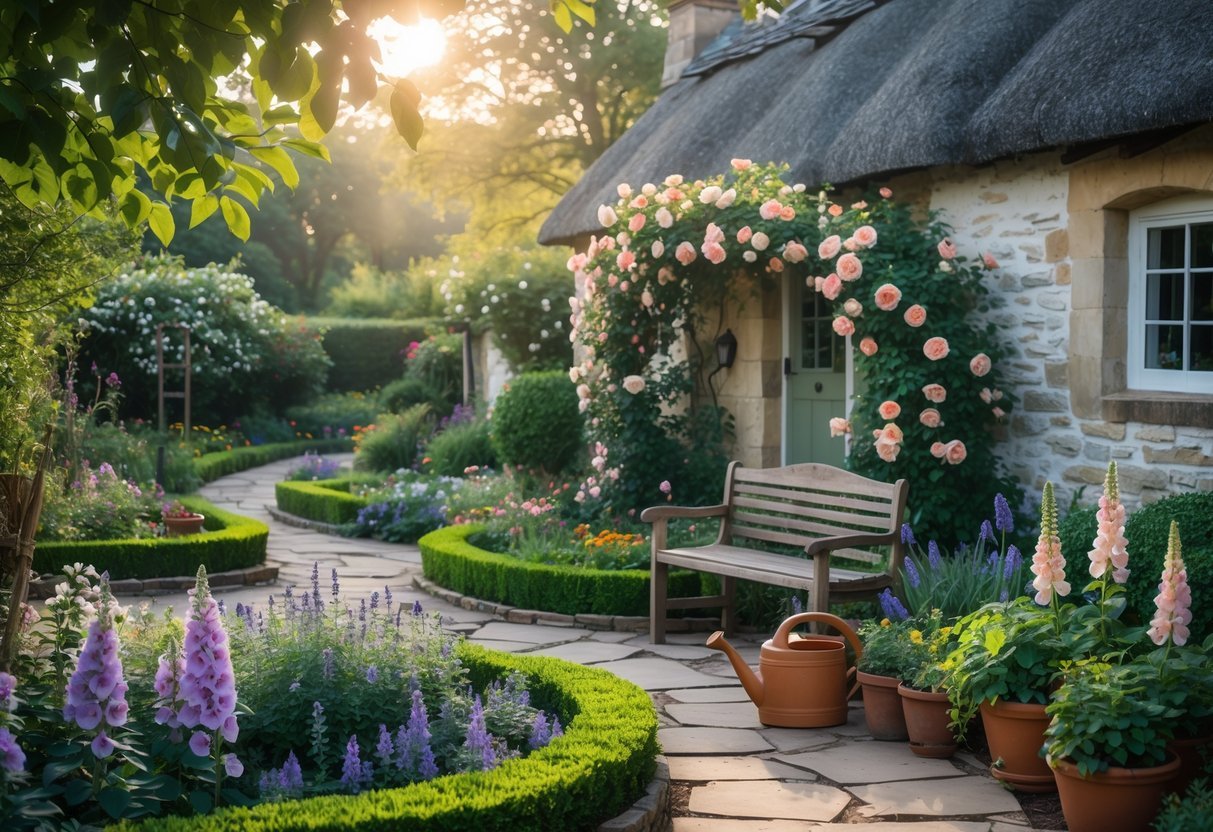
Start with a simple layout: paths, a focal point like a bench or arch, and low hedges or edging to give gentle structure. Use repeated plants and varied heights to make the space feel full without appearing chaotic, and choose easy‑care varieties to keep maintenance reasonable.
Key Takeaways
- Build a simple plan with paths and a focal point to guide the garden.
- Layer plants by height and repeat species to create charm and cohesion.
- Pick reliable, low‑maintenance plants for continuous seasonal interest.
Fundamentals of English Cottage Garden Design
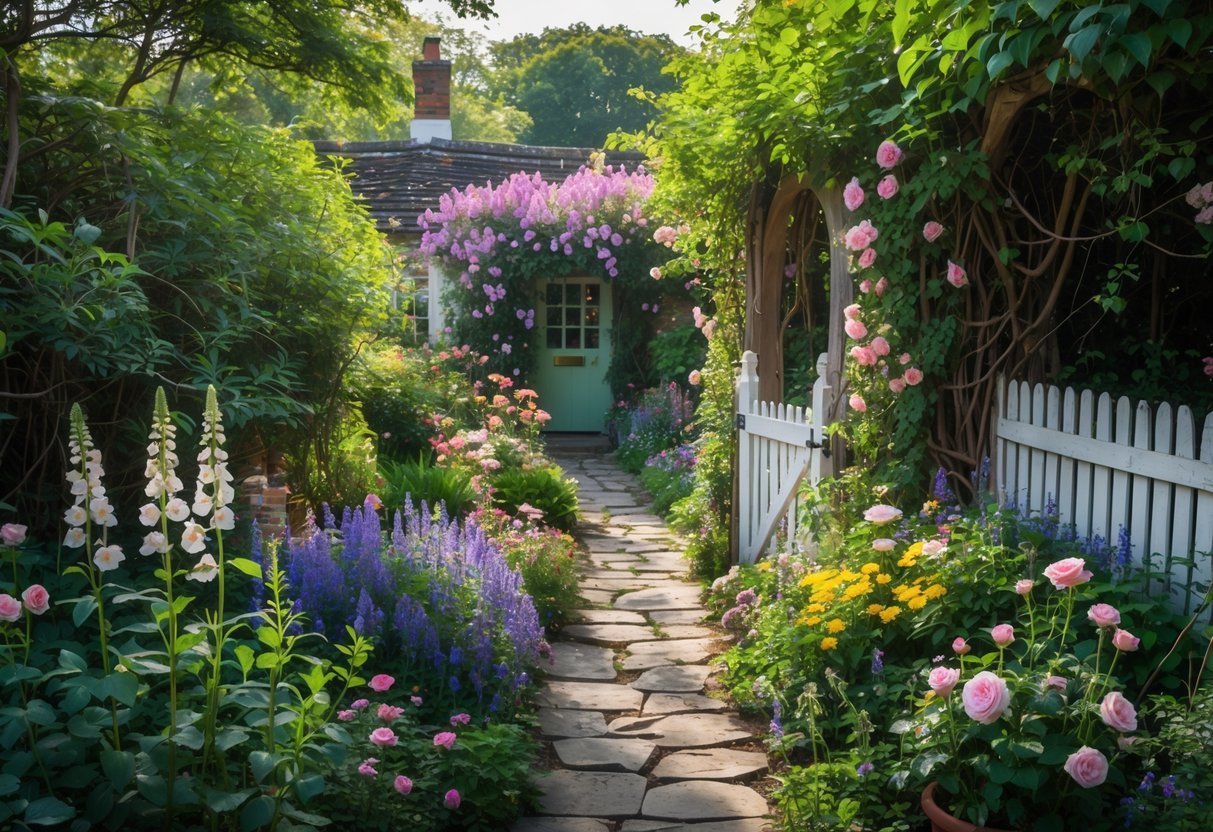
You will focus on loose, layered planting, mixing flowers with herbs and edibles, and using simple hardscape like winding paths and arbors. The aim is a lived-in, cozy look that still follows thoughtful structure and repeat planting for coherence.
Core Principles
Start with structure: plant hedges, a path, and a focal point like a bench or arbor to give the garden purpose. Use repeated plants and colors to tie beds together so the space feels deliberate, not random.
Layer plants by height. Put taller plants (delphiniums, roses, hollyhocks) toward the back or center, mid-height perennials (lavender, foxglove, phlox) in the middle, and low groundcovers or edging herbs (thyme, chamomile) at the front. This creates depth and hides bare soil.
Aim for dense, overlapping beds. Plant close enough to reduce weeds and let plants spill into paths. Include edible plants and herbs among ornamentals for both beauty and function.
History and Influence
Cottage gardens grew from small English homes where families mixed flowers, herbs, and vegetables for beauty and use. The style reflects practical choices: scent, medicine, food, and easy maintenance.
The Victorian era and later garden writers popularized the romantic, informal look. They emphasized abundant blooms and climbing plants like roses and sweet peas. That history explains why you see layered plantings and a mix of formal elements like hedges with informal flowers.
Today, cottage gardens borrow old varieties of roses, cottage perennials, and functional plants. You can adapt the style to small modern plots while keeping its historic charm.
Color Palettes
Choose a dominant color family and one or two accent colors. Soft pastels—pinks, creams, lavender—give a traditional cottage feel. Bright accents like deep crimson or golden yellow add focal points and energy.
Use color repeat to guide the eye across the garden. Plant swathes of the same color or species in several beds rather than scattering different colors thinly. This creates harmony and makes the space read as a whole.
Mix foliage tones too. Silver-gray leaves (lavender, santolina) contrast with dark green shrubs and help blooms stand out. Balance warm and cool tones to keep the garden lively but restful.
Plant Selection Strategies
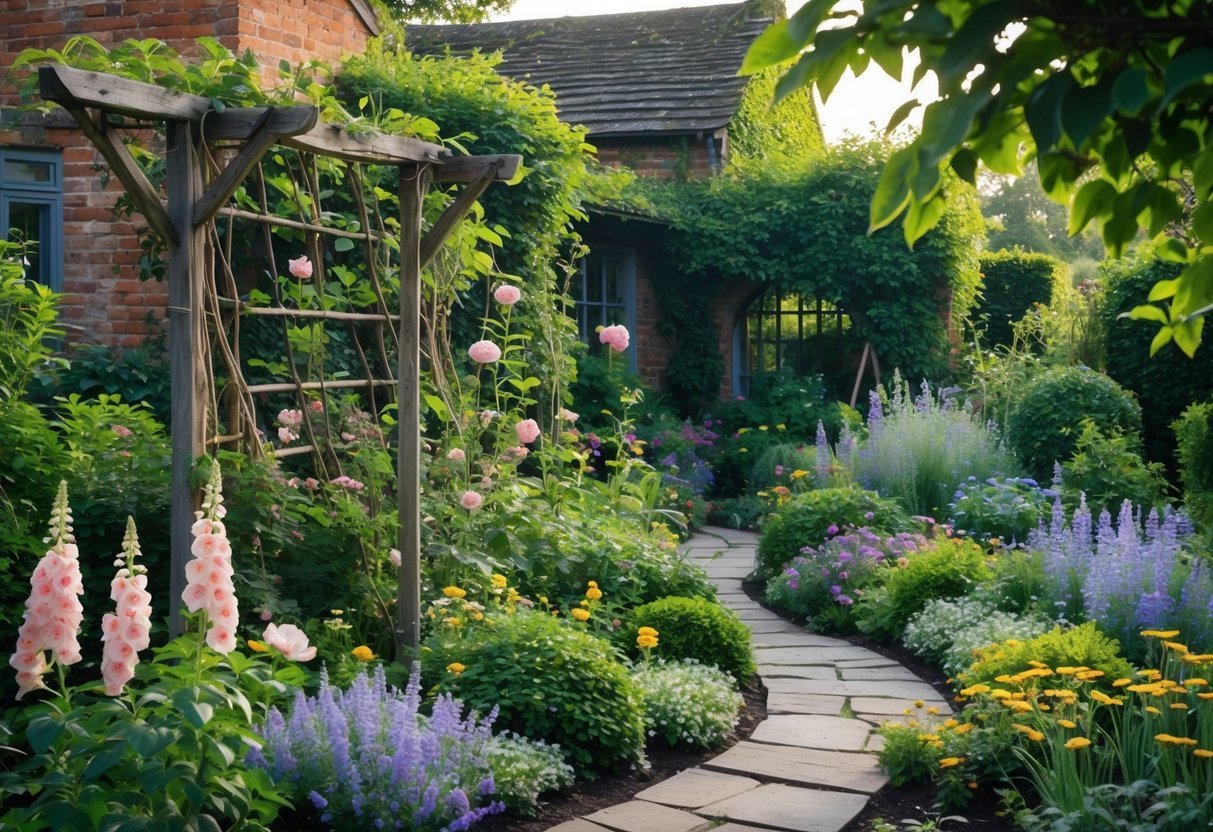
Pick plants that give long bloom times, varied heights, and mixes of scent, texture, and color. Match each plant to your soil, sun, and space so beds look full but stay healthy.
Choosing Traditional Cottage Garden Flowers
Focus on classic choices like roses, foxgloves, delphiniums, hollyhocks, and lavender. Plant roses (shrubs or climbers) where they get at least six hours of sun and good air flow to reduce disease. Use foxgloves and hollyhocks at the back of beds for height and vertical interest.
Mix in herbaceous perennials—peonies, lupines, and campanulas—for repeat blooms and structure. Stagger bloom times: early bulbs (tulips, daffodils), spring perennials, and summer-blooming delphiniums keep color most of the season.
Add self-seeders like cosmos and nigella to create the slightly untamed look. Deadhead some flowers to extend blooms, but leave a few seed heads for next year and for birds.
Selecting Shrubs and Trees
Choose small-scale trees and shrubs that give shape without overpowering beds. Use dwarf fruit trees, crabapples, or serviceberries as focal points. Plant old-fashioned shrubs such as hydrangeas, lilacs, and mock orange near paths or seating for scent and repeat bloom.
Keep shrubs 3–6 feet wide for cozy cottage proportions; prune lightly after flowering to keep natural form. Underplant shrubs with lower perennials and bulbs to hide bare stems. For shade, pick small maples or hawthorns that offer dappled light rather than dense canopy.
Integrating Edibles
Blend herbs and vegetables into flower beds for a useful, lived-in look. Plant rosemary, thyme, sage, and chamomile at the front of beds or along paths for scent and low growth. Mix in compact vegetables—lettuce, chard, and dwarf beans—among flowers to avoid formal rows.
Use vertical supports (trellises, obelisks) for peas and climbing beans to save space and add height. Keep edibles in rich, well-drained soil and water consistently; group herbs with drought-tolerant flowers like lavender. Rotate annual vegetables each year to reduce pests and maintain soil health.
Garden Layout and Structure
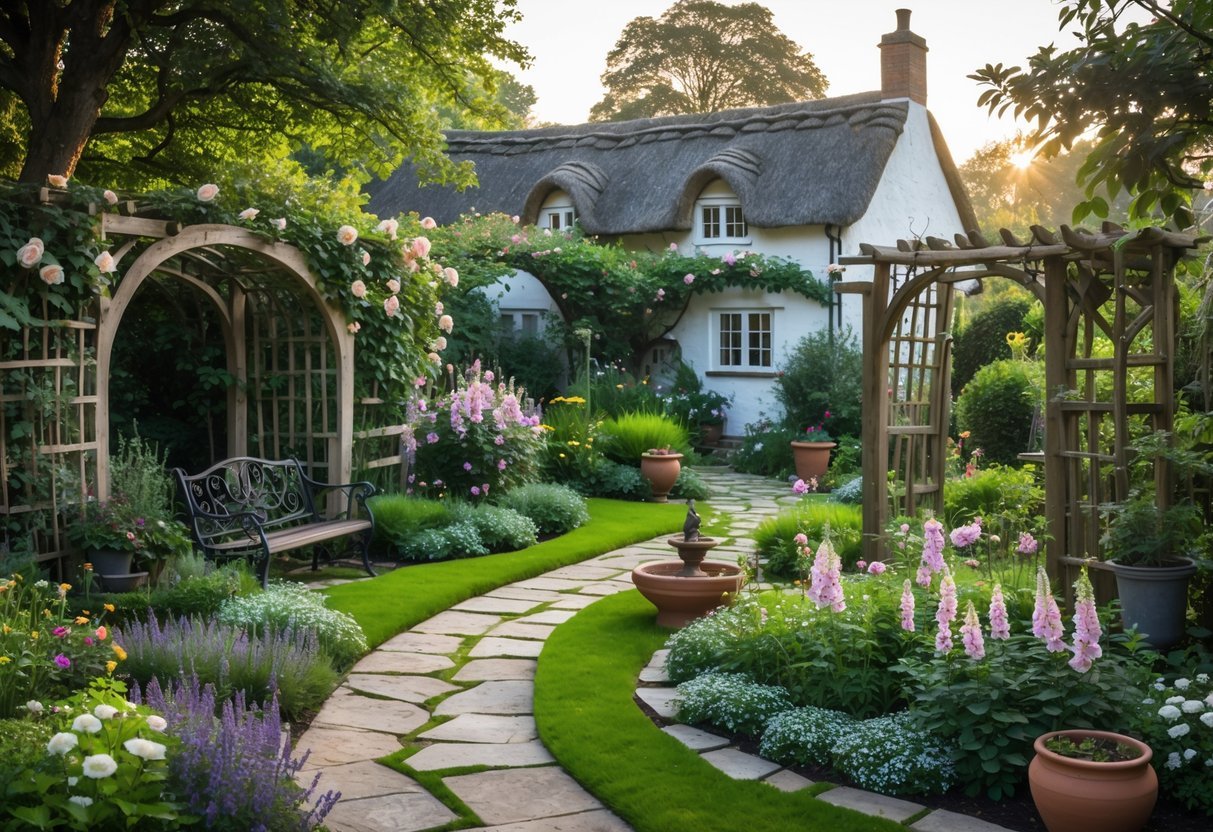
Plan paths, edges, and focal points to guide movement, frame planting, and draw the eye. Use curved walkways, mixed borders, and one or two strong focal features to create a balanced, lived-in cottage look.
Informal Pathways
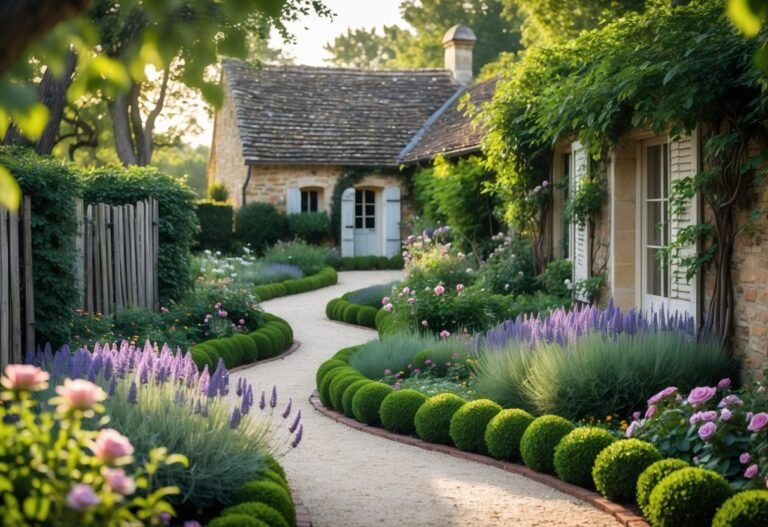
Choose paths that meander rather than run straight. Use gravel, reclaimed brick, or stepping stones set in grass to keep paths soft and informal. Aim for widths of 24–36 inches for main routes and 18–24 inches for secondary routes so you can pass a wheelbarrow or two people comfortably.
Let plants spill over path edges. Lavender, thyme, and low geraniums add scent and texture while tucking into edges. Keep a low border (edging stone or dwarf boxwood) where you need a cleaner line, such as next to a patio, and skip it where you want a more natural spill.
Add seating or a small break every 8–12 paces. A simple bench, a stone plinth, or a narrow viewing lawn gives you places to stop and enjoy the planting. Make sure surfaces drain well and avoid slippery materials.
Borders and Edges
Build layered borders with three vertical zones: low groundcover, mid-height perennials, and taller shrubs or climbers at the back. Aim for repetition of key plants (three to five of each) to create rhythm and cohesion across beds. Use a planting list of 6–10 species per border to keep maintenance manageable.
Mix annuals and perennials for steady bloom through seasons. Put bulbs and early bulbs at the front or intersperse them among perennials. Add edible plants—herbs or compact vegetables—in discrete pockets to reflect the tradition of useful planting.
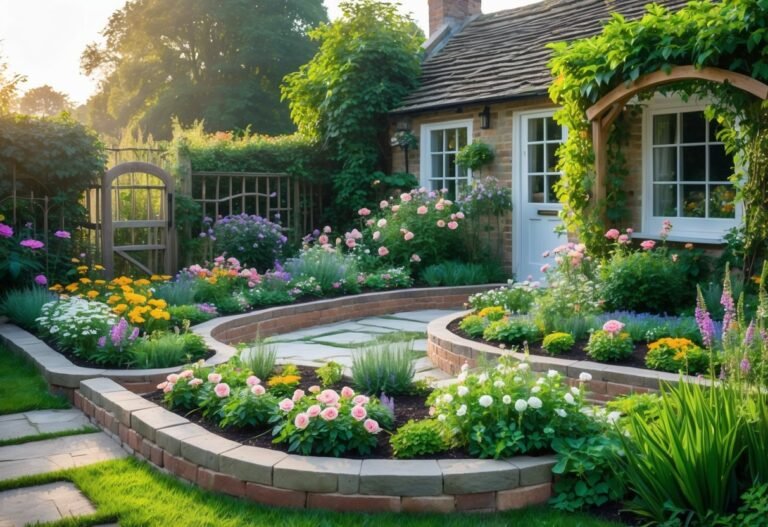
Define edges where needed with low stone, brick, or clipped hedging. Where you want softness, let self-seeding annuals and grasses blur the line. Maintain a 1–2 foot clear path edge to reduce turf wear and make mowing easier.
Focal Points
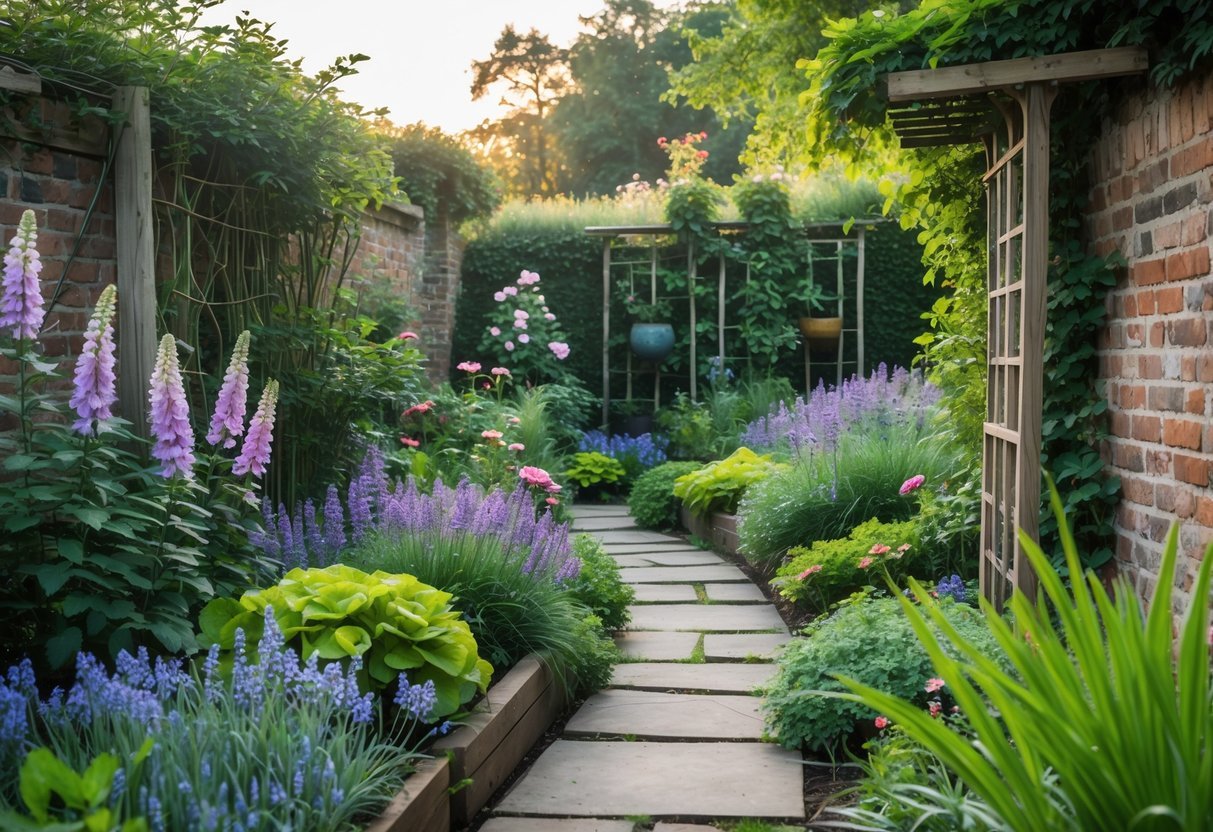
Pick one or two focal points to anchor sightlines. Use a garden arch, a climbing-rose-covered trellis, a birdbath, or a small cottage-style greenhouse as focal elements. Place them at the end of a path or at a bend to create a sense of discovery.
Scale the focal point to the garden size. In small yards, choose a single sculptural plant or urn. In larger spaces, a seating area beneath an arbor or a specimen tree works well. Use color and texture contrast—white flowers, shiny leaves, or a dark-painted bench—to make the feature read clearly from several angles.
Repeat materials near focal points to tie them into the rest of the garden. For example, use the same brick for a path and for a small plinth, or match the trellis paint to window trim on your house.
Layering and Planting Techniques
Plan layers by height, bloom time, and texture so beds look full from spring into fall. Place tall stakes and climbers at the back or center, medium perennials in the middle, and low edging plants up front. Think soil needs and sun for each layer.
Succession Planting
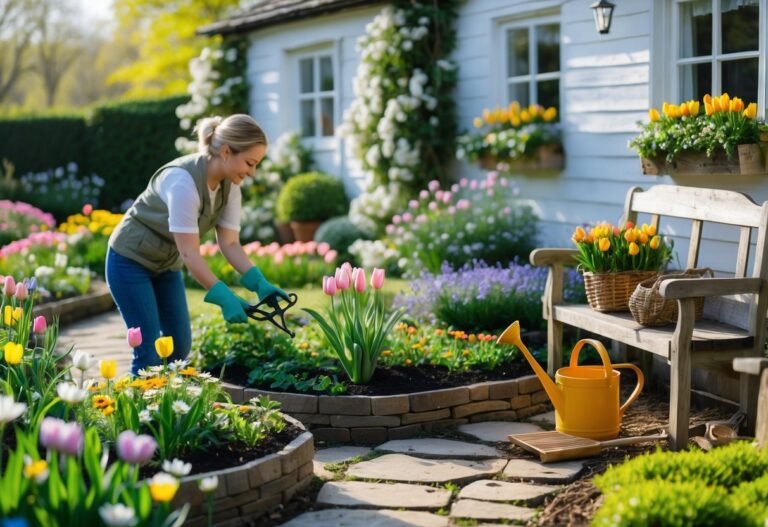
Succession planting keeps color and interest all season. Start bulbs and early bulbs (tulips, daffodils) for spring, then plant quick annuals (nasturtiums, calendula) in gaps after bulbs fade. Follow with long-flowering perennials like phlox, echinacea, and nepeta to carry you through summer. Sow late-season bloomers—asters and sedum—in midsummer for autumn color.
Use staged sowing: plant seeds or plug plants every 2–4 weeks for continuous coverage. Replace spent plants quickly with new annuals or self-seeding varieties. Keep a simple calendar for your site’s frost dates and peak heat to time each wave.
Mixed Planting Beds
Mixed beds combine shrubs, perennials, bulbs, and annuals for texture and depth. Place woody shrubs or small roses as anchors spaced to avoid overcrowding. Add medium perennials in groups of three to five for visible clumps, and finish edges with low groundcovers like alyssum or thyme.
Design by bloom time and foliage contrast. Pair silver-leaved plants with dark green foliage, and mix tall spikes with rounded mounds. Leave walking space and paths; stagger planting so you can deadhead or divide without disturbing neighbors. Mulch 2–3 inches to suppress weeds and retain moisture, but keep mulch away from crown bases.
Companion Planting
Companion planting improves health and pest resistance without chemicals. Plant aromatic herbs—rosemary, lavender, chives—near roses to deter pests and attract pollinators. Use marigolds and nasturtiums to repel nematodes and aphids around vegetables or tender perennials.
Match water and light needs when pairing plants. Don’t put moisture-loving primroses next to drought-tolerant salvias. Rotate annual beds yearly to reduce soil-borne disease. Use support plants like cosmos or sweet peas to provide light shade for young seedlings and to create vertical interest.
Incorporating Decorative Elements
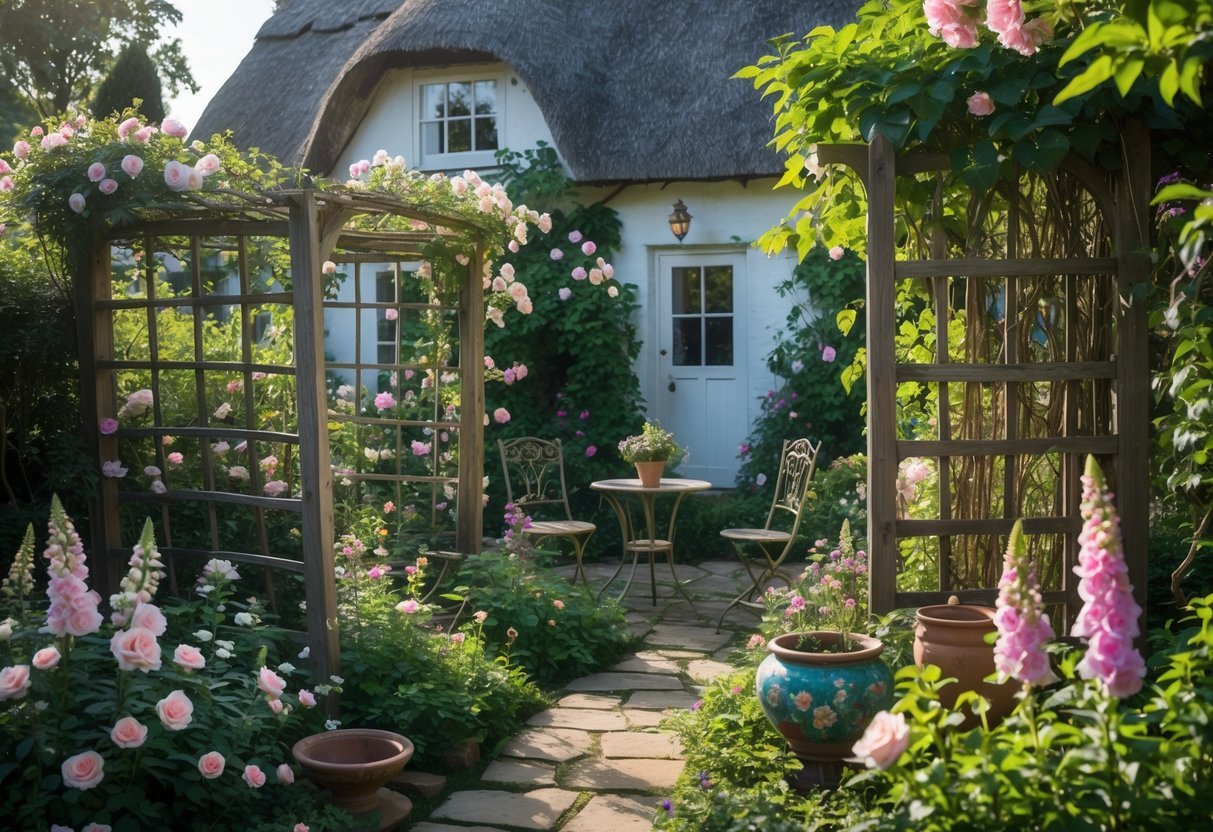
Choose pieces that add charm and structure without crowding beds. Use vintage metal, weathered wood, and climbing supports to guide growth and create focal points.
Garden Ornaments
Use old watering cans, metal urns, birdbaths, and cast-iron statues to add character. Place a single statement piece—like a birdbath or large urn—at a path junction or between flower groupings so it reads as intentional, not cluttered.
Repurpose tools as planters: fill an antique wheelbarrow with trailing petunias or place a row of small terracotta pots on a low wall. Keep materials consistent; too many finishes compete with blooms. For safety and longevity, choose frost-proof stone or metal for permanent spots and move delicate ceramics indoors over winter.
Use low-height ornaments near groundcover and taller pieces near hedges to balance sightlines. Position items where you can see them from a seat or window to boost daily enjoyment.
Arches and Trellises
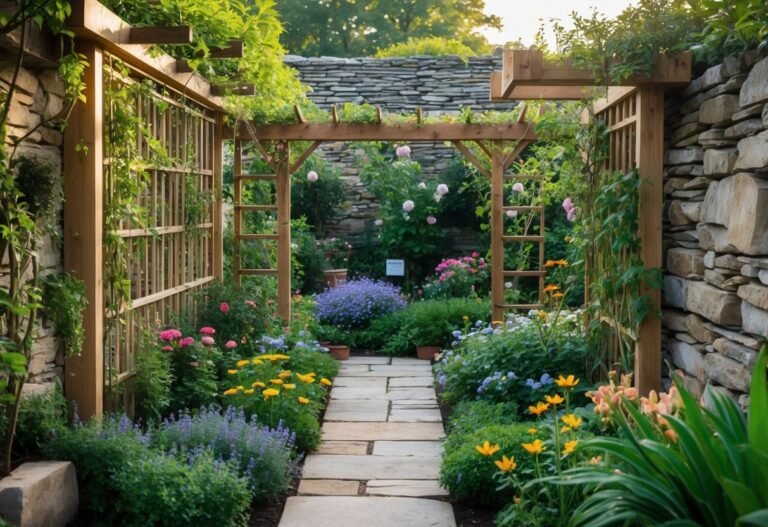
Install a sturdy wooden or metal arch at the garden entrance or along a path to frame views. Anchor posts in concrete or use heavy bases to withstand wind and the weight of climbing roses or clematis.
Choose trellis panels for borders, fences, or to create vertical beds. Train vines with soft ties and prune annually to keep dense flowers from overwhelming structural supports. For small spaces, use narrow obelisk trellises or wall-mounted wire supports to add height without taking ground area.
Match the style of your supports to other materials in the garden—painted white wood for cottage charm or aged metal for a rustic look. Regularly inspect joints and repaint or repair to prevent sagging and extend life.
Seasonal Interest and Maintenance
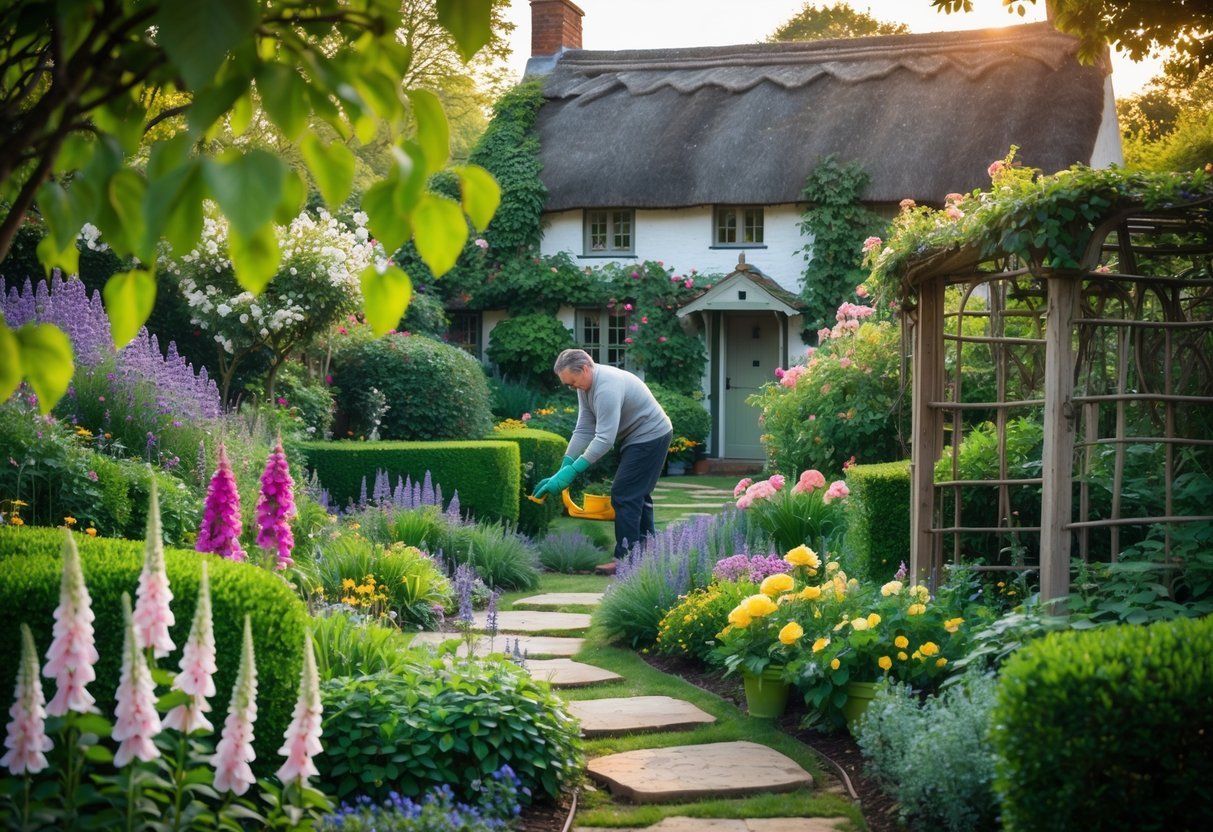
Plan plant choices and timing so your garden offers color, scent, and structure from early spring to late winter. Match bulbs, perennials, shrubs, and seasonal feeders to your soil and hardiness zone, and prepare for key care tasks each season.
Year-Round Bloom Planning
Choose a mix of bulbs, early perennials, and late-season bloomers to keep color moving through the year. Plant crocus, snowdrops, and daffodils for spring; pair peonies, foxgloves, and geraniums for summer; add asters, sedums, and late roses for autumn interest. Include evergreens like boxwood or yew for winter shape and hollies or winter-flowering heathers for berries and blooms.
Stagger planting times and heights so taller plants don’t shade lower ones. Use a simple table for timing:
- Spring: bulbs, early shrubs
- Summer: tall flowers, climbers
- Autumn: asters, sedums, seedheads
- Winter: evergreens, berries, structural stems
Aim for at least three plants blooming in each season and leave some seedheads for birds and winter texture.
Pruning and Care Tips
Prune on a schedule tied to each plant’s flowering time. Cut spring-flowering shrubs after they bloom; prune summer-flowering shrubs in late winter or early spring. Deadhead spent flowers from roses, daisies, and salvias to extend bloom time.
Feed and mulch at predictable intervals. Apply balanced fertilizer in early spring and a light feed after peak bloom. Mulch twice a year—late spring to conserve moisture and late autumn to protect roots. Check soil moisture weekly in dry spells and stake tall perennials before they flop. Remove diseased foliage promptly and inspect for pests such as aphids or slugs to prevent spread.
Sustainable Approaches to Cottage Gardens
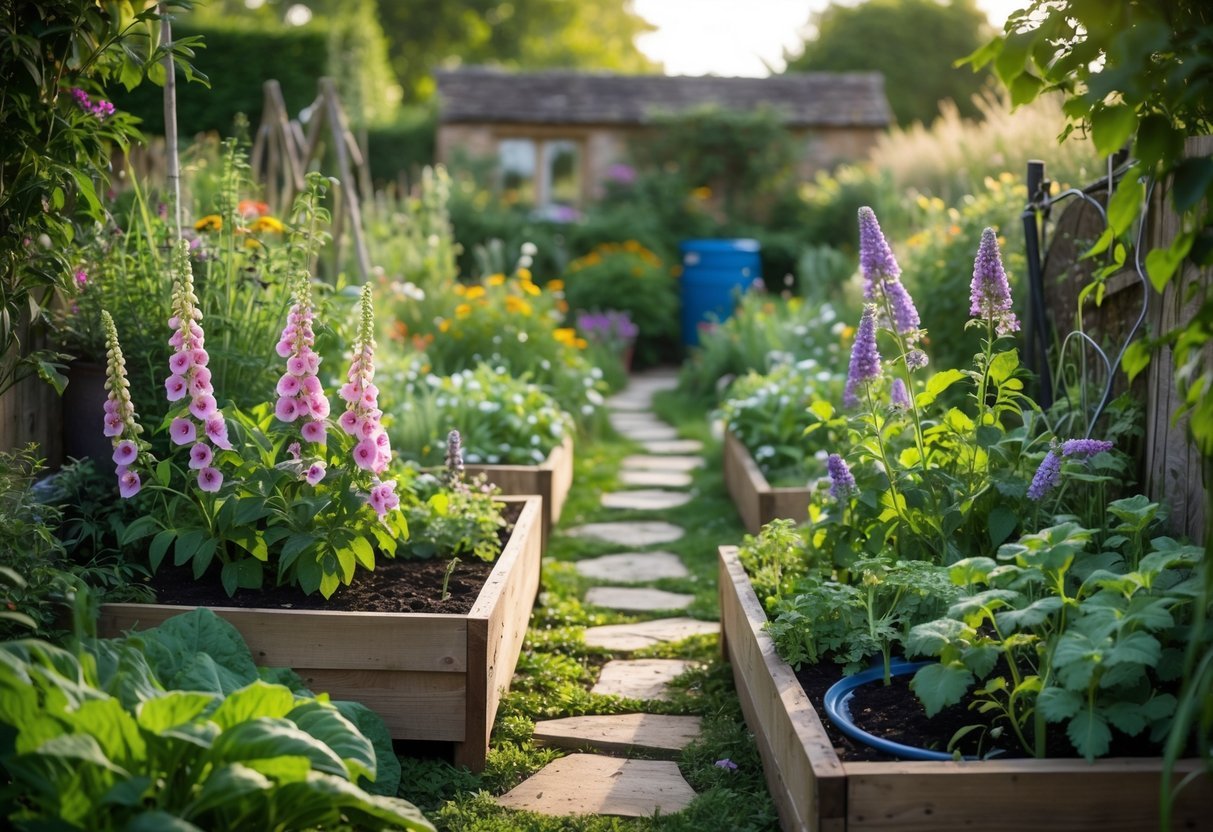
Focus on plants and features that support local wildlife and cut water use. Choose native perennials, sheltering shrubs, and simple rain-saving systems to keep the garden healthy with less work.
Wildlife-Friendly Features
Plant dense hedges like hawthorn or native shrubs to give birds shelter and nesting sites. Include layered planting: groundcovers (e.g., thyme), mid-height perennials (e.g., lupins), and taller shrubs or climbers (e.g., honeysuckle) to offer food and cover at many levels.
Provide continuous food by mixing early- and late-flowering plants such as crocus, primrose, foxglove, and late asters. Add a small, shallow birdbath or pond with sloped edges so insects and hedgehogs can drink and escape.
Avoid chemical pesticides and choose hand-picking, insectary plants, or nematode treatments for pests. Create log piles or leave a corner of untidy growth for beetles and solitary bees. Label a few areas as “wild zones” to protect pollinators and ground-dwelling wildlife.
Water Conservation Methods
Collect rainwater with a covered 200–500 L barrel connected to a downpipe for watering borders and containers. Use a simple screen to keep debris out and a tap or pump for easy access.
Group plants by water need: place drought-tolerant lavender, salvias, and rosemary together and keep thirsty vegetables or cut-flower beds separate. Mulch with 5–8 cm of organic material like leaf mold or wood chips to reduce evaporation and suppress weeds.
Use drip irrigation or a soaker hose on timers for new plantings, and water early in the morning to limit loss. Replace small lawn patches with gravel paths or low-water groundcovers to shrink thirsty turf areas.
Modern Twists on Traditional Cottage Designs
You can keep the cozy, layered feel of a cottage garden while adding cleaner lines and lower maintenance plants. Focus on plant choices, edging, and simple structural elements to update the look without losing charm.
Incorporating Contemporary Plants
Choose plants that give the cottage feel but need less care. Mix native perennials like salvia, rudbeckia, and echinacea with classic cottage plants such as lavender and foxglove. Natives cut watering needs and support pollinators.
Use structural grasses (e.g., Molinia or Festuca) to add vertical texture and reduce the need for constant deadheading. Limit aggressive self-seeders by placing them in defined beds or containers.
Try repeat planting: pick three to five species and repeat them across beds to create a modern, calm rhythm. This makes the garden feel planned while still colorful.
Add a few ornamental shrubs—spiræa or small hydrangeas—for year-round shape. These reduce the need to replant each season and keep the cottage look tidy.
Minimalist Adaptations
Lean on clean edges and simple hardscape to modernize paths and borders. Use straight or gently curved stone paths with gravel joints instead of random stepping stones to create a neater flow.
Keep structures minimal: a single painted bench, a simple arch, or a restrained trellis gives focal points without clutter. Paint choices like soft grey, deep green, or black modernize woodwork while fitting cottage tones.
Limit your palette to three or four main colors and a few foliage textures to avoid visual clutter. Mulch beds with low-contrast materials (fine bark or pea gravel) to hide weeds and make plant colors pop.
Use smart irrigation and drip lines to save water and cut time spent watering. Place plants with similar water needs together to simplify care and keep the neat, modern feel.
Frequently Asked Questions
This section answers practical questions about plant choices, layout, and upkeep. You will find clear steps for building a cottage look, keeping it low-maintenance, and fitting the style to a small space.
What are the essential elements of an authentic English cottage garden?
An authentic cottage garden mixes flowers, herbs, and vegetables in dense, informal beds. Include climbing roses, mixed herb borders, and winding paths made of gravel or stepping stones.
Use layered planting: tall plants at the back, mid-height in the middle, and groundcovers up front. Add simple structures like trellises, low hedges, and a small gate for a lived-in feel.
How can I create a low-maintenance English cottage garden?
Choose perennials over annuals to reduce replanting. Plant drought-tolerant and disease-resistant varieties suited to your climate.
Group plants by water needs and use mulch to cut weeds and conserve moisture. Keep paths clear and prune annually rather than constantly trimming.
What are some simple design strategies for small English cottage gardens?
Maximize space with vertical planting: train roses or clematis up walls and trellises. Use narrow beds and repeat a few plant types to create unity.
Place a small seating area or focal point like a birdbath to draw the eye. Keep pathways narrow and curved to make the garden feel larger.
How does an English garden differ from an English cottage garden in design?
An English garden often uses formal elements like straight paths, clipped hedges, and symmetrical beds. A cottage garden favors informal, dense planting and mixed uses like edible and ornamental plants together.
English gardens emphasize structure and order; cottage gardens emphasize abundance and a relaxed layout.
Can you suggest some plants that are traditionally used in English cottage gardens?
Plant roses (especially old-fashioned and climbing types), foxgloves, delphiniums, and hollyhocks for height and color. Add lavender, rosemary, and thyme for scent and herbs.
Use geraniums, campanulas, and sweet peas for filler. Groundcovers like creeping thyme and ajuga help finish bed edges.
What are effective ways to incorporate the 70/30 planting rule in an English cottage garden?
Make 70% of the bed consist of structural, low-maintenance plants like shrubs, long-lived perennials, and groundcovers. Use the remaining 30% for seasonal color with annuals and short-lived perennials.
Arrange the 70% plants as the backbone across beds and repeat them to create cohesion. Sprinkle bold annuals and changing bulbs in groups for visual impact without extra work.