10 Apartment Balcony Garden Ideas for Small Spaces, Low Maintenance, and Maximum Impact
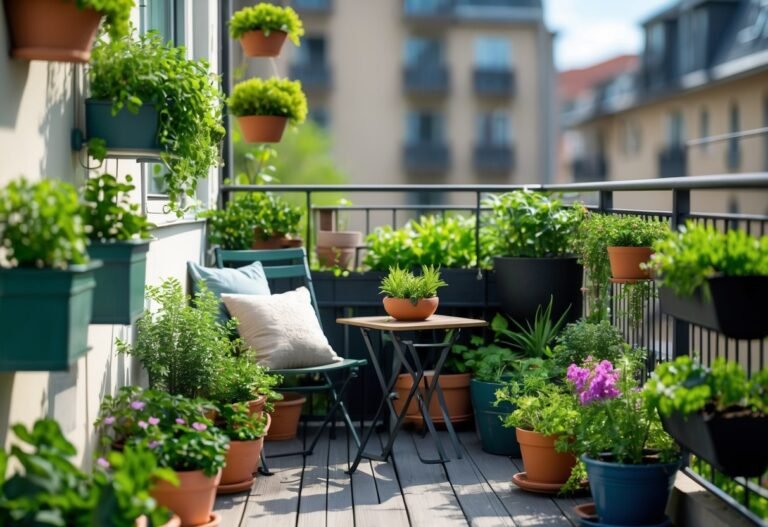
You can turn even the tiniest balcony into a green, useful space that boosts your mood and livability. This article shows ten easy, practical ideas to help you grow plants, save space, and create a cozy outdoor spot tailored to your balcony.
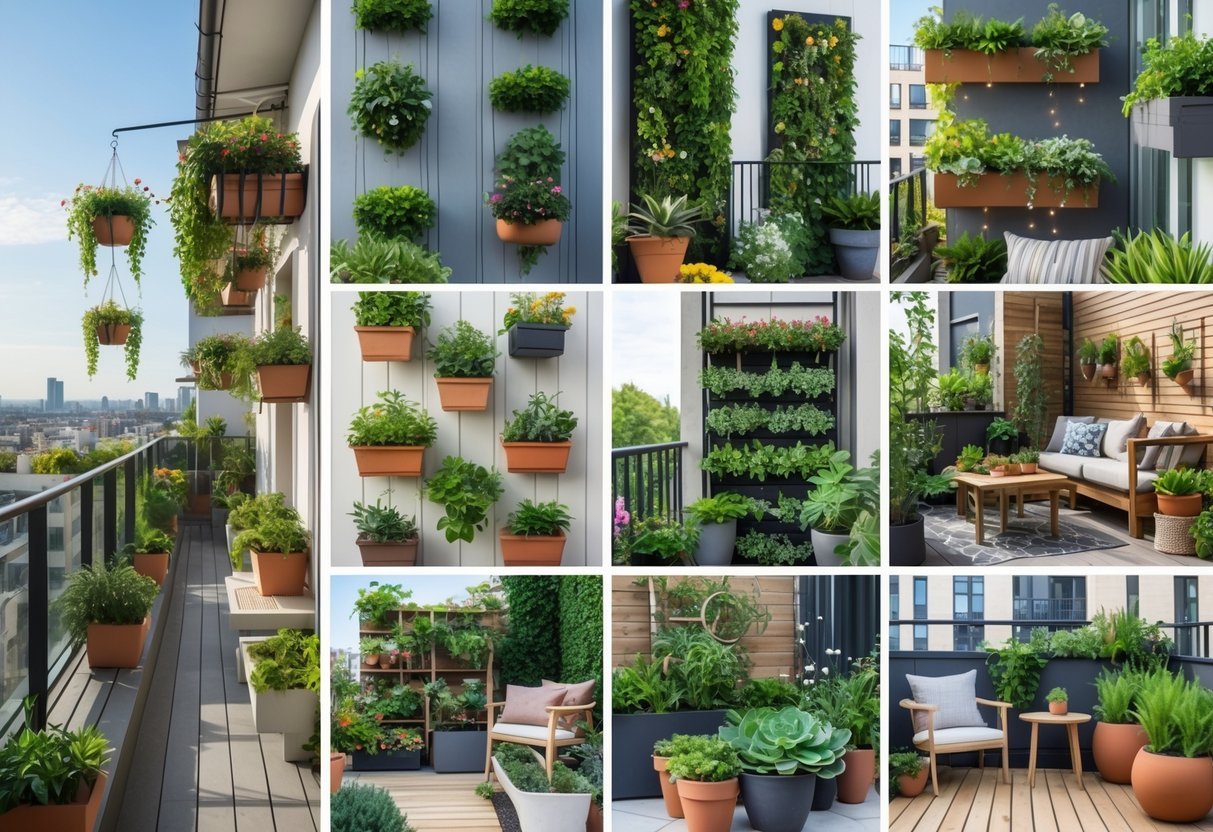
You’ll find simple options for vertical planters, tiered shelves, hanging baskets, and low-maintenance containers that fit apartment life. Expect clear tips on safety, seasonal care, and the tools that make balcony gardening work for your schedule.
1) Use vertical wall planters to maximize small balcony space
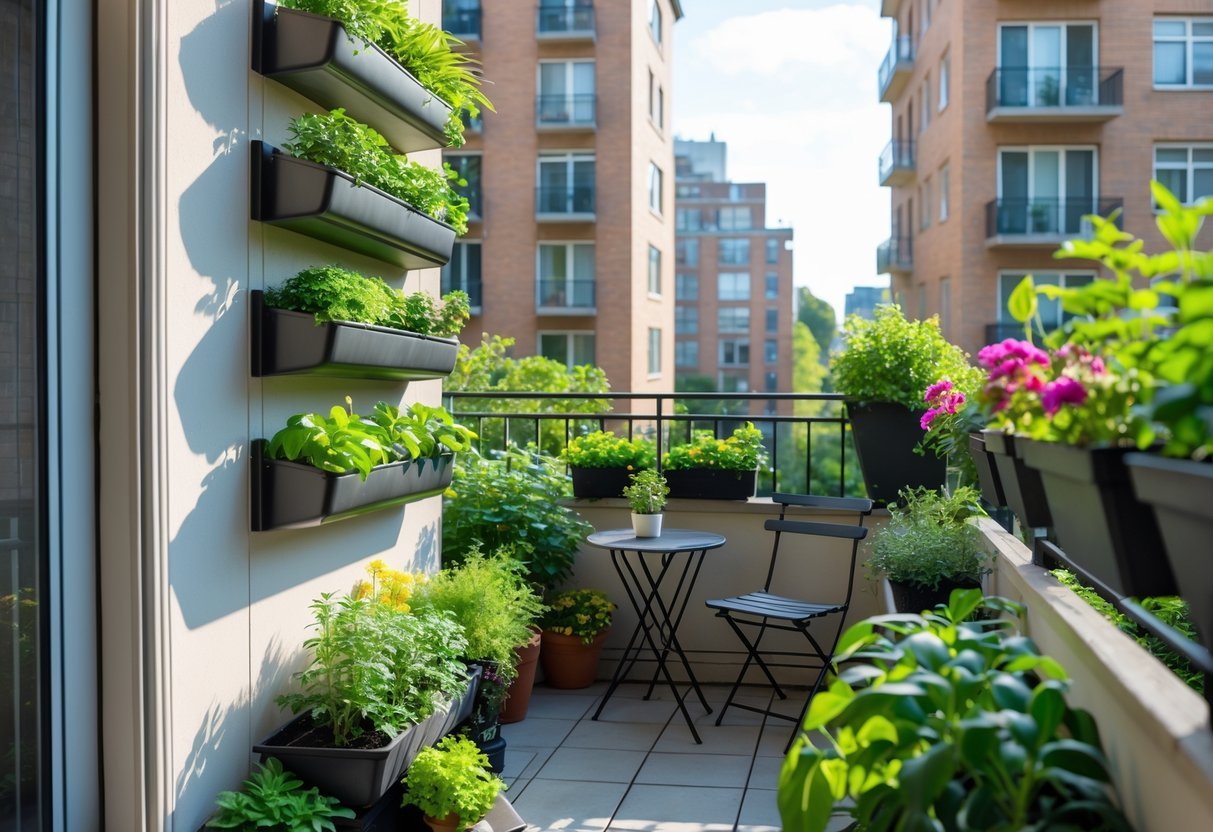
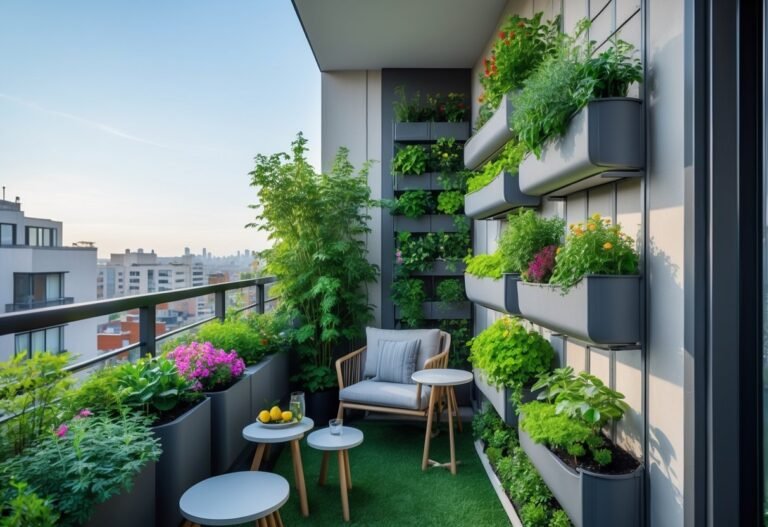
You can fit many plants on a small balcony by using vertical wall planters. They free up floor space while creating a green wall for herbs, flowers, or trailing vines.
Choose lightweight, weatherproof planters and attach them to a sunny wall or railing. Watering is easier with modular systems that let you remove pots for refill or cleaning.
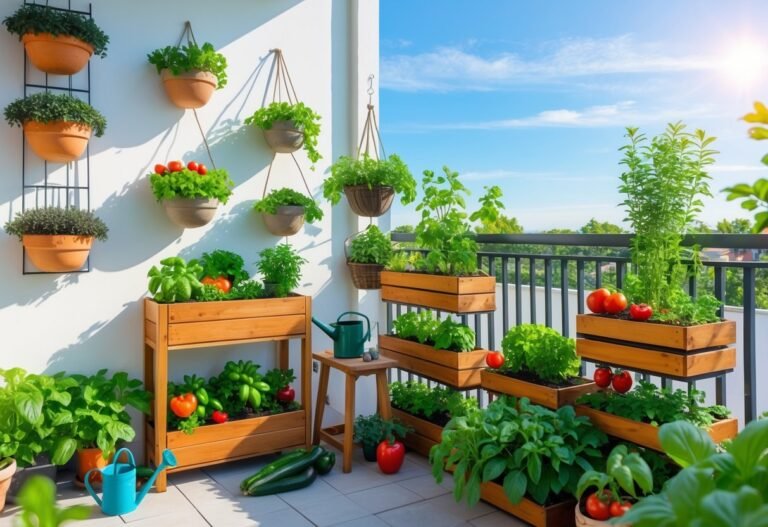
2) Install tiered shelves for multi-level planting
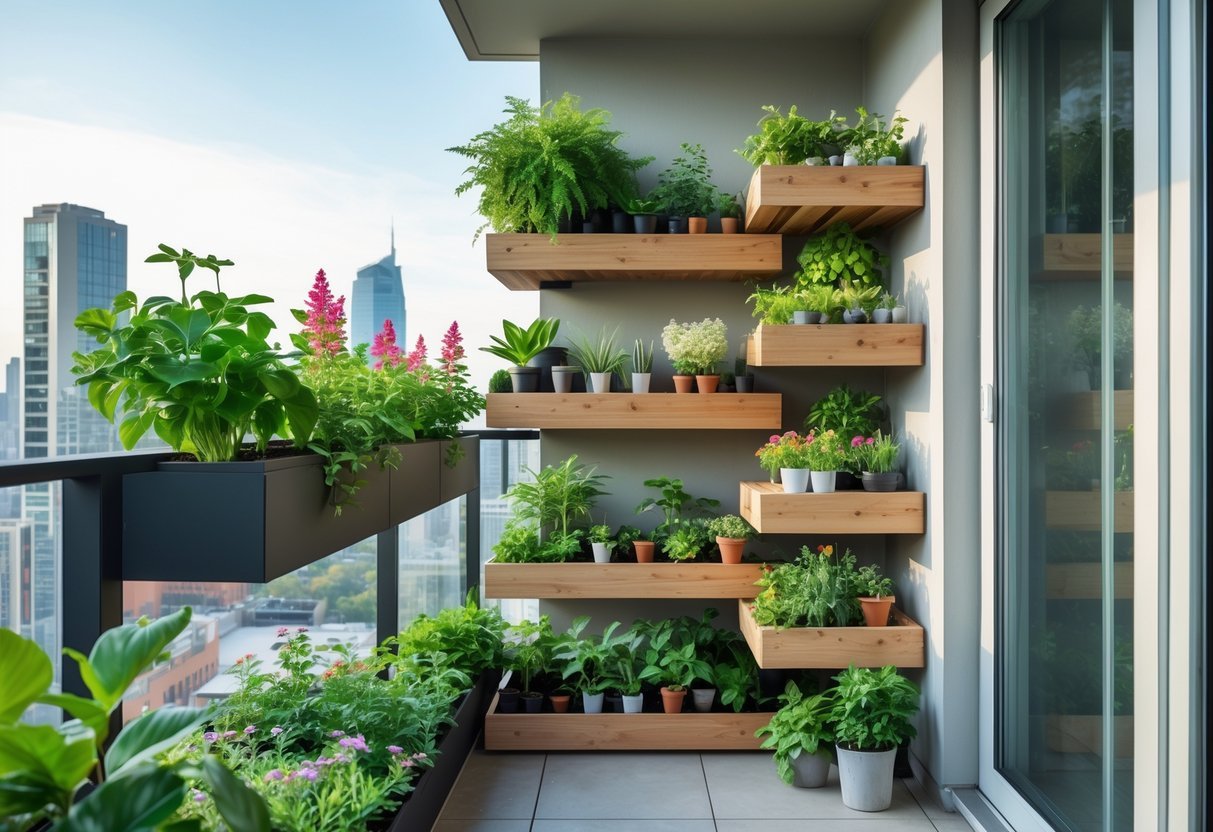
Use tiered shelves to fit more plants without taking extra floor space. You can choose metal, wood, or bamboo depending on your balcony style and weather exposure.
Place sun-loving plants on top and shade-tolerant ones below to match light levels. Tiered racks also make watering and care easier since pots stay organized and accessible.
3) Grow herbs like basil, mint, and thyme in containers
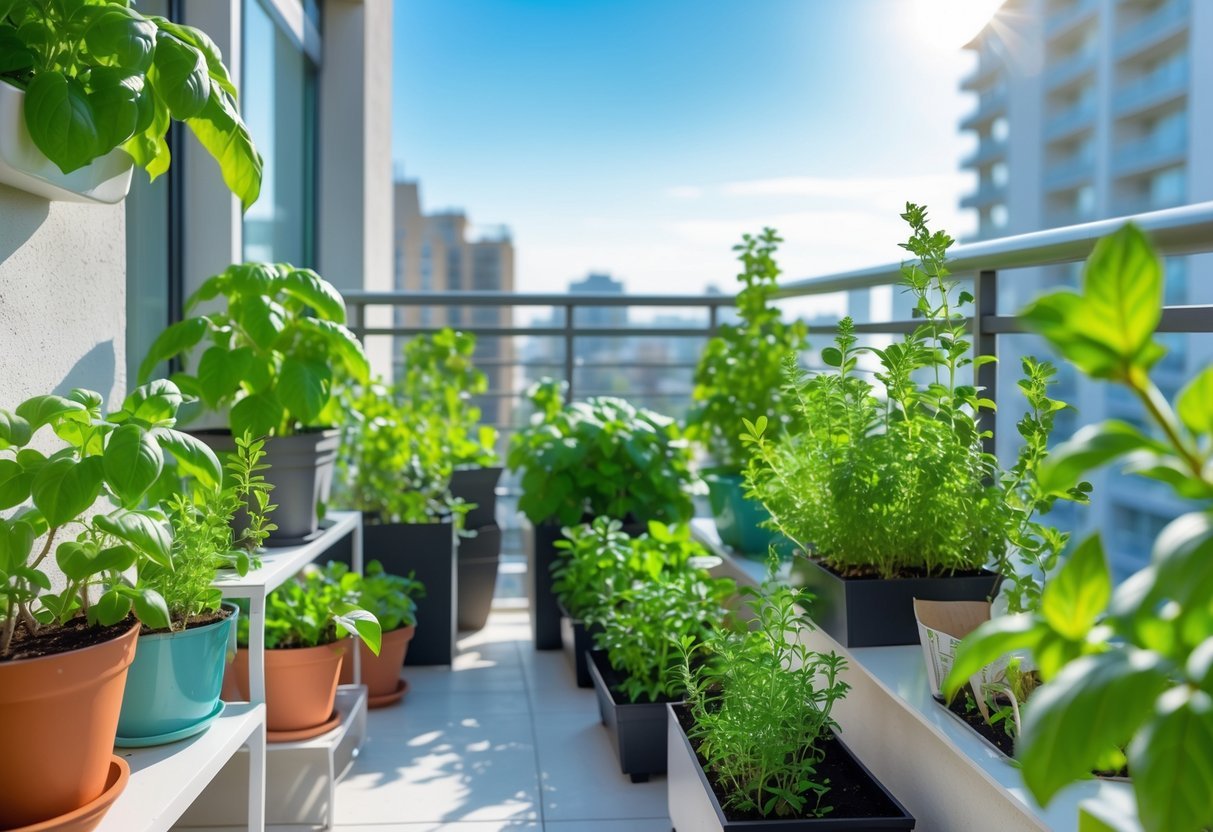
You can grow basil, mint, and thyme on a sunny balcony with just a few pots. Use well-draining soil and pots with drainage holes to prevent root rot.
Keep mint in its own pot because it spreads quickly. Pinch back basil and thyme to encourage bushy growth and more leaves.
Place herbs where you will use them, like near a door or window. Water when the top inch of soil is dry and feed lightly every few weeks during the growing season.
4) Incorporate hanging baskets with trailing flowers
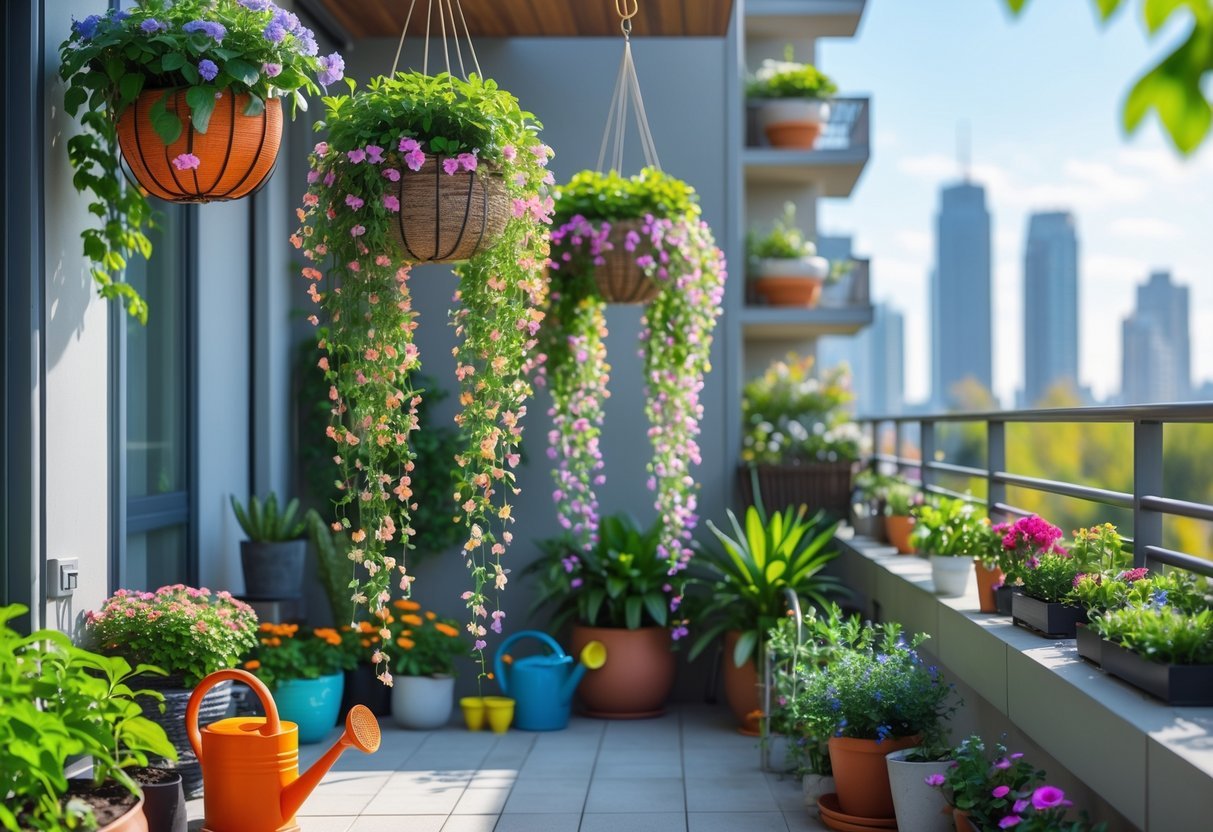
Hang baskets to free up floor space and add height to your balcony garden. Trailing flowers like petunias, lobelia, or dichondra spill over edges and soften railings.
Choose lightweight baskets and secure hooks or a rail for safety. Water more often than ground pots since hanging containers dry fast.
Mix flowering and foliage plants for color and texture. Prune spent blooms to keep plants tidy and encourage more flowers.
5) Choose lightweight, weather-resistant pots for safety
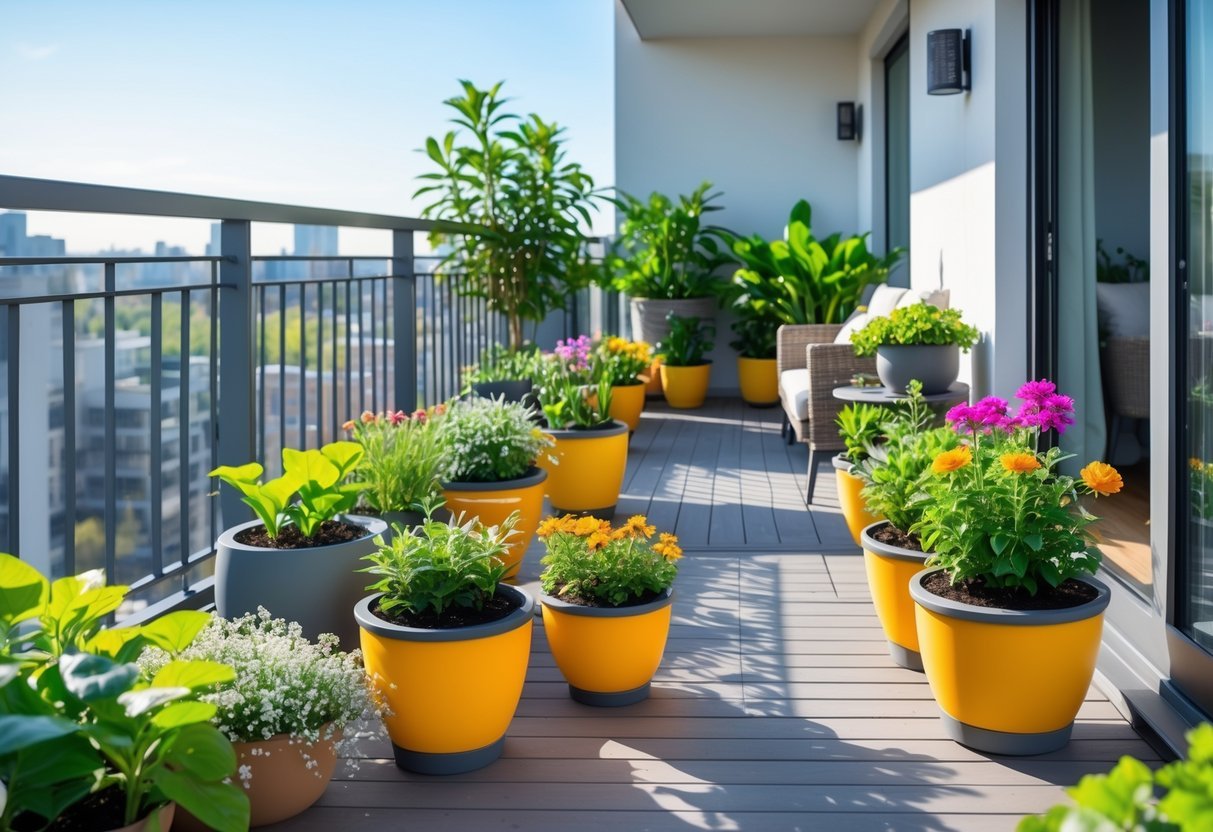
Pick pots made from recycled plastic, resin, or lightweight composite to avoid stressing balcony railings and floors. These materials resist UV and temperature changes, so they last longer with little upkeep.
Look for good drainage to protect roots and reduce water weight. Consider railing planters or wall-mounted options to save floor space while keeping load low.
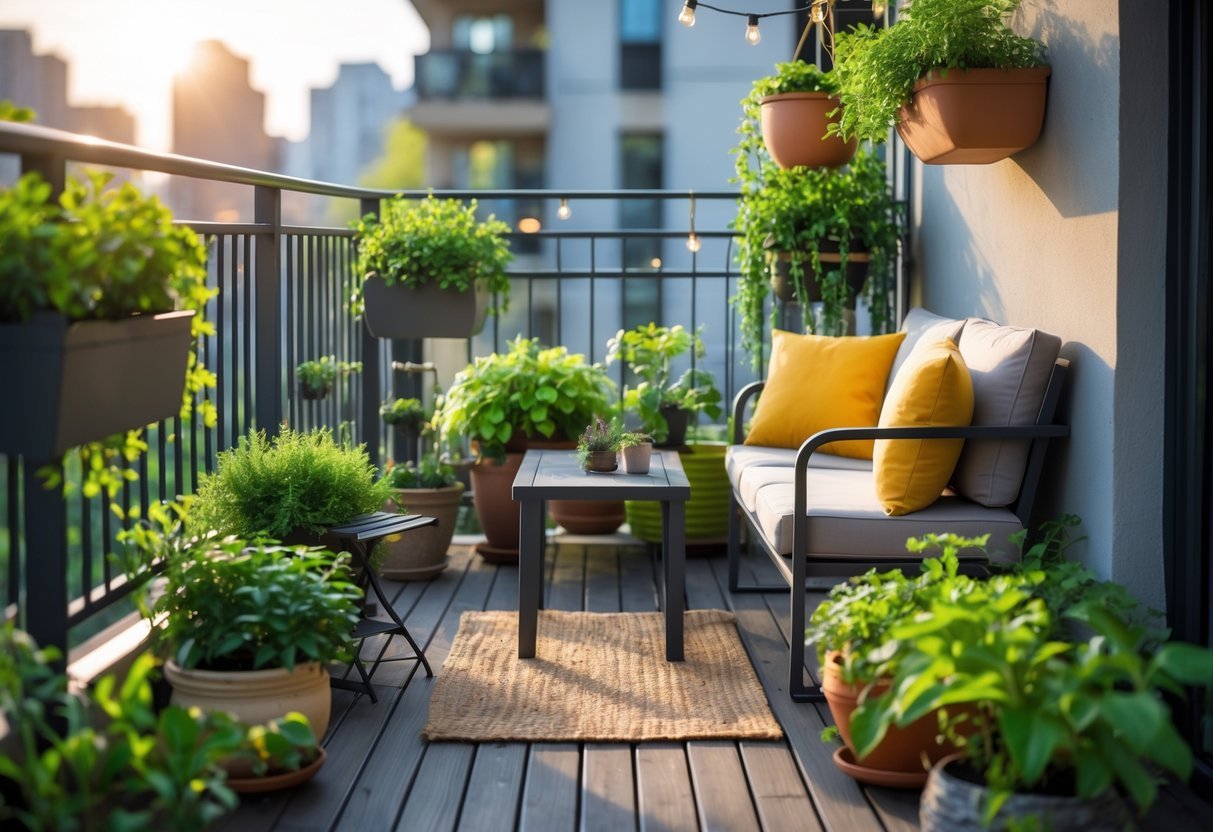
6) Create a cozy seating area with compact furniture
Choose foldable or stackable chairs to save space when you need room for plants or walking. A small bistro set or a slim bench gives you a place to sit without crowding the balcony.
Add cushions and a weatherproof throw for comfort and color. Use a narrow side table for drinks or a book; it keeps things tidy and functional.
Place seating against the railing or wall to open the center area. This layout helps you move freely and fits more greenery.
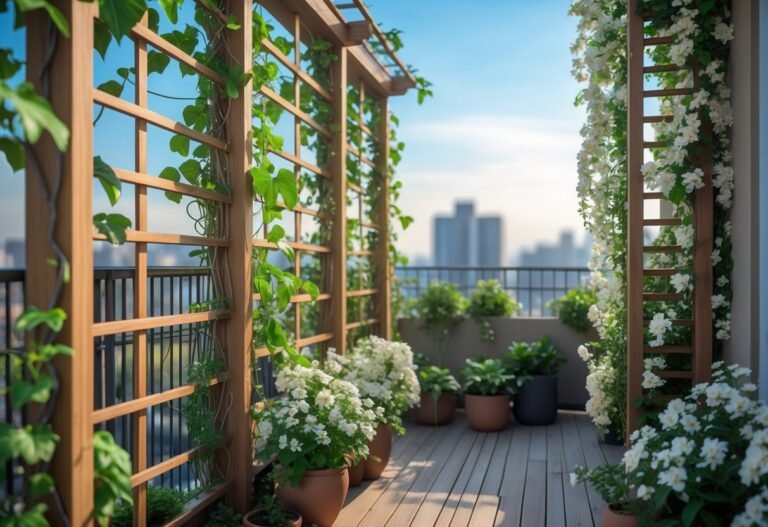
7) Add trellises to support climbing plants like jasmine
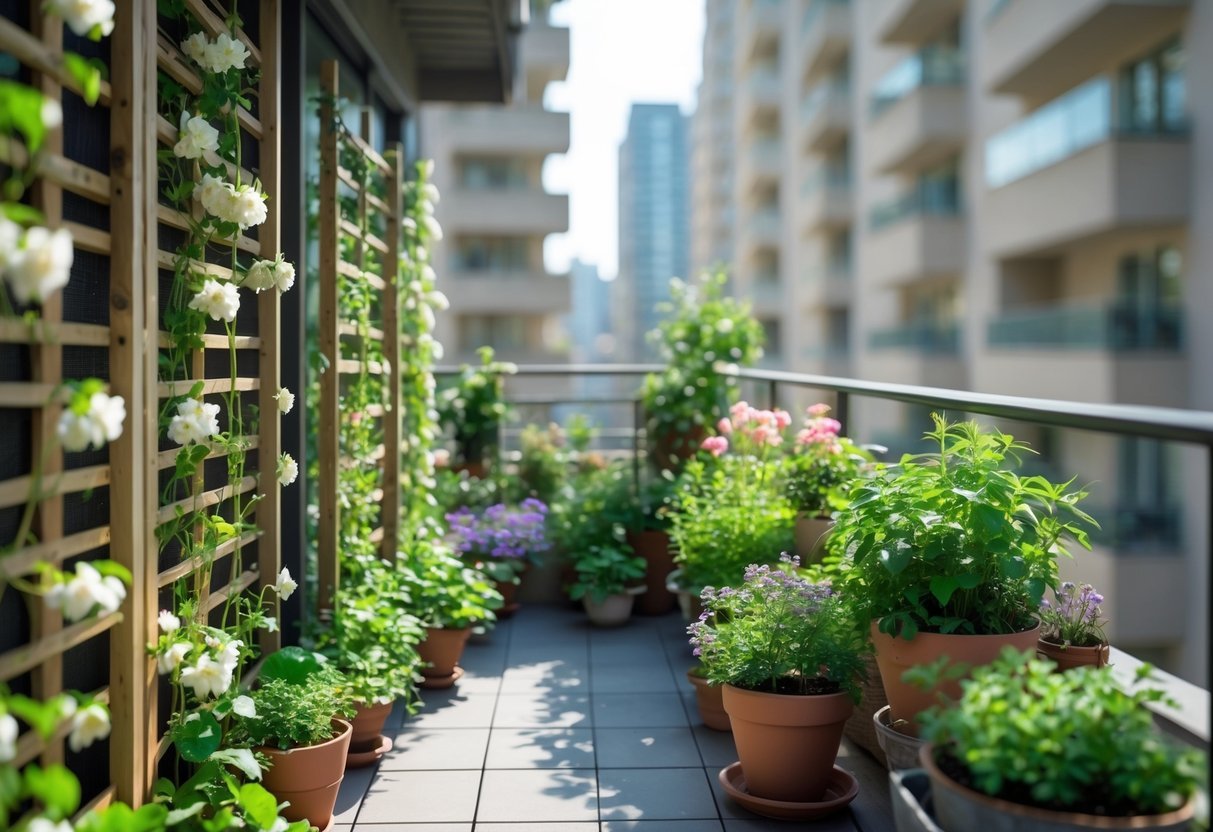
Choose a slim trellis that fits your balcony space and attaches safely to railings or walls. You want something sturdy but light enough for containers.
Plant jasmine or other climbers in deep pots and place the trellis behind them. Train vines gently upward and tie loose stems with soft garden twine.
Trellises save floor space and add vertical green privacy. They also help flowers get better air and light.
8) Plant colorful annuals for seasonal vibrancy
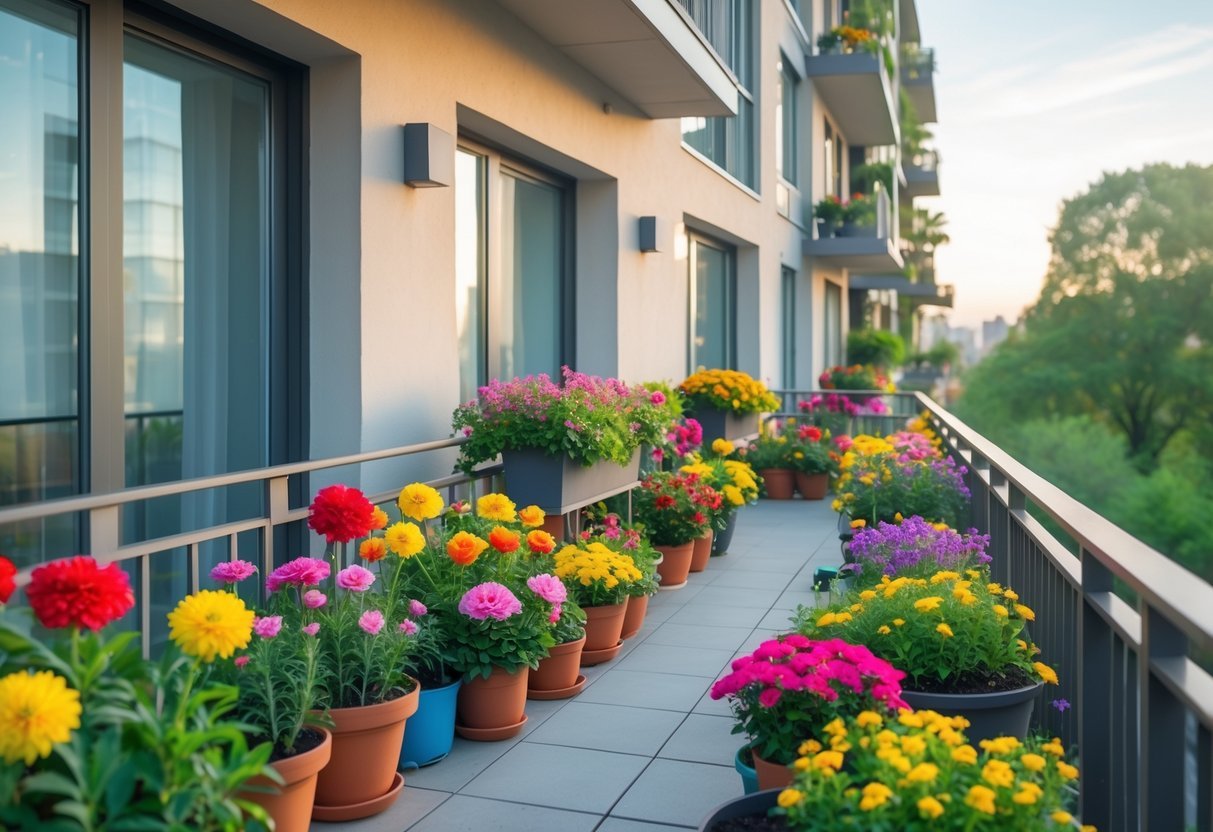
Choose annuals like petunias, marigolds, or begonias to add bright color quickly. They bloom all season and refresh your balcony with new varieties each year.
Plant them in containers with good drainage and a quality potting mix. Water regularly and deadhead spent blooms to keep flowering strong.
Rotate varieties by season—cool-season pansies in spring and fall, heat-tolerant zinnias or vinca in summer. This keeps your space lively and easy to manage.
9) Use self-watering containers for low-maintenance care
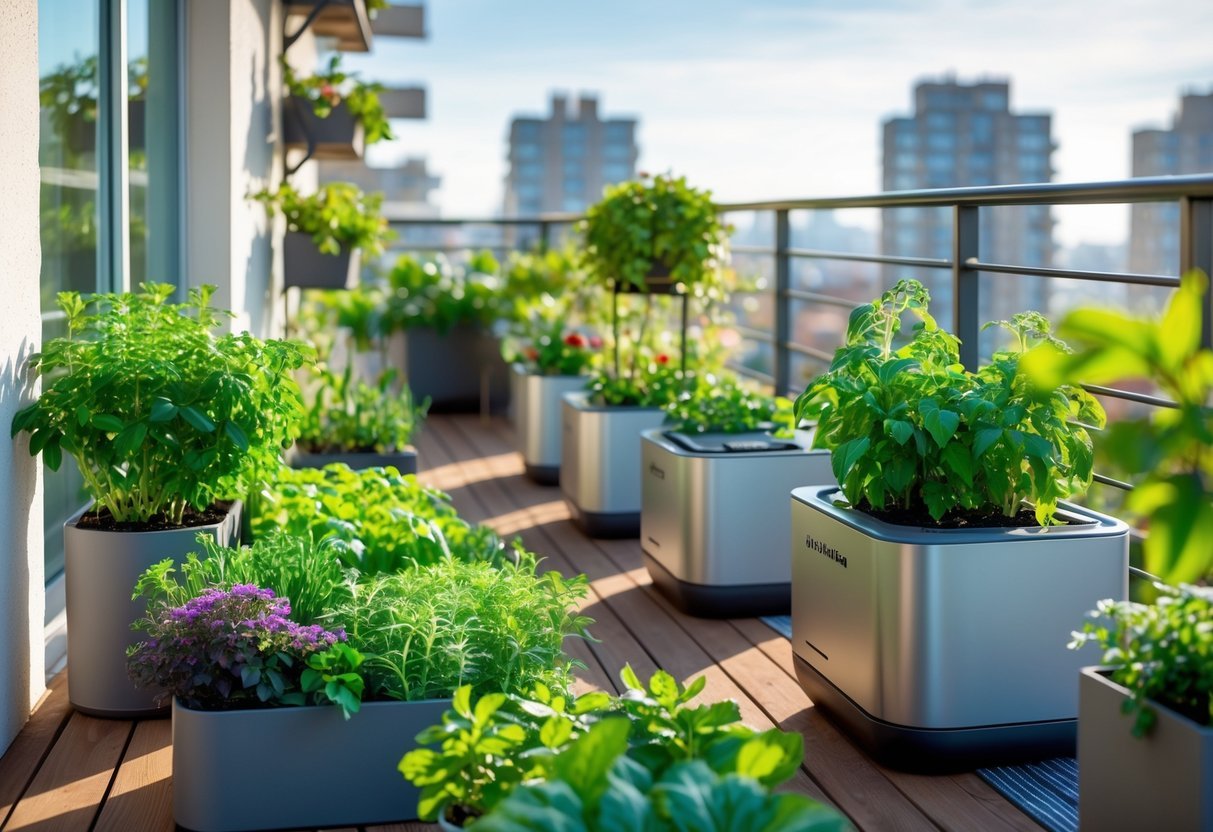
Choose self-watering pots to cut down on daily watering chores. They hold a reservoir that feeds water to roots as needed, so plants stay hydrated longer.
These containers work well on balconies, windowsills, and small patios. You’ll save time and reduce water waste, especially when you travel or have a busy week.
10) Incorporate succulents for drought-tolerant greenery
Succulents need little water and thrive in bright, indirect light, so they suit balconies well. You can group different shapes and colors for visual interest without crowded care.
Use shallow, well-draining pots and a cactus mix to prevent root rot. Rotate containers so each plant gets even light and remove dead leaves to keep plants healthy.
Balcony Gardening Essentials
You need sturdy containers, plants that match the light you get, and smart ways to use every inch. Focus on drainage, sizing, and plant needs to keep things healthy and low-maintenance.
Choosing Containers and Planters
Pick containers that fit your balcony weight limit and railing layout. Use lightweight materials like plastic, resin, or fiberglass if your balcony has a weight restriction. Terracotta looks nice but is heavy and dries faster.
Always use pots with drainage holes. If a decorative pot lacks holes, set a smaller draining pot inside it or drill holes if the material allows. Add a layer of coarse gravel or broken pottery at the bottom only if drainage is poor.
Match pot size to plant roots. Small herbs do well in 6–8 inch pots; tomatoes and peppers need 12–18 inch pots. Use saucers or trays to catch runoff and protect balcony flooring.
Selecting the Right Plants
Start by noting light: full sun (6+ hours), partial sun (3–6 hours), or shade (under 3 hours). Choose plants that match those hours to avoid constant wilting or legginess.
For full sun, pick basil, cherry tomatoes, lavender, or marigolds. For partial sun, try mint, chard, begonias, or dwarf peppers. For shade, use ferns, impatiens, snake plant, or coleus.
Prioritize low-maintenance varieties if you travel or forget watering. Look for “drought-tolerant” or “compact” on labels. Group plants with similar water and light needs together to make care easier.
Maximizing Limited Space
Use vertical space with wall-mounted planters, pocket systems, or stacked pots to free floor area. Attach railing planters or troughs to grow herbs and flowers without blocking walking space.
Choose multipurpose pieces like a bench with built-in planters or a narrow shelving unit for pots. Use trellises or a single climbing plant to add height instead of many pots.
Plant densely but smartly: mix shallow-rooted herbs in a large container with a central deeper-rooted veggie. That saves pots and creates a fuller look while keeping each plant’s root needs met.
Year-Round Balcony Garden Maintenance
Keep plants healthy by controlling water, drainage, light, and seasonal protection. Schedule simple weekly checks and adjust care when temperatures or rainfall change.
Watering and Drainage Tips
Water deeply but less often to encourage strong roots. For containers, water until excess runs from the drainage hole, then let the top 1–2 inches of soil dry before watering again. Use a moisture meter or stick your finger to check soil wetness.
Choose pots with drainage holes and use saucers to protect floors. Raise containers on pot feet or a small rack so water can flow freely and air can reach the pot base. For hanging baskets, add a water-retentive mix or line baskets with coco coir to reduce how often you must water.
Set up a simple drip system or self-watering inserts for herbs and vegetables. In hot months, water in the morning to reduce evaporation and avoid wet foliage at night, which can invite disease.
Seasonal Care Strategies
Adjust fertilizer, pruning, and protection with the seasons. In spring, repot fast-growing plants and add slow-release fertilizer. Pinch back annuals to encourage bushier growth. Monitor pests as new growth appears.
In summer, increase watering frequency and provide afternoon shade for heat-sensitive plants like lettuce and ferns. Move sensitive pots to cooler spots on very hot days. Mulch container soil with 1 inch of bark or gravel to keep roots cool and reduce watering needs.
In fall, cut back perennials and bring tender plants indoors before hard frosts. Reduce feeding and water less as growth slows. In winter, group pots near the wall for warmth, wrap large pots with insulating material, and keep soil barely moist to prevent roots from drying out.
Frequently Asked Questions
These answers focus on practical choices and clear steps you can use right away. Expect plant picks, budget tips, DIY setups, modern layout ideas, and easy vegetables that fit small balconies.
What are some low maintenance plants suitable for balcony gardens?
Choose plants that tolerate varied light and limited watering. Succulents, snake plant, and ZZ plant need little water and do well in containers.
Herbs like mint and thyme are forgiving and useful in cooking. Lavender and geraniums resist pests and add scent and color without much fuss.
How can I design a balcony garden on a low budget?
Start with recycled containers like buckets, wooden crates, or old planters. Paint them for a clean look and drill drainage holes.
Use vertical wall planters and tiered shelves to get more planting area without buying large pots. Share soil and plant cuttings with friends to save money.
What are creative DIY options for setting up a balcony garden?
Hang repurposed baskets from the railing for trailing flowers and herbs. Build a simple tiered shelf from cinder blocks and planks for multiple levels.
Make a vertical planter from a pallet or shoe organizer for small herbs. Label plants with painted rocks or wooden sticks to keep track.
What are some modern designs for apartment balcony gardens?
Go minimalist with matching lightweight, weather-resistant pots and a few sculptural plants. Use clean lines and neutral colors for a contemporary look.
Try a living wall with compact vertical planters for a green backdrop. Mix materials like metal rail planters and wooden shelves for a modern contrast.
How can beginners start a small balcony garden?
Measure your balcony sun exposure and weight limits first. Pick a few easy plants like basil, mint, or a couple of succulents to begin.
Use vertical planters and tiered shelves to maximize space. Water on a set schedule and check drainage to prevent root rot.
What vegetables are ideal for growing in small balcony garden spaces?
Grow compact vegetables that do well in containers. Cherry tomatoes, leaf lettuce, radishes, and dwarf pepper varieties work well.
Use deep pots for root growth and place herbs nearby for companion planting. Rotate crops and refresh soil each season to keep plants healthy.