Rock Garden Landscaping: Expert Design Tips for Low-Maintenance Curb Appeal
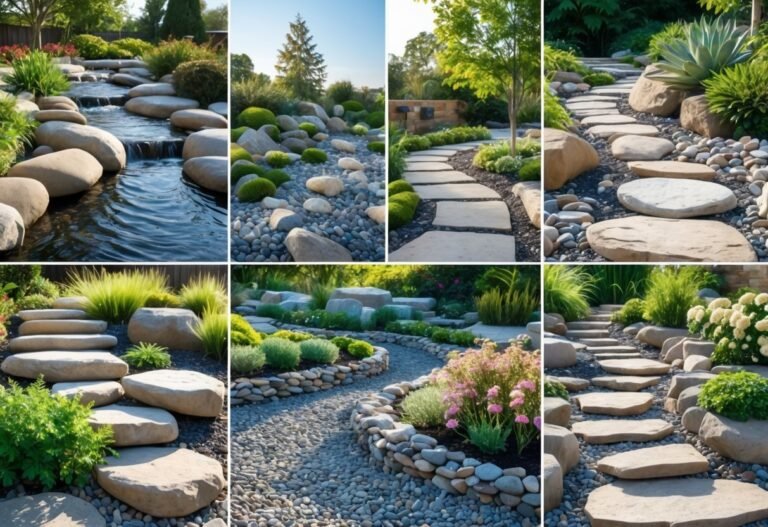
You can turn a rocky patch or sloped corner into a low-maintenance, eye-catching garden with a mix of stones and hardy plants. A well-planned rock garden uses scale, stone placement, and plant choice to create lasting structure and seasonal interest with minimal upkeep.
Picture stepping outside to a tidy, natural-looking display that hides problem soil and saves water. This guide shows simple design rules, plant choices, and upkeep tips so you can build a rock garden that fits your space and skill level.
Key Takeaways
- Plan with stone size, placement, and plant groupings for a balanced look.
- Choose drought-tolerant, small-scale plants that suit your climate.
- Maintain by weeding, mulching, and occasional pruning to keep structure.
Essential Elements of Rock Garden Landscaping
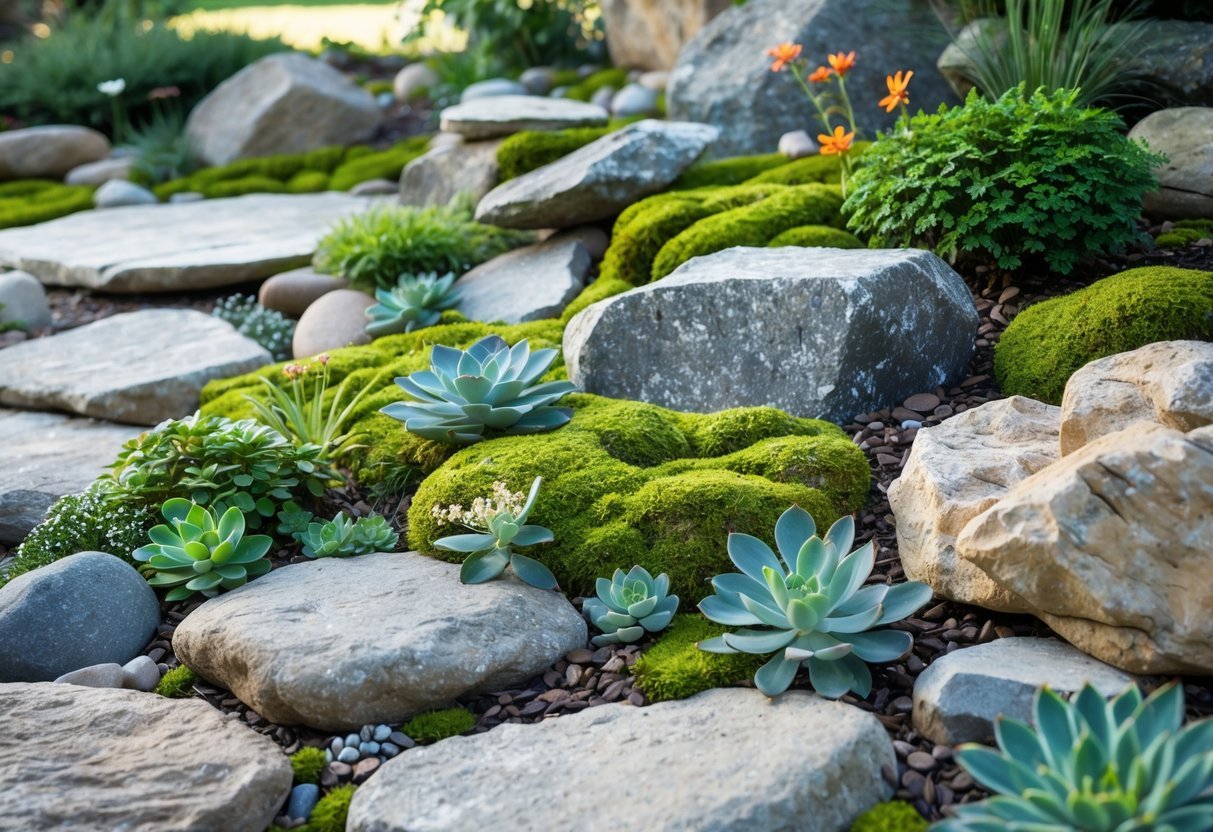
You need sturdy rocks, fast-draining soil, low-water plants, and a clear plan for water flow and irrigation. Each choice affects appearance, plant health, and long-term maintenance.
Choosing the Right Rocks
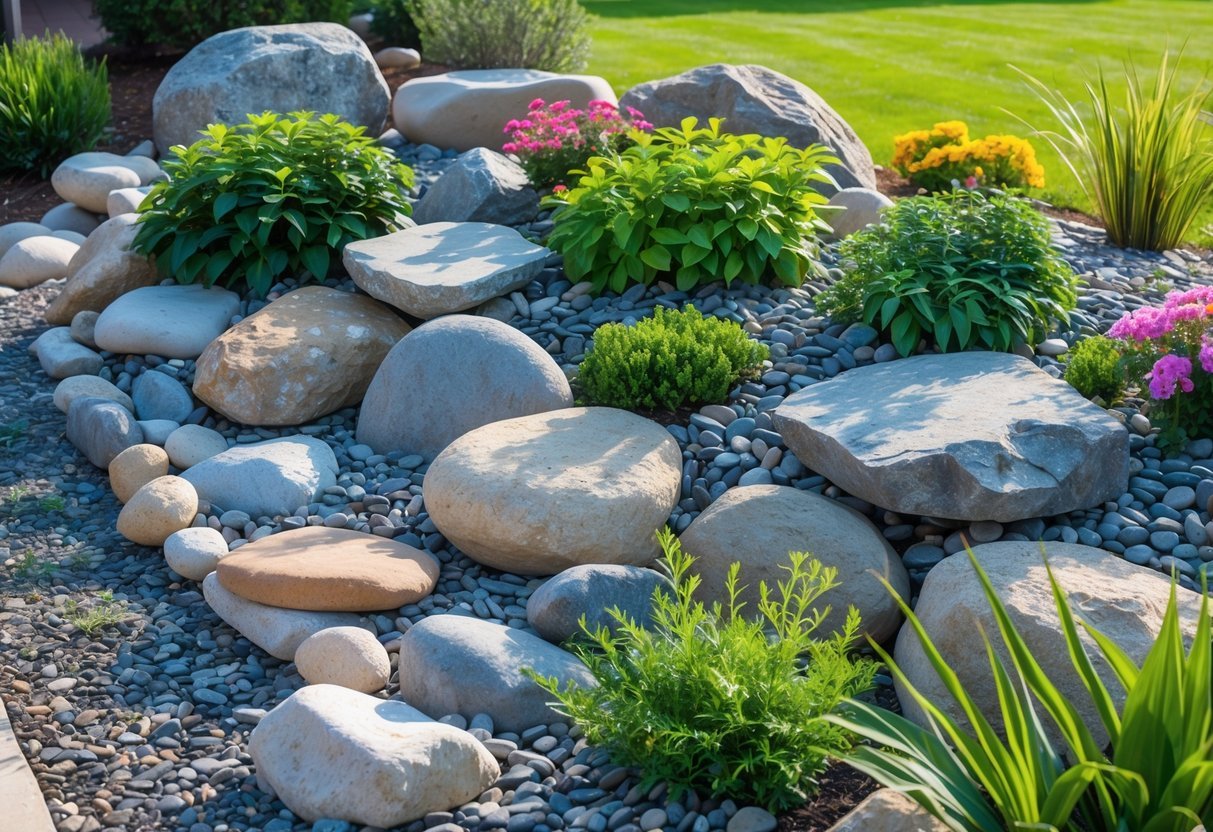
Pick rocks that match your home’s style and the garden scale. Use large anchor stones (2–3 per bed) to create focal points, then add medium and small stones to build natural-looking slopes and crevices. Local stone often looks most natural and weathers well in your climate.
Match rock color and texture to nearby hardscaping like patios or walls. Avoid mixing too many rock types; 2–3 complementary colors and sizes keep the space cohesive. Place rocks partially buried — about one-third to one-half visible — so they look settled, not stacked.
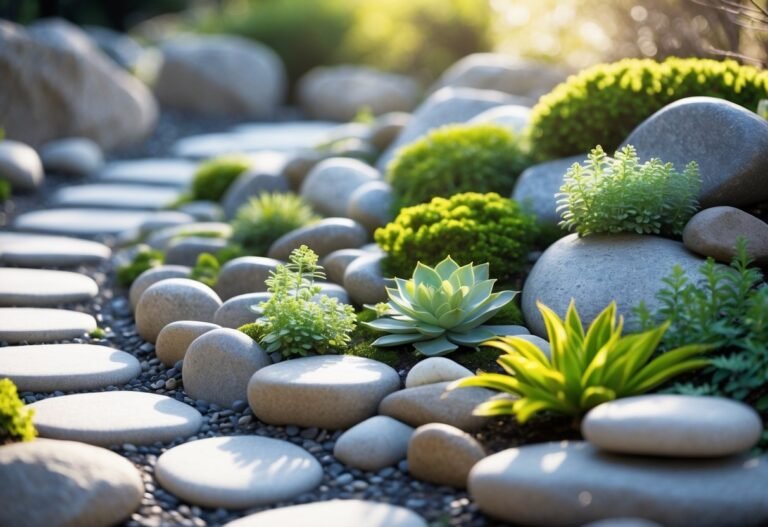
Think about edges: flat stones work for pathways, rounded ones for soft transitions, and crushed gravel fills gaps and aids drainage. Use larger boulders to block wind or create microclimates for sensitive plants.
Soil Preparation for Rock Gardens
Your soil must drain quickly. Remove heavy clay and replace it with a mix of coarse sand, grit, and well-rotted compost in roughly 60% mineral (sand/grit) to 40% organic ratio. This gives roots oxygen and prevents rot.
Create mounds or raised beds where plants prefer extra drainage. Work the amended soil at least 12–18 inches deep to allow roots to establish. Test pH for chosen plants — many rock garden species prefer neutral to slightly alkaline soil.
Use a layer of landscape fabric only where you need weed control; otherwise, it can restrict root growth and water movement. Top with 1–2 inches of gravel or decorative stone to stabilize soil and slow erosion while keeping moisture levels low.
Selecting Suitable Plants
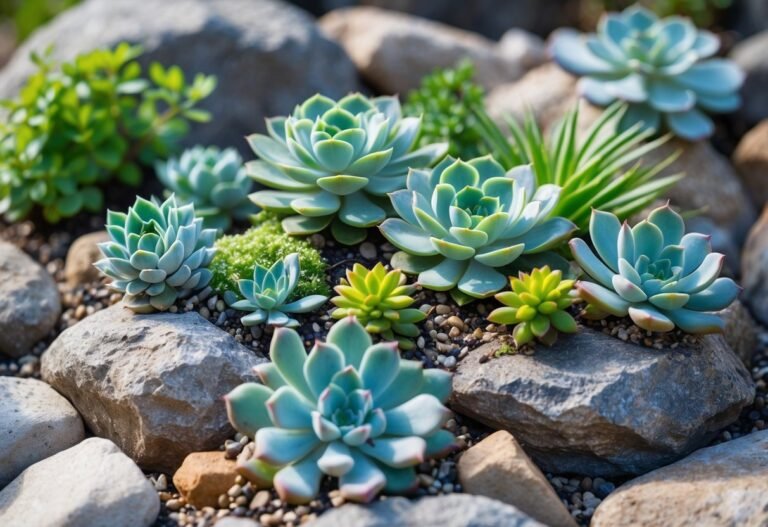
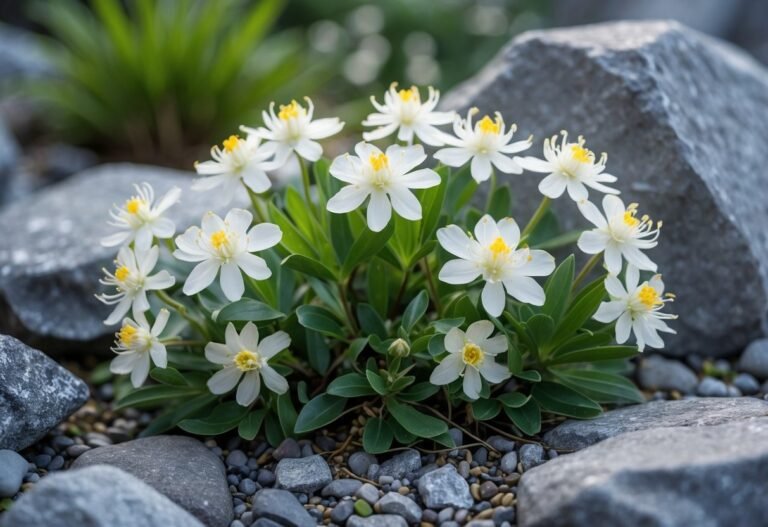
Choose drought-tolerant, low-growing species that suit your USDA zone and sun exposure. Good options include sedums, thyme, saxifrages, alpine primula, dwarf junipers, and many native grasses. Pick plants with different bloom times for seasonal interest.
Group plants with similar water and light needs together. Use sparse, irregular spacing to mimic natural rock crevices. Reserve sheltered pockets near large stones for plants that need slight protection from wind or heat.
Prioritize shallow-rooted or mat-forming varieties to reduce soil disruption. Avoid large shrubs unless you have ample space; they can overpower the rock aesthetic and shade out smaller species.
Drainage and Irrigation Considerations
Design for fast runoff and no standing water. Slope beds away from foundations and use gravel trenches or perforated drain pipe where water collects. Ensure high spots shed water toward planted lower areas without pooling.
Irrigate sparingly. Use drip irrigation or soaker lines set on a low schedule for newly planted specimens, then reduce frequency as plants establish. Mulch with coarse gravel rather than organic mulch to keep moisture low and maintain a dry root zone.
Check drainage after heavy rain and adjust soil mix or add more slope if water lingers. Regularly inspect irrigation lines to prevent overwatering and reduce disease risk in succulent and alpine plants.
Design Principles for Rock Gardens
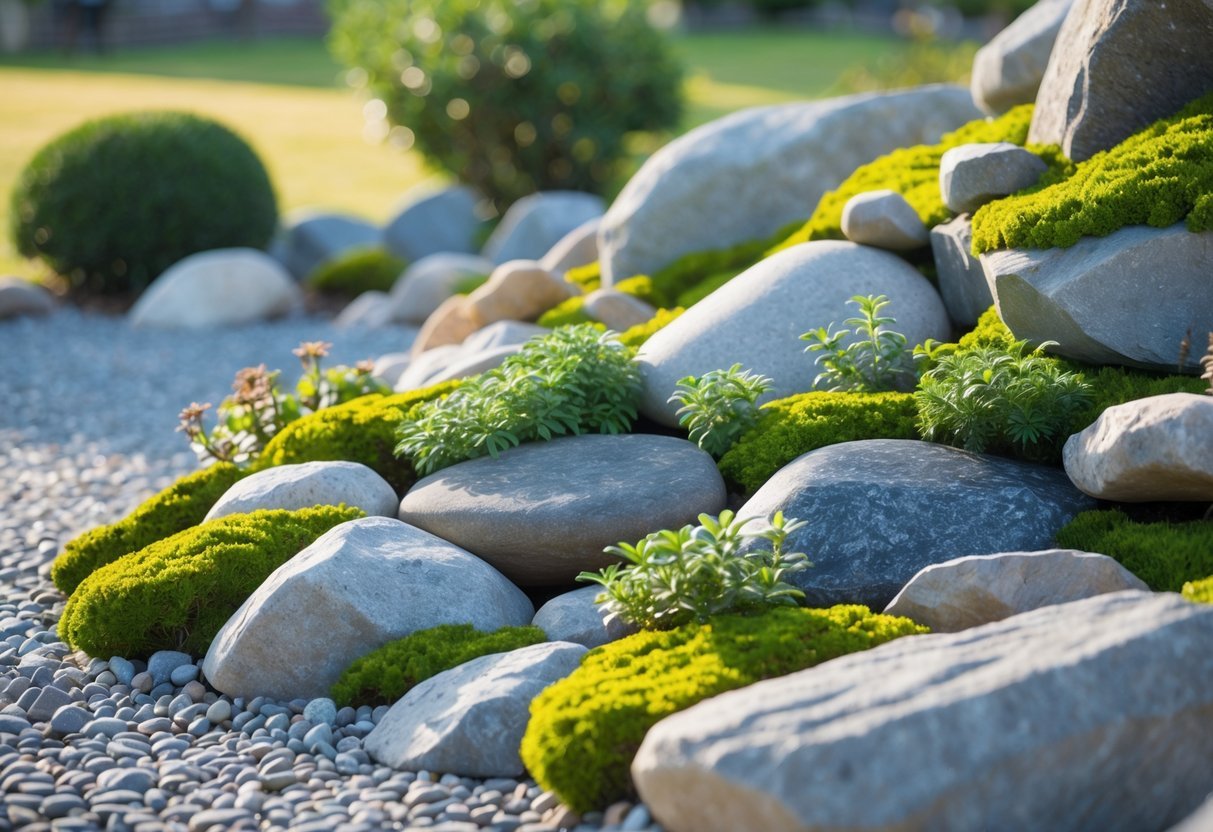
Focus on how rocks, plants, and slopes work together. Use size, placement, and plant choice to make a clear, natural look that suits your site and maintenance level.
Creating Naturalistic Layouts
Place large stones first as the garden’s anchor. Set rocks at slight angles and partly buried so they look like they belong there. Group stones in odd numbers—three or five—to avoid a symmetric, artificial look.
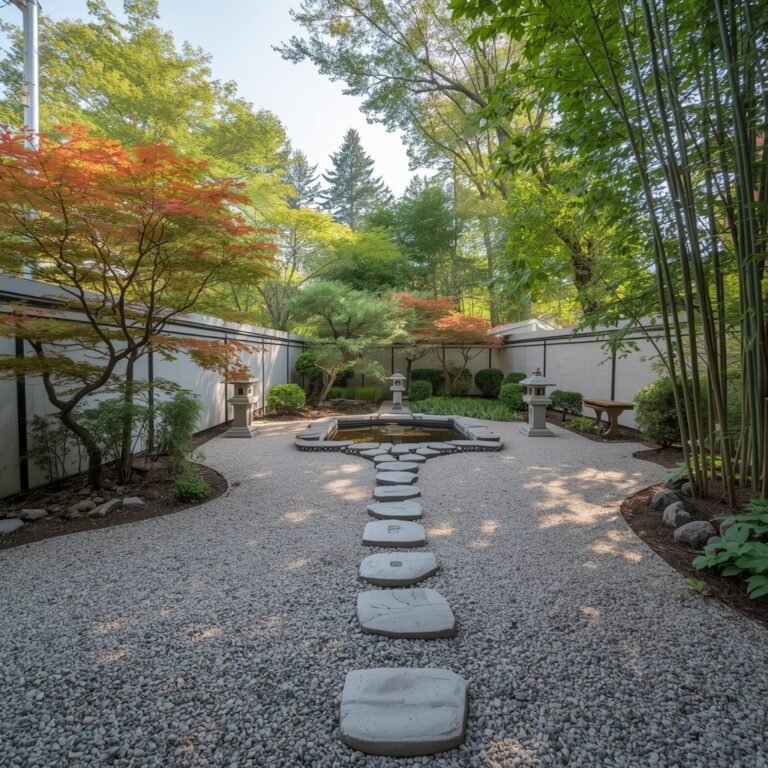
Use scale to match your yard. In a small space, pick smaller boulders and clusters; in a large area, choose fewer, bigger rocks spaced farther apart. Arrange paths or stepping stones to guide movement and sightlines.
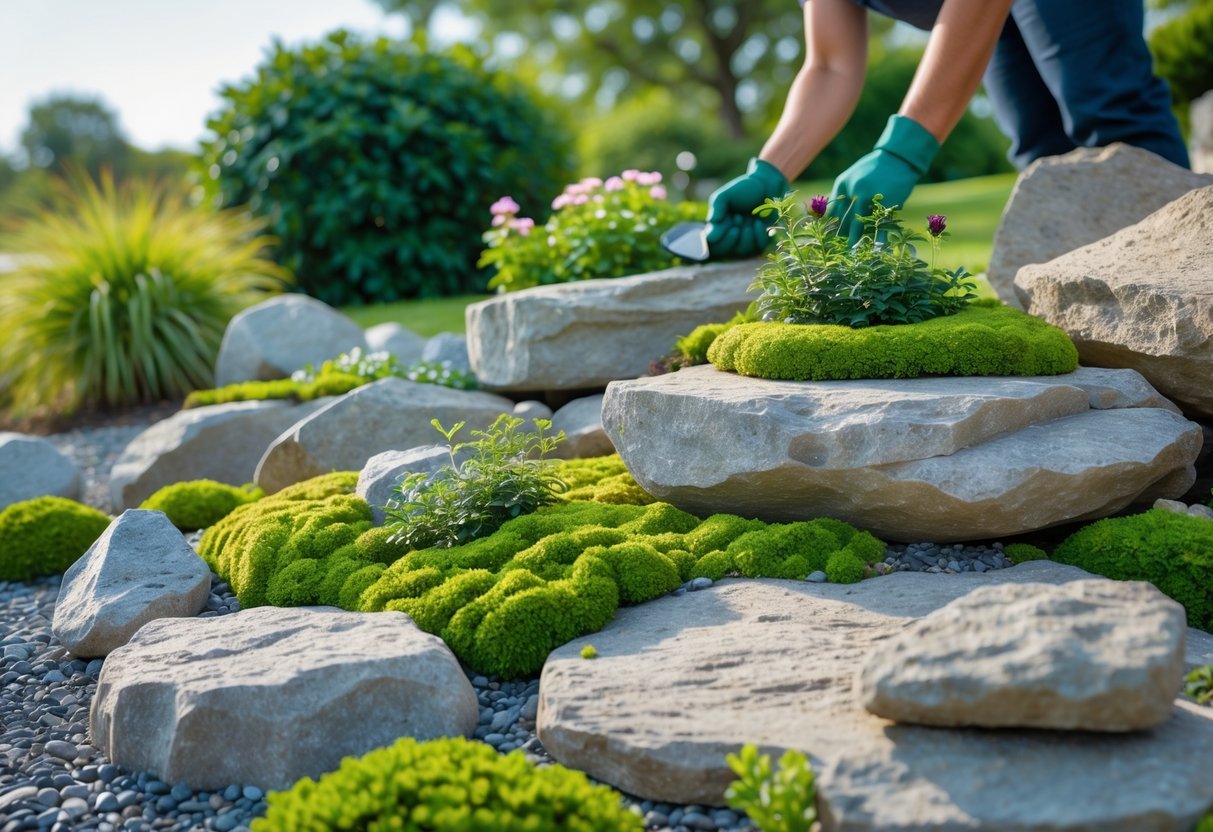
Plant between and around rocks, not just in front. Choose low-growing, hardy plants that spill over rock edges or tuck into crevices. Keep hard edges minimal; blend gravel or mulch into surrounding lawn or beds for a seamless transition.
Incorporating Levels and Slopes
Work with existing slope rather than fighting it. Build terraces with flat stones or stacked rock to hold soil and create planting pockets. Terracing controls erosion and gives you separate planting zones.
Vary elevation subtly to add interest. Use a mix of raised rock mounds, shallow swales, and gentle steps. This creates microclimates—sunny tops and cooler crevices—so you can place drought-tolerant plants on higher spots and moisture-loving ones lower down.
Ensure good drainage by grading soil away from foundations and using coarse substrate under planting pockets. Keep slopes stable with retaining stones set deep and mortar-free so water can pass through.
Color and Texture Harmony
Balance stone colors with plant tones. If you use warm-colored rocks (red, tan), pick plants with warm foliage or blooms. Cool gray stones pair well with silver-leaved plants and blue flowers for a calm palette.
Mix textures for contrast. Combine coarse, rough boulders with fine gravel or sand. Pair spiky or architectural plants (sedum, yucca) with soft, mat-forming groundcovers to avoid monotony.
Limit the number of dominant colors and textures to three to keep the design cohesive. Use repetition—repeat a plant species or stone type at several spots—to tie the garden together visually.
Maintenance and Care of Rock Gardens
Keep weeds low, water for plant needs, and do seasonal tasks like pruning and mulch refreshes. Focus on soil drainage, correct plant spacing, and spot treatments rather than broad, frequent actions.
Weed Prevention Strategies
Pull weeds by hand when they are small to stop roots from taking hold. Use a weeding tool to lift roots from gravel and between rocks so weeds don’t regrow quickly.
Lay landscape fabric beneath gravel in new beds to block weed seeds while still allowing water through. Leave gaps around plant crowns so roots get air and water.
Add a 2–3 inch layer of coarse gravel or crushed stone. Gravel hides weed seeds and slows their germination. Replenish thin gravel spots each year to maintain coverage.
Use targeted herbicide only on persistent patches, and apply with a small brush to avoid harming nearby plants. Mulch annual planting beds with inorganic mulch like lava rock if you have many low-water plants.
Watering Techniques
Water new plantings deeply once a week for the first season to establish roots. After that, reduce frequency and water according to plant type—drought-tolerant alpines and succulents need much less than perennials.
Use drip irrigation or soaker hoses under the gravel to deliver water directly to the root zone. This reduces surface evaporation and keeps rock surfaces dry, which prevents algae and moss.
Water early in the morning to reduce fungal problems and let plants absorb moisture before heat. Check soil moisture 2–3 inches down; if it’s damp, skip watering. Avoid frequent shallow watering that encourages weak roots.
Group plants by water needs so you can water only where needed. Place moisture meters near representative plants to guide your schedule.
Seasonal Upkeep
In spring, remove winter debris and inspect rock placement for erosion. Lift and reset any stones that shifted, and flush compacted gravel with a rake to restore drainage channels.
Prune dead growth after flowering and divide overcrowded clumps every 2–4 years. Trim perennials lightly to maintain shape and prevent shading that can encourage weeds.
In summer, check for pests and fungal spots weekly. Spot-treat pests early and improve air flow by thinning dense growth. Top up gravel and replace any degraded landscape fabric.
In fall, cut back tender plants before first frost and move frost-sensitive pots to shelter. Clean gutters and paths so leaves don’t collect in the rock bed. Store tools and label plants for next season’s care.
Frequently Asked Questions
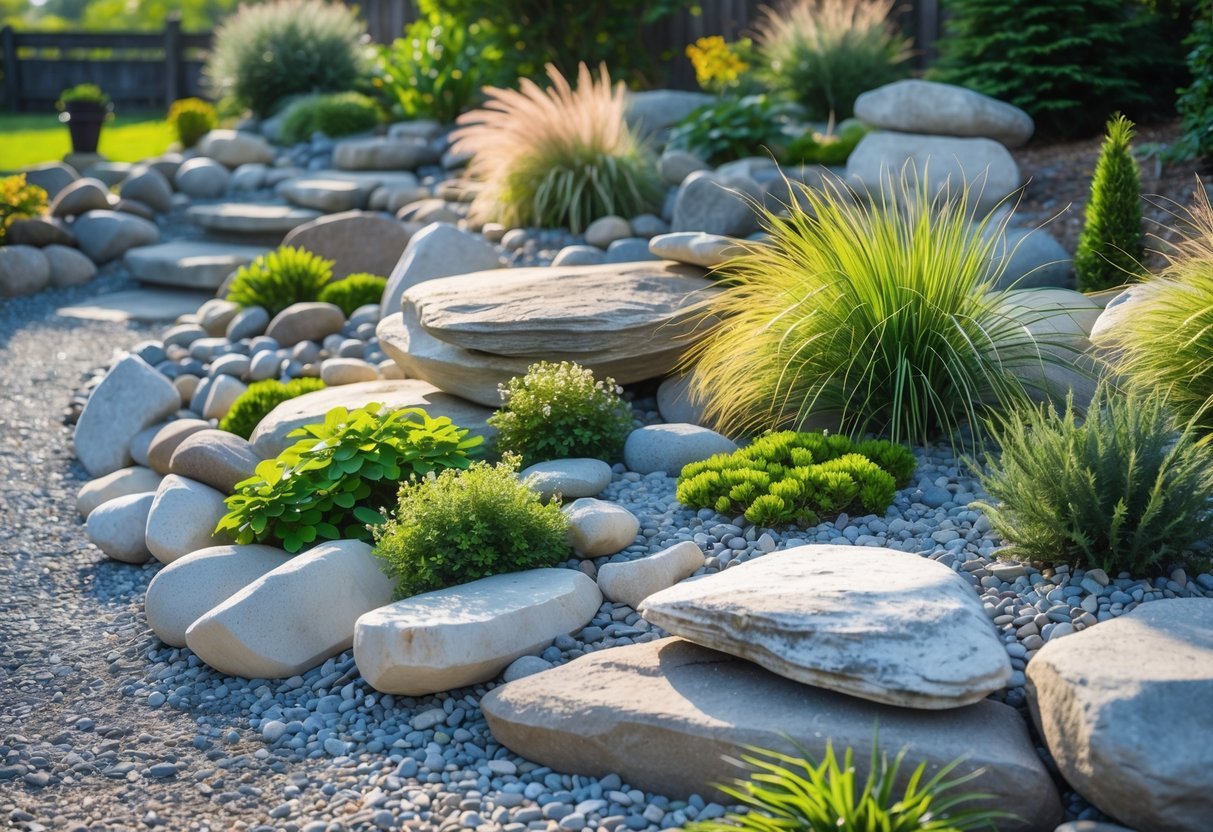
This section answers practical questions about design ideas, plant and rock choices, space-saving layouts, and how to blend a rock garden into a front yard. You’ll get step-by-step tips you can use when planning, building, and maintaining your rock garden.
What are some creative ideas for designing a rock garden?
Use tiered levels or mounds to create visual depth and better drainage. Place larger boulders as focal points and fill gaps with gravel and low-growing groundcovers.
Build a dry stream bed with river rock to guide water and add movement. Add a simple seating area or a small path of stepping stones to invite use and viewing.
Mix textures and colors by pairing succulents, sedums, and alpine plants with ornamental grasses. Plant in drifts or clumps rather than single specimens for a natural look.
How can I create a rock garden in a small front yard space?
Start by mapping a compact area, such as a 4–6 foot bed near the entry or along a walkway. Use a mix of small to medium stones to keep scale proportional to the house.
Choose low-growing plants and keep beds shallow so you don’t overwhelm the space. Use edging or a low retaining wall to define the rock garden and keep gravel contained.
Use vertical interest with a raised mound or stacked stones to add height without using a lot of ground area. Keep pathways narrow and meandering to make the space feel larger.
What are the best practices for integrating a rock garden into front yard landscaping?
Match the rock size and plant palette to your home’s style for a cohesive look. Place the garden where drainage is good and it receives the light levels your chosen plants need.
Create clear transitions between lawn, bed, and walkways using edging or changes in material. Plant native or drought-tolerant species to reduce water and maintenance needs.
Keep sightlines open from the street and entry so the garden complements curb appeal. Maintain tidy rock placement and prune plants so the area looks intentional.
Which types of rocks are most suitable for rock garden landscaping?
Use local stone when possible; it blends with the regional landscape and often costs less. Choose a mix of sizes: large boulders for anchors, medium stones for structure, and gravel for fill.
Sandstone, basalt, limestone, and granite are common choices because they weather well and hold texture. River rock works well for dry stream beds and rounded accents.
Avoid using only one stone type; variety gives a natural appearance. Pick colors that complement your home and plant choices.
What is the 70/30 rule in gardening and how does it apply to rock gardens?
The 70/30 rule means about 70% hardscape (rocks, paths, mulch) and 30% plants in a rock garden. This keeps the garden looking rocky while still allowing plants to stand out.
Use larger areas of gravel or stone to meet the hardscape portion. Place plants in clusters that total roughly 30% of the visible surface area.
Adjust the ratio to suit your taste and site conditions, but keep the balance so plants don’t overwhelm the stones or vice versa.
Why might someone choose to implement a rock garden instead of a traditional garden?
Rock gardens use less water and usually need less ongoing care than turf or high-maintenance flower beds. They suit slopes, poor soils, and sunny dry spots where traditional plants struggle.
They offer year-round structure and texture with a mix of evergreen and drought-tolerant plants. Rock gardens also resist erosion and can reduce lawn area for lower mowing and irrigation needs.