Rock Garden In Home: Stylish Small-Space Designs and Low-Maintenance Tips
You can turn a plain patch of yard into a striking, low-effort landscape with rock garden ideas that suit any space and skill level. This article gives you simple, practical ways to use stones, plants, and layout tricks to create a beautiful, low-maintenance rock garden that fits your terrain and style.
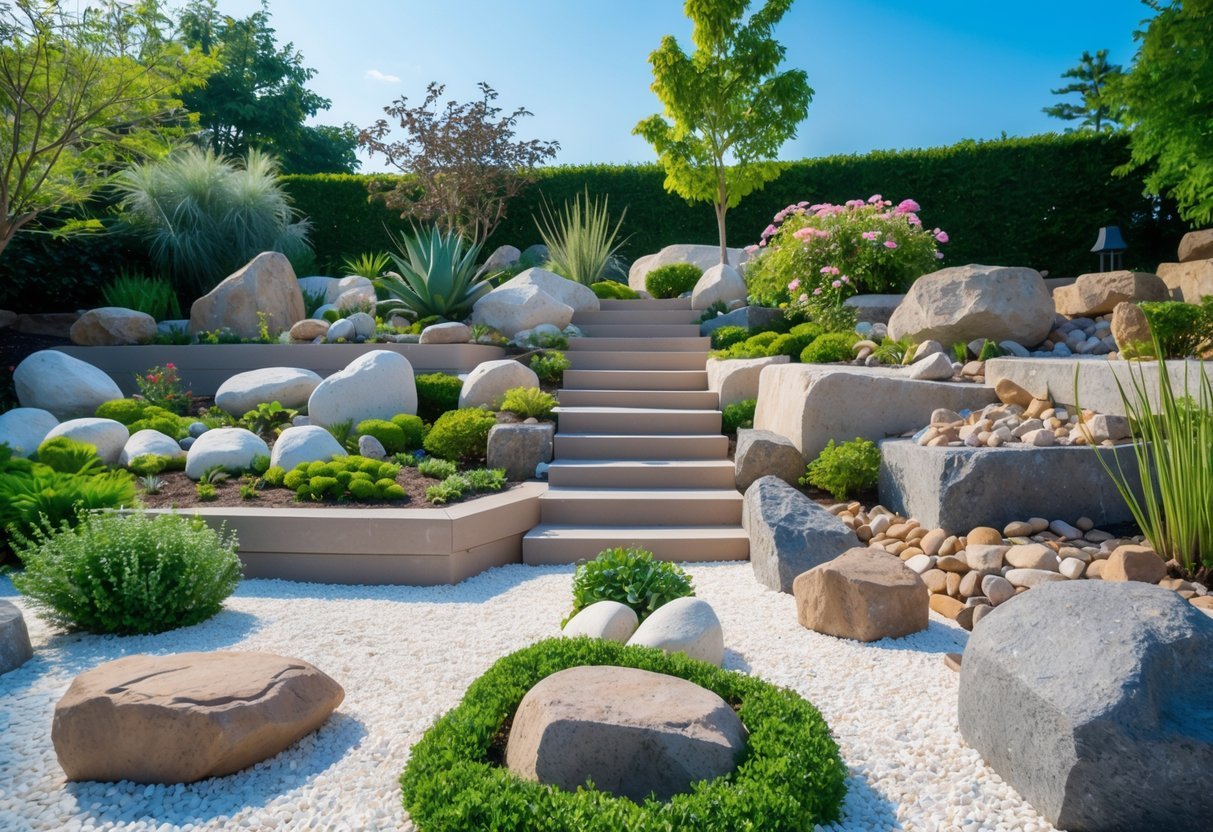
Explore ideas that help you choose plants, place boulders, add paths, work with slopes, and bring color and texture to rocky spots. You’ll find approaches for dry climates, uneven ground, and small or large areas so you can pick the ideas that match your yard and goals.
1) Use native drought-tolerant plants for low maintenance
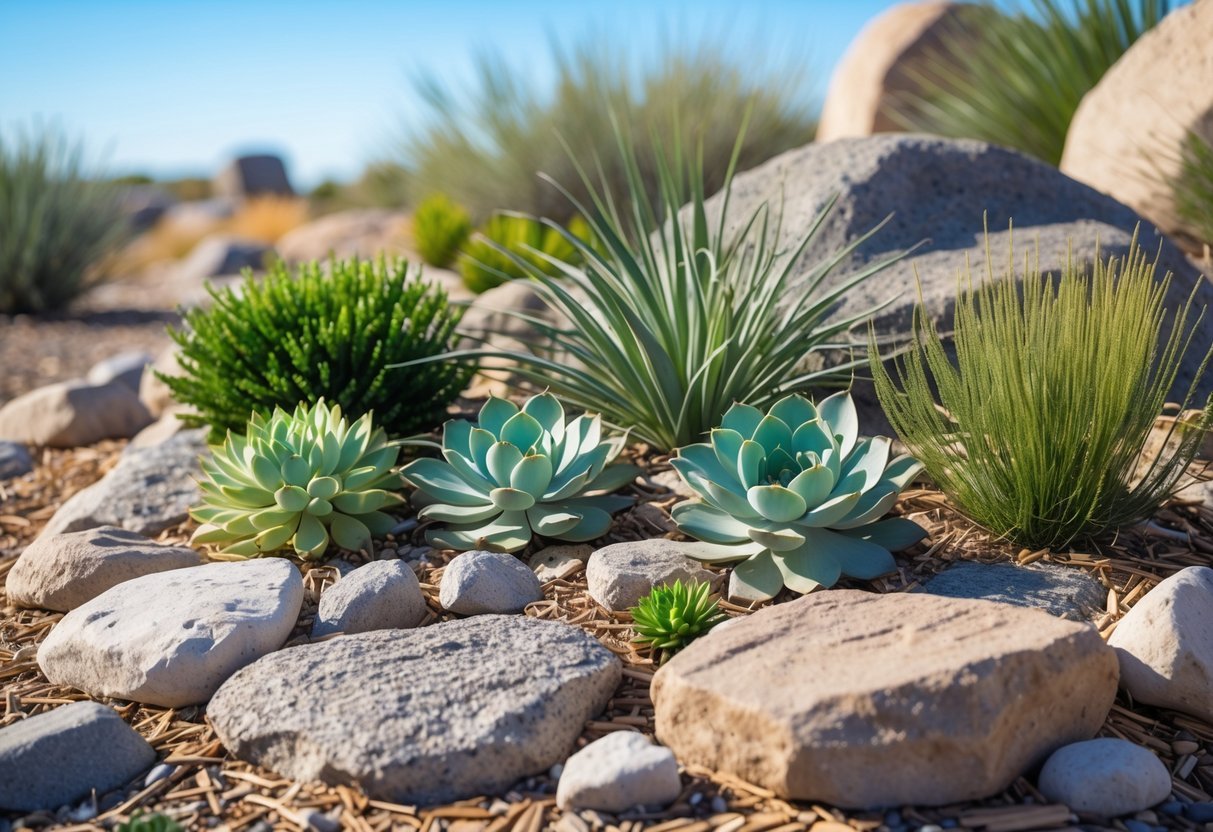
Choose native, drought-tolerant species to cut watering and care needs. These plants are adapted to your local climate and soil, so they establish faster and resist pests better.
Mix low-growing perennials, succulents, and small shrubs for year-round texture. Plant them in well-draining soil and group by water needs to keep maintenance simple.
2) Incorporate boulders to create natural focal points
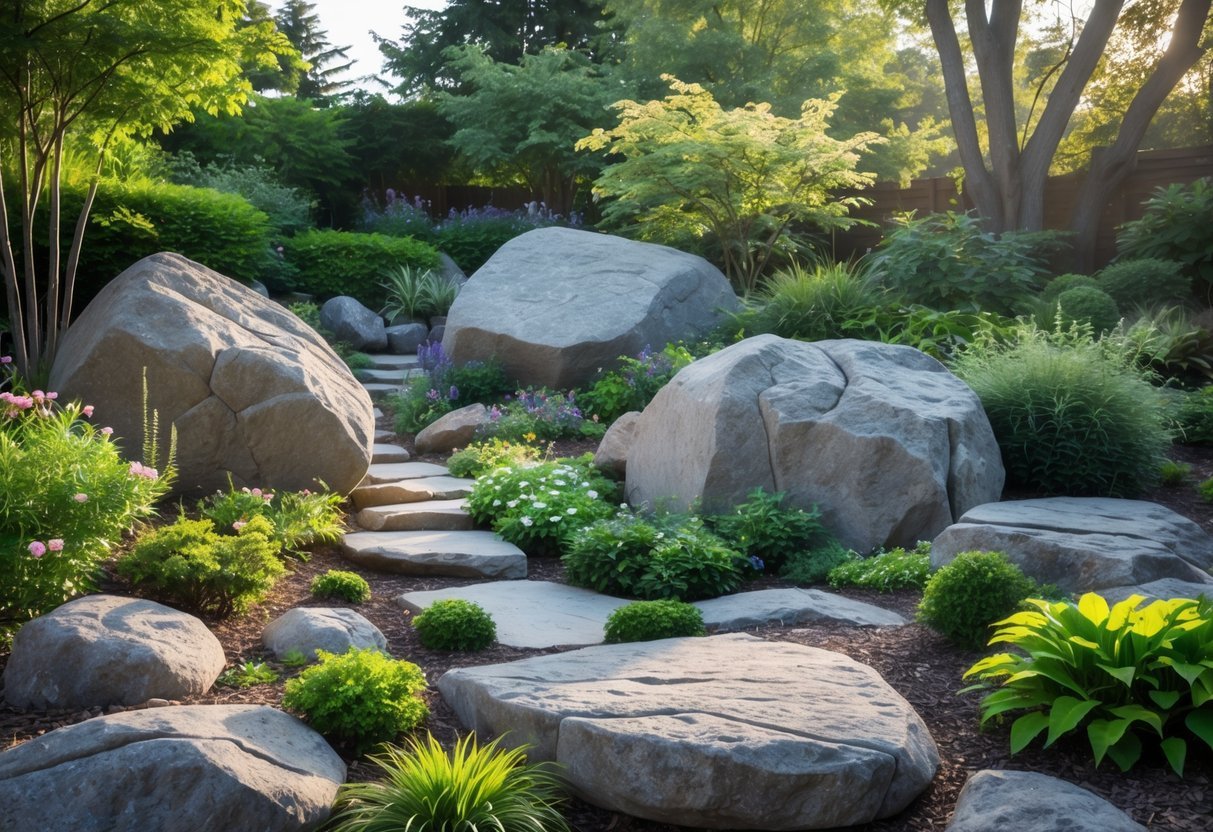
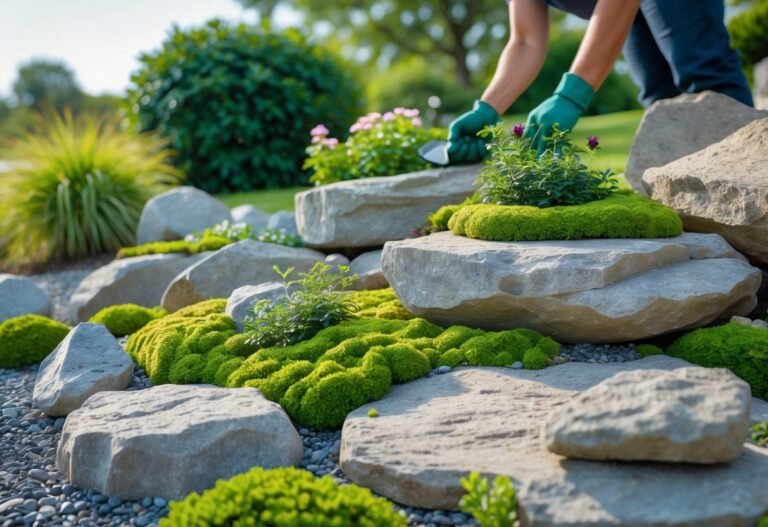
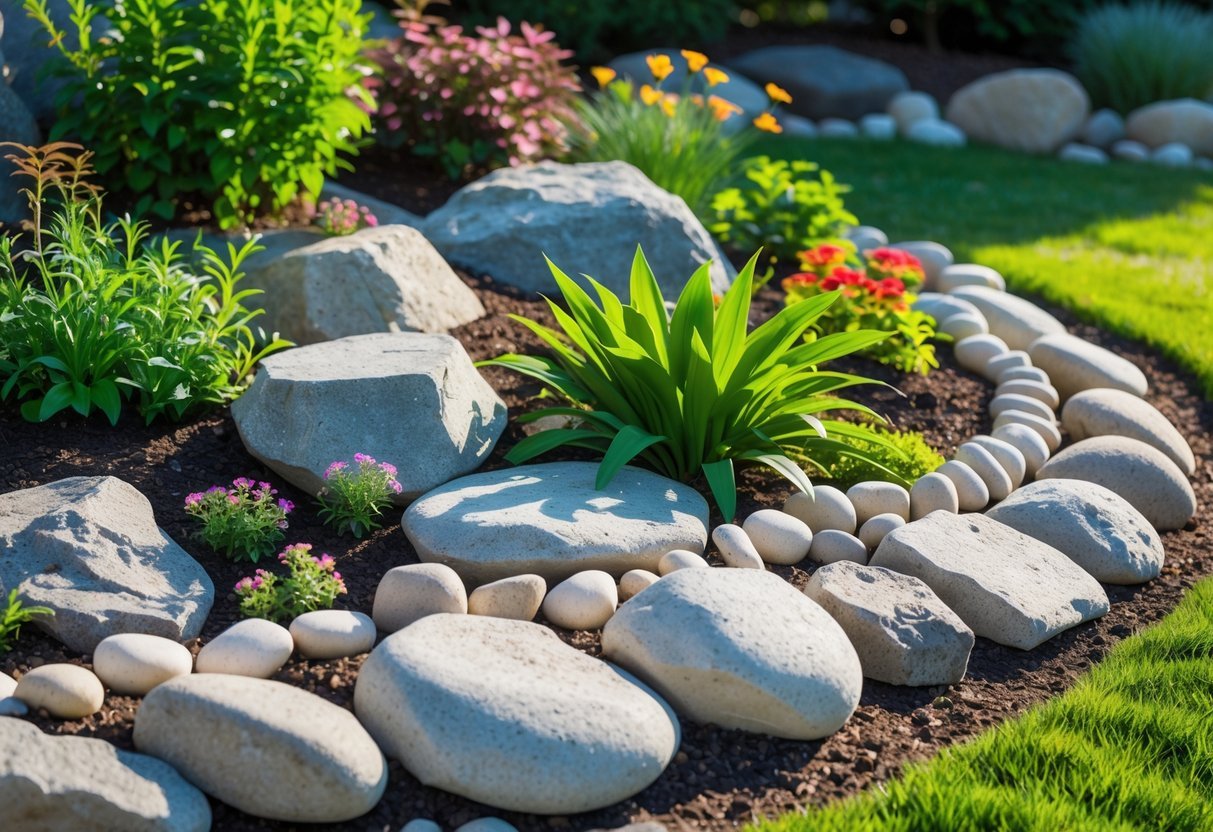
Place one or two larger boulders where you want the eye to go, such as near a path or at the edge of a planting bed. You can group different sizes for a more natural look.
Use low plants and grasses around the base to soften edges and tie the rock to the garden. Flat-topped boulders can double as casual seating or a spot to display a small pot.
3) Arrange rocks to highlight garden layers on slopes
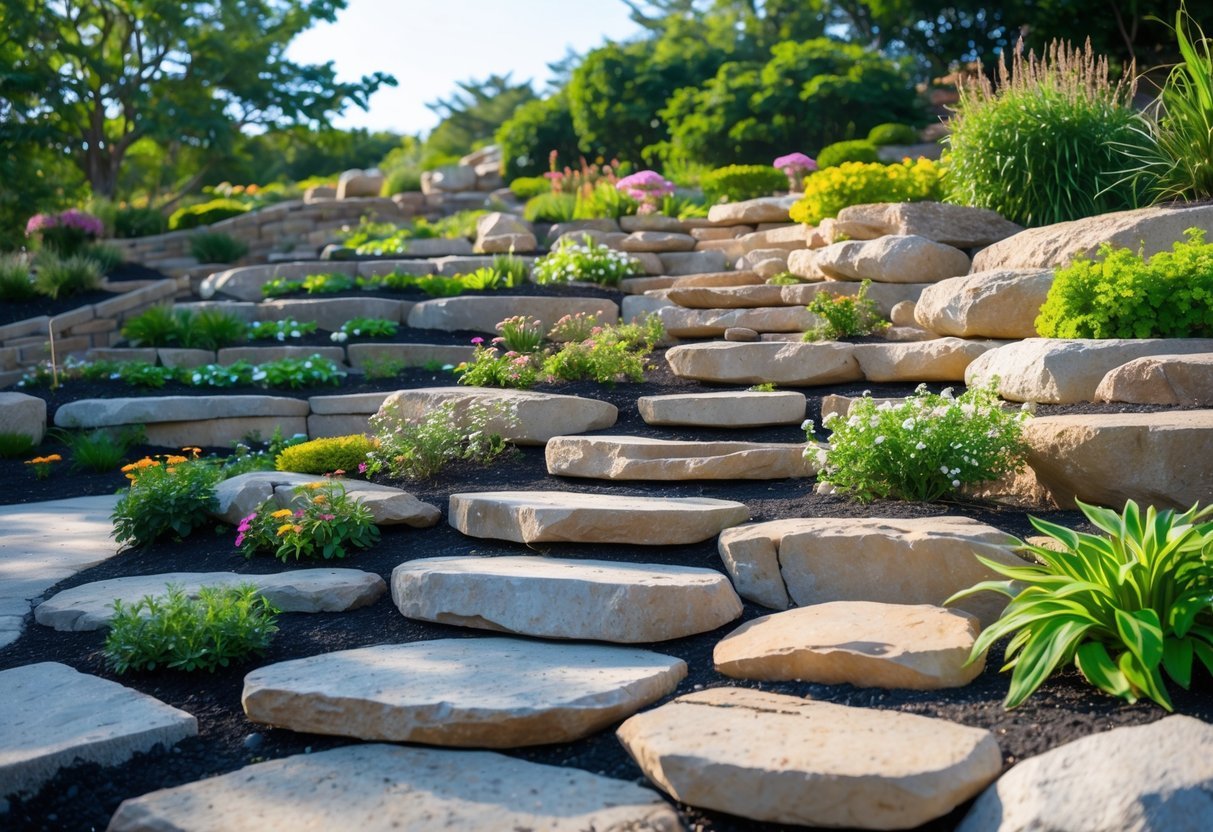
Place larger rocks at the top and mid-slope to anchor the view and catch the eye. This creates natural terraces and helps slow water flow.
Use smaller stones and gravel lower down to suggest finer texture and guide runoff. Stagger rock sizes so each plant layer shows clearly.
Angle rocks slightly into the slope to look natural and help roots hold soil. Arrange them to frame plant groupings and create clear visual tiers.
4) Combine succulents with gravel for texture contrast
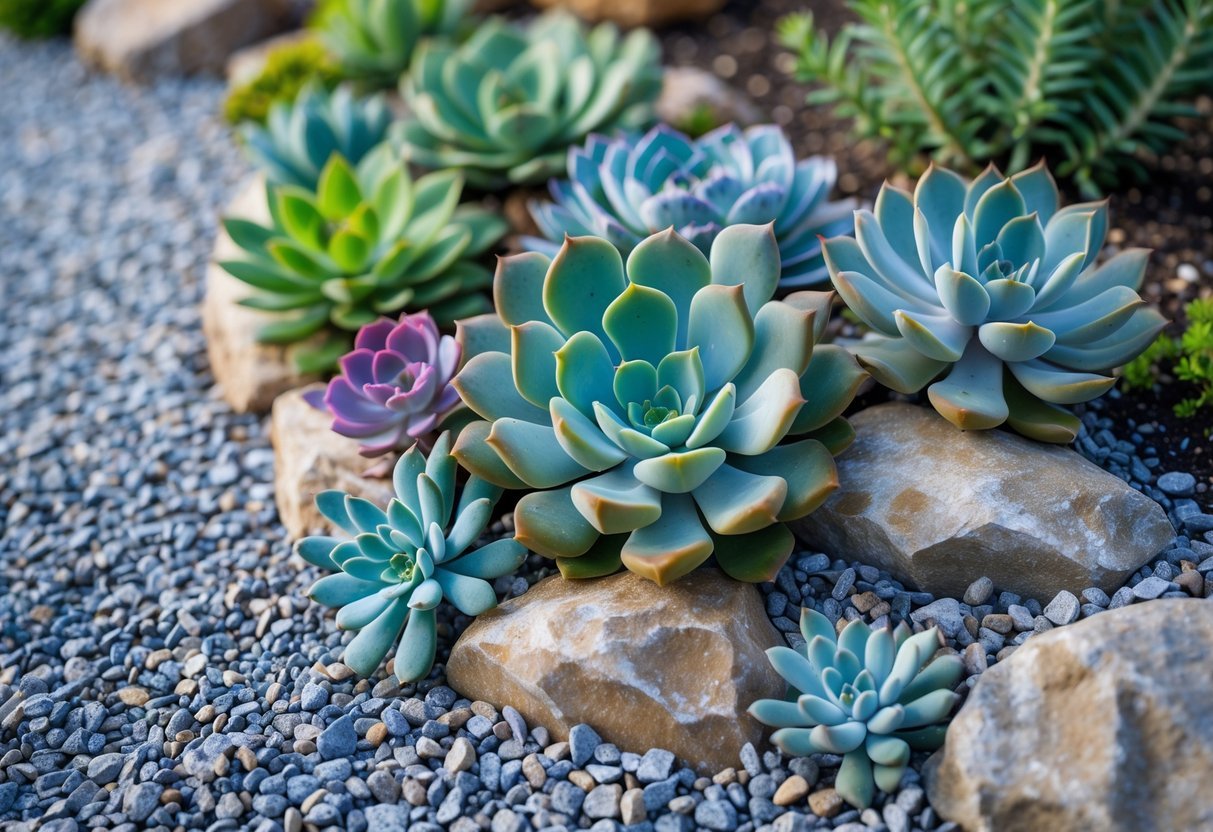
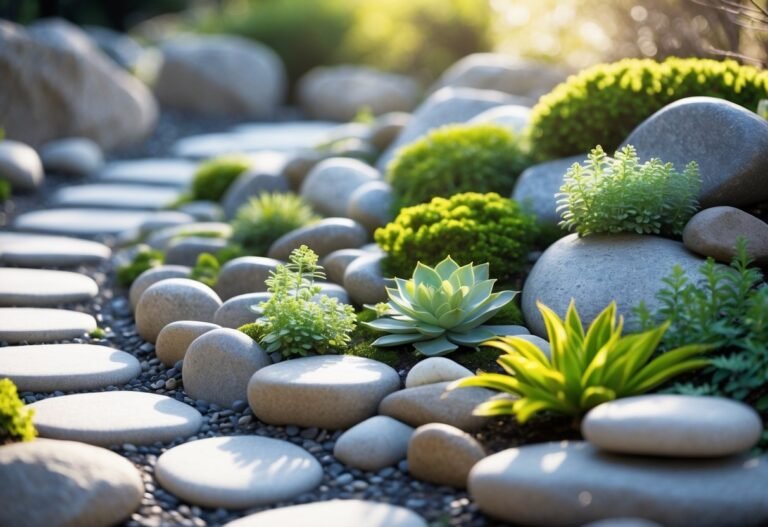
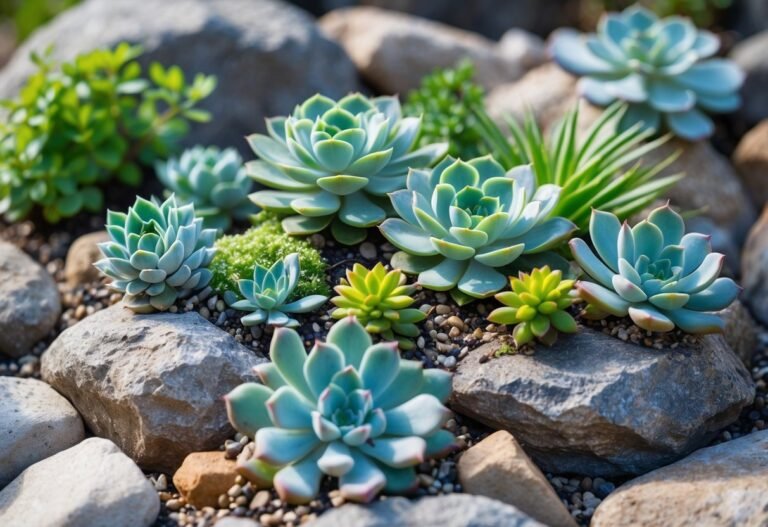
You can pair succulents with gravel to create a clear visual contrast and improved drainage. Use coarse gravel or decorative stones to highlight plant shapes and keep soil from compacting.
Place larger rocks as focal points and scatter finer gravel around smaller succulents for a layered look. This reduces weeds and helps water reach roots without pooling.
Choose gravel colors that complement your plant tones. Neutral grays or warm sands work well with greens, blues, and purple-toned succulents.
5) Build stone pathways to add structure and flow
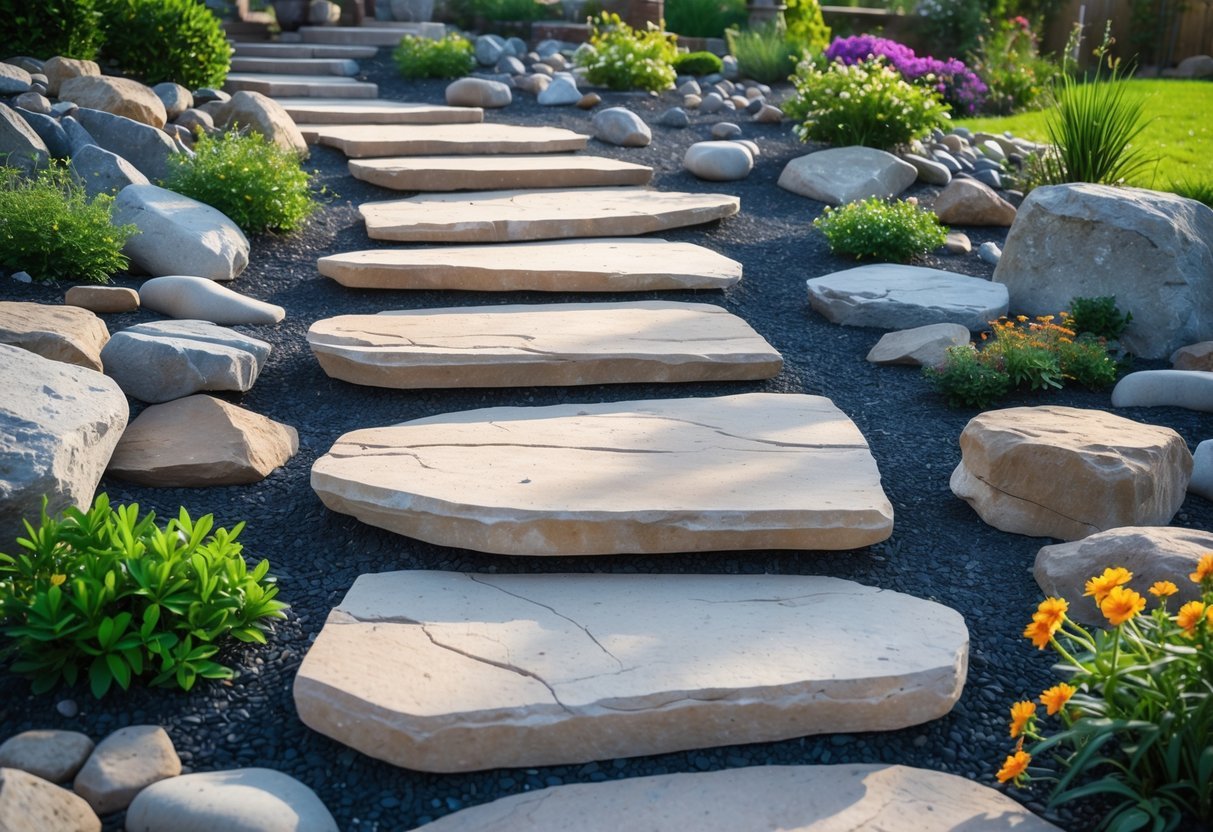
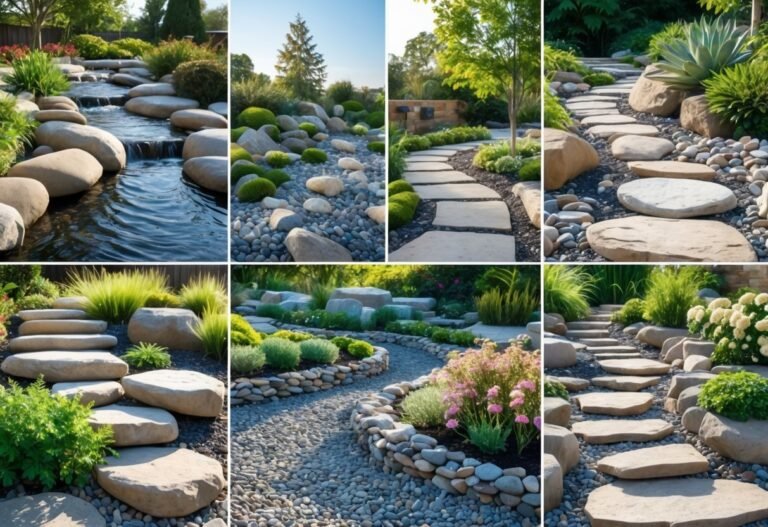
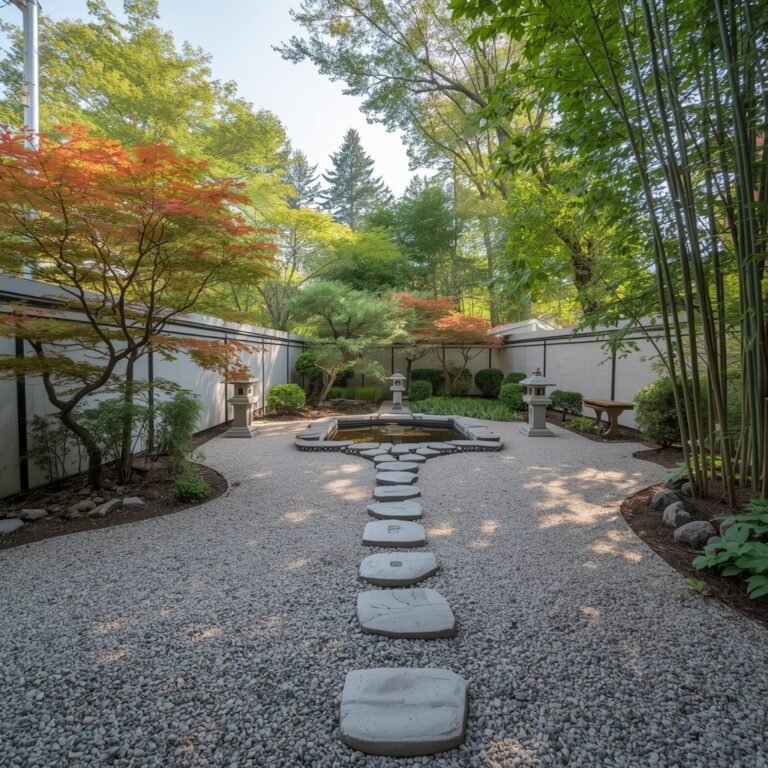
You can use stone pathways to guide movement and define areas in your rock garden. Choose flagstones, gravel, or stepping stones to match your style and maintenance needs.
Lay a stable base and space stones for easy walking. Add low groundcover between stones for softness and better drainage.
Position paths to lead visitors to focal points like a bench or pond. Curved lines create a relaxed feel, while straight lines offer formality.
6) Add colorful flowering plants to brighten rocky areas
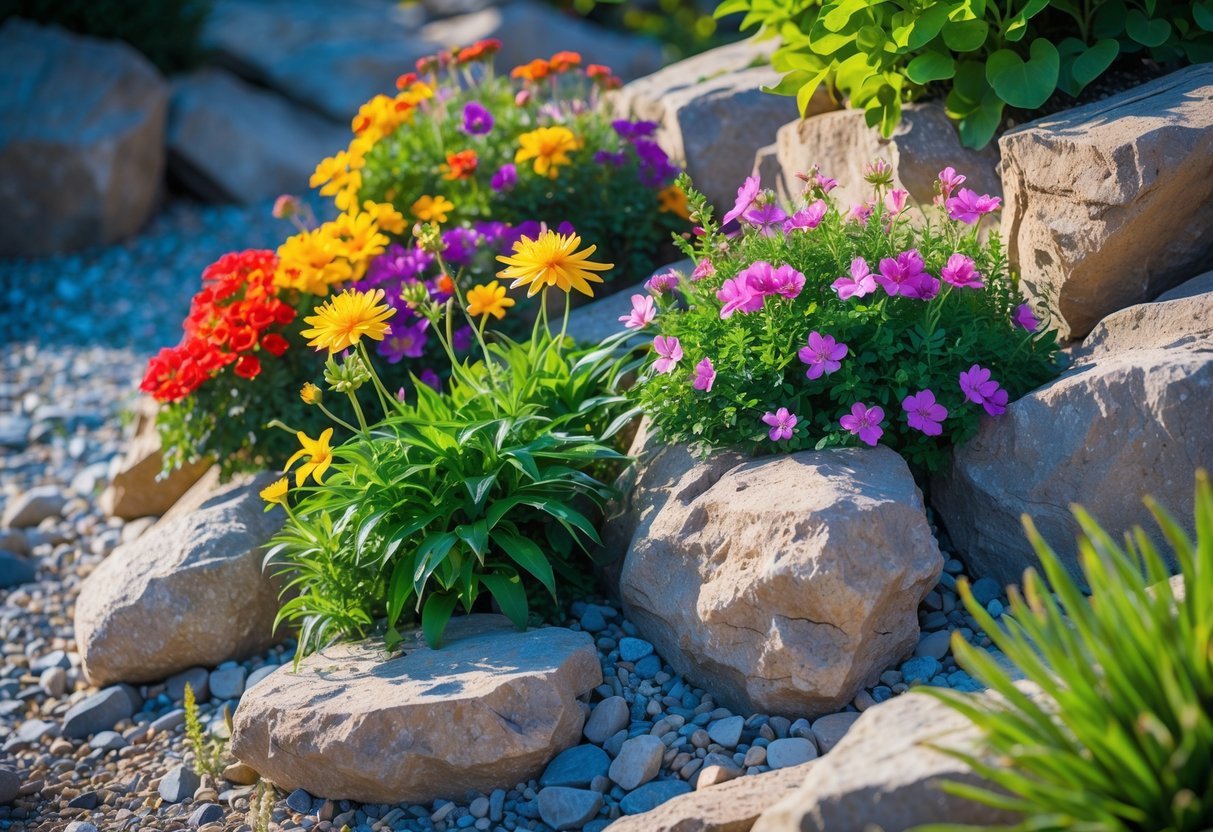
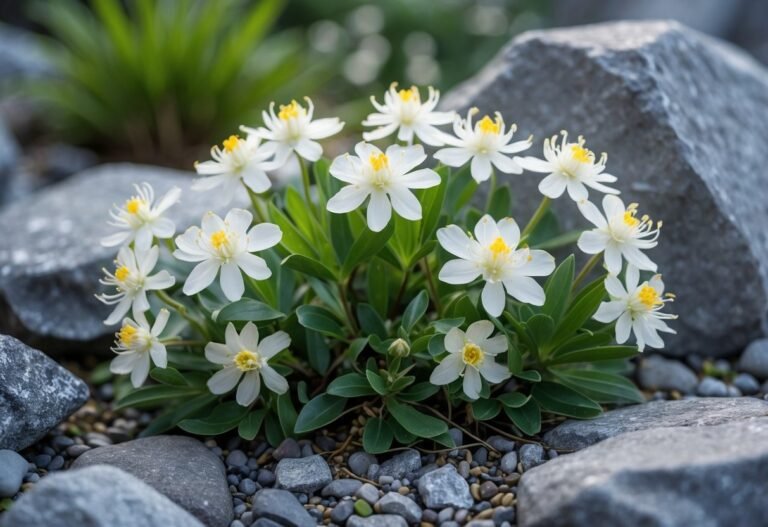
Choose low-growing perennials and succulents that tolerate poor, well-drained soil. These plants add steady color without needing rich dirt or frequent water.
Mix different bloom times to keep color through the seasons. Use creeping phlox, sedum, and dwarf penstemon for varied heights and textures.
Plant in pockets between stones and on slopes to soften hard edges. Group in odd numbers and repeat species for a natural, balanced look.
7) Use natural edging stones to define garden borders
Choose stones like river rock, fieldstone, or flagstone to mark your beds and paths. They create a clear, low-maintenance edge that keeps mulch and soil in place.
Lay stones directly on the soil or set them slightly into the ground for stability. Mix sizes and textures to match your garden style and to help water drain properly.
Natural edging blends with plants and adds a rustic touch without harsh lines. It also limits grass spread and makes mowing easier around beds.
8) Create a rock garden water feature with pebbles
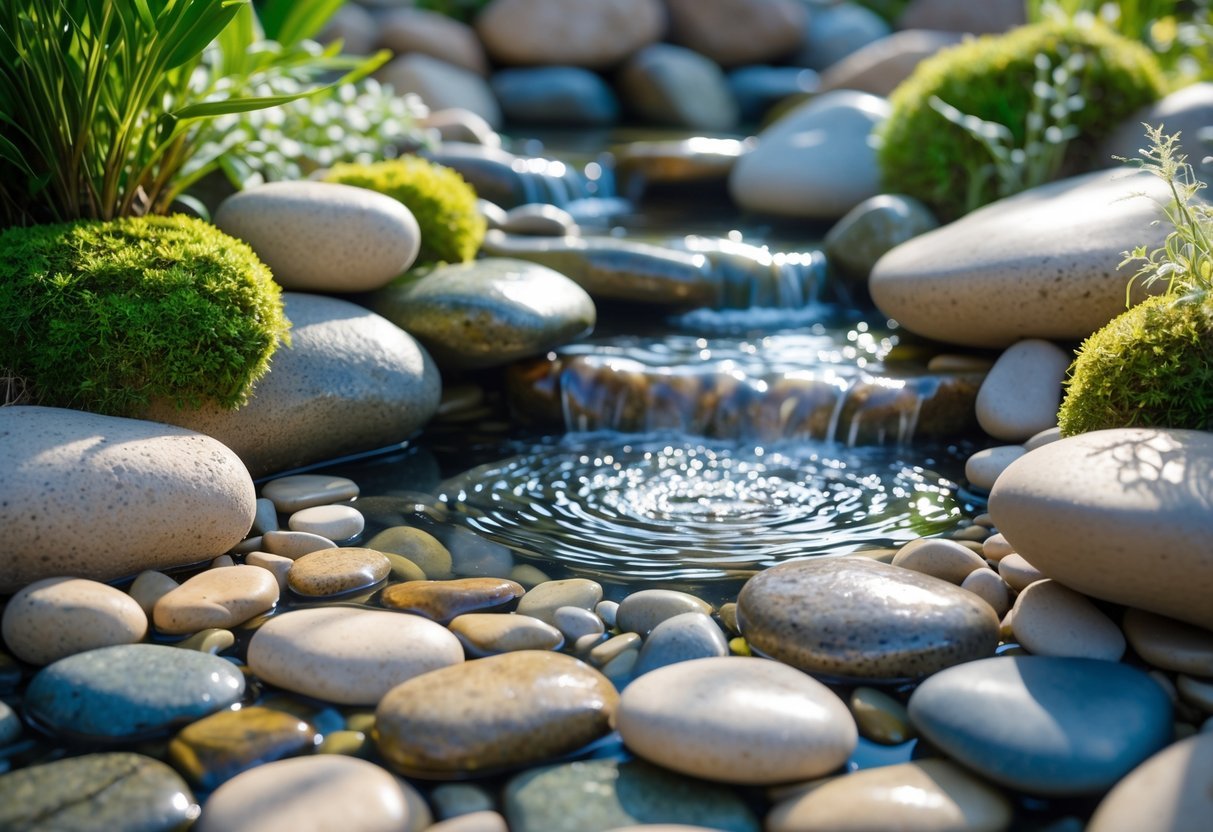
You can add a small water feature using pebbles to bring sound and movement to your rock garden.
Line a shallow basin or pond with varied pebble sizes, then hide a low-flow pump under larger stones for a natural look.
Choose smooth pebbles that let water flow evenly and prevent splash.
Plant moisture-loving natives or moss around the edges to blend the feature into your garden.
9) Plant ground covers between stones for fullness
Use low-growing ground covers to soften edges and fill gaps between stones. They reduce bare soil and give your rock garden a finished look.
Choose hardy varieties like creeping thyme, sedum, or ajuga that tolerate sun and poor soil. Space plants so they can spread without overcrowding.
Water and trim young plants until they establish. Once settled, they need little care and add steady color and texture.
10) Design terraced rock gardens for uneven terrain
Use terraces to turn a slope into usable, low-maintenance planting areas. You get better erosion control and clear planting pockets for drought-tolerant plants.
Stack flat stones or build short retaining walls to create each level. Keep terraces shallow so they look natural and are easy to tend.
Plant alpine or native species that suit shallow, rocky soil. Add gravel paths or steps to improve access and define each terrace.
Planning Your Rock Garden
Start by matching the spot, stones, and soil to how much sun, water, and maintenance you want. Pick a site with clear drainage, choose rocks that match your yard’s scale, and plan soil for the plants you like.
Site Selection and Preparation
Choose a site that gets the light your plants need. Most rock-garden plants prefer full sun or part sun, so measure hours of direct sun across the day before planting. Avoid low spots that collect water after rain.
Test drainage by digging a 12-inch hole and filling it with water. If it drains within 24 hours, the spot is usually suitable. If not, raise the bed or add coarse gravel to improve runoff.
Clear the area of sod, weeds, and debris. Lay landscape fabric only if you expect persistent weeds; otherwise, work organic matter into the top 4–6 inches to help drought-tolerant plants establish. Shape the site with slopes and small terraces to mimic natural rock outcrops and direct water away from plant crowns.
Choosing the Right Rocks
Match rock size to the scale of your yard and to nearby structures. Use boulders as anchors or focal points, medium rocks for groupings, and gravel or pebbles as filler and paths.
Pick rock types that complement your home’s color and local geology. Local stone usually weathers well and looks natural. Combine flat stones for stepping paths and taller stones set into the soil to create depth and planting pockets.
Set rocks with two-thirds of their mass below grade so they look settled, not placed on top. Arrange them in odd-number groups and rotate their faces to avoid a staged pattern. Use a mix of textures and colors, but limit the palette to keep the design cohesive.
Soil Composition for Rock Gardens
Use fast-draining soil that stays loose around roots. Mix 50–70% coarse sand or gravel with 30–50% topsoil or well-rotted compost, adjusting based on plant needs. Alpine and succulent plants prefer a higher proportion of grit.
Avoid heavy clay or dense sod under the planting zone. If clay is present, build a raised bed or amend deeply with coarse materials to create a gritty, porous mix. Test pH and adjust only if specific plants require it; many rock-garden plants tolerate slightly alkaline to neutral soils.
Top with a 1–2 inch layer of coarse gravel around plants to reduce erosion and keep crowns dry. Mulch sparingly; excessive organic mulch can retain too much moisture and invite root rot.
Maximizing Beauty and Functionality
Focus on features that add visual interest and make the garden easier to care for. Choose elements that fit your space, climate, and how you use the garden.
Integrating Water Features
Add a small pond, bubbling rock, or birdbath to bring motion and sound. Place a water feature where you can see and hear it from a seating spot or window. For a low-maintenance option, use a recirculating pump and a plastic liner or preformed basin to avoid leaks and frequent refilling.
Match the scale of the feature to the garden. A 2–3 foot bubbling rock suits a small rock bed; a larger pond needs edging rocks and shallow planting shelves for moisture-loving plants. Use native aquatic plants and gravel to keep water clear. Add a simple filter or skimmer if leaves fall in the water. Position the feature in partial sun to deter algae and place electrical lines safely or use solar pumps.
Lighting Tips for Rock Gardens
Use layered lighting: path lights for safety, spotlights to highlight a focal stone or specimen plant, and low-level uplights for texture. Choose LED fixtures rated for outdoor use; they use less power and run cool. Space path lights about 6–10 feet apart depending on brightness.
Aim lights from below to cast dramatic shadows on rock surfaces and from the side to reveal plant texture. Shield fixtures with small hoods or place them behind rocks to avoid glare. For flexibility, put lights on timers or motion sensors and use warm white (2700–3000K) bulbs to keep the garden feeling natural at night.
Frequently Asked Questions
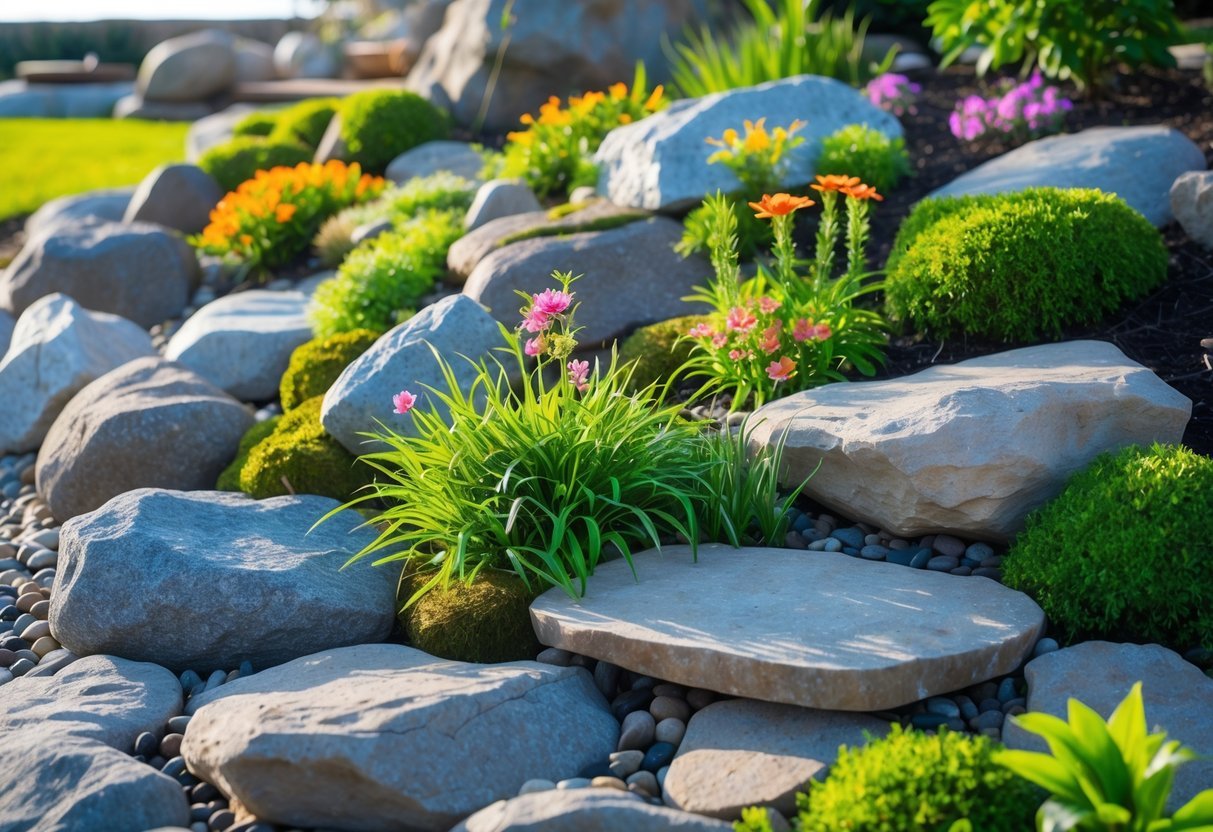
These answers focus on practical steps you can use: affordable layouts for small areas, ways to cut maintenance in a front yard, plant choices that thrive in rocky soil, non-plant design options, the 70/30 balance rule, and the difference between a rockery and a rock garden.
What are some affordable rock garden designs for small spaces?
Use gravel or decomposed granite as a low-cost groundcover instead of imported soil or mulch.
Place a few medium-sized rocks or one boulder as a focal point to avoid clutter.
Choose compact plants like succulents, sedums, and low-growing natives that need little soil and less spacing.
Build a simple stone border or a narrow stepping-stone path to add structure without taking up much room.
How can I create a low maintenance rock garden in my front yard?
Pick native drought-tolerant plants so you cut watering and care needs.
Lay landscape fabric under gravel to suppress weeds, then add a 2–3 inch gravel layer.
Group plants by water needs and use mulch or rock around them to reduce evaporation.
Include a few large boulders to form natural focal points that keep the design stable as plants mature.
Which plants are best suited for growing in rock gardens?
Choose low-growing alpines, sedums, thyme, dwarf sages, and native grasses.
Succulents and drought-tolerant perennials work well where soil is shallow and drainage is fast.
Pick species adapted to your climate to reduce irrigation and pruning needs.
Use plants with varied textures and bloom times for year-round interest.
Can you create an attractive rock garden without using any plants?
Yes. You can emphasize shapes, textures, and patterns with different sized rocks and gravel.
Arrange boulders and pebbles to create visual layers and contrast on slopes or flat areas.
Add hardscape features like a dry creek bed, stone steps, or a simple water basin for focal interest.
Vary gravel color and stone placement to mimic natural landscapes and guide the eye.
What is the 70/30 rule in creating a balanced rock garden?
The 70/30 rule means about 70% hardscape (rocks, gravel, stone paths) and 30% plants.
This keeps your garden looking natural while keeping maintenance low.
Use larger rocks to anchor the design and plant pockets or clusters for softness and color.
Adjust the ratio slightly for small spaces or to suit your visual taste.
What’s the difference between creating a rockery and a rock garden?
A rockery focuses on building a raised, often sloped feature with rocks and layered soil for alpine plants.
A rock garden is broader: it includes flat areas, paths, mixed hardscape, and plant groupings.
Think of a rockery as a specific mound or bed designed to show off rock-loving plants.
Treat a rock garden as a landscape approach that uses rocks, paths, and plantings across a yard.