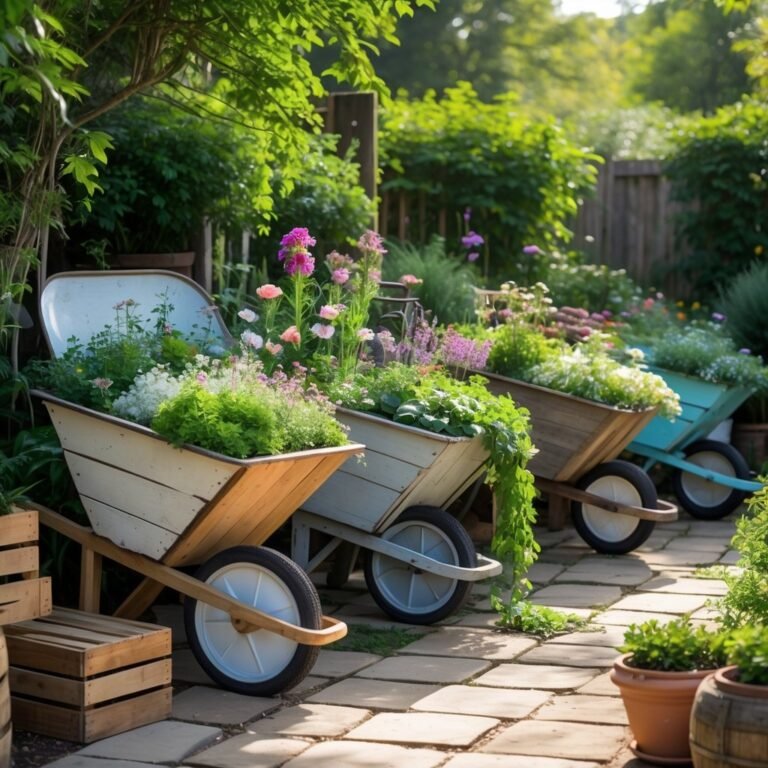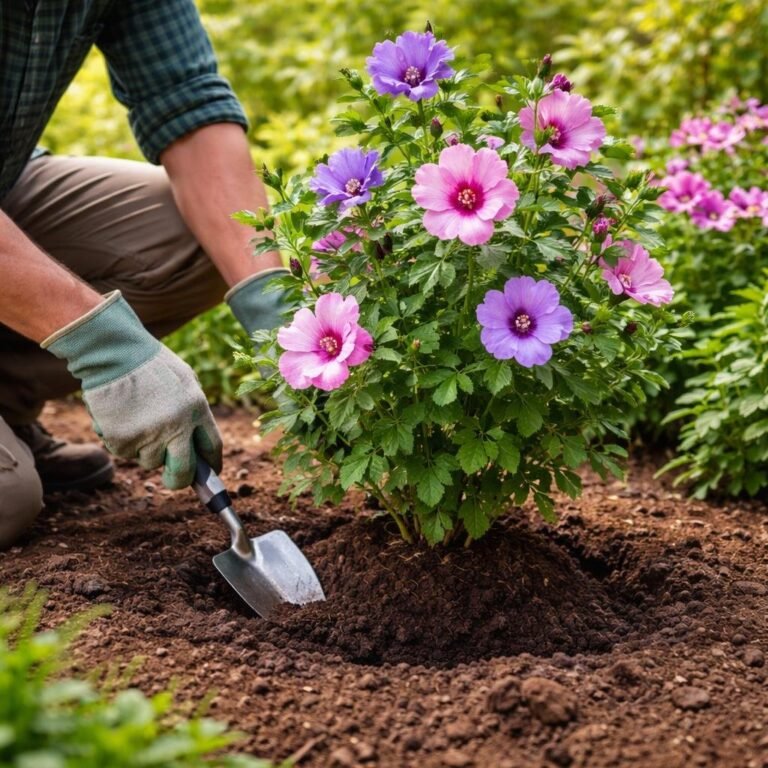
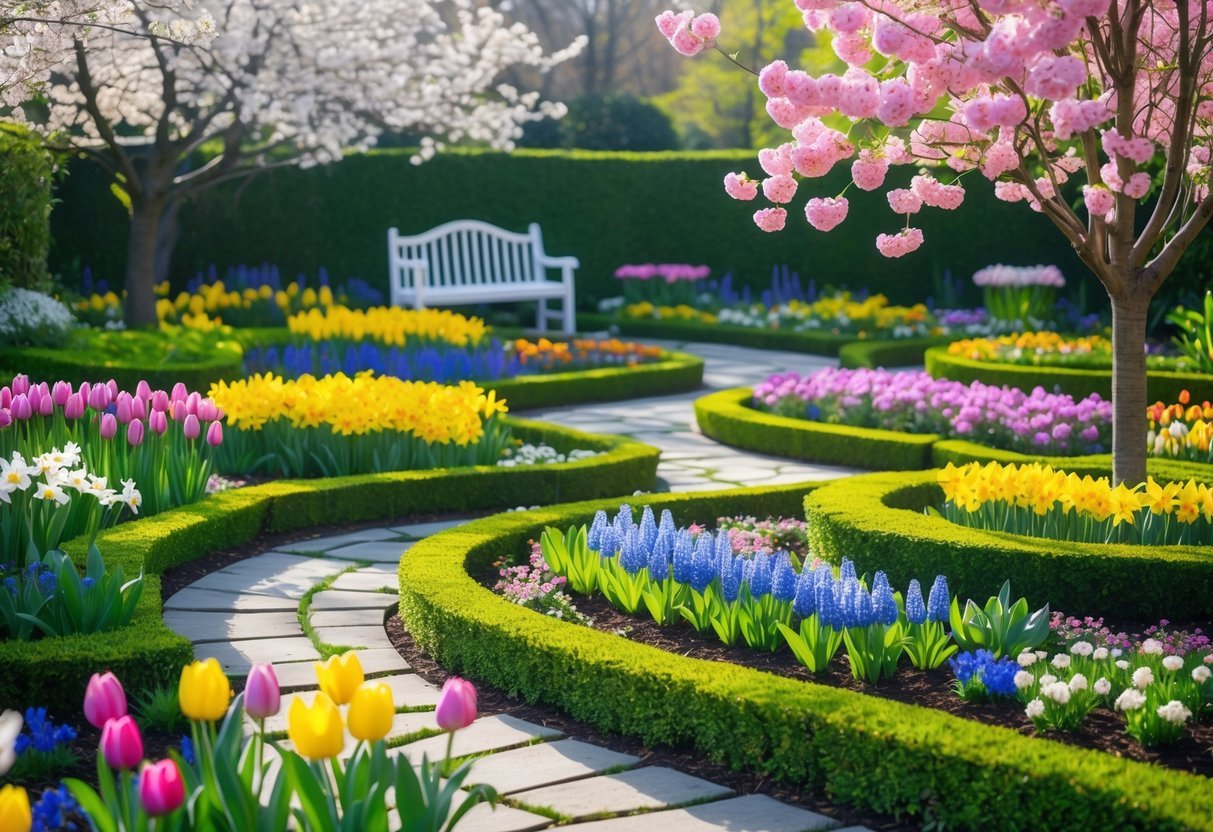
Spring Flowers Garden Ideas & Design: Confident Planting Plans and Seasonal Styling
You can turn any yard, balcony, or patch of soil into a bright spring display that lasts for weeks. Mix bulbs, perennials, and early annuals to stretch color from late winter into early summer and design beds that look full without constant replanting.
Plan for staggered bloom times and simple grouping of colors to get the biggest visual impact with the least work.
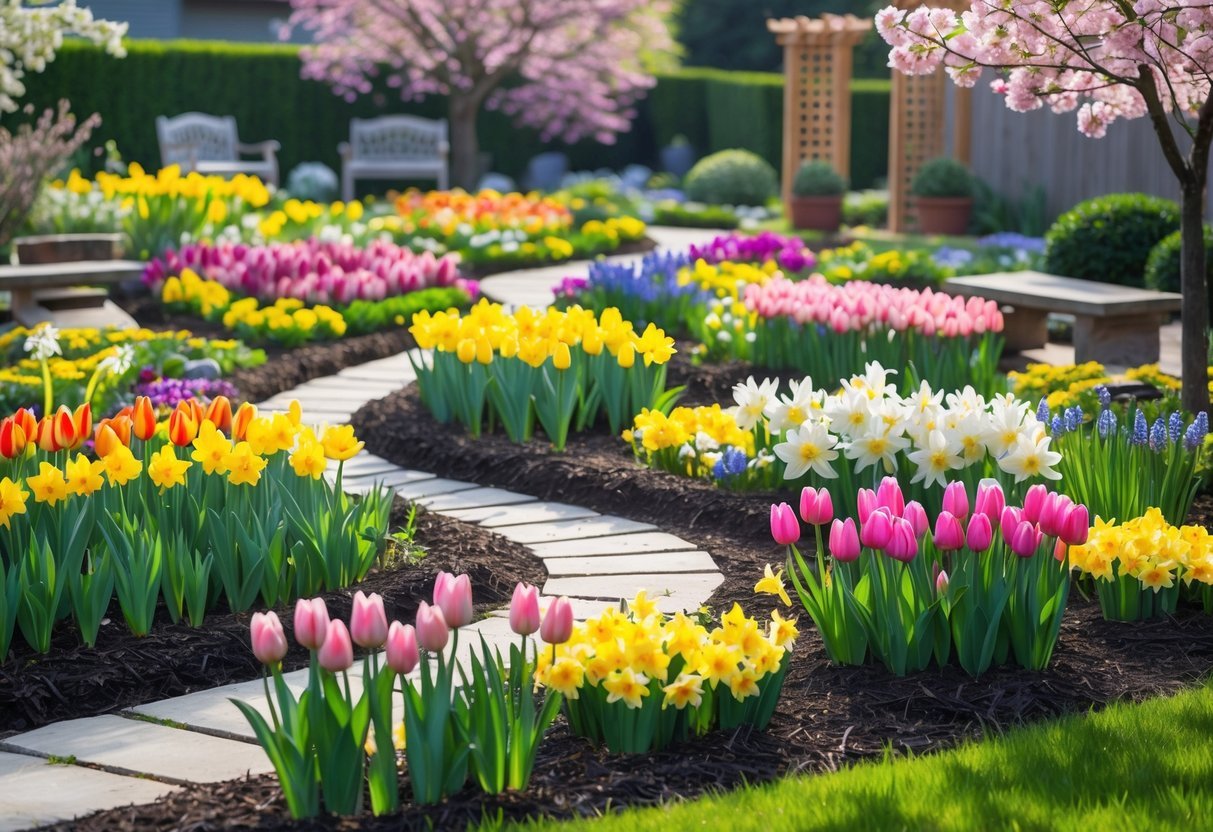
Pick a few favorite flowers—tulips, daffodils, hyacinths, and a couple of long-blooming perennials—and build layouts around them. Use repeating color bands, clumps of bulbs, and layered heights to make small spaces feel larger and to make planting and care easier.
Key Takeaways
- Start with a simple plan that staggers bloom times for continuous color.
- Choose a few reliable spring flowers and group them for bold effect.
- Design beds for easy maintenance and season-long interest.
Planning Your Spring Flower Garden
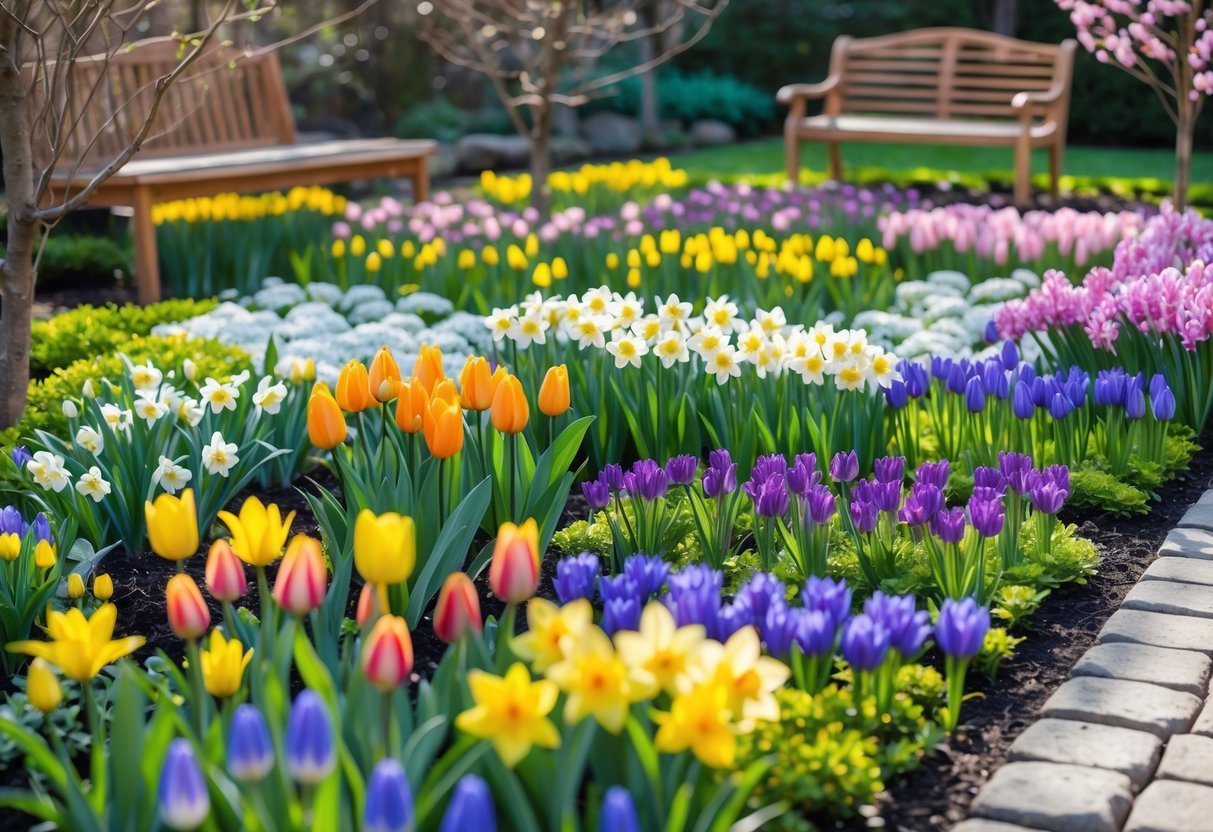
Decide on a sunny spot, test the soil, and sketch a simple layout before you plant. These steps save time and help you pick plants that will thrive.
Choosing the Right Location
Pick a place that gets at least 6 hours of direct sun for most spring-blooming bulbs and perennials. South- or west-facing beds warm up earlier, giving tulips, daffodils, and pansies a head start.
Avoid low spots that hold water unless you plan raised beds or improved drainage. Excess moisture can rot bulbs and stress roots.
Think about visibility from windows and paths. Place your brightest showstoppers where you can see them from inside the house.
Keep spacing in mind: allow mature spread for each plant so you don’t overcrowd and reduce air flow.
Assessing Soil and Sunlight
Dig down 6–8 inches to check soil texture. If it crumbles, you have good structure; if it’s heavy clay or fine silt, add compost and coarse sand to improve drainage.
Test pH with a simple kit: most spring flowers prefer pH 6.0–7.0. Amend with lime for acidic soil or sulfur for alkaline soil as needed.
Map sun patterns across the day for a week. Note morning vs. afternoon sun and any shade from trees or buildings.
Use this map to match plants: early bulbs tolerate cooler, partially shaded spots while later perennials need full sun for strong blooms.
Selecting Garden Shapes and Layouts
Choose a shape that fits your yard and maintenance ability. Rectangular beds suit lawns and mowing; curved borders soften hard lines and create casual flow.
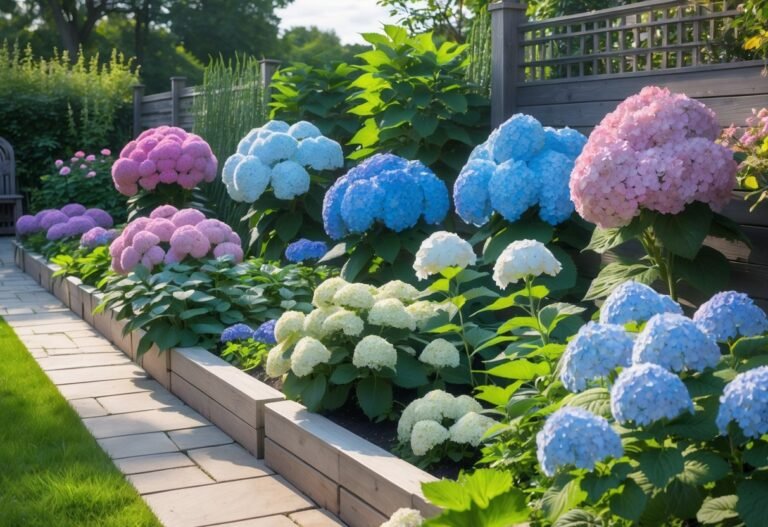
Consider raised beds for better drainage and easier planting. They warm faster in spring and let you control soil mix more easily.
Plan plant groups, not single plants. Use masses of 5–10 bulbs or 3–7 perennials for stronger visual impact.
Create height layers: low edging (e.g., crocus), mid-height blooms (e.g., tulips), and taller back plants (e.g., alliums). Add paths or stepping stones for access and to break up large beds.
Best Spring Flowers for Vibrant Gardens
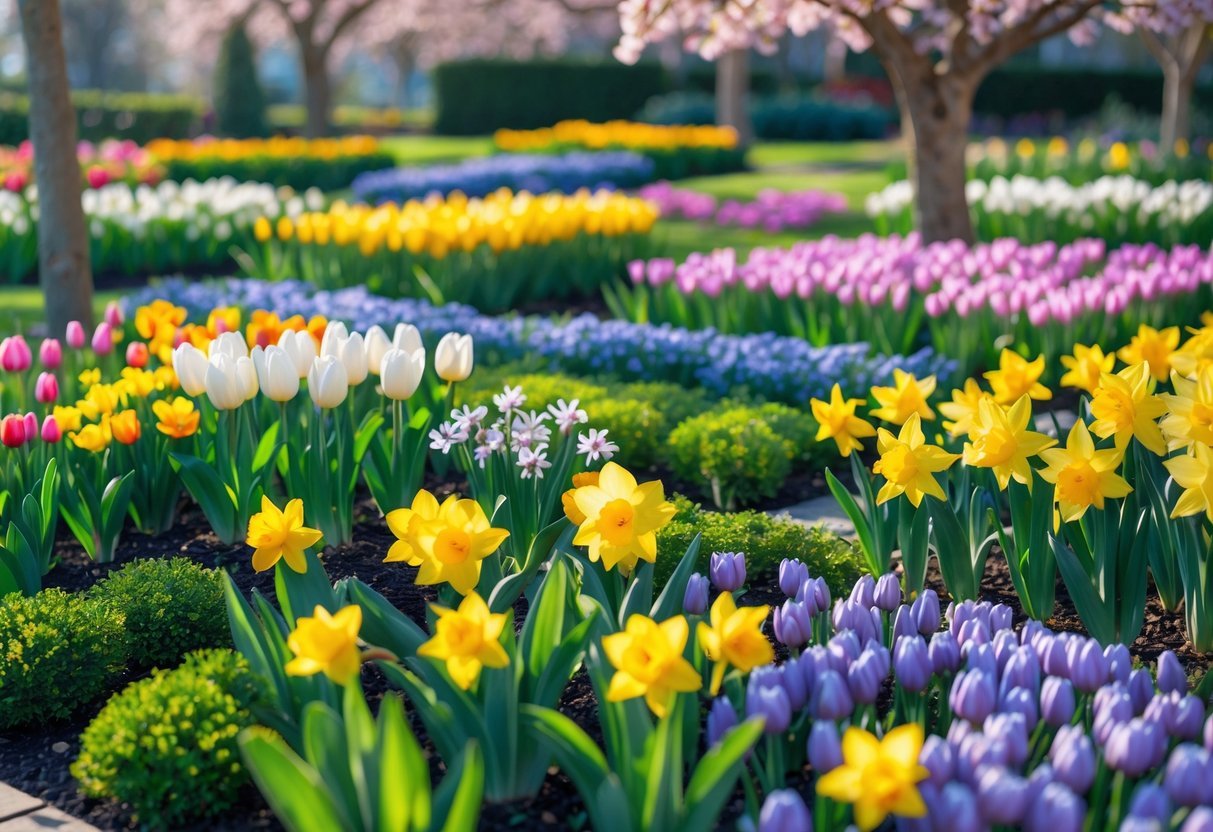
You can create steady color, strong structure, and pollinator habitat by picking the right mix of bulbs, perennials, and annuals. Choose plants that match your light, soil, and bloom timing for continuous interest and easy care.
Classic Spring Bulbs and Perennials
Plant bulbs in fall for early spring impact. Tulips, daffodils, and hyacinths give bold color weeks before many perennials start. Bulbs prefer well-drained soil and full to part sun; lift and divide crowded clumps every few years to keep blooms strong.
Add hardy perennials like peonies, lupine, and early iris for mid- to late-spring structure. These return each year and fill gaps after bulbs fade. Place taller perennials at the back of beds and shorter ones near paths or borders for layered height. Mulch after planting to conserve moisture and suppress weeds.
Colorful Annual Flower Varieties
Use annuals to fill color gaps and extend bloom into summer. Try pansies and violas for cool-season color; they tolerate light frosts and bright, low beds. Snapdragons and calendula add vertical interest and come in many hues.
Plant annuals after the last frost date for your area. Use container mixes or bedding rows for quick impact. Deadhead spent flowers to encourage more blooms and fertilize lightly every 3–4 weeks for sustained color.
Native and Pollinator-Friendly Flowers
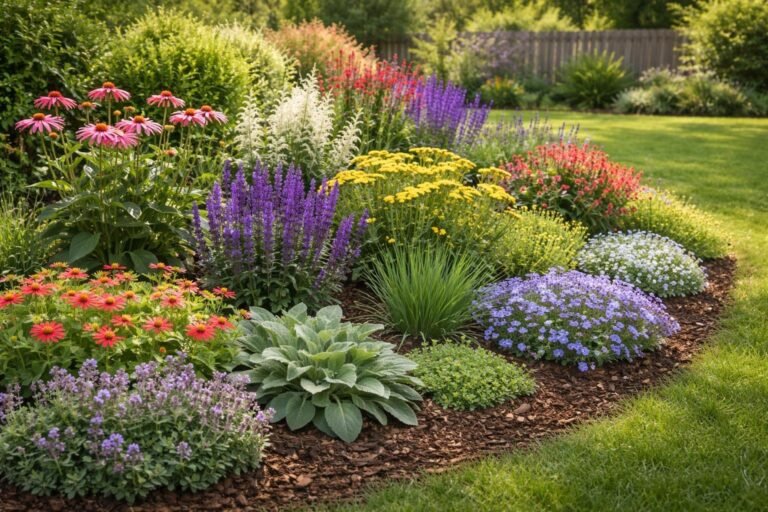
Pick native species to support bees, butterflies, and local wildlife. Coneflowers (Echinacea), bee balm (Monarda), and native lupine attract pollinators and often need less water once established. Check local native plant lists to match species to your region.
Group plants by bloom time to give pollinators constant resources. Include a mix of colors and flower shapes—flat, open blooms and tubular flowers attract different insects. Avoid pesticides and provide shallow water sources to keep pollinators healthy.
Spring Garden Design Ideas
Plan for bloom timing, plant height, and paths. Match plant textures and colors to create zones for sitting, planting, and wildlife.
Cottage Garden Inspiration
Use mixed beds filled with bulbs, perennials, and annuals for nonstop spring color. Plant tulips and daffodils in groups of 6–12 near the front, then layer taller foxgloves, delphiniums, or lupines behind them for height. Include low-growing herbs like thyme or chamomile at the edge to soften borders and add scent.
Keep paths narrow and winding to create discovery. Use reclaimed brick or crushed stone for a rustic look. Add simple wooden trellises for climbing roses or clematis to bring vertical interest and fragrance.
Formal and Symmetrical Garden Beds
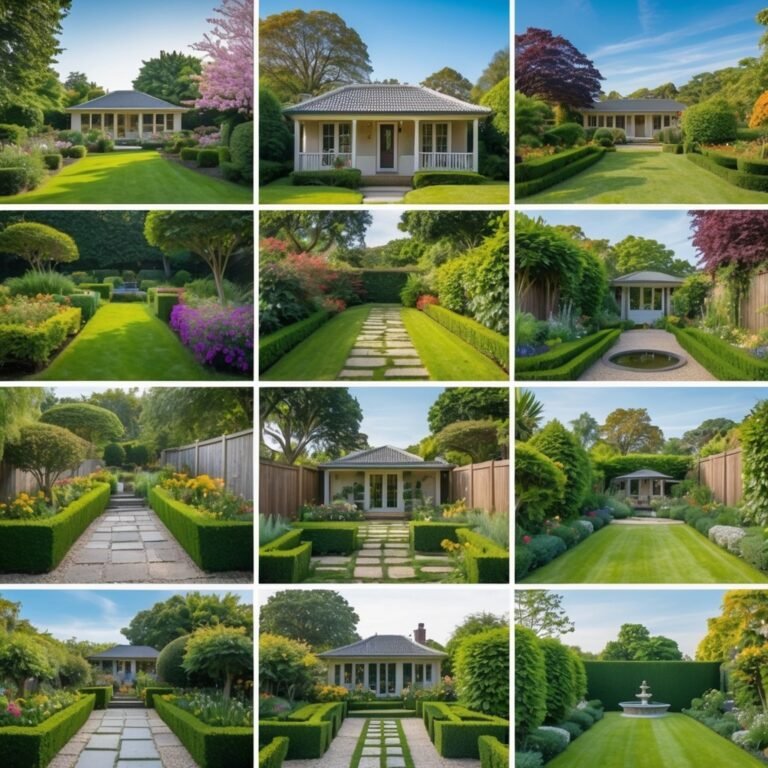
Set up mirrored beds and clear sightlines from a focal point such as a bench or fountain. Use repeating shapes and matched plantings—two boxwood spheres flanking a bed, or rows of the same tulip variety—to strengthen symmetry.
Choose plants with neat forms: clipped hedges, rounded alliums, and uniform tulips work well. Maintain even spacing (measure by bulb size or pot diameter) and deadhead consistently to keep the design tidy.
Container and Small Space Solutions
Pick containers sized to hold root systems: 12–16 inch pots for clumps of bulbs or mixed spring annuals. Combine a tall central plant (e.g., hyacinth), a mid-layer (e.g., primrose), and a trailing edge (e.g., ivy or lobelia) for instant structure.
Use lightweight potting mix and a slow-release fertilizer to support vigorous spring growth. Group pots at varied heights—on steps, plant stands, or crates—to make a small patio feel larger and more varied.
Combining Flower Colors and Textures
Create palettes with contrast and harmony. Pair soft pastels—pale pink tulips and blue muscari—with a dark foliage plant like Heuchera to make colors pop. For bold looks, place bright orange narcissus beside deep purple pansies.
Mix textures: feathery foliage (ferns), glossy leaves (hosta), and spiky blooms (iris) add depth. Use a simple table to plan pairings:
- Color harmony: analogous (pink–red–orange)
- High contrast: complementary (purple vs. yellow)
- Texture mix: soft + glossy + spiky
Test small groups before planting large beds.
Maintenance and Care for Spring Flowers
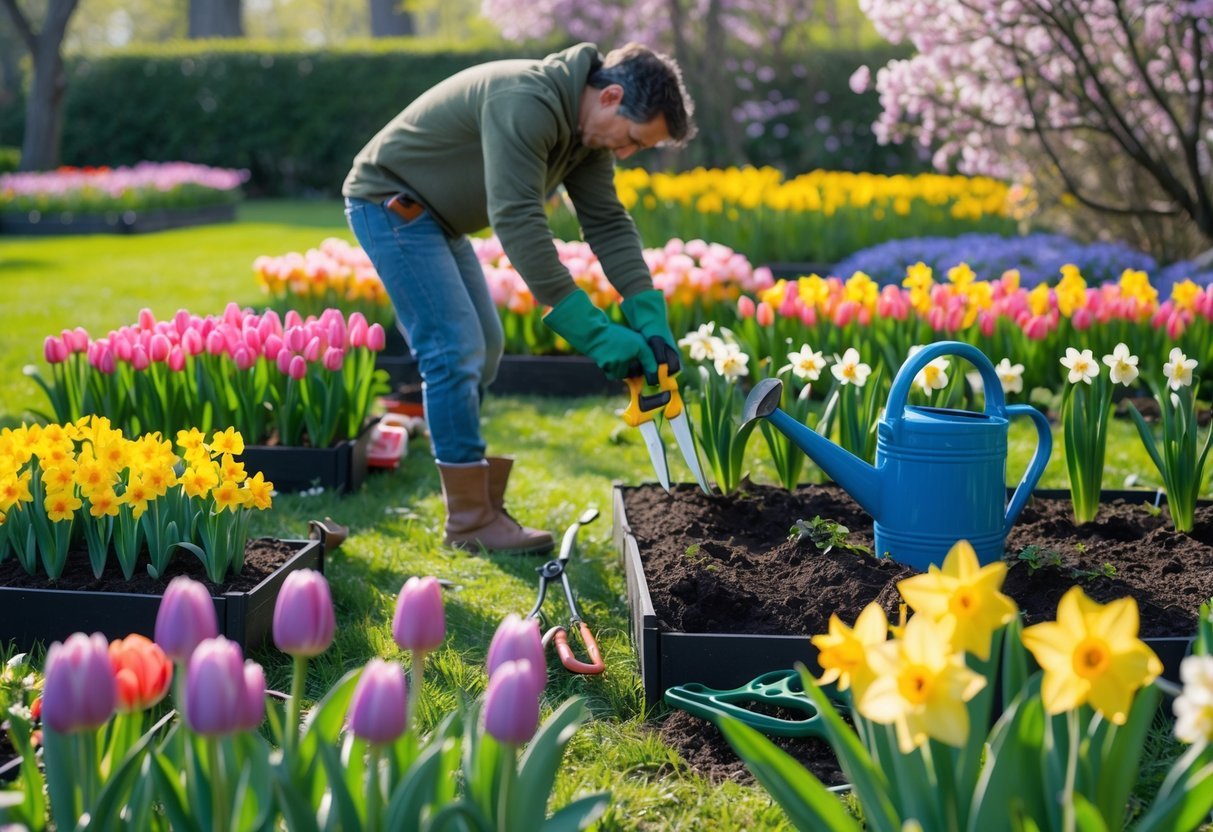
You will focus on consistent watering, timely feeding, pest control, and regular pruning to keep blooms healthy. Follow specific schedules and simple checks to avoid common problems.
Watering and Fertilizing Strategies
Water new bulbs and transplants deeply once a week, giving 1–1.5 inches per session unless rain supplies that amount. Use drip irrigation or soaker hoses to wet the root zone and avoid wetting foliage, which reduces fungal risk.
For established perennials and annuals, water in the morning so leaves dry by evening. Increase frequency during heat waves; reduce it in cool, wet spells. Check soil moisture with your finger—if the top 2 inches are dry, water.
Feed spring-flowering bulbs and perennials with a balanced 10-10-10 granular fertilizer at planting and again at early growth. Apply a low-nitrogen, high-phosphorus formula (e.g., 5-10-5) as buds form to support blooms. Stop heavy feeding once flowering ends.
Use compost or a 2–3 inch layer of organic mulch to retain moisture and feed soil slowly. Reapply mulch in spring after soil has warmed.
Pest and Disease Prevention
Scout your beds weekly for chewing insects, aphids, slugs, and signs of fungal disease like powdery mildew or black spot. Early detection stops small problems from becoming outbreaks.
Use physical controls first: pick off large pests by hand, set beer traps for slugs, and install row covers for early-season protection. Encourage beneficial insects—ladybugs and parasitic wasps—by planting nectar plants and avoiding broad-spectrum insecticides.
Apply targeted treatments when needed: insecticidal soap for soft-bodied pests, Bacillus thuringiensis (Bt) for caterpillars, and copper or sulfur fungicides for persistent fungal issues. Follow label rates and treat in the cool part of the day.
Remove and dispose of diseased leaves promptly. Clean tools between beds to prevent spread. Rotate annual beds and avoid planting the same species in the same spot year after year to reduce soil-borne problems.
Pruning and Deadheading Tips
Deadhead spent blooms on annuals and perennials to encourage more flowers and keep plants tidy. Pinch or cut back just above the next set of healthy leaves or a lateral bud.
For spring-blooming shrubs like azaleas and forsythia, wait until after flowering to prune. Pruning too early removes next year’s flower buds. For repeat-blooming varieties, you can trim lightly after the first flush to shape and promote another set of blooms.
Cut back frost-damaged foliage in early spring once new growth appears. Remove only the damaged tissue to avoid stressing the plant. For perennials that die back in winter, trim stems to ground level before new shoots emerge.
Sterilize pruners between cuts on diseased plants. Make clean cuts at a 45-degree angle to speed healing and reduce infection risk.
Frequently Asked Questions
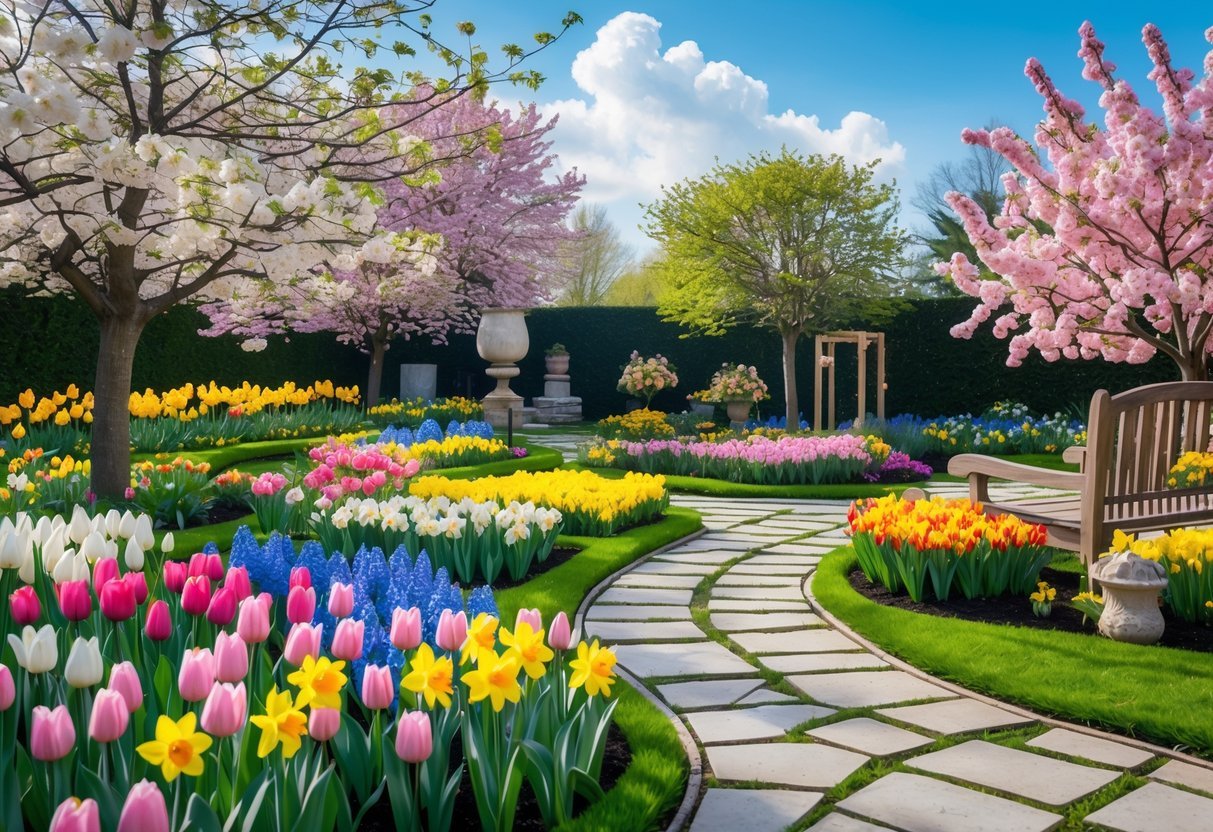
You will find specific plant choices, layout tips, and care steps to make a colorful, long-lasting spring garden. The answers cover flower selection, bed design, perennials, mixing vegetables with flowers, small-space ideas, and low-maintenance options.
What are the best flowers to plant for a colorful spring garden?
Plant tulips and daffodils for bright early-season color. They give bold blooms in many shades and naturalize well in beds and borders.
Add hyacinths and crocus for early scent and ground-level color. Hyacinths add perfume; crocus fill gaps before larger bulbs open.
Use hellebores and primroses for shaded spots. They provide bloom where bulbs and annuals struggle.
Include clematis for vertical color and salvia for lasting spikes. Combine these with azaleas or rhododendrons for layered height and blooms.
How can I design a spring flower bed for maximum impact?
Start with a focal point like a small tree, sculpture, or tall spring-flowering shrub. Plant bulbs and lower perennials around it in concentric rings for depth.
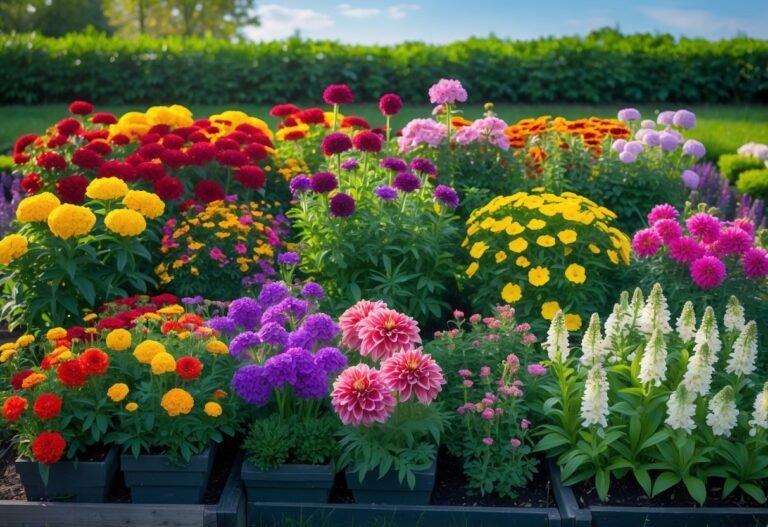
Group bulbs in drifts of the same color and species instead of single bulbs spaced apart. Massed plantings read as a single, strong color block that visitors notice from a distance.
Stagger bloom times by combining early bulbs (crocus, hyacinth) with mid-season (tulips, daffodils) and late spring perennials (salvia, clematis). Use foliage contrast—broad green leaves next to fine-textured foliage—to keep the bed interesting after blooms fade.
Which perennials should I include for a long-lasting spring garden display?
Choose peonies for large, showy blooms that come back each year. They bloom later in spring and create a dramatic mid-season display.
Add salvia and geraniums (hardy cranesbill) for long bloom periods and easy care. These fill space after bulbs finish and keep color through late spring into summer.
Include phlox subulata or creeping thyme for groundcover and continuity. They spread to cover bare soil and extend the bloom window.
How do I start a spring vegetable garden alongside floral arrangements?
Pick a sunny spot that gets at least six hours of sun for most vegetables. Locate flowers like marigolds or nasturtiums at the edges to attract pollinators and deter pests.
Prepare raised beds or well-tilled soil with compost mixed in for good drainage and nutrients. Plant cool-season crops first—lettuce, spinach, peas—and follow with warm-season transplants after the last frost.
Use companion planting: radishes break up soil for carrots; basil pairs with tomatoes to boost flavor. Keep walkways narrow and beds compact so you have room for both flowers and veg.
What are some creative spring garden ideas for small spaces?
Use vertical space with trellises, obelisks, or wall-mounted planters for clematis, sweet peas, or trailing violas. Vertical planting multiplies your growing area.
Try container groupings on patios or balconies with mixed bulbs and annuals. Combine a tall plant, a mid-height filler, and a trailing edge plant for full visual impact in one pot.
Create a mini cutting garden strip for fresh bouquets. Plant showy tulips, ranunculus, and sweet peas in a single narrow bed near your door.
Can you suggest some low-maintenance plants for a vibrant spring garden?
Choose daffodils and alliums for bulbs you can plant once and enjoy for years with little care. They resist deer and rodents better than many other bulbs.
Plant sedum and lamb’s ear for drought tolerance and low care once established. These succulents and silver-leafed plants need minimal water and look good after spring.
Use hardy geraniums and ornamental grasses to provide structure and reduce weeding. They recover well each year and require only occasional pruning.