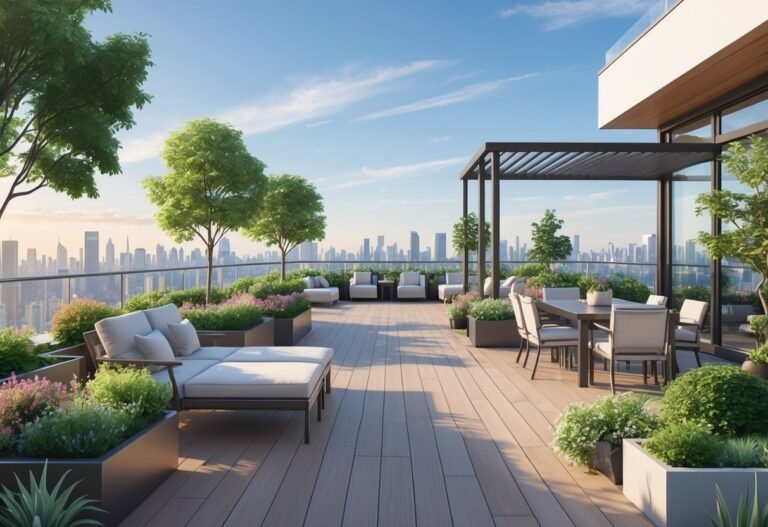
Small Terrace Garden Design Guide for Compact Urban Spaces
You can turn a tiny terrace into a calm, useful garden with simple planning and the right plants. Choose compact, low-maintenance plants, use vertical or stackable planters, and pick foldable furniture to save space and make the area feel bigger.
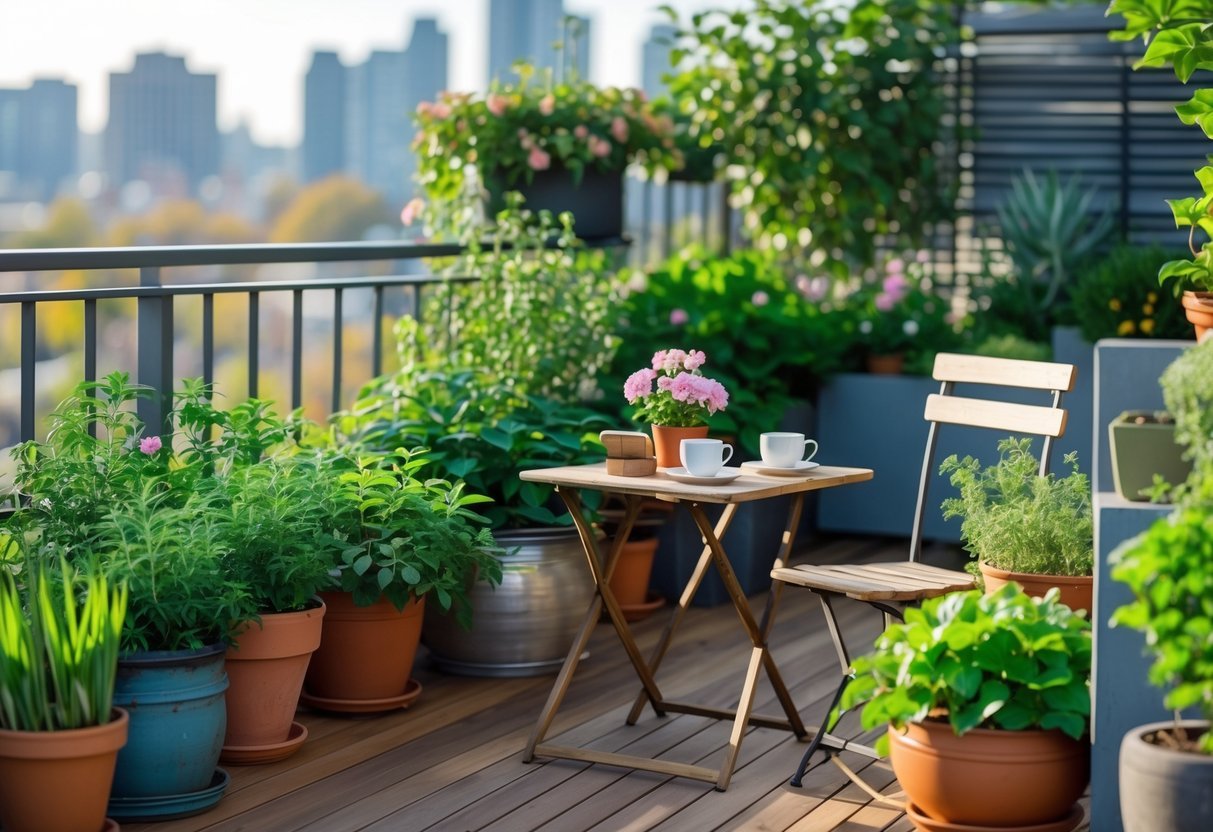
Start by checking sunlight, weight limits, and waterproofing so your plans stay safe and practical. Add layered planting, smart containers, and soft lighting to create a cozy spot for coffee, herbs, or quiet time.
Key Takeaways
- Plan around light, load, and waterproofing before buying supplies.
- Use vertical planters and compact plants to maximize limited space.
- Keep designs simple and maintenance low for long-term enjoyment.
Planning Your Small Terrace Garden
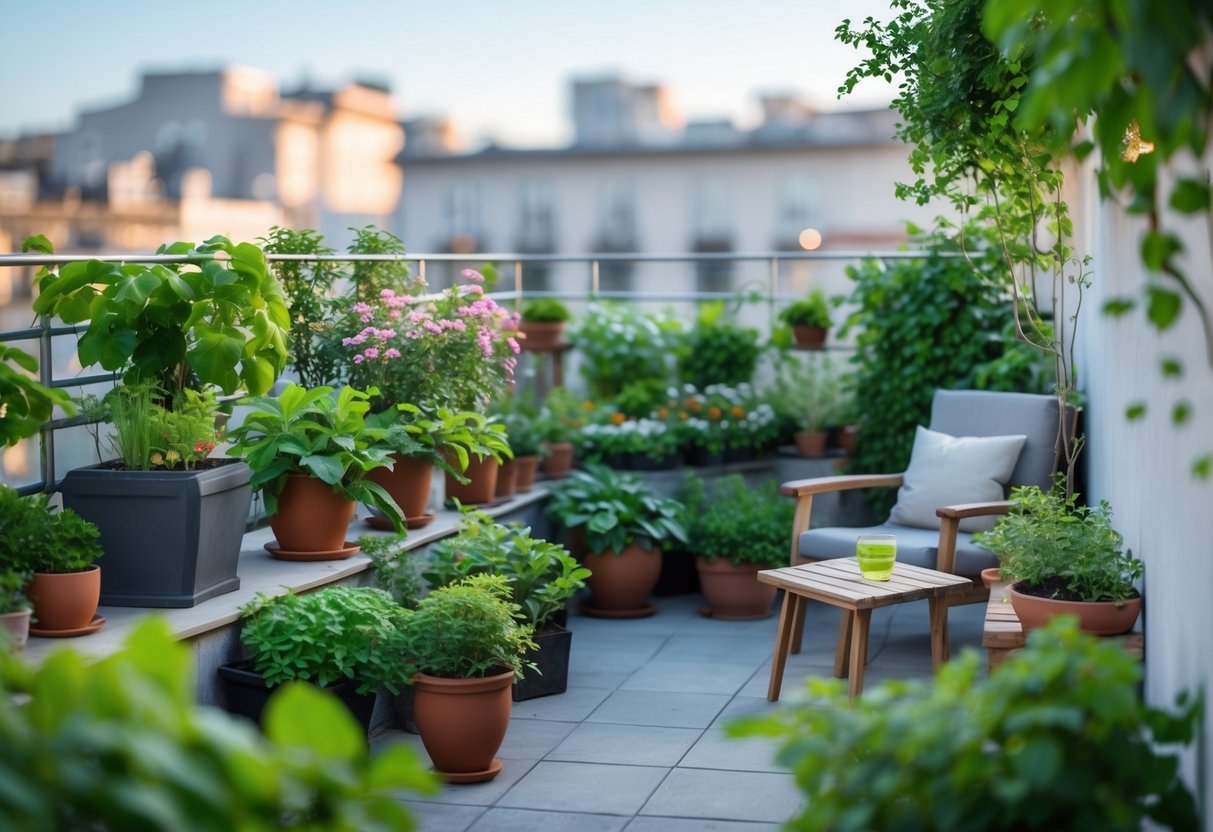
Decide how much space, sun, and money you have, then match plants and layout to those limits. Prioritize safety, access, and watering before buying containers or soil.
Assessing Space and Light
Measure the usable floor area and note any fixed items like AC units or railings. Sketch a simple plan with dimensions so you know how many pots, shelves, or a small bench will fit without blocking paths.
Track sunlight for three days. Mark hours of direct sun, strong afternoon sun, and full shade. Use that to choose sun-loving herbs, partial-shade ornamentals, or shade-tolerant ferns.
Check load limits if your terrace is elevated. Contact your building manager or a structural engineer when in doubt. Also note wind exposure; tall plants need windbreaks or heavier pots.
Choosing a Design Theme
Pick one clear style: edible, low-maintenance, tropical, or modern minimalist. Keep the theme tight so plant choices, pot styles, and accessories match.
For an edible terrace, focus on shallow-root vegetables, herbs, and compact fruit like dwarf strawberries. Use vertical racks and railing planters to save floor space.
For a minimalist look, use matching containers, two or three plant species, and a strong focal point like a bench or sculpture. Maintain visual balance with repeated colors or textures.
Setting a Realistic Budget
List major costs: pots, potting mix, plants, irrigation, tools, and any structural changes. Assign a maximum to each category and prioritize safety and drainage over decorative items.
Save money by buying mid-size plants instead of mature specimens and using local nurseries for soil and plants. Reuse planters or repurpose furniture to cut costs.
Keep a small contingency (10–20%) for unexpected expenses like replacing plants that fail or adding a sturdier pot for a windy spot.
Selecting Plants for Limited Spaces
Choose plants that save space, match sunlight on your terrace, and fit the containers or rails you have. Think vertical options, compact varieties, and plants that give you the most value for the area they use.
Best Plants for Small Terraces
Pick plants that stay narrow or can grow upward. Good choices include climbing plants like jasmine or clematis for trellises, compact shrubs such as dwarf boxwood, and columnar trees like olive or lemon that stay slim in large pots.
Use vertical planters for trailing ivies, nasturtiums, or petunias to keep floor space open. Choose dwarf or patio cultivars labeled “compact,” “miniature,” or “columnar” for predictable size.
Plan pots by root space: shallow trays for herbs and succulents, deep containers for small fruit trees. Group plants with similar light and water needs to make care easier and reduce wasted space.
Edible Plant Options
Grow herbs and salad greens for quick returns. Basil, parsley, mint (in pots to avoid spread), chives, and lettuce fit well in window boxes or shallow troughs. They give fast harvests and need 4–6 hours of sun.
For more yield, choose compact vegetable varieties like cherry tomatoes on a small cage, patio peppers, and bush beans. Dwarf fruit trees — fig, citrus, or pomegranate — work in 15–25 liter pots and can produce fruit without taking much width.
Use vertical supports for vining vegetables like cucumbers. Rotate crops and harvest frequently to keep plants productive in limited space.
Low-Maintenance Choices
Select drought-tolerant and slow-growing plants if you want low care. Succulents, lavender, rosemary, and ornamental grasses survive with less water and pruning. These reduce watering frequency and chores.
Choose self-cleaning or disease-resistant varieties to cut deadheading and sprays. Combine plants with similar needs in each container to avoid over- or under-watering.
Use good potting mix with drainage and add a layer of mulch or gravel to reduce evaporation and keep roots healthy.
Creative Layouts and Container Solutions
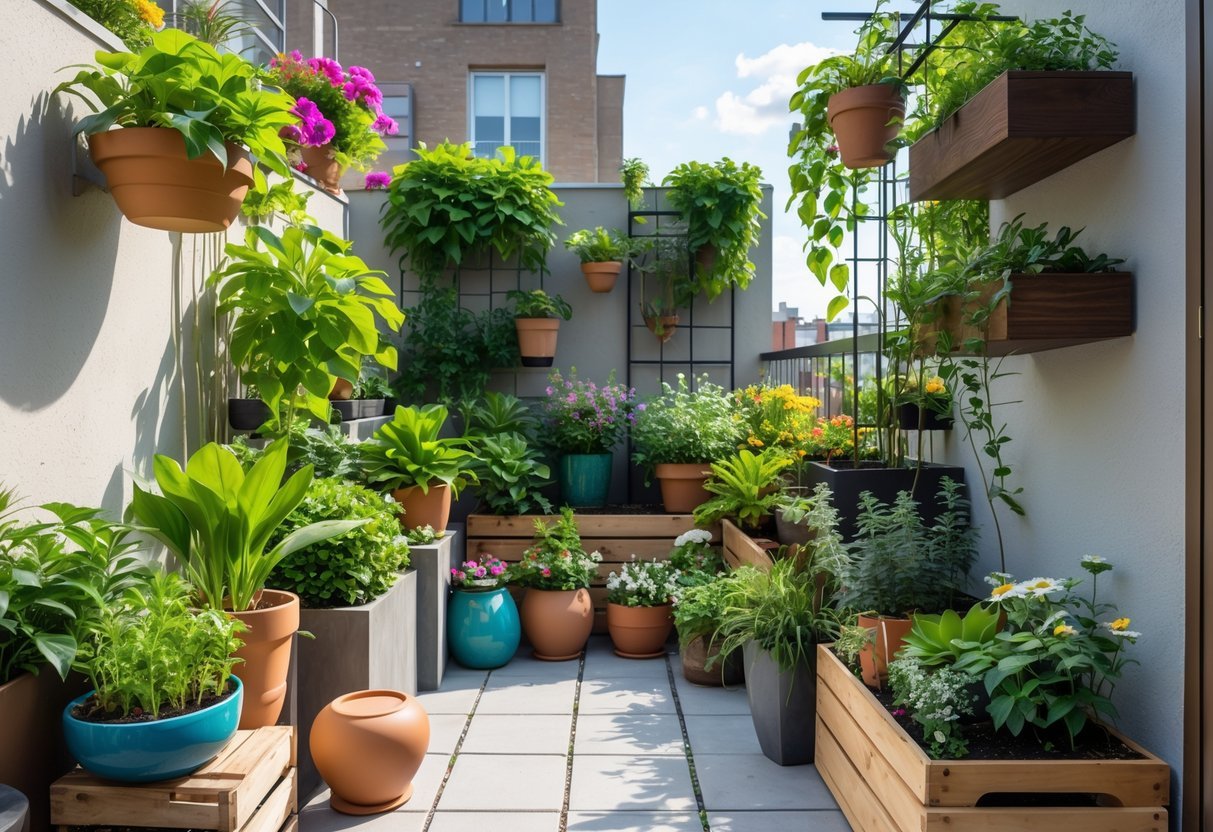
Use vertical space, pick containers that match plant needs, and arrange pots to leave a clear path and sunlight for each plant. Focus on compact systems, mobile planters, and layers that make watering and harvesting easy.
Vertical Gardening Techniques
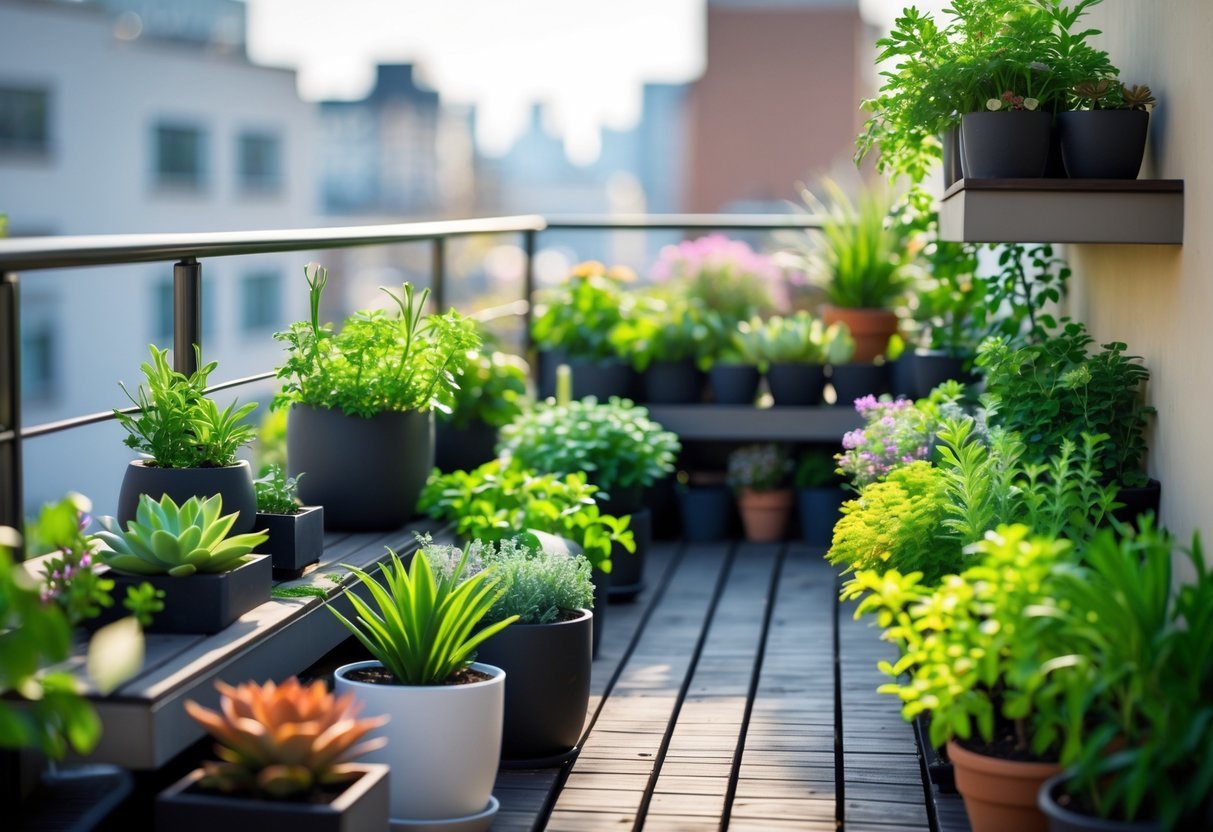
Vertical gardens save floor space by moving growth upward. Mount a trellis against a wall for climbing peas, beans, or jasmine. Use a freestanding ladder shelf for small pots of herbs and lettuces where sunlight hits evenly.
Install a pocket planter or felt wall for shallow-rooted plants like thyme and strawberries. Train vines with soft ties and prune regularly to keep them from shading lower plants. For heavier crops, choose wall-mounted boxes anchored into studs or a railing system designed for balcony load limits.
Watering matters most. Use drip lines or a water reservoir system in stacked planters to keep moisture even. Add a lightweight mulch to topsoil to reduce evaporation.
Choosing the Right Containers
Match container size to root needs: 6–8 inch pots for herbs, 10–14 inch for salad greens, and 14–20 inch or larger for tomatoes or peppers. Check drainage—every container must have holes and a saucer or drip tray.
Pick materials for weight and heat. Plastic and fiberglass stay light; terracotta breathes but gets heavy and dries fast. Use insulated or double-walled pots for hot, sunny terraces to protect roots.
Consider mobility. Mount plants on plant caddies or use pots with casters so you can move them for sun, shade, or to free space for guests. Label containers with plant names and water schedules to keep care simple.
Space-Saving Arrangements
Group plants by water and light needs to simplify care and save space. Create zones: a sunny zone for peppers and rosemary, a partial shade zone for lettuce, and a low-light corner for ferns or snake plants.
Use tiered shelving or plant stands to stack pots at different heights. Place taller plants at the back and low-growing plants forward to maximize sun exposure. Combine multiple herbs in a single larger pot using compatible species to reduce the number of containers.
Leave a 2–3 foot walkway where you need to reach plants for pruning and harvesting. Use narrow, long planters along railings to add growing area without blocking movement.
Incorporating Hanging Plants
Hanging plants free up floor and shelf space while adding greenery at eye level. Choose durable hooks rated for outdoor use and check the terrace ceiling or railing for secure mounting points.
Pick plants suited for hanging: trailing ivy, string of pearls, petunias, or cherry tomatoes in deep baskets. Use lightweight coco liners or fabric pots to reduce weight. Ensure each hanging pot has good drainage and a saucer or drip tray if placed over a floor surface.
Rotate hanging pots periodically so all sides receive light. Install a simple pulley or hook-and-eye system to lower heavy baskets for watering and maintenance without climbing.
Enhancing and Maintaining Terrace Gardens
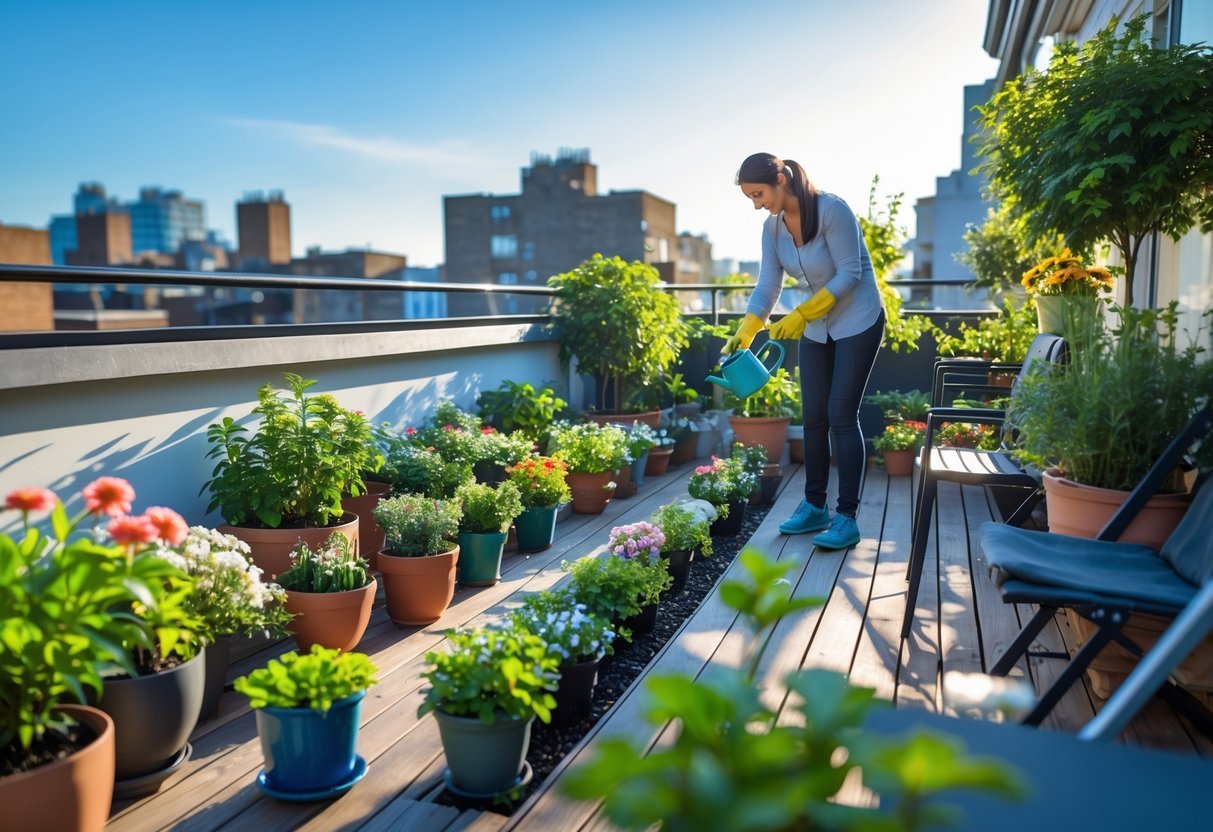
Focus on steady watering, smart décor that resists weather, and seasonal tasks that keep plants healthy. Small changes like timed watering, layered lighting, and winter protection make maintenance easier and improve plant health.
Efficient Watering Strategies
Use a drip irrigation system or soaker hoses to deliver water directly to the soil. Set a timer to run early morning for 20–40 minutes depending on pot size and plant type.
Group plants by water needs—place thirstier vegetables in one area and drought-tolerant herbs together. This reduces overwatering and wasted water.
Add a layer of 2–3 inches of mulch or decorative gravel to each container to slow evaporation. Check moisture with your finger: if the top inch of soil is dry, water again.
Consider self-watering pots or reserve a 1–2 inch water reservoir under large containers. These cut how often you must water and help during short trips away.
Garden Décor and Lighting Ideas
Pick lightweight, weatherproof containers like fiberglass, resin, or thin terracotta to avoid stressing balcony railings. Place heavier pots near the support walls for safety.
Use vertical planters and wall-mounted racks to save floor space. Mix trailing plants on shelves with upright pots to create depth.
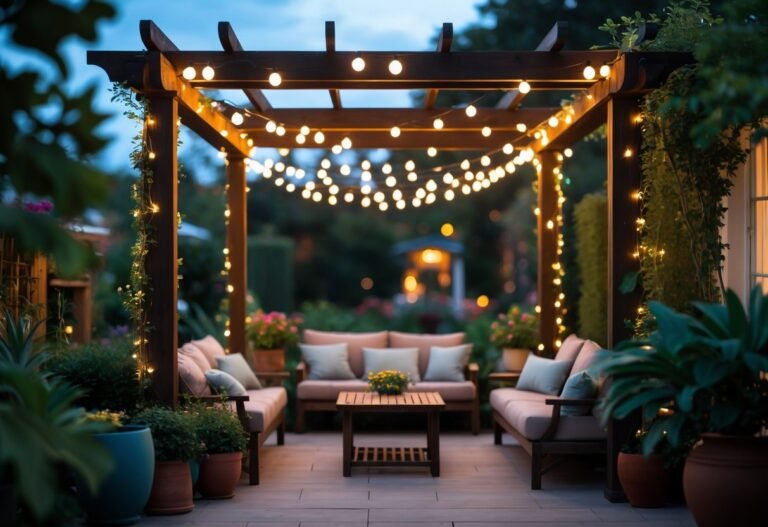
Install LED string lights or solar spotlights to highlight pathways and plant groups. Choose warm white LEDs for a natural look and timers so lights run only at night.
Include one or two focal pieces, such as a compact bench or a small water feature. Keep décor scaled to your terrace size to avoid clutter and allow easy movement.
Seasonal Care Tips
In spring, refresh topsoil and add slow-release fertilizer; divide crowded pots to promote growth. Inspect for pests weekly and remove affected leaves or treat with insecticidal soap.
During summer, shade sensitive plants between 11 am and 3 pm with a shade cloth or move pots to a less hot spot. Increase watering frequency for large, sun-exposed containers.
In autumn, cut back perennials and collect fallen leaves to prevent fungal disease. Move delicate plants indoors or to a protected area before the first hard frost.
For winter, wrap pots with insulating material or place them on foam trays to protect roots from freezing. Reduce watering to match slower plant growth, but never let soil dry out completely.
Frequently Asked Questions
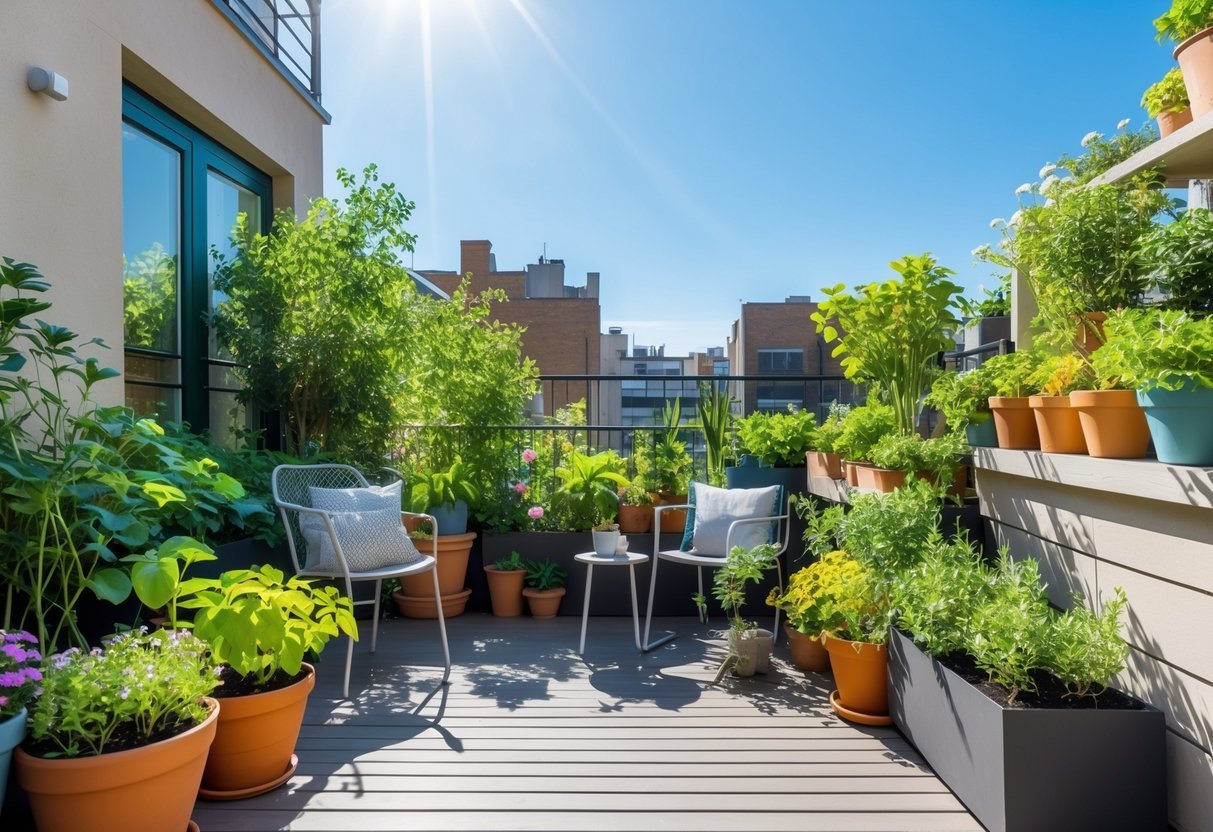
This section answers common, practical concerns about starting and managing a small terrace garden. You will find budget tips, space-saving ideas, plant choices, easy designs, possible problems, and an explanation of the 70/30 rule.
How can one create a terrace garden within a modest budget?
Use recycled or low-cost containers like old buckets, wooden crates, or thrift-store pots. Line them with a cheap plastic sheet and drainage holes to protect plants without buying new planters.
Buy potting mix in bulk and make your own compost from kitchen scraps to cut soil costs. Start with common seeds rather than mature plants; seeds cost less and you get more plants per dollar.
Choose local, hardy plant varieties to avoid expensive soil amendments and extra care. Group plants with similar light and water needs so you save on water and avoid wasteful purchases.
What are innovative small space terrace garden ideas?
Try vertical gardening with wall-mounted planters or a simple trellis to grow beans, peas, or vining flowers. Use hanging baskets for trailing herbs and strawberries to free up floor space.
Convert a narrow railing into a planter box for salads and herbs. Use stackable pots or tiered plant stands to get more plants in a small footprint without crowding.
Create a mini greenhouse with a clear plastic hoop frame over a long planter for winter crops. Use reflected light from mirrors or white walls to brighten shaded corners and boost growth.
Which plants are best suited for growth in a terrace garden?
Herbs like basil, mint, and rosemary do well in containers and need only moderate sunlight. Leafy greens such as lettuce, spinach, and arugula grow fast and fit shallow pots.
Compact vegetables like cherry tomatoes, dwarf peppers, and bush beans produce well in medium containers. For color and scent, use hardy flowers such as marigolds, nasturtiums, and petunias that tolerate heat and container life.
Can you suggest some low-maintenance terrace garden designs?
A simple herb row in identical pots makes watering and pruning predictable and quick. Plant a mixed container with a center focal plant and two companion herbs to reduce pot count and trimming time.
Use self-watering containers or add a capillary mat to cut watering frequency. Choose drought-tolerant plants and set up drip irrigation on a timer for hands-off care.
What are the potential drawbacks of setting up a terrace garden?
Wind exposure can stress plants and dry soil quickly, so you may need windbreaks or heavier pots. Weight load on the terrace can become an issue; always check structural limits before adding many pots or raised beds.
Pests and disease spread easily in close quarters, requiring regular checks and quick action. Watering often and running drainage can be messy; plan for runoff and easy access to water.
How does the 70/30 rule apply to terrace gardening?
The 70/30 rule means you allocate 70% of your terrace space to edible plants and 30% to ornamentals. This keeps most of your space productive while still providing visual appeal and pollinator habitat.
You can also use the split to guide watering and soil needs: 70% of containers get soil mixes optimized for vegetables, while 30% use mixes for flowers or succulents. This helps you manage feeding and watering routines more efficiently.