Front Garden Landscape: Practical Design Ideas for Curb Appeal and Low Maintenance
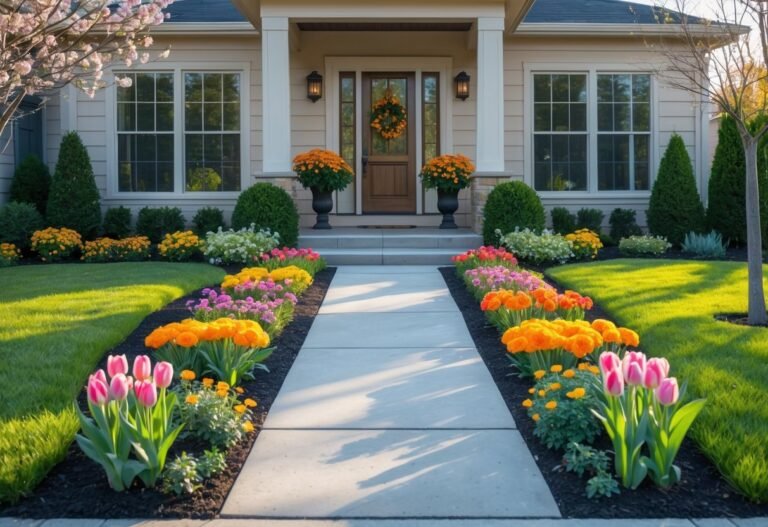
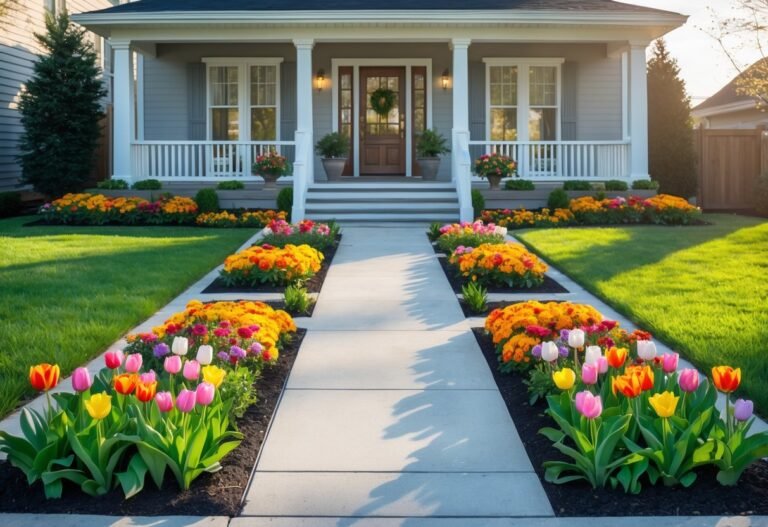
You can turn your front garden into a welcoming, low-maintenance space that boosts curb appeal and fits your budget. Pick a simple layout, choose plants that suit your light and soil, and add a few hardscape accents like a path or mulch beds to make the design last.
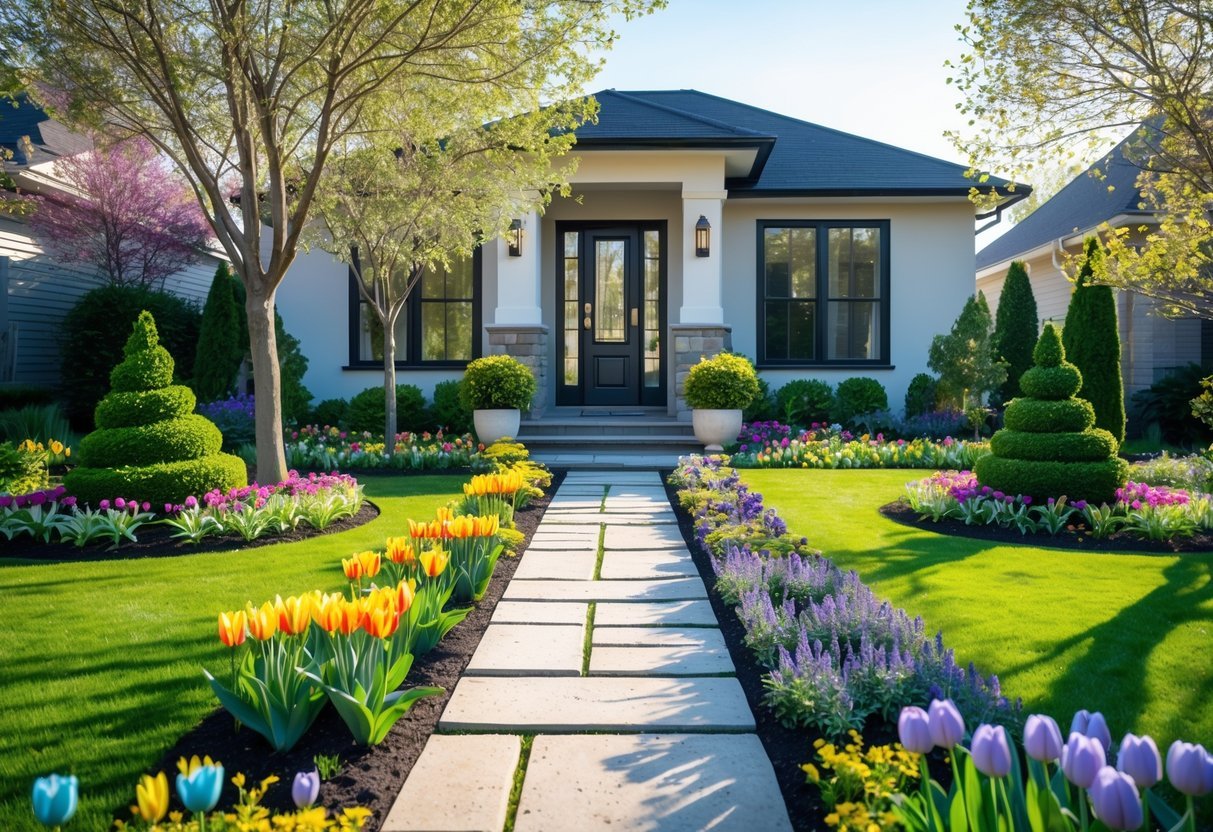
A clear plan that matches your home, climate, and time will save work and give you the biggest visual impact. Start small, use repeat plants for cohesion, and layer heights to keep the space interesting year-round.
Key Takeaways
- Start with a plan that fits your site and upkeep needs.
- Use plant groups and layers for easy, lasting beauty.
- Add simple hardscape elements to define space and reduce maintenance.
Front Garden Landscape Design Essentials
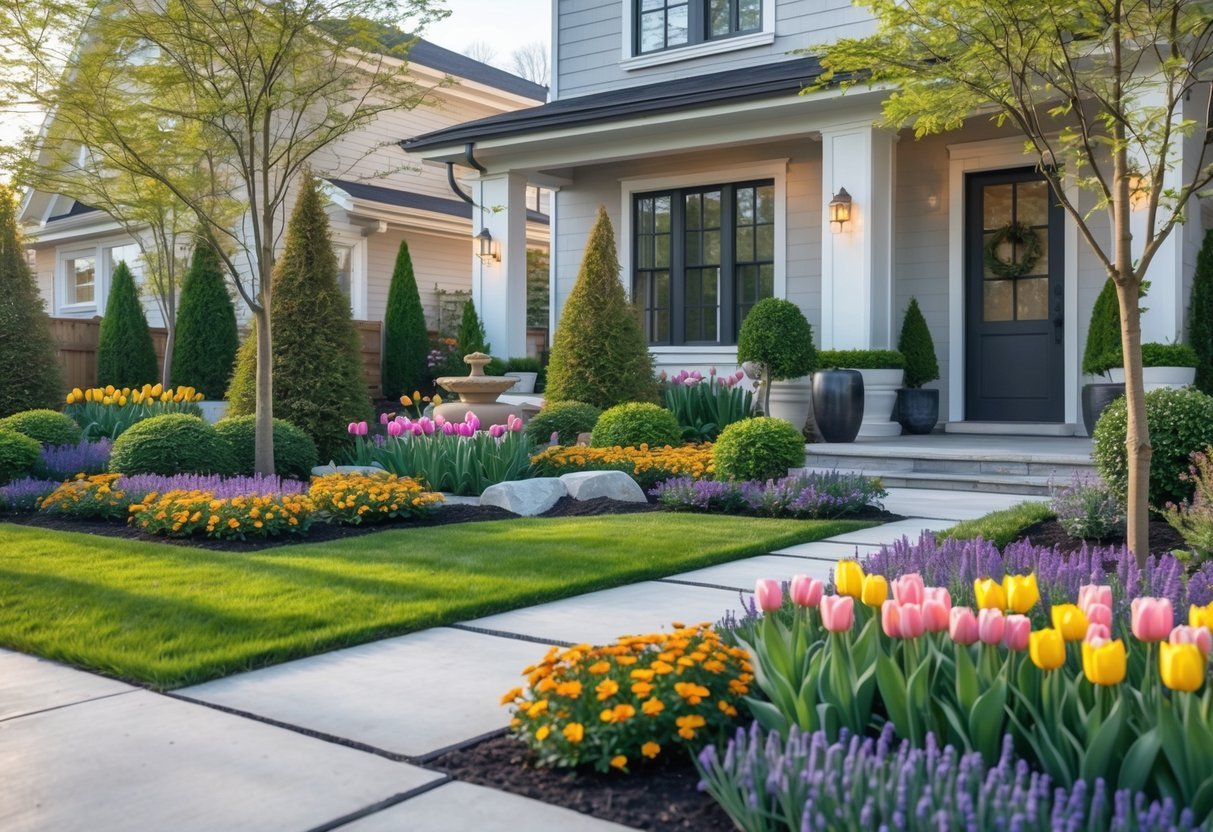
Plan the layout, pick a style that fits your house, and choose materials that match your climate and budget. Focus on sun, soil, scale, and durable finishes to get a front garden that looks good year-round.
Site Assessment and Planning
Walk the site at different times to note sun, shade, wind, and drainage. Mark areas that get morning sun, hot midday sun, and full shade. Note existing features you’ll keep—driveway, porch, mature trees—and space for utilities.
Measure lawn and bed sizes. Sketch a simple plan with dimensions and a scale. Place focal points (tree, planter, bench) at visual centers or near the entry. Plan paths for direct, comfortable movement from driveway to door.
Test soil pH and texture. Amend soil where needed: add compost for clay or sand for heavy loam. Check for water flow and add a dry creek or French drain if water pools. Budget time for phased work if you can’t finish all at once.
Style Selection and Themes
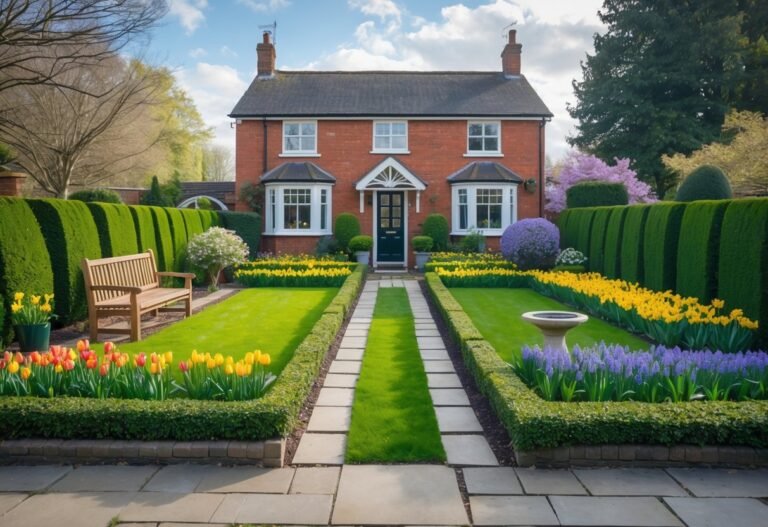
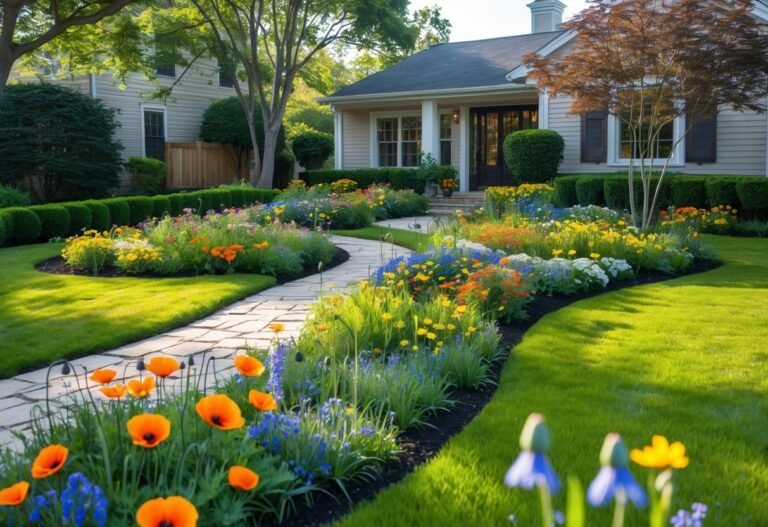
Match the garden style to your home’s architecture. For a modern house, use clean lines, low shrubs, and gravel beds. For a cottage or farmhouse, choose mixed perennials, curved beds, and a picket fence.
Keep a simple plant palette of three to five repeat species for cohesion. Use one structural evergreen, one flowering perennial, and one seasonal annual for color. Choose plant heights to step down from house to lawn for layered sightlines.
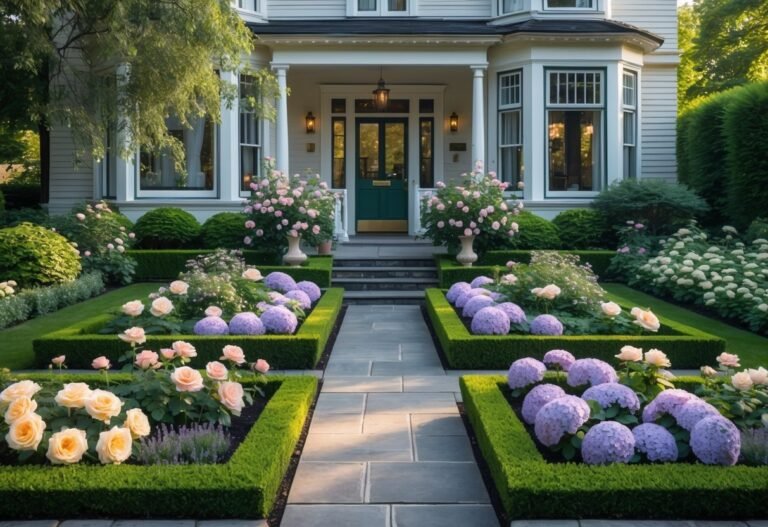
Decide on a focal statement: a small tree, a bold pot, or a pathway. Use symmetry for formal homes and asymmetry for informal or rustic styles. Pick colors that complement your front door and exterior trim.
Choosing the Right Materials
Select hardscaping materials that tolerate local weather. Use pavers or concrete for driveways and compacted gravel for drainage paths. Choose frost-resistant flagstone or poured concrete for steps in cold climates.
Match mulch and edging to the style—dark bark for cottage gardens, crushed stone for modern yards. Use metal or stone edging to keep clean lines where you need them. For lighting, use low-voltage or solar path lights rated for wet locations.
Prioritize low-maintenance finishes if you want less upkeep. Pick native or drought-tolerant plants, permeable paving to reduce runoff, and long-lasting materials like composite decking or sealed natural stone. Keep a small budget line for replacement plants and seasonal touch-ups.
Plant Selection and Placement
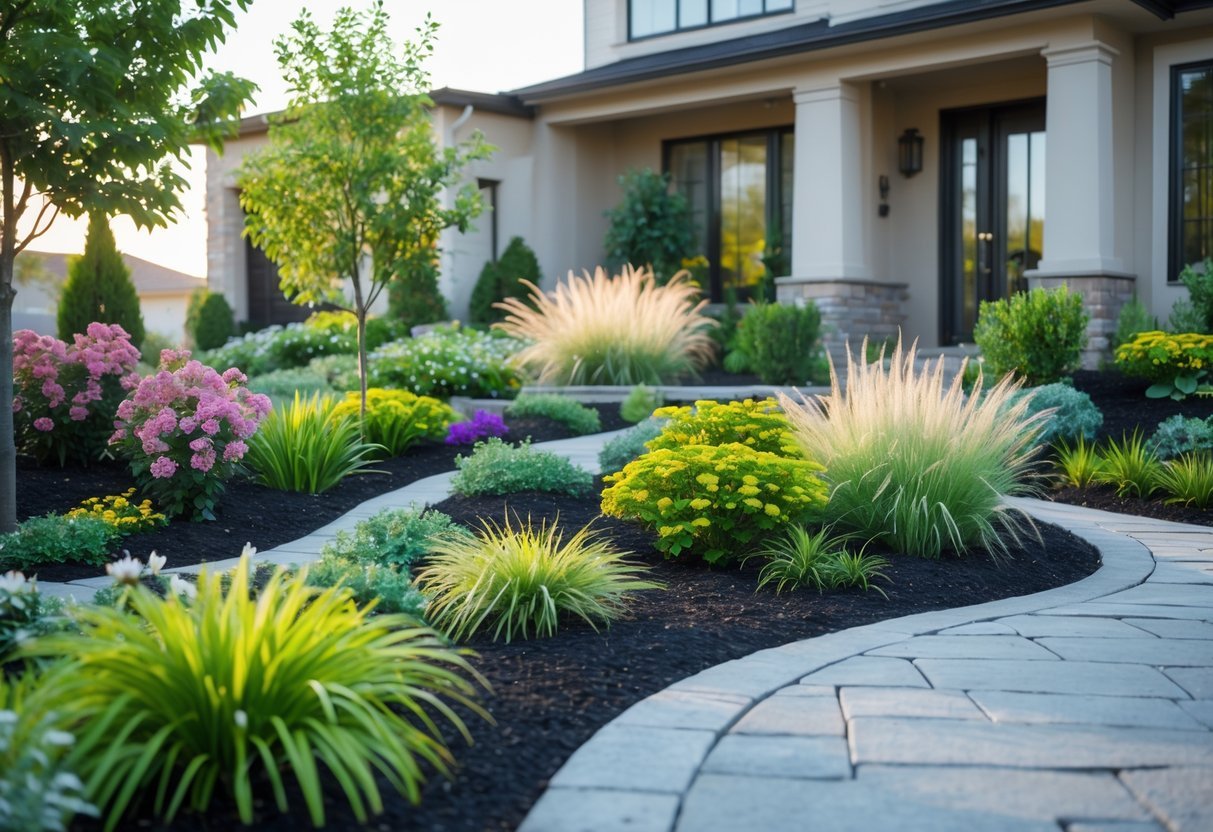
Choose plants that give color across the year, survive your local climate, and cut down on chores. Place taller shrubs toward the back, repeat key colors, and space plants so they touch at mature size.
Seasonal Interest and Color
Plan for spring bulbs, summer perennials, and fall foliage to keep the front garden lively. Plant daffodils or crocus in groups for early color. Use mid-summer bloomers like salvia or coneflower for steady color through warm months.
Mix evergreen shrubs (boxwood, holly) with deciduous shrubs (dogwood, viburnum) so structure remains in winter. Add one or two trees with notable fall color—maple or serviceberry—near the property line, not under power lines.
Repeat three main colors or textures to create harmony. Place bright colors along the walkway and near the entry to draw the eye. Stagger bloom times so you rarely have empty beds.
Drought-Tolerant Choices
Pick plants that use less water in your climate zone. Native grasses, Russian sage, lavender, and sedum handle dry spells while keeping a neat look. Group these plants together so they share a single irrigation schedule.
Use mulch to cut evaporation and keep roots cool. Choose porous soil or amend with compost to improve water retention where needed. When installing, space plants by their mature width so roots don’t compete for limited moisture.
Limit lawn area near beds and replace with gravel paths or groundcovers like thyme to reduce watering needs. Add a drip irrigation line with a timer for efficient, targeted watering.
Low-Maintenance Planting
Choose shrubs that need little pruning, such as dwarf hollies, euonymus, and most native azaleas. Select perennials that self-seed minimally or deadhead easily, like daylilies and catmint, to lower upkeep.
Design beds with overlapping plant masses so they fill gaps as they grow. Space plants to touch at maturity; this reduces weeds and the need for frequent edging. Use a 2–3 inch layer of organic mulch and a thin weed barrier where weeds are persistent.
Create simple maintenance zones: a high-care area near the door for seasonal color and a low-care border with hardy shrubs and groundcovers. Label plants with tags during planting so you follow the right care routine.
Hardscape Features and Enhancements
Hardscape defines the fixed parts of your front garden that add structure, guide movement, and create focal points. Choose durable materials and place features where they support daily use, visibility from the street, and easy maintenance.
Pathways and Walkways
Plan routes that lead visitors from the sidewalk to your door and to side yards. Use pavers, poured concrete, or gravel depending on your style and budget. Pavers offer pattern options and easy repair; concrete is low-cost and smooth for wheelchairs; gravel drains well and suits informal designs.
Keep widths practical: 3–4 feet for single-person paths, 5–6 feet for two people walking side by side. Add gentle curves to slow foot traffic and reveal planting beds gradually. Include edging to stop materials from spreading and add a neat look.
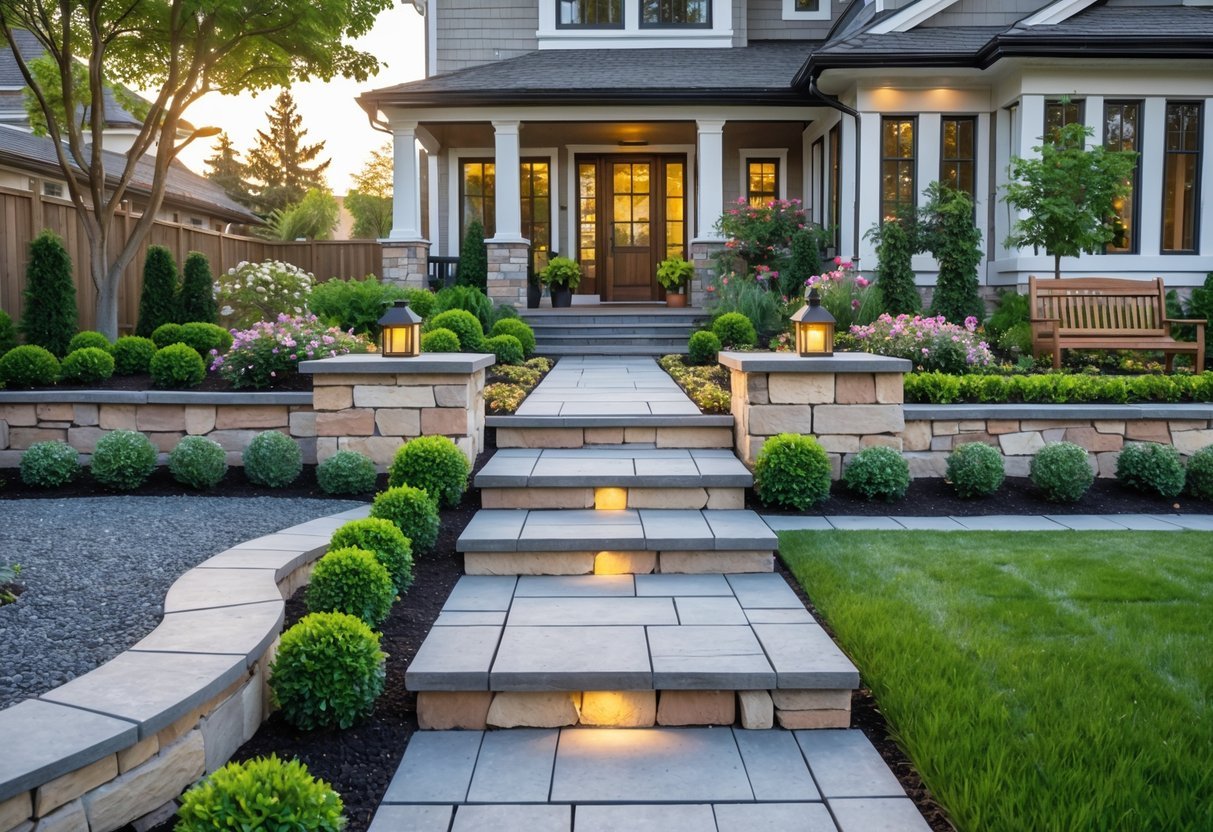
Add low-profile lighting along steps and longer runs. Use solar or low-voltage fixtures spaced 6–10 feet apart for safe night use. For steps, choose non-slip treads and consistent riser heights to reduce trip risk.
Garden Edging Solutions
Edging separates lawn from beds and keeps mulch, soil, and gravel contained. Choose steel or aluminum for a thin, modern line; brick or natural stone for a classic look; or plastic/rubber for a low-cost, flexible option. Hard edges hold materials longer, which reduces weeding and edging work.
Install edging 1–2 inches above or flush with the lawn for clean mowing lines. For sloped areas, use stacked stone or timber as a small retaining edge to prevent soil erosion. Consider root barriers near trees to protect the edge from invasive roots.
Match edging height and material to your garden scale. Taller, visible edges suit formal layouts; low, subtle edges suit cottage or meadow-style plantings. Fasten metal edges with stakes and glue or mortar stone edges where movement would be a problem.
Accent Elements
Add focal pieces that draw the eye and reinforce style. Use a small fountain or birdbath near the entrance for sound and wildlife. Install a low retaining wall of natural stone to create planting terraces and add seating opportunities.
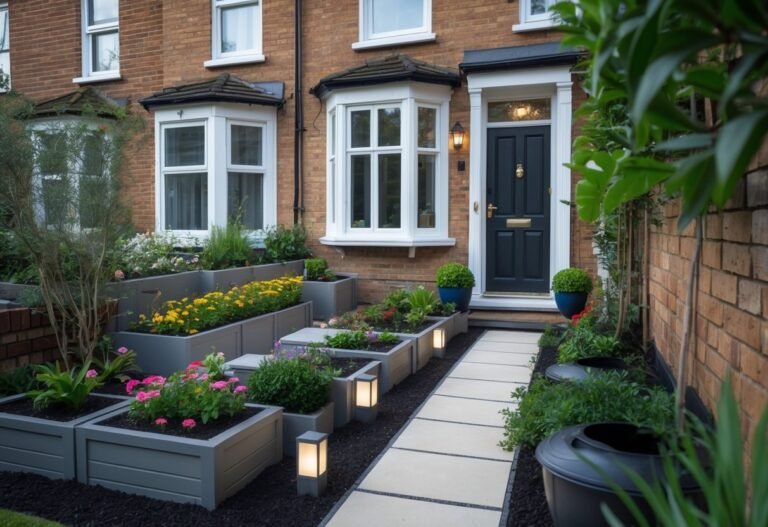
Pergolas or arbors over walkways add shade and frame views. Choose materials that match your house trim or pathway finish for a cohesive look. Add built-in planters or raised beds with integrated seating to combine function with beauty.
Pay attention to scale: a large sculpture can overwhelm a small yard, while tiny accents get lost in a broad lawn. Use durable finishes and place elements where they are visible from the street and the main entry.
Frequently Asked Questions
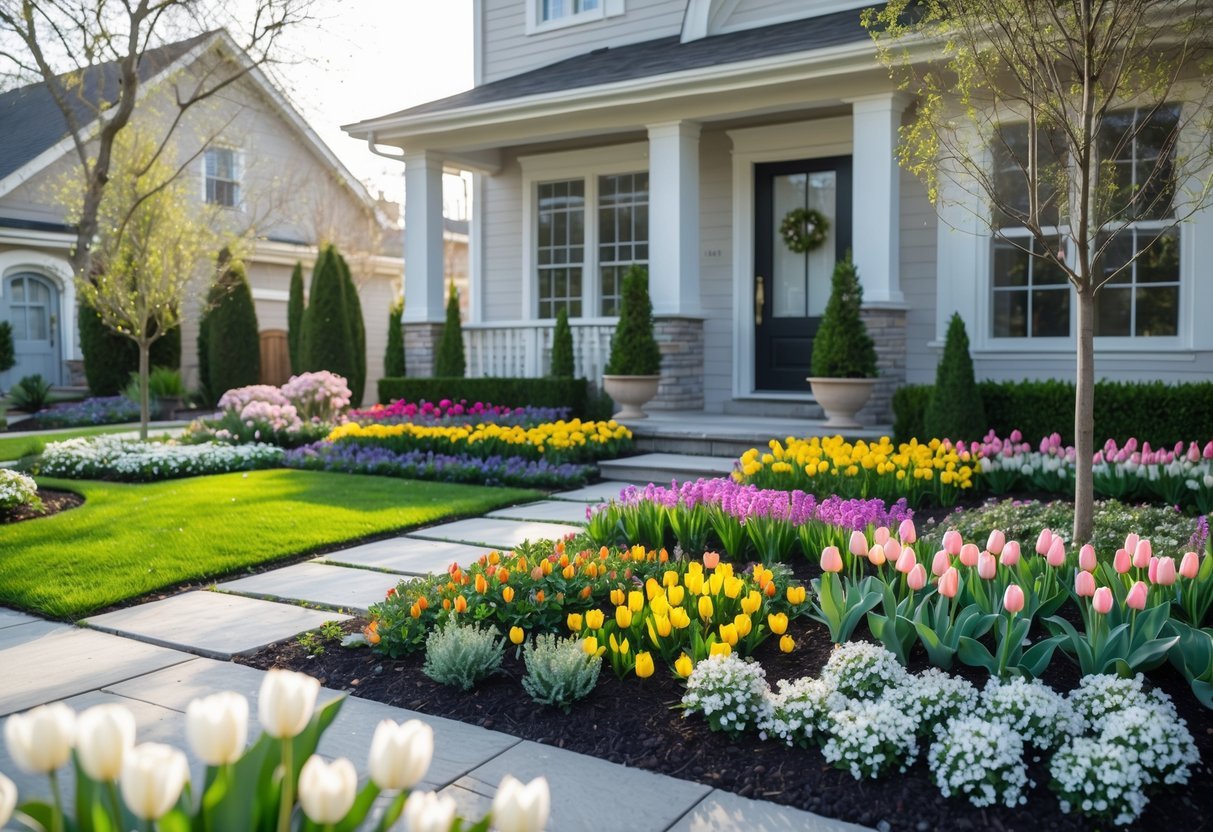
These answers cover practical steps you can use right away: plant choices, layout tips, hardscape ideas, and simple rules to balance beauty and upkeep. Each answer gives clear actions you can apply to your front garden.
How can I design my front yard to be both beautiful and low maintenance?
Choose native and drought-tolerant plants that suit your local climate to cut watering and care. Use mulch and groundcovers to suppress weeds and retain soil moisture.
Group plants by water needs and place high-maintenance plants near the house for easier care. Install a drip irrigation timer to water efficiently without daily effort.
Use durable hardscaping like pavers, gravel beds, and edging to reduce mowing and trimming. Keep planting beds simple with repeated plants for a tidy look that’s easy to maintain.
What are some modern landscaping ideas for a small front yard?
Use clean lines and simple shapes: a narrow path, rectangular planting beds, or a single feature tree. Keep the palette limited to two or three plant types for a calm, modern feel.
Add low walls or raised planters to create height and structure without taking much space. Mix hard materials—concrete, gravel, metal—with soft plantings for contrast.
Include compact focal points like a slim vertical water feature or sculptural plant. Use layered lighting to highlight the entry and key plants after dark.
Which plants are best suited for a front garden in a Californian climate?
Choose drought-tolerant Mediterranean and native species: California lilac (Ceanothus), manzanita (Arctostaphylos), and California fuchsia (Epilobium canum). Add succulents like agave and sedum for low water use and visual interest.
Plant ornamental grasses such as Festuca or Muhlenbergia for texture and low maintenance. Use drought-tolerant trees like olive or pistache for shade and curb appeal.
What design principles should I consider for creating a simple yet appealing front yard?
Focus on balance: repeat shapes and colors to create unity. Use a clear path to the door so visitors know where to walk.
Limit plant variety to avoid clutter and reduce maintenance. Add one or two focal points—like a specimen tree or a bench—to draw the eye.
Keep scale appropriate to your home: choose plant sizes that match the house height and porch size. Maintain proportion between hardscape and planting areas.
How can I implement the 70/30 rule when landscaping my front garden?
Reserve about 70% of the space for low-maintenance, long-lasting elements: shrubs, groundcovers, hardscape, and mulch. Use the remaining 30% for seasonal color with annuals or small ornamental plants.
Plan beds so the big, low-care plants form the backbone and the 30% areas are easy to change each season. This keeps the yard mostly stable while letting you update color and texture.
What features should I include to enhance the curb appeal of my home through front yard landscaping?
Frame the entry with symmetrical plants or a pair of containers to make the front door stand out. Keep the path clean and well-lit for safety and visual appeal.
Add layered lighting: path lights, uplights for trees, and soft porch lighting to create depth at night. Use fresh mulch, neat edges, and trimmed hedges to show the yard is cared for.