10 Vegetable Garden Ideas for Small Spaces and Big Yields
You’ll find practical, space-smart ways to grow more food and enjoy the process of gardening, no matter your yard size or experience. This article gives you ten adaptable vegetable garden ideas that improve soil, save space, and keep plants healthier so you can harvest more with less frustration.
Flip through the ideas to discover layout options, planting methods, and maintenance approaches that fit patios, raised beds, or large plots. Each idea focuses on clear benefits—better soil control, pest management, efficient use of sunlight and water—so you can pick techniques that match your goals and schedule.
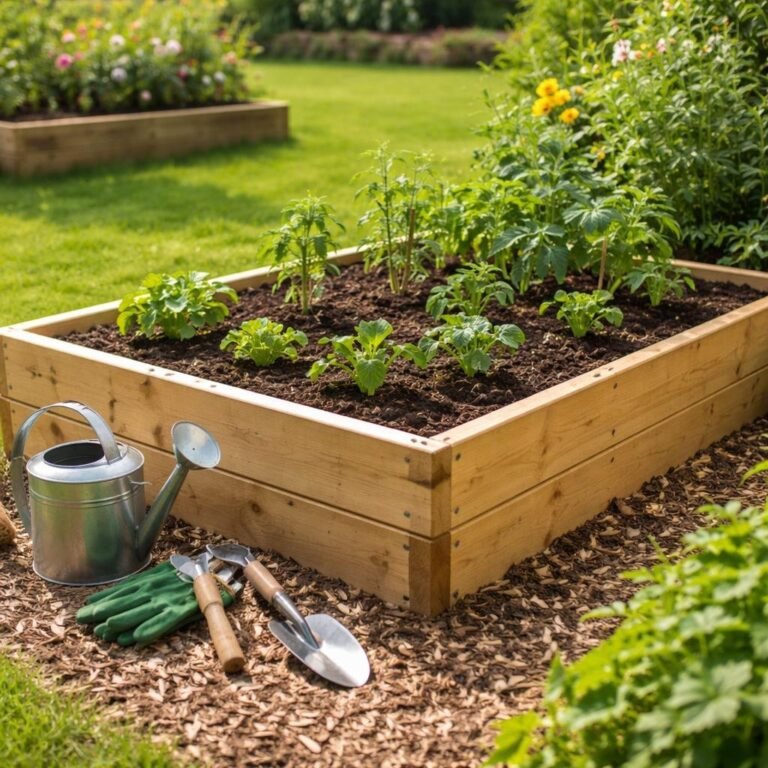
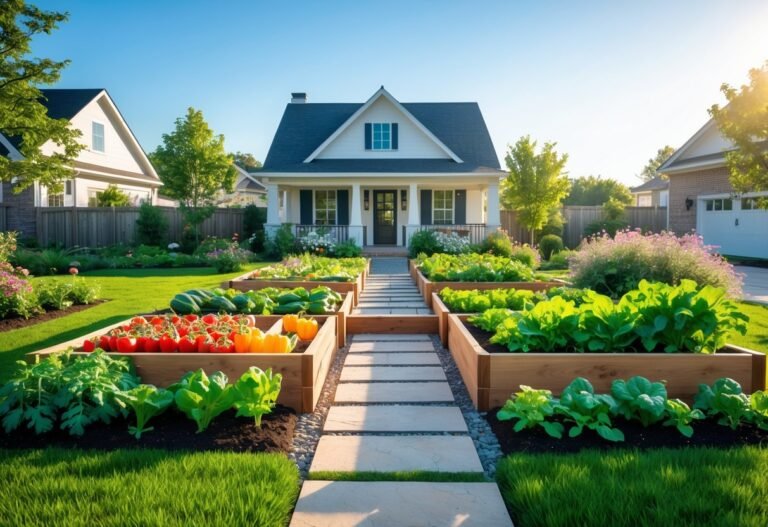
1) Raised bed gardens for better soil control
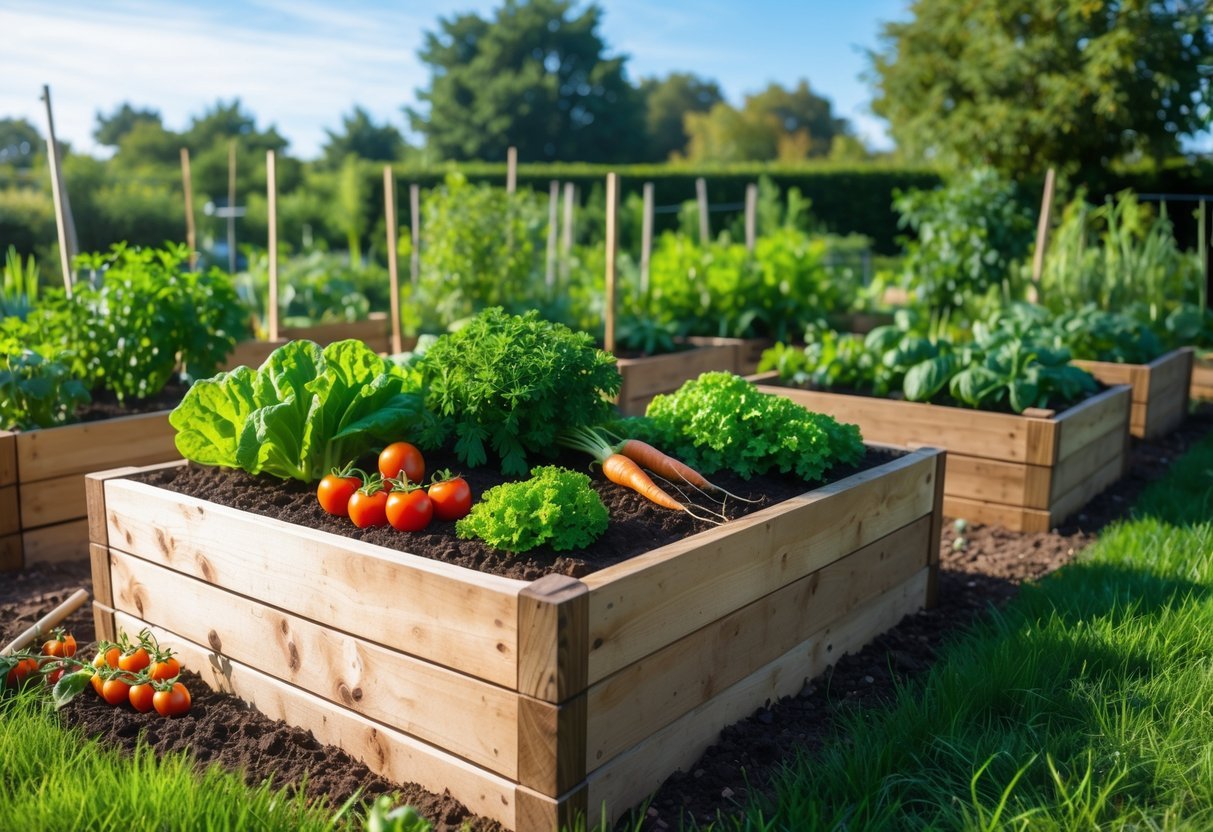
Raised beds let you create a tailored soil mix, so you can give vegetables the right drainage and nutrients.
You avoid poor native soil and can adjust pH, organic matter, and texture to suit specific crops.
The higher planting area improves access for planting, weeding, and harvesting.
You also reduce compaction and can manage irrigation more precisely to prevent waterlogged roots.
2) Vertical gardening using trellises
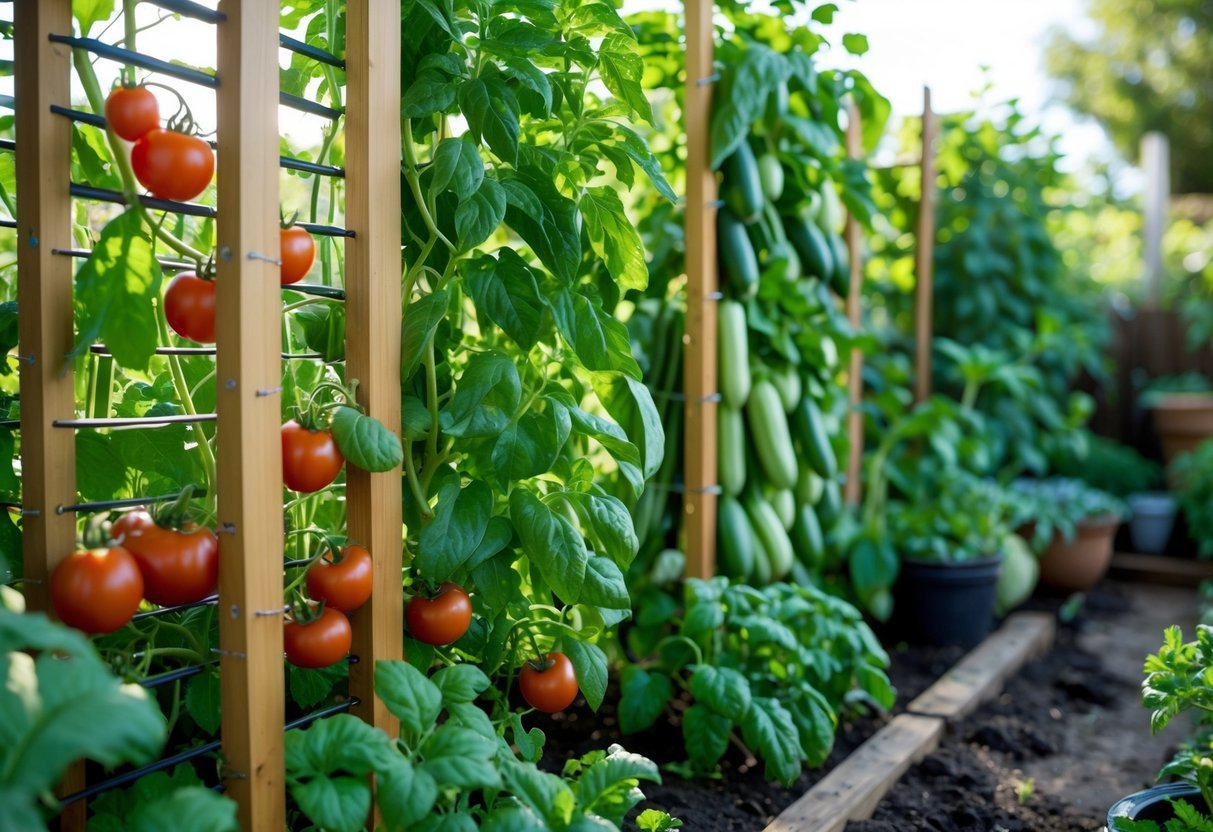
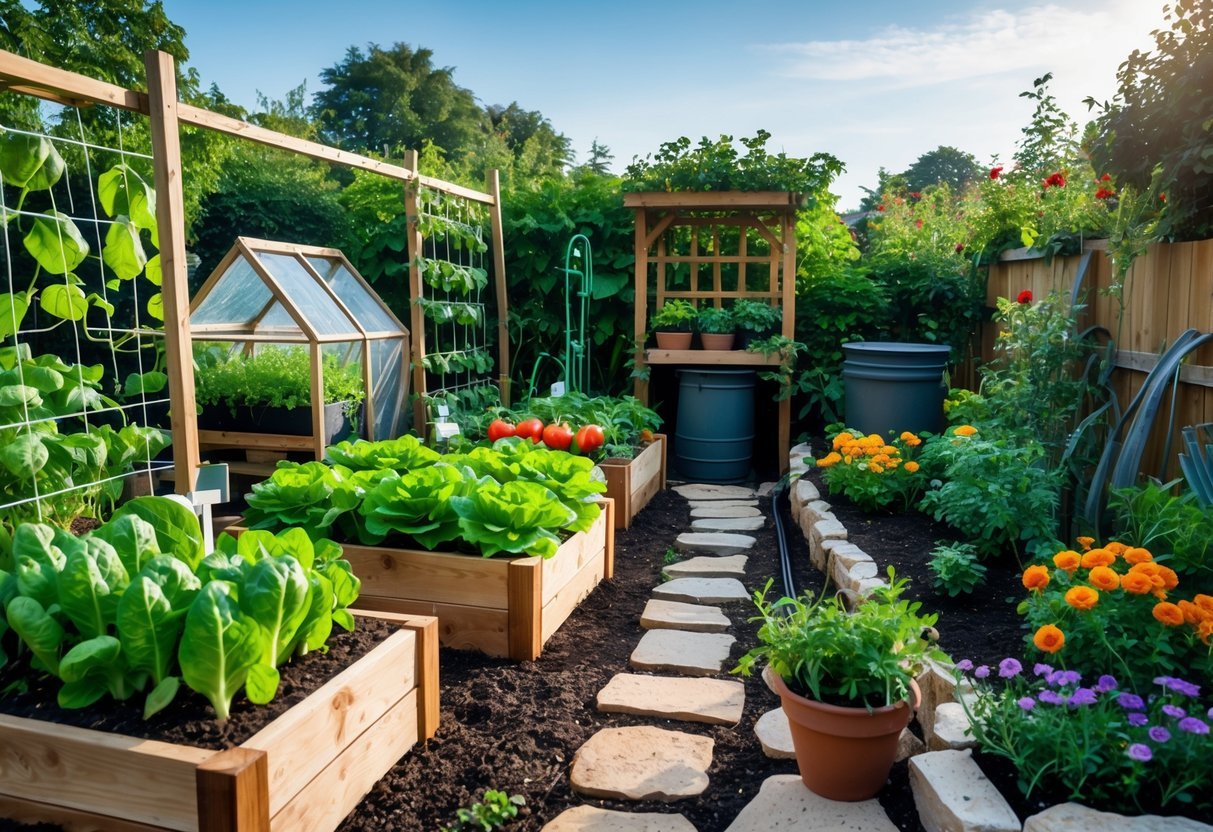
Use trellises to grow vining vegetables like cucumbers, peas, pole beans, and indeterminate tomatoes to save ground space.
Trellises improve airflow and make harvesting easier, which reduces disease and strain on plants.
Choose sturdy materials—wood, metal, or strong mesh—and secure them well for heavy fruit.
Train plants early with ties or clips and prune as needed to keep growth manageable and productive.
3) Companion planting for pest control
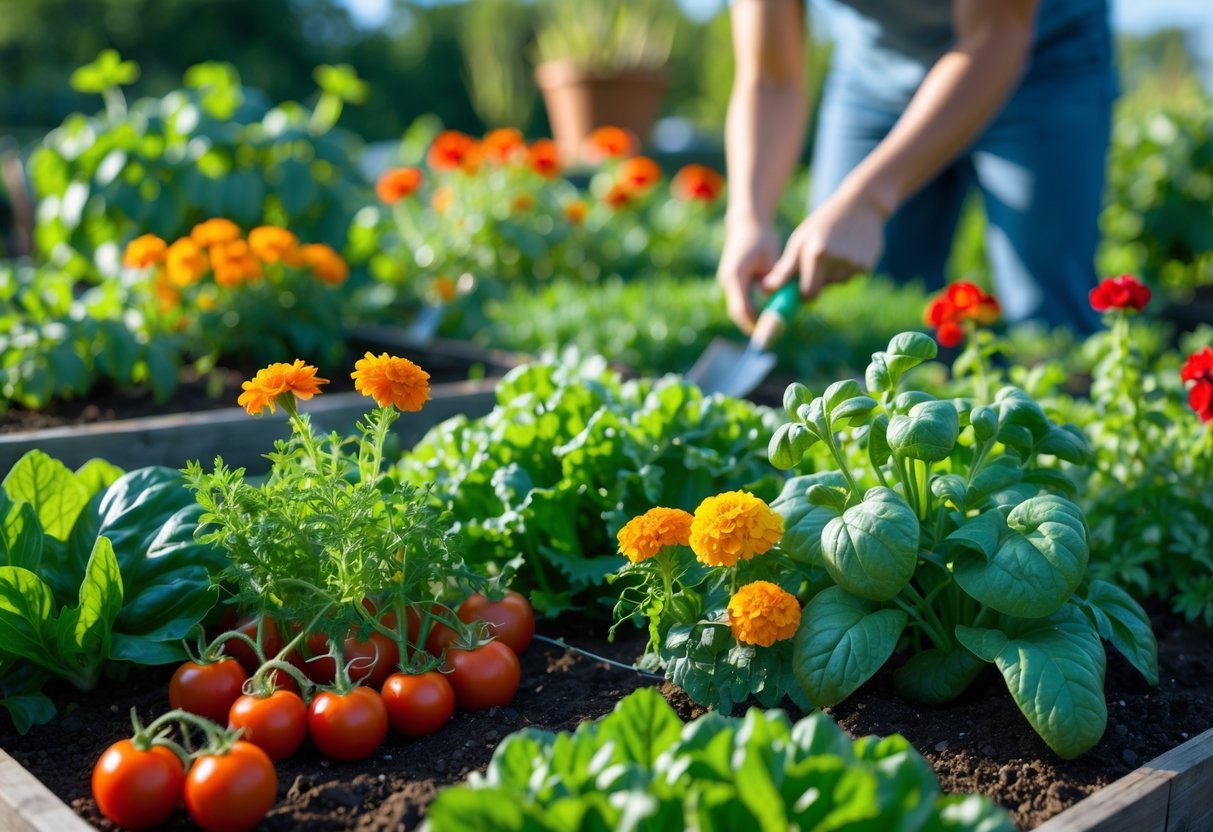
Use companion plants to reduce pests without chemicals. Plant aromatic herbs like lavender or rosemary along bed edges to deter common insects.
Mix heights and textures to attract beneficial insects that eat pests. Marigolds and flowering herbs draw predators while vegetables provide habitat.
Pair specific combos—onions with carrots, basil with tomatoes—to cut pest pressure and improve vigor. Space plants for airflow to lower disease risk.
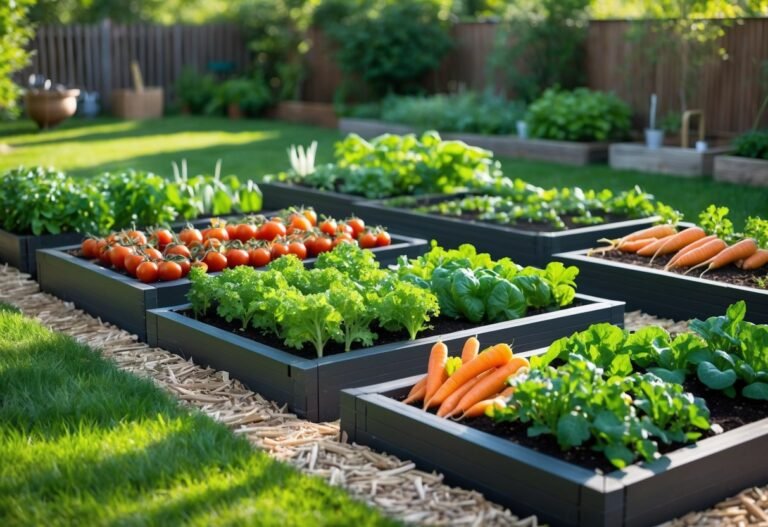
4) Square foot gardening to maximize space
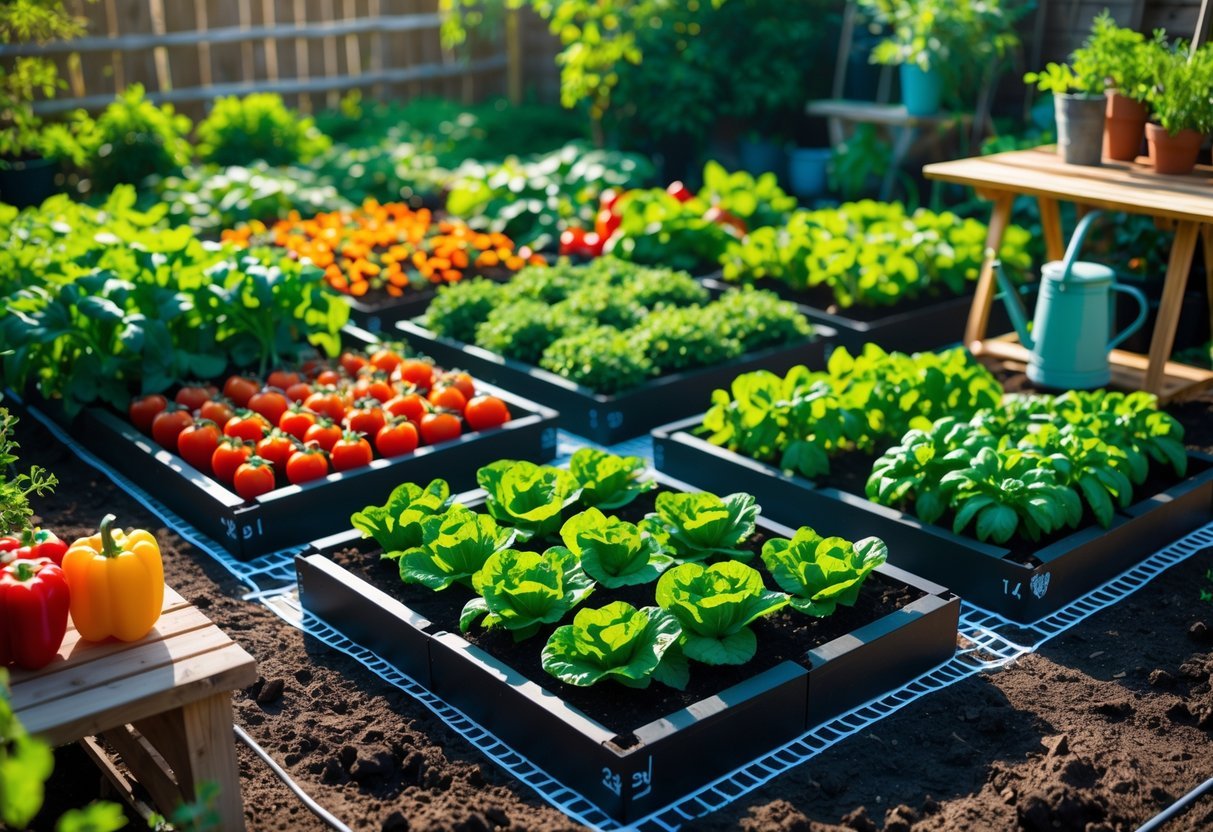
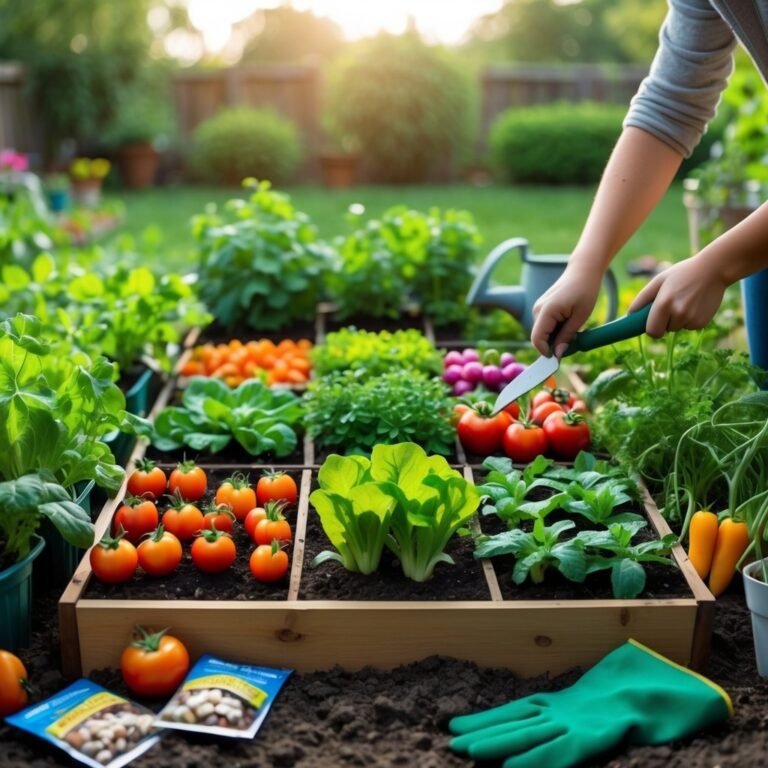
Square foot gardening divides your bed into a grid so you plant precisely and reduce wasted space.
You can fit more crops per square by following spacing charts and using succession planting.
Use raised beds with 4×4 or 3×3 grids to control soil quality and irrigation.
This method simplifies weeding, harvesting, and planning so you spend less time maintaining and more time harvesting.
5) Container gardening on patios or balconies
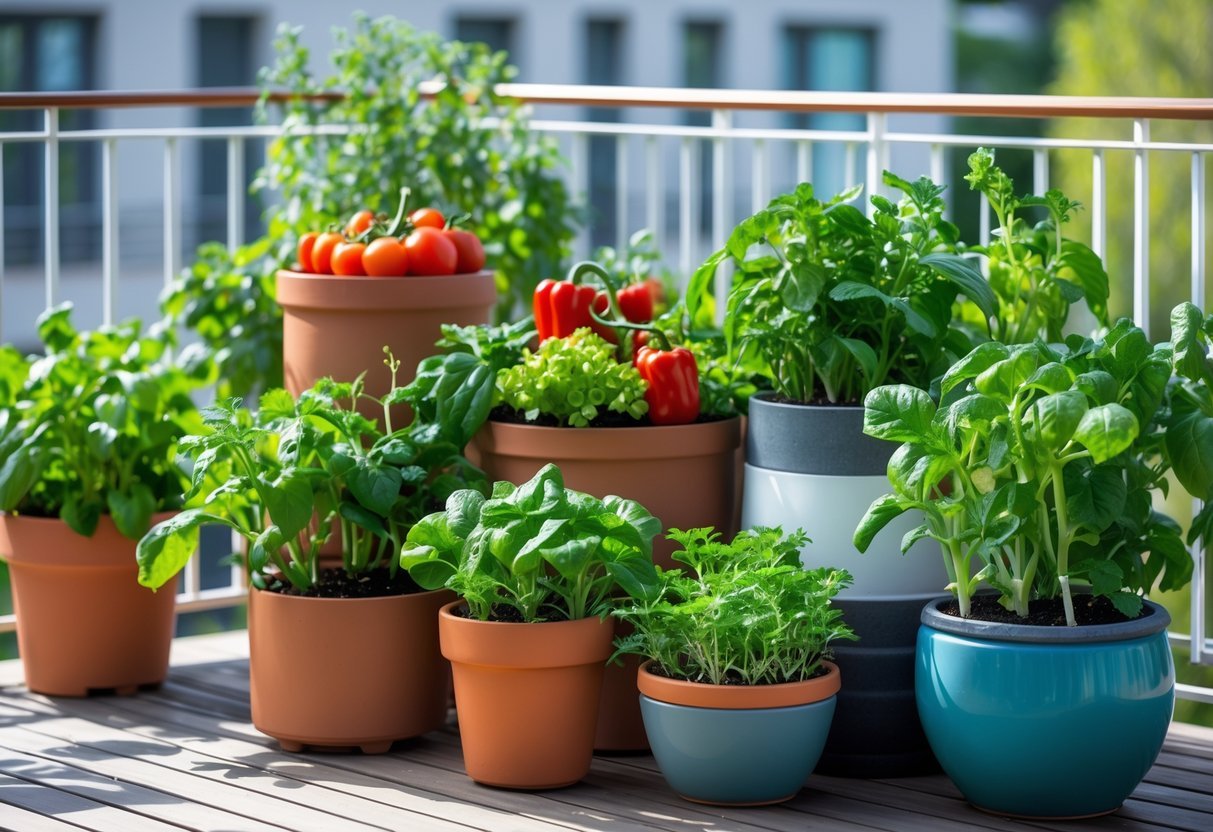
You can grow a surprising variety of vegetables in containers on a patio or balcony, as long as they get sufficient sun. Choose pots sized for root depth—larger containers suit tomatoes and peppers, shallow ones work for herbs and greens.
Use high-quality potting mix and ensure good drainage to prevent root rot. Water more often than in-ground beds because containers dry out faster, and feed with balanced fertilizer during the season.
6) Straw bale gardening for nutrient-rich soil
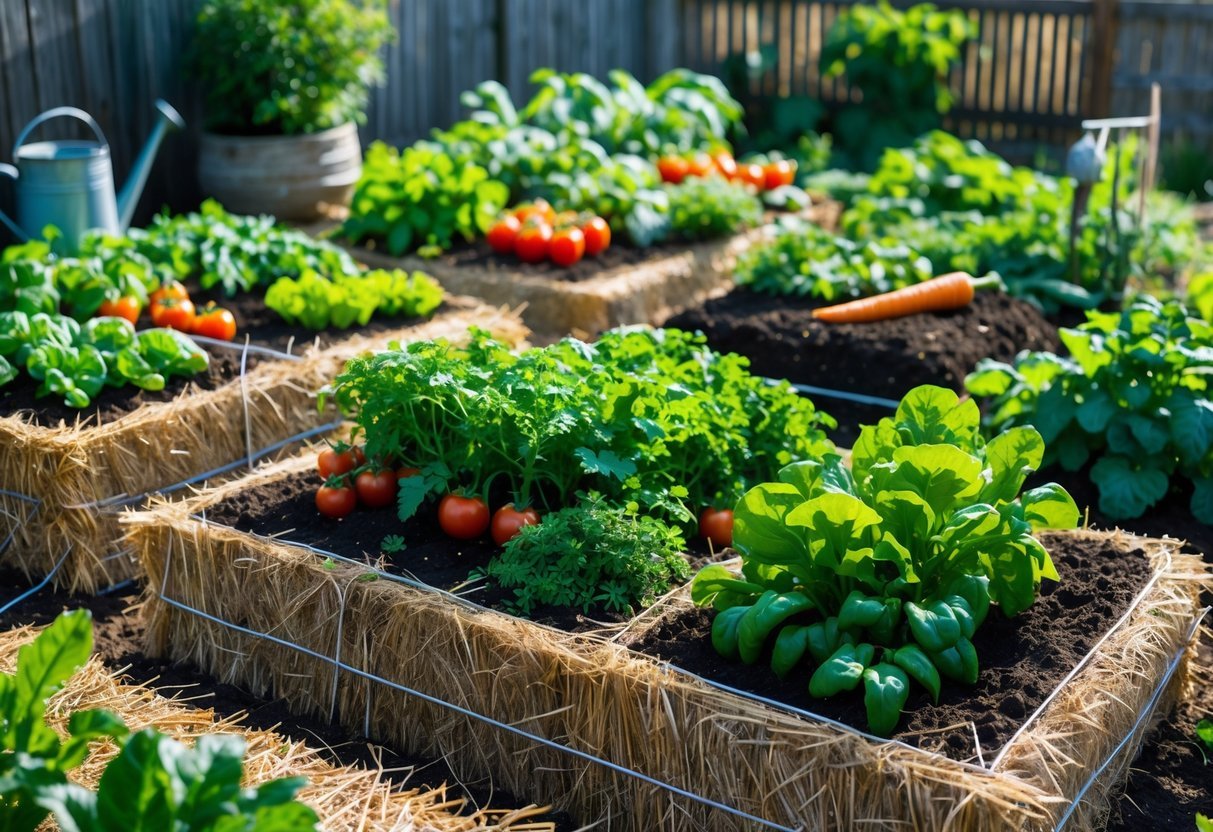
Straw bale gardening lets you create a planting medium without digging or replacing poor soil.
You condition bales with water and nitrogen over about 10–14 days to start decomposition and build fertility.
Plant directly into holes made in the softened straw or top with a thin layer of compost for seedlings.
Maintain even moisture and feed with balanced liquid fertilizer as needed to keep nutrients available.
7) Circular or mandala garden designs
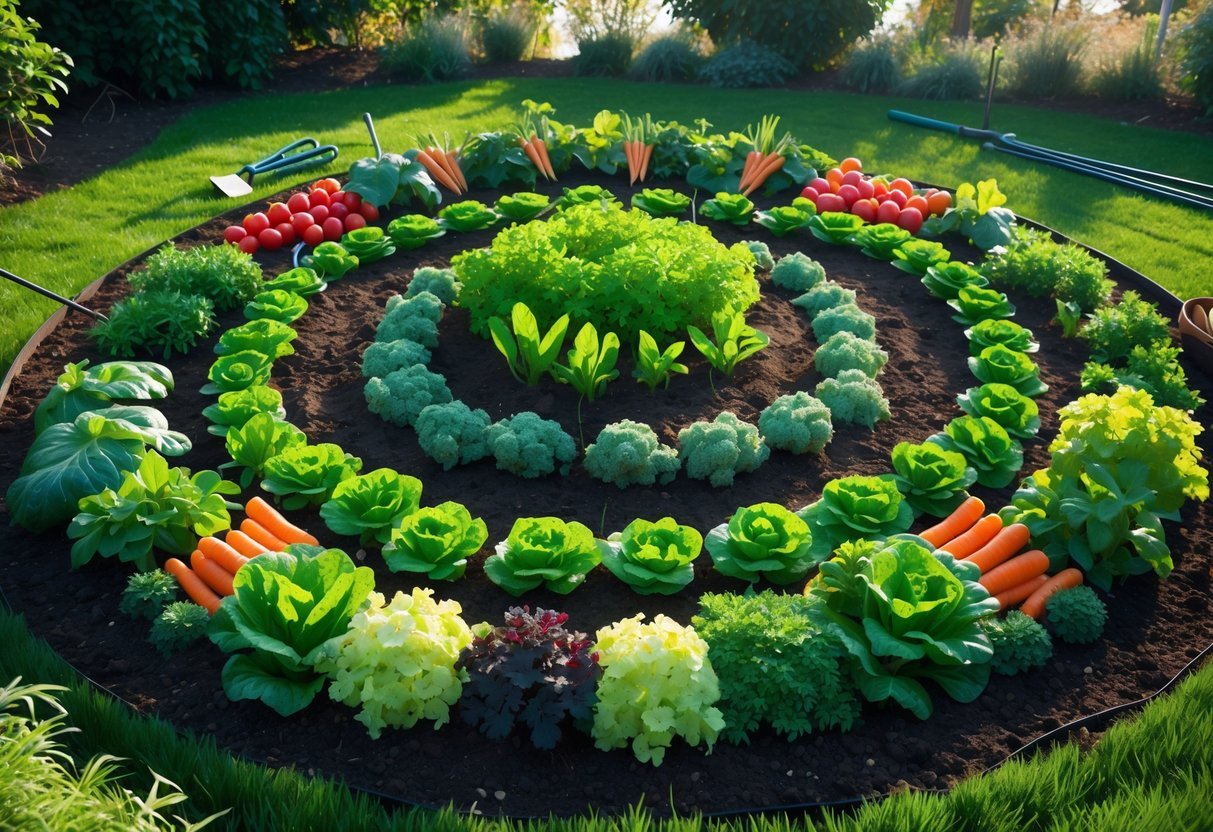
Choose a circular or mandala layout to maximize planting area in a small space. The spiral beds let you reach plants easily and concentrate water toward the center.
You can group plants by water needs or height along the rings to simplify care. This Vegetable design also improves soil structure and can help capture runoff on compacted sites.
Create pathways between rings for access and harvest, and plant herbs or annuals on the inner arcs for frequent use.
8) Pollinator-friendly flower borders
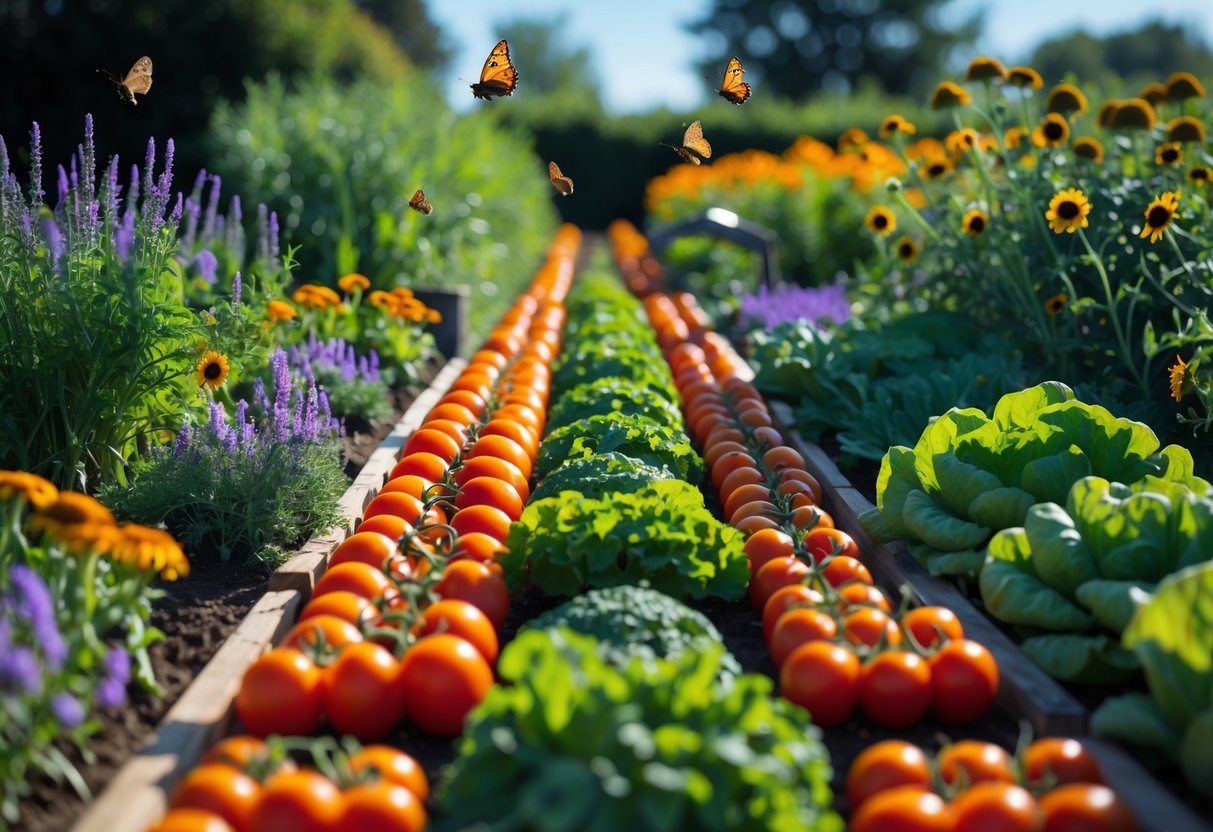
Plant a mix of native, open flowers like lavender, echinacea, and borage along your vegetable beds to attract bees, butterflies, and hoverflies. These plants provide nectar and landing platforms that increase pollination for fruits and vegetables.
Stagger bloom times by including early-, mid-, and late-season species so pollinators find resources throughout the growing season. Place taller plants on the north side to avoid shading crops and keep borders accessible for maintenance.
9) Succession planting for continuous harvests
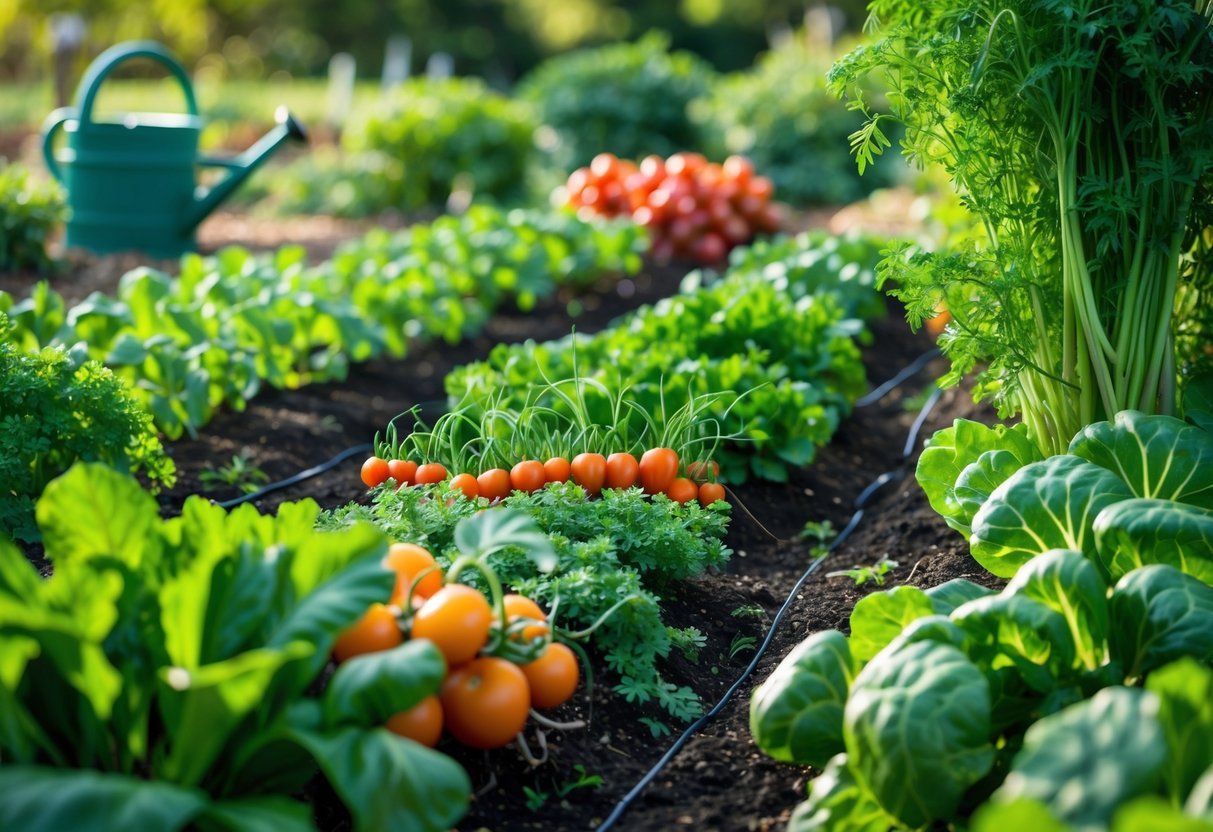
Plan staggered plantings so you replace harvested crops immediately with new ones. This reduces downtime and stretches your harvest across the season.
Choose fast-maturing varieties and sow seeds at regular intervals—every 2–3 weeks for many greens and root crops. Rotate families when possible to protect soil health and reduce pests.
Keep a simple planting calendar to track dates and spacing. Small beds yield more when you time plantings instead of planting once.
10) Herb spirals to save space and moisture
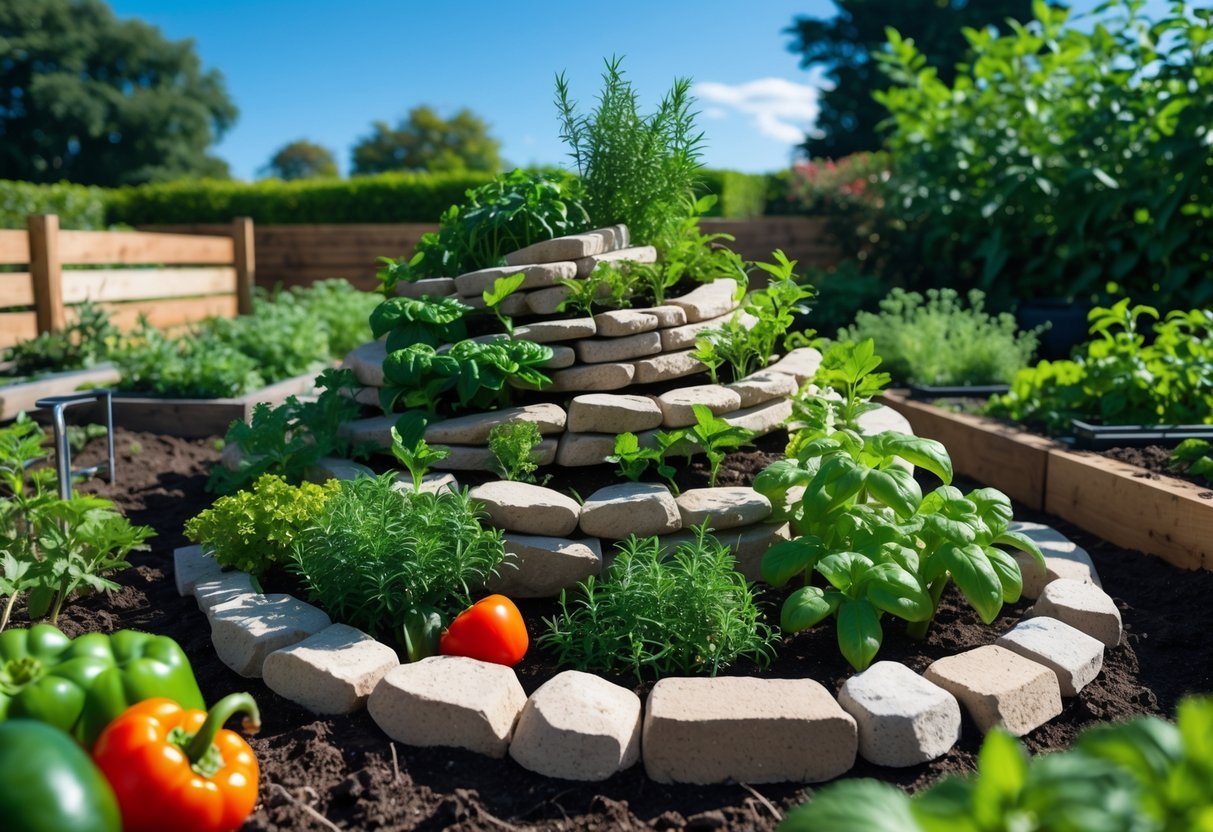
Build a compact spiral mound to create multiple microclimates in a small footprint. You place sun-loving, drought-tolerant herbs at the top and moisture-loving ones at the base, so each plant gets the conditions it prefers.
The slope improves drainage and reduces watering needs on upper levels while retaining moisture below. You can use stone, brick, or recycled materials to form the spiral and soil layers.
Planning Your Vegetable Garden Layout
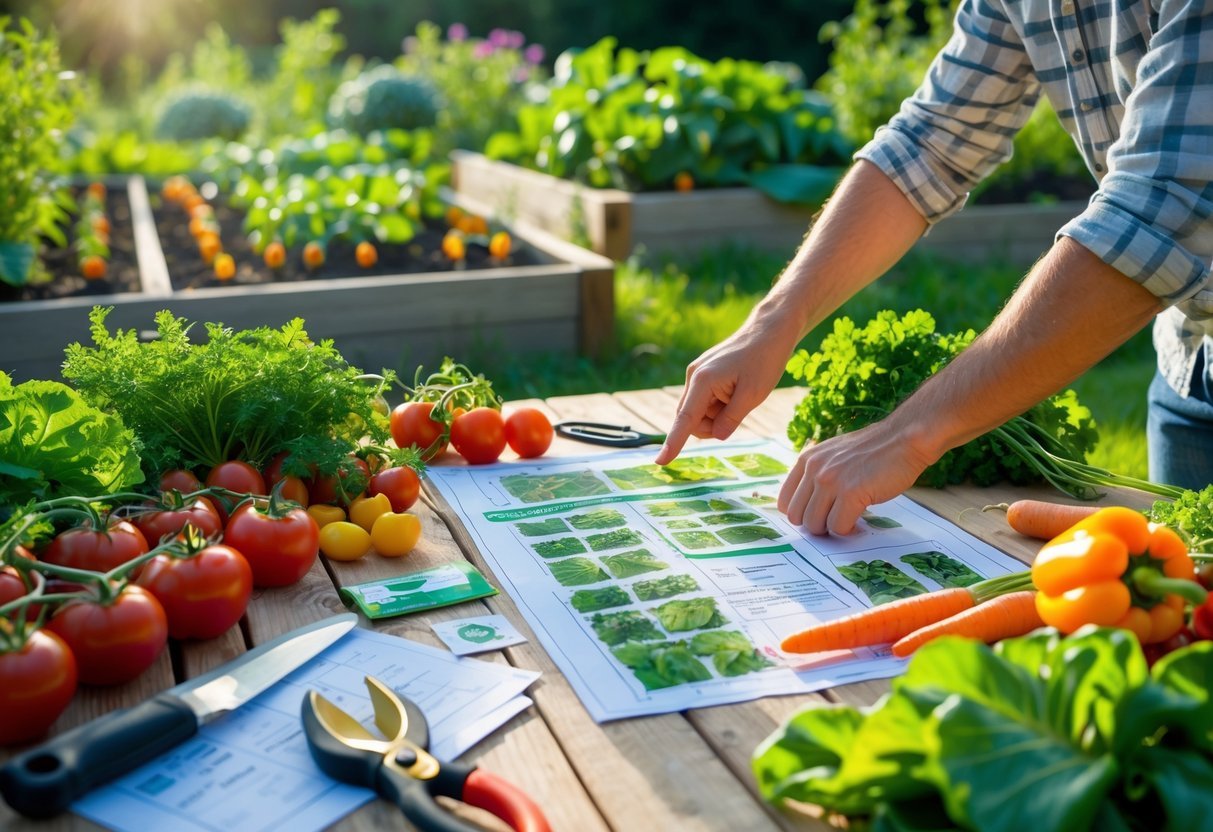
Decide how many plants you want, where paths will run, and which crops need support or isolation. Prioritize reachable beds, clear walkways, and a layout that matches the time you’ll spend on maintenance.
Space Efficiency Strategies
Use raised beds and 4×4 or 4×8 foot modules to make every step count; you can reach the center from all sides without compacting soil. Square-foot gardening lets you plant one tomato per 1–2 sq ft pole space, 16 carrots per sq ft, or 9 bush beans per sq ft—adjust densities by plant size and maturity time.
Layer vertically with trellises for peas, pole beans, cucumbers, and indeterminate tomatoes to free ground space for root crops. Interplant fast-maturing crops (radishes, lettuce) between slower ones (broccoli, peppers) to harvest early and reuse the spot. Keep a 18–24 inch path between beds for wheelbarrow access and 12–18 inch narrow service paths for frequent watering and harvesting.
Sunlight and Soil Considerations
Map sun exposure for a full week at planting height; mark areas that get 6+ hours for fruiting crops and 3–5 hours for leafy greens. Position tall plants (corn, trellised beans) on the north side of beds to prevent shading smaller crops to the south.
Test soil pH and texture before planting; most vegetables prefer pH 6.0–7.0 and loamy, well-draining soil. Amend by adding 2–4 inches of compost and mixing it into the top 6–8 inches for raised beds, or perform a soil test and add lime or sulfur to correct pH. Use mulches to retain moisture and reduce weeds, and plan irrigation lines or soaker hoses to run along bed centers for even water delivery.
Maintenance Tips for Thriving Vegetable Gardens
Focus on consistent watering that reaches root zones and on pest control methods that protect beneficial insects and soil life. Prioritize simple, repeatable routines you can maintain throughout the season.
Watering Best Practices
Water deeply and infrequently to encourage strong root growth. Aim for 1–1.5 inches of water per week for most vegetables, applied in 1–2 sessions rather than daily light sprinkling.
Water at the base of plants early in the morning to reduce evaporation and fungal risk. Use drip lines, soaker hoses, or a watering wand to deliver water directly to soil. Avoid wetting foliage when possible.
Check soil moisture by pushing a finger 2–3 inches into the soil; if it feels dry, water. Mulch 2–3 inches around plants to conserve moisture and moderate soil temperature. Adjust frequency during heat waves, heavy rains, or as plants mature.
Organic Pest Management
Scout your garden weekly to catch problems early. Look under leaves, on stems, and near the soil line for eggs, larvae, or chewing damage. Remove pests by hand when practical.
Encourage beneficials: plant flowers like marigolds, alyssum, or borage; provide water; avoid broad-spectrum insecticides. Use row covers for seedlings and floating row cover fabric for short-term protection against flying pests.
Apply targeted organic controls when needed: insecticidal soaps or neem oil for soft-bodied pests, Bacillus thuringiensis (Bt) for cabbage worms, and diatomaceous earth around stems for slugs. Rotate crops and remove infected plant debris to break pest life cycles.