12 Flowers Garden Ideas for Stunning Year-Round Color and Design
Flower gardens add beauty and life to any outdoor space. Creating a garden that is both attractive and easy to care for requires thoughtful planning. Choosing the right mix of plants and design ideas can help anyone build a flower garden that fits their space and style.
This article offers 12 practical flower garden ideas to inspire and guide gardeners at all levels. Each idea focuses on combining different types of flowers, colors, and layouts to create a space that stands out without being overwhelming.
1) Cottage-Style Flower Garden with Mixed Perennials
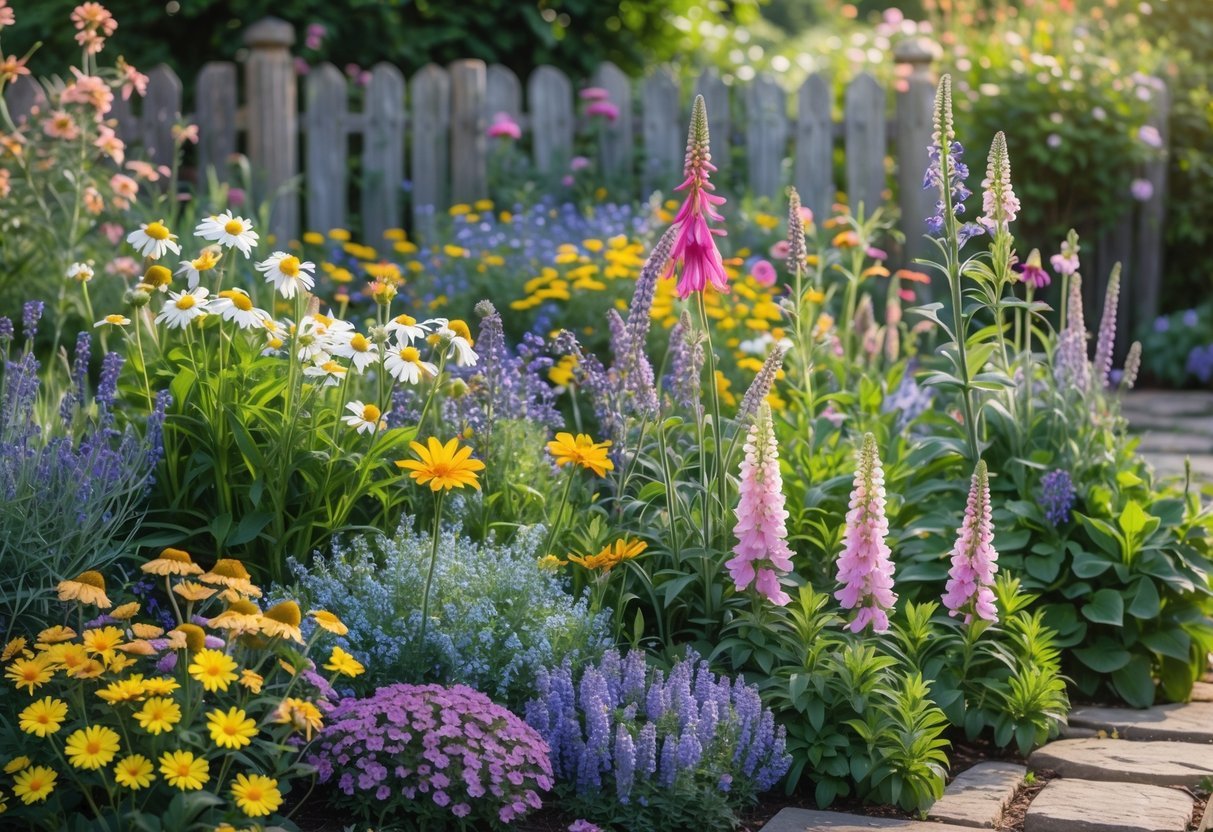
A cottage-style garden uses a mix of perennial flowers to create a natural, layered look. These gardens often blend colors, textures, and heights for visual interest.
Perennials like hollyhocks, foxgloves, and delphiniums provide structure and charm. Adding self-seeding flowers helps keep the garden full and lively throughout the seasons.
This style feels informal but is planned to ensure blooms appear all year. It attracts birds, bees, and butterflies, making the garden full of life and movement.
2) Circular Flower Beds as Garden Focal Points
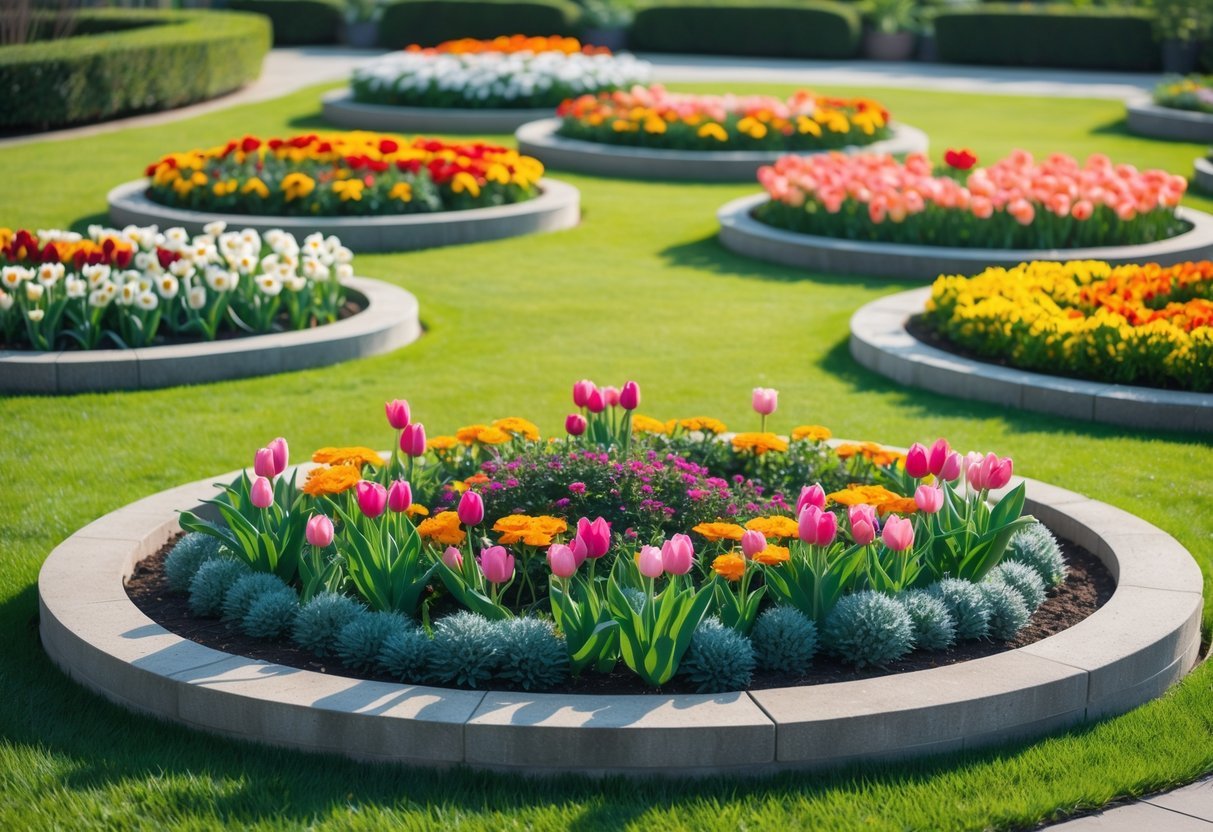
Circular flower beds offer a clear focal point in any garden. Their round shape naturally draws attention and adds balance to the space.
They work well in many garden styles, from minimalist to rustic. Using different plant heights and colors inside the bed can create visual interest.
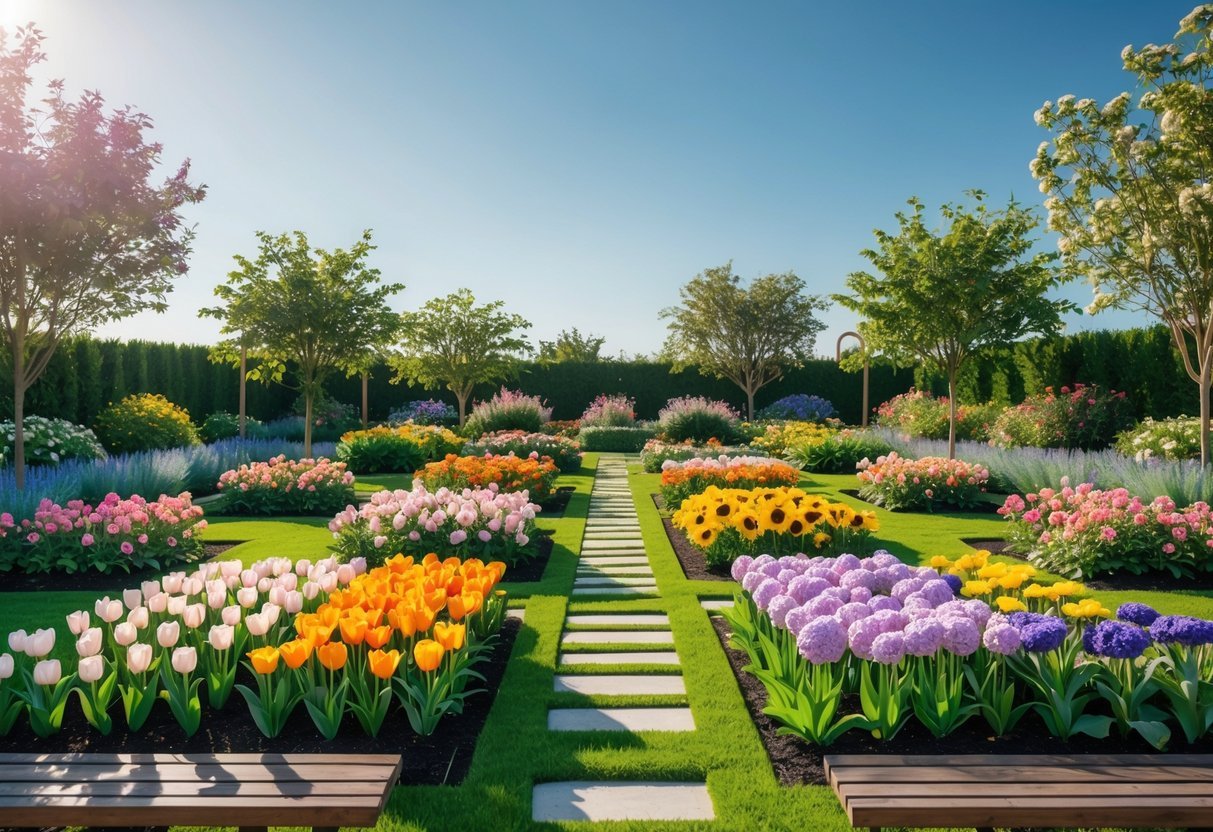
Placing these beds in the lawn center or around trees makes the garden look organized. Circular beds also allow easy access to plants for care and watering.
3) Butterfly-Friendly Native Wildflowers
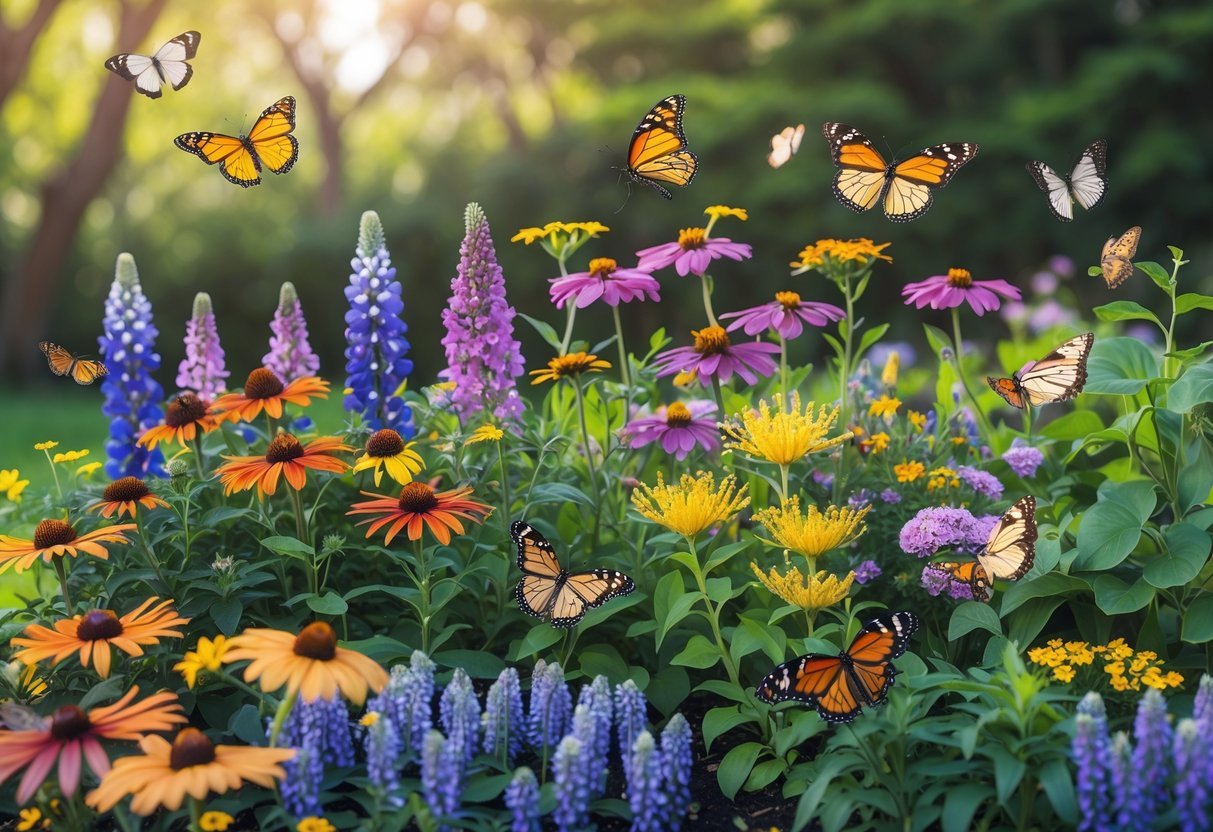
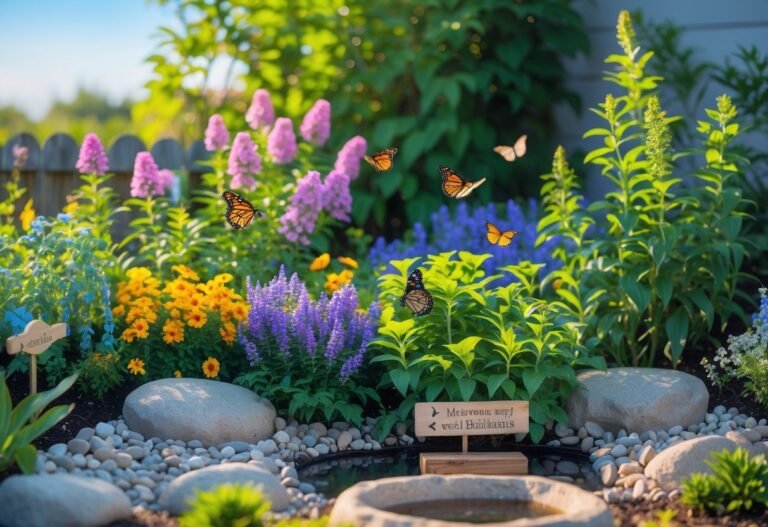
Native wildflowers provide food and shelter for butterflies throughout their life cycle. Plants like milkweed, coneflower, and monarda are commonly chosen for their ability to support both caterpillars and adult butterflies.
These flowers thrive in local soil and climate, making them easier to grow and maintain. They help create a natural habitat that attracts pollinators without the need for chemicals.
Including a mix of wildflowers ensures blooms from spring to fall, giving butterflies a reliable food source across seasons.
4) Romantic Rose Arches and Trellises
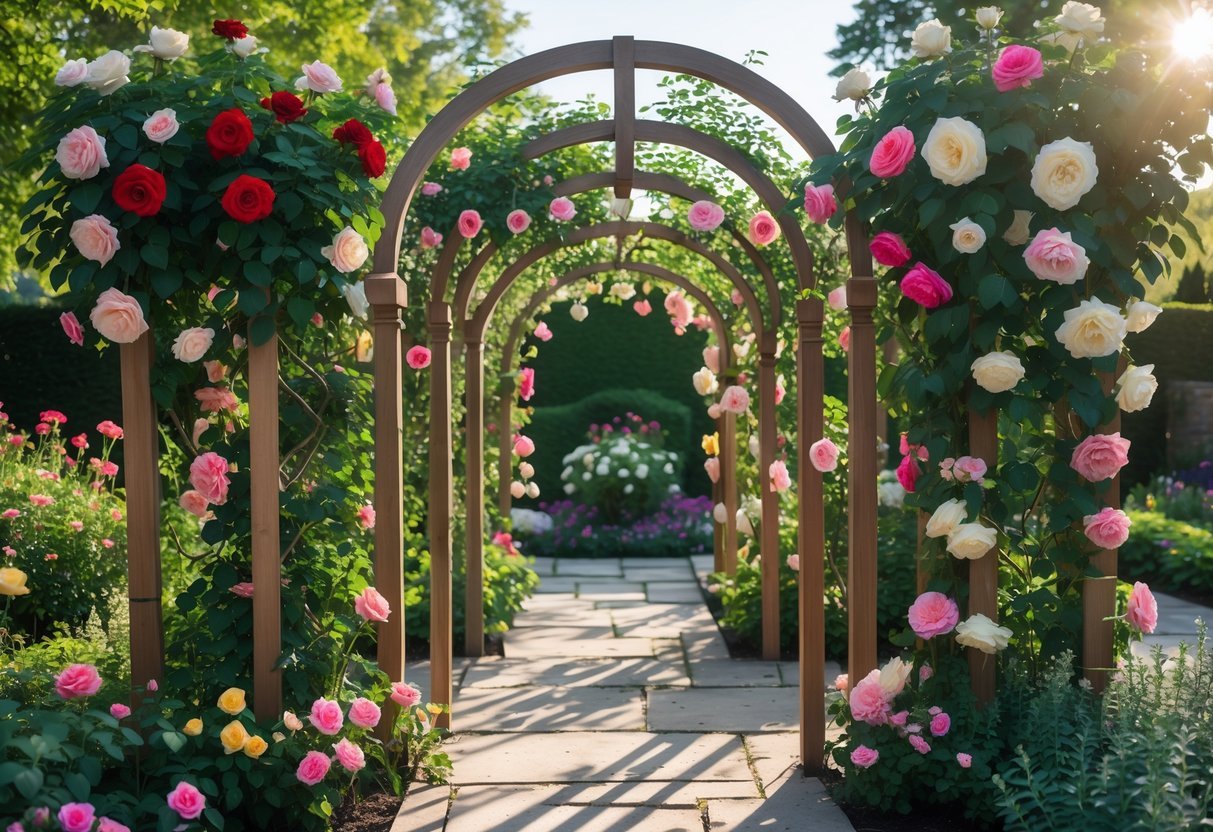
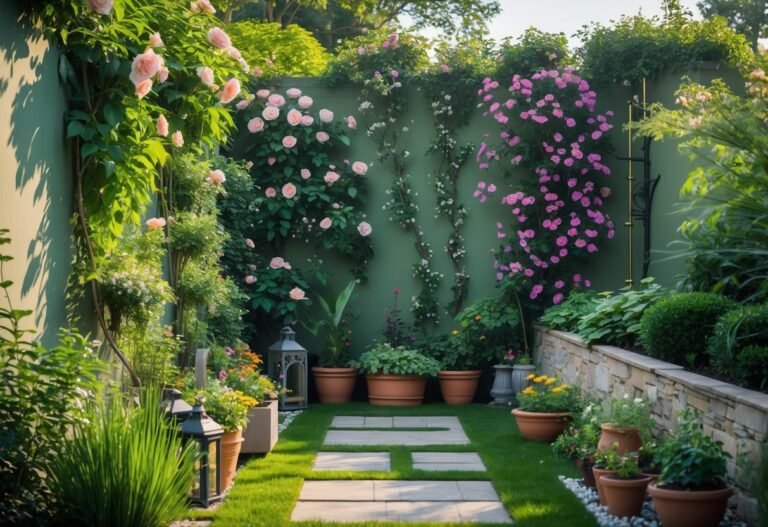
Rose arches and trellises add a classic touch to any garden. They create a lovely entrance or focal point, drawing the eye and adding height. Climbing roses grow well on these structures, offering soft colors and a gentle scent.
Both wooden and metal designs work, depending on the garden style. Rose-covered arches invite visitors to walk through, making the garden feel more inviting. Trellises can also provide support for other climbing plants, giving more options for garden design.
5) Drought-Resistant Flower Varieties
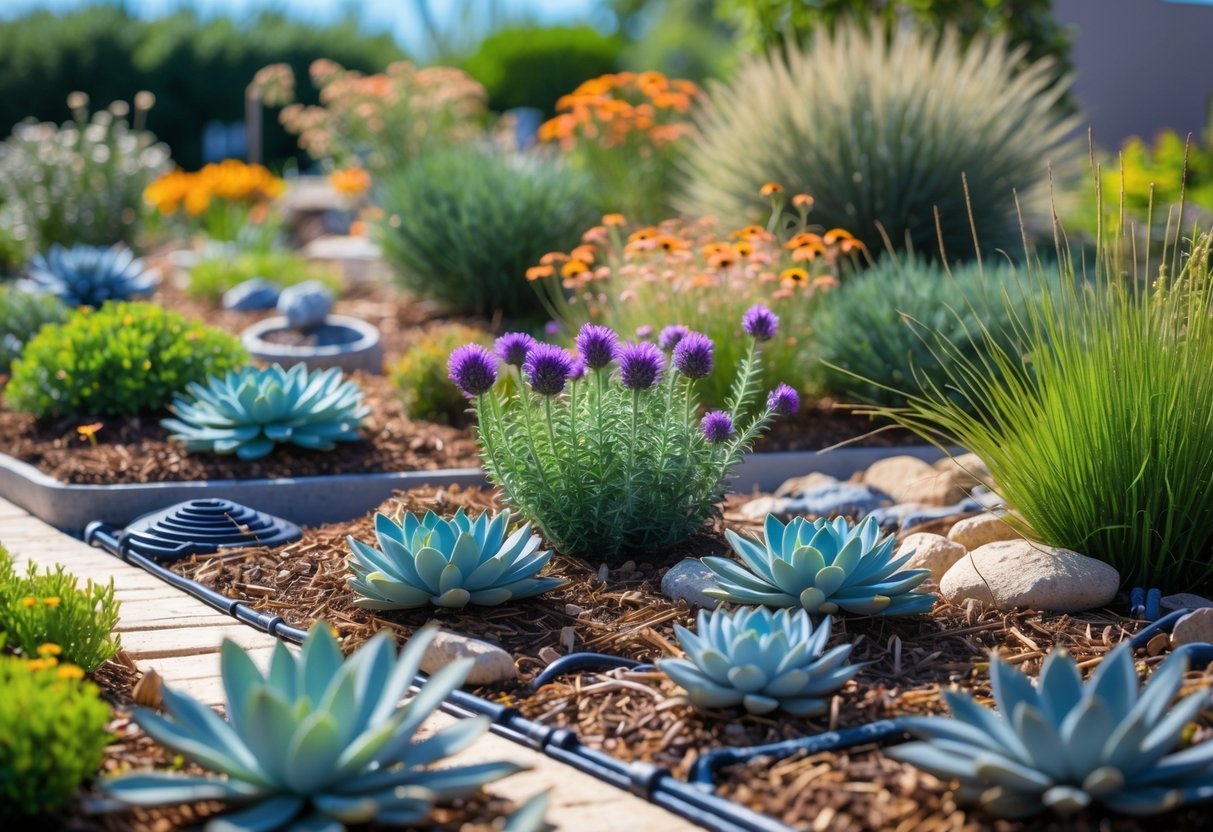
Drought-resistant flowers are ideal for gardens in dry or hot climates. They need less water and can survive long dry spells. Plants like sedum store water in thick leaves, helping them stay healthy without frequent watering.
Other popular options include lantana and yarrow. These flowers thrive in poor soil and full sun, making them low-maintenance choices for many gardeners. They also bring color and attract pollinators, supporting both beauty and wildlife in the garden.
6) Combination of Tall and Trailing Flowers
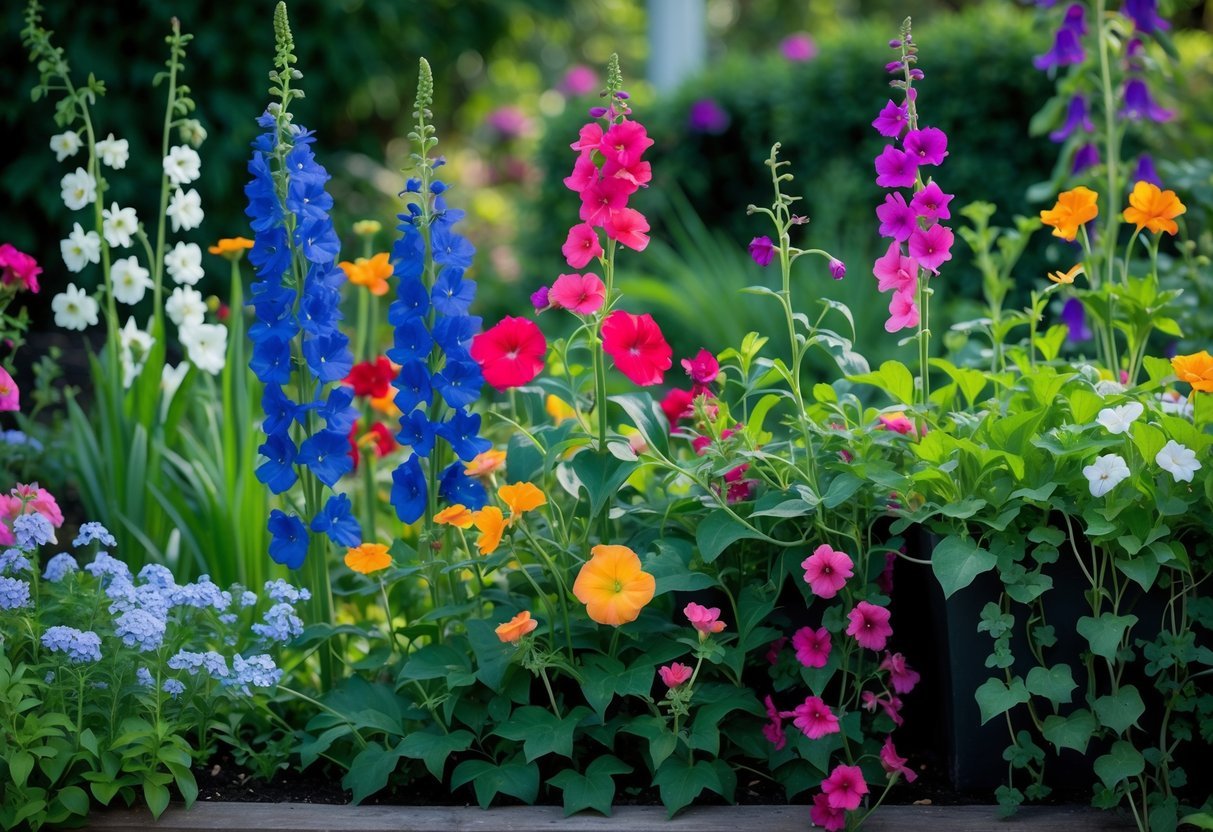
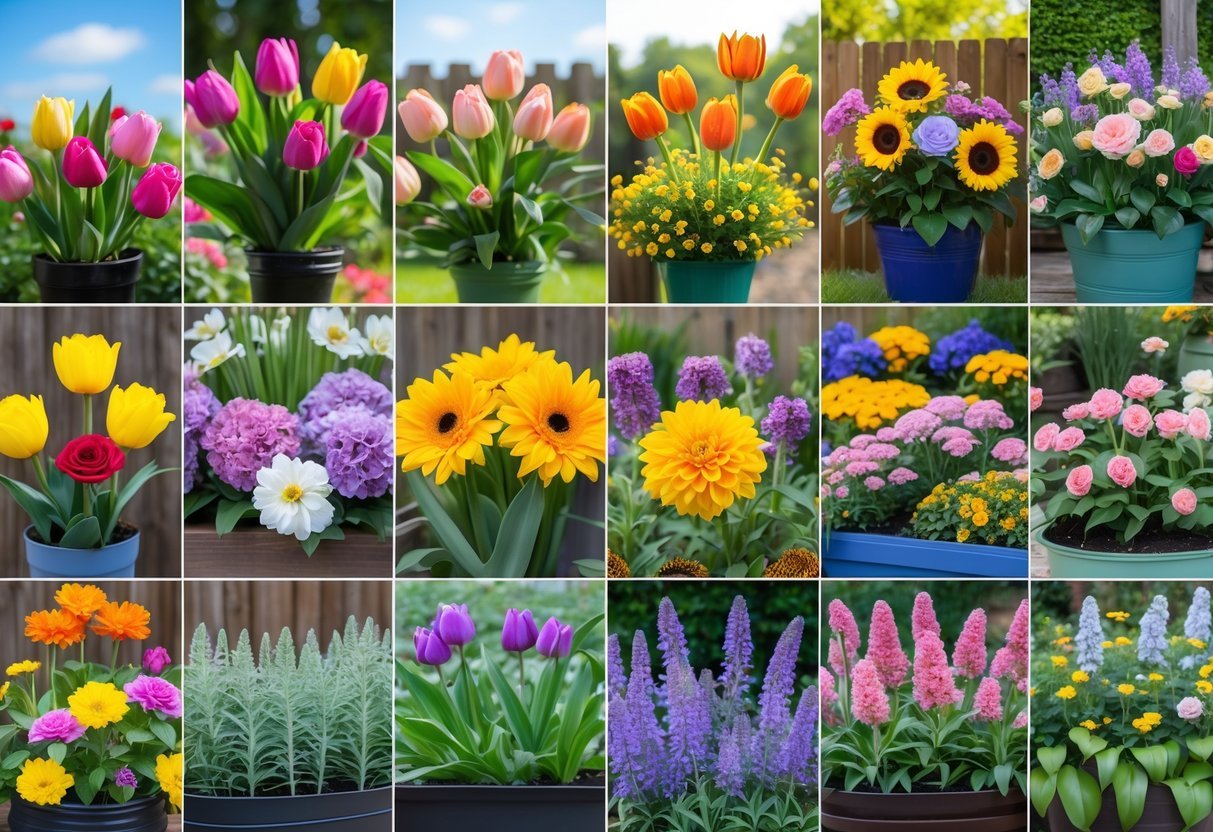
Combining tall and trailing flowers creates a balanced, layered garden look. Tall flowers add height and structure, while trailing flowers soften edges by cascading over pots or garden beds. This mix adds depth and interest without crowding space.
Plants like sunflowers work well behind trailing nasturtiums to avoid shading. Using both types helps gardeners achieve a dynamic, polished appearance. This design fits small or large spaces, enhancing visual appeal throughout the seasons.
7) Cut Flower Garden with Perennials and Annuals
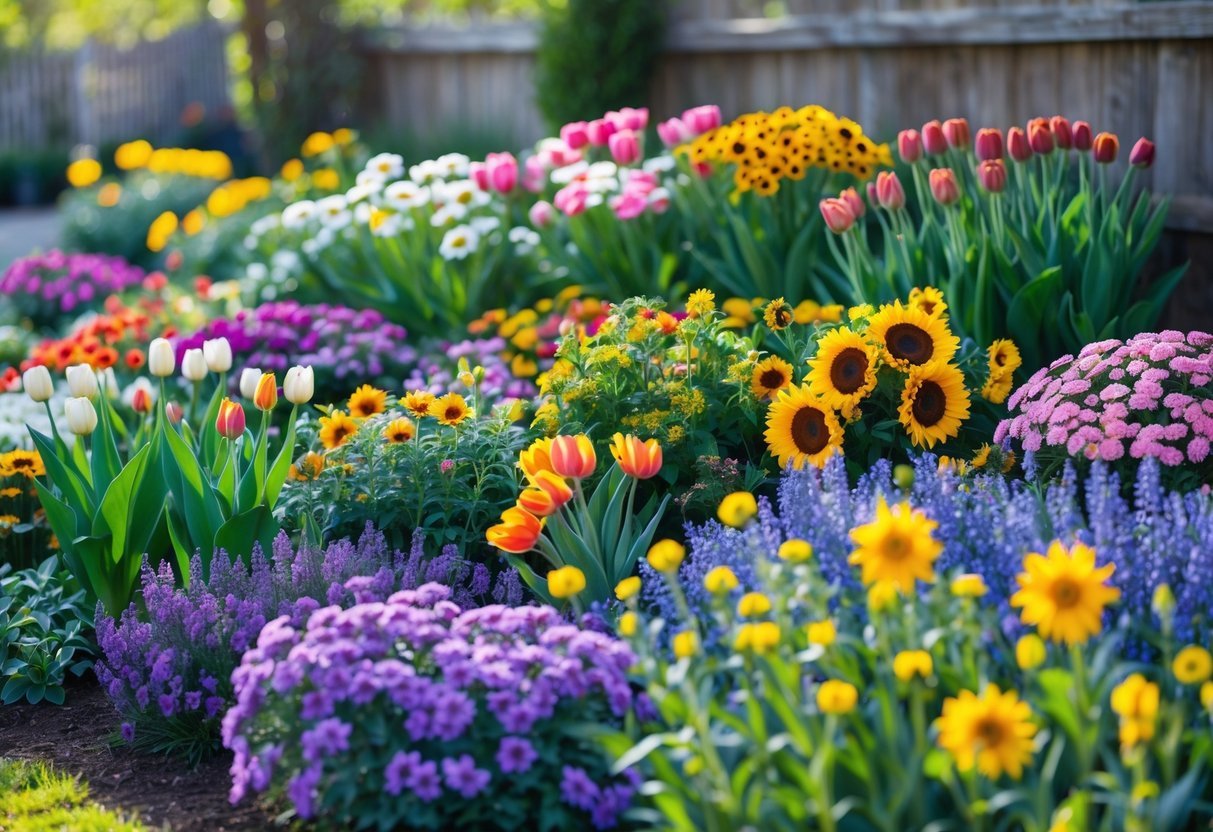
A cut flower garden that includes both perennials and annuals can provide steady blooms throughout the growing season. Perennials return year after year, offering a reliable base of flowers. Annuals bloom quickly and add fresh color and variety each season.
By mixing these two types, gardeners can enjoy a longer harvest period for cutting. This combination also helps create diverse arrangements with different textures and colors. Even a small garden space can supply enough flowers for regular bouquets.
8) Vibrant Wildflower Meadow Design
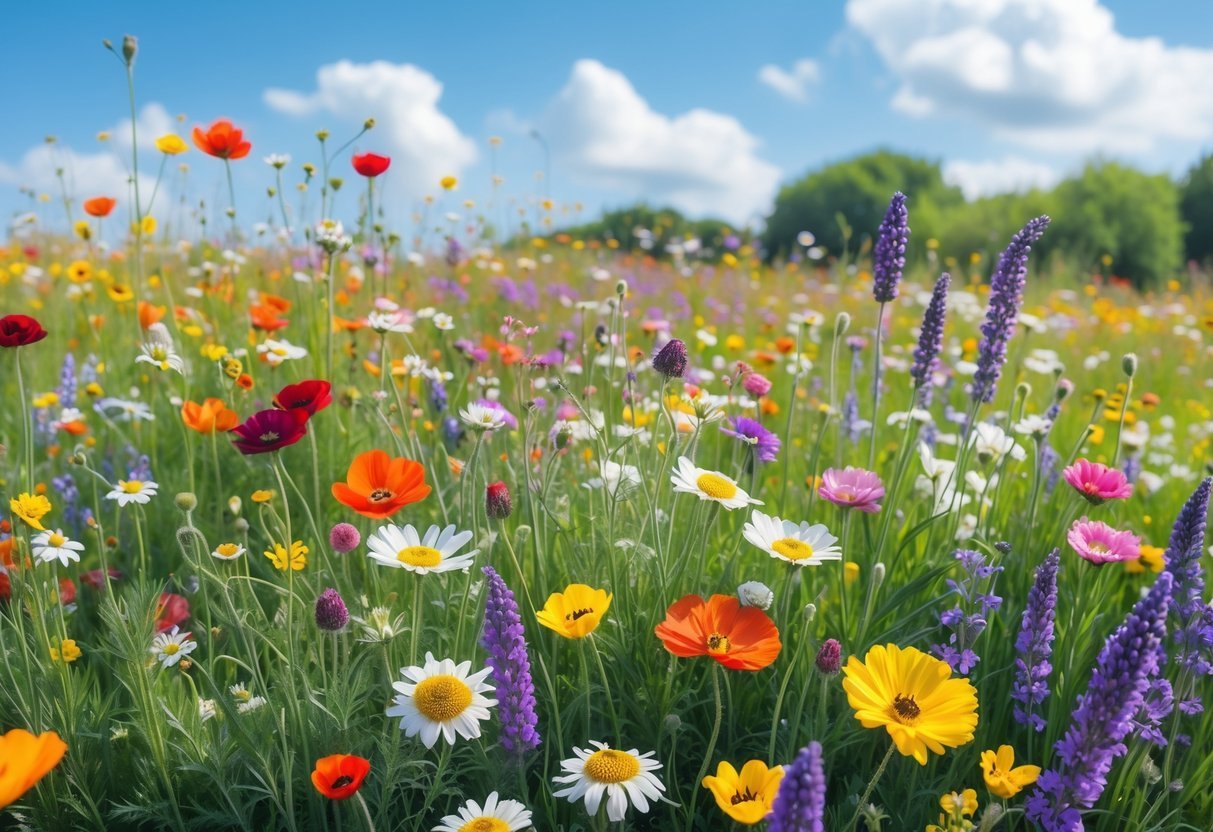
A vibrant wildflower meadow brings natural color and texture to any garden. It requires minimal care and attracts bees, butterflies, and other pollinators.
Choosing a mix of native wildflowers helps the meadow thrive in local soil and climate. The flowers bloom at different times, ensuring steady color throughout the seasons.
This design suits large or small spaces and can be adapted to fit formal or casual garden styles. It creates a lively, natural look that changes and grows year after year.
9) Succession Planting for Continuous Bloom
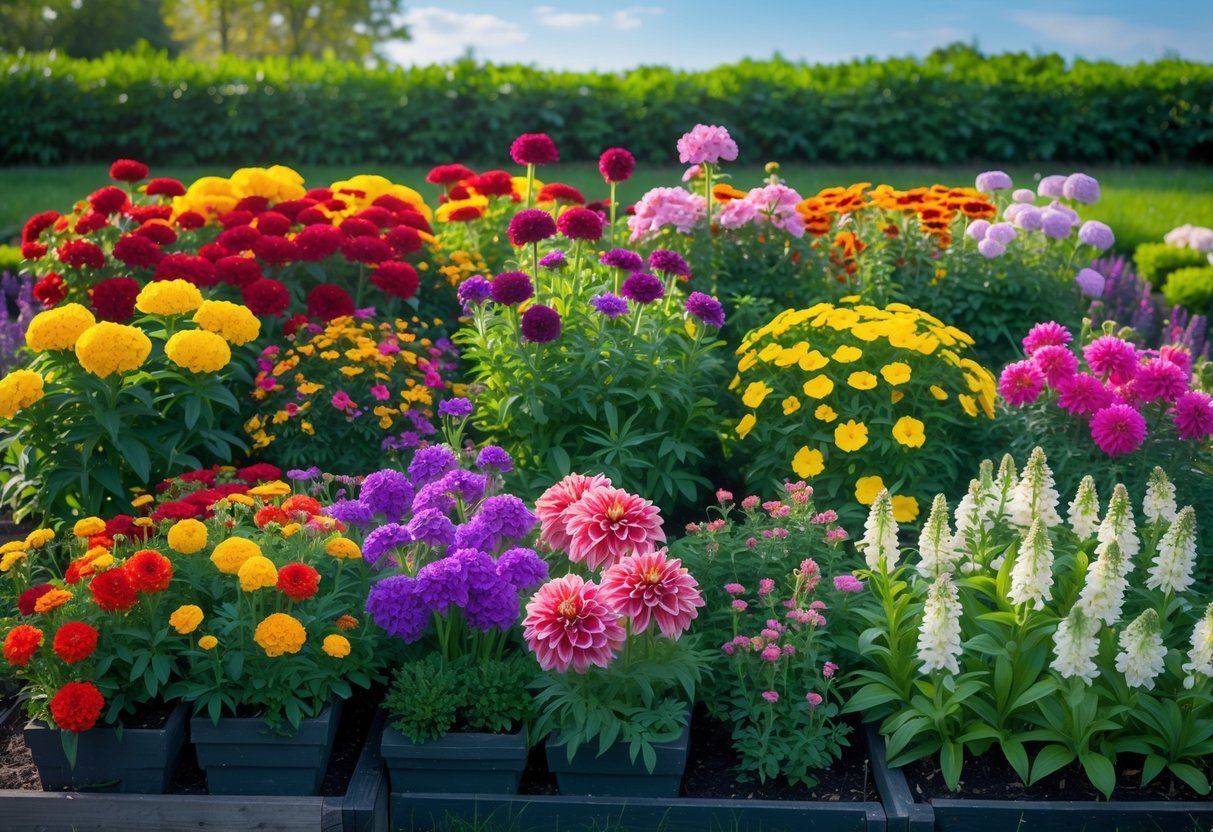
Succession planting involves planting flowers in intervals, usually every 2 to 3 weeks. This approach allows one group of flowers to finish blooming as the next group begins. It keeps the garden full of color for a longer time.
Gardeners choose different flower varieties that bloom at different times. They plan the planting schedule based on climate and soil conditions. This method helps maintain steady blooms throughout the season without gaps. It is useful for both home gardens and flower farms.
10) Color-Themed Flower Beds
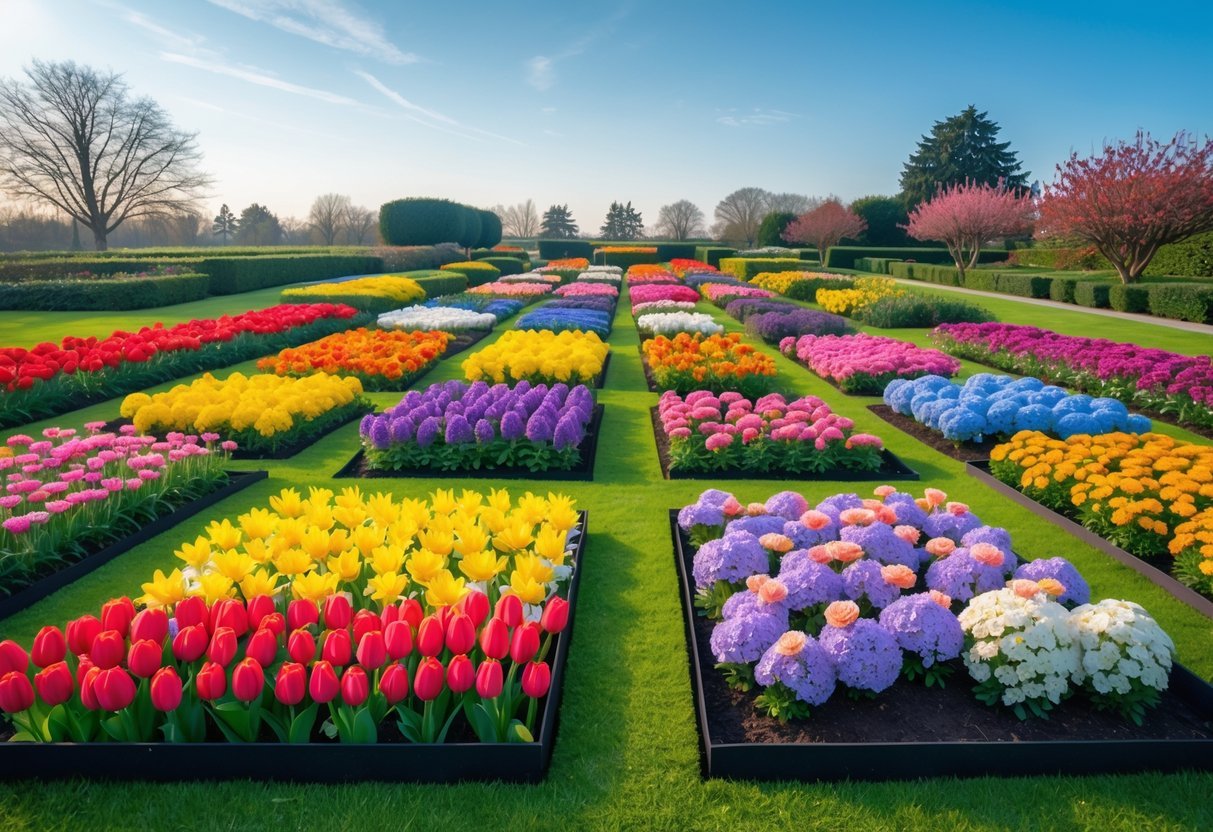
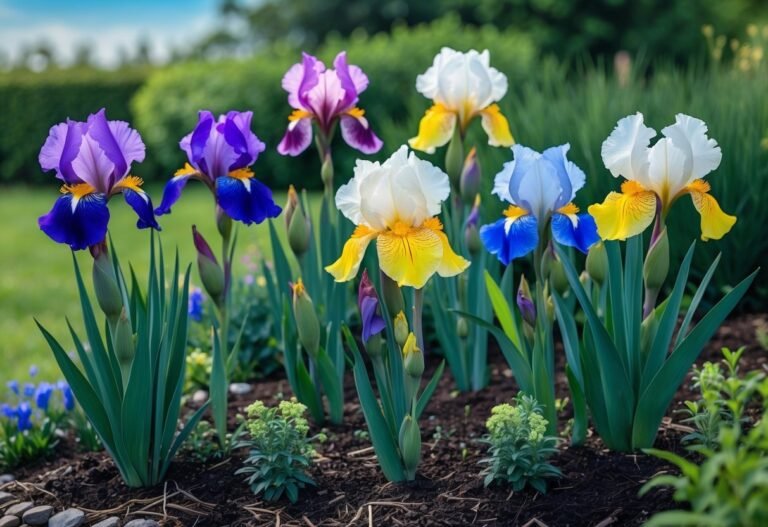
Color-themed flower beds focus on planting flowers of similar shades to create a unified look. This style helps bring order and clarity to the garden. For example, choosing all blue flowers can give a calm and peaceful feel.
They can also use contrasting colors, like yellow and purple, to make the garden more lively. Color themes allow gardeners to easily plan and maintain their flower beds while making a clear visual statement. This approach suits both large and small spaces.
Design Principles for Flower Gardens
A well-designed flower garden balances color, texture, and plant placement to create a pleasing and lively space. Careful choices about color schemes and planning for continuous blooms maintain interest and harmony throughout the year.
Choosing Complementary Color Schemes
Selecting the right color combinations helps a garden feel cohesive and vibrant. Gardeners often use a color wheel to find pairs that work well together. Complementary colors, like purple and yellow, sit opposite each other and create strong contrast. Analogous colors, such as red, orange, and yellow, blend smoothly.
Mixing warm tones (reds, oranges, yellows) with cool tones (blues, purples, greens) adds depth. Using too many bright colors can overwhelm the space, so limiting the palette to three or four main colors helps keep the design balanced. Including plants with different foliage colors or variegated leaves adds subtle interest without clashing.
Creating Year-Round Visual Interest
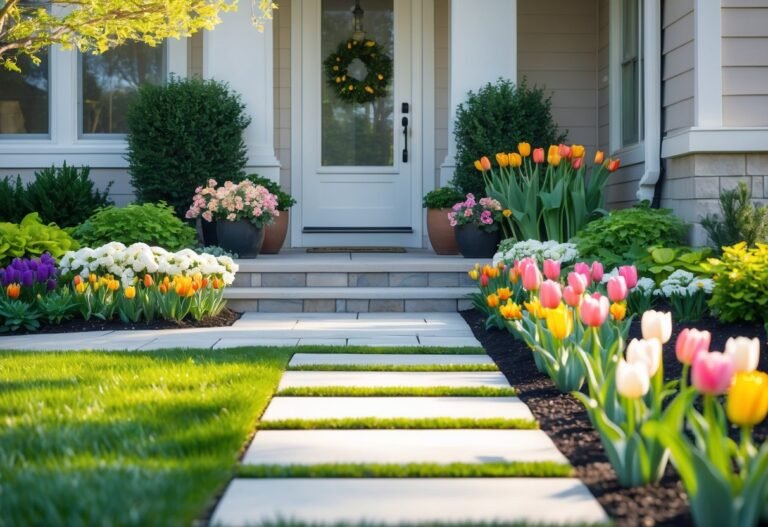
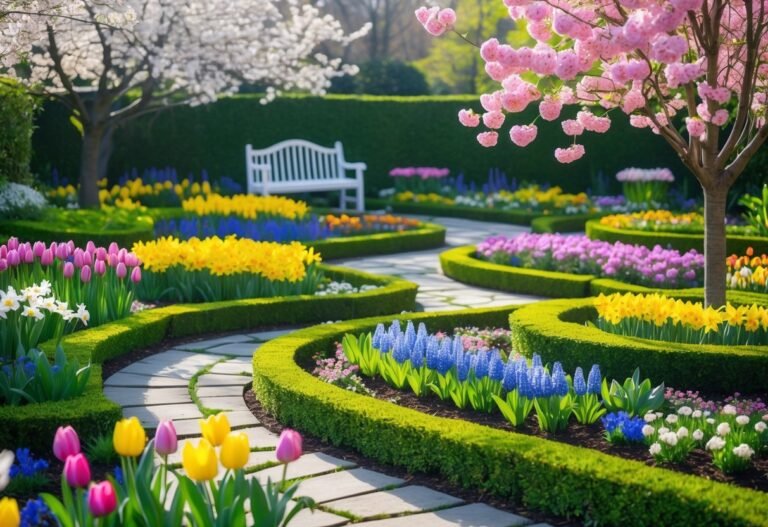
Maintaining a garden that looks good in every season requires planning plant variety and bloom timing. Combining perennials, annuals, and bulbs ensures something is flowering throughout the year. Tall plants can form vertical focal points, while shorter flowers fill in the lower spaces.
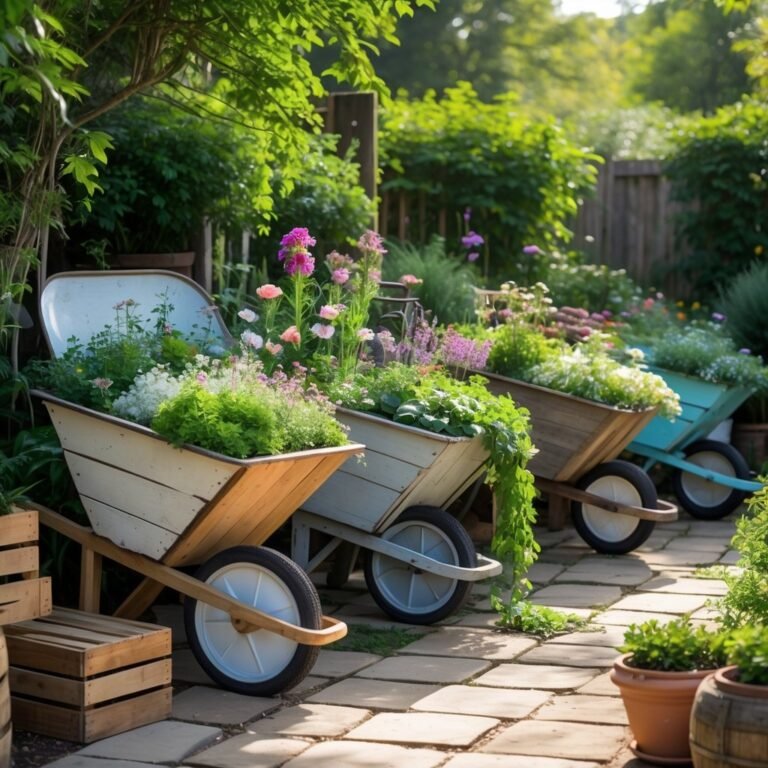
In addition to blooms, using evergreen plants or shrubs adds green color and structure in winter. Adding texture with ornamental grasses or vines changes the look without relying solely on flowers. Garden art or unique planters can also serve as points of interest when flowers are not in full bloom.