Backyard Playhouse Design: Practical Ideas and Plans for Every Yard
You want a backyard playhouse that fits your space, budget, and the way your kids play. Think about size, placement, and a basic plan before you buy materials so you avoid costly mistakes and wasted time. A simple, well-placed playhouse that matches your yard and your family’s needs gives the biggest reward for the least effort.
Choose a style that suits your home and pick a few customizing touches—windows, shelving, paint, or a ramp—to make it useful and fun. Keep safety and easy access in mind while planning, and blend the playhouse into your landscaping so it feels like part of the yard.
Key Takeaways
- Start with a clear plan that fits your yard and budget.
- Pick a style and add a few practical custom features.
- Prioritize safety and integrate the playhouse with outdoor space.
Essential Elements of Backyard Playhouse Design
Focus on durable, safe materials, the right size for your space and kids, and proper ventilation and daylight. These three areas decide how safe, comfortable, and long-lasting the playhouse will be.
Choosing Safe Materials
Pick pressure-treated or naturally rot-resistant lumber like cedar for floors and framing to resist moisture and insects. Use smooth, kiln-dried wood for interior surfaces to reduce warping and splinters. Avoid lead-based paints and use water-based, low-VOC paint or stain rated for exterior use.
Use stainless-steel or galvanized fasteners and hardware to prevent rust. For windows, choose polycarbonate or tempered glass with child-safe locks. For flooring, consider non-slip outdoor decking or rubber mats in high-activity zones.
Keep small parts, sharp edges, and protruding screws out of reach. Seal gaps and joints with exterior-grade caulk to keep bugs and moisture out. Label materials with maintenance notes so you can replace or treat them on schedule.
Sizing and Space Planning
Decide who will use the playhouse and how: toddlers, older kids, or both. For two small children, aim for at least 36–48 sq ft of floor area. If you add furniture, a slide, or a sand area, add 25–50% more space.
Plan doorways at least 28–30 inches wide and 4–5 feet tall for easy access and adult supervision. Keep a 2–3 foot clear zone inside the doorway for safe entry. Place any built-in benches or shelves along walls to free central floor space.
Map the playhouse footprint on the ground before building. Mark where utilities (like water or electricity) might go and keep play zones clear of tree roots and drainage paths. Ensure proper fall zones if you include climbing features.
Ventilation and Natural Light
Install vents near the roof peak and low vents near the floor to create passive airflow. Cross-ventilation works best: place operable windows or vents on opposite walls to move fresh air through the space.
Use translucent panels, skylights, or larger windows on the sun-facing side for natural light. Choose UV-resistant polycarbonate panels or double-pane tempered glass to keep light but reduce heat gain. Add curtains or shutters for shade when needed.
Position windows high enough to prevent accidental falls, and include window stops to limit opening width. Combine ventilation with insect screens and weatherstripping to keep pests and drafts out while maintaining fresh air.
Design Styles and Themes
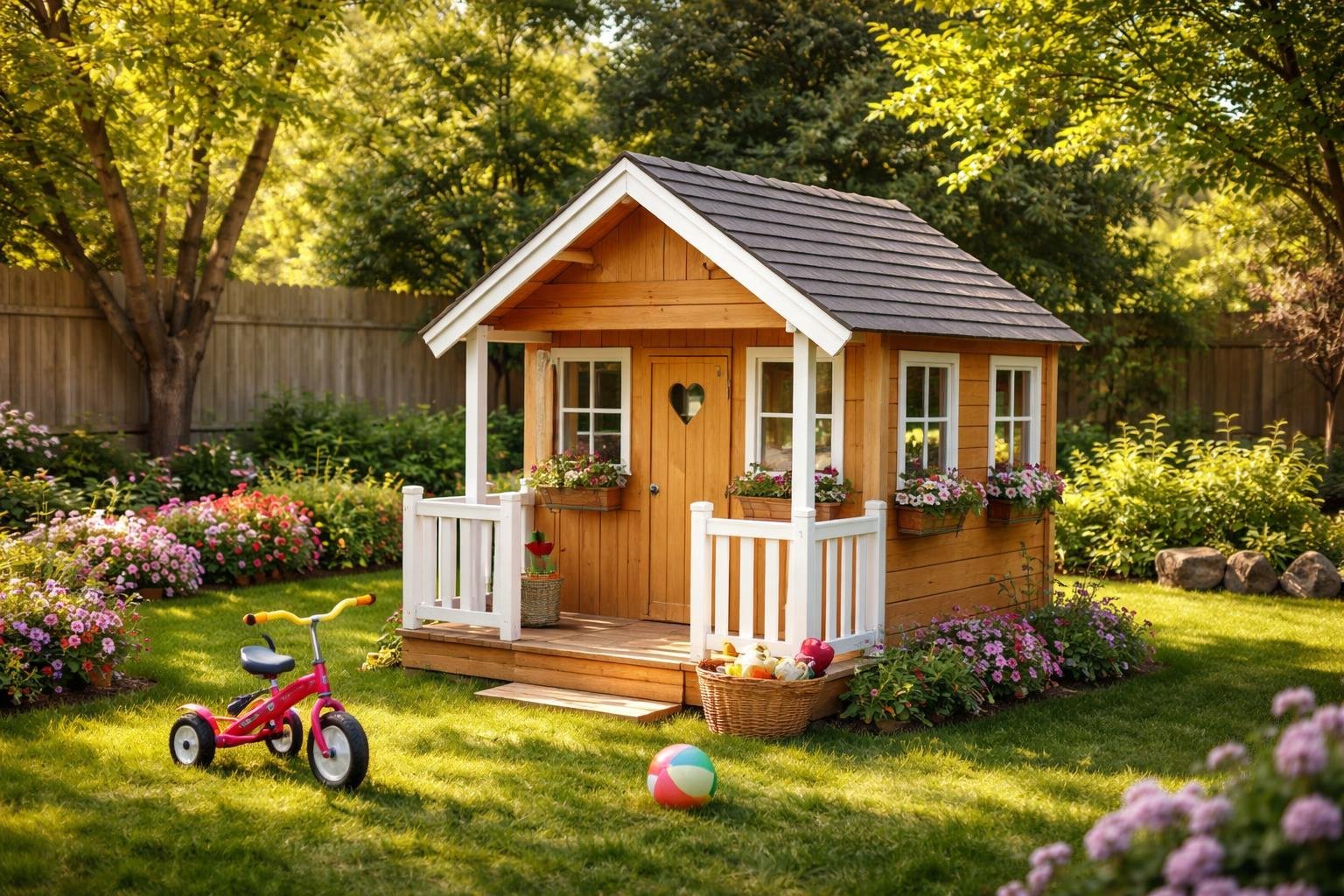
Choose a style that fits your yard, budget, and how your child will play. Think about materials, colors, and features like porches, windows, or ramps to match the look and function you want.
Classic Cottage Designs
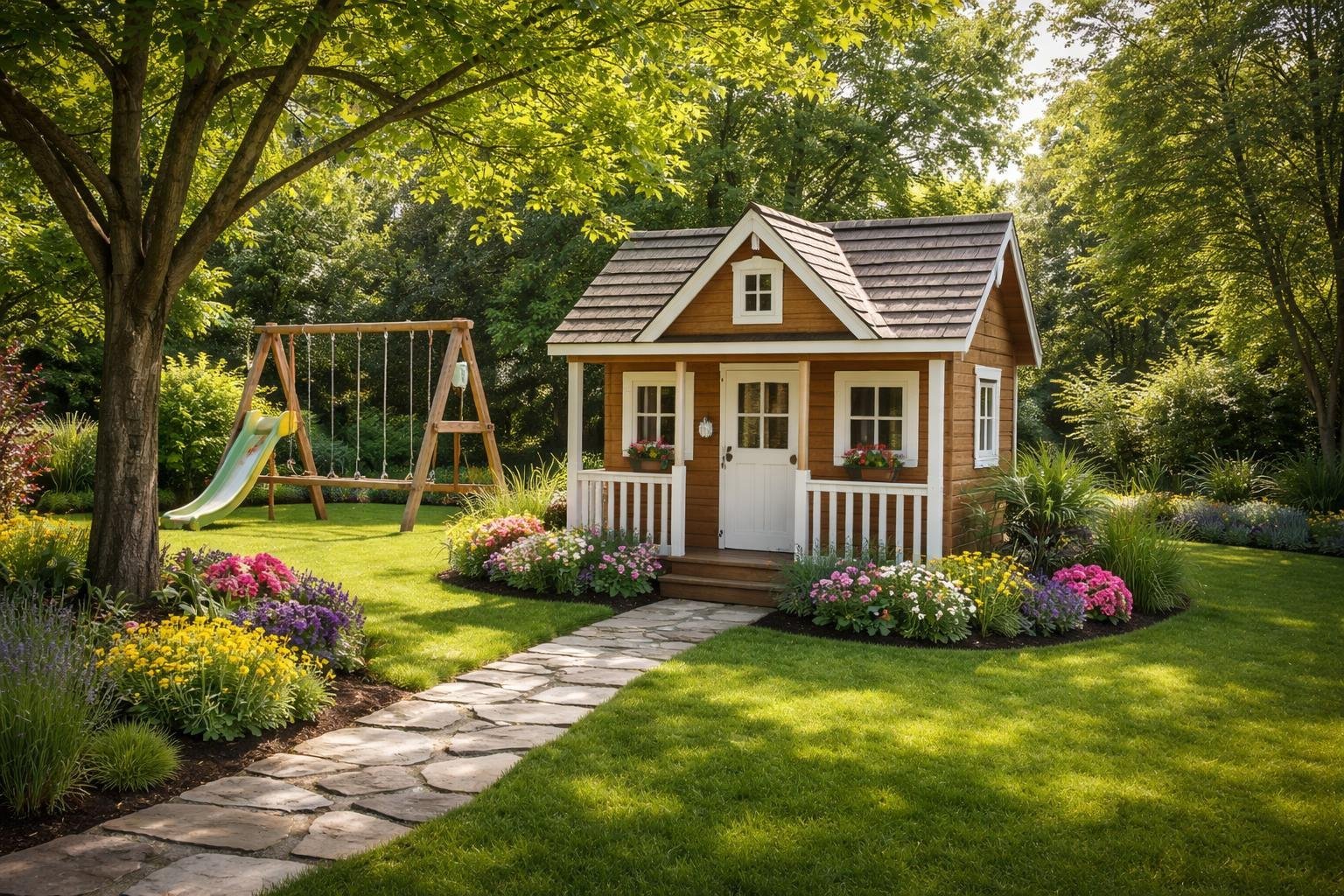
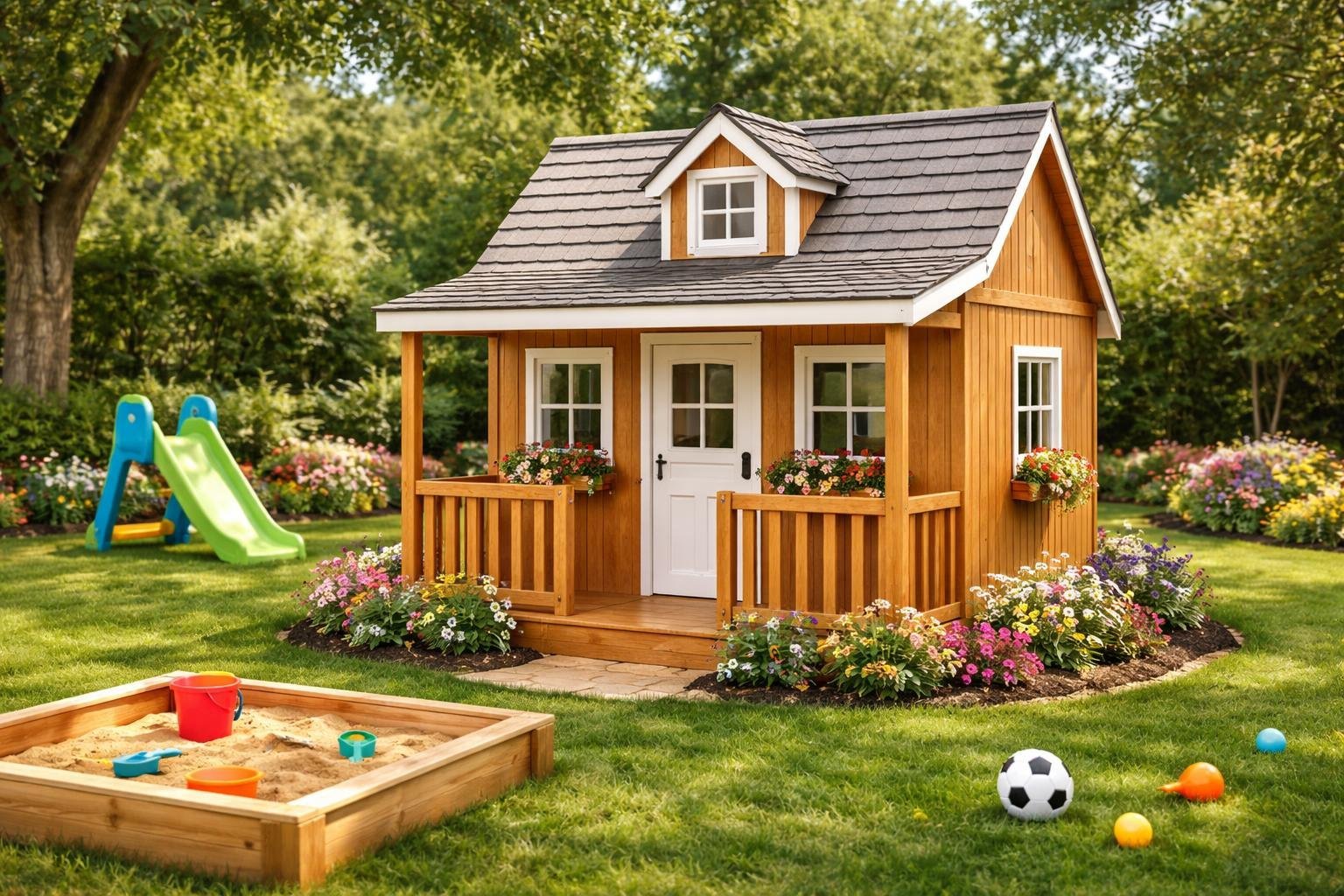
Classic cottage playhouses use simple shapes and cozy details to feel inviting. You can pick a peaked roof, a small front porch, flower boxes, and a paneled door. Use painted wood siding or shiplap in soft colors like cream, pale blue, or sage to keep the charm.
Inside, add built-in benches, low shelves, and a small table to make a real mini-home. Windows with shutters or mullions boost the cottage look and let in light. For safety and durability, use exterior-grade paint and weather-resistant hardware.
Modern Architectural Styles
Modern playhouses focus on clean lines, flat or shed roofs, and minimal ornament. You can combine materials such as stained cedar, metal accents, and vertical siding for a sleek look. Stick to a simple color palette—charcoal, natural wood, or white—to keep the design contemporary.
Large windows or a sliding glass door create an airy interior and connect the playhouse to the yard. Think about multi-use features like a built-in bench that doubles as storage. Prioritize a solid foundation and treated lumber to handle modern openings and heavier glazing.
Nature-Inspired Playhouses
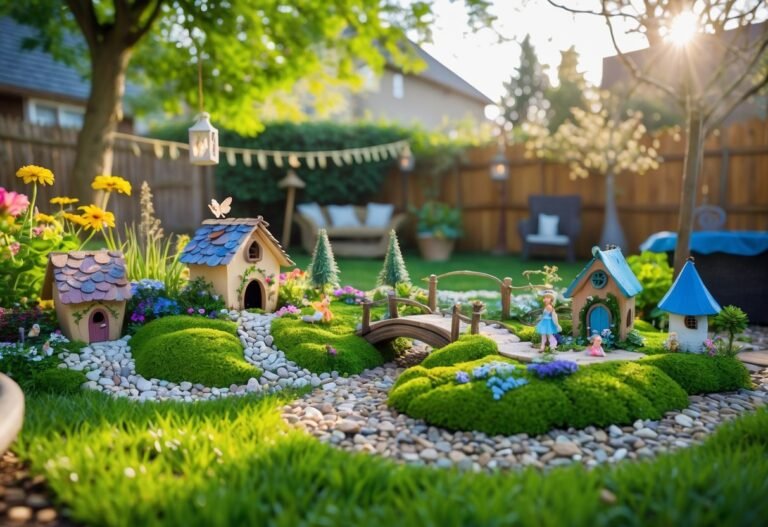
Nature-inspired playhouses blend into the landscape with rustic materials and organic shapes. Use rough-sawn wood, stone accents, or living roofs with planted sedum to create a cabin-like feel. Earth tones and natural finishes help the structure sit quietly in a garden.
Add features that invite outdoor play: a small deck for bug-watching, tree-mounting platforms (built safely), or a mud kitchen under an overhang. Choose non-toxic finishes and sealed wood in contact with the ground to resist rot. Incorporate native plants nearby to attract birds and make the space feel like part of the yard.
Customization and Personalization Options
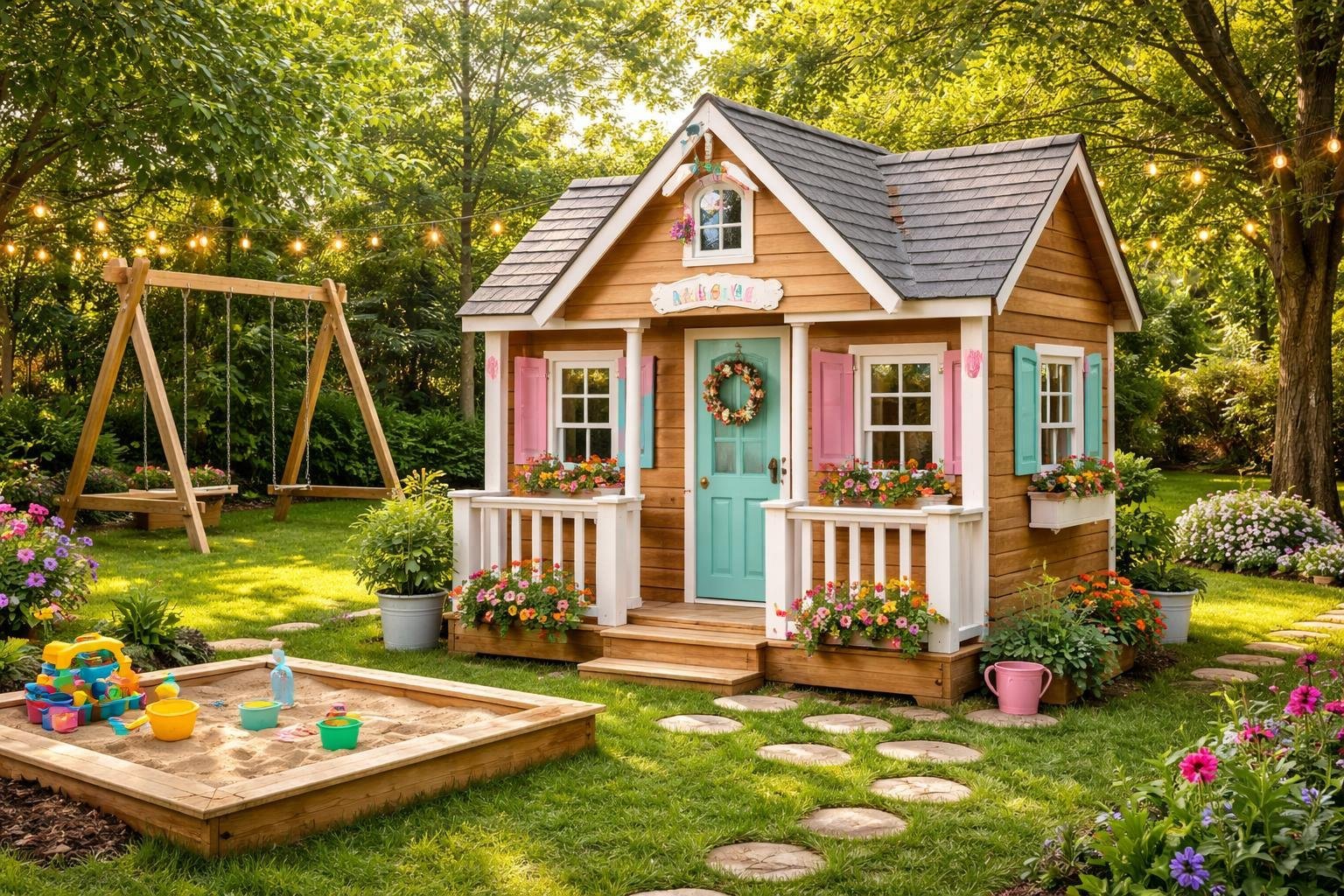
Choose colors, finishes, and room layouts that match your home and your child’s tastes. Think about durability, safety, and ease of maintenance when you pick paint, trim, and interior fittings.
Color Schemes and Paint Ideas
Pick paints rated for exterior use and low VOC to protect kids and the environment. Use a neutral base like beige, gray, or soft white for trim and structure, then add one or two accent colors on doors, shutters, or window frames.
Try these quick combos:
- Navy trim + soft gray walls + yellow door for a nautical look.
- Sage green walls + cream trim + terracotta door for a cottage feel.
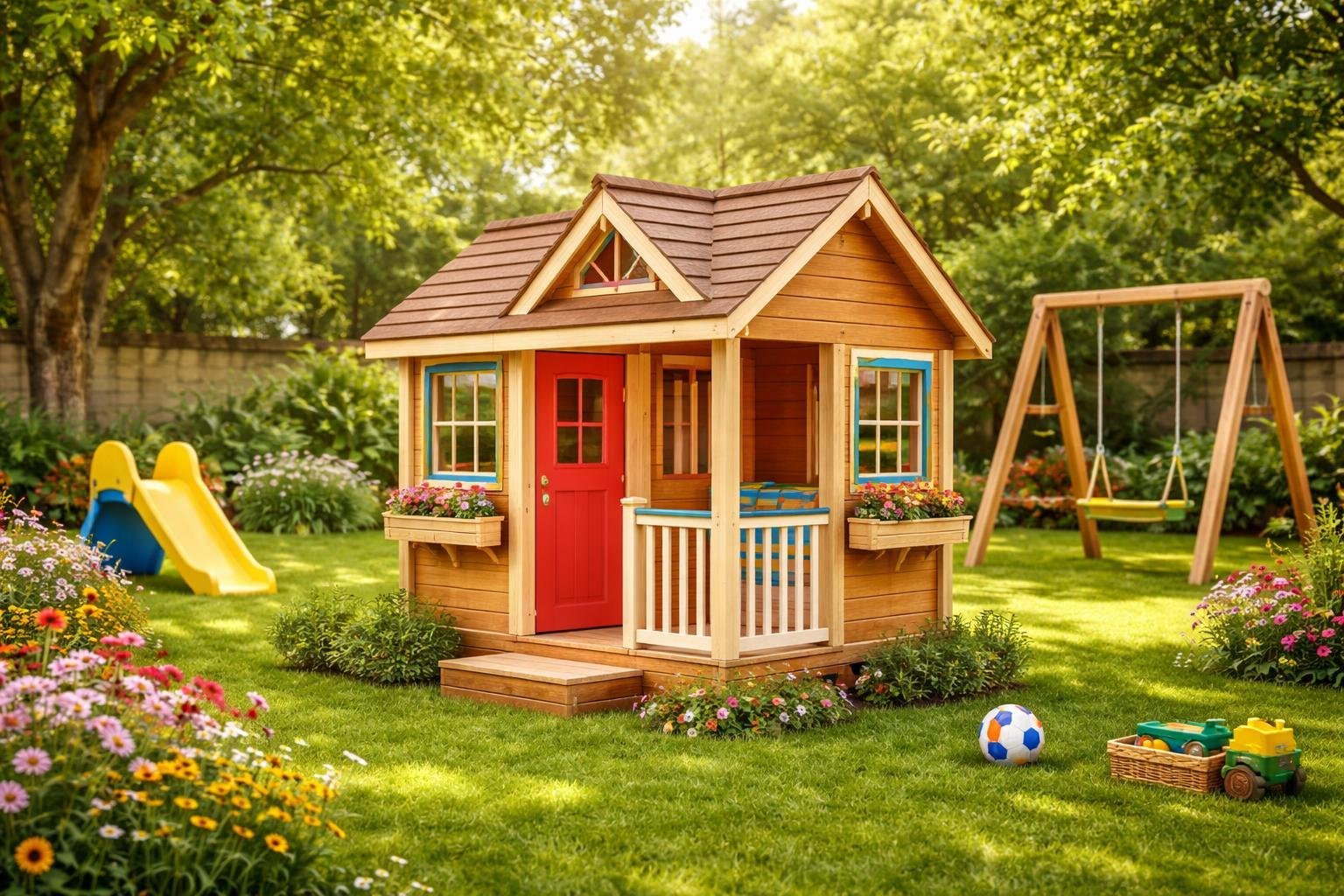
- Charcoal walls + white trim + red door for a bold contrast.
Use semi-gloss on high-touch areas so you can wipe scuffs clean. Test small swatches in sunlight before you commit. Consider weatherproofing primer and a UV-resistant topcoat if the playhouse gets full sun.
Decorative Features
Add features that make the playhouse feel like a tiny home. Install real mailbox and house numbers for role play. Put up planters, a small porch railing, or a flagpole for curb appeal.
Functional decorations work best. Add shutters that open, a working latch on the door, and child-safe hinges. Use plexiglass instead of glass for windows to keep kids safe.
For seasonal change, use removable items: bunting, chalkboard signs, and magnetic play sets. These let you update the look without new paint or construction. Aim for decorations that are durable outdoors and easy to replace.
Adaptable Interior Layouts
Plan interior zones for specific activities. Allocate a reading corner with cushions and a small bookshelf, a play kitchen area that’s anchored to the wall, and an art table with washable surface and storage bins.
Keep circulation clear. Leave a 2–3 foot pathway so kids can move without knocking things over. Mount shelves at varying heights so younger and older kids can reach toys safely.
Use modular furniture and stackable storage so you can change the layout as kids grow. Secure tall items to studs to prevent tipping. Add electrical outlets or solar lighting if you want usable light for evenings, and choose fixtures with covered bulbs for safety.
Outdoor Integration and Landscaping
Plan where the playhouse sits, tie it to existing plants, and protect it from weather. Think about sun, sightlines, access, and materials that match your yard.
Placement Strategies
Place the playhouse on level ground close to adult sightlines so you can watch from the patio or kitchen window. Measure a 6–10 foot clear path for safe access and make sure the door swings without hitting branches or furniture.
Check sun exposure for at least one week. Position the playhouse so morning sun warms it and afternoon shade keeps it cool, or add a shade sail if your yard gets hot. Avoid low spots that collect water; raise the base on a gravel or compacted soil pad if drainage is poor.
Keep the playhouse away from large trees with dead limbs and from utility lines. If you build near a fence, allow 2–3 feet clearance for maintenance and paint touch-ups. For steep yards, place the playhouse on a terrace or small retaining wall to create a safe, level area.
Blending with Garden Features
Match siding or trim colors to nearby structures for a cohesive look. Use the same wood stain or paint palette as your fence, shed, or deck to make the playhouse feel like part of the yard.
Add plantings that frame the playhouse without blocking views. Use low shrubs or perennials under windows and a small climbing vine on a trellis to soften edges. Keep thorny or toxic plants well away from play areas.
Create defined paths with mulch, stepping stones, or compacted gravel. Add a small raised bed or container garden the kids can tend. Use durable, child-safe materials for edging and choose non-slip surfaces near steps.
Weather Protection Solutions
Choose rot-resistant or pressure-treated wood and metal fasteners rated for outdoor use to reduce maintenance. Apply exterior-grade paint or stain and reseal every 2–3 years in wet climates.
Add simple overhangs or a porch roof to protect the door and front wall from rain. Fit gutters that direct water away from the foundation; run downspouts toward planted areas or a dry creek bed to prevent pooling.
Insulate lightly with foam board if you plan to use the playhouse in cooler months, and install vents or operable windows for summer airflow. Anchor the structure with ground anchors or concrete piers to resist wind uplift, especially in open yards.
Safety and Accessibility Considerations
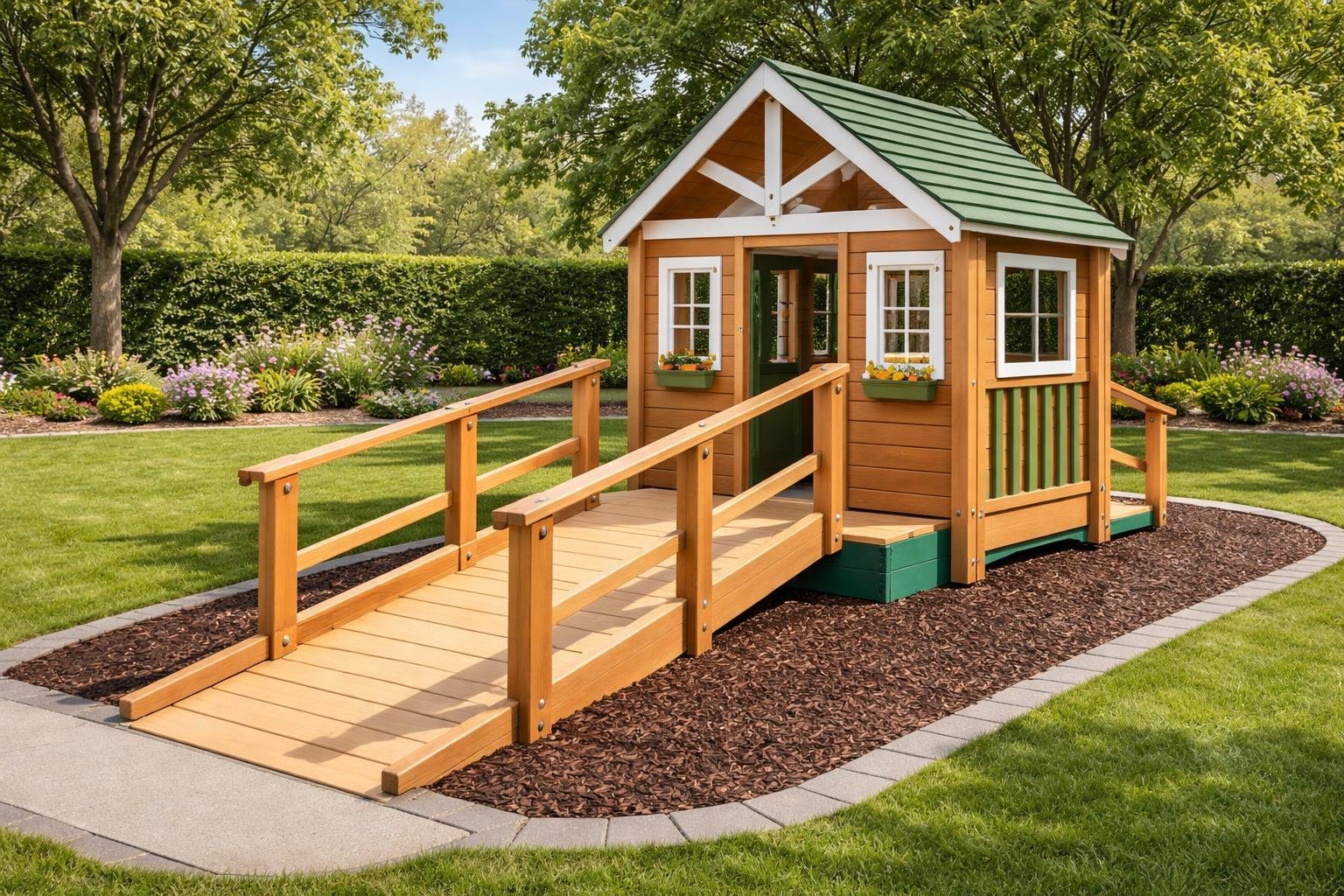
Focus on clear paths, sturdy materials, and features that match the ages and abilities of the children who will use the playhouse. Prioritize non-slip surfaces, proper guardrails, and door widths that fit mobility devices if needed.
Age-Appropriate Design
Match dimensions and features to the youngest regular user. For toddlers, keep floor height low (under 12 inches), use soft, rounded edges, and avoid small parts or long cords. Windows should be low enough for viewing but have safety stops to prevent falls. For older children, include climbing holds and lofts only if you add guardrails at least 24 inches high and limit openings wider than 3.5 inches to prevent entrapment.
Choose materials that resist splinters and rot—smooth sanded wood or composite panels work well. Use non-toxic, low-VOC paints and sealants. Place furniture and play items so they don’t block exits or create tripping hazards. Label any weight limits for elevated features.
Secure Entry and Exit Points
Design doors and ramps for safe, repeated use. Fit doors with hinges that don’t pinch fingers and install a latch that a child can open from the inside in case of panic. If you include a ramp, slope it no steeper than 1:12 for wheelchair access; add handrails 24–30 inches high and use a textured, non-slip surface.
Keep thresholds flush or low to prevent trips. Make sure any steps are uniform in height and depth, with a minimum tread depth of 10 inches for secure footing. For windows and cutouts, set sill heights at least 18 inches above the ground if you can’t secure openings with guards. Place exterior lighting near entrances to improve visibility after dusk.
Frequently Asked Questions
This section answers common design, safety, material, age-appropriate, maintenance, and local rule questions. You will get clear, practical steps and specific things to check before you build.
What are the essential safety features to consider when designing a playhouse for children?
Place the playhouse on level ground and keep a soft surface like mulch or rubber matting around entries and play areas. Ensure entrances and windows have smooth edges and no gaps where small fingers can get trapped.
Use non-toxic paints and finishes labeled for children’s products. Anchor the structure to the ground or a concrete pad to prevent tipping in wind or when children climb.
Keep steps and ladders short with handrails sized for small hands. Avoid long vertical drops and include guardrails on any raised platforms at 24 inches or higher.
How do you select the best materials for building a durable outdoor playhouse?
Choose pressure-treated lumber for the frame or rot-resistant species like cedar for exposed wood. Use exterior-grade plywood or tongue-and-groove boards for walls and floors to resist moisture.
Pick fasteners and hardware with stainless steel or galvanized finishes to prevent rust. For siding and trim, consider vinyl or composite if you want low maintenance and long life.
Use exterior-grade paint or stain with UV protection and mold inhibitors. Seal all cut edges and joints to stop water penetration.
Can you suggest some creative themes for playhouse designs that stimulate imaginative play?
Turn the playhouse into a tiny cafe with a serving window, chalk menu, and a small counter. Add simple props like play cups and a cash box.
Create a nature guide station with a magnifying glass, specimen jars, and low shelves for field guides. Add binocular hooks and a map inside.
Build a small workshop or studio with pegboard for tools or art supplies and a fold-down table. Keep items lightweight and washable for easy cleanup.
What considerations should be taken into account for playhouses of different age groups?
For toddlers (1–3 years): keep doorways wide, thresholds low, and openings small. Avoid steps higher than 6–8 inches and use soft flooring.
For preschoolers (3–5 years): add low shelves, simple switches, and short stairs with railings. Include features for role play like a window counter or mailbox.
For school-age kids (6–12 years): provide taller ceilings, working locks at child height, and stronger flooring for more active play. Consider modular elements that can be adjusted as they grow.
How do you properly maintain and weatherproof a wooden playhouse?
Inspect wood annually for rot, insect damage, and loose fasteners. Tighten screws, replace damaged boards, and sand rough spots to prevent splinters.
Re-seal or repaint every 2–4 years with exterior-grade products. Caulk joints and seal exposed cut ends to block moisture.
Keep drainage clear around the base and slope soil away from the foundation. Trim nearby trees and bushes so leaves and branches do not trap moisture on the roof or walls.
What are the zoning or building code requirements for constructing playhouses in residential areas?
Check your local building department for size limits, setback rules, and permit needs before building. Many jurisdictions exempt small structures under a certain square footage but still require setback from property lines.
Confirm electric or plumbing work needs permits and licensed trades if you plan to add power or lights. If in a homeowners association, review covenants for color, height, or style restrictions.