Upgrad Your Yard: 12 Easy and Beautiful Fence Line Landscaping
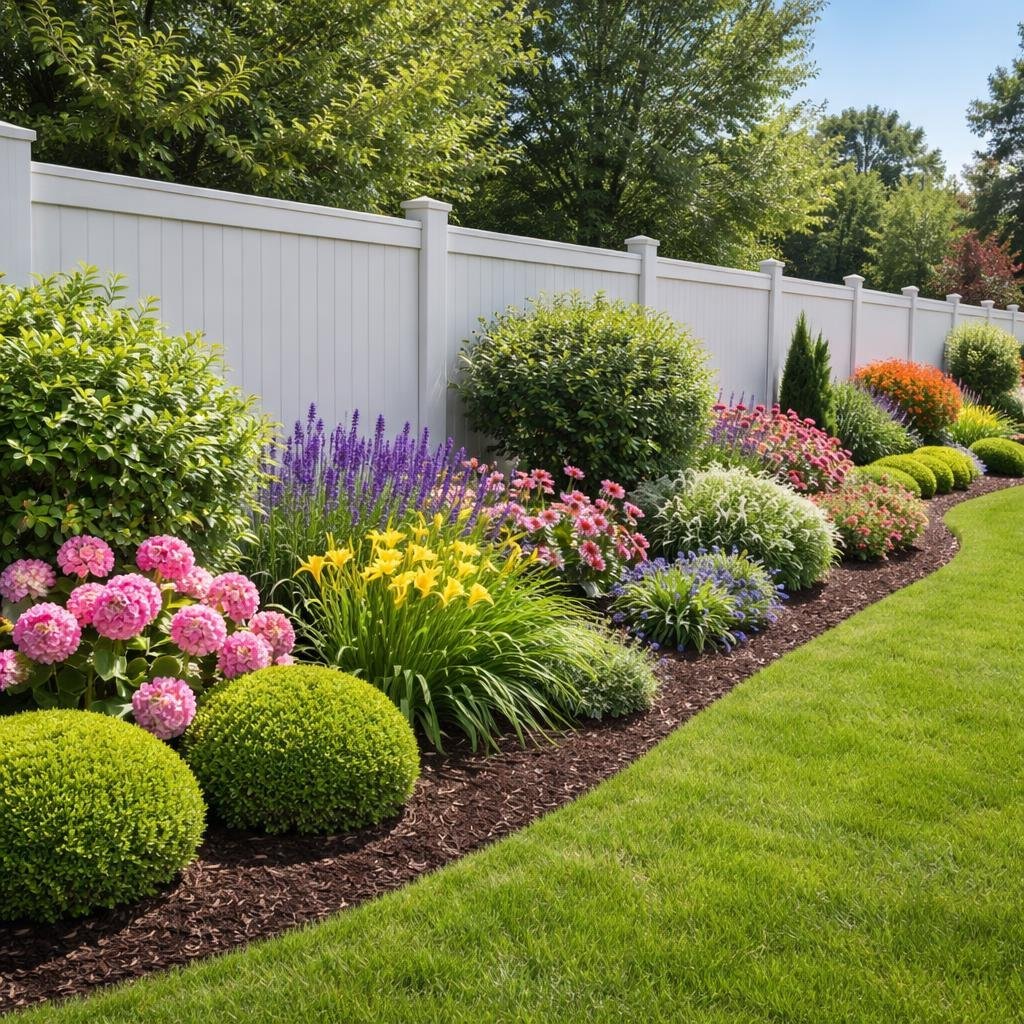
You can turn the strip along your fence into a striking part of your yard without major work or expense. This article shows twelve simple, beautiful ideas that help you add color, texture, and year-round interest while keeping maintenance reasonable.
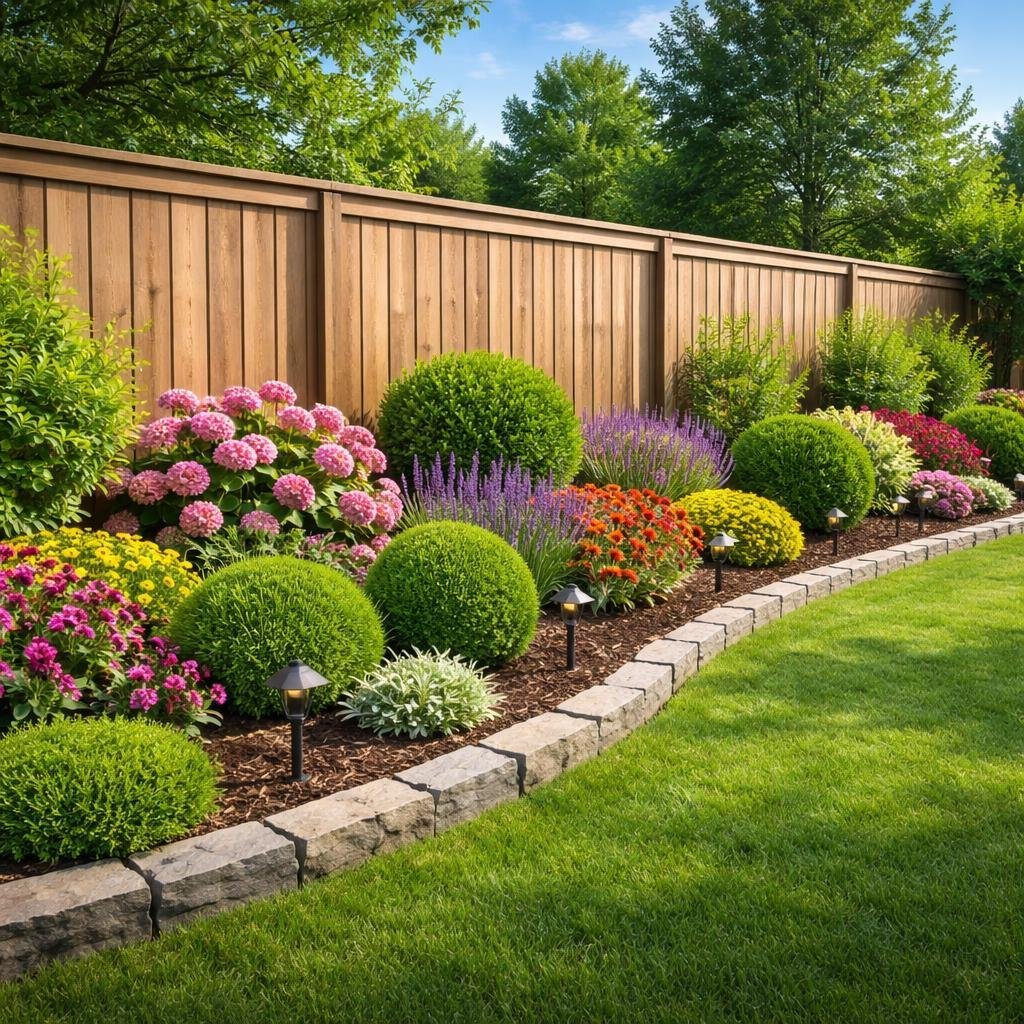
You’ll find practical plant choices and layout tips that fit different light, soil, and style needs, plus design principles and care steps to keep your fence line looking its best. Use these ideas to make your outdoor space more private, attractive, and useful.
1) Plant drought-tolerant ornamental grasses for low maintenance and texture.
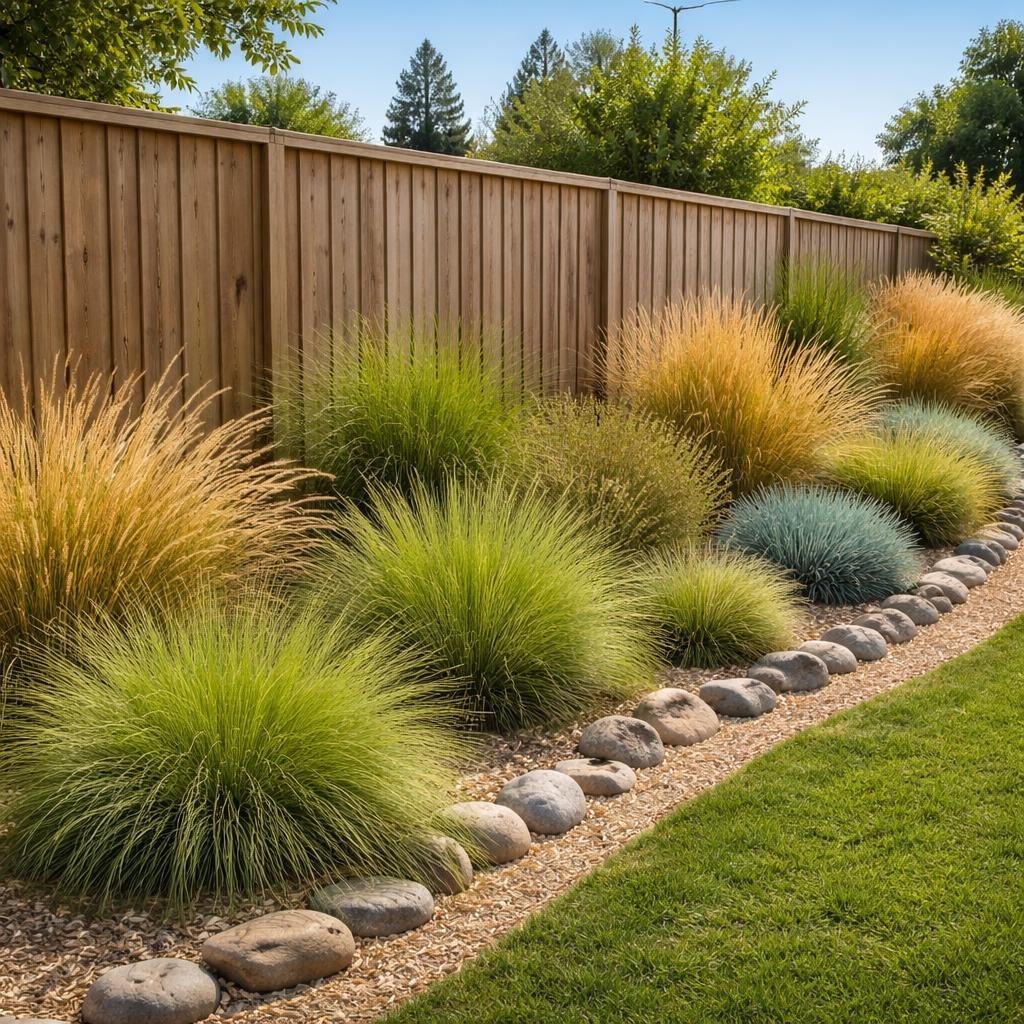
Choose grasses that need little water once established, like blue oat grass or feather grass. They add movement and year-round shape without heavy care.
Plant in groups along the fence for rhythm and privacy. Mix heights and seedheads to create depth and soft edges.
2) Install climbing clematis along the fence for vibrant annual blooms.
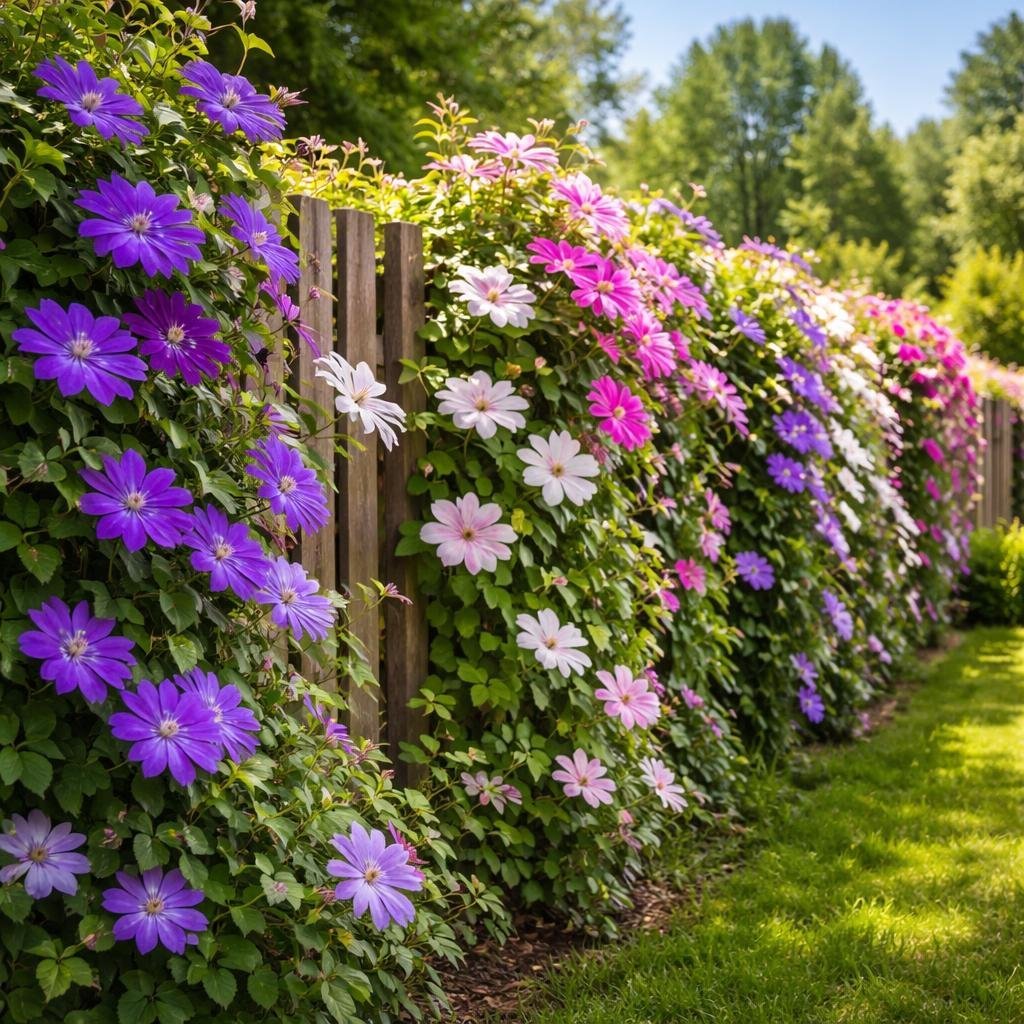
Plant clematis at the base of the fence so roots stay cool and stems climb up supports. Choose varieties suited to your climate and the amount of sun your fence gets.
Attach a simple trellis or guide wires to help vines climb without damaging the fence. Prune by the group type each year and water regularly for steady flowering.
3) Use boxwood hedges to create a clean, structured border.
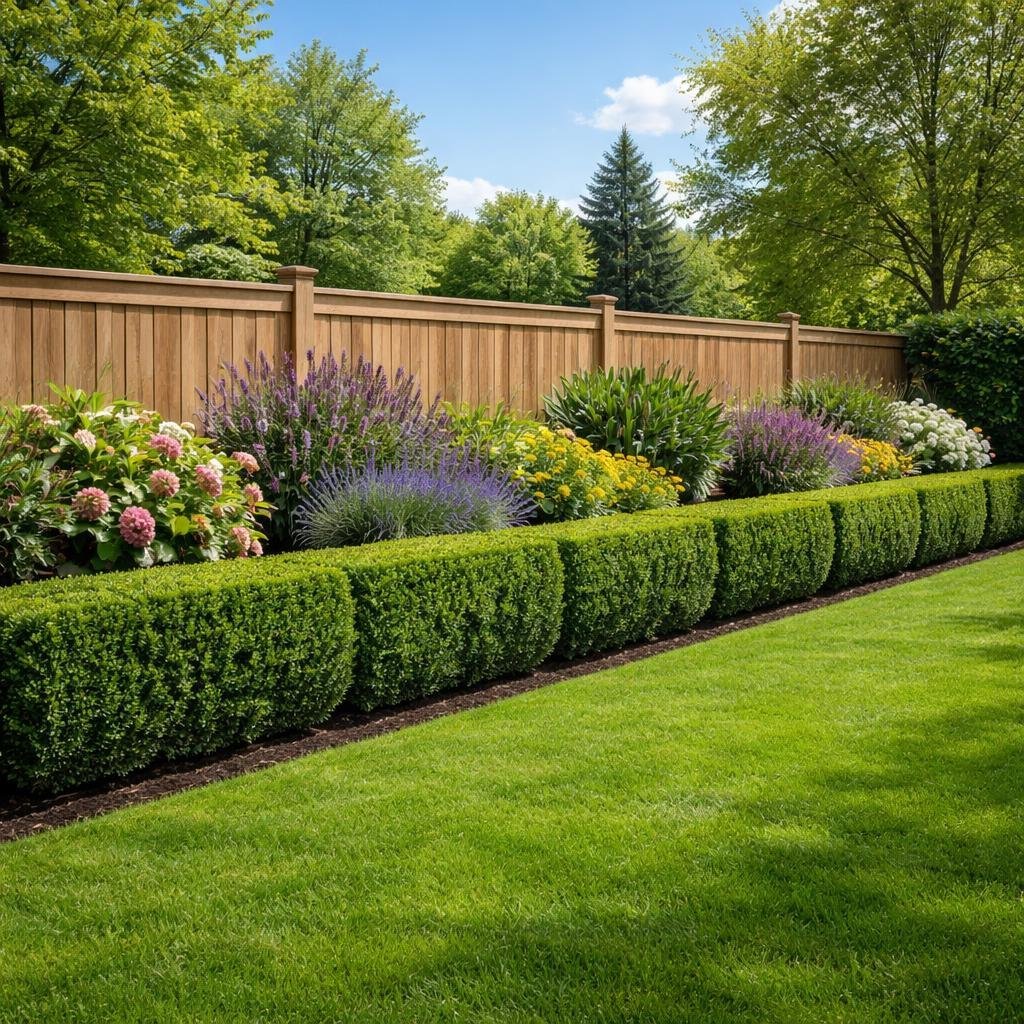
Plant low, compact boxwoods along the fence to form a steady green edge that lasts year-round.
Their small leaves and dense growth let you trim neat lines or soft curves without much effort.
Space plants evenly for a uniform look, or stagger them for a softer feel.
Pair boxwoods with mulch or gravel at the base to keep weeds down and show the hedge off.
4) Incorporate lavender for fragrance and pollinator attraction.
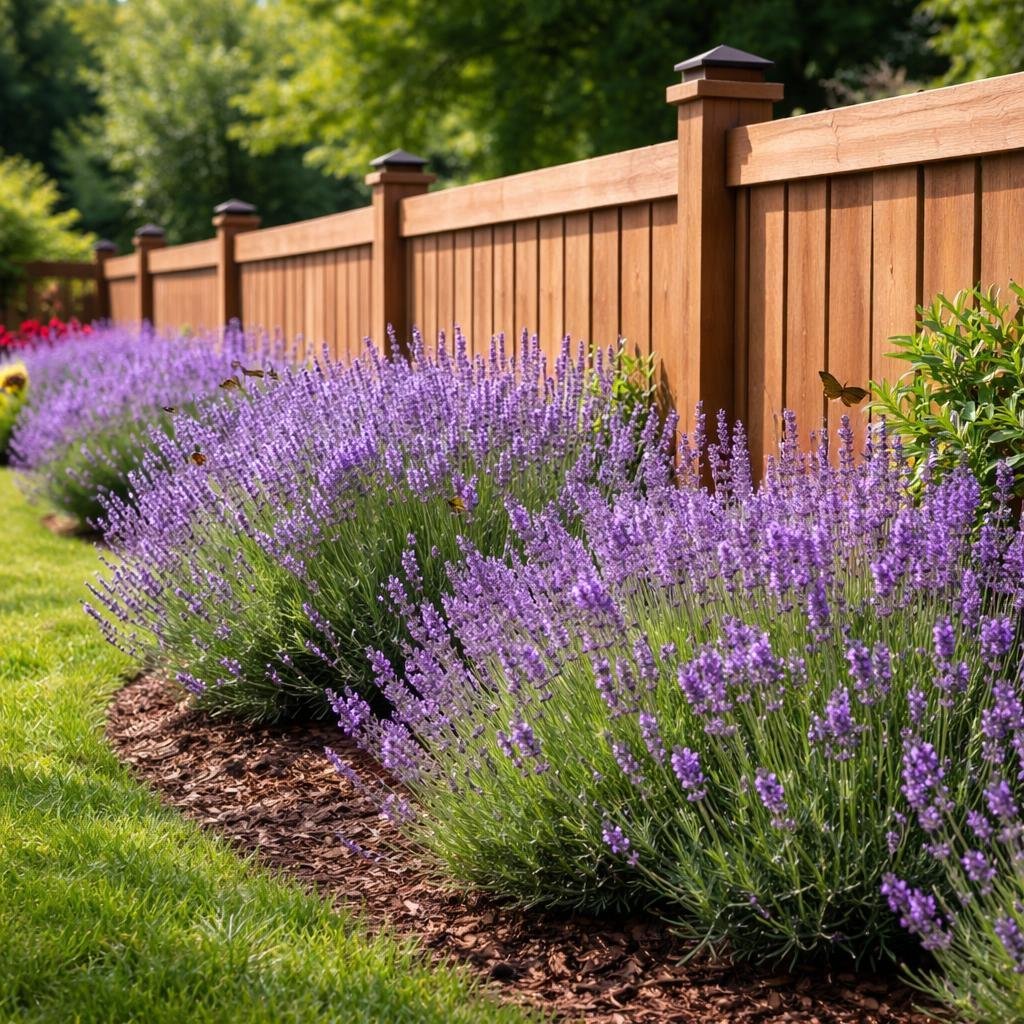
Plant lavender along the fence to add steady color and a pleasant scent you can enjoy from your yard.
Its flowers draw bees and butterflies, which help nearby plants thrive.
Choose well-draining soil and full sun spots so your lavender stays healthy.
Trim spent blooms to keep plants tidy and encourage more flowering.
5) Add flowering dogwood shrubs for seasonal color and privacy.
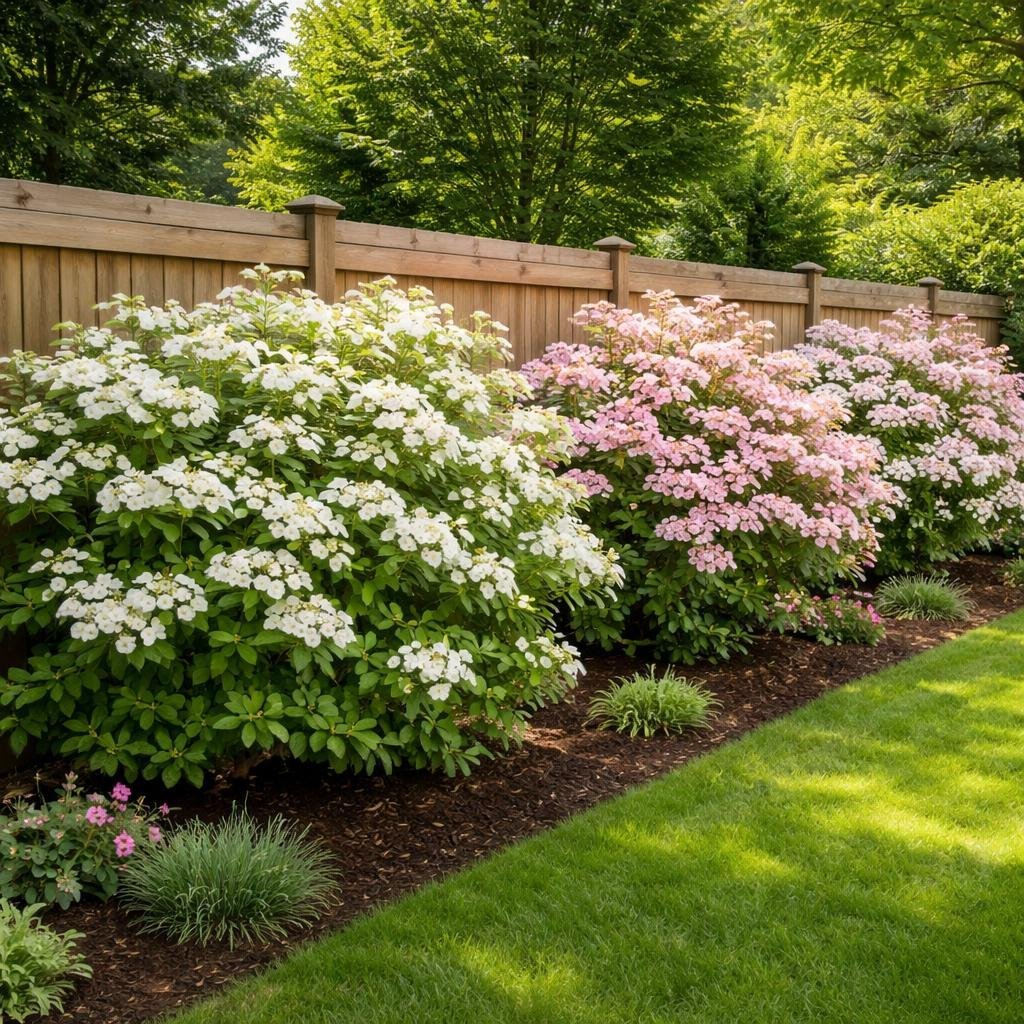
Plant dogwood shrubs along your fence to add spring blooms, summer berries, and fall color. They give visual interest all year and help screen neighbors without a tall wall.
Choose varieties suited to your zone and soil; many do well in part shade and moist ground. Space them so branches fill in but still allow air flow to prevent disease.
6) Create a tiered flower bed with daylilies at varying heights
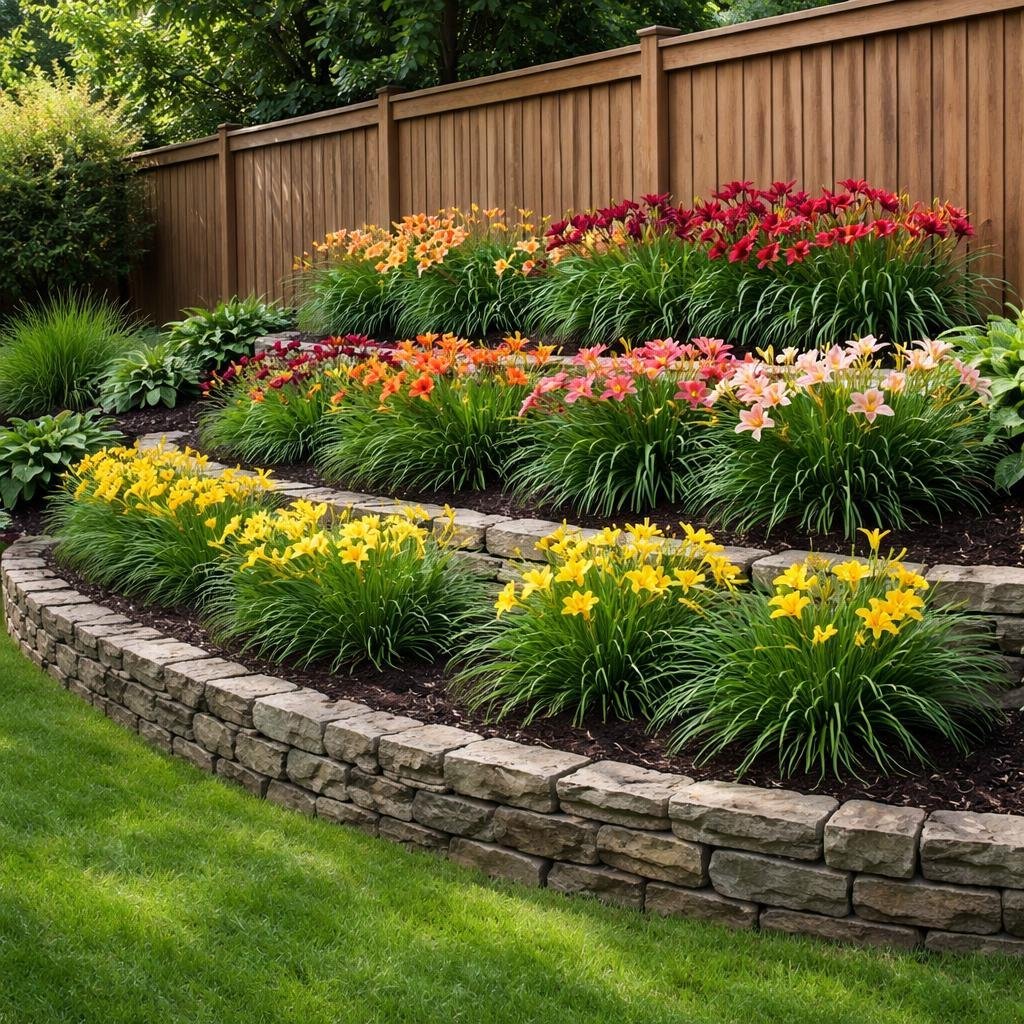
Plant daylilies in stepped beds to add depth along the fence line. Use taller varieties at the back and medium to low types toward the front for clear layers.
Choose well-draining soil and full sun spots; daylilies tolerate heat and rebloom with little care. Space plants so each gets room to grow and show its blooms.
7) Place evergreen junipers for year-round greenery
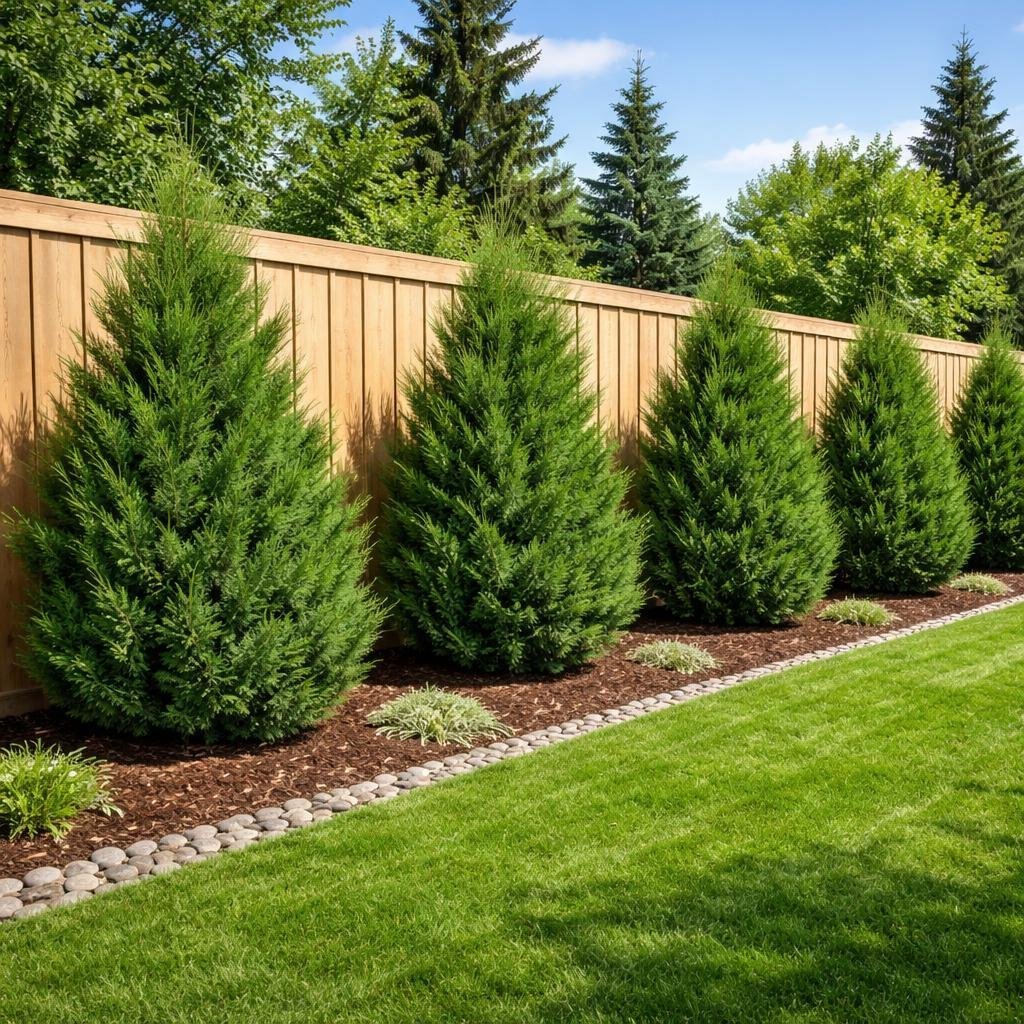
Plant junipers along the fence to keep color and structure every season. They come in low groundcovers and upright varieties, so you can pick the size that fits your space.
Junipers need well-drained soil and full sun to thrive. Space them according to mature width to avoid overcrowding and reduce pruning.
Use low junipers to control erosion on slopes and taller types to screen views. They are drought-tolerant and low-maintenance, making them a practical choice for most yards.
8) Plant hydrangeas for big, showy flowers that thrive in shade
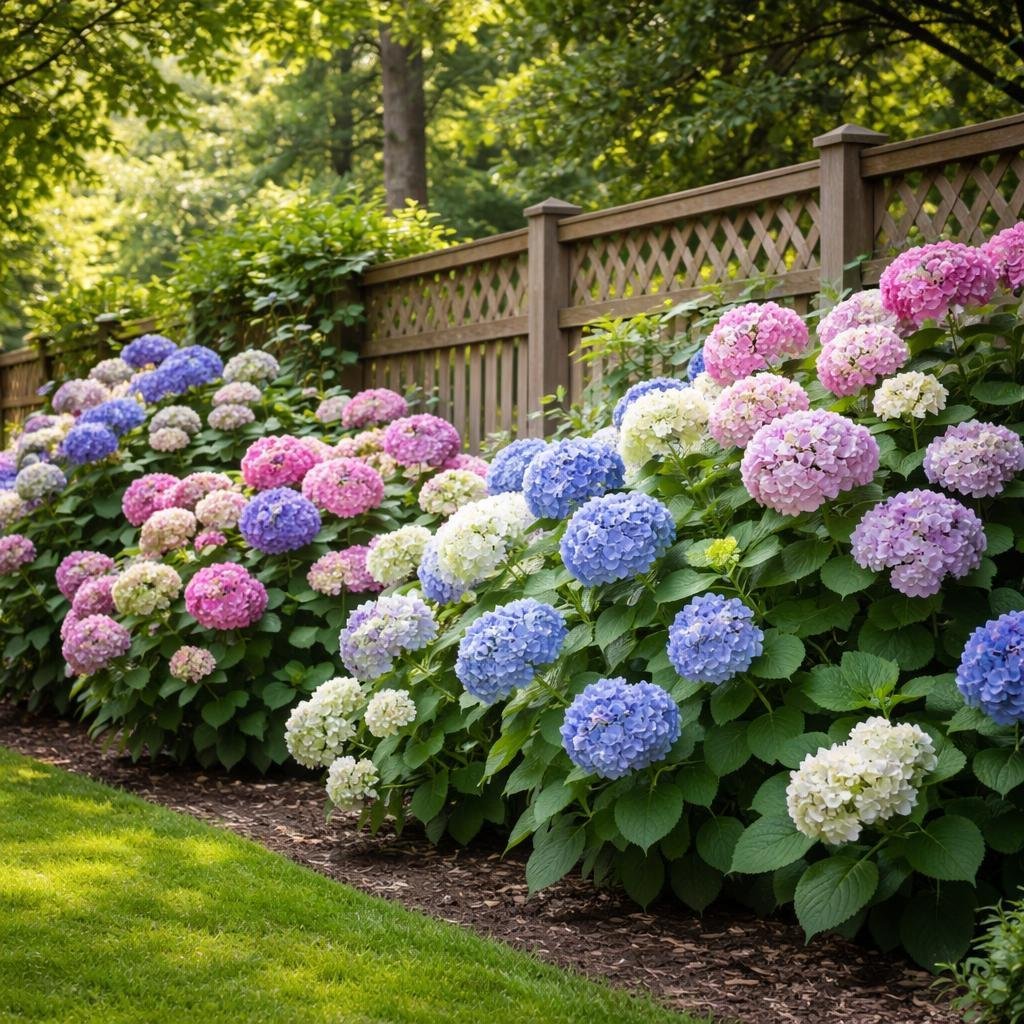
Choose hydrangea varieties that do well in partial or full shade, like lacecap, mophead, or climbing types. They give large, long-lasting blooms without full sun.
Plant them in rich, well-draining soil and keep roots cool with mulch. Water regularly during dry spells to support big flower heads.
Place hydrangeas where they get morning sun or filtered light. This reduces heat stress and helps blooms last longer.
9) Use creeping thyme as a fragrant ground cover along the base.
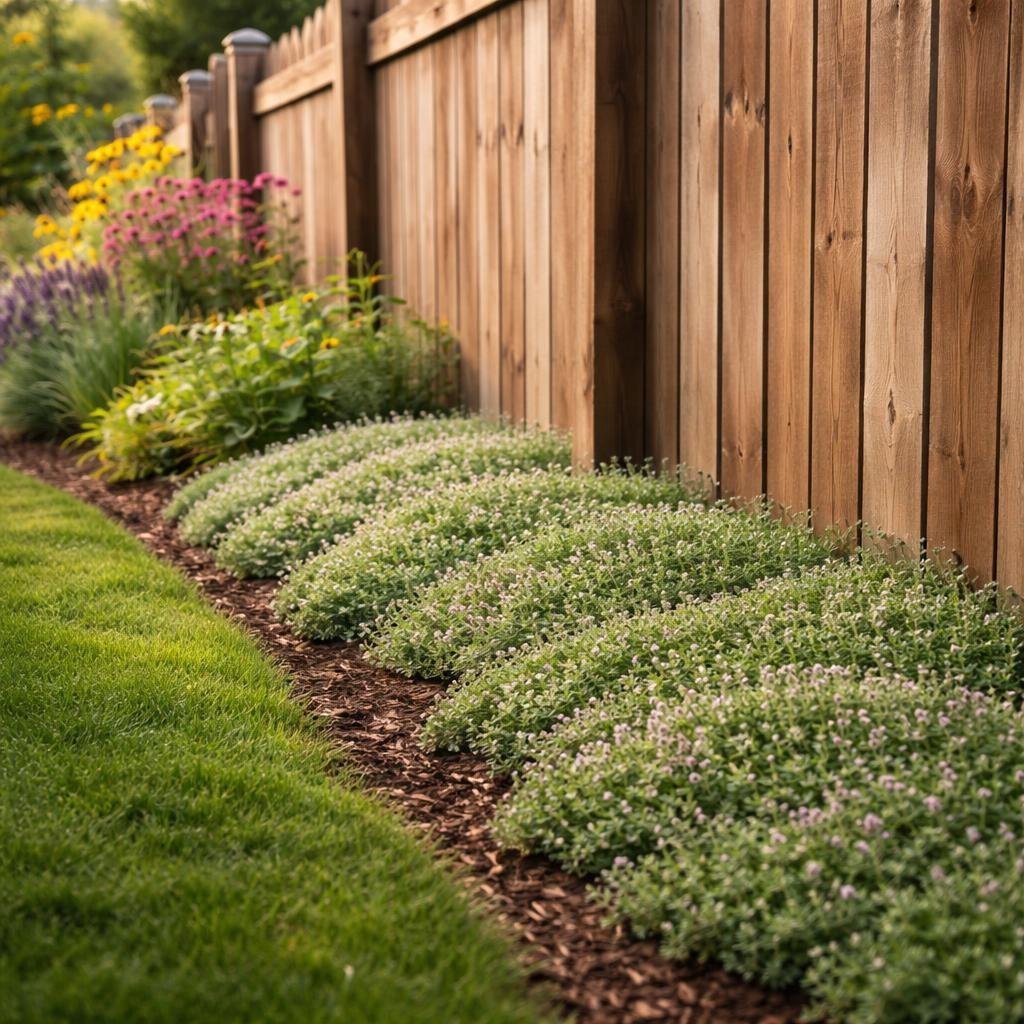
Plant creeping thyme at the fence base to fill gaps and soften hard edges. It stays low, spreads fast, and smells pleasant when brushed.
This ground cover tolerates sun and poor soil, so it works in many spots. It attracts pollinators and needs little mowing or trimming once established.
10) Integrate edible herbs like rosemary and thyme for utility and beauty.
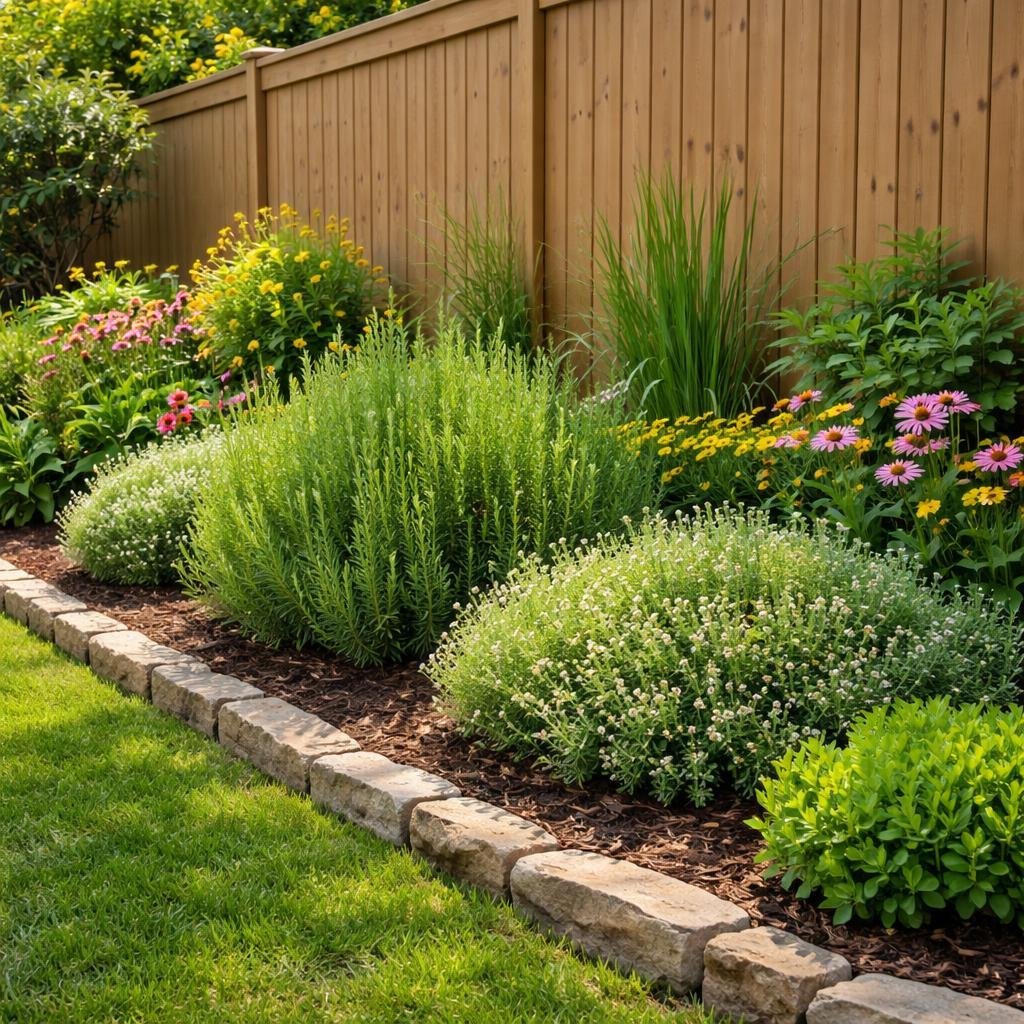
Plant rosemary and thyme along your fence line to add scent, texture, and year-round interest. They need full sun and well-drained soil, so pick a sunny stretch.
Use thyme as a low groundcover around taller rosemary to reduce weeds. Both attract pollinators and give you fresh herbs for cooking.
Trim them regularly to keep a tidy edge and encourage new growth. You’ll get a practical, attractive border with low maintenance.
Essential Design Principles for Fence Line Landscaping
Focus on how your layout, plant choices, and use of texture and color work together to create privacy, year-round interest, and ease of care. Make choices that match your yard’s size, sun exposure, and the amount of maintenance you want.
Balance and Symmetry
Balance helps your fence line read as a deliberate part of the yard instead of an afterthought. Use matching plant groupings or matching hardscape elements on either side of a gate or focal point to create symmetry. For longer stretches, alternate repeating clusters (three boxwoods, a gap, three more) to keep the eye moving without feeling cluttered.
If your space is narrow, favor vertical elements—tall, slim shrubs or trellised vines—to maintain balance without taking up much ground. In wide areas, mix low, medium, and tall layers so taller plants don’t overwhelm shorter ones. Use the same scale of plants and materials on both sides of a centerline for a cleaner, more formal look.
Selecting the Right Plant Varieties
Pick plants that match your site conditions: full sun, part shade, clay soil, or sandy soil. Note mature size before you plant; small shrubs that become large trees will crowd the fence and need pruning. Favor native or low-maintenance species if you want fewer pests and less watering.
Combine evergreens for year-round screening with seasonal bloomers for color. For example: evergreen yew or holly for structure, flowering dogwood or hydrangea for seasonal interest, and ornamental grass for movement. Check hardiness zones and water needs, and group plants with similar needs together to simplify irrigation and care.
Incorporating Texture and Color
Texture and color create visual interest along the fence without extra space. Use a mix of leaf sizes—broad leaves, fine leaves, and grassy blades—to give depth and contrast. Repeat two or three foliage textures across the bed to tie the composition together.
Plan color by season: spring bulbs, summer perennials, autumn foliage, and evergreen structure. Keep a limited color palette (two main colors plus one accent) for a cohesive look. Add texture with non-plant elements too—mulch, gravel paths, trellises, or low stone edging will contrast plant textures and define the bed.
Maintaining a Healthy and Attractive Fence Line
Keep plants trimmed to their intended size, feed the soil seasonally, and watch for pests or weeds so your fence line stays tidy and healthy.
Ongoing Care and Pruning Tips
Prune shrubs and small trees in late winter or early spring before new growth starts. Remove dead, crossing, or inward-growing branches to keep plants open and shaped. For flowering shrubs, prune right after they bloom if they flower on last year’s wood; prune in late winter for those that bloom on new growth.
Trim perennials back after the first hard freeze to reduce disease and make room for spring growth. Use clean, sharp tools and make cuts at a 45° angle about 1/4 inch above a bud or lateral branch. Keep a rhythm: quick light trims every 6–8 weeks shape growth without shocking the plants.
Stake young trees and check ties monthly; loosen them as trunks thicken. Mulch 2–3 inches deep but keep mulch 2–3 inches away from trunks and stems to avoid rot.
Soil Preparation and Fertilization
Test soil pH and nutrients every 2–3 years with a kit or lab test. Most fence-line plants prefer slightly acidic to neutral soil (pH 6.0–7.0), but match amendments to the plants you choose. Add lime to raise pH or sulfur to lower it, following test recommendations.
Work organic matter—compost or aged manure—into the top 6–8 inches before planting. This improves drainage and root growth and reduces the need for frequent fertilizer.
Fertilize based on plant type: use a balanced slow-release granular fertilizer (10-10-10) in early spring for shrubs and trees, and a higher-phosphorus mix for flowering perennials. Follow product rates on the label and avoid overfeeding, which causes leggy growth and more pruning.
Managing Pests and Weeds
Inspect plants weekly for signs of chewing, discoloration, or sticky residue. Identify pests—aphids, spider mites, and caterpillars are common—and treat accordingly: blast aphids with water, use insecticidal soap for soft-bodied pests, or apply Bacillus thuringiensis (Bt) for caterpillars on foliage you want to protect.
Control weeds by laying 3 inches of organic mulch and using a weed barrier fabric in problem strips. Pull weeds when small to prevent seed spread. Spot-treat persistent weeds with targeted herbicides, following label instructions and avoiding spray drift onto desirable plants.
Encourage beneficial insects like ladybugs and lacewings by planting nectar sources (e.g., dill, yarrow) near the fence. Rotate control methods and monitor results to reduce resistance and keep your plantings strong.
Frequently Asked Questions
This section answers common concerns about plant choice, spacing, privacy, color, and drainage for fence-line beds. Expect specific plant picks, spacing rules, pruning tips, and simple fixes for soggy or dry spots.
What are the best plants for landscaping along a fence line?
Choose plants that match your sun exposure, soil, and water availability. For structure, use boxwood hedges; for color and seasonal interest, add flowering dogwood shrubs; for scent and pollinators, plant lavender; for vertical bloom, train clematis on the fence; and for low-maintenance texture, include drought-tolerant ornamental grasses.
Mix heights and bloom times so you have interest year-round. Put taller shrubs like dogwood toward the back and shorter plants like lavender and grasses in front.
How do I maintain privacy while landscaping my fence line?
Plant a layer of tall, dense shrubs or hedges directly in front of the fence for an instant screen. Boxwood can form a tidy, year-round barrier; flowering dogwood gives seasonal leaf cover plus spring flowers.
Fill gaps with vertical elements like trellised clematis or fast-growing evergreen screens. Stagger plants slightly instead of a straight line to avoid sightlines through gaps.
Can you recommend low-maintenance shrubs for fence line gardens?
Boxwood works well for a neat, low-maintenance border and tolerates regular shearing. Flowering dogwood shrubs add color and require only yearly pruning and occasional feeding.
Select native or drought-tolerant varieties when possible for fewer pest and water needs. Mulch beds to reduce weeds and cut back only once or twice a year.
What are some creative ideas for adding color to my fence line?
Add clematis on trellises for bright vertical blooms and mix in flowering dogwood for seasonal splashes. Plant lavender for purple blooms and lasting fragrance that also draws pollinators.
Use ornamental grasses for color shift in fall and pair them with shorter perennials for contrasting hues. Rotate annuals in pots along the fence for quick bursts of changing color.
How should I space plants when creating a fence line landscape?
Follow mature size recommendations on plant labels and leave room for air flow. For boxwood hedges, space plants about half to full mature width apart so they fill in without overcrowding.
Place taller shrubs like dogwood 3–6 feet apart depending on cultivar, and set lavenders and grasses 1–3 feet apart. Stagger rows slightly to avoid a single straight plane and to create depth.
What are the considerations for ensuring proper drainage in fence line landscaping?
Avoid planting directly against a fence if water tends to collect there; raised beds or a slight soil grade away from the fence help. Amend heavy clay with compost and coarse sand to improve drainage for roots.
Install a narrow gravel trench or perforated drain pipe where water pools. Choose plants that tolerate your site’s moisture level—lavender and ornamental grasses do better in drier spots, while dogwood tolerates more moisture.