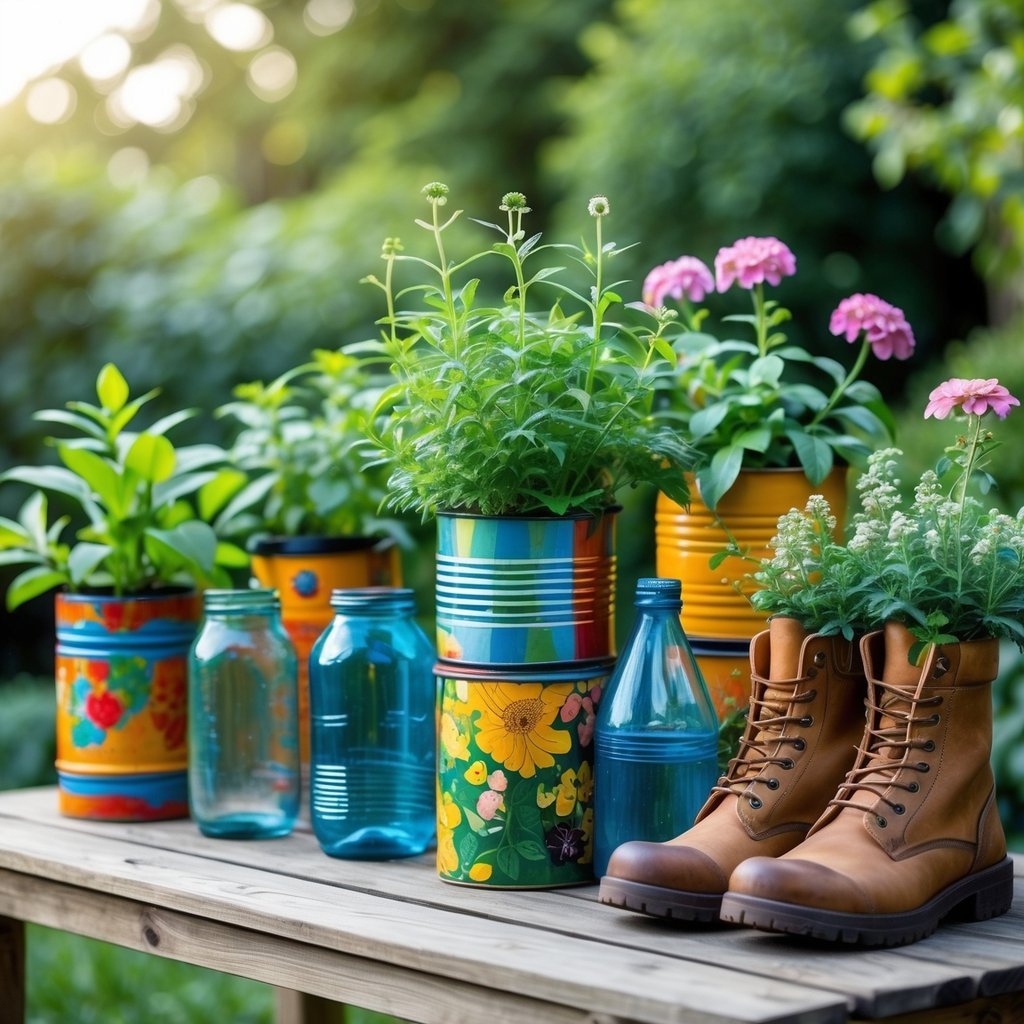
10 Smart Ways to Turn Trash into Beautiful Garden Decor
You can make a beautiful garden without spending much money by turning ordinary trash into useful, eye-catching decor. Upcycled planters, sculptures, and functional pieces from items like suitcases, tires, bottles, and scrap wood let you create a unique outdoor space while cutting waste.
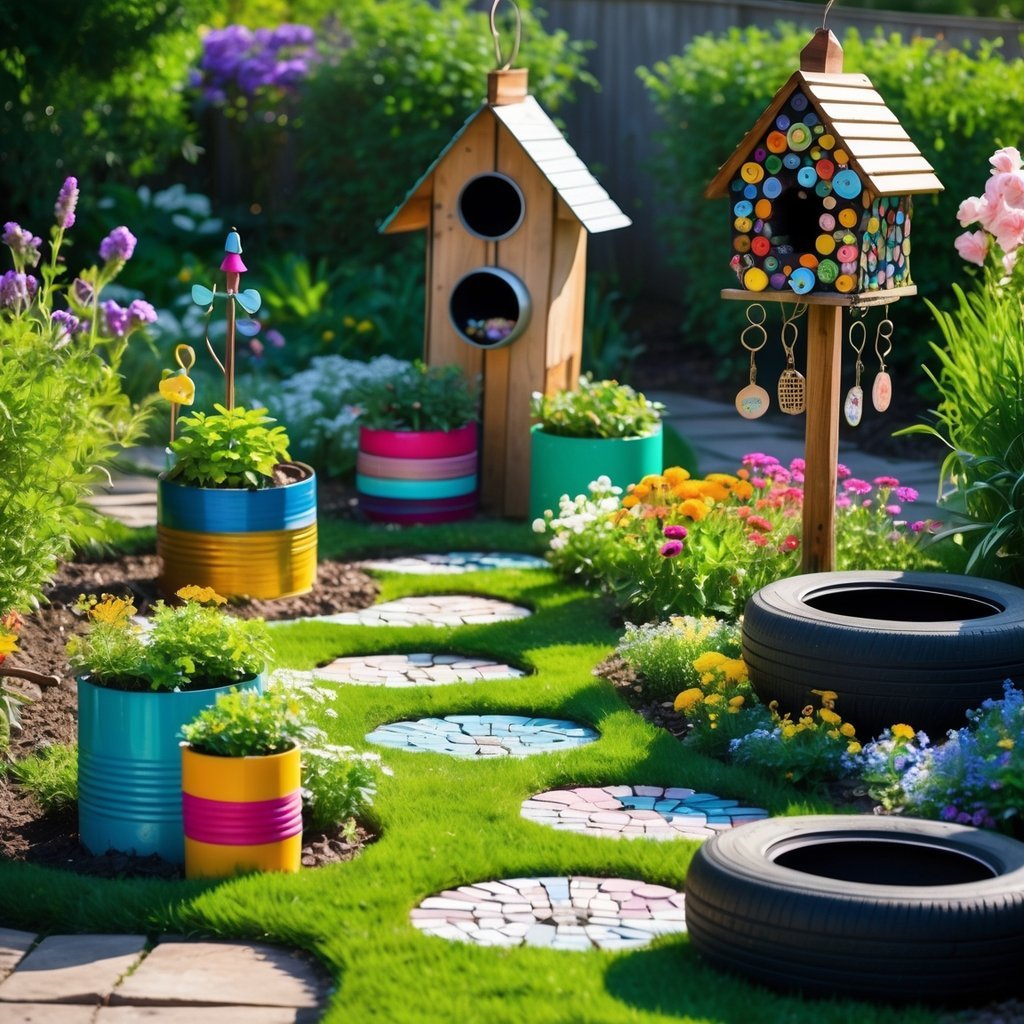
This post shows 10 simple, safe, and creative projects you can try right away. Expect clear steps, easy materials lists, and quick tips so you can start transforming junk into garden charm today.
Key Takeaways
- Learn low-cost projects that use common discarded items.
- Find artful and practical ideas to personalize your outdoor space.
- Get simple how-to tips and safety pointers for upcycling materials.
Creative Planters from Everyday Trash
You can turn common waste into useful, attractive planters with simple tools and a little paint. Each project below shows exactly what to cut, how to prep for drainage, and which plants work best.
Turning Old Tires into Garden Beds
Remove dirt and wash the tire with soap and water. Cut the tire sidewall if you want a low planter, or stack whole tires for a deeper bed. Drill several 1/2-inch drainage holes in the bottom and line the interior with a breathable landscaping fabric to keep soil from washing out.
Fill with a mix of potting soil and compost. Use trailing herbs, annual flowers, or compact vegetables like lettuce and radishes. Paint the tire with exterior latex paint for color; scuff the surface first so paint adheres. Place the tire on a level surface and raise it slightly on bricks if you need extra drainage.
Safety tip: avoid tires with steel belts exposed; wear gloves and eye protection when cutting. Repaint every few years to refresh the look.
Repurposing Plastic Bottles for Vertical Gardens
Choose 2-liter bottles or similar sizes for stability. Cut a horizontal opening along the side large enough for soil and plants, leaving one edge intact as a flap. Punch drainage holes in the bottom and two small holes on the top edge to thread hanging twine or wire.
Mount bottles on a wooden frame, fence, or a pallet in a staggered pattern to maximize light. Fill with lightweight potting mix and plant shallow-rooted herbs, lettuce, or succulents. Water from the top; excess drains out the bottom holes into a tray or the ground. For sun protection, paint the bottle backs opaque or line them with reflective material to reduce heat on roots.
Label each bottle with plant name and watering notes using a permanent marker or a small tag.
Using Tin Cans as Stylish Flower Pots
Clean cans and remove sharp edges with a metal file or by folding the rim inward. Drill 3–4 small drainage holes in the bottom. If you want to avoid rust, line the can with a plastic cup or coat the inside with a thin layer of clear, non-toxic sealant.
Decorate cans with spray paint, twine wraps, or decoupage. Use screw-in S-hooks to hang cans from a rail, or group them on a shelf. Ideal plants include herbs, pansies, and small succulents. When planting, place a layer of gravel or broken pottery at the bottom to improve drainage before adding soil.
Tip: rotate hanging cans monthly so each plant gets even light.
Innovative Garden Art with Upcycled Materials
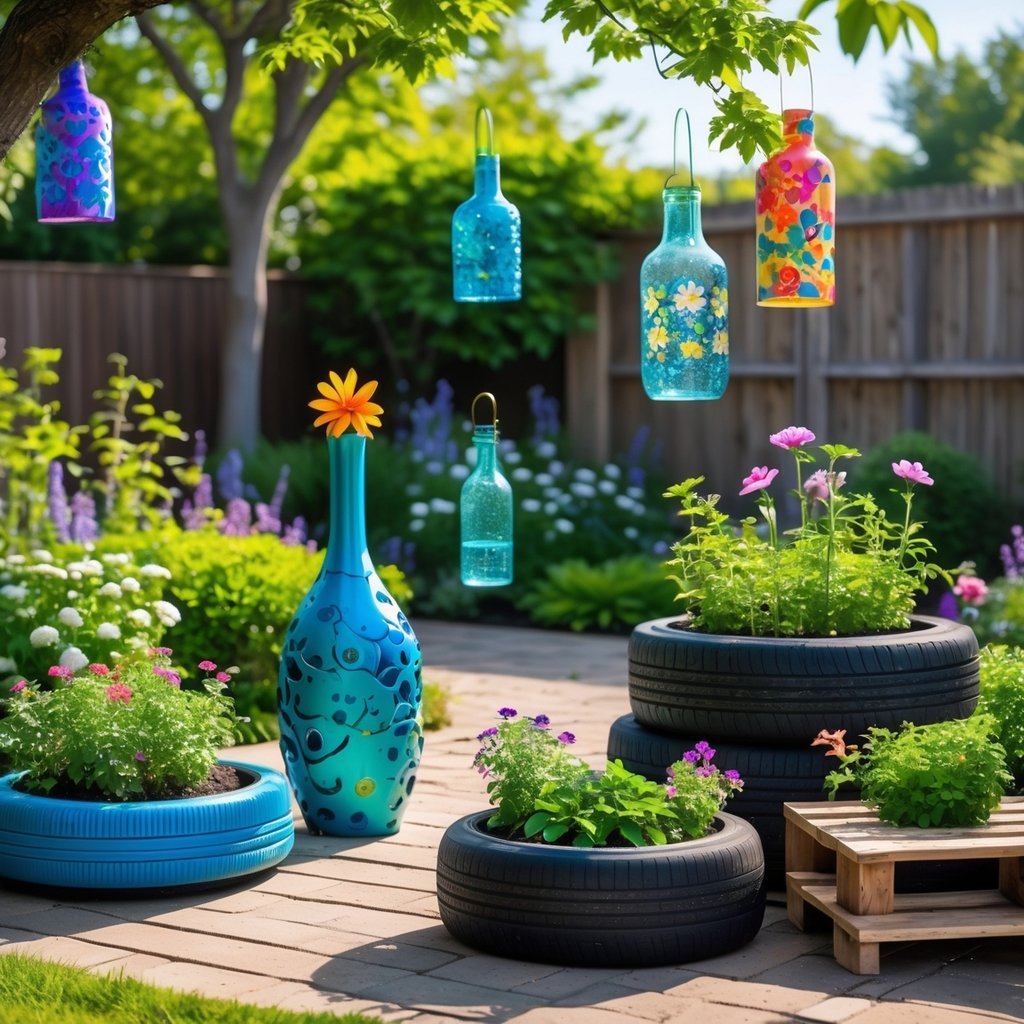
You can make bright, durable garden features without buying new supplies. The ideas below show practical steps, safety tips, and simple finishing touches to turn common throwaways into lasting decor.
Transforming Glass Bottles into Garden Borders
Use bottles to make a low, colorful border along flower beds or paths. Clean bottles thoroughly and remove labels. For a buried border, dig a shallow trench, place bottles neck-down so rims stick up, and pack soil tightly around them. For a standing edge, cut bottle bottoms (use a glass cutter and sand edges) and glue bottoms to a wooden or metal strip with outdoor epoxy before anchoring.
Choose bottles of similar height for a neat look or mix sizes for a playful edge. Clear, green, and brown glass create classic tones; painted bottles add bright contrast. Wear gloves and eye protection when cutting or drilling glass. Seal any painted surfaces with outdoor clear coat to protect color from sun and rain.
Crafting Wind Chimes from Metal Scraps
Collect small metal pieces like old keys, silverware, pipes, and washer sets to make chimes that sing in the breeze. Drill or file holes for hanging and group items by tone — thicker pieces ring deeper, thin pieces ring higher. Thread pieces on stainless steel wire or nylon cord and tie to a wooden ring or reclaimed cutlery handle as the top.
Balance the chime by spacing pieces evenly; test sound outdoors before finalizing lengths. Protect metal from rust by cleaning with a wire brush and coating with a clear rust-inhibitor or outdoor varnish. Hang chimes where they catch wind but won’t hit windows or fragile plants. Use a small windcatcher made from a painted tile or metal tag to increase movement.
Building Garden Sculptures with Broken Ceramics
Turn broken plates and tiles into mosaic sculptures that add texture and color. Collect pieces, arrange designs on a sturdy base like a discarded chair back, old statue form, or concrete planter, and adhere with exterior tile adhesive. Use grout rated for outdoor use and press pieces firmly to fill gaps.
Plan patterns before gluing; sketch shapes and sort ceramic shards by color and size. Wear heavy gloves to avoid cuts and rinse grout residue promptly. For added durability, seal the finished mosaic with a penetrating sealer to repel moisture and freeze-thaw damage. Small bird baths, stepping-stone tops, and column-wrapped forms work well for beginners.
Functional Decor Solutions Using Waste Items
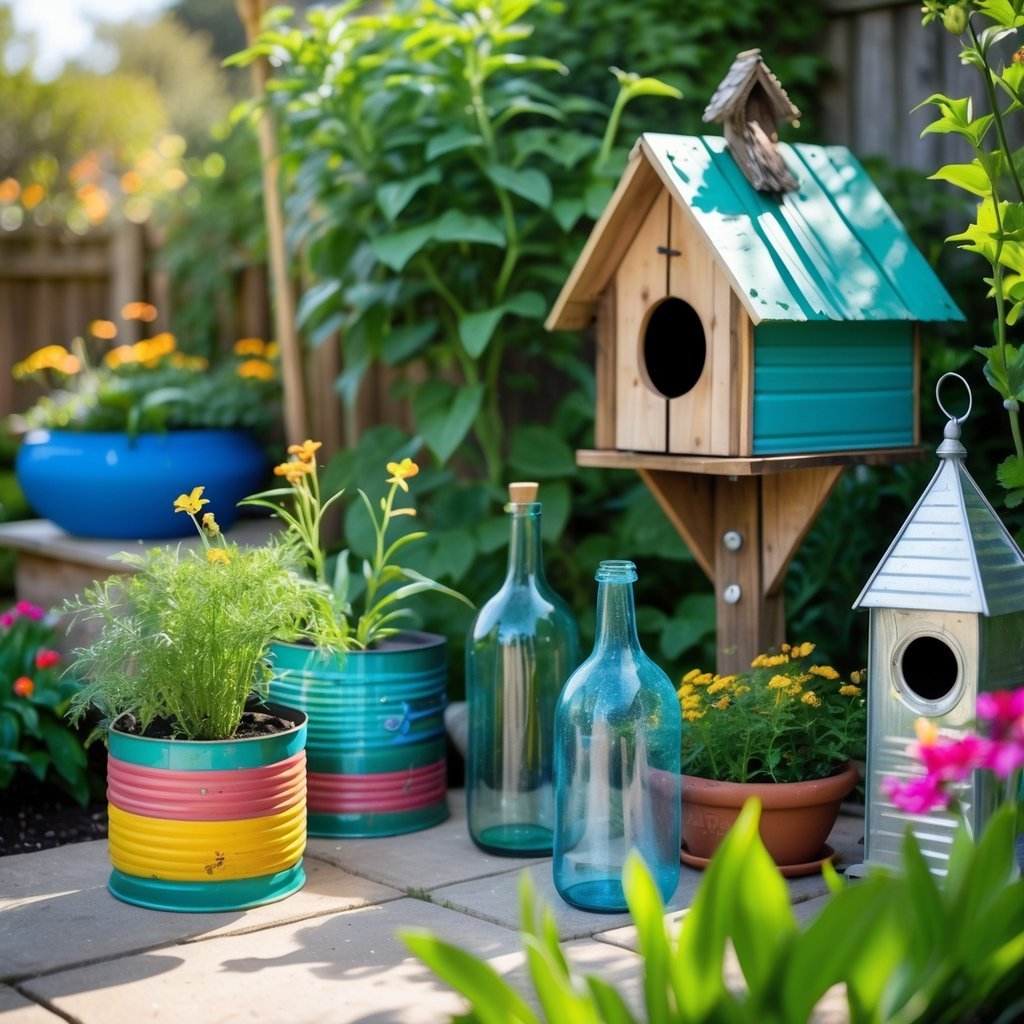
You can turn common waste items into useful garden features that save money and add charm. Focus on durability, drainage, and placement to make pieces that last and function well.
Making Pathways from Recycled Bricks and Stones
Use old bricks, broken concrete, and flat stones for durable garden paths. Start by clearing a 12–18 inch-wide trench, then lay a 2–3 inch base of crushed gravel for drainage. Fit bricks or stones tight together; use sand or crushed stone to fill gaps and lock pieces in place.
If pieces are uneven, break them to fit or use a rubber mallet to level. For a neater look, edge the path with reclaimed metal or timber to keep materials from shifting. Seal porous bricks with a clear outdoor sealant if you expect heavy rain. Maintain the path by sweeping and topping gaps with sand yearly.
Designing Bird Feeders with Discarded Containers
Choose sturdy containers: glass jars, tin cans, or plastic bottles work well. Drill small drainage holes in the bottom of jars or cans to prevent seed rot. For hanging, attach a strong wire loop around the neck or crimped rim; for stand-alone feeders, mount the container on a reclaimed wooden post.
Cut feeding ports large enough for birds to perch and access seed, but small enough to keep rain out. Fill with mixed seed and place feeders 6–10 feet from dense shrubs to give birds nearby shelter. Clean feeders monthly with mild soap and hot water to stop mold and disease. Use a small roof made from an old saucer or lid to shield seed from rain.
Frequently Asked Questions
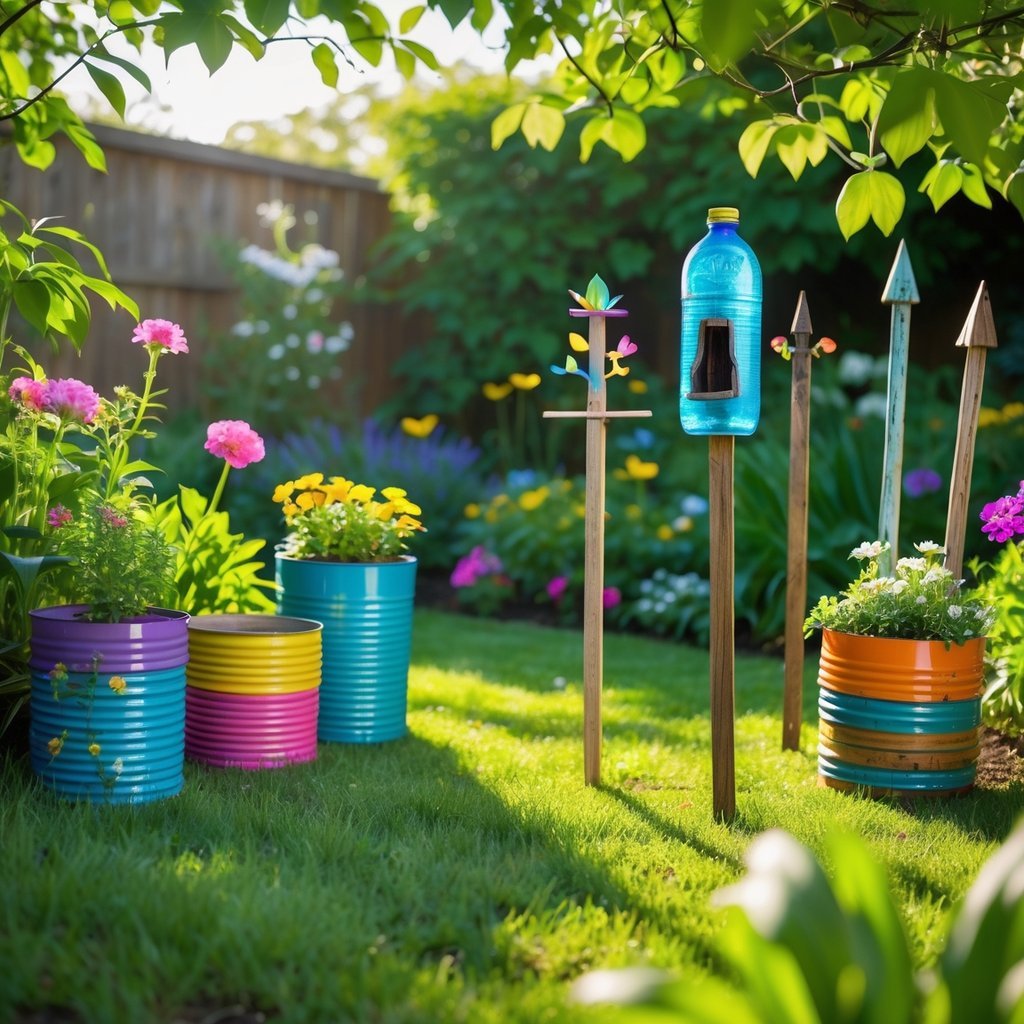
You can turn common trash items into useful, attractive garden features. Find specific steps for tires, plastic bottles, broken ceramics, wood pallets, glass jars, and old kitchenware so you can start projects with clear materials and simple tools.
How can I repurpose old tires for garden decoration?
Paint tires with exterior paint to resist weather. Stack them for raised planters or cut one side to make a shallow planter for herbs and succulents.
Mount a painted tire on a wall or fence as a hanging planter. Use smaller tires or inner tubes to create colorful edging for flower beds or pathways.
What creative uses are there for plastic bottles in a garden setting?
Cut bottles to make mini greenhouses over seedlings or to use as cloches that protect young plants. Make vertical planters by cutting the side, filling with soil, and hanging them on a trellis.
Use bottle bottoms as drip cups under potted plants, or string several bottles into a decorative rain chain to guide water from gutters.
In what ways can broken ceramics be used to enhance a garden’s aesthetic?
Use shards as edging for paths or to create mosaic stepping stones. Press pieces into concrete or soil around plant bases for color and texture.
Arrange larger broken pots as layered planters or use shards in drainage layers at the bottom of containers to help water flow.
How can I use discarded wood or pallets to create garden furniture or art?
Disassemble pallets for planks to build benches, planters, or raised beds. Sand rough edges, treat the wood with a sealant, and paint or stain for weather resistance.
Turn pallet slats into vertical planter boxes or a trellis. Assemble a small seating area from pallet cushions and low tables for a low-cost patio setup.
What are effective methods to transform glass jars or bottles into garden ornaments?
Wrap jars with wire to hang as tealight lanterns or fill them with fairy lights for evening ambiance. Bury the necks of bottles upside-down to create a decorative border or a bottle wall that filters light.
Use painted or frosted bottles as stake markers in beds, or turn jars into small herb planters and window-sill vases.
Can you provide ideas for upcycling old kitchen items into garden planters?
Convert old colanders into hanging planters; their holes give great drainage for trailing plants. Turn teapots, kettles, and baking tins into quirky container planters for small herbs and flowers.
Repurpose wooden spoons as plant labels and use muffin tins as seed-starting trays. Drill drainage holes in metal or ceramic items before planting.