10 Creative Wheelbarrow Garden Ideas for a Rustic Look
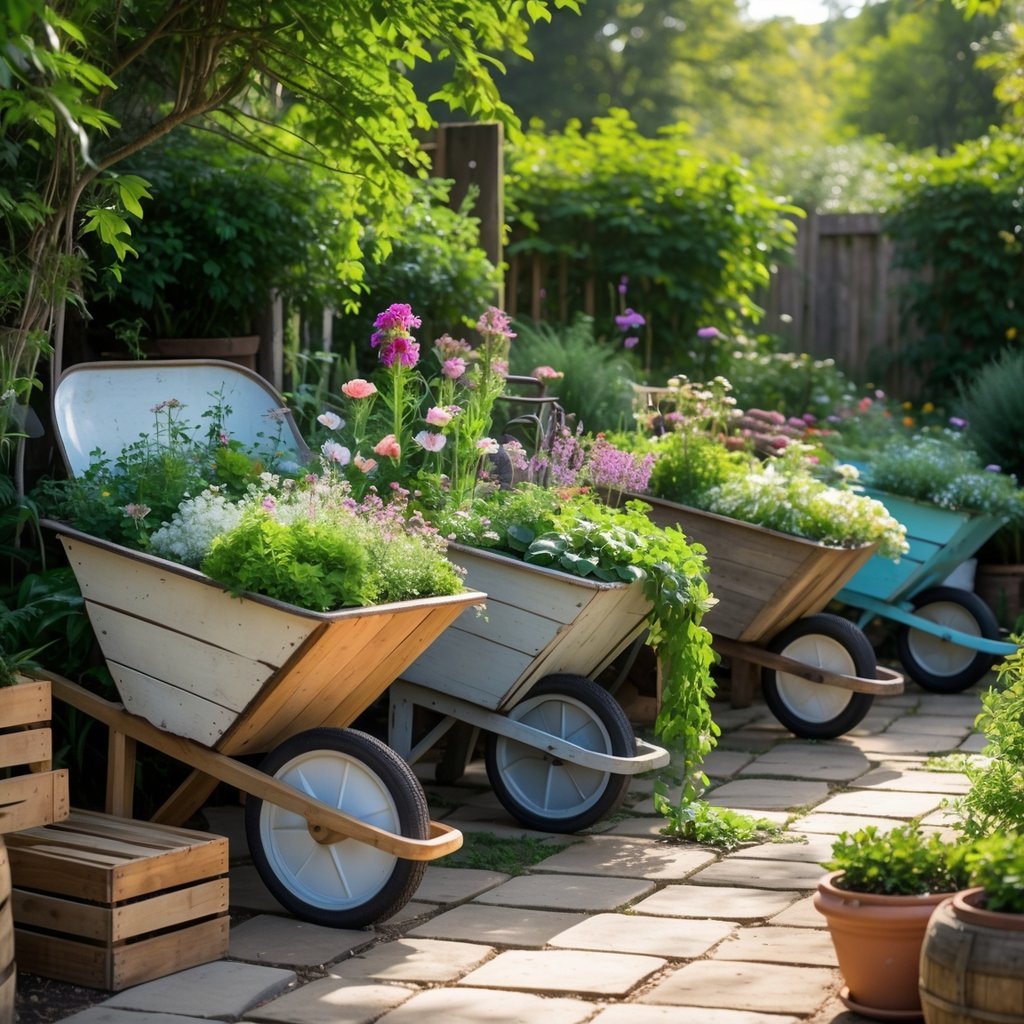
You can turn an old wheelbarrow into a striking rustic feature that fits any garden style. This article shows ten simple, creative ways to reuse a wheelbarrow so you can add charm, color, and function to your outdoor space.
You will find ideas that range from overflowing wildflowers and herbs to a small fountain or fairy garden, plus easy tips to keep each display looking great. Use these ideas to match your space, skills, and the plants you love.
1) Spilled Flower Cascade overflowing with seasonal blooms
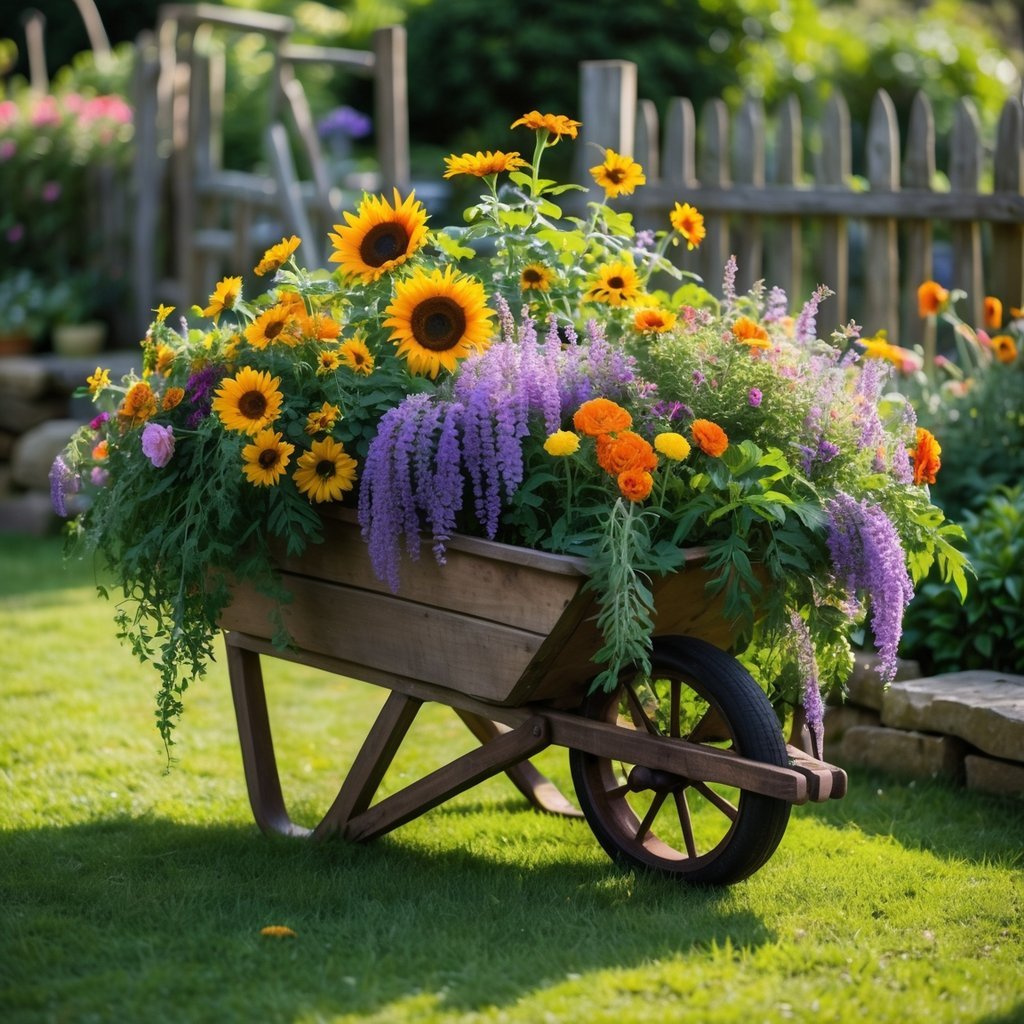
Tip the wheelbarrow on its side and plant a mix of seasonal flowers so they look like they’re pouring out. Use trailing plants like petunias or sweet potato vine at the lip and add upright fillers behind them.
Place the wheelbarrow where you want a focal point, and rotate plant colors to match each season. You can swap annuals quickly to keep the display fresh and full.
2) Rustic Succulent Garden with patina and stone layers
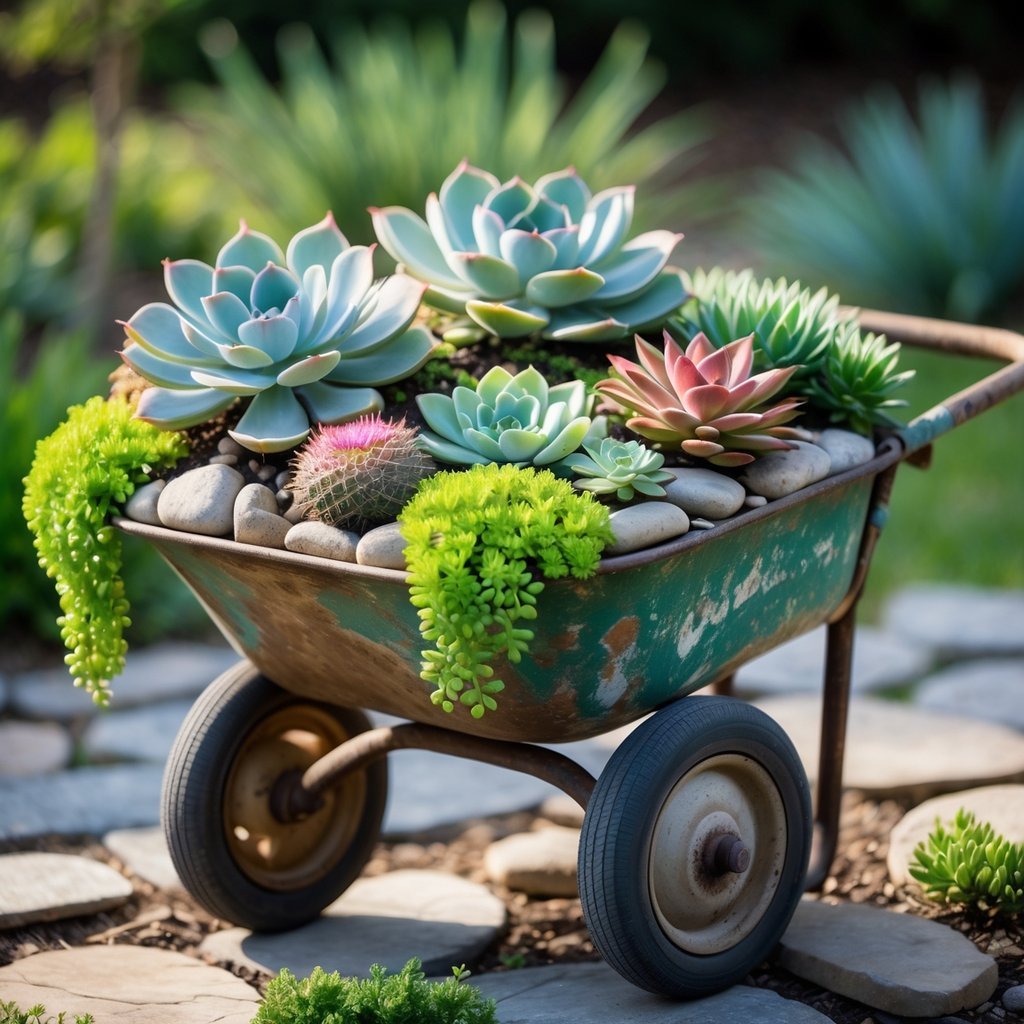
Choose an old wheelbarrow with rust or patina to add instant character to your garden. The worn metal gives a vintage feel without extra work.
Fill it with well-draining soil and a mix of small succulents. Arrange flat stones between plants to create clear layers and help control water.
Place the wheelbarrow where you can see it up close. The stone layers make the display tidy and protect roots during wet weather.
3) Vintage Wheelbarrow filled with marigolds for color and pest control
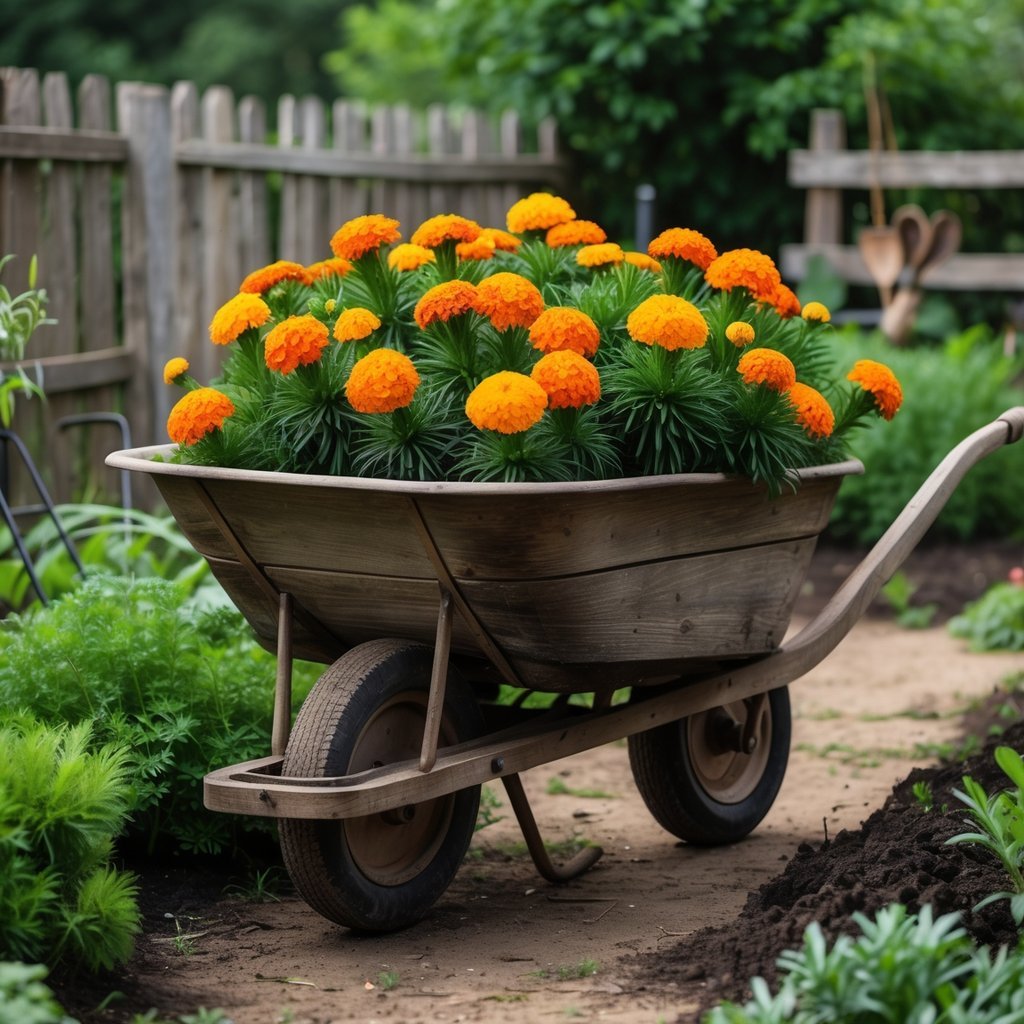
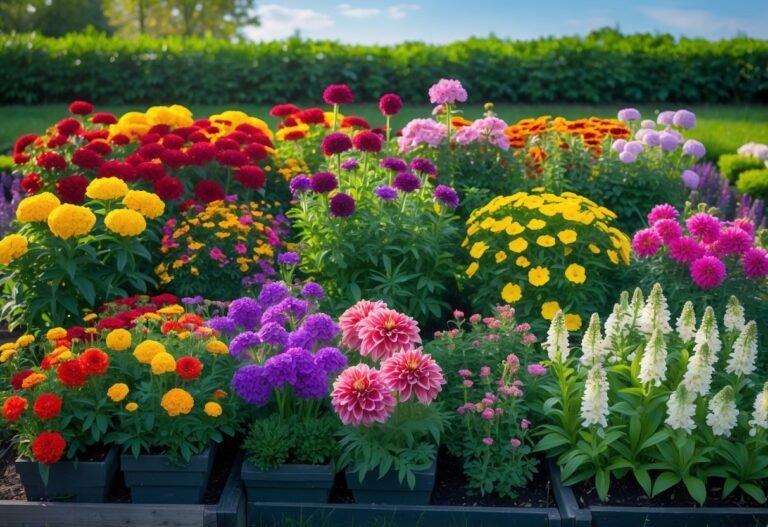
Place a vintage wheelbarrow in a sunny spot and fill it with well-draining soil. Marigolds add bright, warm color and bloom all season with little care.
Plant several marigold varieties for layered height and continuous flowers. Their scent can help repel some garden pests like nematodes and certain insects, reducing damage to nearby plants.
Move the wheelbarrow as needed to follow the sun or refresh the display. Deadhead spent blooms to keep plants flowering and tidy.
4) Fairy Garden setup using miniature plants and decorations
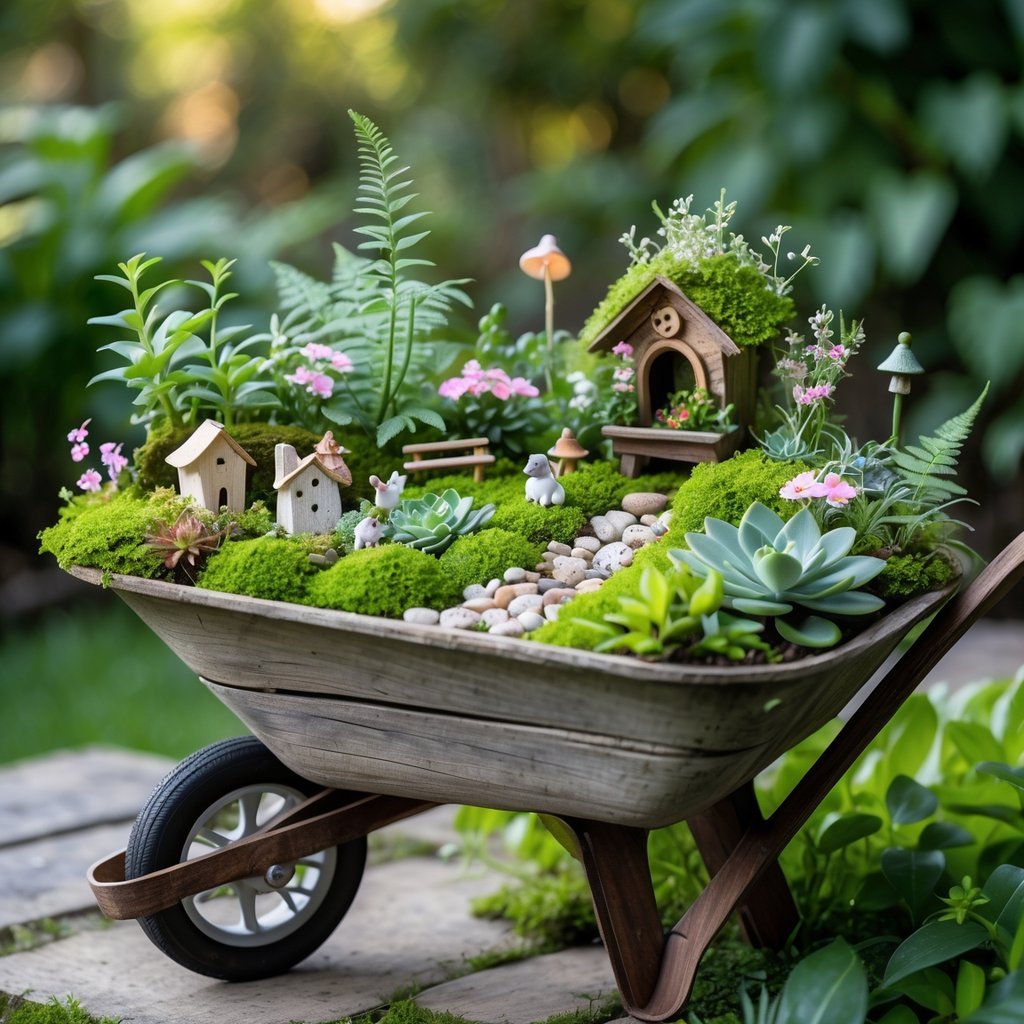
You can turn a wheelbarrow into a fairy garden with small plants like moss, thyme, or tiny succulents that stay low and cozy. Add miniature houses, a pebble path, and small furniture to create interest without crowding the plants.
Place taller items at the back and low groundcovers in front so you can see every detail. Use a shallow layer of potting mix and ensure drainage holes to keep roots healthy.
5) Herb Planter with layered soil for basil, thyme, and mint
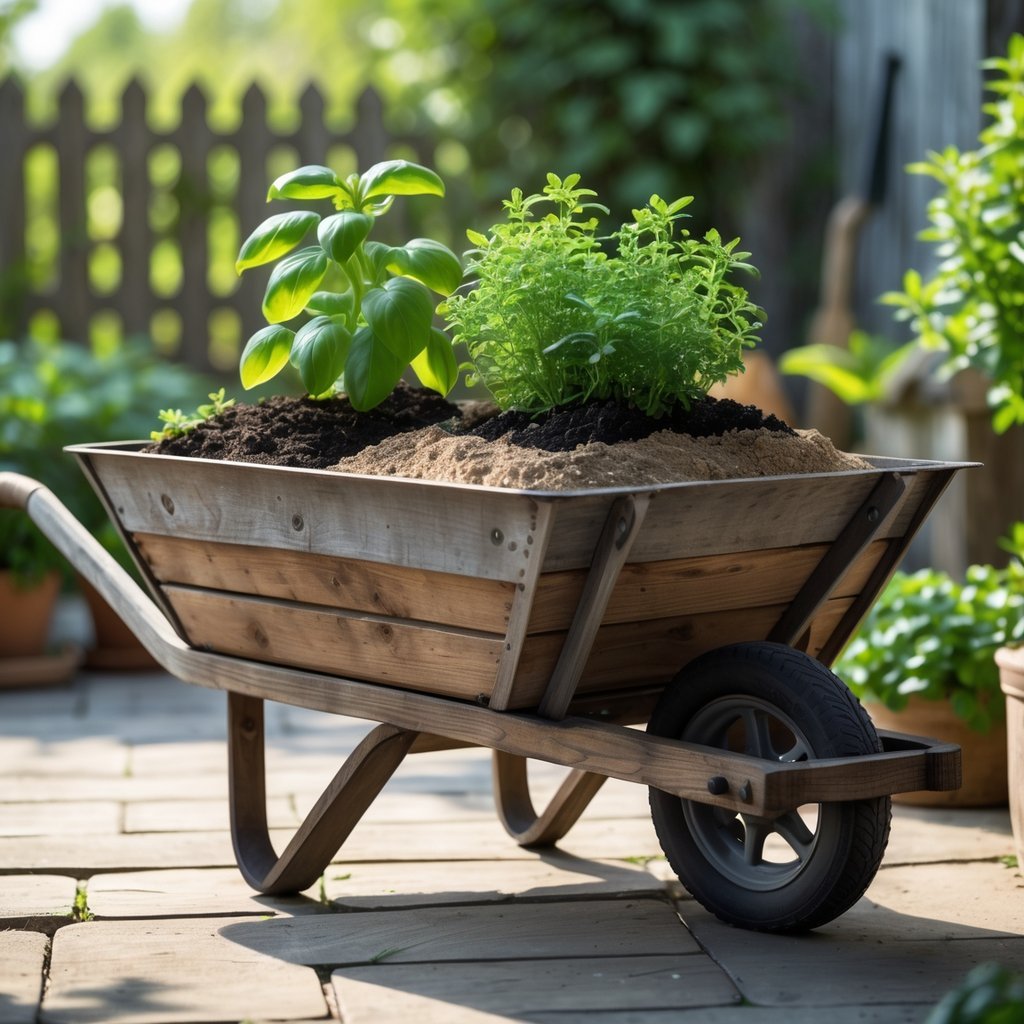
Create drainage by lining the wheelbarrow with coarse gravel, then add a layer of potting mix topped with compost. This layered soil keeps roots healthy and reduces waterlogging.
Plant basil where it will get the most sun, thyme in drier spots, and mint at the edge or in a small buried pot to stop spreading. Water consistently but avoid soggy soil to keep flavors strong.
6) Old Wheelbarrow painted with chalkboard paint for garden notes
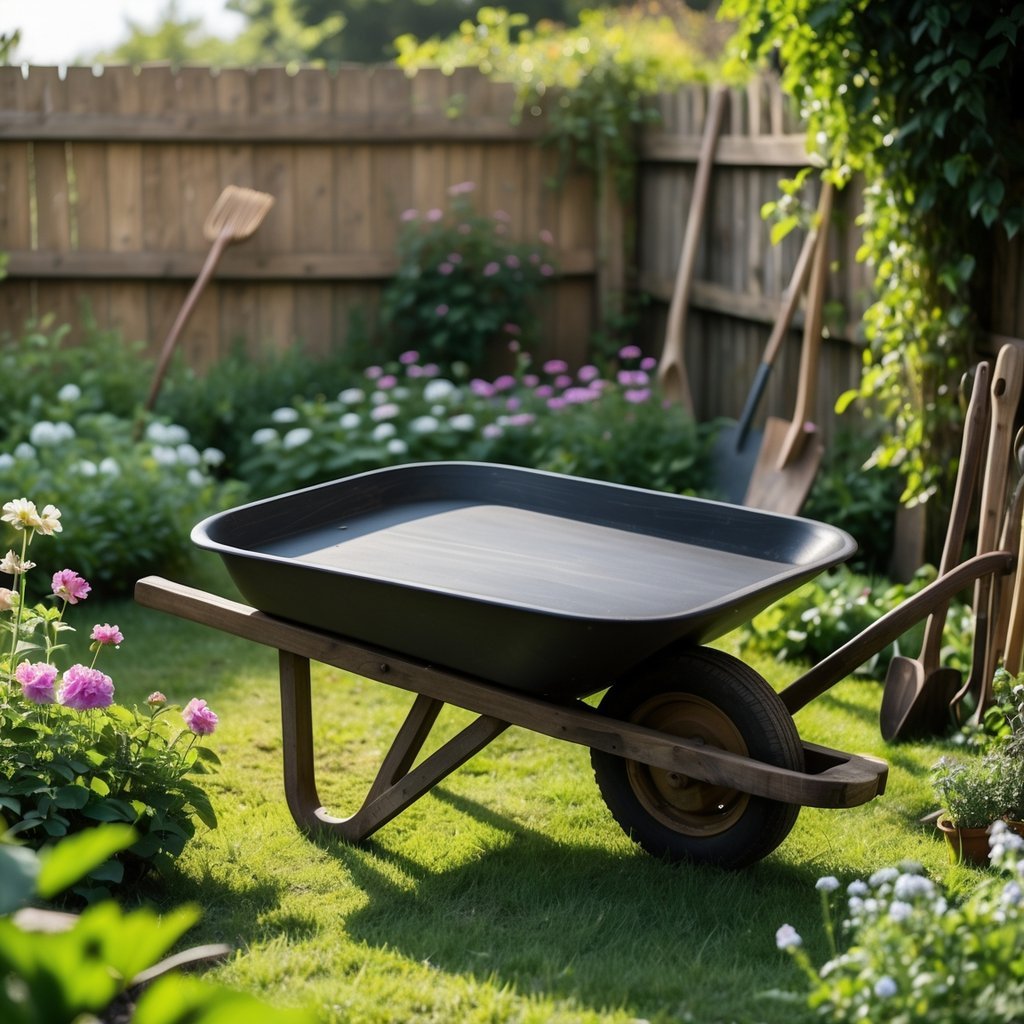
Paint the inside or side of your wheelbarrow with chalkboard paint to make a reusable garden sign. You can write plant names, watering schedules, or a simple welcome message.
The surface stays useful through seasons. Wipe it clean with a damp cloth and update notes as needed.
Place the wheelbarrow near beds or paths so your notes are easy to see. This adds function and a rustic look without much cost.
7) Mixed Texture Display combining bushes and potted plants
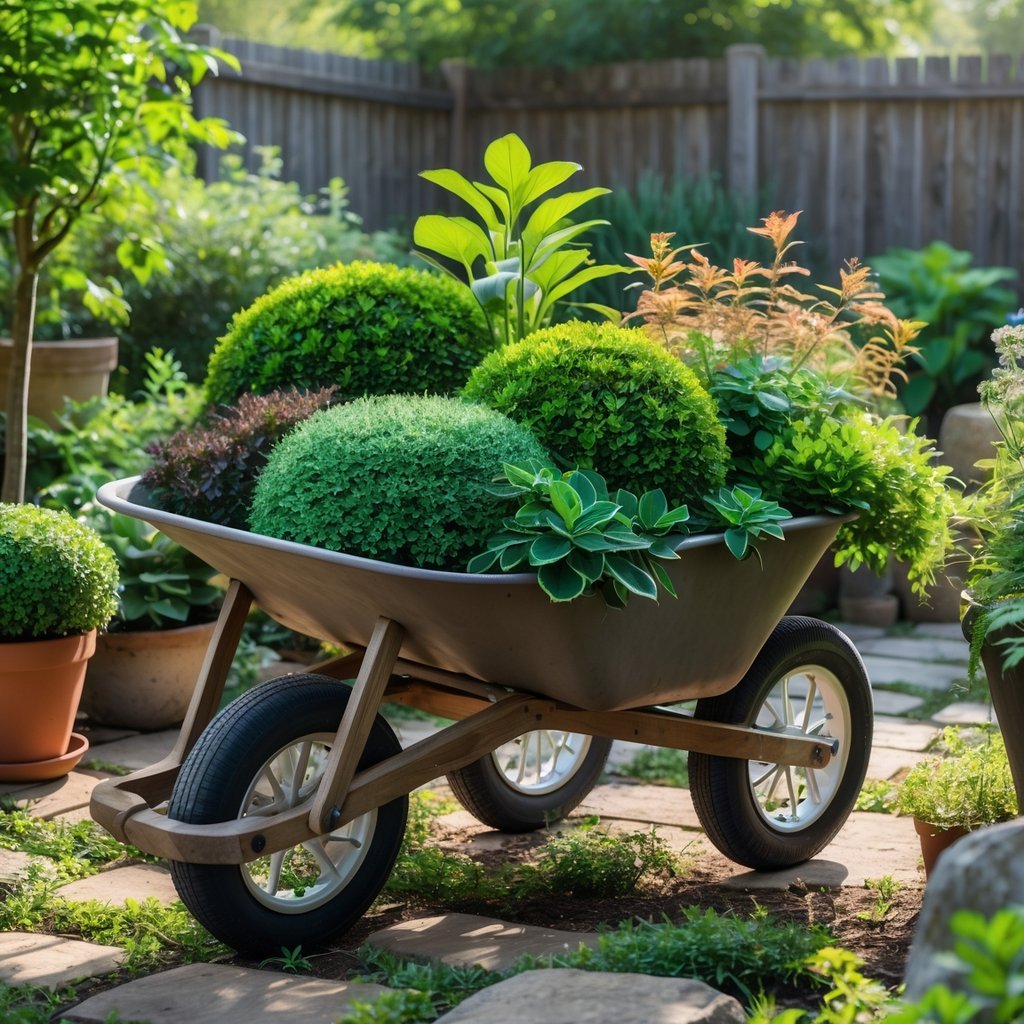
You can mix small shrubs with potted annuals to add depth and contrast in a wheelbarrow.
Place a low-growing bush at the back and several small pots in front for layered texture.
Choose plants with different leaf shapes and heights to keep the display interesting.
Combine a rounded boxwood or dwarf holly with spiky grasses and soft, flowering pots for balance.
Keep soil and watering needs similar to reduce extra work.
Group plants that share light and moisture requirements so your display stays healthy.
8) Rustic Wheelbarrow Fountain adding water element and charm
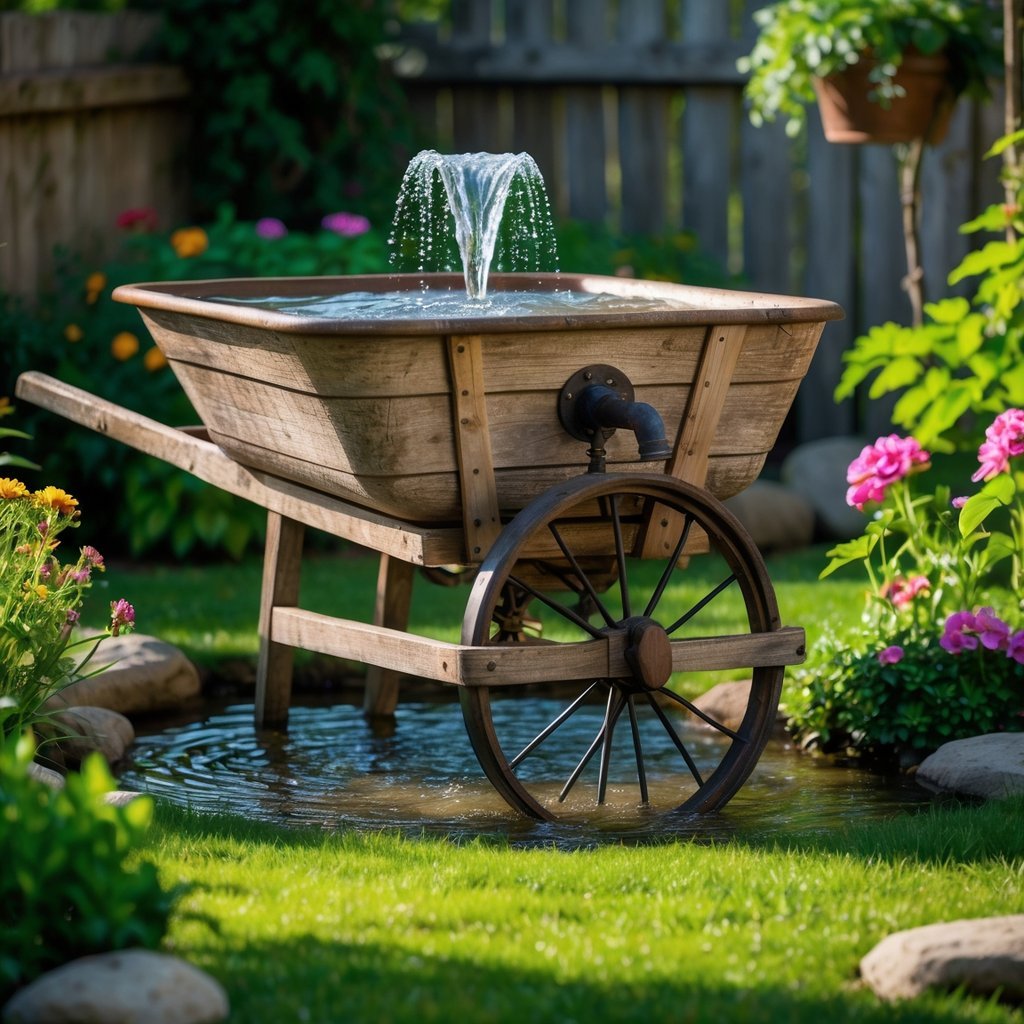
You can turn an old wheelbarrow into a simple fountain with a small pump and a liner. Place the pump in the tub, hide tubing with stones, and let water trickle over rusted edges for a natural sound.
Position the fountain near seating or a path so you and visitors enjoy the scent and movement. Maintain the pump and clean leaves seasonally to keep water clear and flow steady.
9) Wheelbarrow Overflowing with wildflowers for a natural look
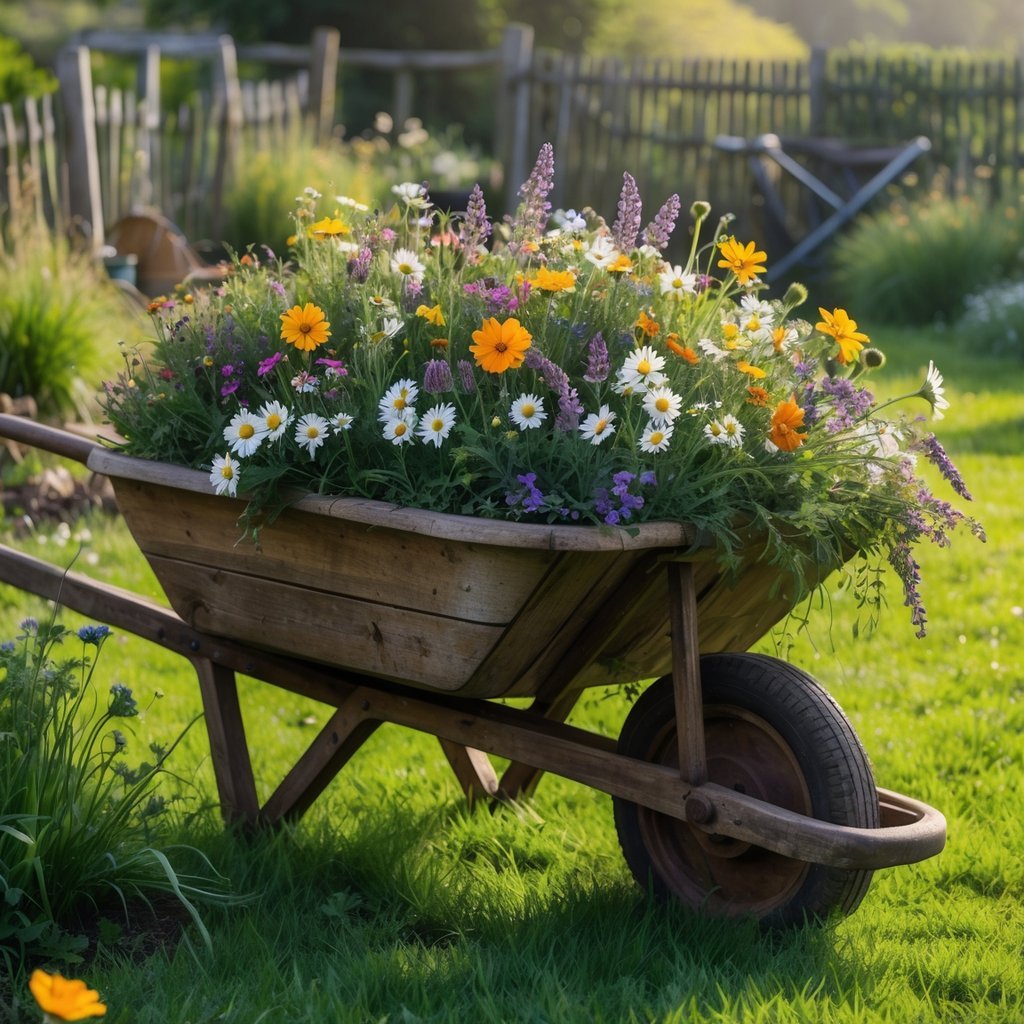
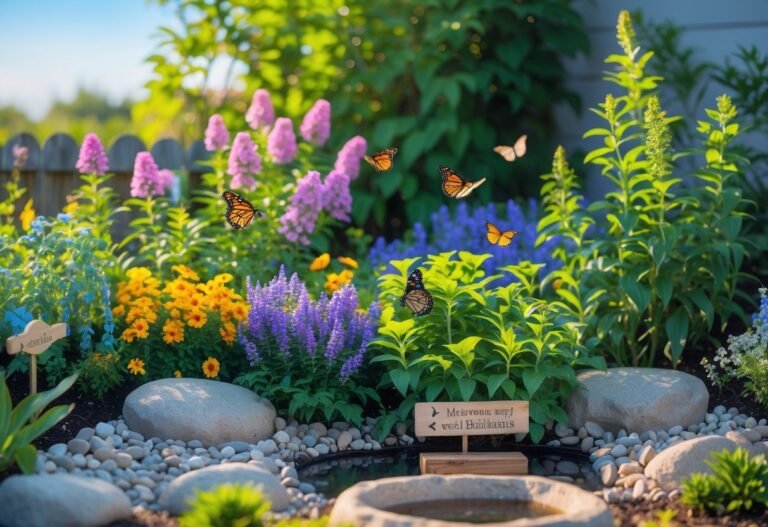
Fill an old wheelbarrow with well-draining soil and a mix of native wildflowers for an easy, low-maintenance display. You’ll get varied colors and shapes that attract bees and butterflies without much fuss.
Plant taller blooms toward the back and trailing varieties near the front so flowers spill over the edge. Move the wheelbarrow to tweak light and view, and water only when the soil feels dry to keep plants healthy.
Essential Tips for Styling Wheelbarrow Gardens
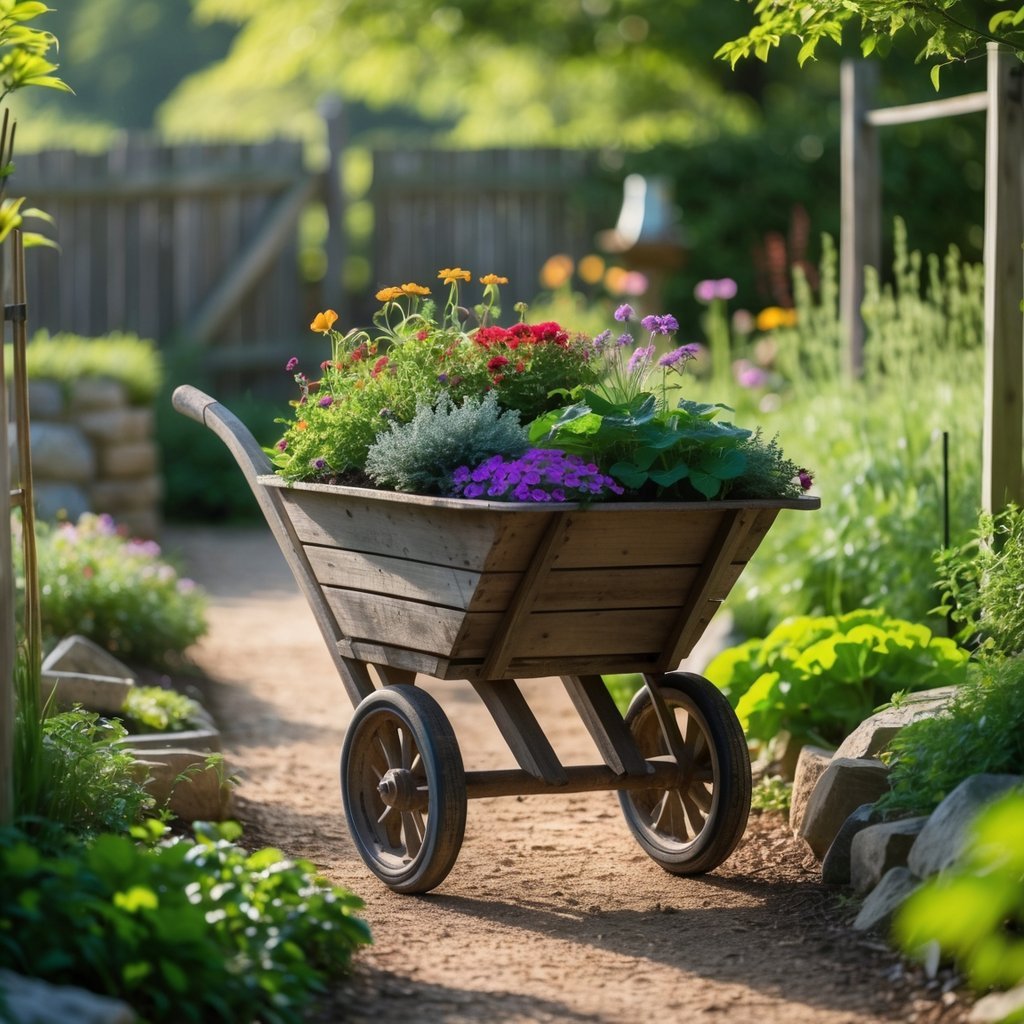
Pick a wheelbarrow that fits your space and plant choices. Think about drainage, stability, and how the wheelbarrow’s finish will age in your yard.
Choosing the Right Wheelbarrow Materials
Choose metal if you want a vintage, rusted look that adds texture. Metal holds shape well but can rust through over time, so line the basin with pond liner and add drainage holes to protect soil and roots. For a longer-lasting rusted finish, let natural patina develop rather than sanding it off.
Pick wood for a warm, cottage feel. Cedar or redwood resist rot better than pine. Seal the interior with non-toxic wood sealer, then add gravel at the bottom for drainage before potting mix. Replace boards that split to prevent soil loss.
If you use an old wheelbarrow, check the wheel and handles for balance. Remove loose paint and sharp edges to protect plants and hands. Small repairs let you safely move the planter when needed.
Blending Rustic Elements with Modern Landscapes
Place a rustic wheelbarrow near clean lines like a concrete path or geometric raised beds to create contrast. Let low, spilling plants such as petunias or lobelia hang over the rim to soften the transition between old and new.
Use a limited color palette to tie the wheelbarrow to modern features. Match one accent color from nearby cushions, pots, or plant foliage to a flower or painted trim on the wheelbarrow. This creates cohesion without losing the rustic charm.
Mix plant types for texture: succulents and low grasses give structure, while seasonal annuals add bursts of color. Keep taller plants toward the back so the wheelbarrow reads as a focal point rather than a cluttered container.
Maintenance and Longevity of Rustic Wheelbarrow Gardens
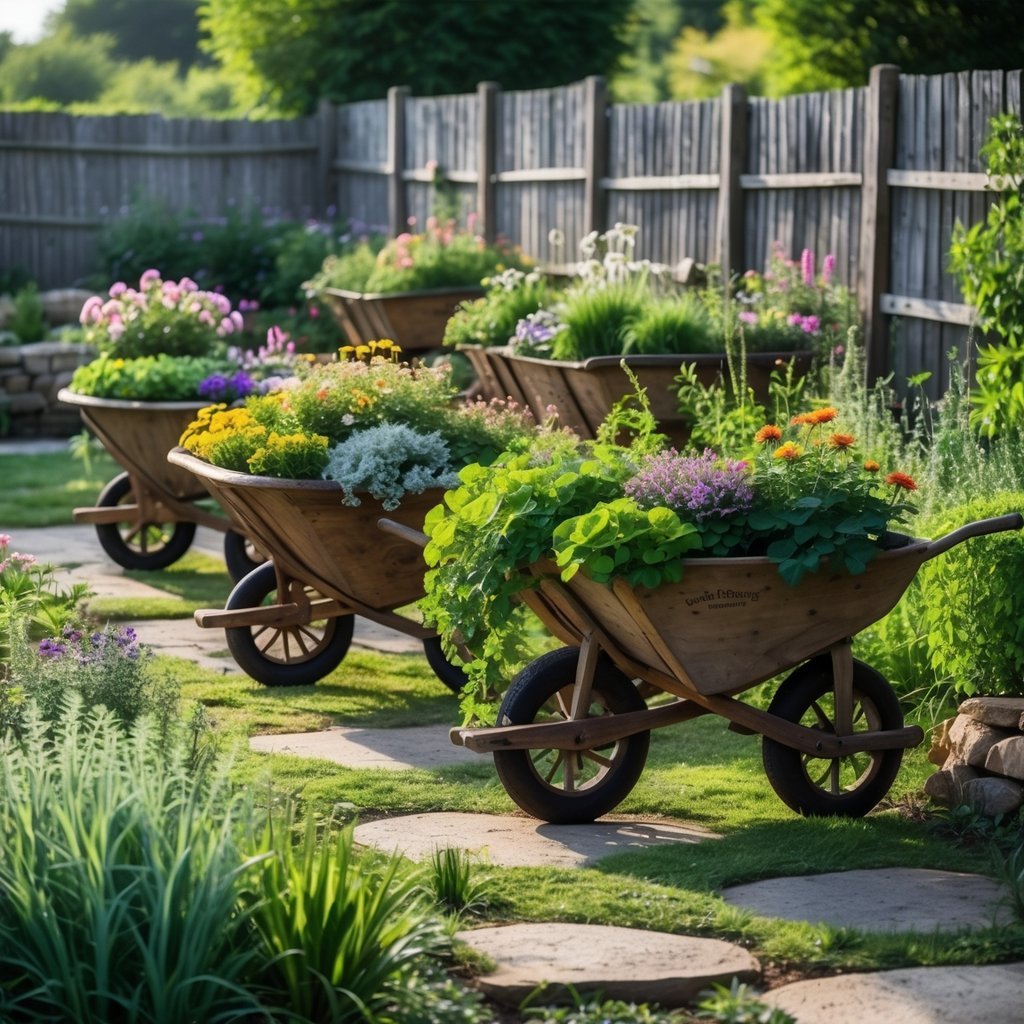
Keep metal and wood protected, replace soil every 1–2 years, and plan plants by season to reduce stress and rot. Small, regular checks prevent big repairs and keep your display looking intentional.
Protecting Against Weather and Wear
Inspect the wheelbarrow frame and tub monthly for rust, loose bolts, or rotting wood. For metal tubs, sand any flaky rust, prime with a rust-inhibiting primer, and paint with outdoor enamel to slow corrosion. For wooden tubs, sand rough spots and treat with a waterproof wood sealer in spring and again midseason.
Raise the wheelbarrow off wet ground using bricks or a pallet to avoid constant moisture at the base. Replace or tighten any corroded fasteners and lubricate the wheel axle once per season. Use a breathable fabric cover during heavy rain or snow, not plastic, to avoid trapping moisture.
Seasonal Planting and Care Recommendations
Change potting mix every 12–24 months to refresh nutrients and reduce compaction. Use a well-draining mix: combine equal parts potting soil, coarse sand, and compost for flowers; use cactus mix or added perlite for succulents.
In spring, plant sun-loving herbs and annuals, and top-dress with 1–2 inches of compost. In summer, water early morning and check drainage weekly; move the wheelbarrow to partial shade during heat waves. In fall, pull frost-tender plants, cut back perennials, and swap in pansies or winter greens if you want color. For winter storage, empty soil into larger beds or pots, clean the tub, and store the wheelbarrow under cover to protect structural parts.
Frequently Asked Questions
These answers show practical steps and clear plant picks. They cover repurposing, styling, and DIY tips for wheelbarrow planters like a spilled flower cascade, succulent layers, marigolds, fairy gardens, and herb beds.
How can I repurpose an old wheelbarrow into a rustic garden planter?
Clean out dirt and remove loose rust, then drill drainage holes in the bottom to prevent waterlogging. Line the basin with landscape fabric and add a layer of gravel for extra drainage before filling with potting mix.
Place the wheelbarrow where it will be visible and level it with bricks or pavers so it sits steady. Paint or leave the patina intact depending on the look you want; sealed patina keeps the rustic feel without flaking.
What are some effective ways to use a vintage wheelbarrow as a decorative piece in my garden?
Position a vintage wheelbarrow as a focal point near a path, porch, or entrance to draw the eye. Fill it with a seasonal spilled flower cascade or a cluster of marigolds for bright color and low maintenance.
Use smaller props like a fairy garden setup or a few stacked terra-cotta pots to add charm. Group it with other rustic items—wooden crates, milk cans, or a stone border—to reinforce the vintage theme.
Which plants are best suited for growth in a wheelbarrow garden to achieve a rustic aesthetic?
Choose plants that suit shallow containers: succulents, trailing annuals (petunias, lobelia), and compact herbs (basil, thyme, mint). Marigolds work well for color and pest control, while succulents give a low-water, textured patina look.
Mix heights and textures: a central taller plant, mid-height herbs, and trailing spillers at the edges for the spilled flower cascade effect. Use plants with similar light and water needs.
Can you provide tips for DIY projects to convert a large wheelbarrow into a garden planter?
Measure the wheelbarrow and plan a soil depth of at least 6–12 inches for herbs and annuals; increase depth for larger roots. Reinforce weak seams with exterior-grade wood strips or metal brackets before filling.
Add handles or wheels if you want mobility, and protect metal from soil contact with a plastic liner. For a rustic finish, distress paint with sandpaper or apply a thin stain that lets the metal show through.
What are the steps to properly transform a wheelbarrow into an eye-catching container garden?
Start by cleaning, repairing, and drilling drainage holes. Add a layer of gravel, then landscape fabric, and finally a good-quality potting mix tailored to your plants.
Plant using a design: tallest in back or center, mid-height next, and trailing plants at the edge to create a cascade. Mulch the top lightly to retain moisture and reduce weeds.
How can a wheelbarrow be incorporated into outdoor garden decor while maintaining a rustic theme?
Keep materials natural: weathered wood, unpainted metal, stone, and aged pottery complement a rustic wheelbarrow. Use simple color schemes—earth tones and muted greens—to keep the look cohesive.
Rotate seasonal displays: marigolds for summer color, succulents for dry months, and a fairy garden or herbs near the kitchen door for function and charm.