Traditional Landscape Ideas for a Grand Entrance
You want your entrance to feel timeless, welcoming, and thoughtfully arranged. This article shows how classic shapes, strong symmetry, and traditional materials come together to create a grand, balanced approach that suits many homes and styles.
You will learn practical ideas for shaping paths, planting signature shrubs and flowers, and adding classic focal points that give your home instant curb appeal.
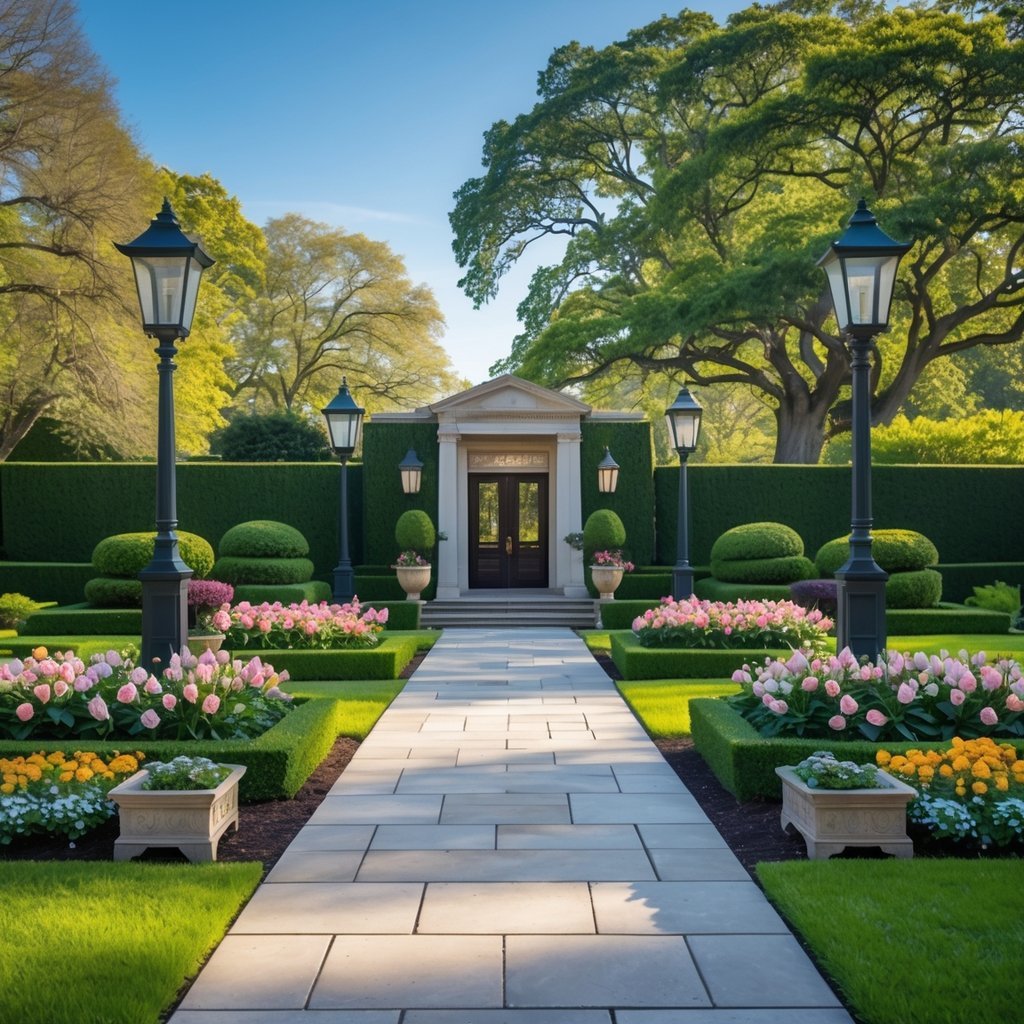
Expect guidance on layout, plant choices, hardscape options, and lighting that work together to make a strong first impression. Use these ideas to plan an entrance that feels finished and inviting without being fussy.
1) Symmetrical boxwood hedges lining the pathway
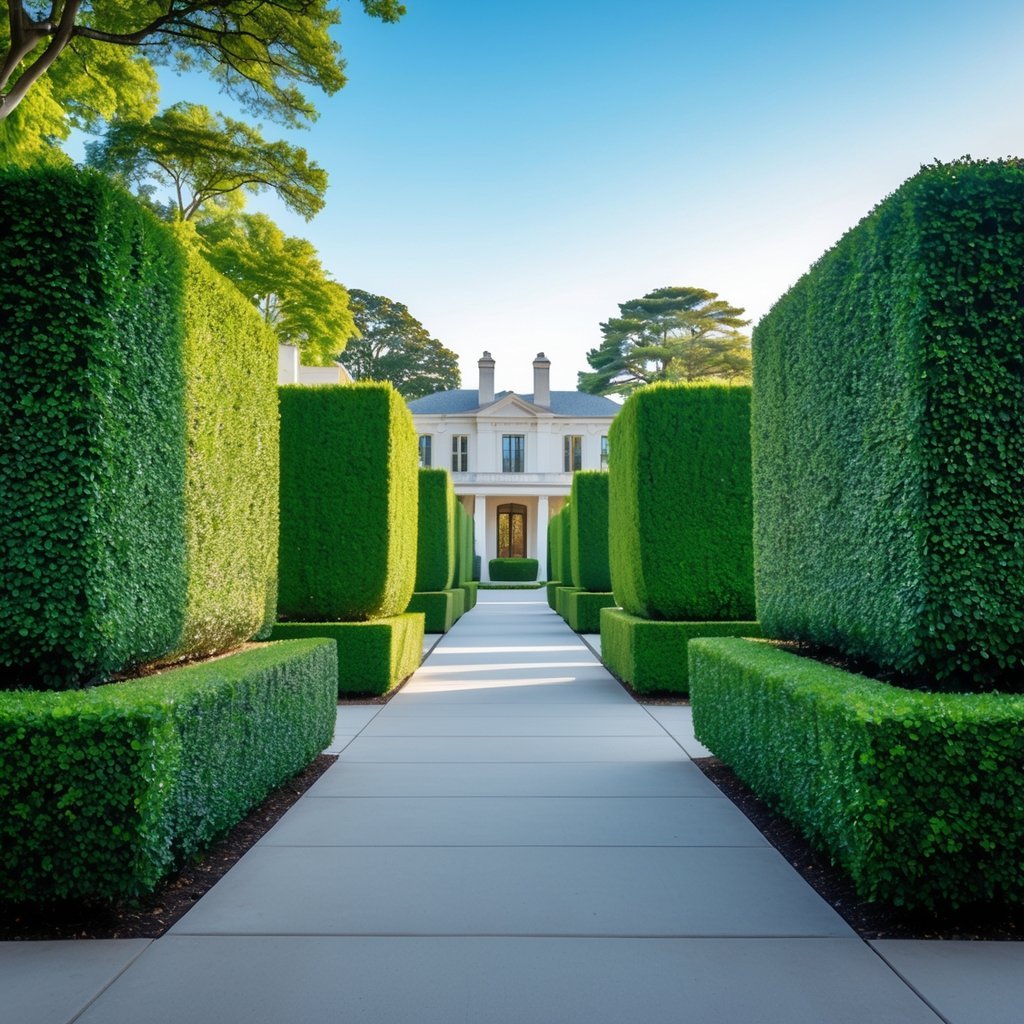
You can create a formal, balanced entrance by planting low boxwood hedges on both sides of your path.
Trim them to a consistent height and shape to guide the eye toward your front door and add clear structure.
Boxwoods tolerate pruning and stay dense, so you’ll get a tidy edge year-round.
Space plants evenly and allow room for growth to keep the line neat without crowding.
2) Classic brick or stone walkway with clean edges
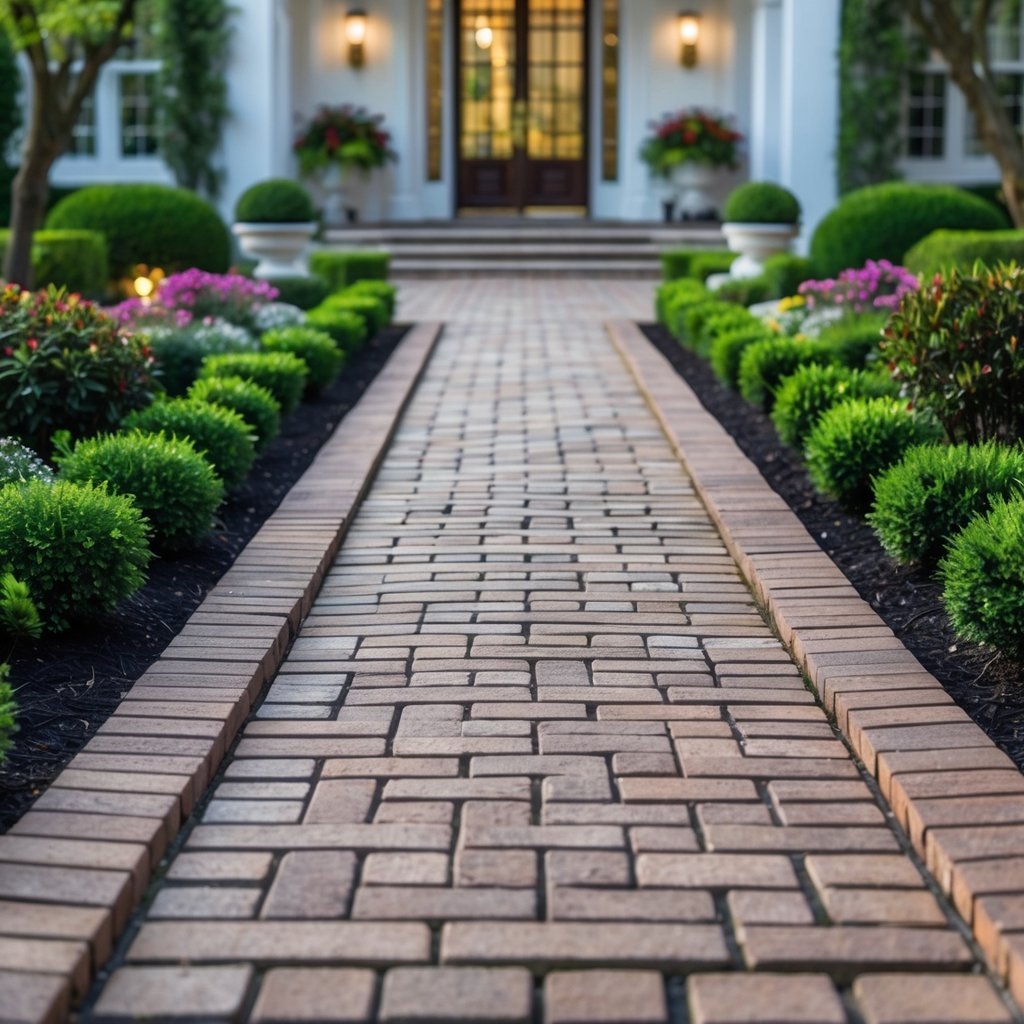
Choose brick or stone for a timeless path that suits many home styles. You get durable, low-maintenance material that holds up to weather and foot traffic.
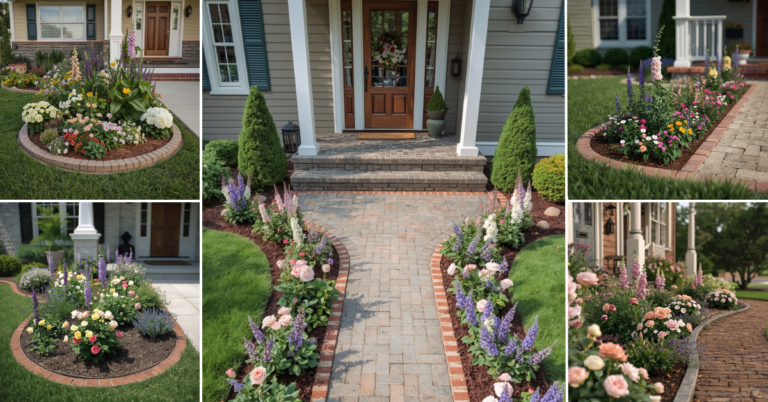
Keep edges straight and well-defined using pavers, metal, or cobblestone. Clean edges make the entrance feel formal and organized.
Add low planting or simple lighting along the sides to frame the walk without clutter. This keeps focus on the path and guides visitors to your door.
3) Victorian-style wrought iron gate with ornate details
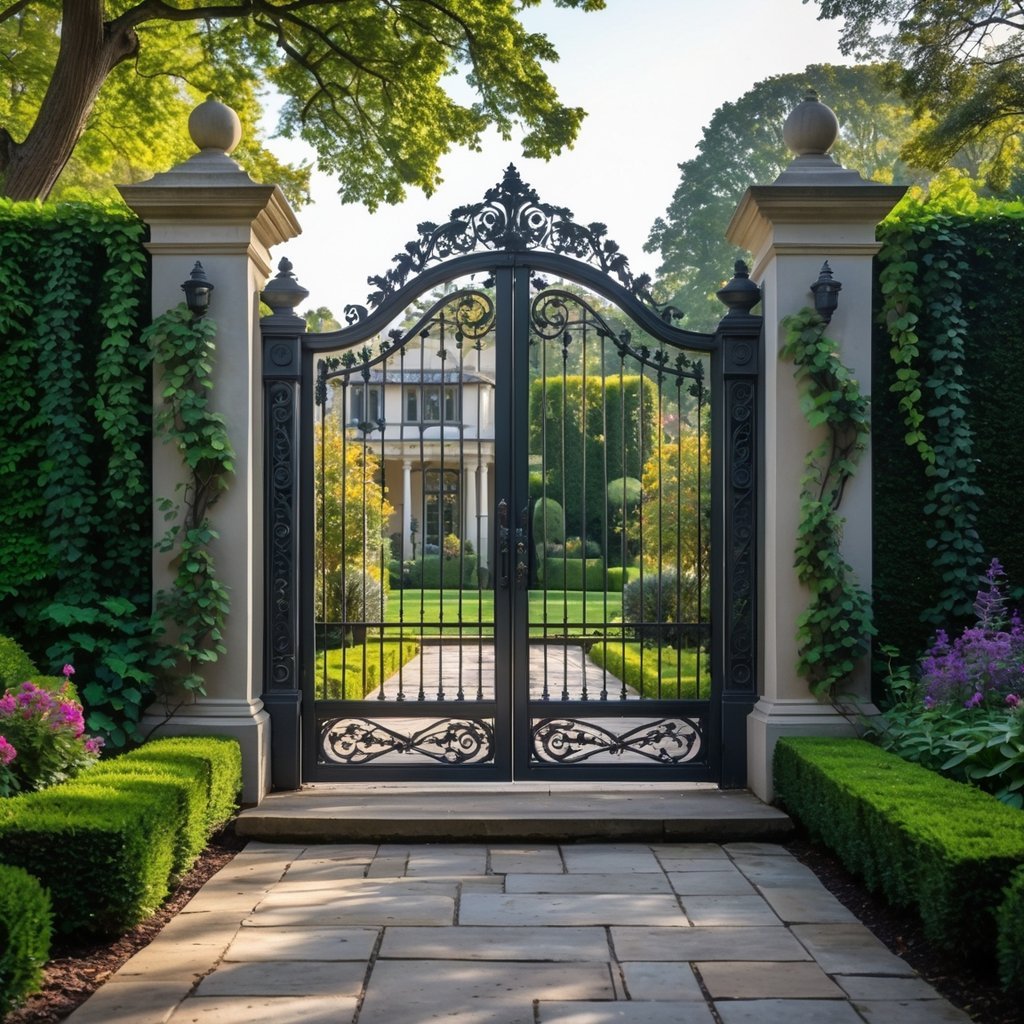
Choose a Victorian-style wrought iron gate to give your entrance a formal, historic feel. The ornate scrollwork and finials add visual weight without blocking sightlines.
Match the gate to stone pillars or brick walls for a cohesive look. Add climbing roses or boxwood hedges on either side to soften the metal and guide visitors toward your door.
4) Tiered fountain as a central focal point
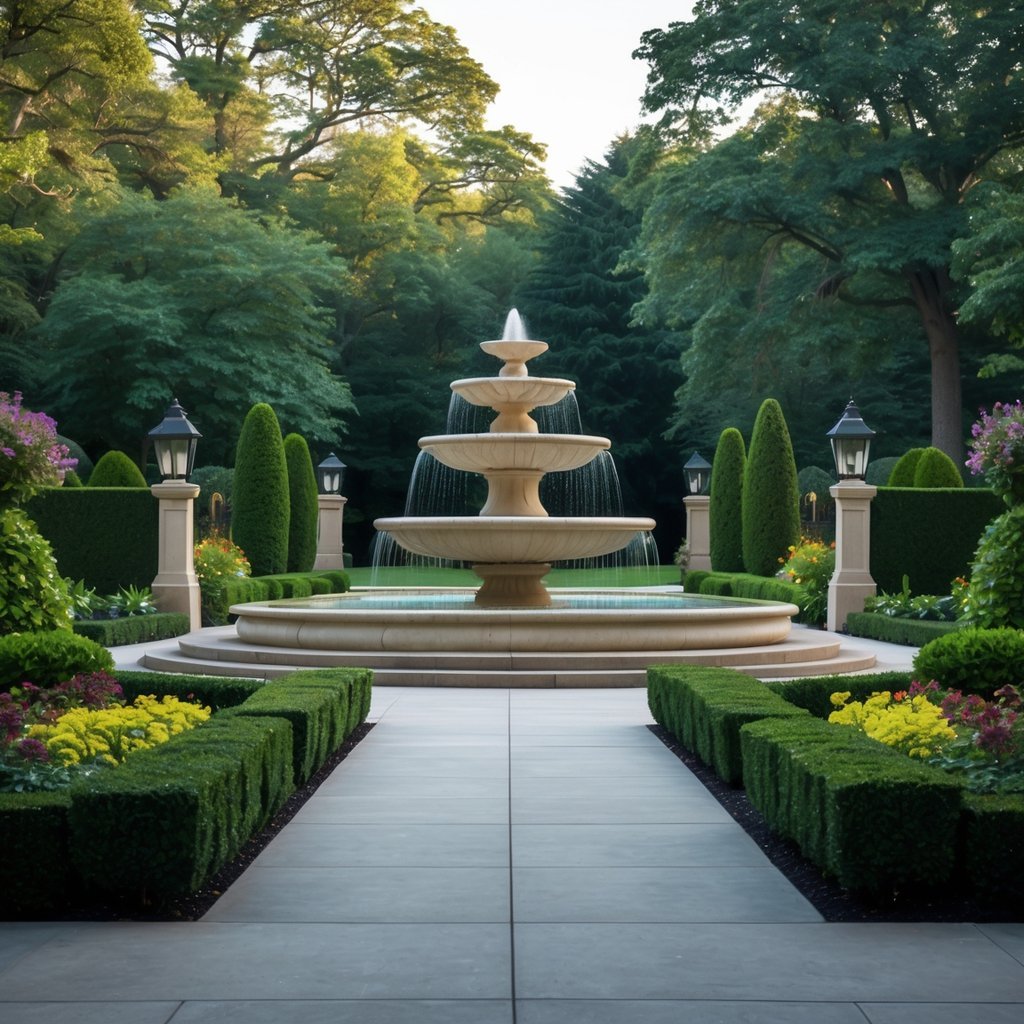
Place a tiered fountain at the center of your entrance to draw the eye and set a formal tone.
The layered water flow adds gentle sound that masks street noise and creates calm.
Surround the fountain with symmetrical paths, low hedges, or seasonal flowers to reinforce balance.
Choose stone or cast materials that match your architecture for a cohesive, timeless look.
5) Climbing roses on a wooden arbor or trellis
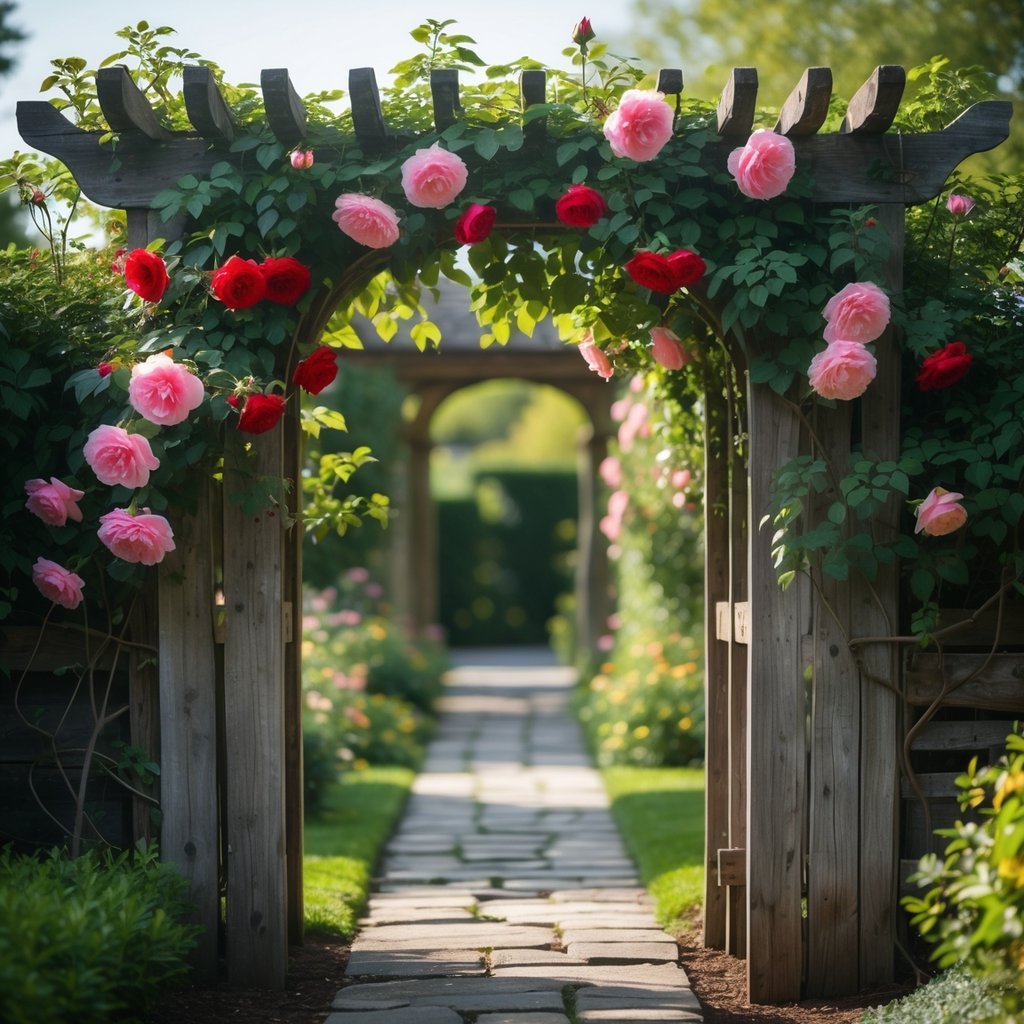
You can frame an entrance with a wooden arbor covered in climbing roses to add height and charm. Choose vigorous varieties and place the structure where roses get full sun.
Train canes along the trellis and tie them gently as they grow. Prune each year to keep blooms strong and the shape neat.
Use rot-resistant wood and secure posts deeply for long life. Add mulch and regular feeding to support heavy flowering.
6) Formal parterre garden with geometric patterns
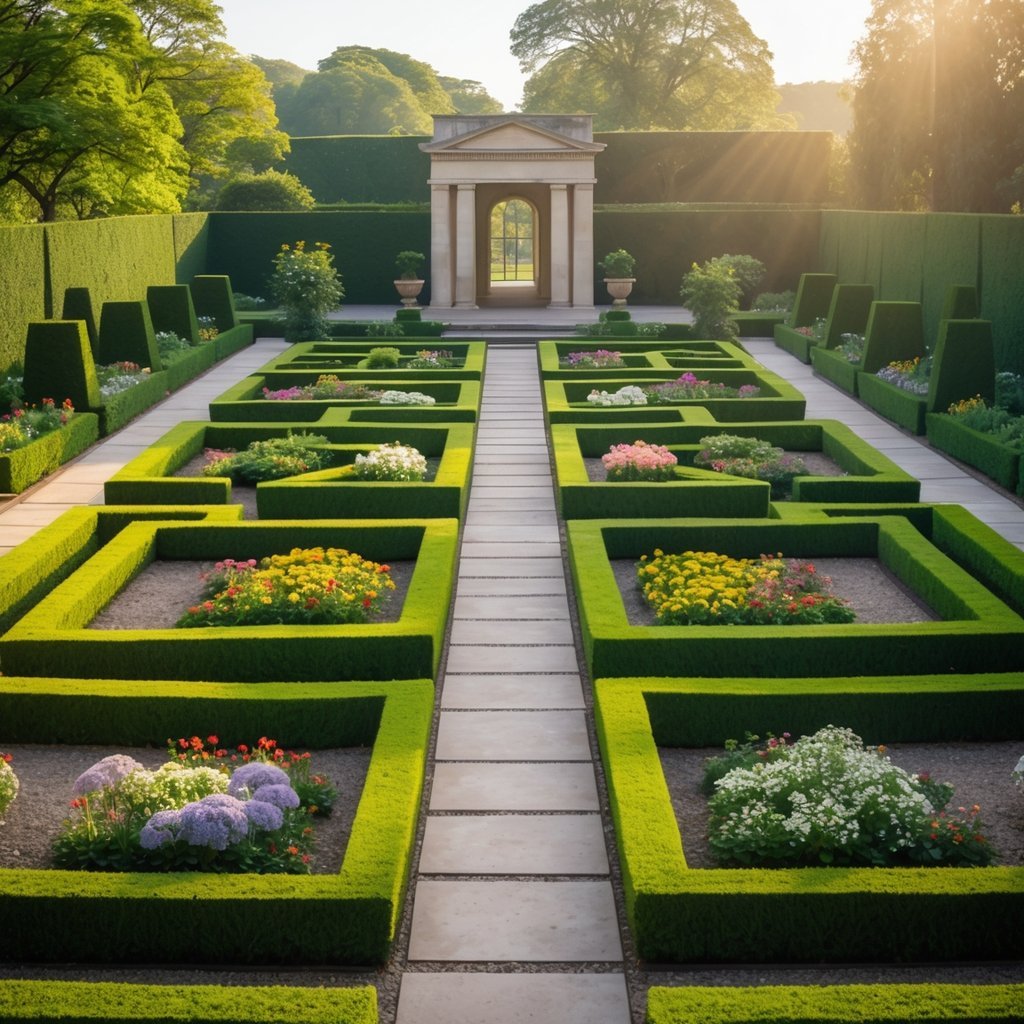
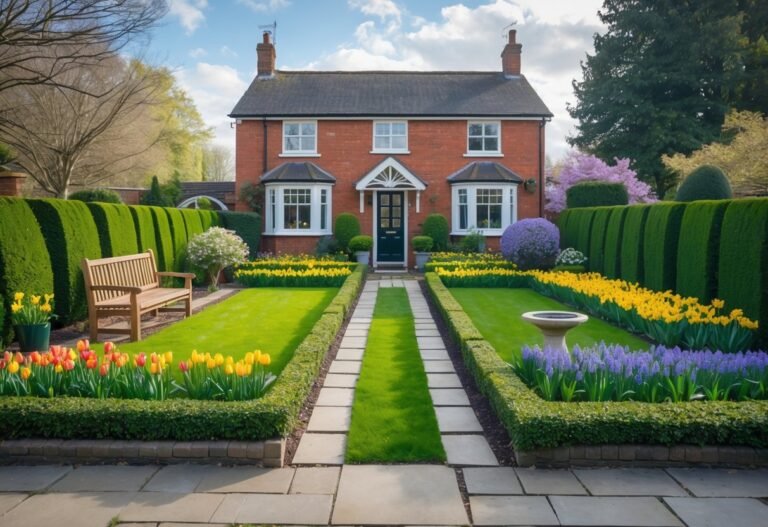
You can create a strong, formal entrance using a parterre with crisp geometric beds and low hedges.
Aim for symmetry along a central axis so your layout reads clearly from the house or steps.
Use dwarf boxwood or similar low-growing shrubs to outline shapes like squares, diamonds, or scrolls.
Fill the compartments with gravel, seasonal flowers, or contrasting groundcover for neat color and texture.
Keep paths straight and wide enough for easy access and maintenance.
Regular clipping and simple irrigation will preserve the sharp, formal look.
7) Traditional lantern-style pathway lighting
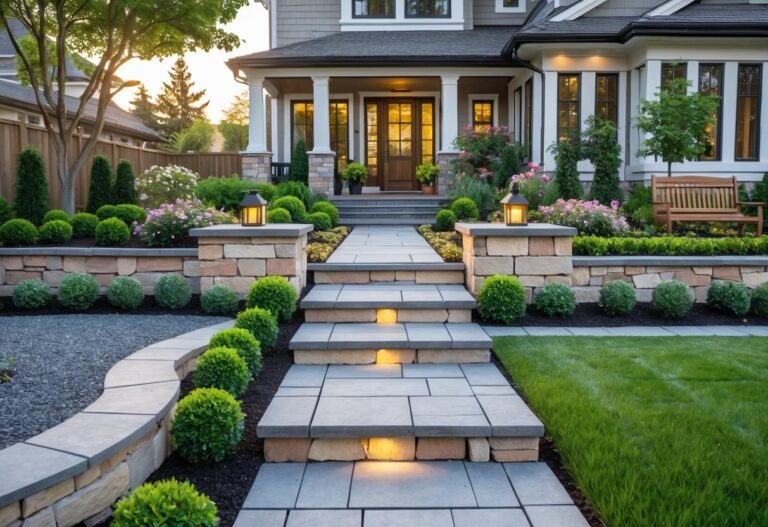
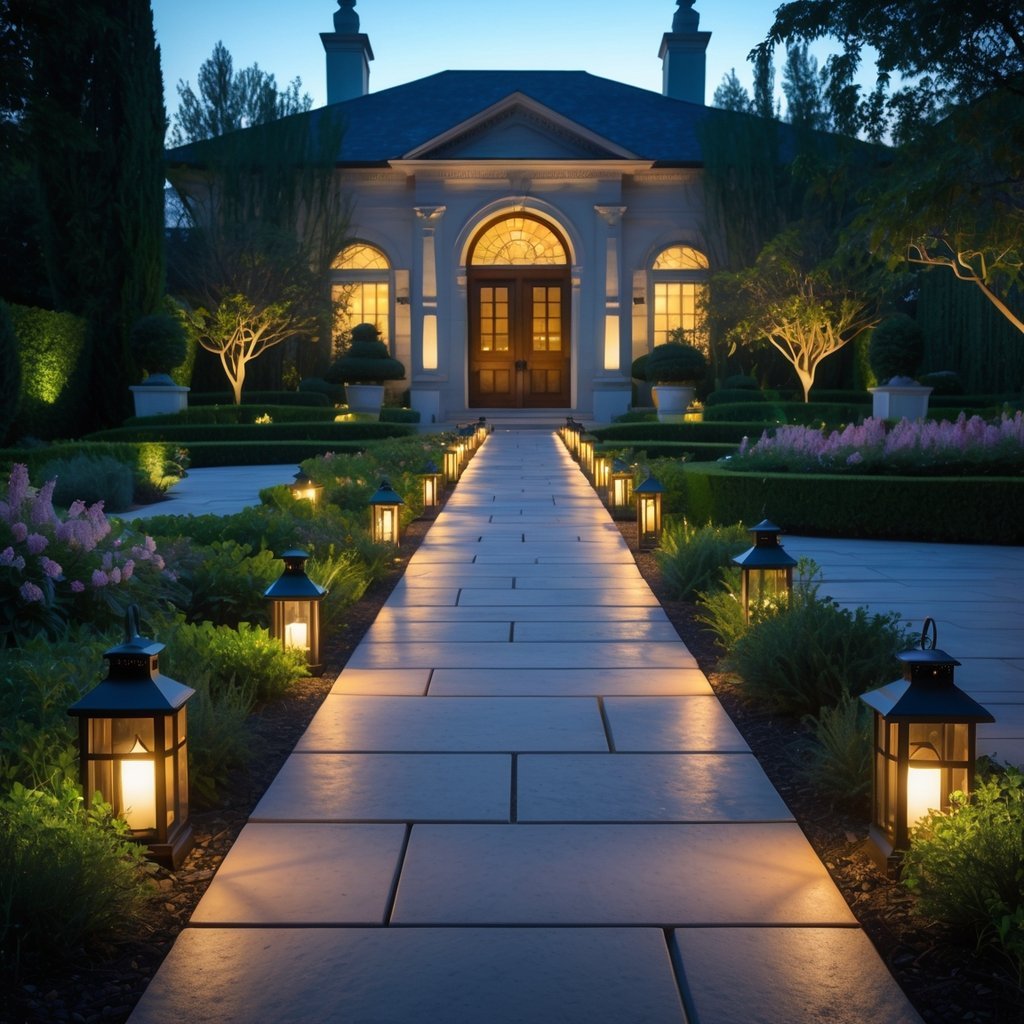
Choose lantern-style posts to give your entrance a classic, welcoming look. They guide guests and highlight your landscaping while staying true to a traditional aesthetic.
Place fixtures at regular intervals or near steps and curves for safe, even illumination. Use warm white bulbs (2700–3000K) to keep the glow inviting and consistent with period design.
Select durable, weather-resistant materials and finishes that match your home’s trim. Solar or hardwired options both work; pick what fits your budget and maintenance plans.
8) Neatly trimmed evergreen shrubs
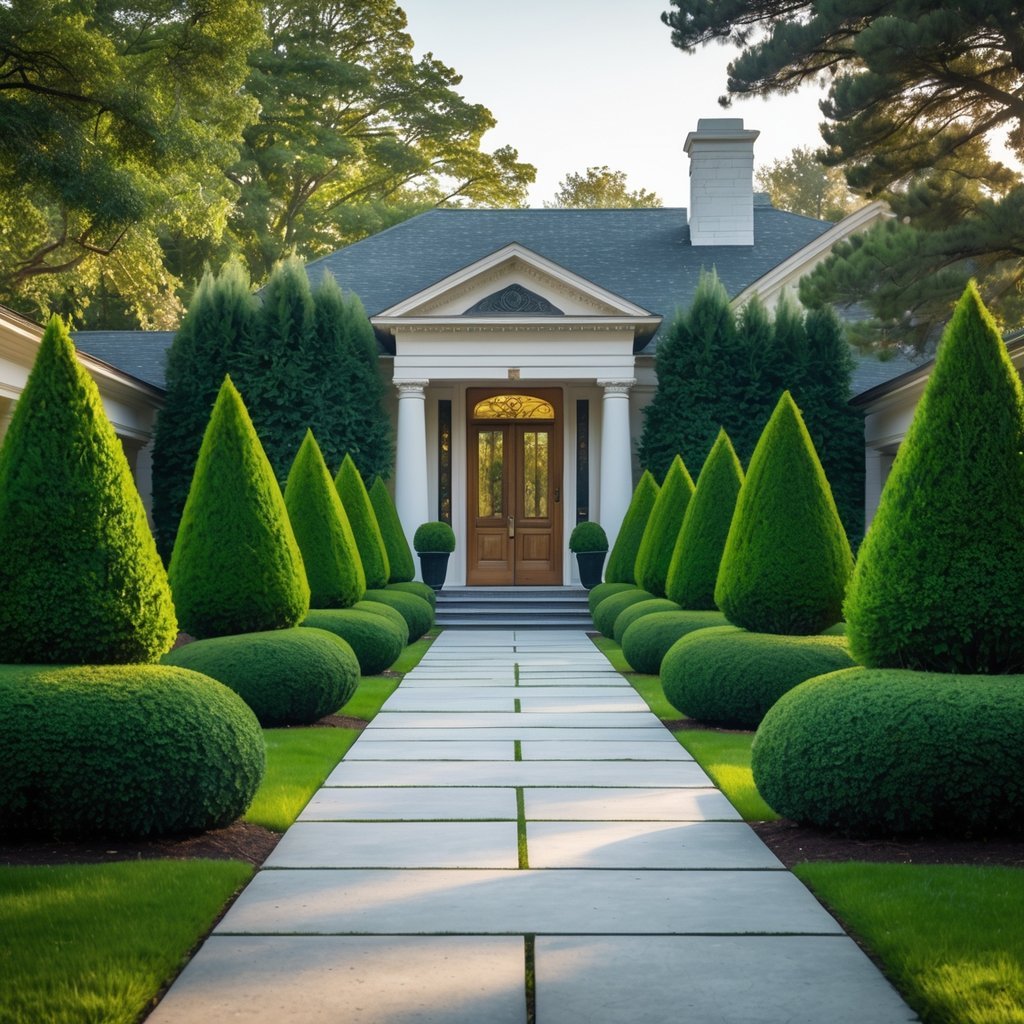
You can use neatly trimmed evergreen shrubs to frame your entrance and give a formal, tidy look. They keep year-round color and require little seasonal change.
Plant them in pairs or repeat a single variety for symmetry. Trim regularly to maintain shape and to avoid blocking walkways or windows.
Choose slow-growing types like boxwood or dwarf holly for less pruning. Mulch and water young plants until established to ensure strong, even growth.
9) Flower beds with peonies and hydrangeas
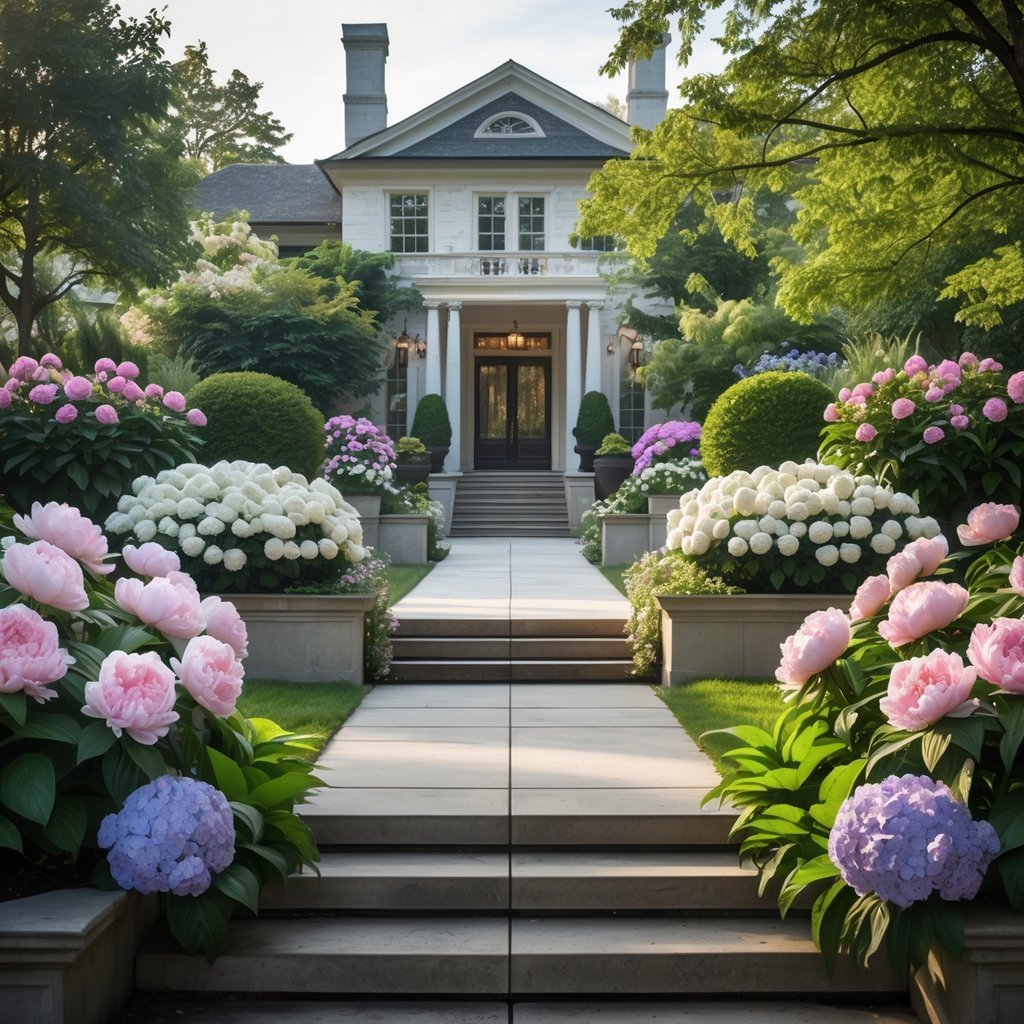
Plant peonies near the front for bold, long-lasting blooms that add structure and color. Pair hydrangeas behind or beside them to soften the look with large, clustered flowers.
Choose varieties that match your light and soil conditions so both plants thrive. Use mulch and regular watering to keep roots cool and support steady blooms.
Space plants to allow air flow and easy maintenance. This keeps the bed tidy and reduces disease risk while giving your entrance a classic, inviting feel.
10) Vintage-style stone benches
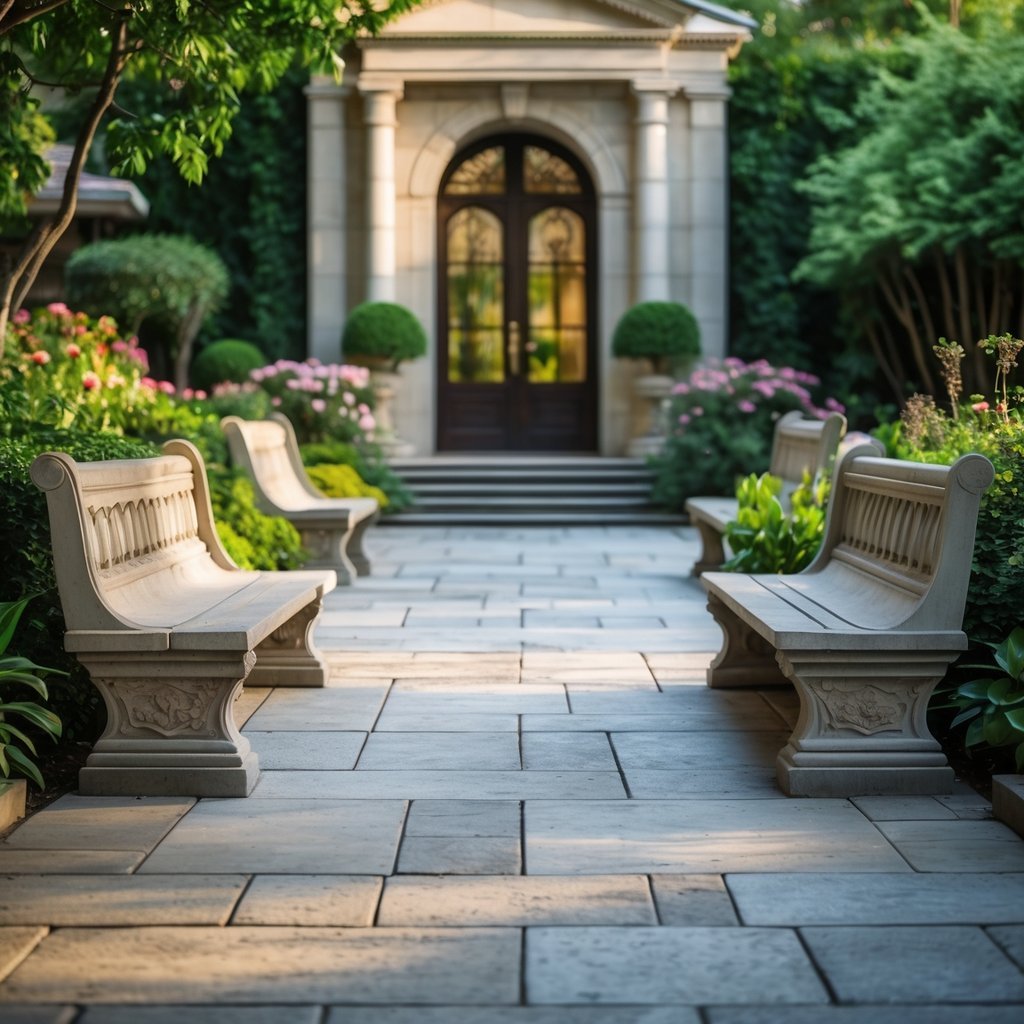
Place a vintage-style stone bench near your entrance to add quiet elegance and weight to the space. You can use cast stone or limestone for a classic look that lasts.
Position the bench to face a focal point, like a pathway or planting bed, so it invites pause. Keep maintenance low with occasional gentle cleaning to preserve the patina.
Design Principles for a Grand Entrance
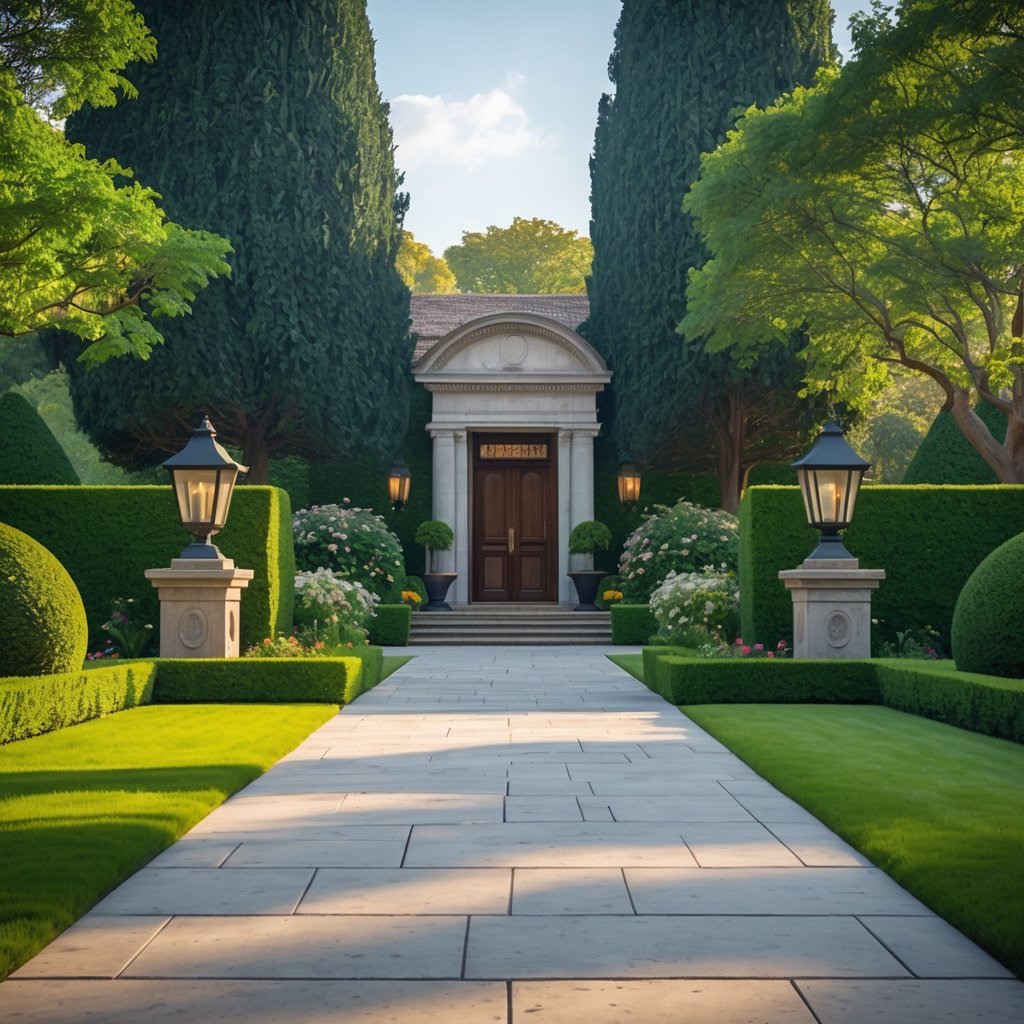
Focus on clear lines, repeatable shapes, and a controlled palette so visitors notice the door and the path leading to it. Use durable materials and plant choices that fit your home’s size and style.
Balance and Symmetry
Place matching elements on either side of the path or doorway to create a formal, grounded look. For example, use identical planters, clipped shrubs, or stone pillars flanking the steps. This makes the approach feel intentional and guides the eye to the entry.
Keep scale consistent with your home. On a two-story house, choose taller plants or two-tiered urns. On a bungalow, keep elements lower and wider so nothing overwhelms the façade.
Use repetition to tie the space together. Repeat a single plant species, paving pattern, or lighting style at regular intervals down the walkway. That repetition reinforces the symmetry and simplifies maintenance.
Allow small asymmetries for practical needs. For instance, one side can house a mailbox or utility meter if you balance it visually with a sculpture or a taller plant on the other side.
Color and Texture Coordination
Pick a primary color family for large elements—evergreen foliage, stone, or brick—then add two accent colors in flowers or pots. This prevents a chaotic palette and highlights the door. Use neutral paving like gray or warm sand to anchor the colors.
Mix textures to add depth. Combine smooth stone steps with rough-cut boulders, glossy-leaf shrubs with fine-textured grasses, and matte terracotta pots with polished metal lanterns. Texture changes keep the approach interesting without adding more colors.
Match plant bloom times to avoid an empty look. Choose spring bulbs, summer perennials, and late-season shrubs so some color appears most of the year. Also pick low-maintenance varieties suited to your climate to keep the entrance looking sharp with little work.
Selecting Signature Plantings
Pick plants that give structure, year-round interest, and scale to your entrance. Focus on a small number of strong choices: a few strong trees, repeating shrubs, and accents that match your house size and local climate.
Choosing Focal Point Trees
Choose one or two trees to anchor your entrance. Use trees with clear trunks and a neat canopy so sightlines to the door stay open. Good choices include columnar oaks or serviceberries for medium-sized drives, and Japanese maple or small flowering crabapples for tight spaces.
Think about mature height and root behavior. Plant a tree at least half its mature canopy away from foundations and paved areas to avoid future damage. Match the tree to light and soil: full sun for oaks, part shade for maples.
Select for seasonal interest. Look for spring flowers, summer foliage color, fall leaf color, or attractive bark for winter. Stake young trees for one season and mulch 2–3 inches around the base, keeping mulch off the trunk.
Classic Shrub Borders
Create repeating shrub groups to frame walkways and gates. Use an odd number of plants in each group (3 or 5) to create a natural, balanced look. Choose evergreen shrubs like boxwood or yew for year-round structure, and mix in flowering shrubs such as hydrangea or rhododendron for seasonal color.
Space shrubs based on their mature width and prune to maintain clean lines. Leave 1–2 feet between a small boxwood’s mature spread; allow 6–8 feet for larger hydrangeas. Plant taller shrubs at the back with lower ones in front to keep sightlines and entry visibility clear.
Use a simple repeating palette across both sides of the entrance for cohesion. Add a few accent perennials or seasonal containers near the door to soften the transition without overcrowding the border.
Frequently Asked Questions
This section explains practical choices for plants, paths, gates, water features, and lighting. It gives clear steps for planting, layout, materials, and upkeep so you can build and keep a formal, traditional entrance.
What are the essential elements to include in a grand entrance landscape design?
Include a formal walkway of brick or natural stone with crisp, straight edges to guide visitors to your door. Line that path with symmetrical boxwood hedges to create structure and a classic look.
Add a focal point such as a tiered fountain centered on the approach or a Victorian-style wrought iron gate at the property line. Use a wooden arbor or trellis with climbing roses to frame the immediate entry and add height.
Hardscape elements should be durable and low-maintenance: choose frost-resistant stone, well-draining gravel under borders, and stainless or powder-coated metal for gates. Place lighting and irrigation during layout to avoid rework.
How can landscaping enhance the curb appeal of a home’s main entrance?
Define clear sightlines from the street to the front door with a straight or gently curved brick walkway. Symmetry—matching shrubs, planters, or lamps on both sides—gives a formal, polished appearance.
Use a focal feature like a fountain or ornate gate to create a memorable first impression. Layer plant heights: low edging, medium shrubs, and taller vertical accents to add depth without clutter.
Maintain consistent materials and colors that complement your home’s façade. Well-kept hardscape and clean lines signal quality and increase perceived value.
What are some plant species that thrive in entryway landscaping?
Boxwood (Buxus spp.) works well for low hedges and topiary; it tolerates pruning and keeps shape. Climbing roses (Rosa spp.) suit arbors and trellises when planted in full sun with good air flow.
Use evergreen accents like yew or holly for year-round structure. Add perennials such as lavender or salvia for seasonal color and fragrance that attract pollinators.
Pick plants suited to your hardiness zone and soil type. Group plants with similar water and light needs to simplify irrigation and care.
What are effective lighting strategies for creating a welcoming grand entrance at night?
Place low-voltage path lights along the walkway at regular intervals to ensure safe, even illumination. Use warm white LEDs (2700–3000K) to produce a soft, inviting glow.
Highlight the fountain and gate with upward-facing spotlights to add drama without glare. Add lantern-style wall lights by the door and motion-sensor fixtures near driveways for both style and security.
Aim lights downward where possible and shield bulbs to reduce light spill. Use timers and dimmers to conserve energy and maintain consistent scenes.
How does one incorporate symmetry and balance in traditional entrance landscape designs?
Mirror major elements on each side of the path: matching boxwood hedges, identical planters, and paired light fixtures. Keep spacing uniform to reinforce a formal rhythm as visitors approach.
Center a focal point—like the tiered fountain—on the main axis, then arrange secondary features evenly. Use repeated materials, such as the same brick paver and metal finish, to tie both sides together.
Vary plant texture and scale while keeping identical species or shapes across the axis to avoid monotony. Small asymmetries, like seasonal plantings, can add interest without breaking the formal balance.
What are the best practices for maintaining the grandeur of a traditional entrance landscape over time?
Prune boxwoods and clipped shrubs regularly to keep crisp lines and prevent overgrowth. Clean and reseal hardscape surfaces like brick or stone every few years to preserve joints and color.
Service the fountain seasonally: check pumps, clear debris, and winterize according to local freeze risk. Inspect gates and metalwork for rust or loose hardware and touch up paint or coatings as needed.
Adjust irrigation with the seasons and replace failed plants promptly to keep the formal composition intact. Keep records of planting dates, fertilizer, and pruning schedules to maintain consistent care.