California Landscape Ideas for Front Yard: 9 Drought‑Tolerant Designs for Modern Curb Appeal
You can make your front yard look great while saving water and time. This article shows simple, practical California landscape ideas that help you pick plants, hardscapes, and layouts that fit local conditions and your lifestyle.
You will learn how to create a low‑water, attractive front yard that boosts curb appeal and supports local ecology. Expect clear options for drought‑tolerant plantings, clean hardscape lines, edible accents, and easy maintenance so you can choose what works best for your street and climate.
1) Drought-tolerant succulent beds with agave and aloe
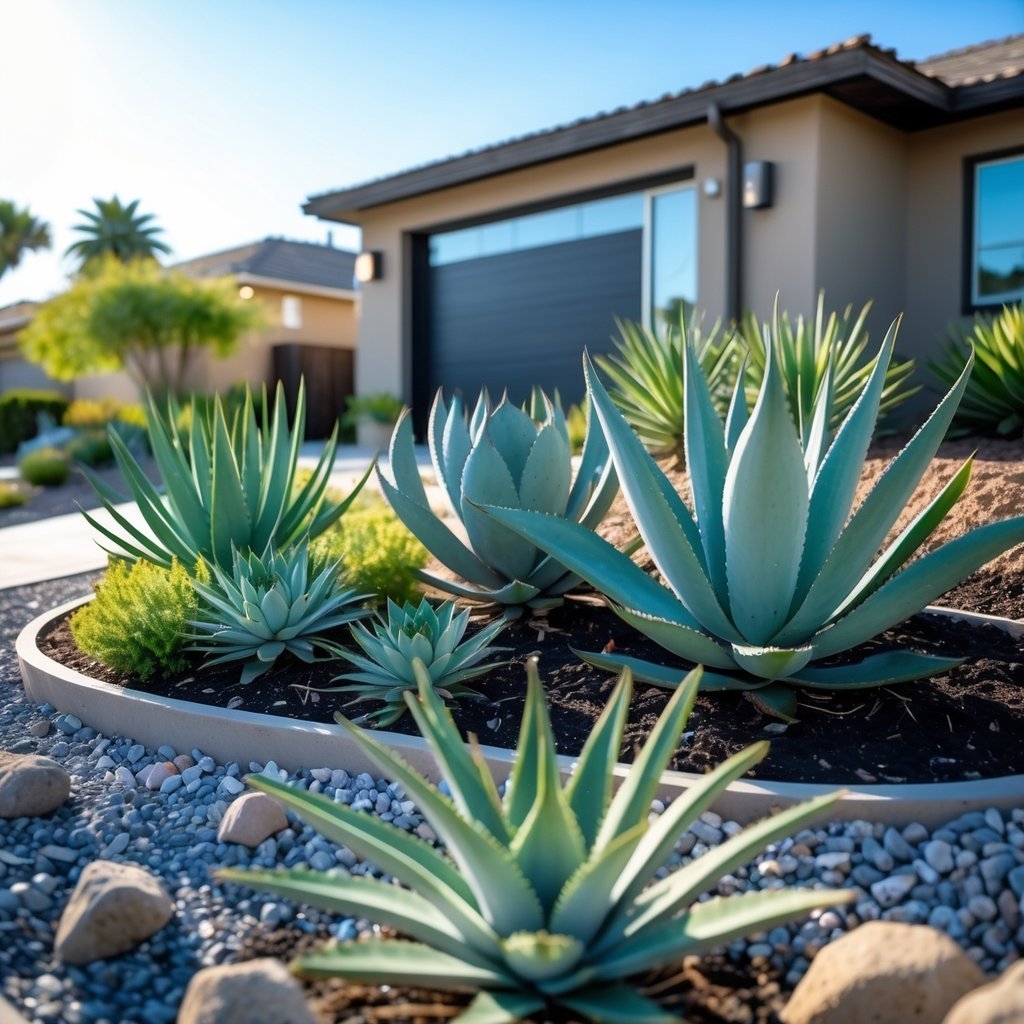
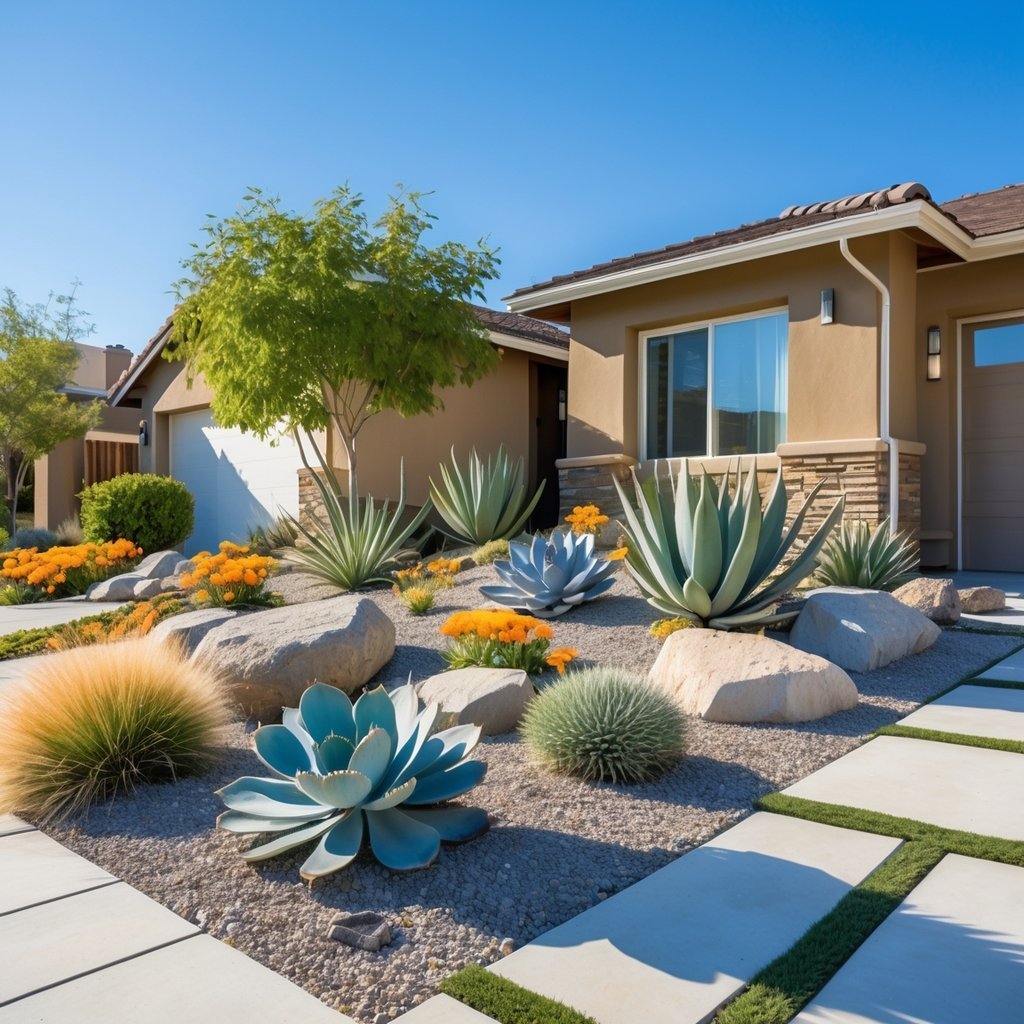
You can create a low-water front yard using agave and aloe as focal plants. Their bold shapes add structure while needing little irrigation.
Mix smaller succulents like echeveria or sedum around the larger rosettes to soften edges and fill gaps. Use gravel mulch and well-draining soil to prevent root rot.
Place plants where their forms show from the street, and space them for future growth. Minimal pruning and an occasional deep soak keep them healthy.
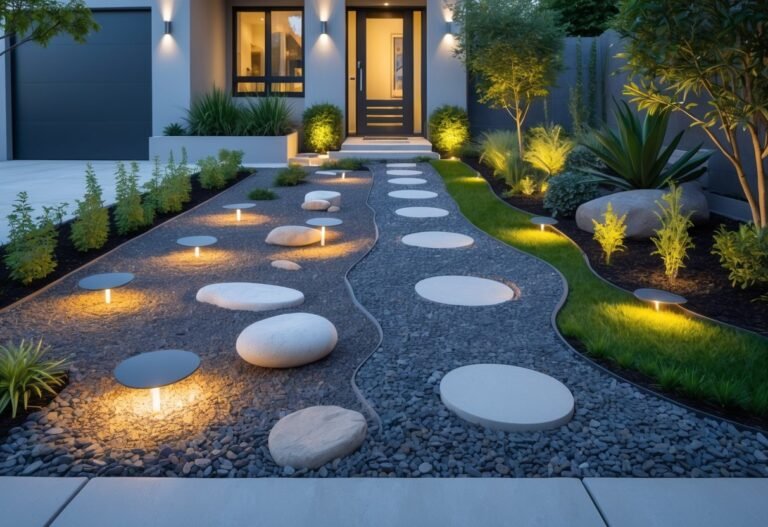
2) Pebble and gravel paths with geometric hardscaping
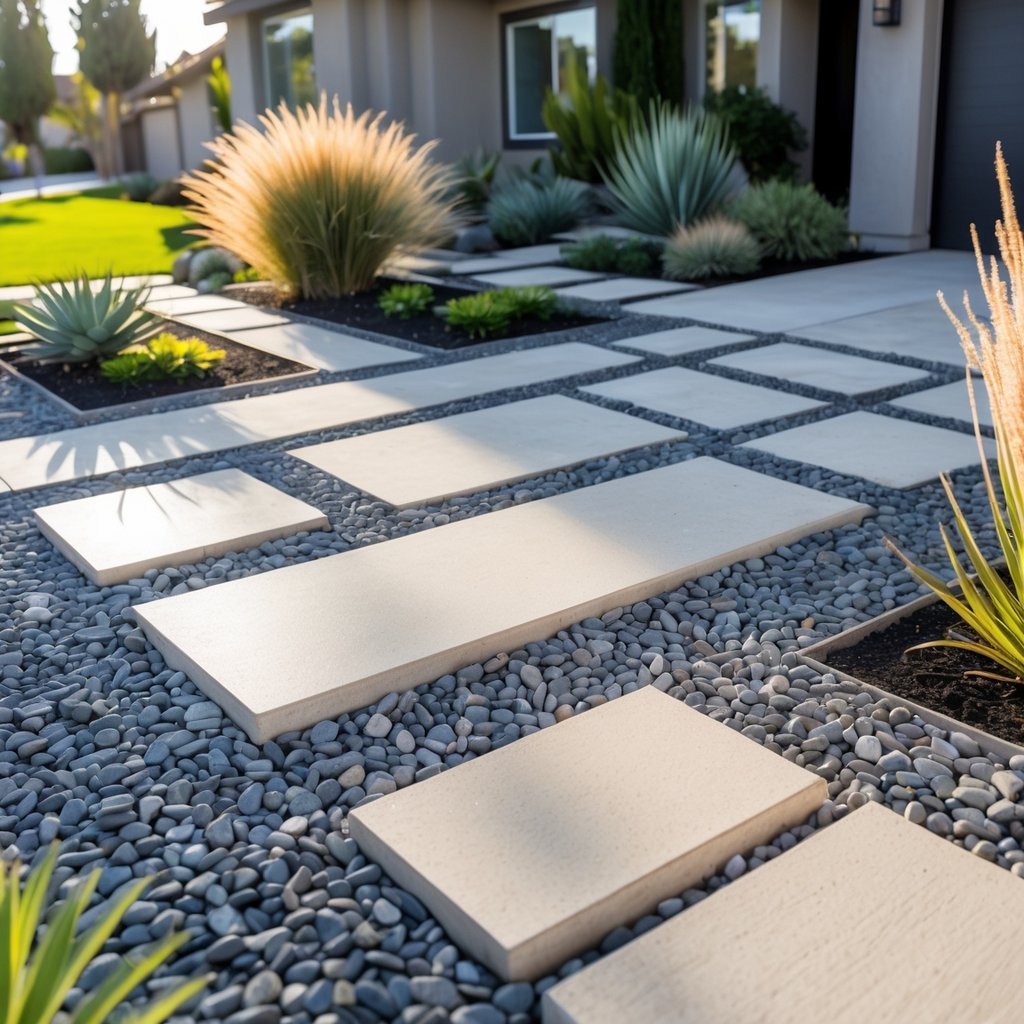
You can use pebble or gravel paths to create clean, low-water walkways that fit California’s climate.
Lay geometric shapes with pavers or concrete to add structure and guide movement.
Mix small pebbles with larger gravel for texture and better drainage.
Border paths with metal or stone for crisp lines and easier maintenance.
Add drought-tolerant plants in the gaps to soften hard edges and reduce irrigation needs.
3) Native California wildflower patches for color and wildlife
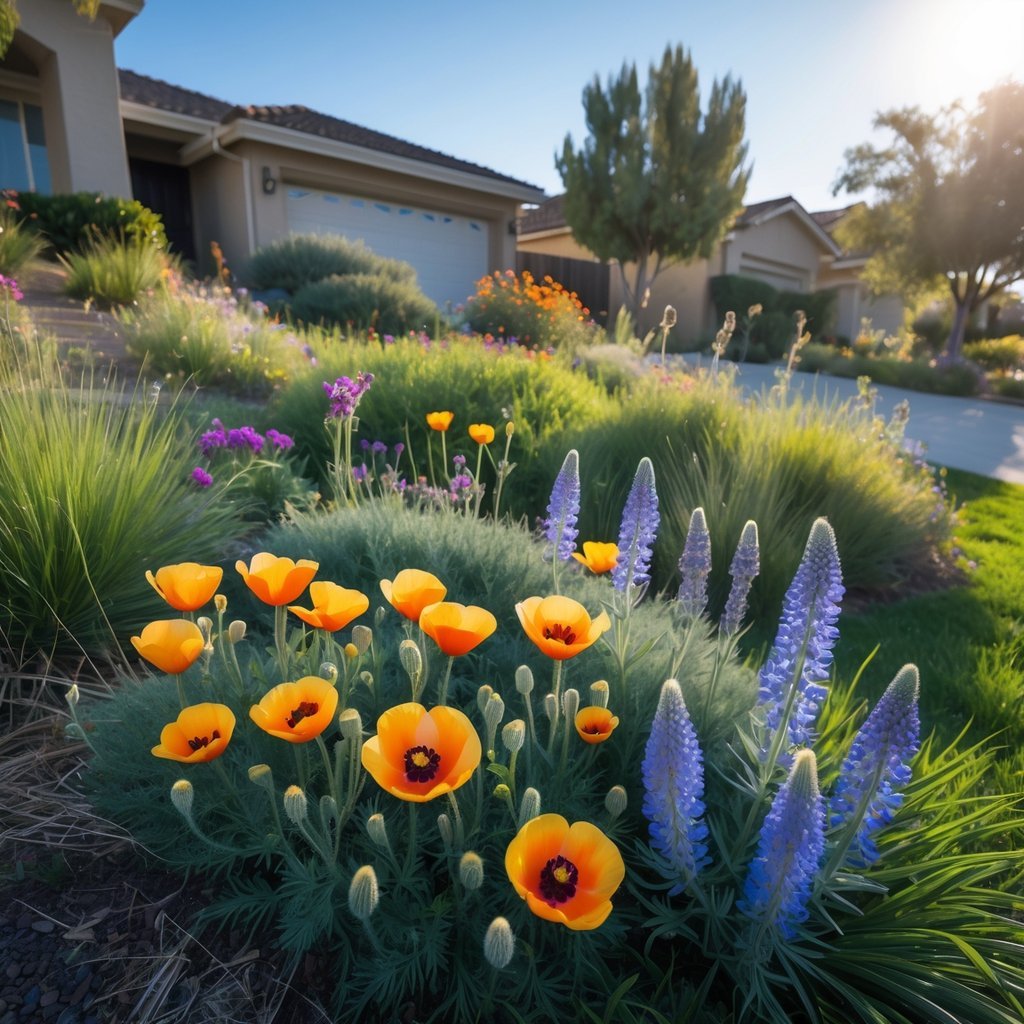
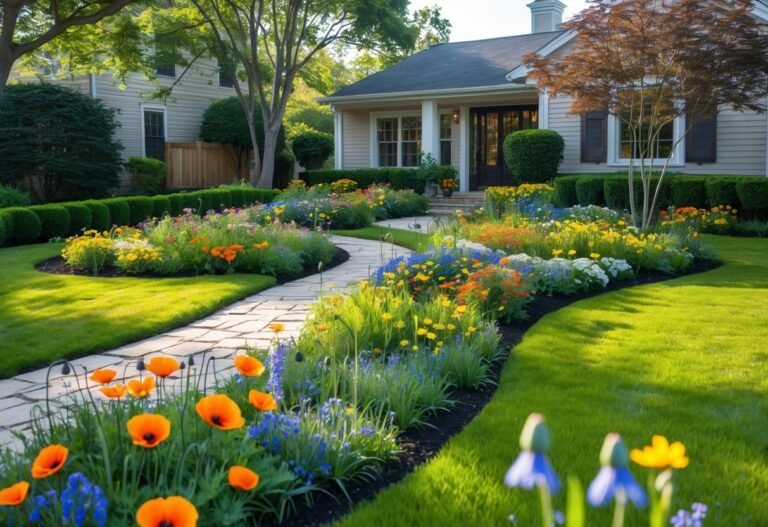
Plant a patch of native wildflowers to add seasonal color and attract pollinators like bees and butterflies. Choose mixes labeled for your region to match soil and climate, especially if you live in Northern or coastal California.
Prepare soil by removing weeds and lightly loosening the top layer, then sow seeds in fall or early spring. Once established, native patches need little water and provide habitat for birds and beneficial insects.
4) Midcentury modern concrete stepping stones
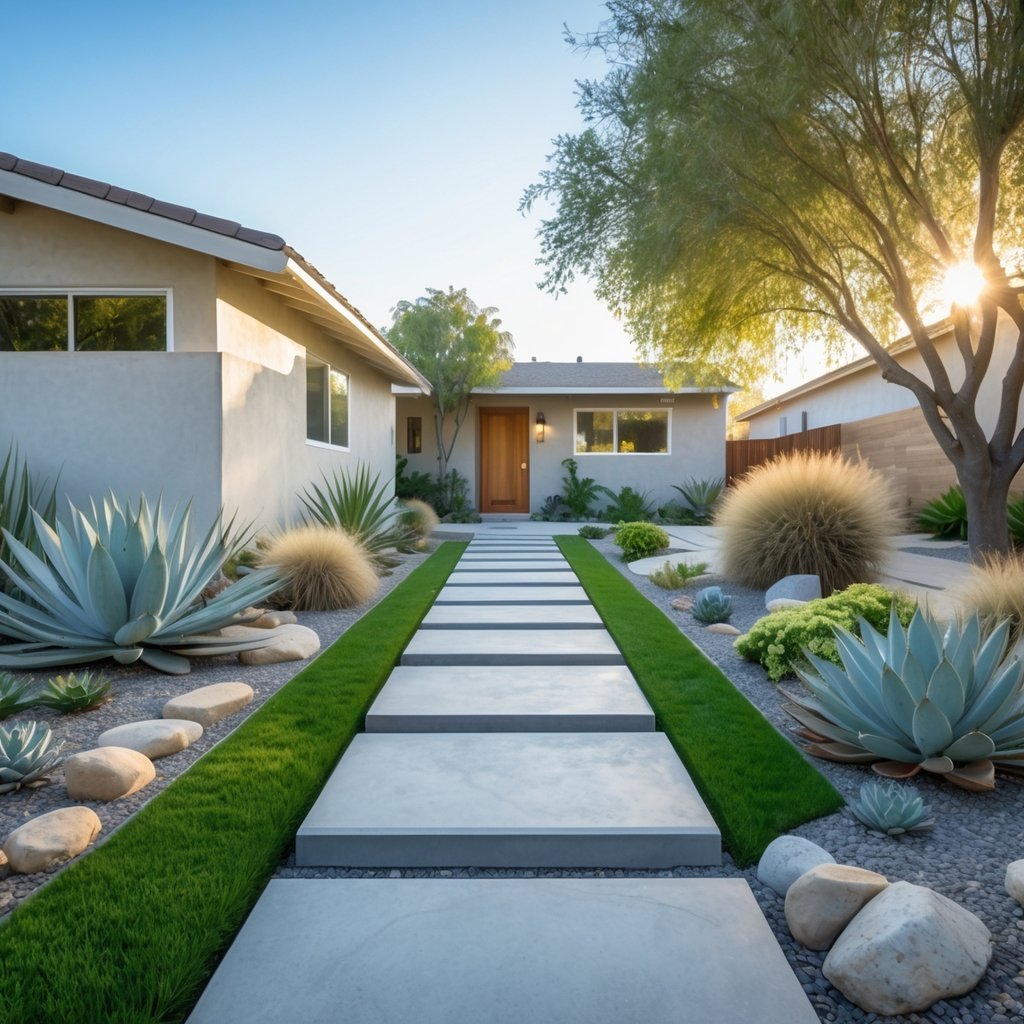
You can use large, rectangular concrete stepping stones to give your front yard a clean, midcentury look. Space them evenly across gravel or low groundcover to keep lines simple and uncluttered.
Choose warm gray or sand-toned concrete and pair it with native grasses or succulents for a low-water, low-maintenance path. The result feels modern and timeless without much fuss.
5) Edible front yard gardens with herbs and vegetables
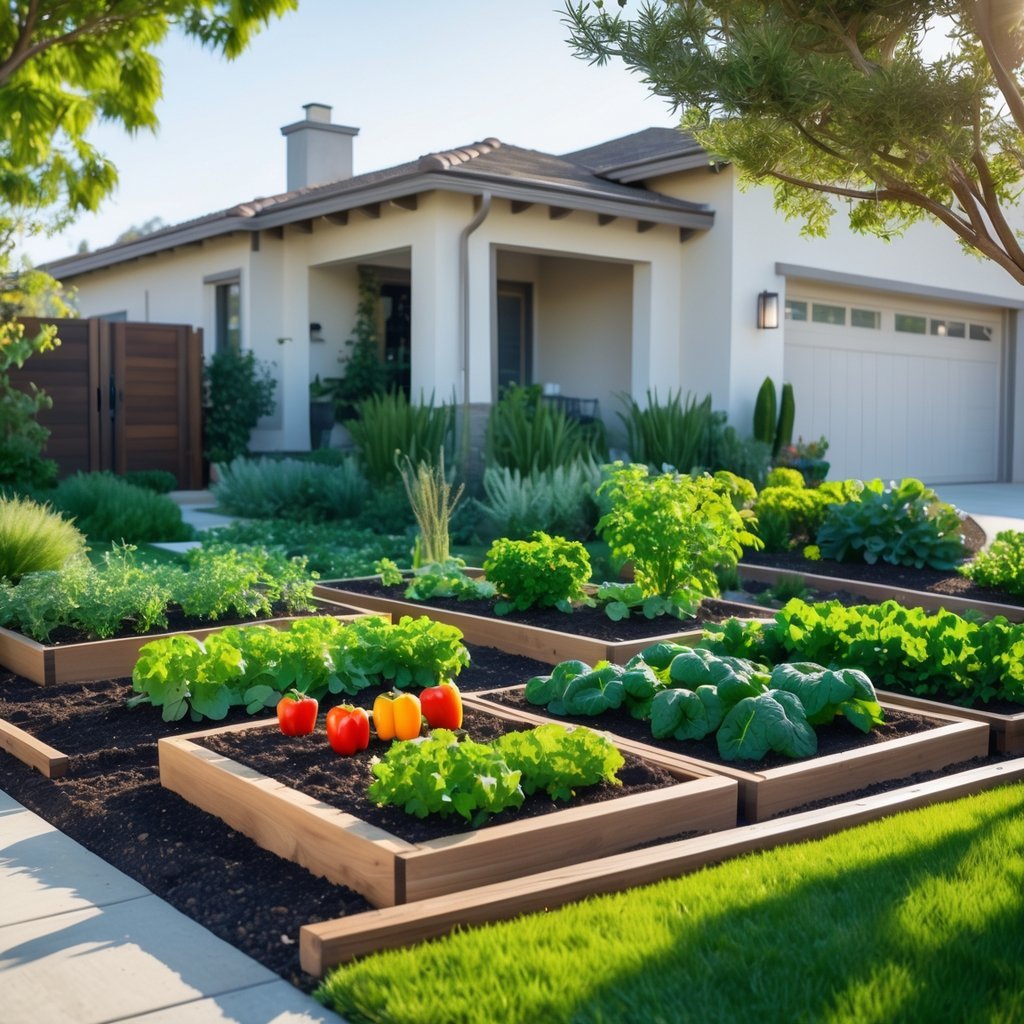
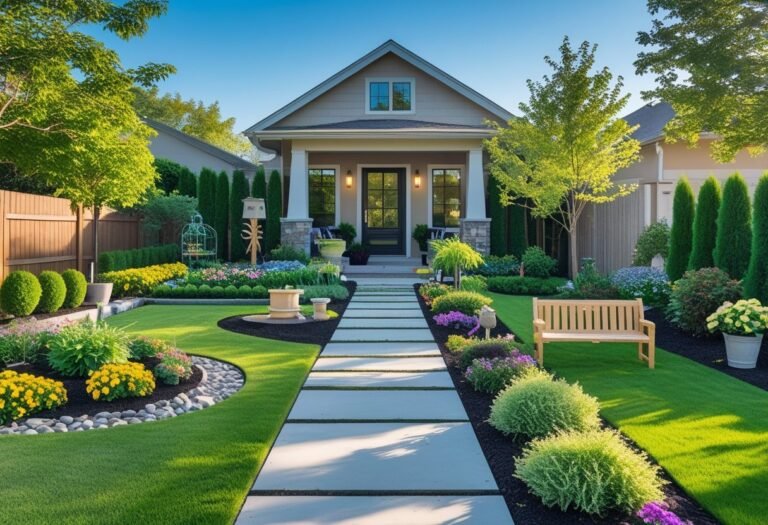
You can blend herbs and vegetables into your front yard to boost curb appeal and food production. Choose compact varieties like dwarf tomatoes, kale, rosemary, and thyme to keep beds tidy.
Use raised beds, containers, or mixed borders so plants look intentional and stay easy to maintain. Group plants by water needs and sun exposure to save time and water.
Add low paths or edging to invite guests and keep harvests accessible. Keep plantings neat and repeat key colors or textures for a polished look.
6) Xeriscape designs featuring ornamental grasses
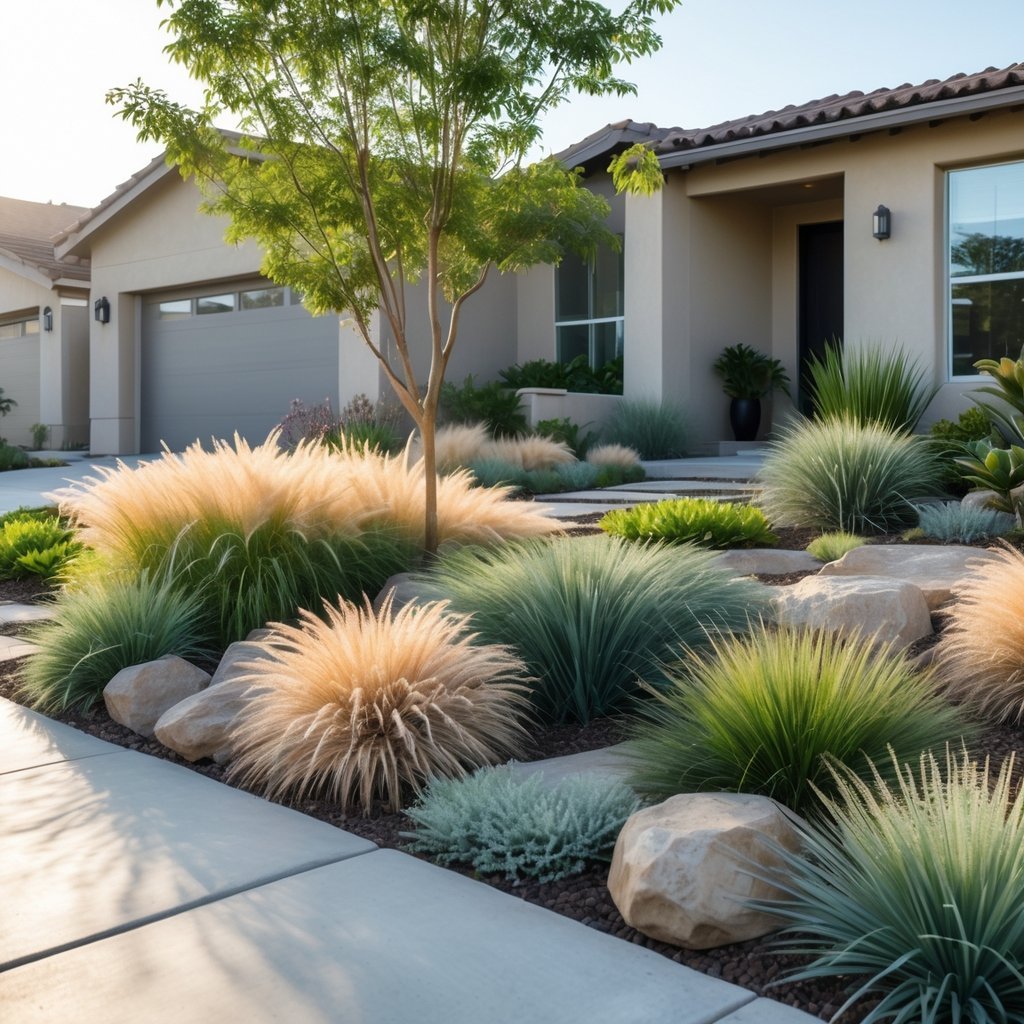
You can use ornamental grasses to add texture and movement while saving water. Mix clumping grasses like carex or muhly with low-growing succulents for contrast and easy care.
Place grasses in drifts or repeating groups to create rhythm and reduce the need for irrigation. Choose native or drought-tolerant species suited to your microclimate for best results.
7) Low-water native shrub clusters like manzanita and ceanothus
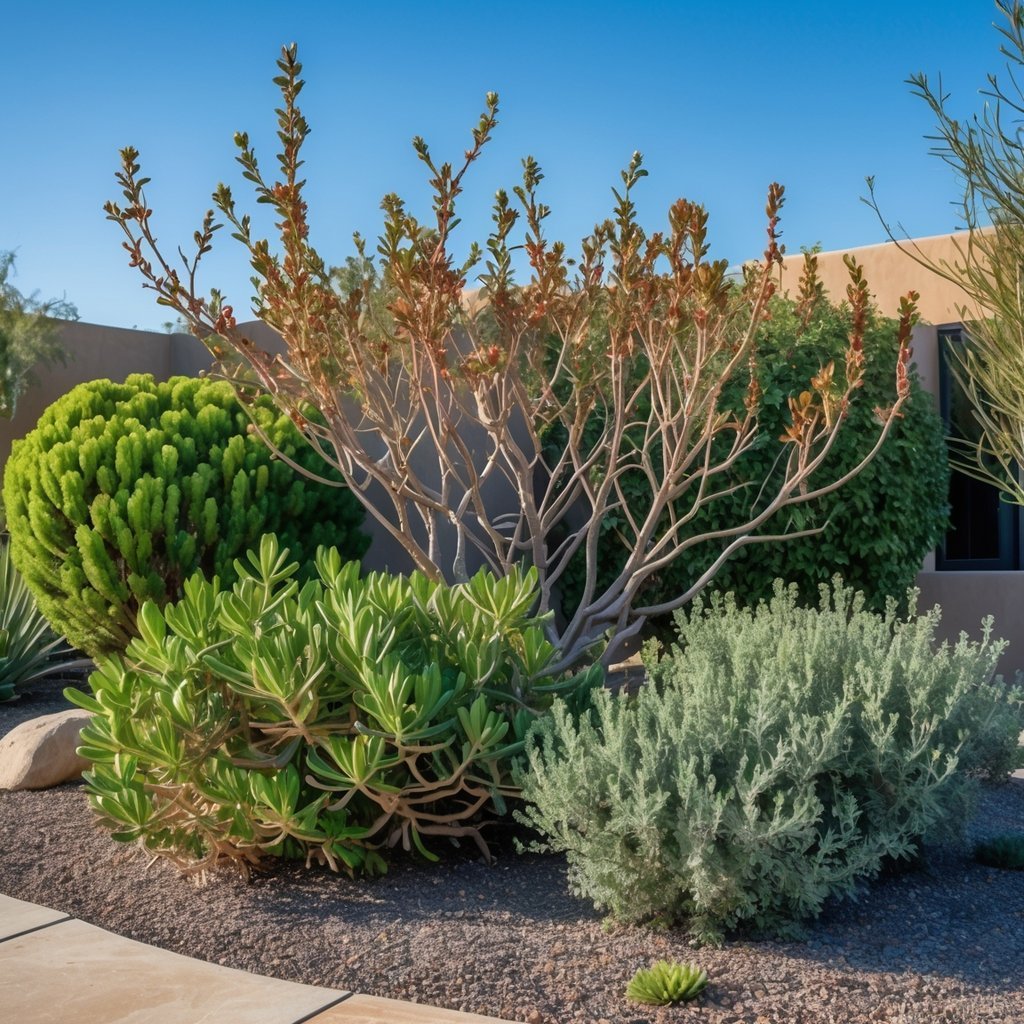
Plant manzanita and ceanothus in small groups to create year-round structure and seasonal blooms. These shrubs need little water once established and fit many California front yards.
Space plants to allow airflow and natural shape. Mulch lightly to retain moisture and reduce weeds.
You attract birds and pollinators without extra irrigation. Choose species suited to your climate zone for best results.
8) Succulent rock gardens with boulders and sand
You can create a low-water front yard that looks tidy and modern. Use large boulders for structure, sand or gravel as groundcover, and group succulents by size and texture.
Place taller specimens like agave or columnar cacti near the back. Add small rosettes and ground-hugging succulents in front to soften rock edges and reduce open sand areas.
9) Water-wise citrus tree accents for fragrance and shade
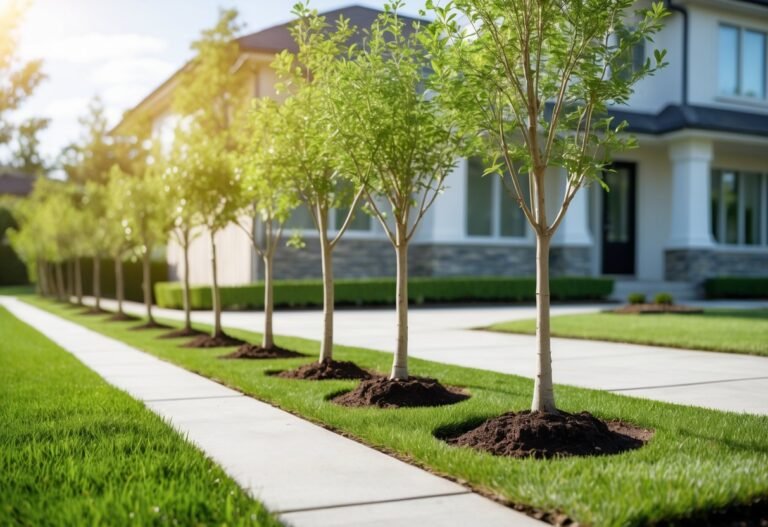
Place dwarf citrus trees near walkways or a porch to give your front yard scent and light shade. They need well-draining soil and deep, infrequent watering to save water.
Use mulch and drip irrigation to cut evaporation and keep roots cool. Prune lightly to keep size manageable and to encourage fruiting.
Choose varieties suited to your microclimate, like Meyer lemon or calamondin, for reliable blooms and small fruit.
Essential Principles of California Front Yard Landscaping
Focus on plants that match your local climate, water systems that cut waste, and soil that holds moisture and nutrients. These three moves will give your yard curb appeal with lower bills and less upkeep.
Climate-Appropriate Plant Selection
Choose plants suited to your microclimate: coastal fog, inland heat, foothill, or high desert. Pick California native or Mediterranean species like California poppy, purple needlegrass, manzanita, and ceanothus for dry summers and wet winters. Group plants by sun exposure and watering needs so you avoid overwatering or chronic stress.
Use a mix of sizes and textures: low groundcovers, mid-height shrubs, and one or two small specimen trees for structure. Include seasonal bloomers for color and evergreen shrubs for year-round form. Check mature sizes and spacing on plant labels so you avoid future crowding.
Water-Smart Irrigation Techniques
Install drip irrigation for plant beds to deliver water directly to roots and cut evaporation. Use separate zones for shrubs, grasses, and succulents so each type gets the right frequency and flow rate. Add a smart controller or weather-based timer to reduce watering after rain and during cool months.
Mulch beds with 2–3 inches of organic mulch to slow evaporation and suppress weeds. Place drip lines under mulch to protect them and keep soil temperatures steady. Periodically check emitters for clogs and adjust run times with seasonal changes.
Soil Preparation for Lasting Growth
Test your soil pH and texture before planting. Most California soils benefit from added organic matter—compost or well-rotted mulch—mixed into the top 6–12 inches to improve water retention and nutrient supply. Avoid heavy digging in clay soils; instead, build raised beds or amend in layers.
Improve drainage in compacted or clay sites by incorporating gypsum where appropriate and adding coarse sand or compost to break up dense soil. For sandy soils, focus on organic matter to hold water. Always plant with a soil-level crown and firm soil gently around roots to eliminate air pockets.
Integrating Hardscapes and Native Features
Use durable, local materials and group plants by water need to save time and water. Place paths, patios, and plant beds so they guide movement, frame views, and support native wildlife.
Incorporating Pathways and Stone Elements
Choose materials like California sandstone, decomposed granite, or recycled pavers for a long-lasting look that matches local soil and color. Lay paths at least 3 feet wide for comfortable two-way walking, and add a 4–6 inch compacted base to prevent settling.
Use stepping stones or broken flagstone set in gravel to let water infiltrate between pieces. Edge paths with narrow native grasses or low creeping sages to soften hard edges and reduce weed growth. Place larger boulders or low walls as focal points near entries or seating areas; they act as windbreaks and visual anchors.
Consider permeable pavers in driveways and near downspouts to reduce runoff. Use a simple pattern and limited material palette to keep costs down and maintenance low.
Curating Native Plant Groupings
Group plants by water needs: drought-tolerant in the front slope, moderate-water in shady pockets. Combine 2–3 heights—groundcover, mid-height shrubs, and 3–6 foot structural plants—to create depth and year-round interest.
Pick region-appropriate species like California poppy, rabbitbrush, manzanita, and California fuchsia for color and pollinator support. Plant in clusters of odd numbers (3–5) to look natural and simplify maintenance. Mulch with wood chips or gravel to suppress weeds and keep soil cool.
Leave small open patches of native soil for ground-nesting bees. Space plants according to mature size to avoid future pruning and overcrowding.
Balancing Open Space and Greenery
Decide how you use the yard first: clear turf for play, a gravel patio for seating, or a wildflower strip for pollinators. Reserve 30–50% of the front yard as open, hard-surfaced areas if you want low maintenance and clean sightlines to the house.
Use planted islands or linear beds to break large open areas and direct views. Keep sight triangles near driveways clear for safety. For softer edges, transition from gravel or lawn to plantings with a 2–4 foot buffer of low groundcover.
Design for staged growth: start with widely spaced plants so you can add infill later. This lowers initial cost and reduces the need for overwatering as plants establish.
Frequently Asked Questions
This section gives clear, practical answers for choosing plants, saving water, fitting small spaces, using native species, replacing lawn, and boosting curb appeal in Southern California. Expect plant names, layout tips, hardscape ideas, and simple maintenance steps tied to drought-tolerant, native, and edible front yard choices.
What are some low-maintenance plants that thrive in California front yards?
Choose succulents like agave, aloe, and aeonium for low water and low care.
Lavenders, rosemary, and sage give color, scent, and drought tolerance with minimal pruning.
Use ornamental grasses (e.g., blue fescue, deer grass) for texture and motion.
California poppies and yarrow add seasonal color and attract pollinators without heavy feeding.
How can I design a drought-tolerant front yard landscape in California?
Group plants by water needs into hydrozones so drip irrigation serves similar plants together.
Use mulch, gravel, or pebble beds to reduce evaporation and keep soil cooler.
Include hardscape elements like concrete stepping stones or geometric paths to cut planted area.
Choose native and drought-tolerant species and water deeply but infrequently to encourage deep roots.
What are effective strategies for landscaping a small front yard in California?
Prioritize a clear focal point such as a small tree, sculptural succulent, or midcentury concrete step.
Use narrow gravel or pebble paths to guide the eye and create a sense of space.
Plant in layered beds with low groundcovers up front and taller shrubs behind.
Limit plant varieties to three to five types to keep the space calm and easy to maintain.
Can you suggest native California plants for an eco-friendly front yard landscape?
Plant California native sages (Salvia spp.), manzanita (Arctostaphylos), and ceanothus for habitat and low water needs.
Add native wildflowers like California poppy and lupine in patches for seasonal color and pollinators.
Use California buckwheat and yarrow to support bees and butterflies.
These natives reduce irrigation needs and require little fertilizer once established.
How do I create a front yard landscape in California without using grass?
Replace lawn with drought-tolerant groundcovers like sedum, prostrate rosemary, or native wildflower mixes.
Install pebble or decomposed granite pathways and arrange succulent beds for low water and low upkeep.
Add raised beds for herbs and vegetables to satisfy an edible front yard idea.
Combine hardscape accents (stepping stones, low walls) to define spaces without turf.
What features work best in a Southern California front yard to enhance curb appeal?
Use a mix of succulents (agave, aloe), native shrubs, and colorful wildflower patches for year-round interest.
Add midcentury modern concrete stepping stones or geometric gravel paths for a clean, modern look.
Include an edible element like a small herb or vegetable bed near the entry for function and charm.
Layer lighting along paths and uplight key plants to highlight texture and shape at night.