10 Stunning Fence Line Landscaping Ideas to Transform Your Yard — Practical Tips for Every Style
You can turn a plain fence into a beautiful, useful edge that changes how your yard looks and feels. This article shows ten practical fence line ideas that boost privacy, add color, and make outdoor space more inviting so you can choose the styles that fit your yard and budget.
You’ll find options that work with small spaces, low maintenance plans, and ways to mix plants with hardscape features for year-round interest. Use the tips and planning advice that follow to pick the right ideas and avoid common mistakes as you reshape your fence line.
1) Vertical garden with terracotta pots
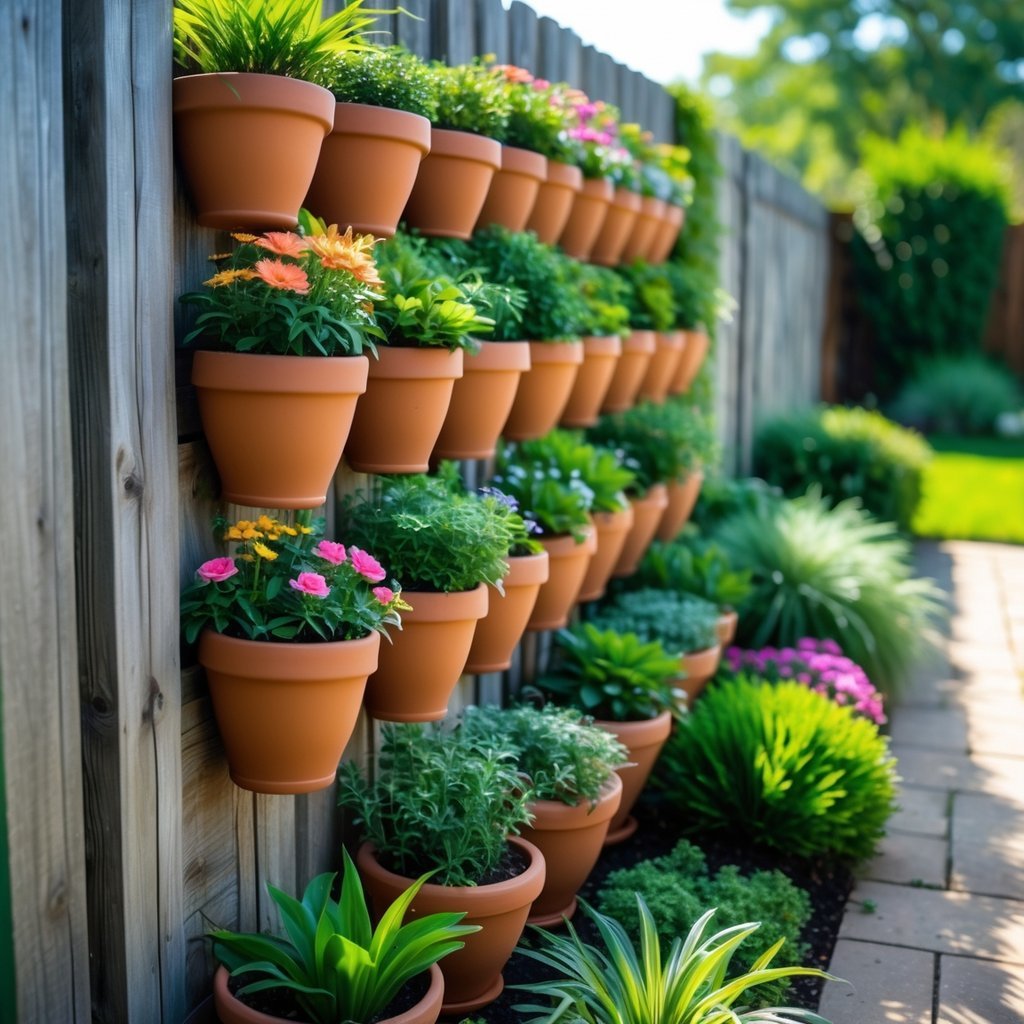
You can mount terracotta pots on your fence to add color and life without taking ground space. Mix herbs, succulents, and seasonal flowers for variety and easy maintenance.
Stack pots vertically or attach them in rows for a neat, layered look. Terracotta breathes well, helping roots stay healthy, but water more often in hot weather.
2) Flower bed borders with colorful perennials
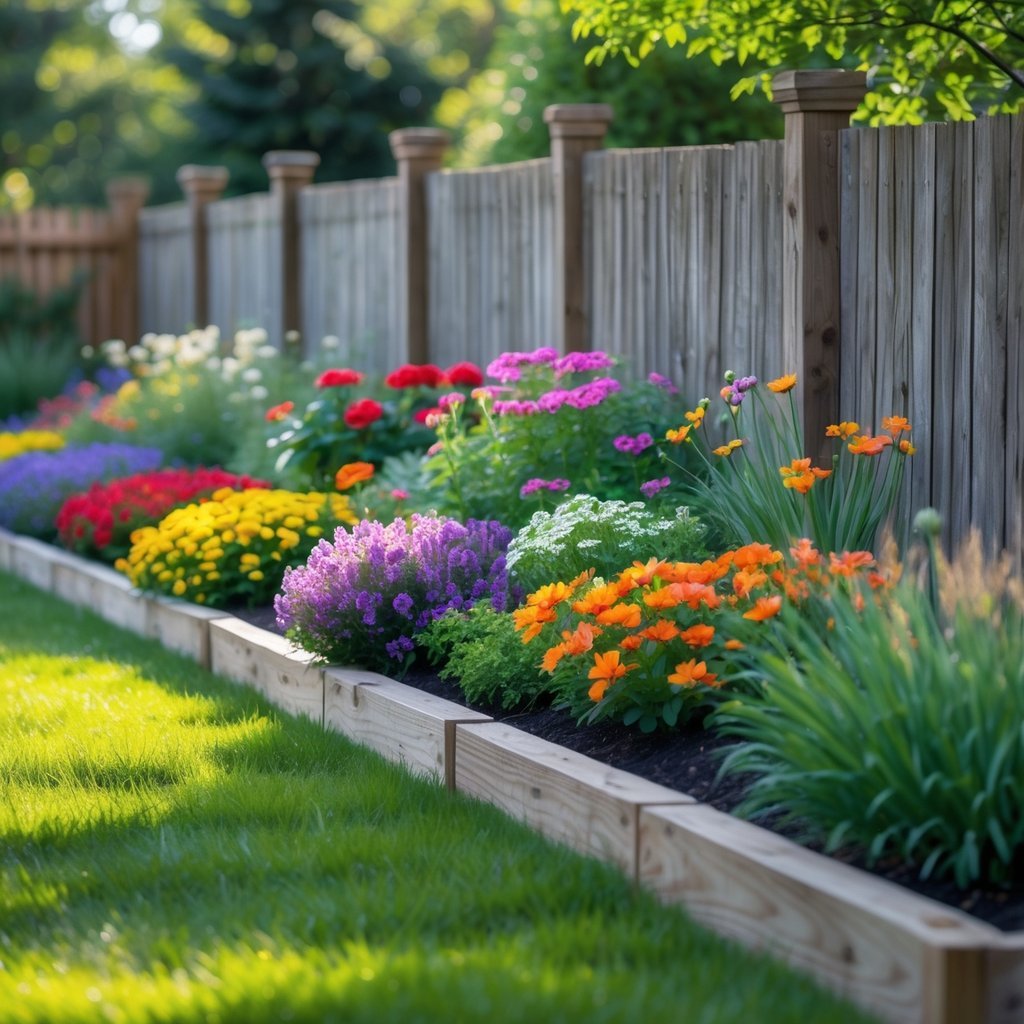
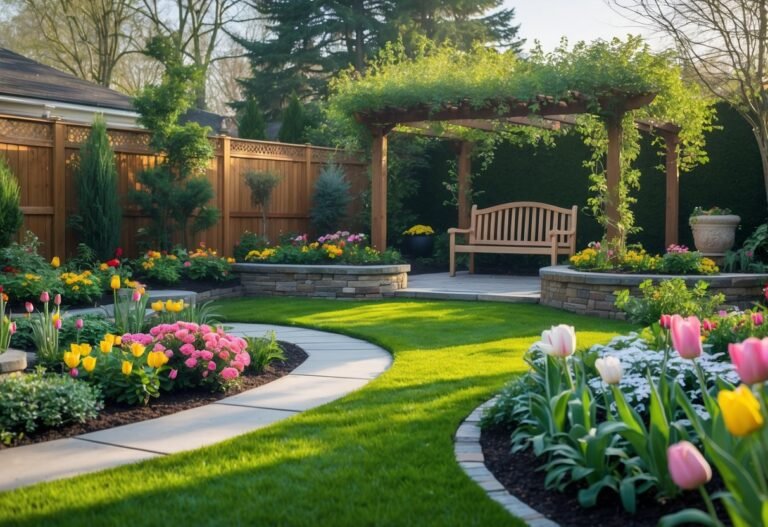
Plant a row of perennials along your fence to add year-after-year color with low effort. Choose a mix of heights and bloom times so something flowers in every season.
Use taller perennials near the fence and shorter ones in front to create depth. Add mulch to retain moisture and reduce weeds for healthier plants.
Pick native varieties for easier care and better wildlife support. Replace or divide crowded plants every few years to keep the border tidy.
3) Privacy hedge with arborvitae trees
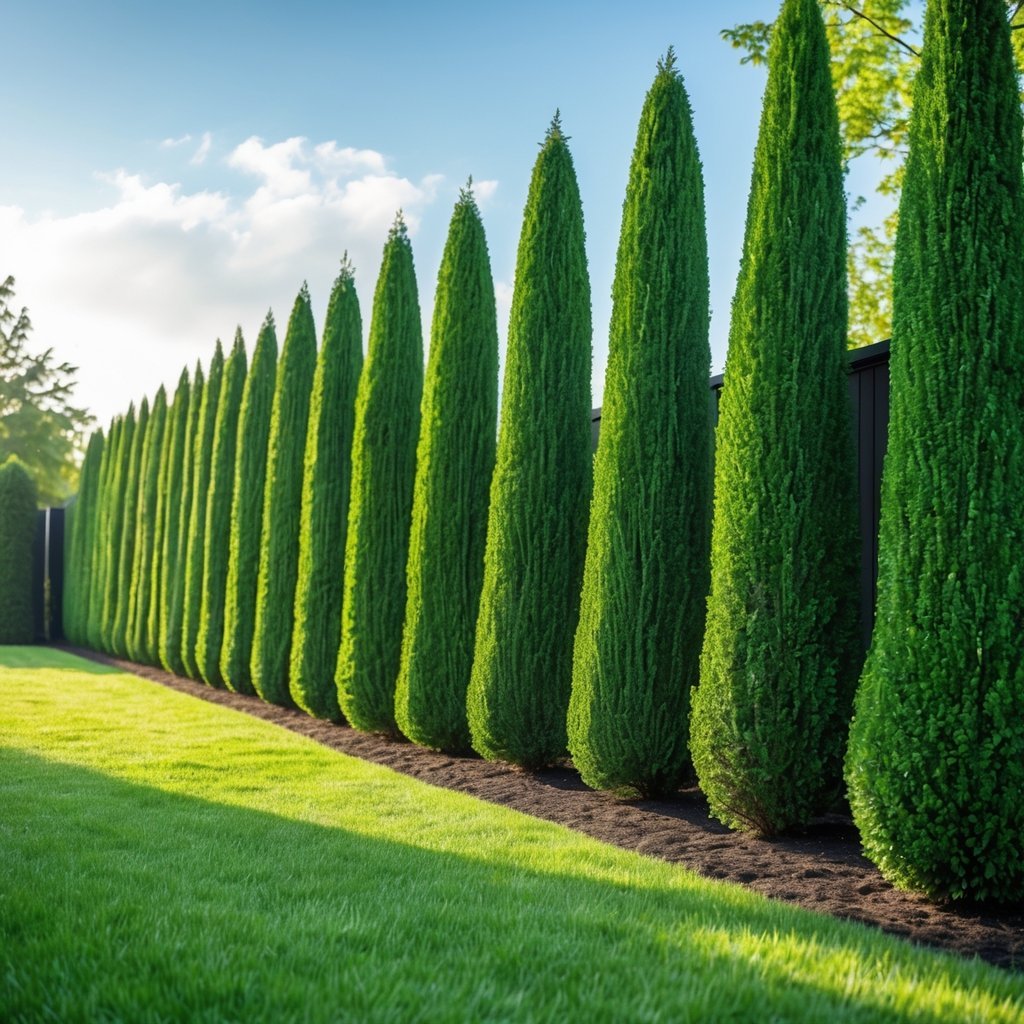
Plant arborvitae in a straight row to create a dense, year-round screen that blocks views and wind. Choose varieties like Green Giant for fast growth or Emerald Green for a narrower profile if space is tight.
Space them according to the mature width to avoid crowding and reduce future pruning. Water well during the first two years and mulch to retain moisture and suppress weeds.
Trim lightly to keep a clean shape, but avoid heavy shearing that can stress the trees. Over time you’ll have a low-maintenance, attractive privacy hedge.
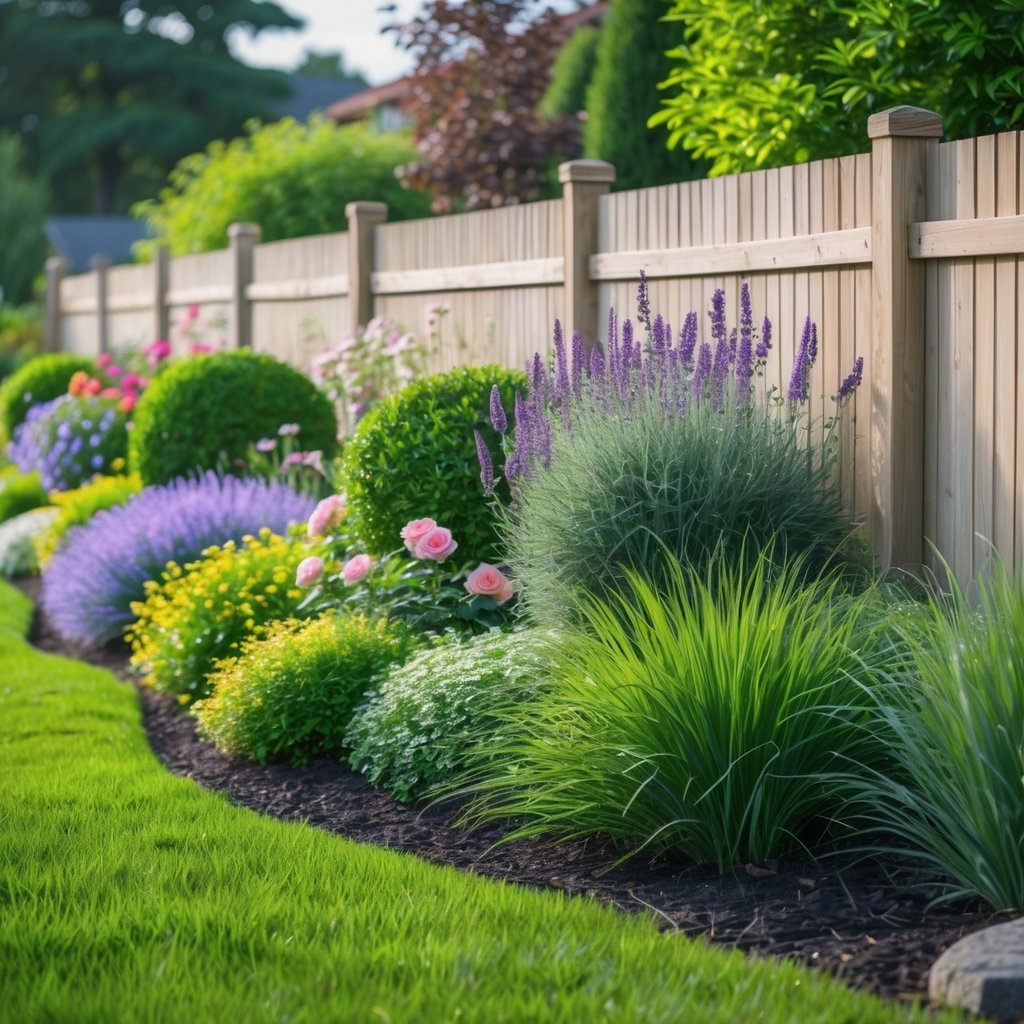
4) Mixed shrubbery and ornamental grasses
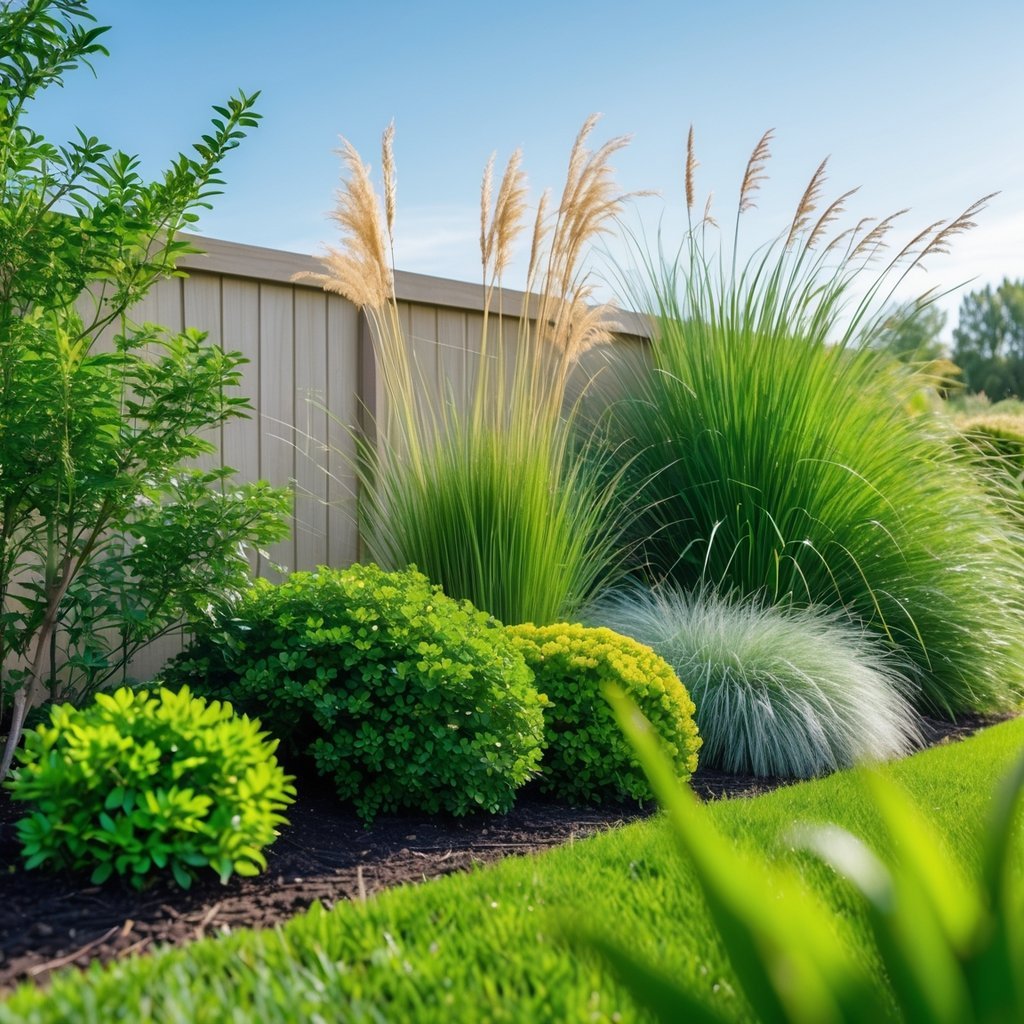
Mix shrubs and ornamental grasses to soften your fence and add year-round interest. Shrubs give structure and color, while grasses bring movement and texture.
Choose a mix of heights and bloom times so something looks good every season. Keep spacing in mind to allow airflow and easy maintenance.
Plant lower grasses in front and taller shrubs behind for a layered look. Mulch and a simple drip irrigation line will cut watering and weed work.
5) Climbing roses on trellis panels
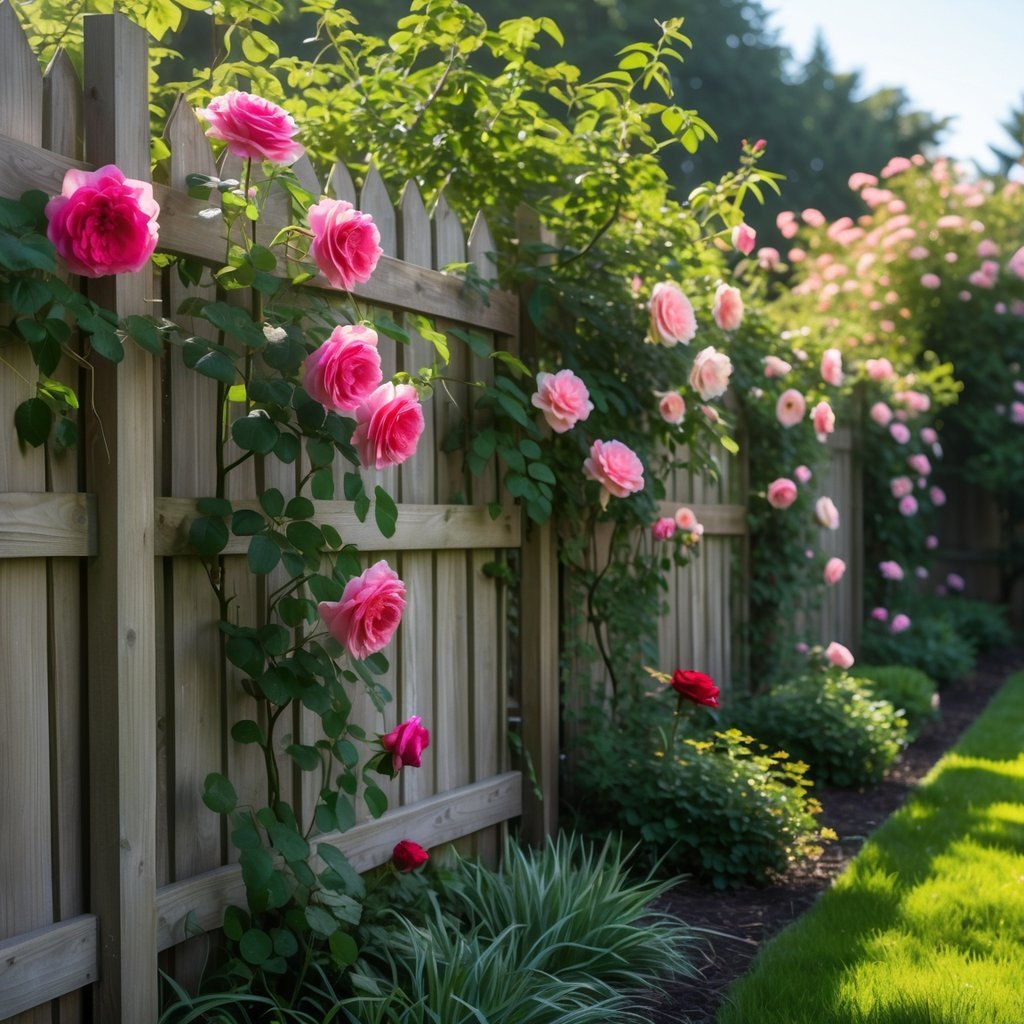
Plant climbing roses at regular intervals along sturdy trellis panels to add color and scent to your fence line.
Train the canes horizontally to encourage more blooms and even coverage.
Choose disease-resistant varieties and give them well-drained soil and regular pruning.
Trellis panels hide the fence and create a neat, vertical display without taking much ground space.
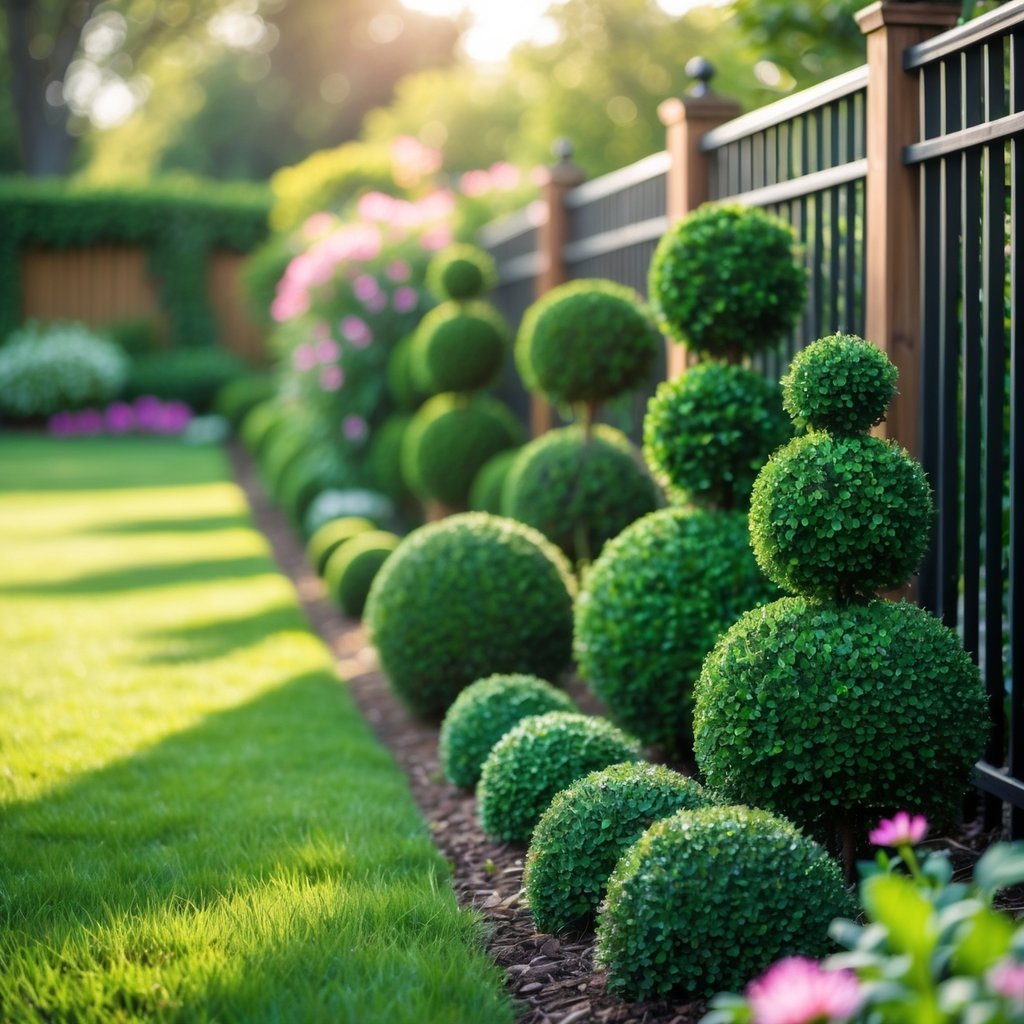
6) Boxwood topiary accents
You can place boxwood topiaries along the fence to add formal structure and year-round green.
Use varied shapes—balls, spirals, or cones—to create rhythm and visual interest without crowding the line.
Keep spacing regular and prune lightly each season to maintain clean shapes.
Plant in groups or pair with low flowering plants to soften the base and add seasonal color.
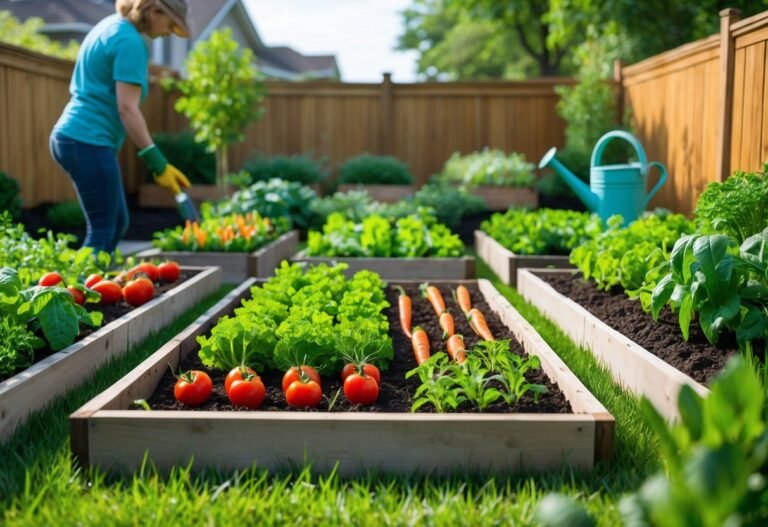
7) Edible garden with herbs along the fence
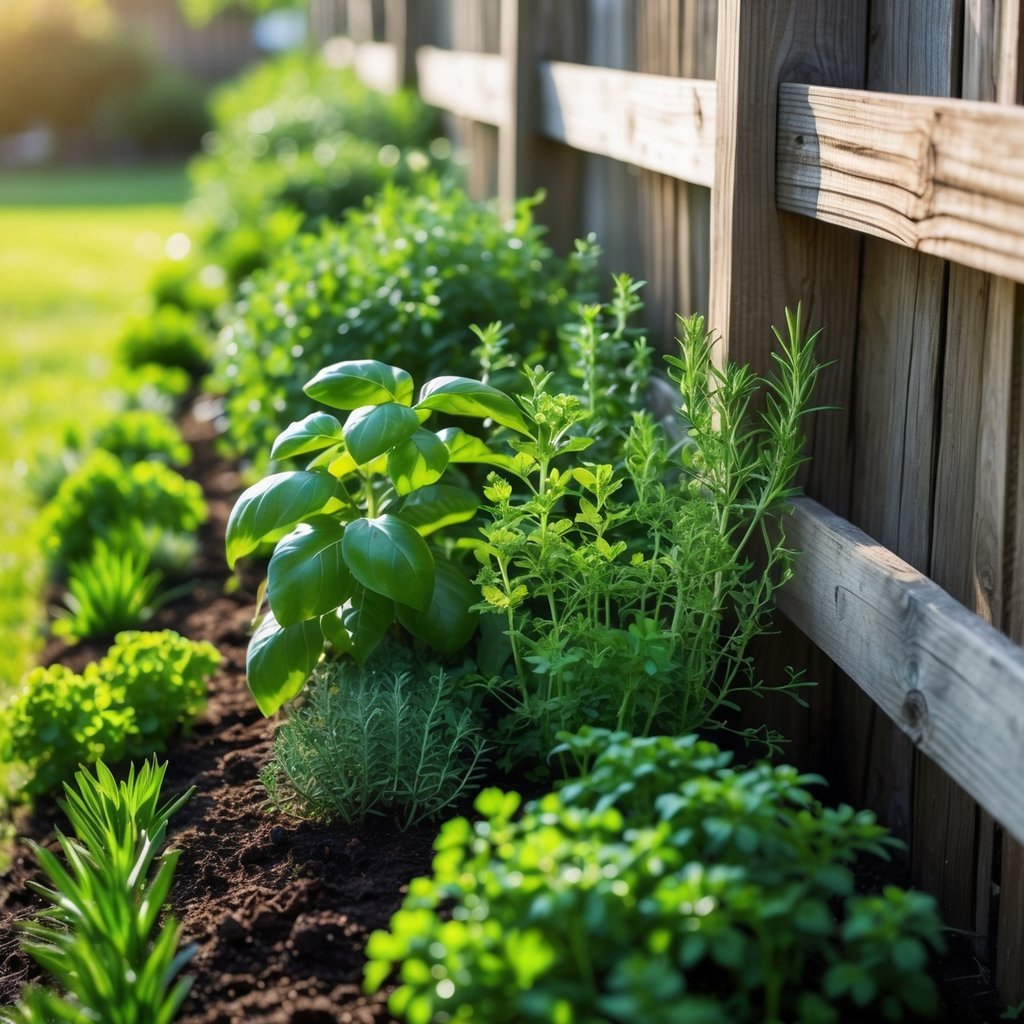
Plant herbs along your fence to add scent, color, and easy access for cooking. Choose thyme, rosemary, basil, and mint for varied heights and uses.
Use containers or a narrow bed if space is tight. Train climbing herbs like savory or nasturtium on trellises to save room.
Place sun-loving herbs where the fence gets light, and shade-tolerant ones in darker spots. Mulch and water moderately to keep plants healthy.
8) Rock and gravel ground cover around plants
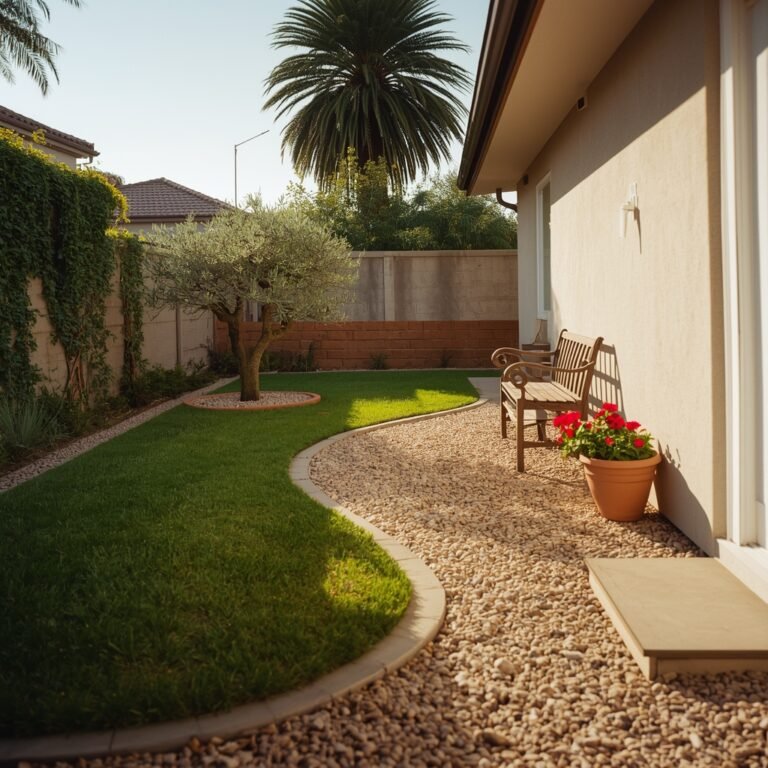
Using rock or gravel around plants cuts down on weeds and reduces maintenance. Choose pea gravel for a soft look or crushed granite for better drainage and a firmer path.
Keep a 2–3 inch layer and leave a small gap at plant bases so stems don’t sit in rock. Rocks also help retain soil moisture and protect roots in hot weather.
Mix different sizes and colors to add contrast with foliage. You can edge the area with metal or brick for a clean, finished look.
9) Wildflower strip for attracting pollinators
Plant a narrow wildflower strip along your fence to feed bees, butterflies, and other pollinators. Use native species suited to your region for best results.
Keep the strip narrow so it fits in tight spaces but still blooms all season. Mow or trim a central lawn area and leave the strip undisturbed to provide shelter.
Add a mix of heights and bloom times to support different insects. Avoid pesticides to protect pollinator health.
10) Layered planting with varying heights
Use layers of plants to add depth along your fence. Place tall shrubs or small trees at the back, medium shrubs in the middle, and low flowers or groundcover up front.
Choose plants with different textures and bloom times to keep interest through the seasons. This also helps with privacy and hides plain fence panels.
Keep spacing and sunlight needs in mind so each layer can grow well. Mulch and a simple drip line make maintenance easier.
Essential Planning Tips for Fence Line Landscaping
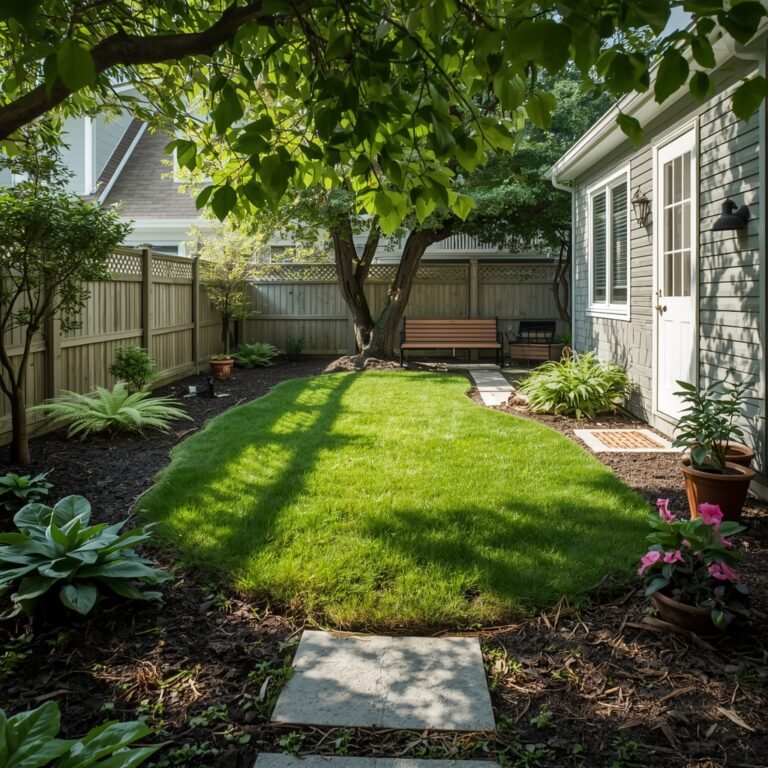
Start by checking how much sun and shade your fence line gets, and test the soil. Decide what height, color, and care level you want before buying plants or materials.
Assessing Sunlight and Soil Conditions
Stand at your fence at sunrise, midday, and late afternoon on a clear day. Note which parts get full sun (6+ hours), partial sun (3–6 hours), or shade (less than 3 hours). Mark these zones with stakes or chalk.
Dig 6–8 inches to inspect soil texture. If it feels gritty, it’s sandy; if it’s sticky, it’s clay. A simple pH test kit helps: most ornamentals like pH 6.0–7.0. Amend heavy clay with compost and gypsum. Add organic matter to sandy soil to improve water and nutrient hold.
Consider drainage. Look for standing water after a rain. Raised beds or mounded soil fix poor drainage. Place drought-tolerant plants in fast-draining spots and moisture-loving plants where water collects.
Choosing the Right Plant Varieties
Match plant choices to your sunlight, soil, and climate zone. Use native shrubs and perennials when possible; they need less water and resist local pests. For example, choose hydrangeas or hostas for shade and lavender or salvia for sunny, dry areas.
Think about mature size and spacing. Check plant labels for height and spread, then space plants so they won’t crowd the fence or each other in 3–5 years. Mix heights: low groundcover, medium shrubs, and taller accents for depth.
Balance seasonal interest. Pick a mix that flowers at different times and includes evergreen structure for winter. Also plan for pollinators: include nectar plants like bee balm or coneflower.
Determining Privacy and Maintenance Needs
Decide how much privacy you want: full screen, partial screen, or decorative accent. For full privacy, choose fast-growing evergreens or a layered hedge. For partial privacy, use tall grasses, shrubs, or trellises with climbing vines.
Estimate weekly and seasonal tasks. Lawns and low-maintenance shrubs may only need monthly checks. Flower beds and hedges need pruning, deadheading, and weeding more often. Write a simple care plan: watering schedule, pruning months, and mulch refresh times.
Factor in long-term costs and tools. Mulch, soil amendments, and irrigation systems add upfront cost but reduce labor. Choose plants that match how much time you will actually spend on care.
Integrating Hardscape and Softscape Elements
Use solid, functional hardscape pieces to frame and support your plant choices. Choose materials and placements that help movement, drainage, and visual flow while letting plants soften edges and add color.
Incorporating Pathways and Edging
Lay a clear path to guide movement and keep plants from being trampled. Pick a path material—gravel, pavers, or decomposed granite—that matches your fence style and yard use. For high-traffic routes, set pavers on compacted base with sand joints to prevent shifting.
Edge beds with a low curb, metal strip, or brick to keep mulch and soil contained. Install edging 1–2 inches above surrounding grade so mower debris stays out and water runs away from foundations. Use curves in edging near fence lines to create gentle flow; straight runs suit modern fences.
Plant narrow, low-growing borders (e.g., dwarf mondo grass, sedum, or lavender) beside paths. These plants define the route and reduce maintenance by blocking weeds. Maintain a 12–18 inch planting strip between path and fence when possible to allow root space and airflow.
Blending Decorative Stones with Greenery
Mix stones and plants to add texture and reduce watering needs. Use larger feature stones or boulders near fence corners as focal points, then surround them with lower groundcovers like thyme or creeping phlox to soften edges.
Choose one stone palette—warm tan, cool gray, or river rock—to keep the look unified. Place coarse gravel for drainage against fence bases, then step out to finer gravel or mulch in planting zones. This prevents water pooling and protects wood or metal posts.
Group plants in odd numbers and vary heights: a small shrub (2–4 ft), a mid-height perennial, and a trailing groundcover works well. Add stepping stones through gravel beds to allow access for weeding and watering without disturbing roots. Regularly remove weeds and replenish stone where erosion occurs.
Frequently Asked Questions
These answers focus on specific, usable ideas you can try along your fence. Expect plant choices, layout tips, cost-saving moves, and ways to keep pets and edibles safe and productive.
What are some creative fence line garden ideas for a fresh look?
Use a vertical garden with terracotta pots mounted at different heights to add color without taking ground space.
Install trellis panels and train climbing roses for classic charm and scent.
Plant flower bed borders with colorful perennials—think coneflowers, salvia, and daylilies—for repeat blooms and easy care.
How can I achieve low-maintenance landscaping along my fence on a budget?
Choose mixed shrubbery and ornamental grasses for long-term structure that needs little pruning.
Mulch beds well and use drip irrigation or soaker hoses to cut watering time and waste.
Buy small plants or plugs instead of large specimens and fill gaps with inexpensive groundcovers like creeping thyme or sedum.
What are the best plants to use for landscaping along a wooden fence?
Arborvitae trees make a strong privacy hedge and tolerate many soil types.
Climbing roses, clematis, or jasmine work well on wooden trellises attached to the fence.
For lower layers, pair evergreen shrubs with ornamental grasses and perennial flowers to provide year-round interest.
Can you suggest ways to incorporate a vegetable garden alongside a fence?
Use the fence as a support for pole beans, peas, or cucumbers to save space.
Mount terracotta pots or narrow planters on the fence for herbs and salad greens near your kitchen door.
Keep vegetables on the sunny side of the fence and rotate crops each season to reduce pest and soil disease buildup.
How do I design a pet-friendly fence line landscape for my yard with dogs?
Select non-toxic plants and avoid species known to be poisonous to dogs, like oleander or foxglove.
Create a clear, durable path of gravel or pavers so dogs don’t trample beds, and add low fencing or edging to protect plant roots.
Provide shaded resting spots and place water bowls near high-traffic areas to discourage digging in planting zones.
Are there effective strategies for landscaping along a fence to enhance privacy?
Plant a staggered row of arborvitae trees for quick vertical screening and a natural look.
Layer mixed shrubbery and ornamental grasses in front of taller plants to fill sightlines and block gaps.
Combine a trellis with fast-growing climbers to add height quickly while your larger plants mature.