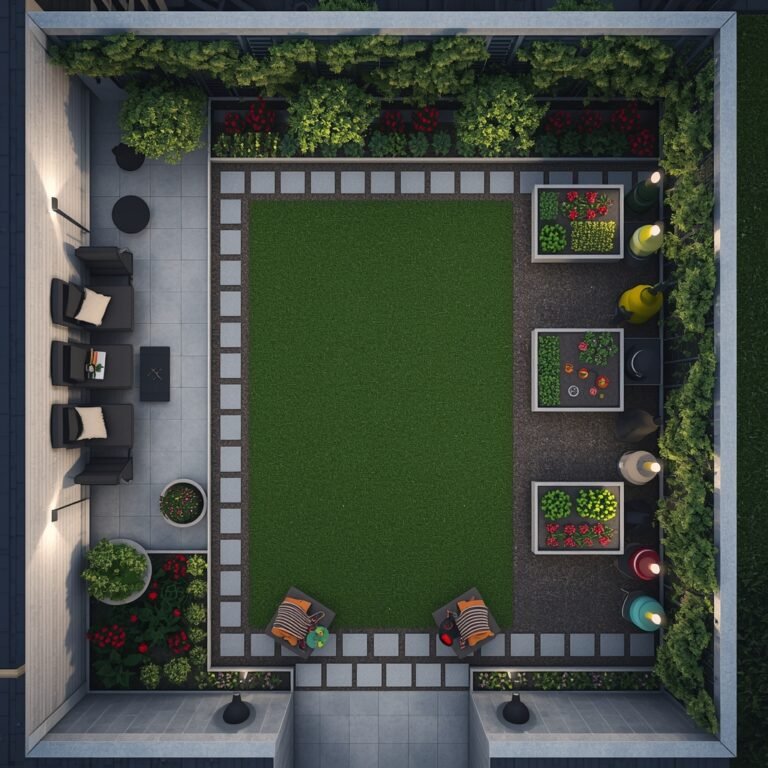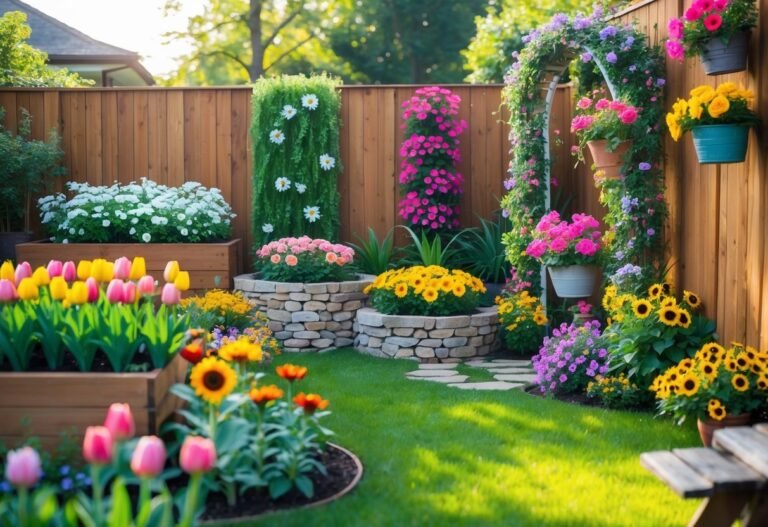
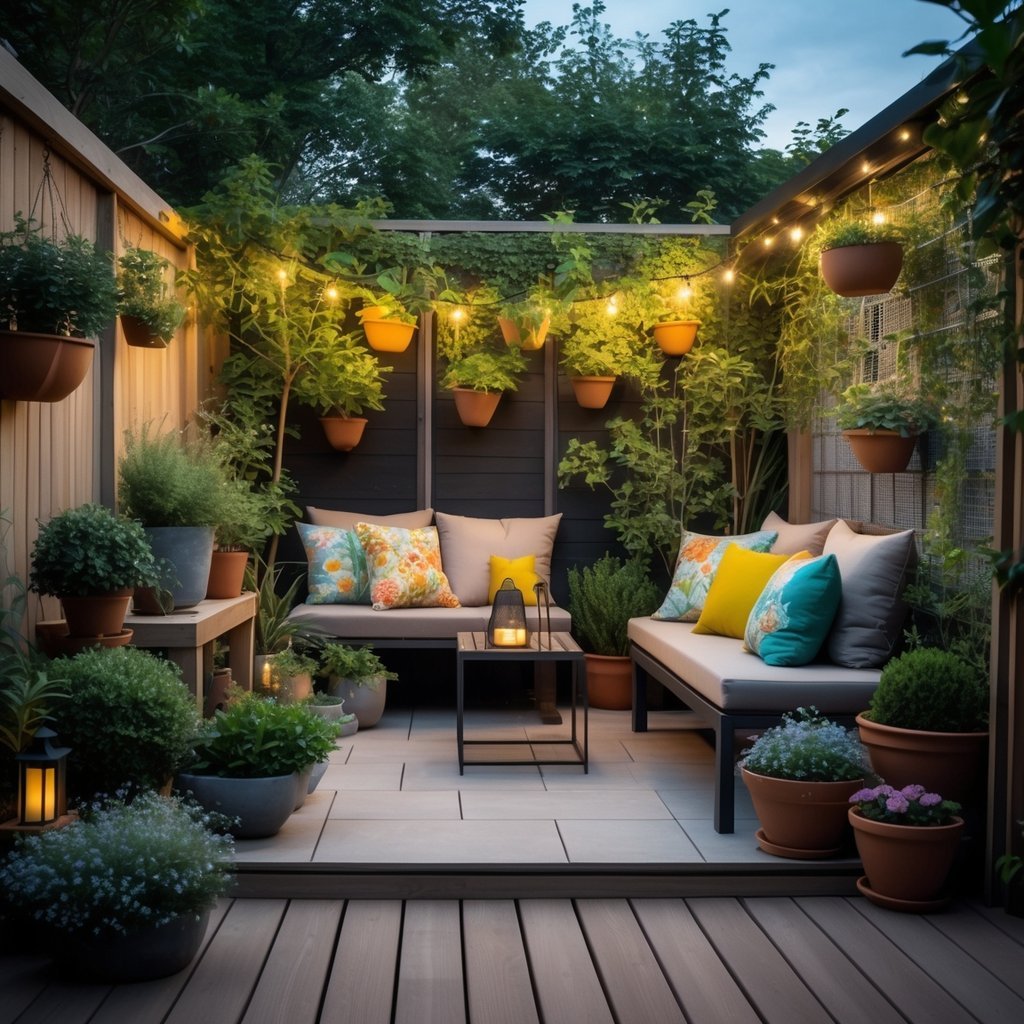
Small Patio Garden Setup Ideas: Space-Saving Designs, Plant Picks, and Easy Care Tips
You can make a lively, useful garden on a small patio without a lot of money or space. Focus on using vertical planters, multiuse furniture, and compact containers to fit more plants and seating into every inch. A small patio garden works best when you plan the layout, choose plants for tight spaces, and use vertical and container solutions to maximize space and comfort.
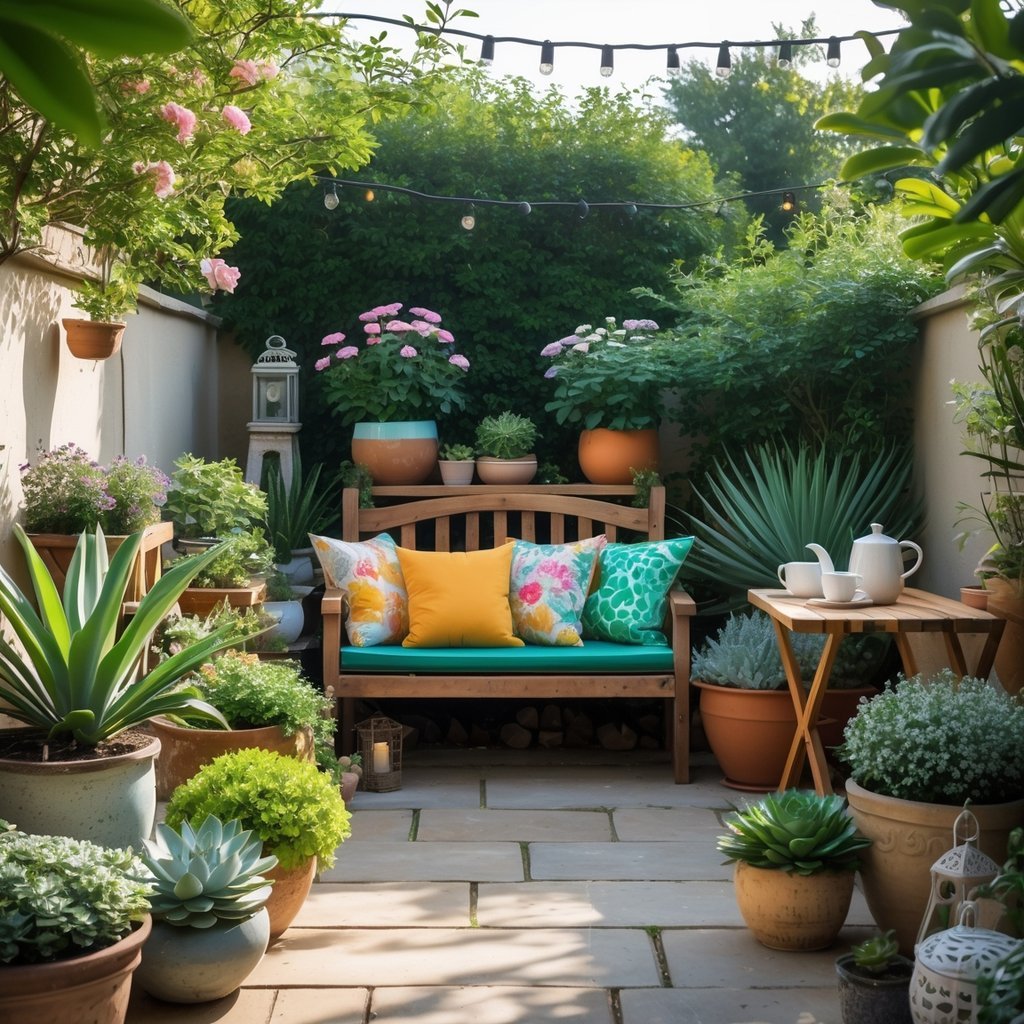
Start by picturing how you want the space to feel—cozy dining spot, herb station, or a flower-filled nook—and pick furniture and planters that do double duty. Mix trailing and upright plants, add light for evenings, and use scent and texture to make the area feel bigger and more inviting.
Key Takeaways
- Plan the layout around how you will use the space.
- Use vertical and multiuse solutions to save room.
- Pick compact, low-maintenance plants and lighting for year-round appeal.
Planning Your Small Patio Garden
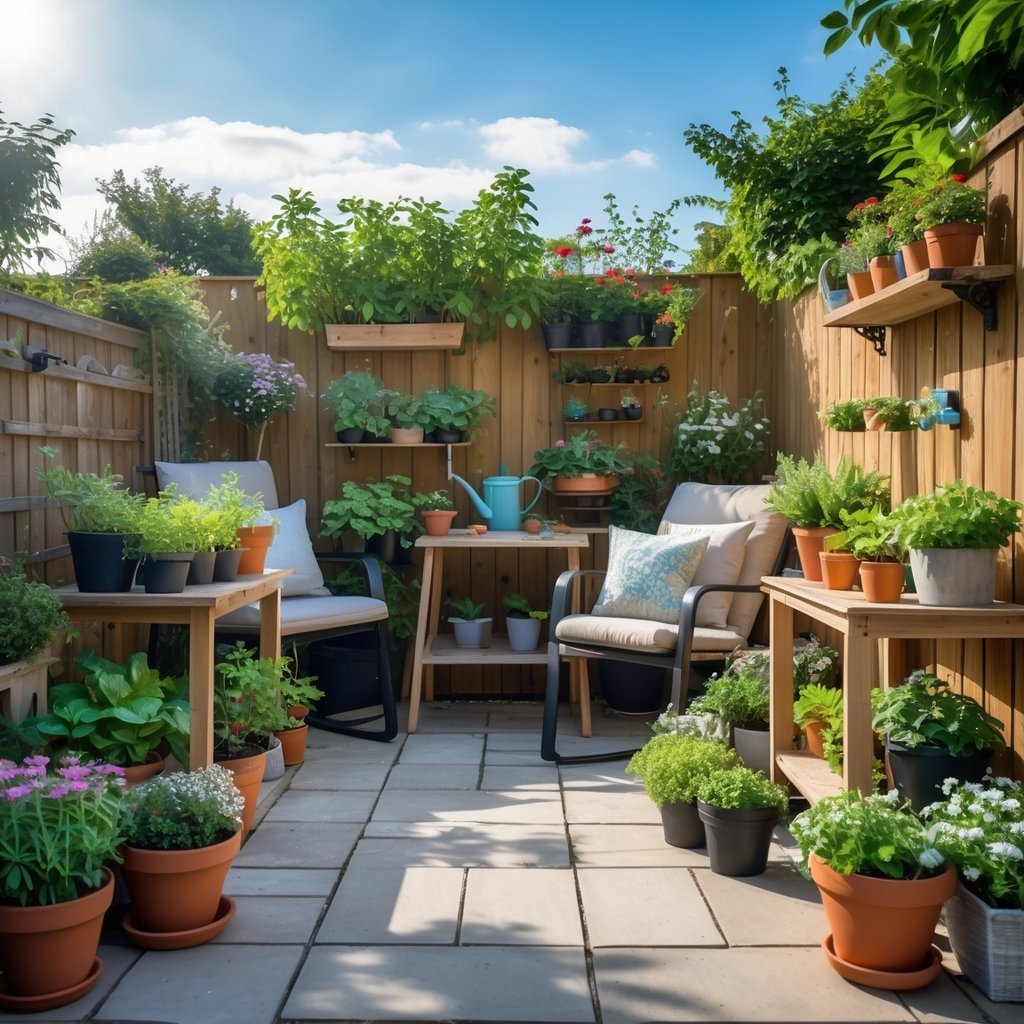
Decide what fits the space, how much sun it gets, and the look you want. Choose containers that match plant needs and your daily care routine.
Assessing Space and Sunlight
Measure your patio area: length, width, and any ledges or railings you can use. Note obstructions like vents or doors so you won’t block access or airflow. Sketch a simple layout to test where pots and furniture will go.
Track sunlight for three days. Mark full sun (6+ hours), partial sun (3–6 hours), and shade (under 3 hours). Use a phone photo or notes at morning, noon, and late afternoon to be precise.
Also check wind and heat reflection. Tall buildings or fences can create wind tunnels or heat pockets. These affect plant choice and pot placement more than you might expect.
Defining Your Garden Style
Pick one clear purpose: herbs for cooking, a flower display, a reading nook, or edible containers. Limiting choices keeps the space cohesive and reduces clutter.
Choose a visual style that fits your home. Options include modern (sleek pots and single-color plants), cottage (layered textures and mixed flowers), or Mediterranean (drought-tolerant plants and terracotta). Match colors and materials to existing furniture.
Decide on maintenance level up front. If you travel a lot, prioritize low-water, low-prune plants and self-watering containers. If you enjoy daily care, pick plants that reward frequent attention.
Selecting Container Types
Match container size to root space. Small herbs need 6–8 inch pots; compact shrubs and dwarf trees need 12–18 inch or larger. Bigger pots dry out slower and give plants more stability.
Choose materials by weight and insulation. Terracotta breathes but dries fast; plastic holds moisture and is light; ceramic looks good but can crack in cold. Use saucers or trays to protect deck surfaces.
Use vertical and multi-tier options for tight spaces: railing planters, wall pockets, stackable planters, and tiered shelves. Ensure each container has drainage holes or add a layer of gravel and a drip tray to prevent waterlogging.
Creative Small Patio Garden Setup Ideas
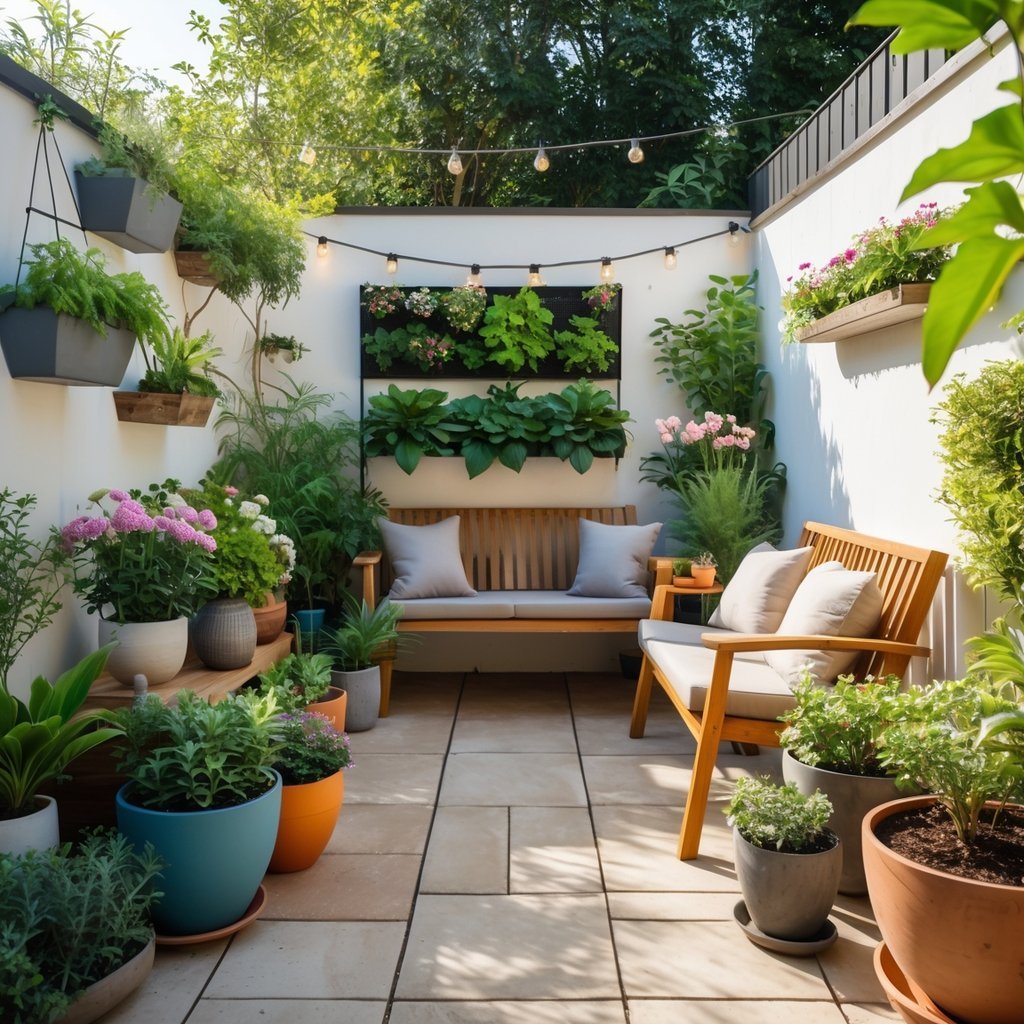
These ideas focus on getting the most plant space, useful furniture, and gentle water sounds into a small area. You will find practical ways to stack plants, choose items that pull double duty, and add a small water feature that fits tight spaces.
Vertical Planting Solutions
Use vertical space to grow herbs, flowers, and small veggies without losing floor area. Install a wall-mounted planter system or a sturdy trellis to support climbing beans, peas, or clematis. Pocket planters and hanging pockets work well for thyme, oregano, and petunias.
Choose lightweight containers and a quality potting mix to avoid overloading balconies. Space containers 6–12 inches apart vertically to allow airflow and light. Add a simple drip line or use self-watering pots to keep upper tiers moist without daily watering.
Group plants by water needs: drought-tolerant succulents on top shelves and moisture-loving herbs lower down. Secure every item to the wall or railing to prevent tipping in wind.
Multi-Functional Furniture
Pick furniture that stores, plants, or converts to seating to keep your patio uncluttered. Use benches with built-in storage for soil and tools. Select a fold-down table that mounts to the railing and folds flat when not in use.
Look for planters that double as side tables or ottomans. A narrow console table with integrated trough planters gives you a work surface and a line of greenery. Choose weatherproof materials like teak or powder-coated steel to reduce maintenance.
Measure before you buy. Keep a 24–30 inch clear path for walking. If you entertain, use stackable chairs so you can add seating only when needed.
Compact Water Features
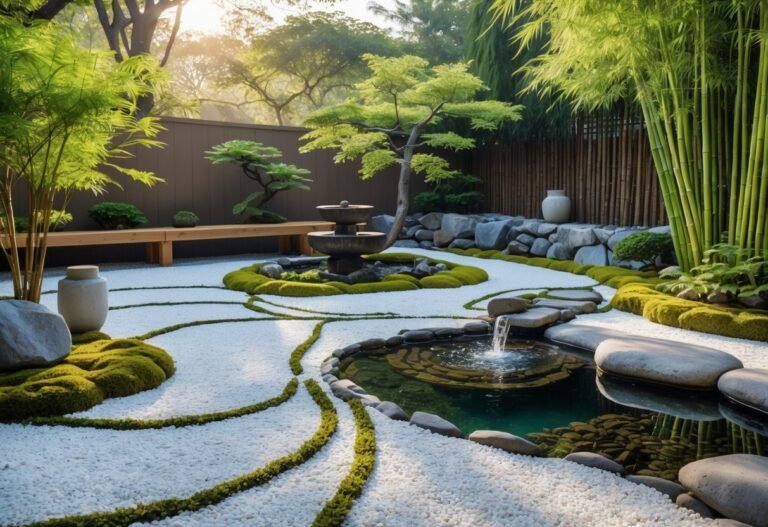
Choose small water features that fit corners or hang on walls to add sound and humidity. A wall-mounted fountain or a tabletop bubbler consumes little space and still attracts birds and beneficial insects. Use recirculating pumps to save water and prevent constant refilling.
Place the feature near plants that like humidity, such as ferns or calatheas. Add a small gravel tray under the basin to catch splashes and protect decking. Clean the pump and change water monthly to avoid algae and keep the system running smoothly.
Power options include a standard outlet or a solar pump for sunny patios. Secure electrical cords and use GFCI outlets if you plug equipment outdoors.
Choosing Plants for Limited Spaces
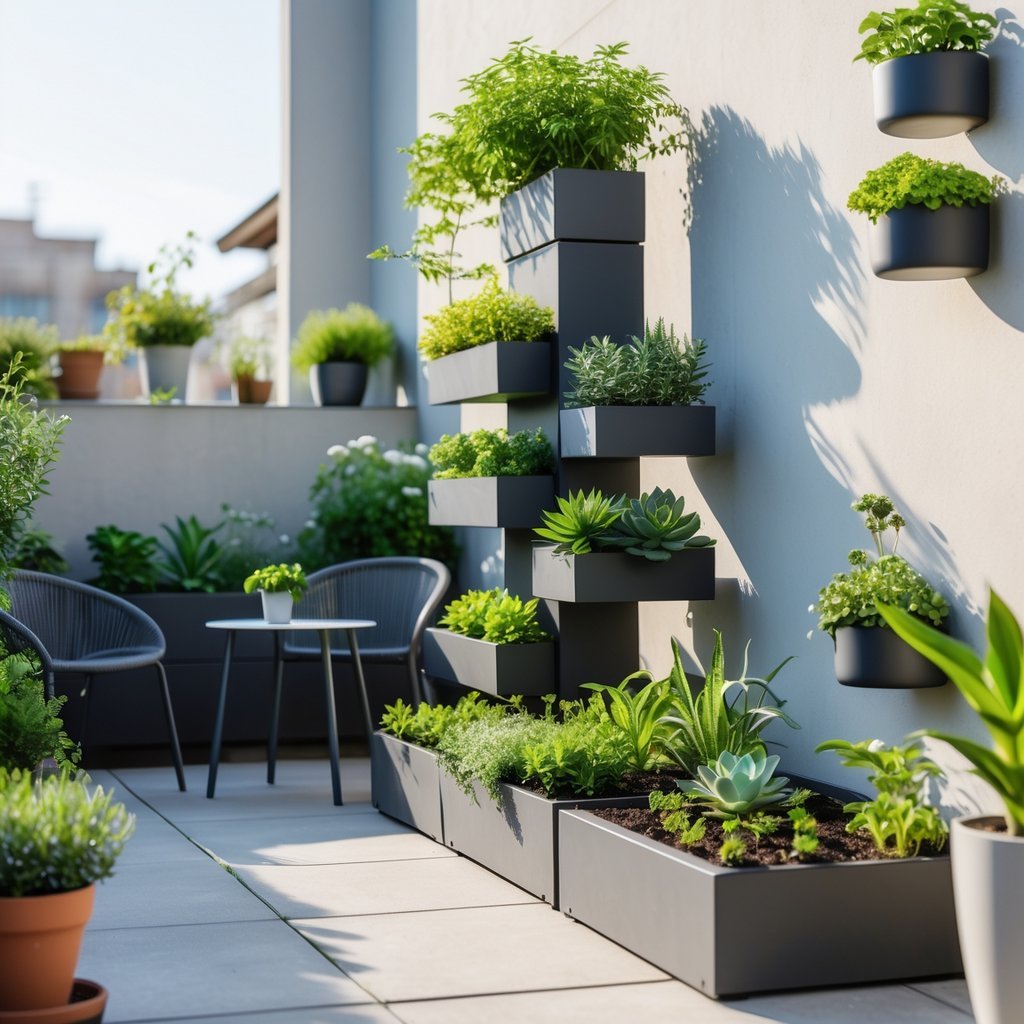
Pick plants that match the light, container size, and how much care you can give. Focus on compact varieties, multi-use plants, and those that thrive in containers to get the most from a small patio.
Best Edible Plants for Small Patios
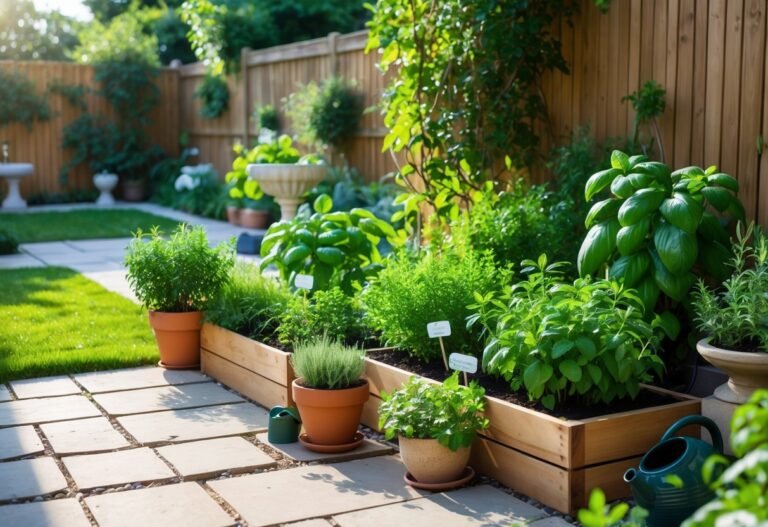
Choose compact, high-yield edibles that fit containers and give reliable harvests. Herbs like basil, parsley, chives, and mint grow well in 6–10 inch pots and need 4–6 hours of sun. Keep mint in its own pot to stop it spreading. Cherry tomatoes and dwarf pepper varieties suit 5–10 gallon containers and produce all season with regular feeding.
Leafy greens—lettuce, arugula, and spinach—yield quickly in shallow trays and tolerate partial shade. Strawberries do well in hanging baskets or tiered planters and give fruit from spring through fall. Use vertical space with herb rail planters or stackable pots to increase capacity without crowding the floor.
Low-Maintenance Ornamental Options
Pick plants that need little watering and pruning if you want easier care. Succulents and sedums thrive in sunny spots with well-draining soil and only occasional water. For shady patios, choose hostas, ferns, and begonias; they tolerate low light and stay tidy with minimal pruning.
Use containers with good drainage and a layer of gravel or perlite to reduce root rot. Group plants with similar water needs together to simplify watering. Consider one or two statement plants—like a dwarf olive tree or a clipped boxwood—in larger pots to give structure and reduce the number of small pots to manage.
Seasonal Flower Selections
Plan for blooms across the year by mixing early, mid, and late-season flowers. Plant spring bulbs such as tulips and crocuses in deep pots for bright early color. Add annuals like pansies and primroses for cool-season interest; they tolerate light frost and brighten early months.
For summer, use zinnias, marigolds, and petunias in hanging baskets and window boxes; they handle heat and provide long-lasting flowers. In fall, plant asters and mums in containers for late color. Replace spent annuals between seasons to keep your patio looking fresh without large beds or heavy soil work.
Enhancing Ambience and Functionality
You can make the patio feel cozy and work better by adding focused light, smart storage, and a few decorative pieces that also serve a purpose. Each choice should improve how you use the space and how it feels at different times of day.
Lighting Strategies
Think about layered lighting: task, ambient, and accent. Use a bright, weatherproof LED for seating or cooking areas so you can read or prepare food without straining your eyes. Place it on a pole or under a pergola beam for even coverage.
Add string lights or warm LED strips along railings and planters for soft ambient light. Choose dimmable fixtures or plug-in timers so you control brightness and runtime. Solar path lights work well if you lack outdoor outlets.
Use small spotlights or stake lamps to highlight a focal plant or water feature. Aim them low to avoid glare. For safety, pick IP44-rated fixtures and keep cords tidy with clips or conduit.
Clever Storage Solutions
Use vertical space first. Install a wall-mounted slatted panel with hooks for tools, trowels, and hanging baskets. That frees floor space and keeps items within reach.
Choose multifunctional furniture. Benches with hinged lids or ottomans with internal storage hide cushions, potting supplies, and small planters. A narrow cabinet against a wall stores fertilizer, gloves, and hand tools without blocking flow.
Use stackable crates or modular shelving for pots and seed trays. Label shelves by plant type or season to speed up watering and harvest. Keep a small caddy with pruning shears, ties, and a spray bottle for quick trips around the patio.
Incorporating Decorative Accents
Pick accents that add personality but also help the space function. A small fountain provides white noise and attracts birds while taking up minimal room. Choose a recirculating pump to avoid plumbing.
Use outdoor rugs to define zones—one for dining, one for a reading nook. Select fade-resistant, quick-dry materials to avoid mildew. Add cushions in weatherproof fabric; store them in bench compartments when wet.
Include a few eye-catching planters or a vertical trellis with colorful pots to create a visual focal point. Mix textures—terracotta, metal, and woven fibers—to keep the look balanced. Place mirrors opposite greenery to make the space feel larger without adding clutter.
Frequently Asked Questions
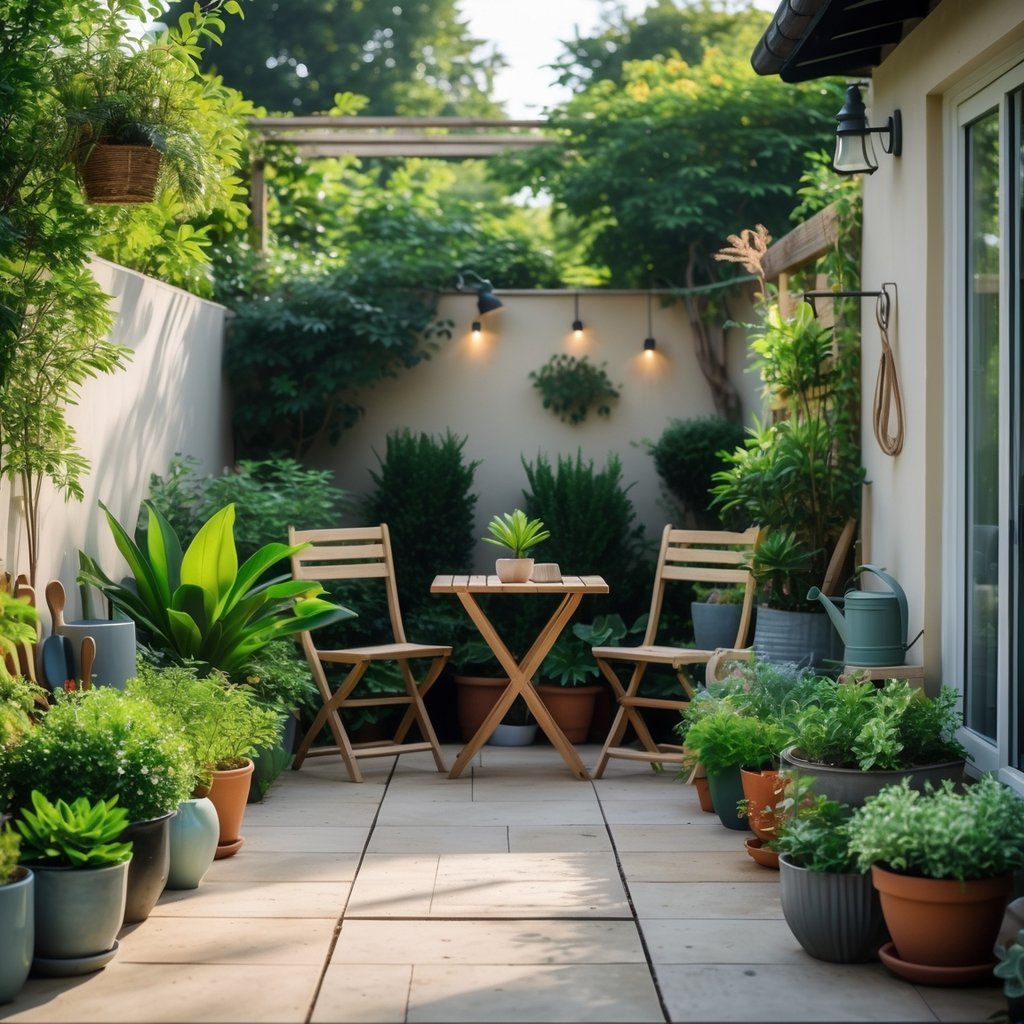
You can fit herbs, salad greens, and compact ornamentals in tight spots using vertical planters, railing boxes, and stackable pots. Use timed drip irrigation, mulch, and slow-release fertilizer to cut back on daily chores.
How can I create a low-maintenance garden in a small patio space?
Choose plants that match your light and wind conditions, such as succulents for sun or ferns for shade. Pick self-watering or deep-rooting containers to reduce watering frequency.
Use mulch, a timed drip system, and slow-release fertilizer to limit feeding and watering. Group plants with similar needs together so you can care for them all at once.
What are some affordable options for setting up a small patio garden?
Reuse containers like buckets, wooden crates, and old gutters as planters. Buy seeds or small starter plants instead of mature specimens.
Build simple vertical planters from pallets or shoe organizers to add lots of planting area for little cost. Shop sales, swap cuttings with neighbors, or grow from cuttings to save money.
What are the best DIY projects for enhancing a small patio garden?
Make a vertical wall using a wooden pallet, pocket planters, or stacked pots to free up floor space. Convert a small table into a potting station that doubles as extra planting space.
Create a simple trellis from bamboo or metal for climbing plants, and craft railing boxes from cedar boards for herbs. These projects use basic tools and cut setup costs.
Which plants are ideal for a compact patio garden layout?
Herbs like basil, mint, and chives grow well in small pots and give quick harvests. Salad greens, radishes, and dwarf tomatoes work for edible container gardens.
For ornamentals, choose compact varieties such as dwarf lavender, succulents, and small geraniums. Pick varieties labeled “compact,” “dwarf,” or “patio” for the best fit.
Can you provide inspiration for designing a very small patio area?
Try a vertical herb wall on one side and a narrow bench with built-in planters on the other to keep the center clear. Hang pots from the ceiling or railing to add layers without using floor space.
Use a uniform color for pots and cushions to make the area feel larger. Add a small rug and string lights to create a cozy, usable corner.
How should furniture be arranged on a small patio to maximize space for a garden?
Choose foldable or stackable furniture that you can move when you need more planting space. Place seating against a wall or railing to keep the center open for containers.
Use multi-functional pieces like benches with storage or tables with built-in planters. Keep walkways at least 24 inches wide for easy access to plants.