7 Bamboo Garden Ideas In Home: Practical Designs and Care Tips for Compact Spaces
You can turn small corners and wide yards into calm, useful spaces with bamboo. This article shows seven practical bamboo garden ideas that help you add privacy, style, and function to your home landscape and indoor spots.
You will find options for screens, planters, trellises, edging, water features, seating, and simple upkeep tips so you can pick ideas that fit your space and skill level. Expect clear, doable approaches that make your outdoor and indoor areas greener and more restful.
1) Bamboo Privacy Screens for Outdoor Spaces
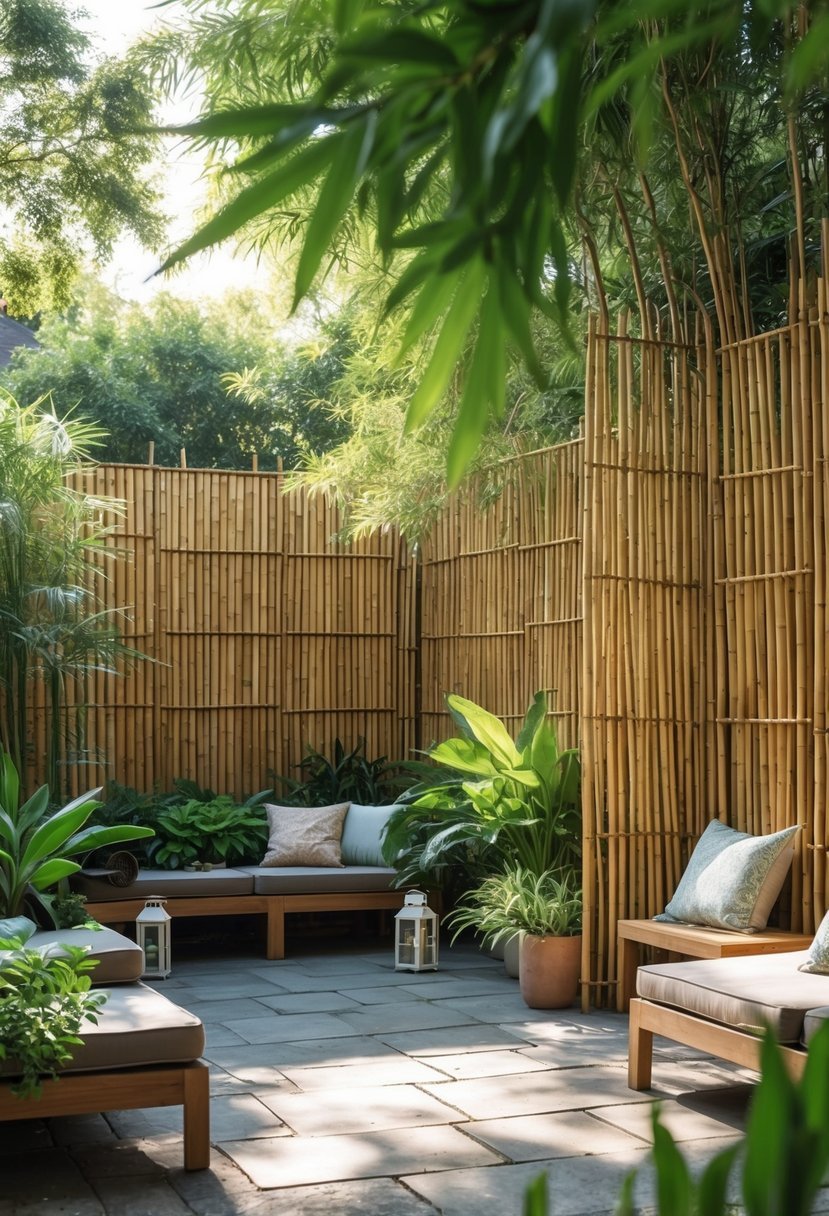
You can use bamboo screens to block views and make your yard feel private. Taller species or paired panels give quick coverage without heavy construction.
Place screens near patios, along fences, or between neighbors to create distinct outdoor rooms. Bamboo lets air pass through, so your space stays breezy while you relax.
Choose clumping bamboo or contained root barriers to avoid invasive spread. Maintain by trimming and checking supports for wind.
2) DIY Bamboo Hanging Planters
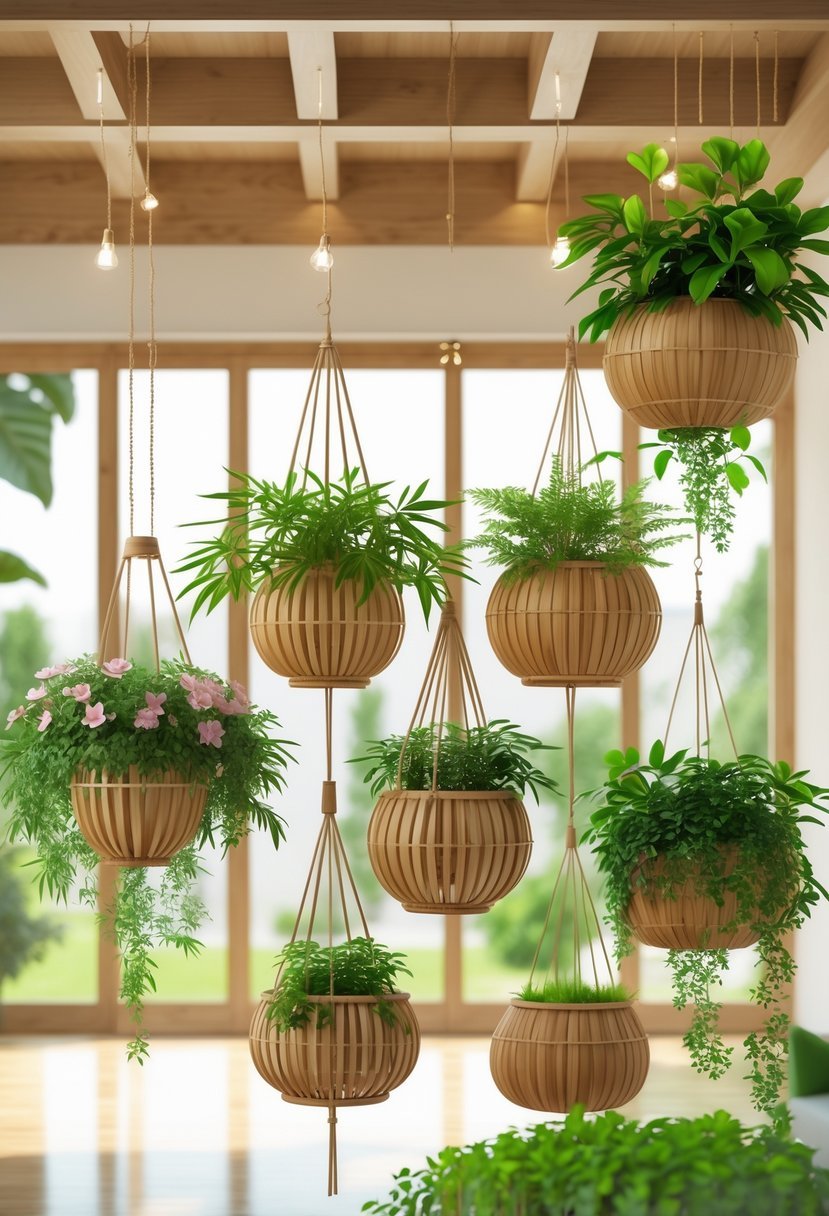
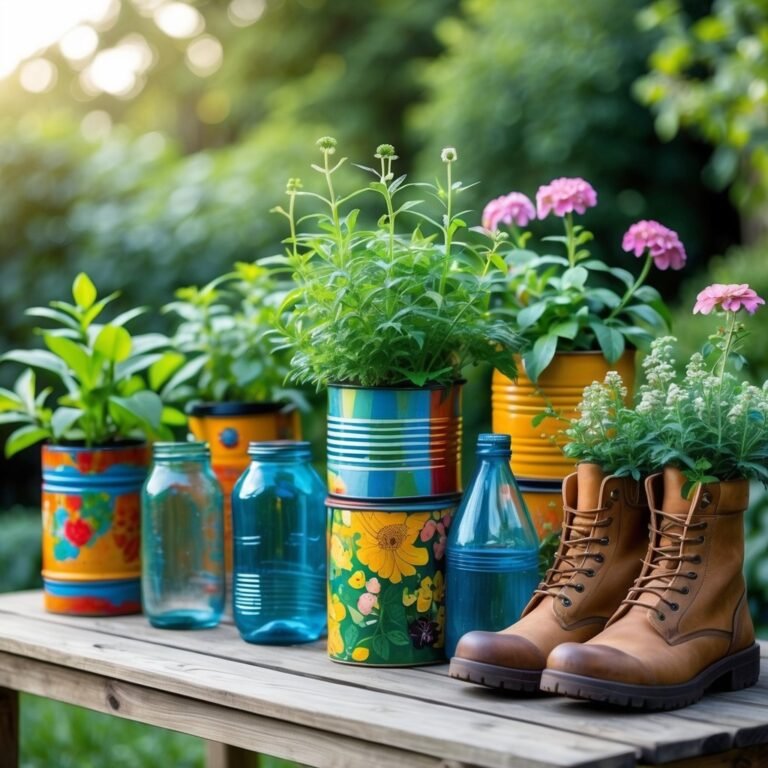
You can make simple, natural hanging planters from bamboo sections and rope. Cut bamboo into cups or cylinders, drill drainage holes, and sand the edges for safety.
Hang them from hooks or a beam to save ground space and add vertical interest. They work well for herbs, succulents, and trailing plants.
3) Bamboo Trellis for Tomato and Cucumber Support
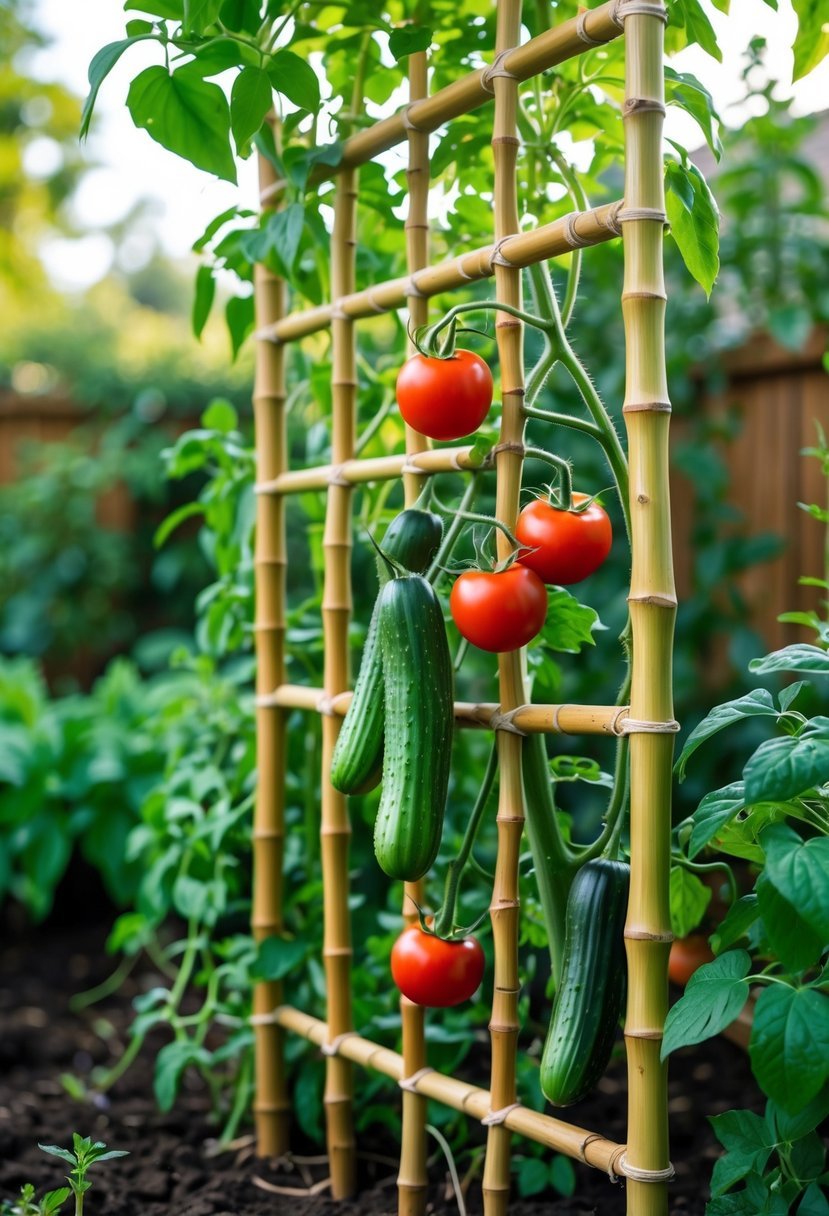
Build a simple bamboo trellis to save space and keep fruits clean. Use sturdy poles and tie them with twine to form A-frames or vertical ladders.
Place trellises in full sun and set poles deep for stability. Train vines upward and prune lower leaves to improve air flow and ripening.
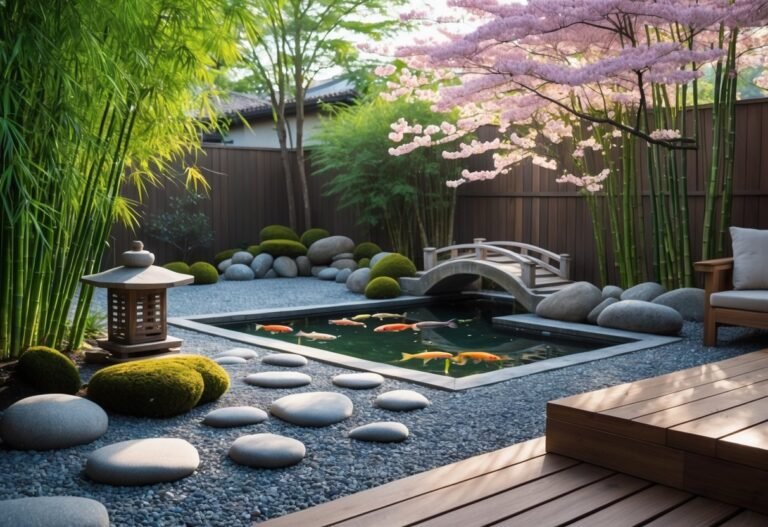
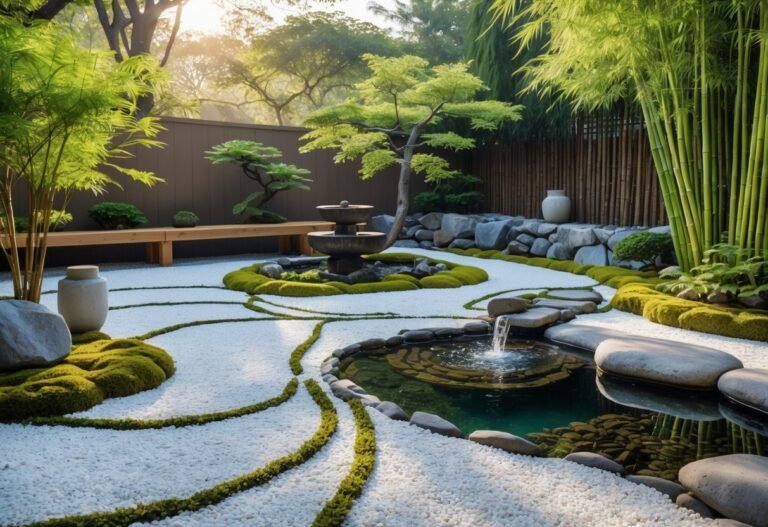
4) Zen Bamboo Water Garden with Stone Pathways
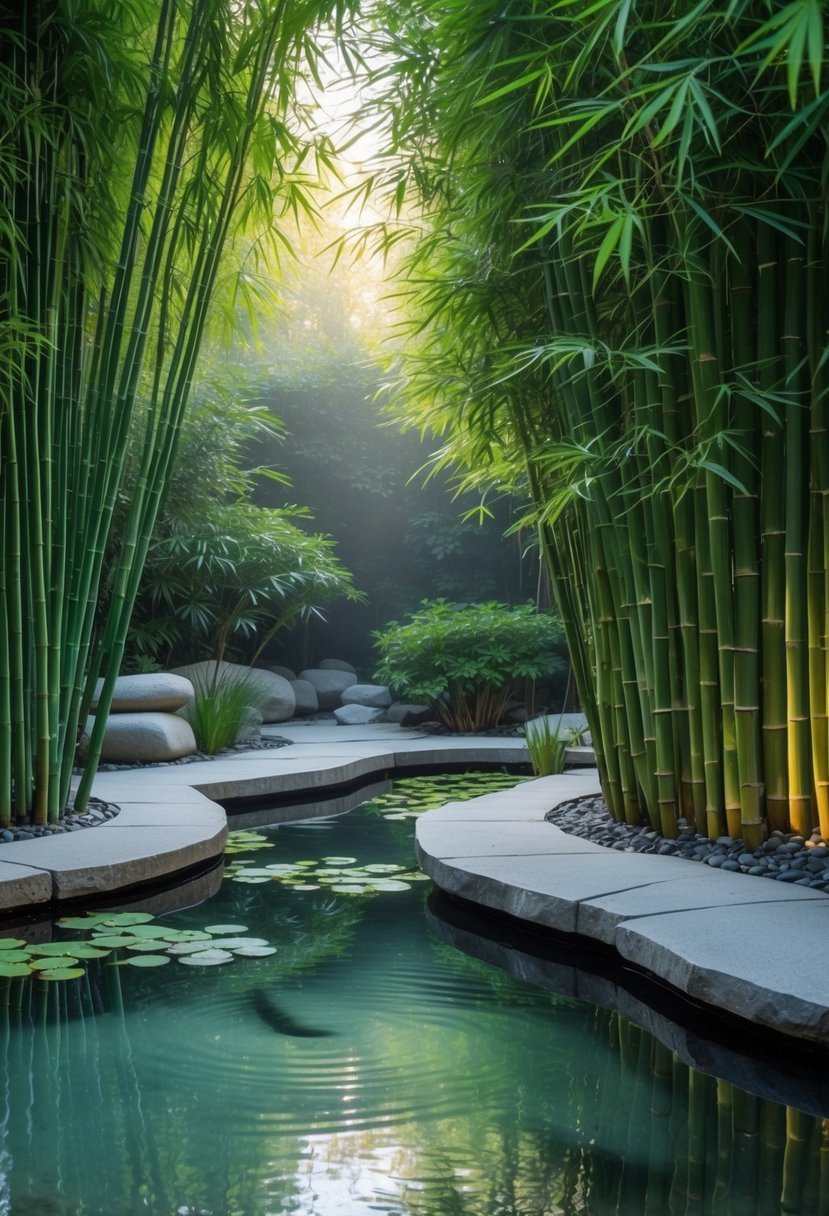
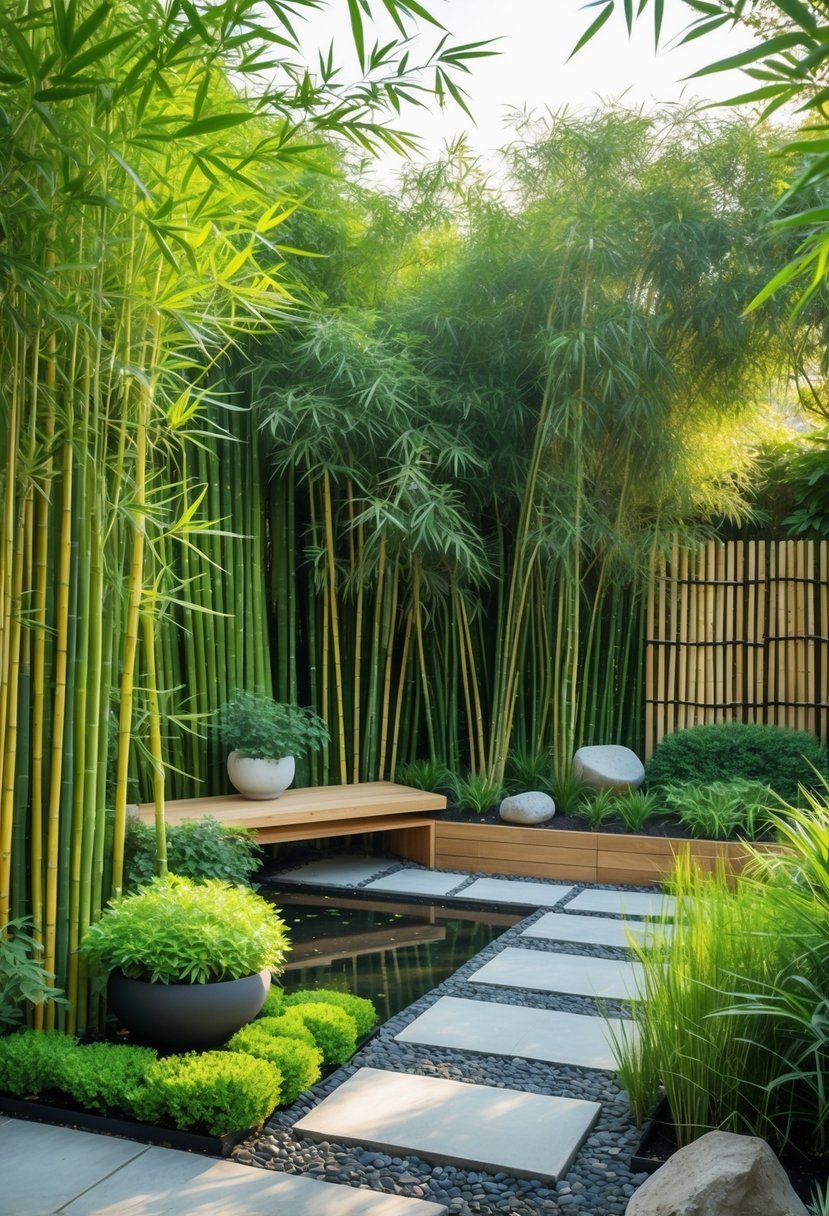
Create a calm corner by pairing a bamboo water spout with a shallow stone basin. The soft trickle of water soothes the space and draws the eye to the center of your garden.
Lay flat stepping stones to lead visitors through the planting. Keep the path irregular and spaced for a natural look that slows movement and invites pause.
Surround the water feature with low moss, ferns, and small bamboo clumps. Choose simple, muted materials to keep the design peaceful and balanced.
5) Bamboo Garden Edging for Defined Beds
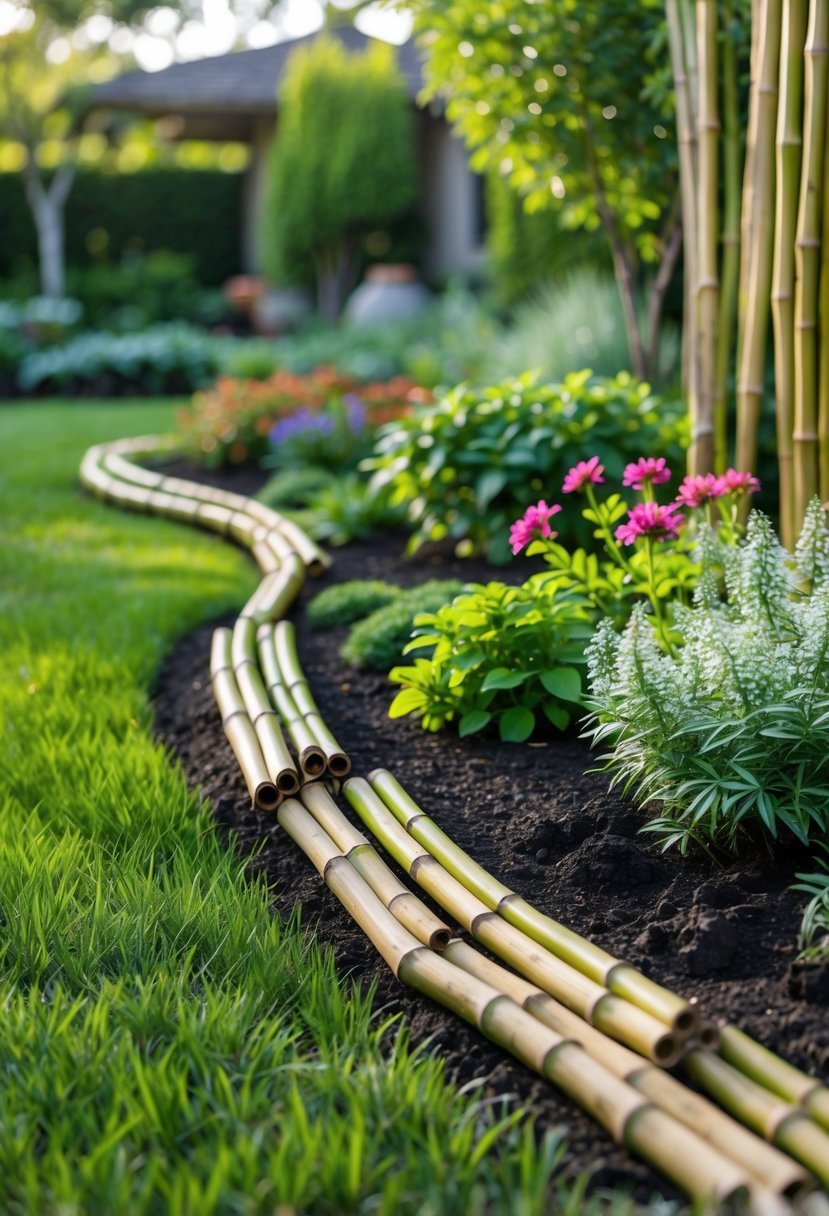
Use bamboo edging to give your beds a clean, natural border that keeps soil and mulch in place. You can install vertical stakes, short horizontal logs, or a woven bamboo strip depending on the look you want.
Measure the edge, cut poles to size, and press them into the ground or secure them with stakes. Bamboo is light and durable, so it’s easy to adjust as your garden changes.
6) Bamboo Plant Pots for Indoor Greenery
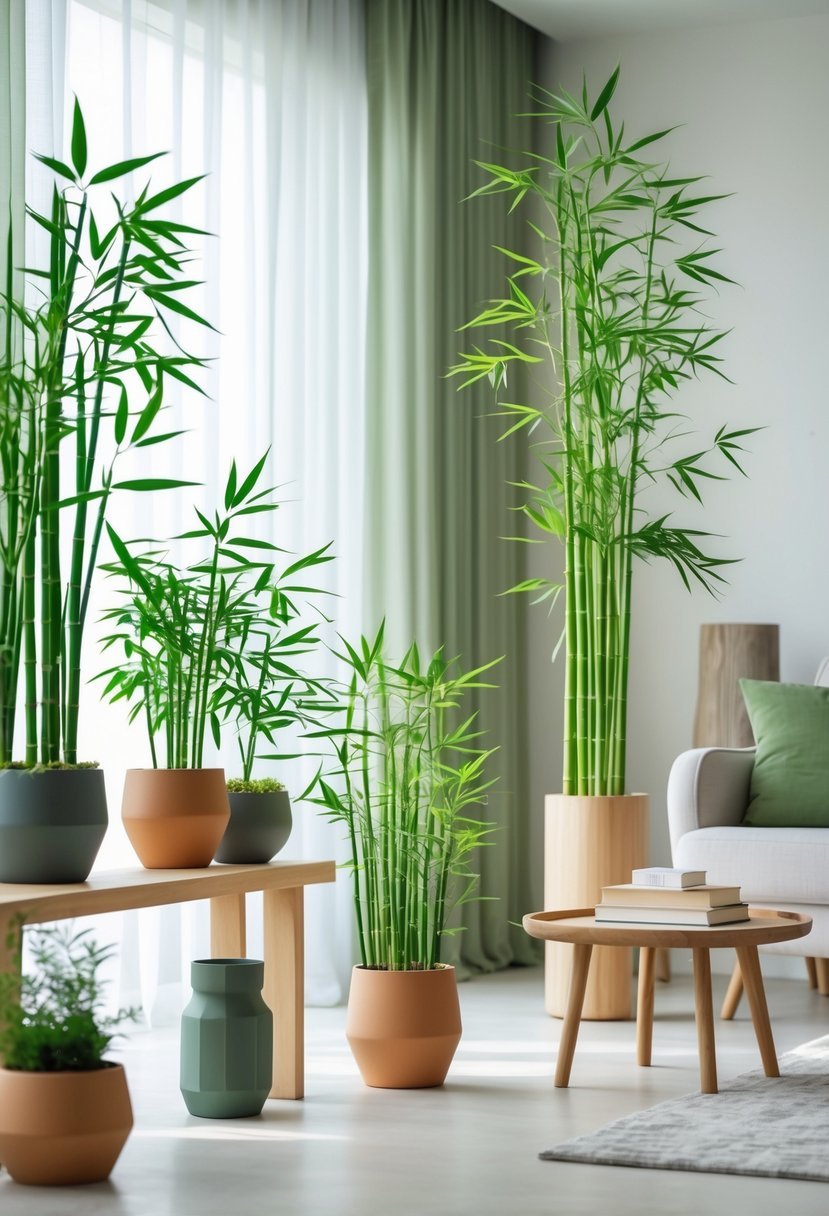
Choose a pot with good drainage so your bamboo roots stay healthy. A chunky ceramic or plastic container works well if you add a fast-draining potting mix.
Pick a pot size that fits the bamboo variety; small clumping types do fine in medium pots, while taller species need deeper containers. Move pots to brighter spots if leaves pale, and water regularly but avoid waterlogging.
7) Bamboo Garden Benches for Seating Areas
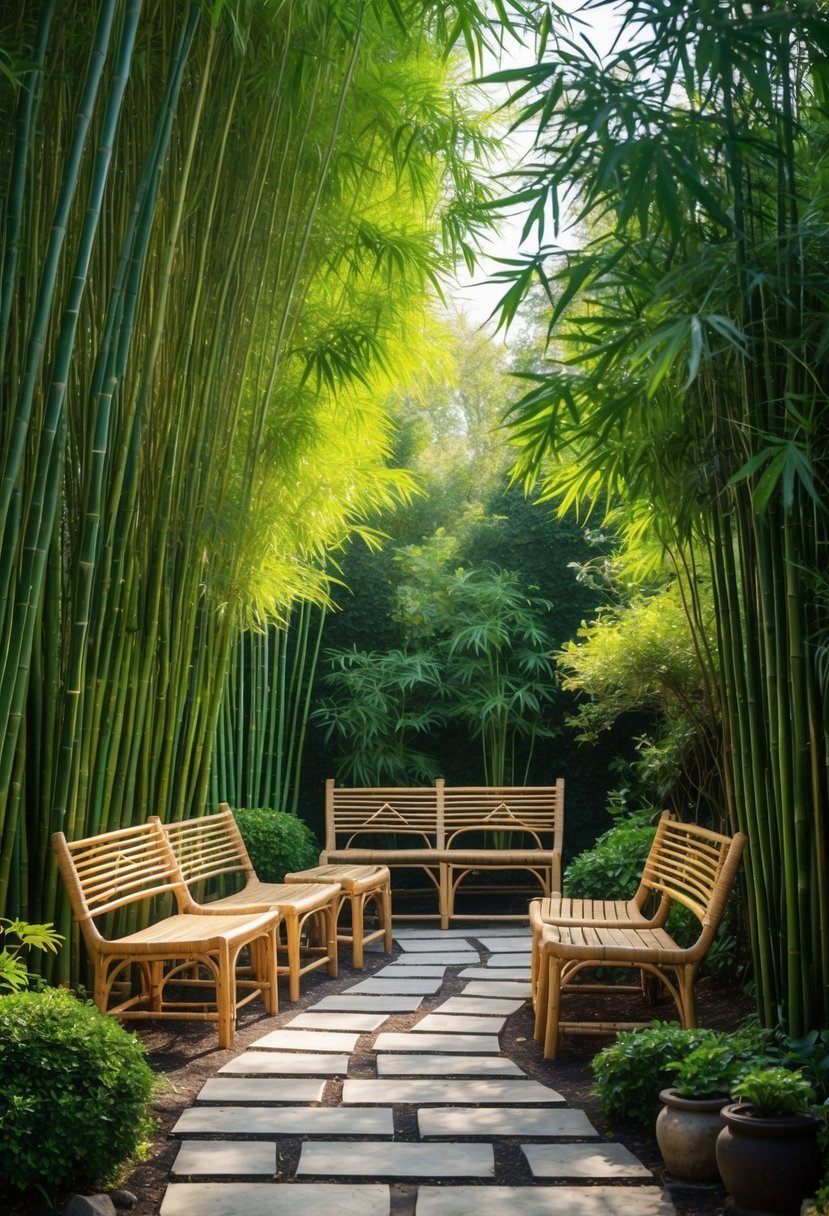
A bamboo bench adds natural style and sturdy seating to your garden. You can place one under tall bamboo for shade or by a path for a quiet spot to sit.
Choose treated bamboo or sealed finishes to resist weather and pests. Match bench size to your space so it feels balanced, not crowded.
Simple designs work well with plants and other features. Add cushions or a small table to make the area more comfortable and functional.
Essential Bamboo Garden Maintenance
Keep bamboo healthy by giving it steady moisture, well-draining soil, and occasional pruning to control size and remove dead canes. Watch for spreading runners if you plant running types, and feed clumping varieties once or twice a year.
Watering and Soil Conditions
Bamboo likes consistent moisture but not standing water. Water deeply once or twice a week in dry weather so the root zone (top 6–12 inches) stays moist. Reduce watering in cool, wet months.
Aim for loamy, well-draining soil with a pH near neutral (6.0–7.5). If your soil is heavy clay, mix in compost and coarse sand to improve drainage. For sandy soil, add organic matter to help hold moisture.
Mulch with 2–4 inches of shredded bark or compost to keep roots cool and cut watering frequency. Check soil by pushing a finger 2–3 inches down; if it feels dry, water.
If you grow bamboo in pots, choose wide, deep containers and use a high-quality potting mix. Containers dry faster, so expect to water more often and repot every 2–3 years.
Pruning for Healthy Growth
Prune in late winter or early spring before new shoots arrive. Remove dead, weak, or damaged canes at ground level to free up nutrients and light. Thinning crowded clumps every 2–3 years keeps plants vigorous.
Cut back overly tall canes to control height and wind stress. Use sharp loppers and make clean cuts just above a node. Leave the strongest, straightest canes spaced about 3–6 feet apart, depending on species.
If you want to limit spread for running bamboo, install a root barrier 18–24 inches deep, or regularly cut through new runners with a spade. For potted bamboo, trim roots and top growth when you repot to maintain a balanced plant.
Choosing the Right Bamboo Variety
Pick bamboo based on how big you want it, how fast it spreads, and whether it needs a root barrier or a pot. Match height and width to your space and check the plant’s cold hardiness before you buy.
Clumping vs. Running Bamboo
Clumping bamboo spreads slowly and stays in tight groups. Choose clumping types like Bambusa if you want a low-maintenance hedge or a potted specimen. They rarely need root barriers and are easier to control in small yards.
Running bamboo spreads fast through long underground rhizomes. Pick running types only if you can install a strong barrier (30–36 inches deep) or commit to frequent root pruning. Running bamboo is good for tall privacy screens but can invade lawn and neighbors’ beds if left unchecked.
Use this checklist when choosing:
- Purpose: screen, specimen, or container.
- Space: measured width and height limits.
- Control plan: barrier, edging, or pots.
Considerations for Indoor and Outdoor Spaces
For indoor use, pick smaller, clumping varieties that tolerate lower light and less root space. Look for dwarf or compact cultivars and use wide, shallow pots with good drainage. Place them near bright windows and water when the top inch of soil dries.
For outdoor plantings, match the species to your USDA hardiness zone. Choose cold-hardy Phyllostachys for temperate climates or tropical Bambusa for warm regions. Consider mature height so plants won’t overpower fences or utilities. Install root barriers for running types or plant clumps with at least 3–4 feet between each for air flow and future maintenance.
Use these practical tips:
- Check tag for mature height and zone.
- Measure space and plan irrigation.
- Budget for barriers or regular pruning if needed.
Frequently Asked Questions
These answers cover practical steps you can take to add bamboo features, grow healthy plants, pair bamboo with other ornaments, care for indoor arrangements, and meet soil and privacy needs.
How can I incorporate bamboo into my outdoor garden design?
Use bamboo as a living privacy screen along property lines to block views and reduce noise. Plant clumping bamboo 2–4 feet from fences or use bamboo canes to build a screen if you prefer a non-living barrier.
Create a focal point with a small bamboo grove around a stone path or water feature. Combine bamboo garden edging to define beds and add a bamboo trellis to support tomatoes and cucumbers.
Install bamboo hanging planters on a porch or pergola for vertical interest. You can also place short, decorative bamboo poles around potted plants to echo a zen water garden design.
What are the optimal conditions for growing bamboo at home?
Most garden bamboos prefer full sun to partial shade. Give them at least 4–6 hours of direct sun daily for healthy growth.
Provide consistent moisture, especially the first two years. Mulch to keep roots cool and retain water, but avoid waterlogging.
Choose the right bamboo type: clumping varieties stay contained while running types spread quickly. Match the variety to the space and control needs.
What other ornamental elements complement a bamboo garden theme?
Use smooth river stones or crushed gravel to make pathways that match bamboo’s clean lines. Add a small stone basin or fountain to reinforce a zen bamboo water garden.
Mix in low, evergreen shrubs or ornamental grasses for layered texture. Place simple wooden or bamboo furniture near the grove to keep the natural look consistent.
Metal or ceramic planters with muted tones work well next to bamboo hanging planters. Keep decorative items minimal to preserve the calm, structured aesthetic.
How do I maintain bamboo plants indoors for a long-lasting arrangement?
Place indoor bamboo where it gets bright, indirect light near an east- or west-facing window. Rotate the pot occasionally so all sides receive light.
Water when the top inch of soil feels dry; do not let roots sit in standing water. Feed monthly with a balanced, diluted fertilizer during the growing season.
Trim yellow or crowded canes to encourage new shoots. Repot every 2–3 years to refresh soil and prevent root binding.
Are there any particular soil requirements for planting bamboo?
Use well-draining soil rich in organic matter. A loamy soil mixed with compost or aged bark keeps moisture balanced and supplies nutrients.
Aim for a slightly acidic to neutral pH (about 6.0–7.0). If your soil is heavy clay, amend it with sand and organic matter to improve drainage before planting.
Can bamboo be used as a privacy screen in residential gardens?
Yes. Clumping bamboo varieties form thick, vertical growth that makes an effective living screen. Plant them in a staggered line 3–6 feet apart for quick coverage.
If you choose a running bamboo, install a root barrier at least 30 inches deep to stop unwanted spread. You can also use bamboo poles or panels to create a fast, non-living screen if you want instant privacy.