Side Yard Design Ideas for Small Spaces: Creative, Low-Maintenance Plans
You can turn a narrow, forgotten strip into useful, beautiful space with a few smart choices in plants, paths, and furniture. Use shade-tolerant or low-water plants where light or access is limited, add a simple path to guide movement, and pick compact seating or storage that fits the space.
Think about function first—privacy, access, or curb appeal—and match materials and plants to that purpose so the design lasts with low upkeep. A clear plan that matches one main purpose to the right plants, paving, and accents will make your side yard look and work better without heavy work or cost.
Use lighting, vertical planting, and tidy edging to add polish and make the space feel larger and safer at night.
Key Takeaways
- Start with a clear purpose for your side yard.
- Choose plants and materials that fit light and maintenance needs.
- Small features like lighting and vertical elements boost impact.
Key Principles of Side Yard Design
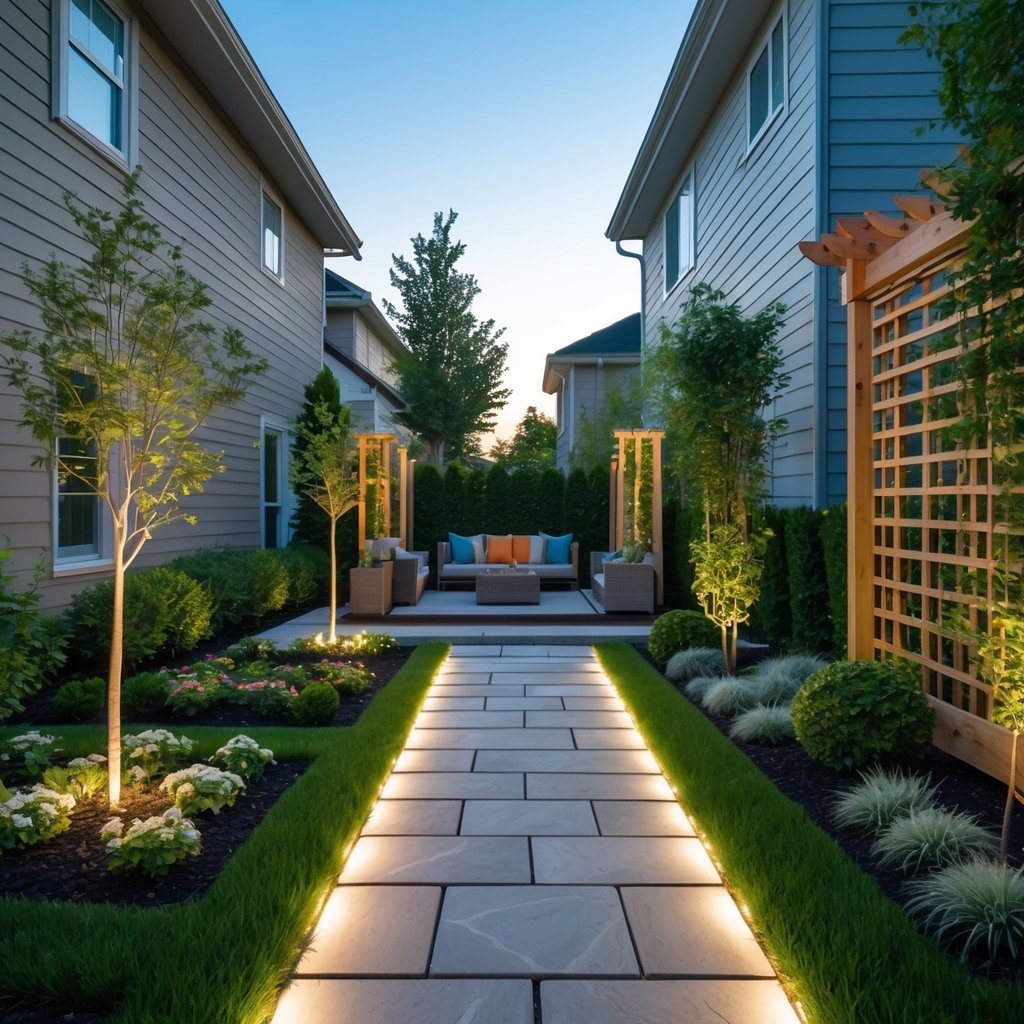
Plan with light, space, and movement in mind. Focus on real measurements, sun paths, and how people will use the area day to day.
Assessment of Space and Sunlight
Measure the width, length, and height of fences, walls, and eaves first. Note fixed features like downspouts, meters, and vents so you don’t block them. Sketch a simple plan with a north arrow and mark obstacles.
Track sunlight through the day for at least one clear day. Record hours of direct sun, morning vs. afternoon shade, and any seasonal changes from trees or neighboring buildings. Use this to pick plants and locate seating or a path.
Check soil depth and drainage near foundations. Shallow soil limits roots and planter choices. If drainage is poor, plan raised beds or gravel channels to avoid water pooling against the house.
Maximizing Privacy and Security
Place privacy elements where sightlines cross into your side yard. Use tall, narrow plants like arborvitae or bamboo in a line to block views without taking much width. Combine solid fencing with planting to soften the look.
Use layered planting and vertical screens for depth. A trellis with climbers plus a low hedge keeps neighbors from peeking while letting air flow. Keep planting 12–18 inches from the house to allow inspection and airflow.
Add lighting and visibility for security. Install motion-sensor lights near gates and along the path, and low-level path lights to prevent trips. Lockable gates and a clear sightline to the street or front yard improve safety.
Optimizing Accessibility
Create a continuous, level path at least 36 inches wide for easy passage. Use permeable materials like gravel with edging, compacted decomposed granite, or narrow pavers to reduce mud and trip hazards. Add a 48–60 inch turning space where needed for carrying items.
Place gates, storage, and utility access at practical points. Put a gate closer to the driveway if you regularly move trash cans or garden supplies. Locate a slim storage shed or wall hooks near the path for hoses and tools.
Design transitions with low steps or ramps. Keep thresholds flush and use contrasting textures or colors at steps to help visibility. Ensure maintenance access to siding, meters, and downspouts without dismantling landscaping.
Landscape Layout Ideas for Side Yards
You can turn a tight, shady, or sloped side yard into a useful and attractive area. Focus on clear walkways, smart seating, productive planting, and vertical elements to make the most of limited space.
Narrow Pathway Solutions
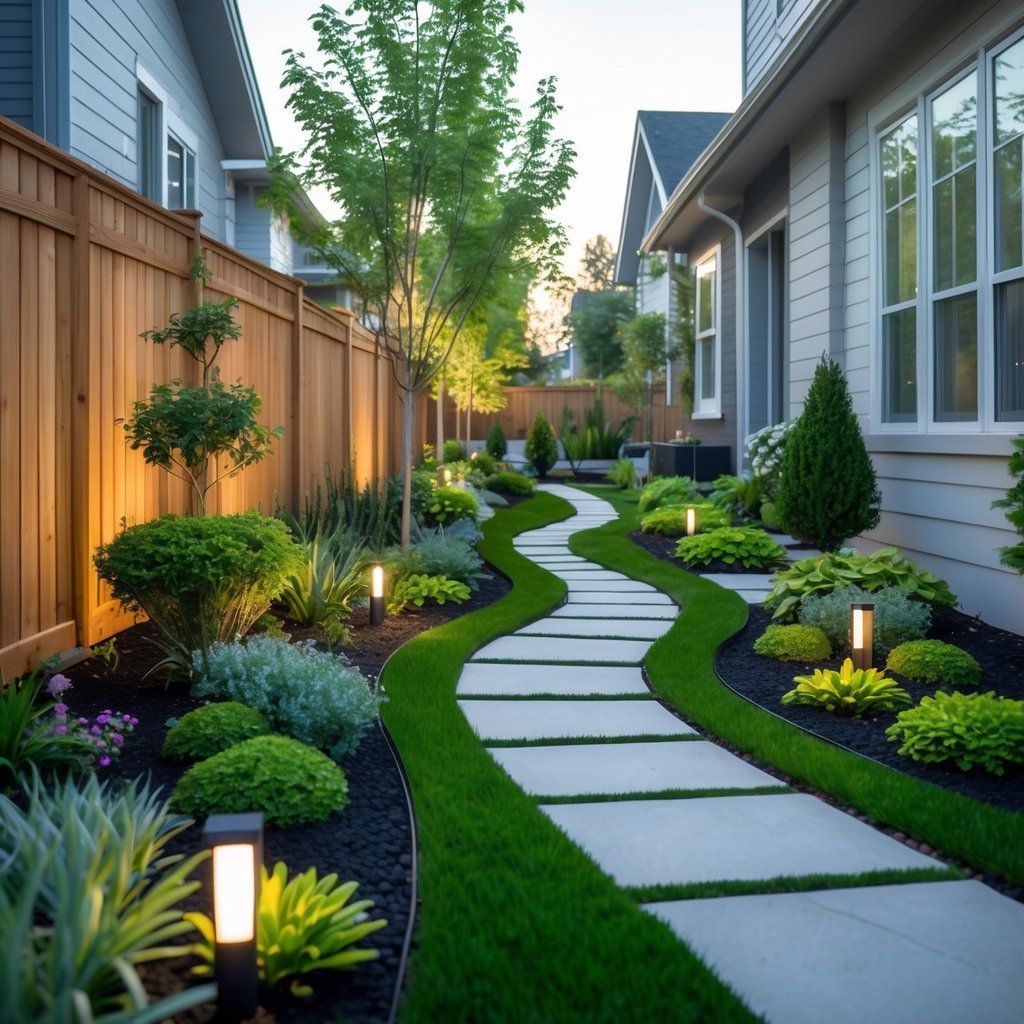
Keep the path at least 3 feet wide where possible so two people can pass. Use straight or gently curving lines to guide movement; straight lines feel formal, curves soften the space. Durable surfaces like poured concrete, compacted gravel, or narrow pavers cut to fit the width work well for long, skinny strips.
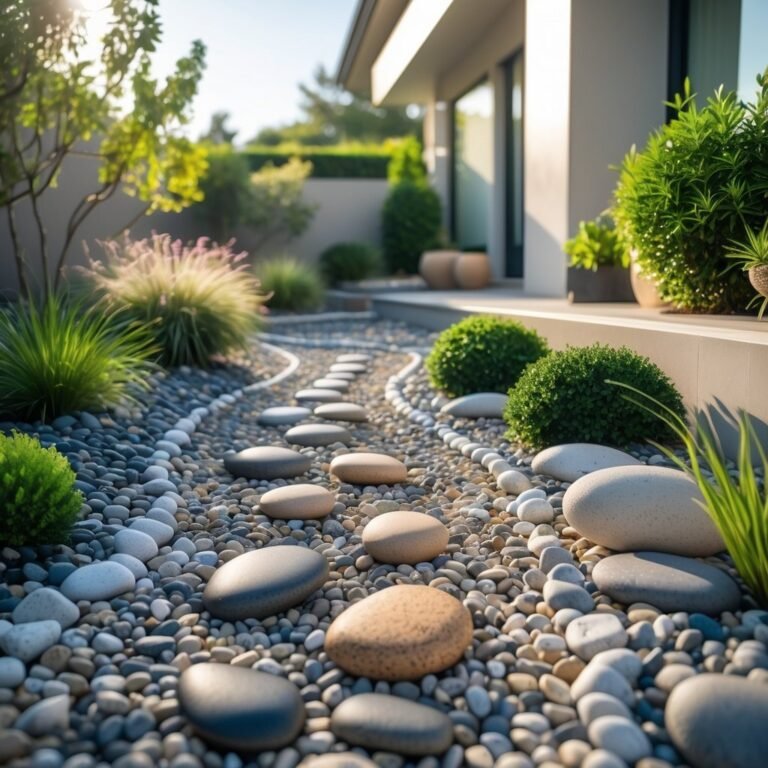
Edge the path with low plants or a 6–12 inch strip of river rock to prevent soil spillage. Add 6–12 inch raised edging if you want a cleaner look. Place low-level solar lights every 6–8 feet to improve safety and highlight the route without heavy wiring.
If drainage is an issue, install a narrow French drain alongside the path or slope the surface away from the house by 1 inch for every 8 feet. Keep plants and fixtures at least 18 inches from foundation vents and meter boxes.
Functional Seating Areas
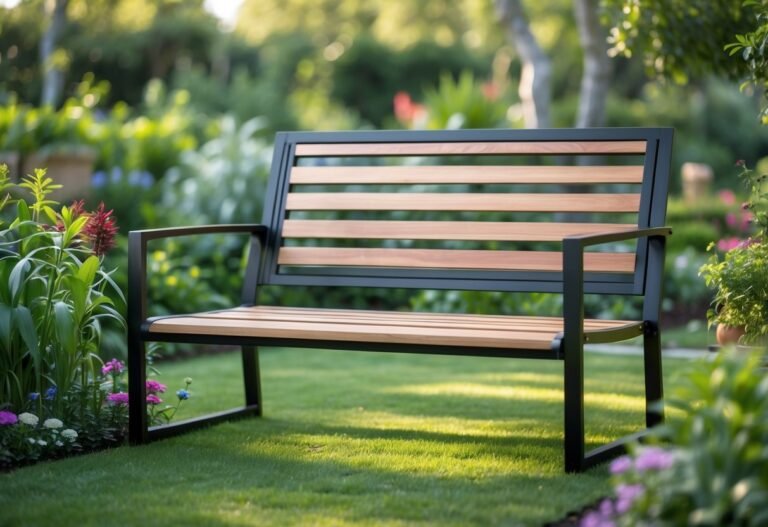
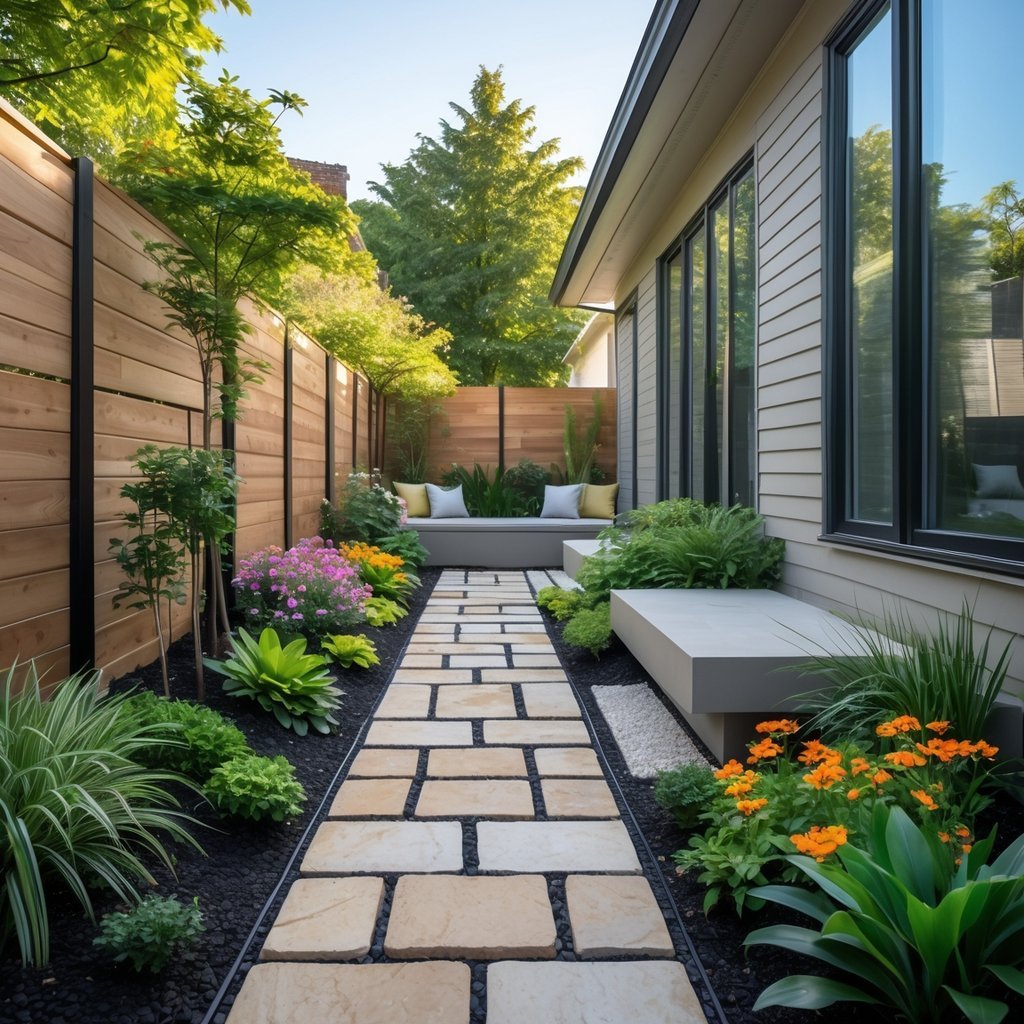
Choose benches or slim-profile furniture that sit parallel to the house to save width. A built-in bench 12–16 inches deep along a fence uses space efficiently and can include under-seat storage for tools or cushions. For very narrow yards, use a fold-down table and two stools that stow flat when not in use.
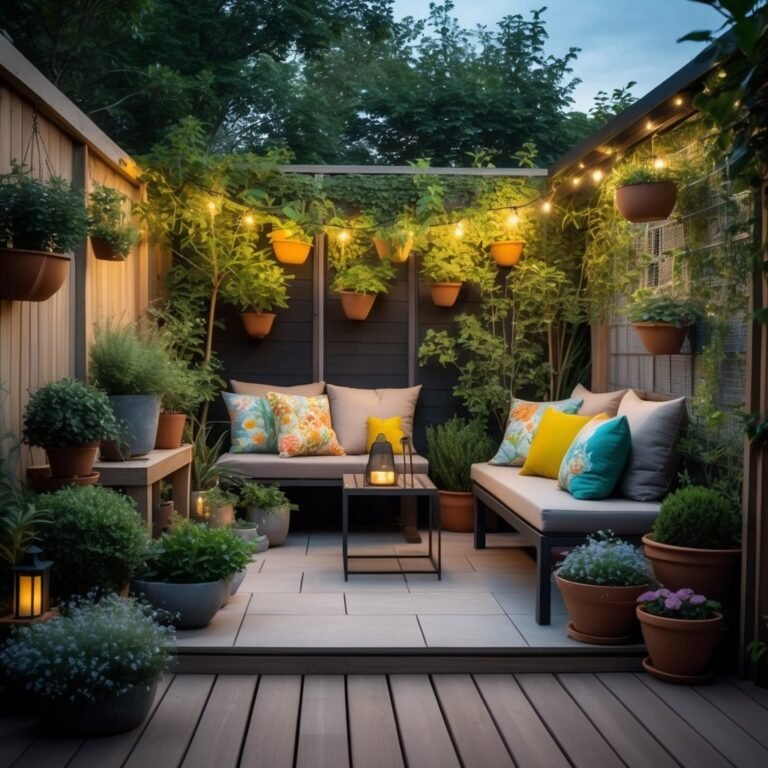
Anchor seating with a small patio of compact pavers or a 4–6 foot wide decking strip to define the area. Include a shade element — a retractable awning, sail, or climbing vine on a trellis — to make the spot usable during hot afternoons. Add one or two potted plants of different heights to create privacy without crowding.
Plan for circulation: leave a 30–36 inch clearance in front of seating so people can walk past comfortably. If noise is a concern, add a water feature like a 12–18 inch fountain to mask street sounds.
Edible Gardens
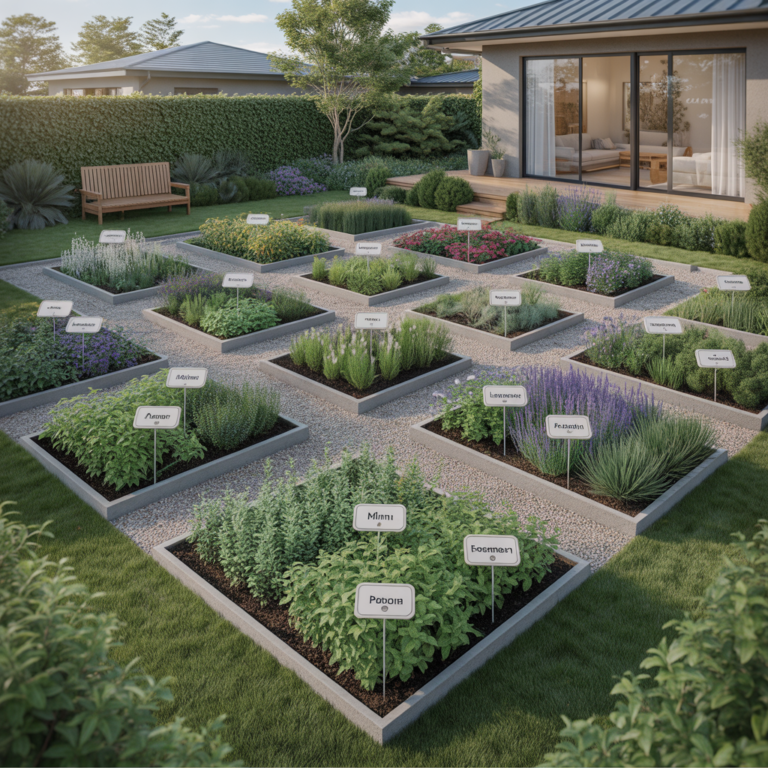
Use raised beds 8–12 inches high and 2–3 feet wide to keep planting and harvest within easy reach. Place beds along the sunny side of the yard; most vegetables need 6+ hours of sun. For partial shade, focus on leafy greens, chard, herbs, and root crops that tolerate less light.
Install a drip irrigation line with a timer to deliver water directly to roots and reduce waste. Stagger planting in succession rows to extend harvests through the season. Label beds with simple stakes so you remember crop rotation and avoid soil-borne disease buildup.
If space is very tight, interplant herbs and annual vegetables in pots or grow bags. Use narrow planter boxes mounted on rails or the fence to add more growing area without taking floor space.
Vertical Garden Installations
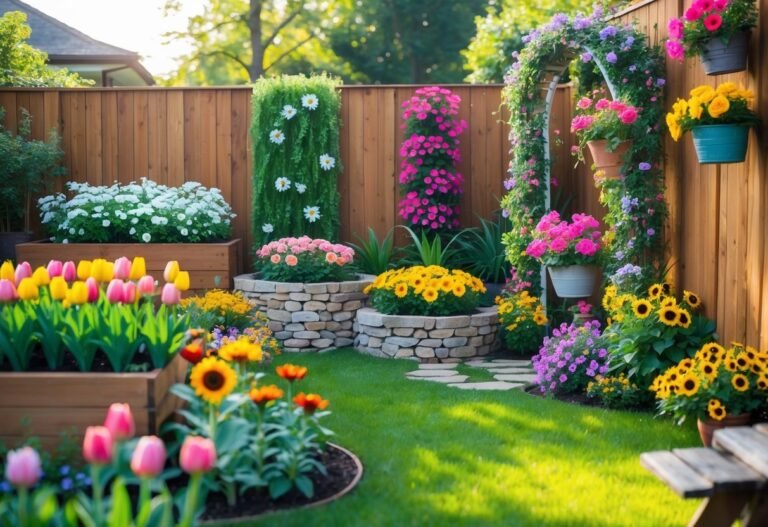
Mount trellises, living walls, or stacked planters on the fence to multiply planting area. Choose sturdy materials like cedar or powder-coated metal that resist rot and rust. For climbing vegetables, install a trellis 6–8 feet tall and space plants 6–12 inches apart depending on species.
For living walls, use modular panels with a built-in irrigation line or drip tubing. Select lightweight potting mixes and keep panel widths to 2–3 feet to limit weight and water stress. Rotate crops or replace panels seasonally to maintain plant health.
Mix ornamental and edible climbers — such as nasturtiums, peas, and compact cucumbers — to improve pollination and visual interest. Ensure easy access for pruning and harvest by leaving a 2–3 foot clearance in front of the vertical elements.
Decorative Elements and Final Touches
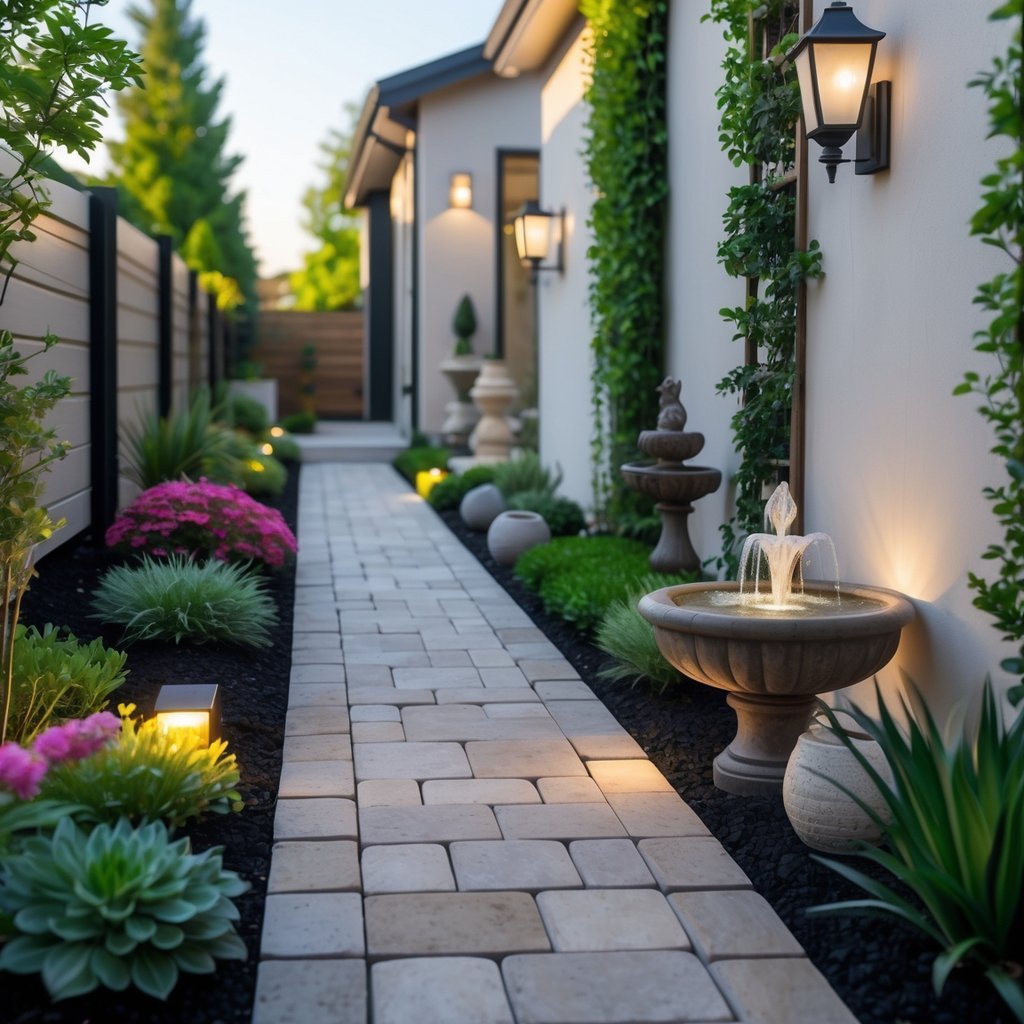
Choose elements that add safety, privacy, and personality without crowding the narrow space. Focus on durable materials and scale the pieces to the width and sightlines of your side yard.
Outdoor Lighting Enhancements
Use layered lighting: path lights, wall-mounted sconces, and low uplights to create depth and increase safety. Install LED path lights every 6–8 feet along walkways to guide steps and reduce trip hazards. Choose warm white (2700–3000K) for a cozy look that matches porch lighting.
Place wall or fence-mounted sconces near gates and doors at about 66–72 inches high for consistent illumination. Add small spotlights aimed at vertical features like a trellis or specimen plant; aim fixtures at a 30–45 degree angle to avoid glare. Use motion sensors only for service paths where you want security; for living spaces, use dusk-to-dawn or dimmable controls.
Protect fixtures with wet-location ratings if exposed to rain. Use low-voltage systems to cut installation cost and energy use. Label circuits and keep wiring in conduit for future maintenance.
Fencing and Trellis Options
Pick a fence height and material that meet local codes and match your home’s style. For privacy, use 6-foot horizontal wood slats with 1/4-inch spacing to allow airflow while blocking sightlines. Stain or paint to match trim to keep a cohesive look.
If you want light and greenery, install a 4–5 foot lattice or metal trellis along the wall for climbing vines like clematis or jasmine. Anchor trellises into concrete footings or use heavy-duty wall anchors to resist wind. For a modern touch, choose powder-coated steel panels with laser-cut patterns to add texture without bulk.
Consider a fence with integrated shelves or built-in planters to save space. Use rust-resistant hardware and stainless-steel fasteners to avoid staining and reduce maintenance.
Artistic Features and Sculptures
Choose one focal piece rather than many small items to avoid clutter. A narrow vertical sculpture, water wall, or a tall ceramic urn can draw the eye up and make a tight area feel taller. Position the piece at a visual stop—end of a path or against a simple backdrop.
Use materials that tolerate outdoor conditions: corten steel for a rusty patina, stone for permanence, or glazed ceramic for color. Mount heavier pieces on concrete pads and bolt them down if needed for safety. Keep scale proportional: a piece should be no wider than one-third of the walkway width.
Add small accents like a row of matching pots or a single wall-mounted mosaic to complement the main artwork. For water features, choose recirculating pumps rated for continuous use and install a GFCI-protected outlet.
Frequently Asked Questions
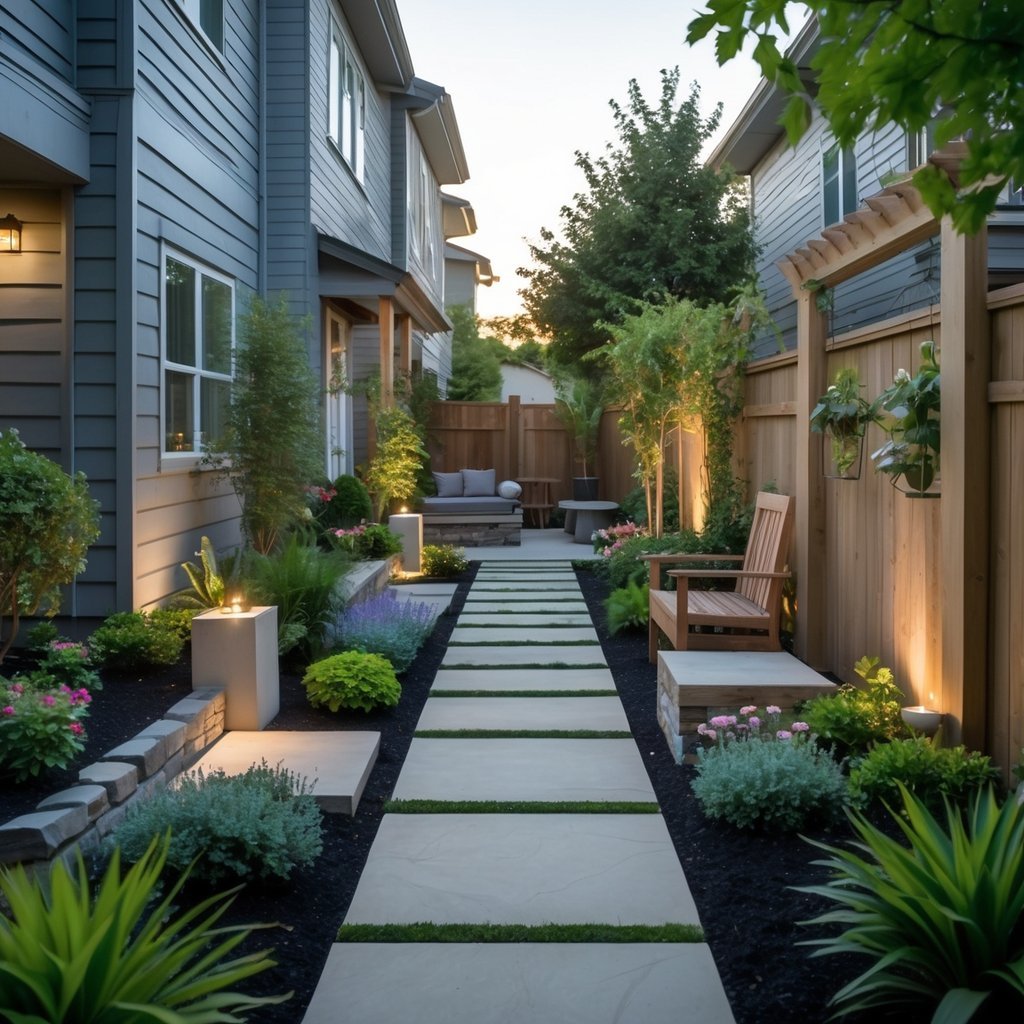
Find specific plant, hardscape, and layout options you can use right away. Each answer gives clear actions and examples for narrow, small, low-maintenance, and no-grass side yards.
What are effective landscaping solutions for narrow side yards?
Use a straight, narrow path of pavers or gravel to guide movement and keep planting beds tidy. Place tall, slim plants like Italian cypress, bamboo in containers, or dwarf columnar trees to add height without taking width.
Add wall-mounted planters or vertical trellises for vines such as clematis or jasmine to save ground space. Install shallow root shrubs and groundcovers—like mondo grass or ajuga—where soil is limited.
How can I design a low maintenance side yard?
Choose drought-tolerant plants such as lavender, sedum, and ornamental grasses to cut watering needs. Use mulch or rock covers to suppress weeds and lock in soil moisture.
Pick native plants suited to your climate to reduce fertilizer and pest work. Install a simple drip irrigation timer so you water efficiently with little effort.
What are some simple design strategies for enhancing a side yard?
Define clear circulation with a single path and stepping stones to avoid worn grass or mud. Create sightlines by trimming plants at eye level and placing a focal point—like a bench or sculpture—at the end.
Use matching container styles or repeating plant colors to make the space feel intentional rather than cluttered. Add low-level lighting along the path to improve safety and extend evening use.
How do I make the most of a small side yard space?
Layer plant heights: low groundcovers in front, medium shrubs in the middle, and tall accents at the back. Choose multi-use elements, for example storage benches that double as seating or a narrow herb garden beside a walkway.
Keep furniture slim and foldable, and use wall storage for tools to save floor space. Mirror a focal element on both sides if the space is symmetrical to create balance and the illusion of room.
What are cost-effective ways to create a beautiful side yard?
Use reclaimed pavers, compacted gravel, or crushed stone for paths instead of poured concrete. Buy smaller plants and group them; they establish faster and cost less than mature specimens.
Install low-cost solar lights and DIY raised beds from cedar or recycled lumber. Plant hardy perennials that return each year to reduce replanting costs.
Can you suggest side yard landscaping ideas that don’t require grass?
Lay decomposed granite, pea gravel, or mulch for ground cover that needs no mowing. Create beds of ornamental grasses, succulents, and shrubs that only need occasional pruning.
Use paved patios, stepping stones, or composite decking for clear walking areas. Add container gardens and vertical planters to keep green elements while avoiding turf care.