7 Hydrangea Garden Ideas for Stunning Borders, Containers, and Shade Plantings
You can transform your yard into a calm, colorful space by planning simple hydrangea combinations that work with your soil, light, and style. You will learn practical ideas to mix hydrangeas with taller blooms, ground covers, structural hedges, and garden art so your planting choices look intentional and last for years.
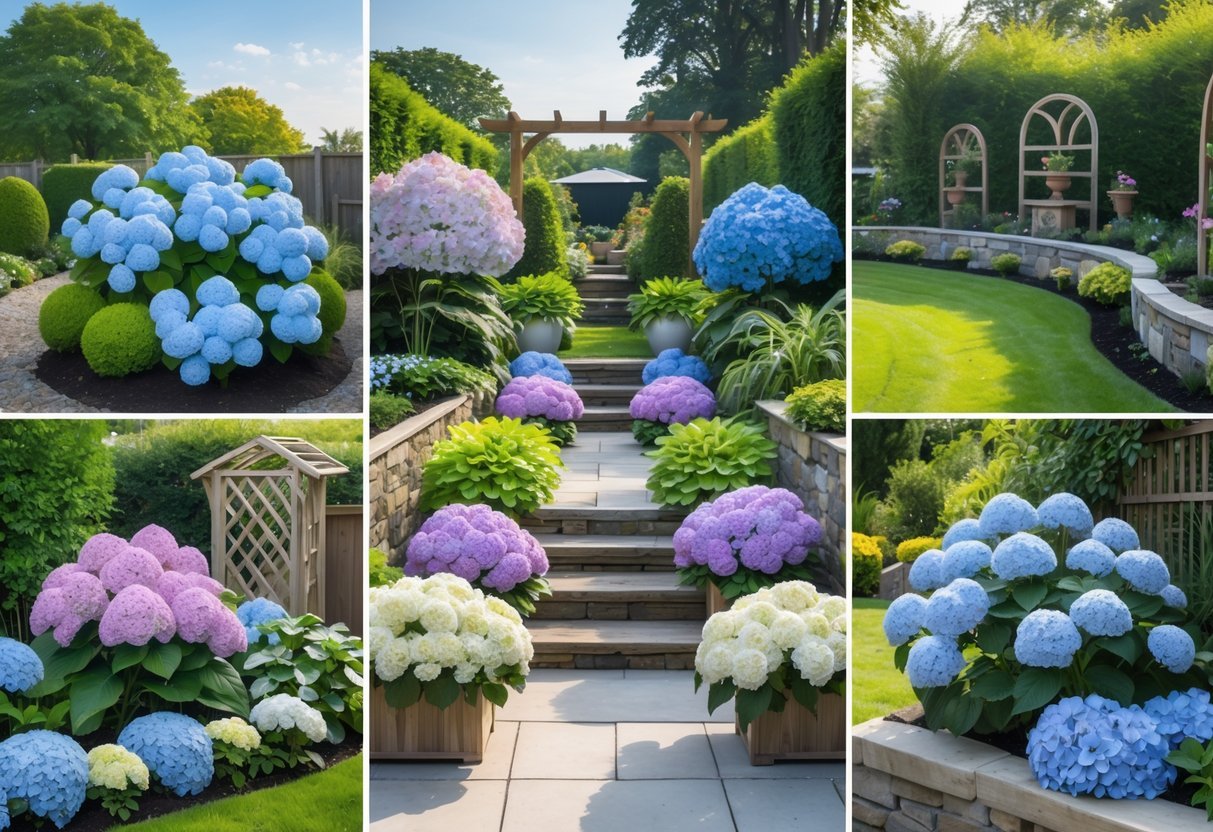
This article guides you through easy design choices, care basics, and pairing tips that help you pick the right varieties and positions for impact. Expect clear steps on sunlight, soil needs, seasonal care, and answers to common questions so you can build a hydrangea garden that fits your space and skill level.
1) Plant Hydrangea macrophylla ‘Nikko Blue’ for vibrant blue blooms
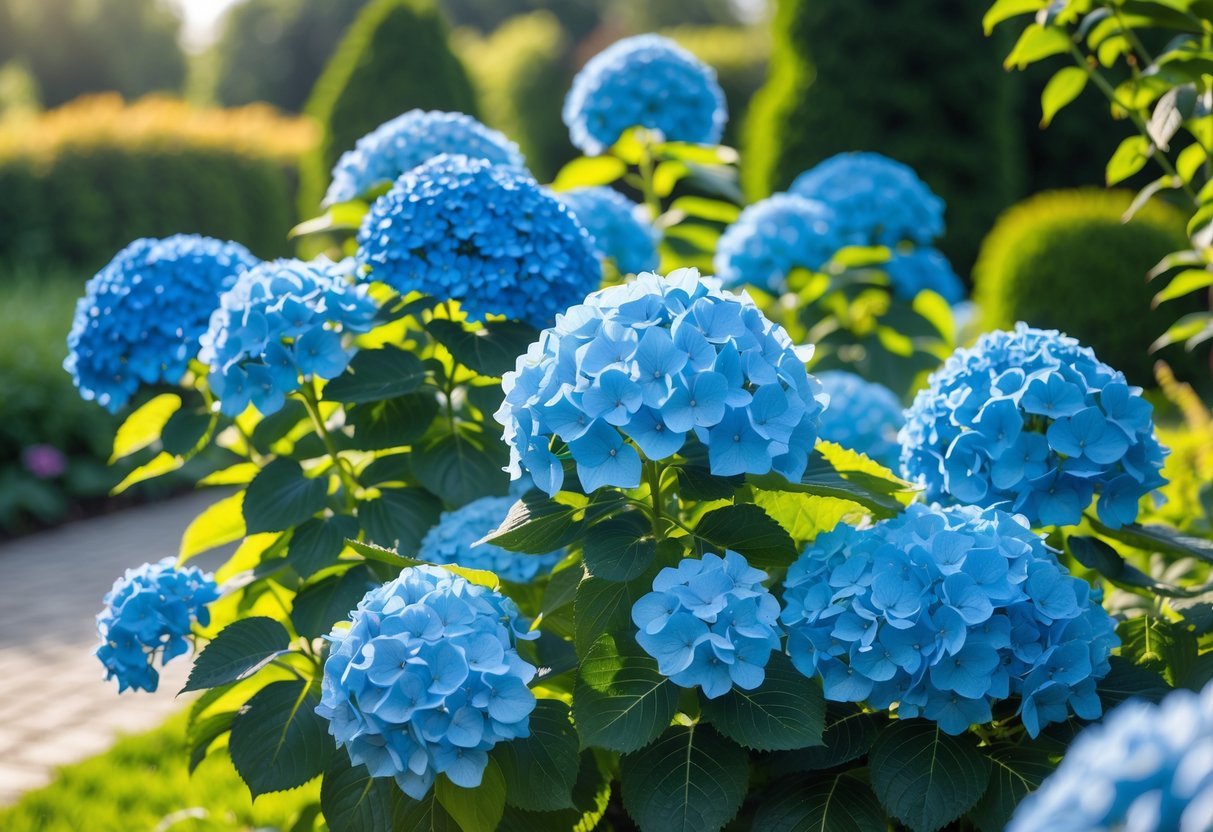
Choose a partly shaded spot with morning sun and afternoon shade for best blooms. Nikko Blue prefers well-drained, moist soil and regular watering to keep flowers full.
To encourage blue color, keep soil acidic (pH around 5.0–6.0); you can add aluminum sulfate or use acidifying amendments. Mulch to retain moisture and protect roots from heat.
2) Use tall purple alliums like ‘Globemaster’ for height contrast
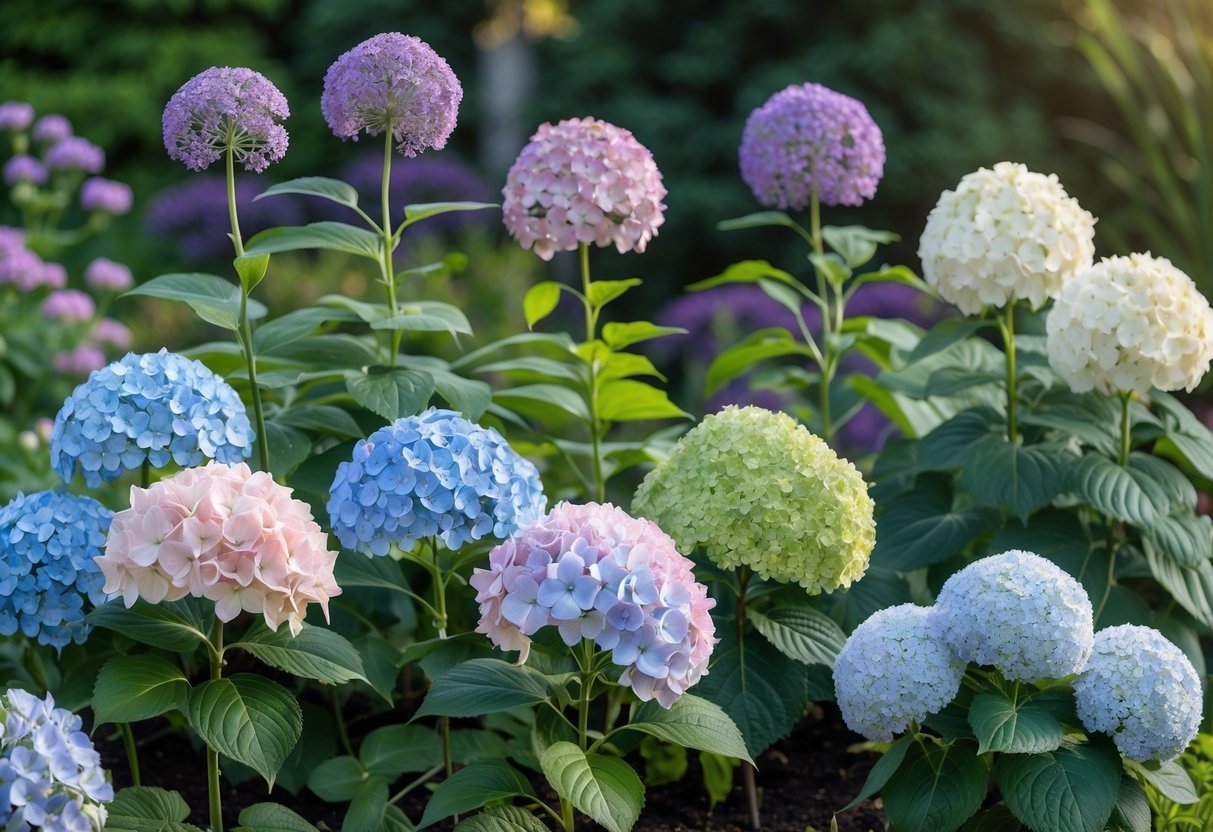
You can plant tall purple alliums near hydrangeas to add vertical interest and a clear contrast in shape.
Globemaster produces large, round flower heads that rise above hydrangea foliage on straight stems.
Space clusters of 5–7 bulbs for a strong visual effect without crowding your hydrangeas.
Alliums are deer resistant and attract pollinators, which helps garden health while keeping the look tidy.
3) Incorporate purple salvia to add texture and color variation
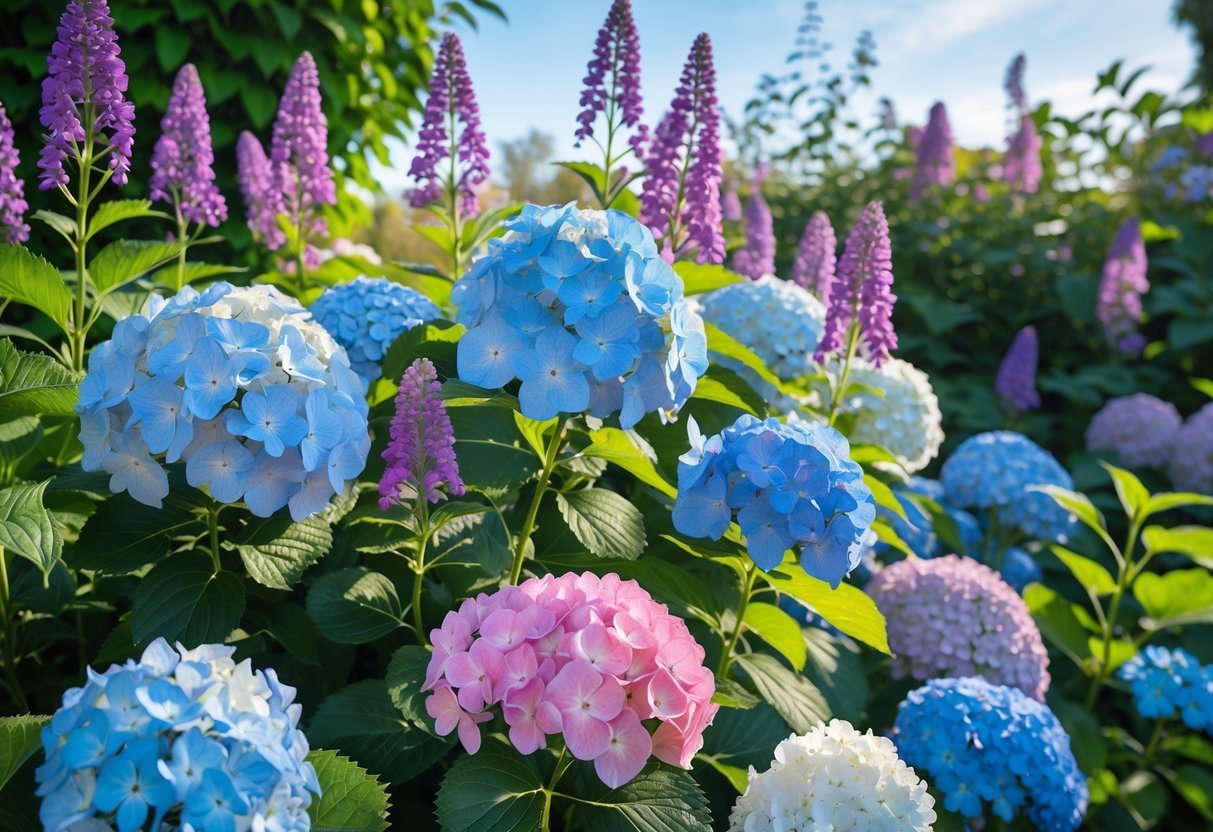
Place purple salvia near hydrangeas to add tall, spiky contrast to the round flower heads. The vertical form gives your bed more texture and draws the eye upward.
Choose varieties like Salvia nemorosa or Salvia x sylvestris for reliable blooms. Deadhead spent flowers to keep plants tidy and encourage more blooms.
Salvia prefers full sun and well-drained soil, so match locations accordingly. Combine with seasonal mulch to retain moisture for both plants.
4) Create a low border with creeping phlox for ground coverage
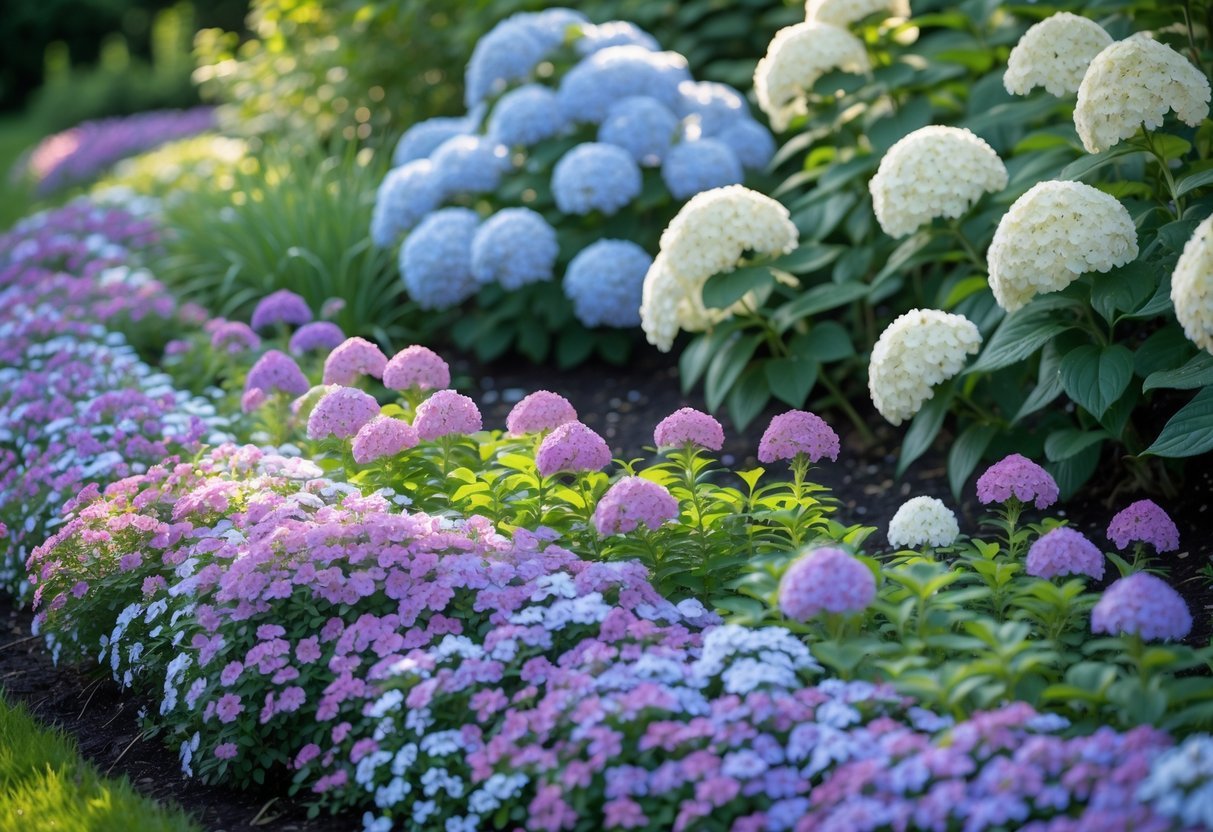
Plant creeping phlox along the edge of your hydrangea bed to hold soil and add spring color. It grows low, spreads quickly, and tolerates some shade under hydrangea canopies.
Choose acidic, well-drained soil and give phlox morning sun when possible for best flowering. Space plants a foot apart to fill in without crowding your hydrangeas.
Trim back after bloom to keep a neat edge and prevent legginess. This creates a tidy, natural border that supports both plants.
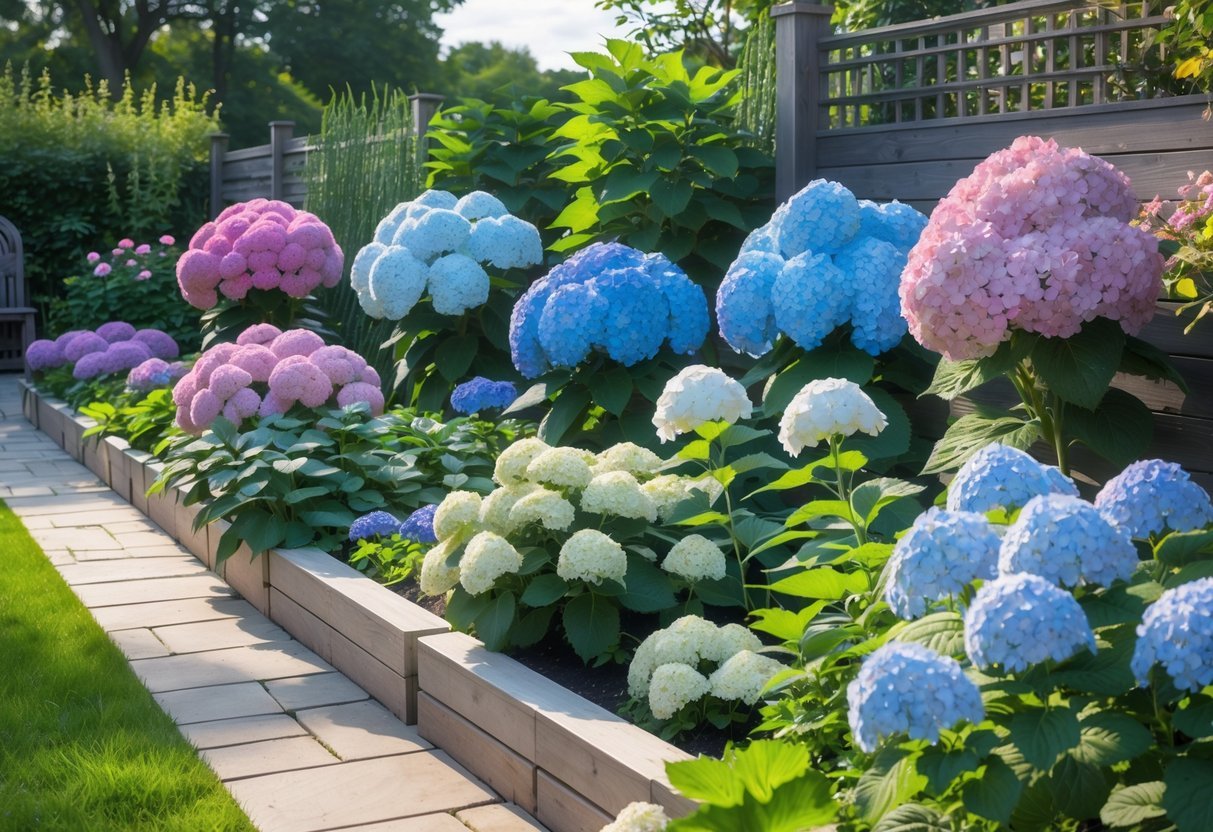
5) Use hydrangea hedges along stone walls for structure
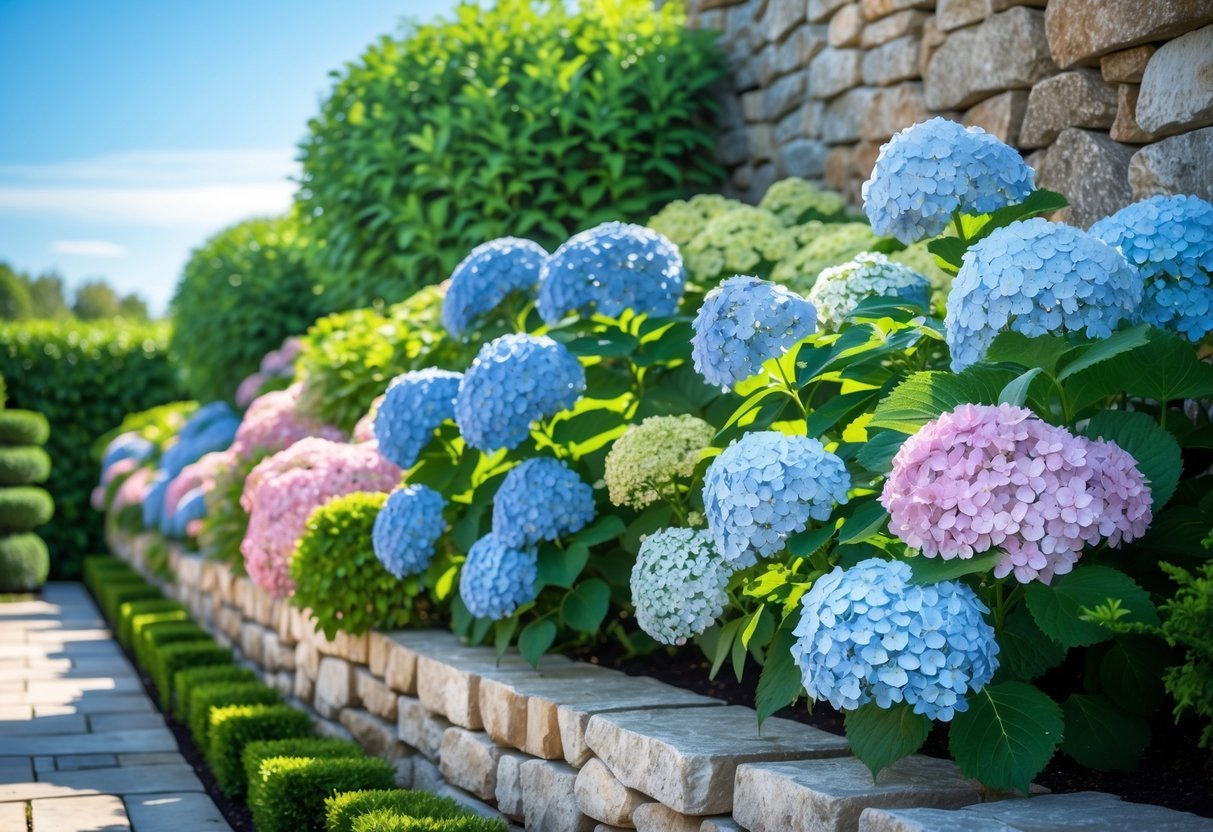
Plant hydrangeas along a stone wall to add height and soft color without hiding the wall’s texture. Choose varieties that match your wall height and trim them to keep a neat, even line.
Space plants so roots have room and water well the first two seasons. Add mulch to retain moisture and protect roots near the stone where heat can build up.
6) Add metal or ceramic sculptures to enhance garden art
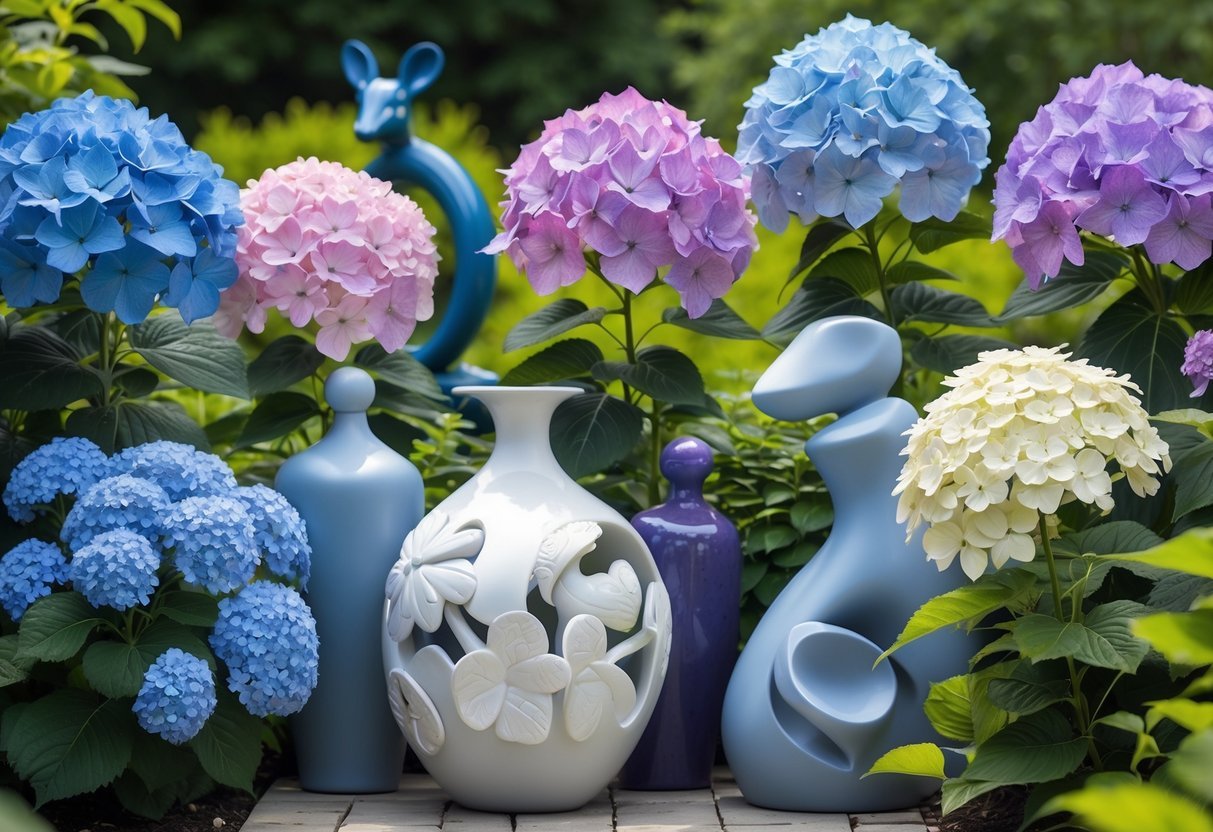
Place a metal or ceramic sculpture near hydrangea clusters to give your garden a clear focal point. You can choose a modern metal piece for contrast or a glazed ceramic figure for softer color ties.
Think about scale and color so the sculpture complements plant size and bloom tones. Position it on a small plinth, among low groundcover, or beside a path to invite closer viewing.
7) Mix coneflowers (Echinacea purpurea) for complementary color
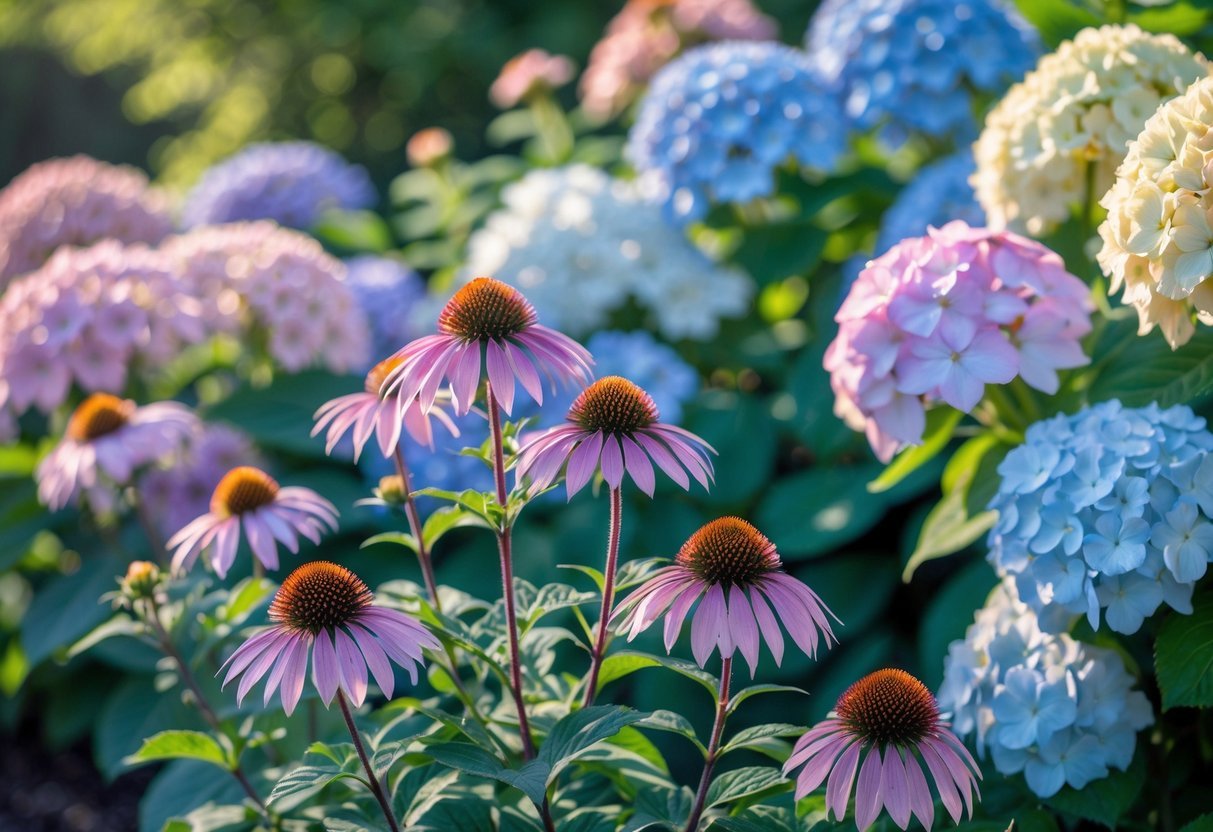
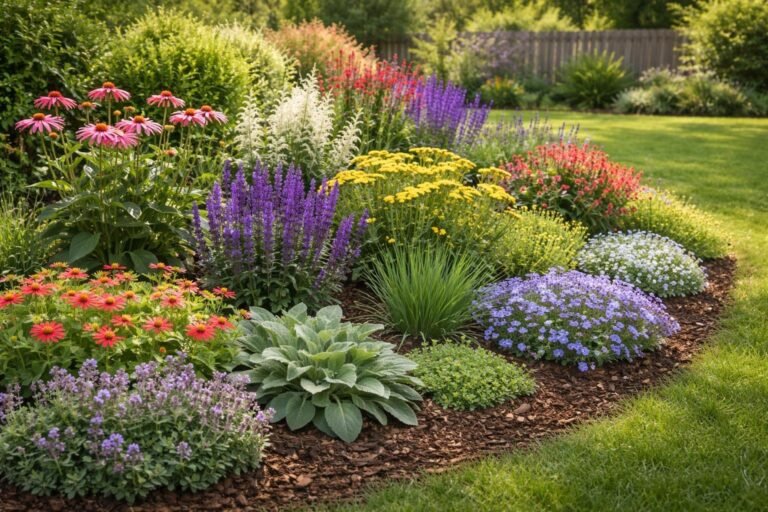
Plant coneflowers near hydrangeas to add tall, daisy-like blooms and long-lasting summer color. Their pinks, purples, and whites pair well with blue or pink hydrangea clusters and add vertical contrast.
Coneflowers attract pollinators and keep interest after hydrangea blooms fade. Choose sturdy varieties and space them so both plants get good air flow and sun.
Soil and Sunlight Essentials
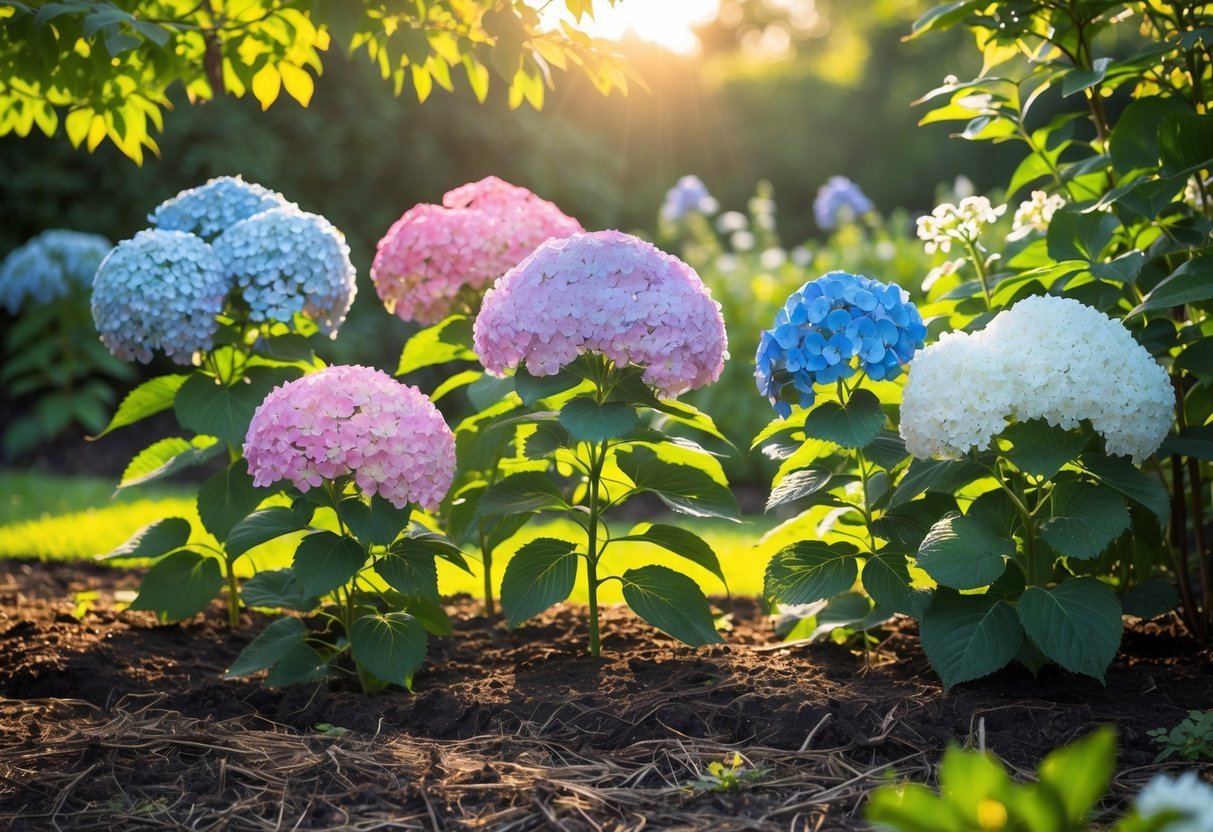
Good soil and the right light keep hydrangeas healthy and flowering. Test and adjust soil pH, and place shrubs where they get morning sun and afternoon shade for best results.
Ideal Soil pH for Hydrangeas
Hydrangea flower color can change with soil pH, and most types prefer slightly acidic to neutral soil. Aim for a pH of 5.5–6.5 for stronger blue tones in acid-loving varieties, or 6.5–7.5 for pink tones when aluminum is less available. Use a soil test kit to know your exact pH before adding amendments.
To lower pH (make soil more acidic), add elemental sulfur or acid-forming fertilizer slowly and retest in 6–8 weeks. To raise pH (make soil more alkaline), mix in garden lime. Work amendments into the top 6–8 inches of soil and add 2–3 inches of organic mulch to stabilize pH and retain moisture.
Light Requirements and Placement Tips
Most hydrangeas do best with morning sun and afternoon shade. Plant Bigleaf (macrophylla) and Oakleaf (quercifolia) types where they get 3–4 hours of sun in the morning and dappled shade the rest of the day. Panicle (paniculata) and Smooth (arborescens) types tolerate more sun and can handle 5–6 hours of direct sun if soil stays consistently moist.
Avoid planting where hot afternoon sun hits bare roots; blooms and leaves can scorch. In hot climates, place hydrangeas on the east or north side of buildings. In cooler climates, you can site them with more southern exposure for longer bloom time.
Long-Term Hydrangea Garden Care
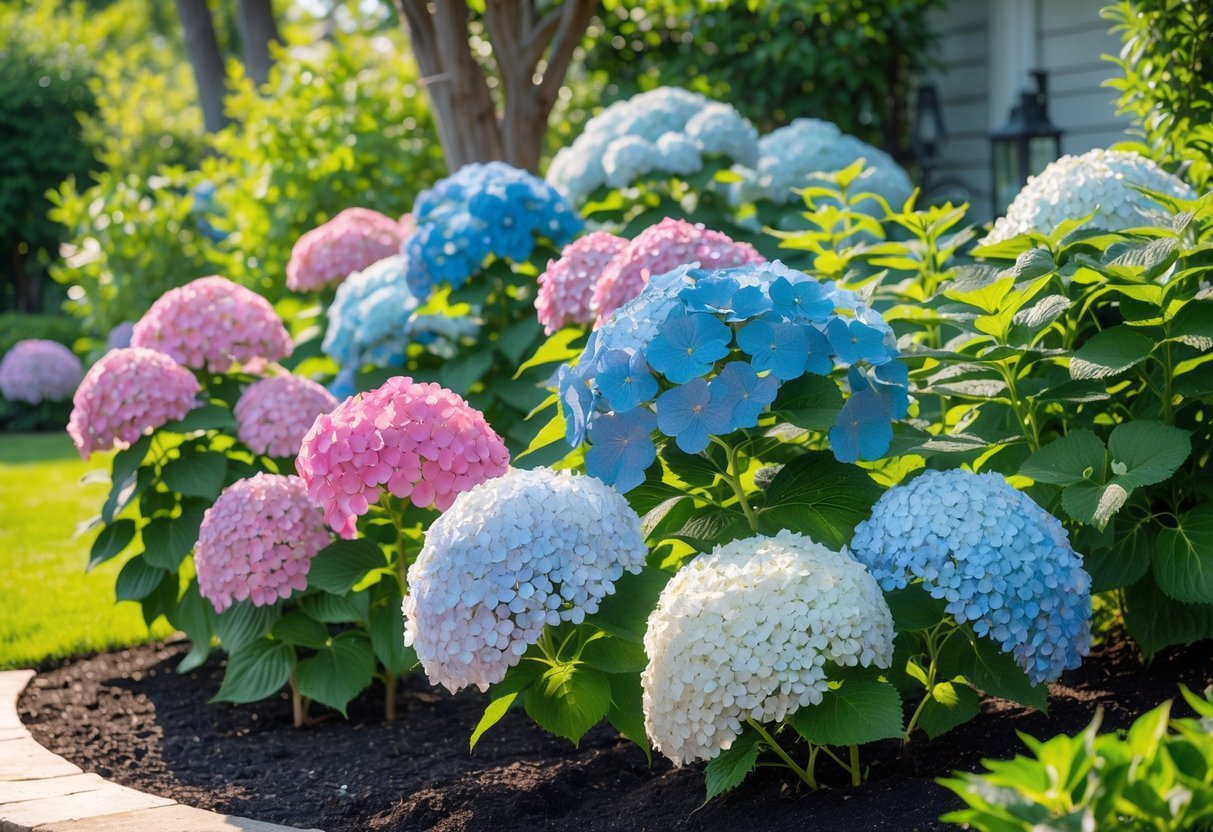
Keep plants healthy with regular pruning at the right time and steady watering that matches your soil and climate. Use clean tools, check soil moisture before watering, and protect new wood from late freezes.
Seasonal Pruning Guidelines
Prune based on the hydrangea type: mopheads and lacecaps (bigleaf, Hydrangea macrophylla) bloom on old wood, so prune right after flowering to avoid cutting next year’s buds. Remove dead stems and shape lightly; cut no deeper than a third of the plant in a single year.
Panicle (H. paniculata) and smooth (H. arborescens) types bloom on new wood. Prune these in late winter or very early spring before growth starts. Cut back to healthy buds 12–18 inches from the ground for stronger stems and larger blooms.
Always disinfect pruning shears between plants to reduce disease spread. Remove crossing branches and any weak, spindly growth. Leave a few strong stems each year to maintain structure and replace older wood gradually.
Watering Strategies for Healthy Blooms
Check soil moisture with your finger 2–3 inches deep; water only when it feels dry at that depth. Hydrangeas prefer consistently moist, well-drained soil. Too little water causes smaller blooms and leaf wilting; too much can rot roots.
Favor deep, infrequent watering over light daily sprinkles. Water slowly so moisture reaches the root zone; 1–1.5 inches per week is a good target in warm weather, including rainfall. Use a soaker hose or drip line to keep leaves dry and reduce fungal risk.
Mulch 2–3 inches of organic material around the base, keeping it an inch away from stems. Mulch preserves moisture, cools roots, and reduces weeds. Adjust watering after mulch, in extreme heat, or during drought to keep soil evenly moist.
Frequently Asked Questions
These answers cover plant pairings, soil fixes, spacing, mulching, and ways to keep blooms from spring into fall. You’ll find specific plant names, soil mixes, and timing tips you can use in a yard or border.
What companion plants complement hydrangeas in a garden design?
Pair Nikko Blue hydrangeas with tall purple alliums like ‘Globemaster’ for vertical contrast.
Add purple salvia near the middle of the bed to give texture and repeat the purple tone.
Use creeping phlox at the front to form a low, flowering edge that hides bare stems.
Choose shade-tolerant hostas or ferns if your hydrangeas sit in part shade. They add foliage contrast without stealing light.
How can I create a year-round interest in my hydrangea garden?
Plant varieties that offer different seasonal features: bigleaf hydrangeas for summer flowers and panicle types for late-season blooms.
Include evergreen shrubs or a stone wall behind the hedge to keep structure in winter.
Leave some old flower heads through winter on mopheads for seedhead interest.
Add spring bulbs near the front so bulbs bloom before hydrangeas leaf out.
Which soil amendments are best for growing healthy hydrangeas?
Mix in 2–3 inches of compost to improve drainage and feed roots.
Use a soil test to check pH; add sulfur to lower pH for bluer Nikko Blue blooms or lime to raise pH for pink tones.
Work in 1–2 inches of aged manure or a slow-release balanced fertilizer in spring.
Avoid heavy peat-only mixes; aim for loamy, well-drained soil that holds moisture without staying soggy.
What is the ideal spacing for planting hydrangeas in a garden?
Space macrophylla types like Nikko Blue about 3–5 feet apart to allow airflow and bushy growth.
Plant larger panicle hydrangeas 4–6 feet apart if you plan a hedge along a stone wall.
For mixed borders with alliums and salvia, leave 1–2 feet between smaller perennials and the hydrangea dripline.
Always account for mature width, not current pot size.
How do I achieve continuous bloom in a hydrangea garden?
Deadhead spent blooms right after they fade to encourage more flower production on reblooming types.
Choose a mix of early- and late-flowering hydrangea types so bloom times overlap.
Fertilize lightly in spring and again in midsummer with a balanced feed.
Water evenly during dry spells; uneven moisture causes bud drop and fewer blooms.
What are effective mulching techniques for hydrangea gardens?
Apply 2–3 inches of organic mulch, like shredded bark or composted leaves, around the root zone.
Keep mulch 2–3 inches away from stems to prevent rot and pest hiding spots.
Top up mulch each spring to conserve moisture and suppress weeds.
Use a wider mulch ring to protect shallow roots without burying crowns.