
Mediterranean Garden Ideas Design: Simple Layouts, Drought-Tolerant Plants, and Timeless Materials
Transform your outdoor space into a relaxed, sun-soaked retreat that fits your climate and lifestyle. Use drought-tolerant plants, simple stone paths, shady seating, and a small water feature to get the classic Mediterranean look without high water use or heavy upkeep.
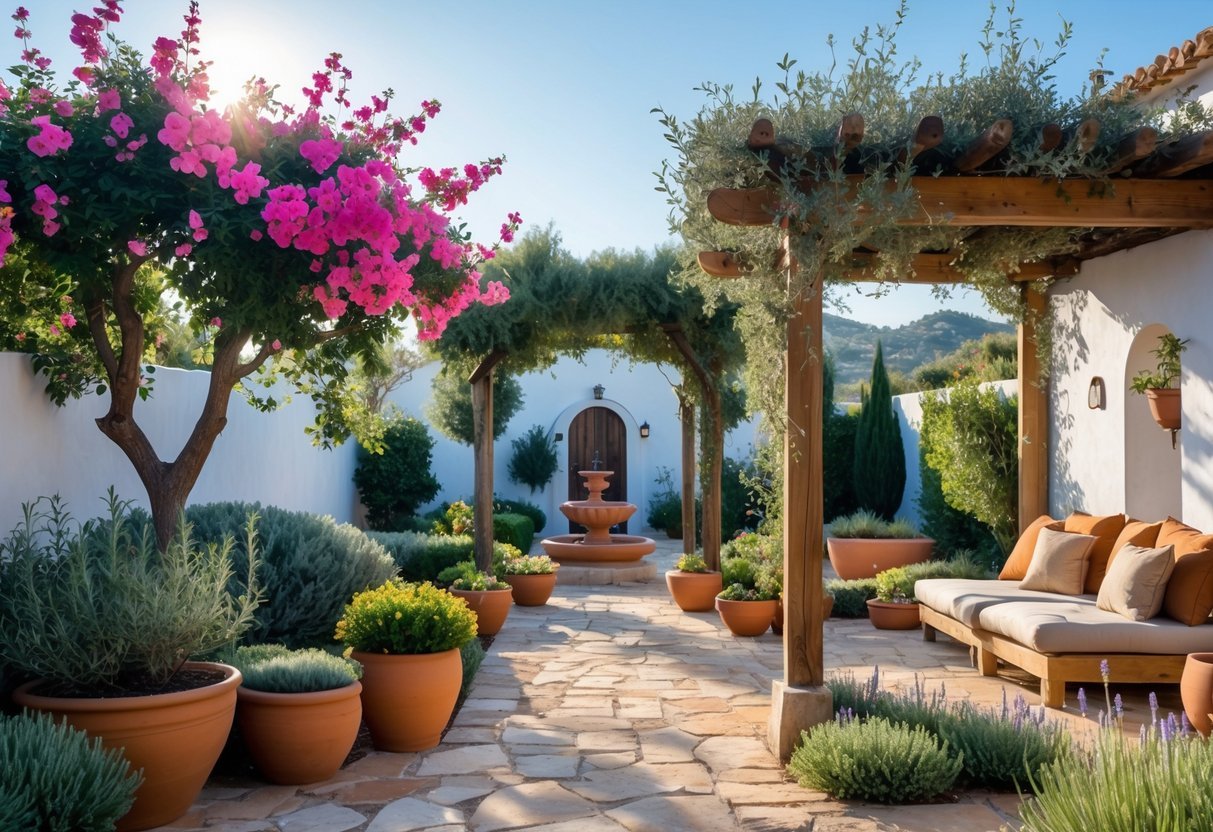
Choose a clear layout and a few repeat elements—olive or lavender for scent, terracotta pots for color, and gravel or flagstone for paths—to create a timeless feel that still works for small balconies or large backyards. A Mediterranean garden mixes drought-smart plants, natural materials, and comfy outdoor rooms so you can enjoy a low-maintenance, stylish landscape year-round.
Follow practical design choices that match your space and local climate, and you’ll end up with a durable, attractive garden that invites lingering, cooking, and relaxing outdoors.
Key Takeaways
- Use drought-resistant plants and simple hardscaping for a low-water, low-maintenance garden.
- Repeat a few materials and plant types to create a cohesive, Mediterranean feel.
- Plan seating and shade to make the space usable through the seasons.
Core Elements of Mediterranean Garden Design
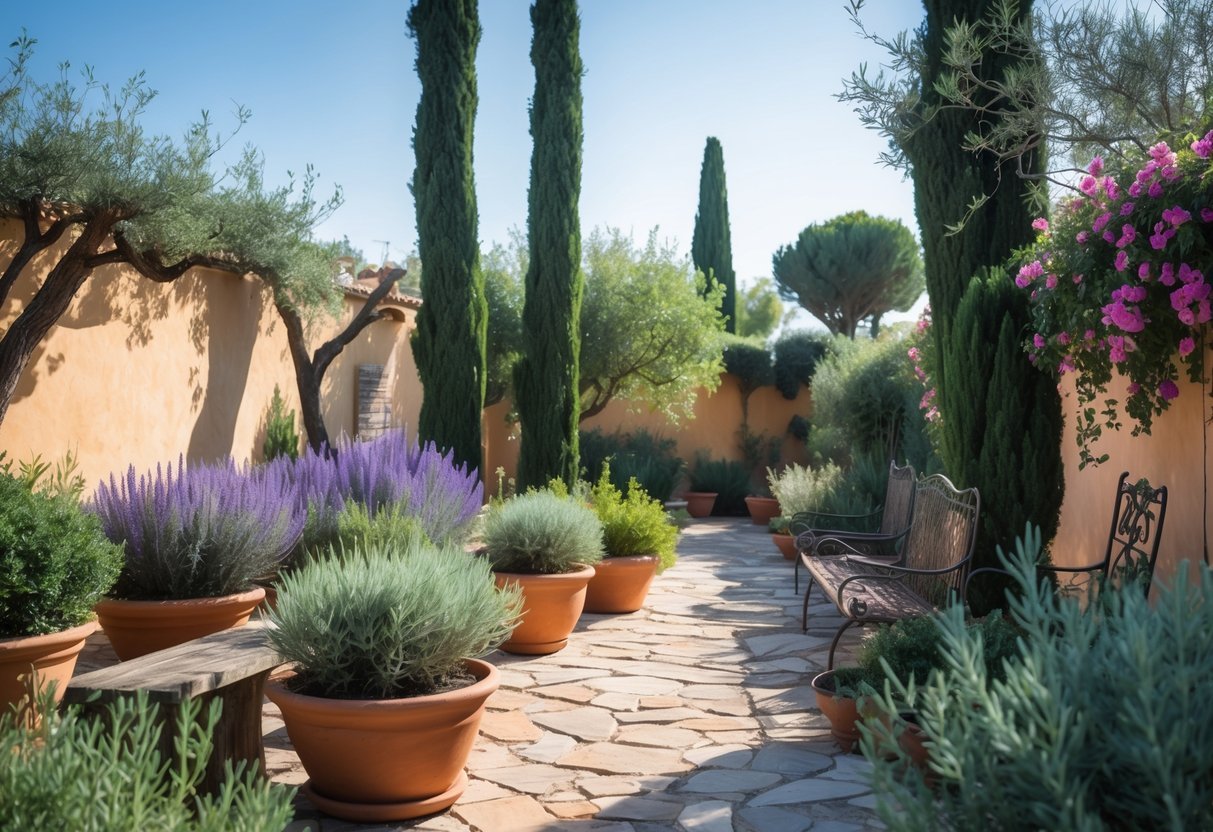
You’ll focus on drought-tolerant plants, simple strong shapes, and a warm color and texture mix. Each choice should help reduce water use, create shade or breezes, and make outdoor living feel inviting.
Plant Selection for Mediterranean Gardens
Choose plants that tolerate heat, wind, and low water. Olive, lavender, rosemary, and thyme handle summer heat and poor soils. Use drought-tolerant shrubs like oleander and pittosporum for structure.
Include evergreen trees or large shrubs—cypress or bay laurel—to give year-round form and shade. Add seasonal color with salvias, gaura, or rockrose which bloom reliably on little water.
Group plants by water needs: put thirsty herbs near the house if you water them, and xeric shrubs farther away. Use mulches and well-drained soil to prevent root rot.
Plant in layers: low groundcover (creeping thyme), mid-height shrubs (lavender), and focal trees. This saves water and creates a classic Mediterranean look.
Mediterranean Garden Layout Principles
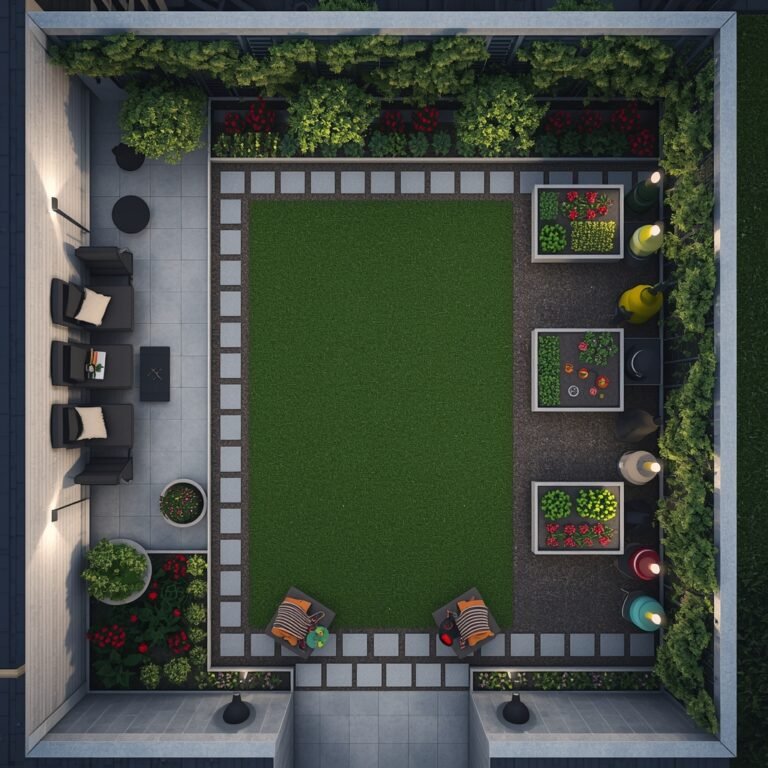
Plan for outdoor living zones: dining, lounging, and a cooking/herb area. Place a patio or terrace near the kitchen for easy access. Use paths of gravel or flagstone to link spaces and control foot traffic.
Create shady retreats with pergolas or deciduous trees to cool summer seating while letting winter sun through. Add one small water feature—like a fountain—to moderate heat and mask noise.
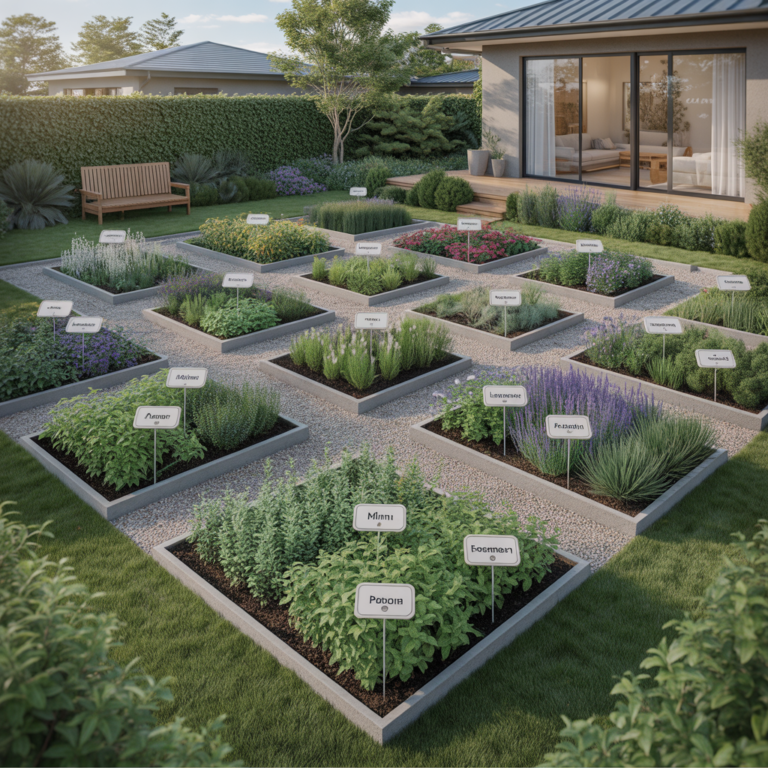
Design with simple geometry: rectangles, circles, and axial paths give a formal, timeless feel. Arrange planting beds to frame views and provide privacy without dense hedges.
Keep maintenance low: cluster plants with similar needs and limit lawn areas. Hardscape should be durable—terra cotta, natural stone, or compacted gravel work well.
Color Palettes and Texture Combinations
Favor sun-baked colors: warm ochres, terracotta, soft whites, and deep greens. Use light wall colors to reflect sun and make spaces feel brighter. Accent with blue or cobalt pots for Mediterranean contrast.
Mix textures: silvery foliage (lavender, dusted germander) next to glossy laurel leaves creates visual interest. Pair coarse-textured grasses or ornamental fennel with fine-textured thyme or rosemary.
Use repetition of color and texture in beds and containers to unify the garden. Limit bright colors to focal points—pots, cushions, or a single flowering shrub—to keep the scheme calm.
Finish with natural materials: weathered wood, terracotta pots, and stone paths add tactile contrast and reinforce the regional style.
Hardscaping and Structural Features

Hardscaping sets the layout, controls water, and defines use zones. Choose durable materials and simple lines that match your climate and the scale of your garden.
Terraces, Patios, and Pathways
Terraces help you manage slopes and create flat planting or seating areas. Use local stone or poured concrete with a natural finish to blend with surrounding plants. Keep riser heights between 6–8 inches for safe steps.
For patios, pick materials that stay cool in sun—light-colored flagstone, travertine, or gravel with stepping stones work well. Design patios near the house for meals and farther ones for quiet seating. Include at least one fixed shade element, like a pergola or vine-covered trellis.
Pathways should guide movement and create views. Use 18–24 inch stepping stones for casual paths and 3–4 foot wide paved runs for main routes. Fill joints with gravel or low-growing thyme to reduce runoff and add scent.
Stone Walls and Outdoor Seating
Stone walls can be purely decorative or structural for terracing and erosion control. Stack dry-laid stone for a rustic look or use mortar for durability. Keep wall heights under 3 feet where possible to avoid permit needs and to maintain human scale.
Built-in seating extends usable space and saves room. Use the same stone material for continuity. Add cushions on flat-topped walls and consider rounded corners for comfort. Plan seating facing a focal point—fountain, view, or dining area.
For long walls, include planting pockets or espaliered shrubs to soften hard edges. Ensure any retaining wall has proper drainage: a perforated pipe behind the base and gravel backfill.
Water Features and Fountains
Small fountains deliver cooling sound without high water use. Choose recirculating pumps and basins sized to your space—12–24 inch bowls work for patios, while larger basins suit open courtyards. Place fountains where you can see and hear them from seating areas.
Design water features for low maintenance. Use smooth stone or glazed ceramic for easy cleaning. Add a simple skimmer and accessible pump access panel for winter care and service.
Think about wildlife and safety. Keep basin edges visible and shallow for small children and pets. Plant water-wise species nearby—lavender, rosemary, and ornamental grasses—to frame the feature and limit extra watering.
Popular Mediterranean Garden Styles
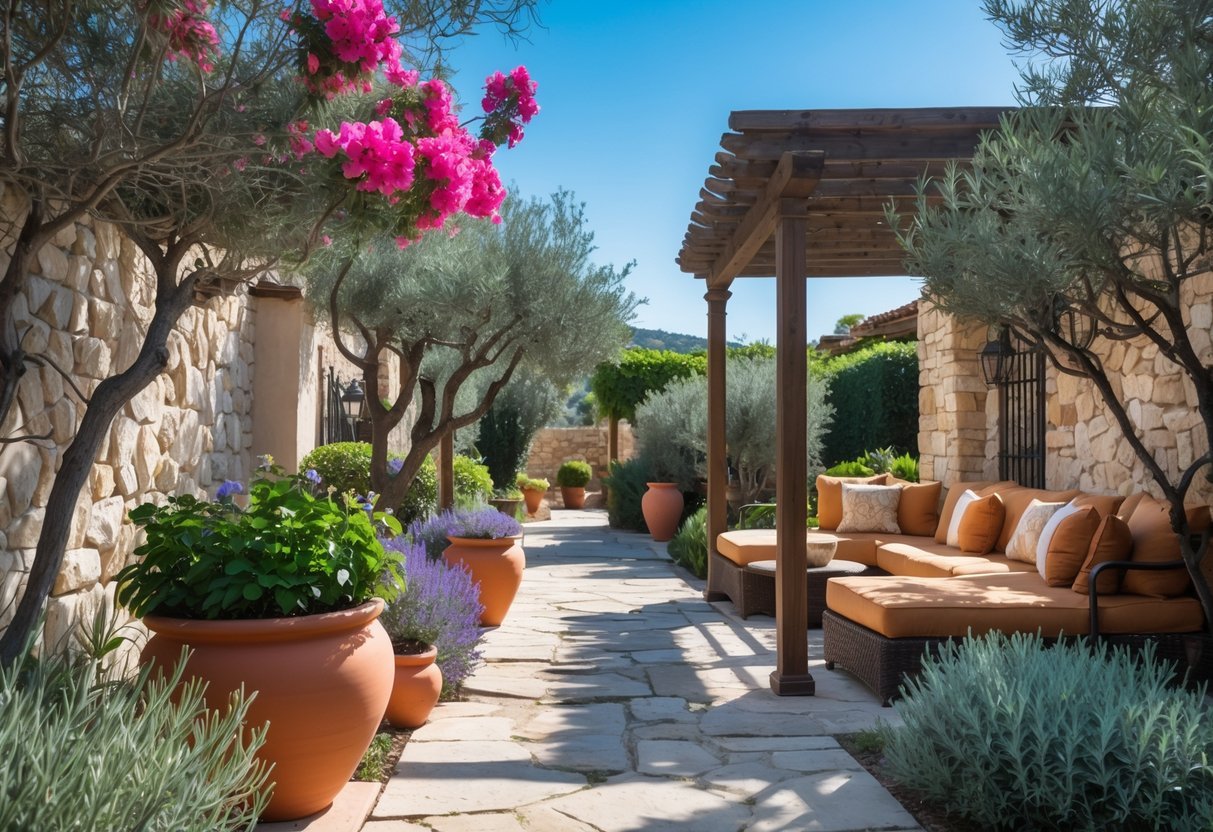
These styles focus on drought-tolerant plants, textured hardscaping, and outdoor living areas that suit warm climates. You’ll find clear choices for layout, plant palette, and materials that match different Mediterranean moods.
Spanish-Inspired Courtyards
A Spanish courtyard centers on a small, enclosed space with a strong indoor-outdoor flow. Use a paved or gravel floor, a central water feature like a small fountain, and raised planting beds against walls. Choose terracotta pots, clipped boxwood, and drought-tolerant shrubs such as lavender and rosemary for year-round structure.
Plant in repeated masses to create rhythm and reduce maintenance. Add tiled accents or patterned pavers near doorways to echo historic Spanish motifs. Provide shaded seating under a pergola or vine-covered trellis; trained grape or climbing bougainvillea work well. Focus on scent and texture—herbs for aroma and silver-leaved plants for contrast.
Italian Villa Gardens
Italian villa gardens emphasize symmetry, axis lines, and formal planting. Create clear sightlines by aligning paths, a central fountain, or a statue with your house entrance. Use low hedges (boxwood or privet) to form geometric parterres and gravel paths to reinforce formality.
Olive trees, cypress, and clipped topiary provide vertical accents. Include terraces or raised beds if your site slopes; stone retaining walls and steps suit this look. Add ceramic pots with citrus or geraniums for color and a lived-in feel. Keep pruning tight and plantings repeated so the garden reads as a composed outdoor room.
Greek Island Themes
Greek island gardens feel light, airy, and rugged, favoring white stone, coastal plants, and simple shapes. Use pale gravel or flagstone and whitewashed walls to reflect light. Choose drought-hardy Mediterranean natives like oleander, rosemary, agapanthus, and succulents for a seaside palette.
Emphasize contrast: bright bougainvillea or purple salvias against white walls. Create shady nooks with pergolas draped in grapevine or wisteria. Limit lawn areas and favor mulched beds or gravel to save water. Keep plant groups informal but purposeful so the space feels relaxed and sun-ready.
Sustainable Mediterranean Landscaping
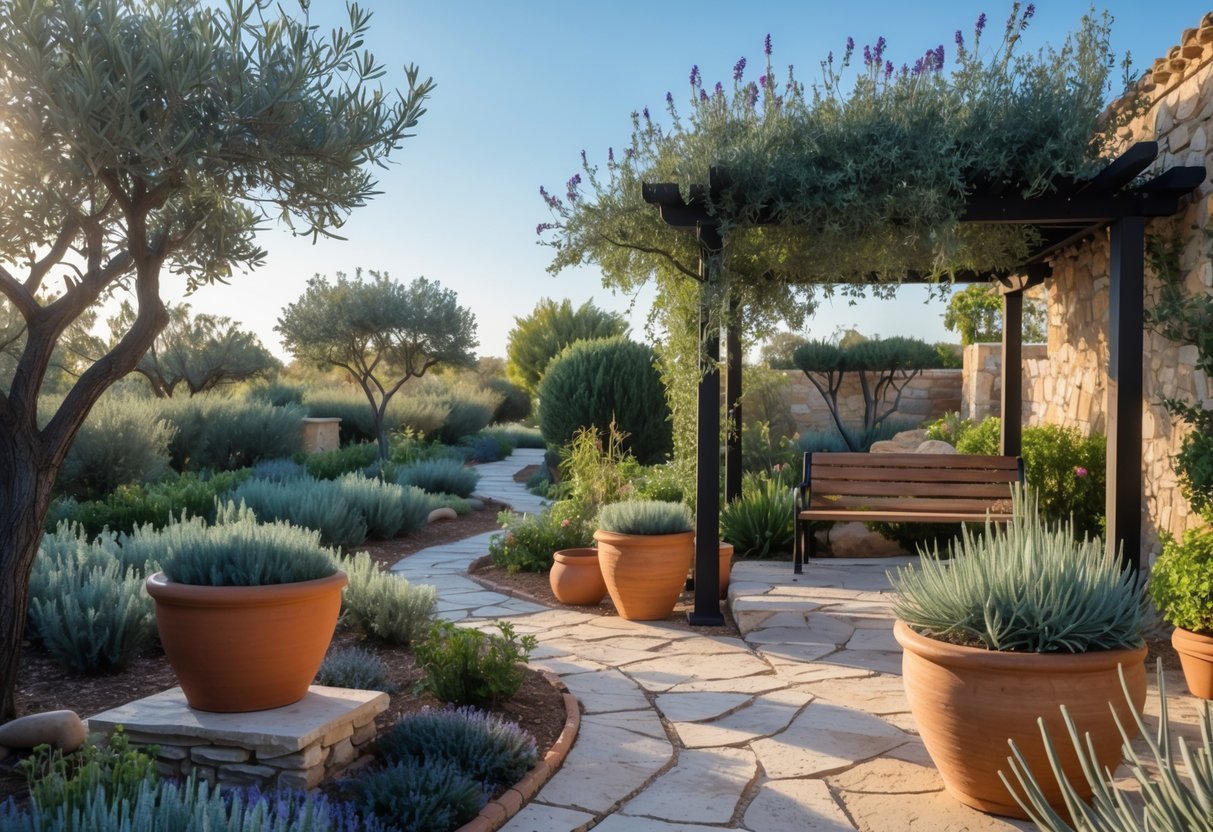
Use drought-tolerant plants like lavender, rosemary, olive, and sage to cut water use and keep a Mediterranean look. These plants thrive in hot, dry summers and need less care than typical lawns.
Switch turf for gravel, decomposed granite, or low-water groundcovers to reduce watering and mowing. Hardscaping with natural stone also gives structure and saves resources.
Install drip irrigation and a smart controller to water deeply and only when needed. Mulch around plants to retain moisture and lower soil temperature.
Collect rainwater with barrels or a small cistern to top up irrigation. Position larger containers near thirsty planting beds for easy access.
Choose native or adapted species to support local wildlife and reduce pest problems. Group plants by water need so you can water efficiently.
Use recycled or locally sourced materials for paths, pots, and walls to cut transport emissions. Simple features like a shaded pergola or vine-covered trellis reduce heat and make outdoor rooms more comfortable.
Consider small, recirculating water features to add cooling without high water loss. Keep features shaded or use plants to limit evaporation.
Quick checklist:
- Plant list: lavender, rosemary, sage, olive, thyme
- Water tools: drip line, smart timer, rain barrel
- Materials: local stone, reclaimed tile, mulch
This approach keeps your garden true to Mediterranean style while protecting water and resources.
Seasonal Maintenance and Care
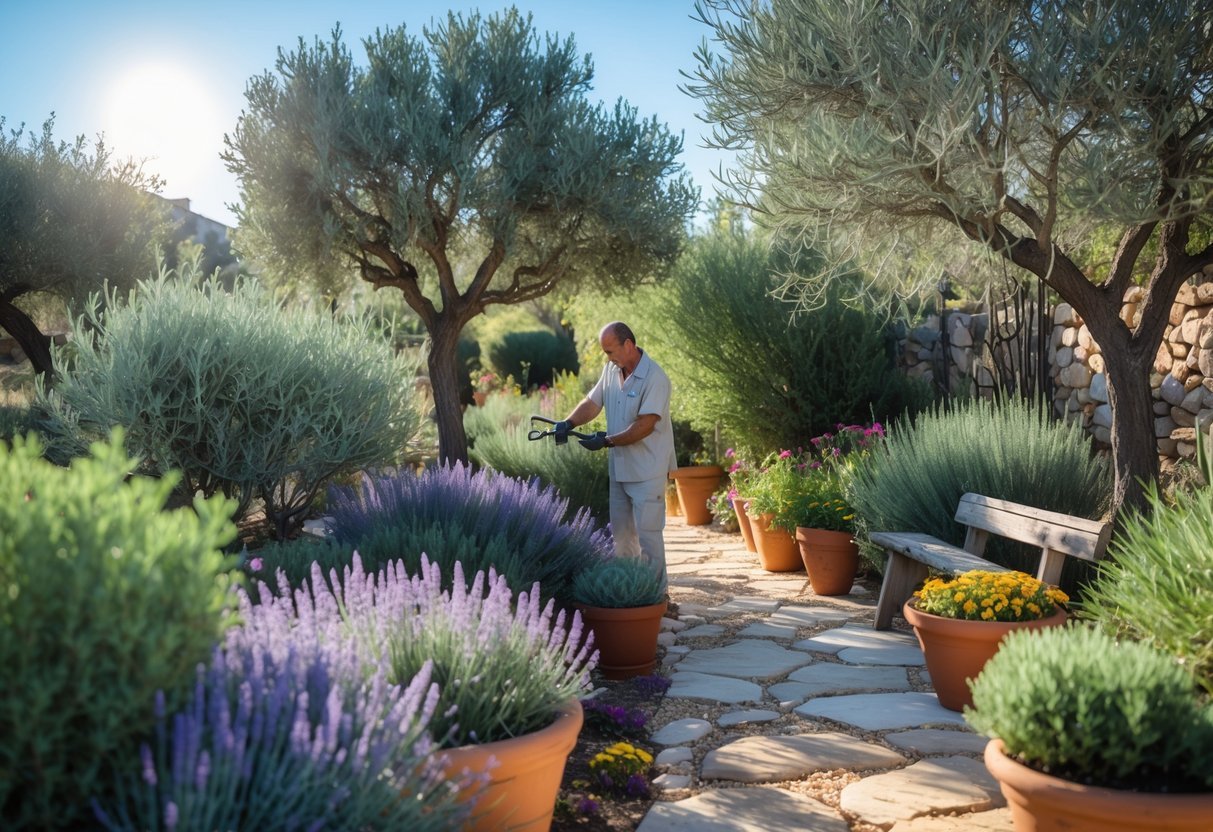
Keep your garden water-wise, tidy, and soil-rich through the year. Focus on timed watering, regular pruning, and seasonal mulching to keep plants healthy and reduce work.
Irrigation Techniques
Use a drip irrigation system with pressure-compensating emitters to deliver water directly to roots. Set emitters at 1–4 liters per hour depending on plant size; shrubs need more than small perennials. Run irrigation in the early morning to reduce evaporation and disease risk.
Adjust frequency by season: deep, infrequent watering in summer (1–2 times weekly for established shrubs) and less often in cool months. Check soil moisture with a finger or a probe 5–10 cm deep; water when soil feels dry below the surface. Use a simple timer or smart controller that allows different schedules for beds, pots, and lawns.
Tip: group plants by water need (hydrozoning) so you don’t overwater drought-tolerant species like lavender or rosemary.
Pruning Methods
Prune annually to shape plants, remove dead wood, and improve airflow. For evergreen shrubs, do light shaping after the main bloom. For spring-flowering shrubs, prune immediately after flowering to avoid cutting off buds for next year.
Remove dead or crossing branches anytime to prevent disease. Cut back herbaceous perennials in late fall or early spring to clear old growth. Use clean, sharp tools: bypass pruners for small stems, loppers for thicker wood, and a pruning saw for large branches. Make cuts just outside the bud or collar at a 45-degree angle to promote healing.
Sterilize tools between plants if disease is present. Keep a pruning calendar: note bloom times and last frost dates to schedule major trims.
Mulching and Soil Management
Apply 5–8 cm (2–3 inches) of organic mulch like composted bark or gravel mulch where appropriate. Keep mulch 5 cm away from stems and trunks to avoid rot. Mulch reduces evaporation, suppresses weeds, and moderates soil temperature.
Test soil pH and texture every 2–3 years. Mediterranean plants prefer well-draining soil; amend heavy clay with coarse sand and compost to improve drainage and fertility. Work 2–4 cm of compost into the top 10 cm of soil each spring to replenish nutrients.
Spot-feed long-lived shrubs with a balanced slow-release fertilizer in spring if growth is weak. For containers, refresh potting mix every 1–2 years and replace 20–30% of the soil to maintain structure and nutrients.
Frequently Asked Questions
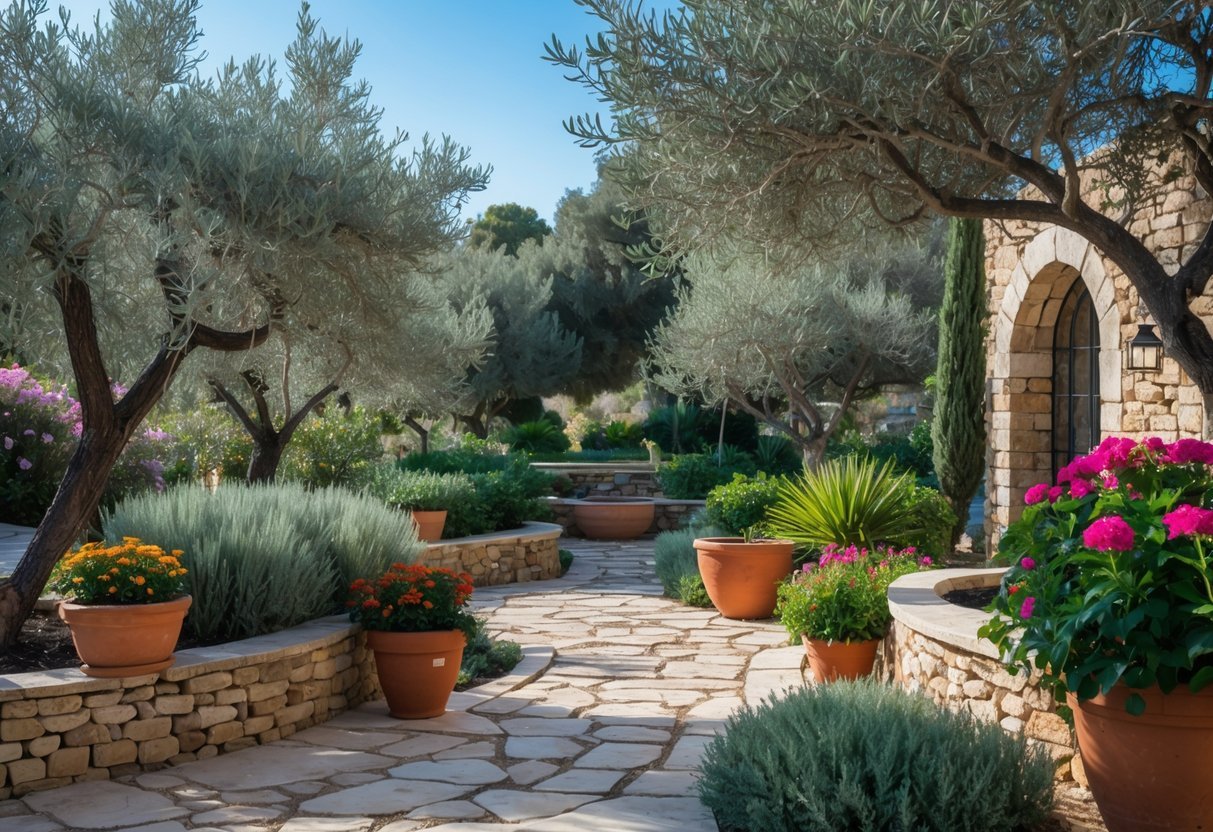
Quick, practical answers to common choices: what to plant, what hardscaping works best, water features that fit the style, where to sit, and which color palettes create an authentic Mediterranean feel.
What are the essential elements to include in a Mediterranean garden?
Include drought-tolerant plants like lavender, rosemary, olive or citrus trees, and low-water grasses or groundcovers.
Add hardscape such as gravel or compacted earth paths, stone walls, terracotta pots, and a simple pergola for shade.
Use layers of planting: structural trees, mid-height shrubs, and low herbs or gravel beds.
Add a focal point, such as a fountain or large pot, to anchor the space.
How do I select plants suitable for a Mediterranean garden climate?
Choose plants labeled drought-tolerant and suited to your USDA or local hardiness zone.
Pick Mediterranean natives or similar species: aromatic herbs (rosemary, thyme), silver-leaved shrubs (cistus, santolina), and olives or pines for structure.
Prefer plants with low summer water needs and good heat tolerance.
Group plants by water needs and place sun-loving species in the brightest spots.
What type of paving is recommended for an authentic Mediterranean garden pathway?
Use natural stone like flagstone, limestone, or sandstone for an authentic look.
Combine irregular stone with compacted gravel or decomposed granite to keep paths informal and permeable.
Edge paths with low herbs or gravel to soften transitions.
Avoid large expanses of smooth concrete; texture and warmth suit the style better.
Can you suggest water features that complement a Mediterranean garden design?
Choose simple, small-scale fountains: tiered stone bowls, wall-mounted spouts, or a single basin fountain.
Use natural materials like stone or aged metal for a timeless look.
Keep water features modest to save water and fit the low-maintenance ethos.
Position a fountain near seating or at a focal point so sound and sight draw people in.
How should I incorporate seating areas in a Mediterranean garden?
Place seating in shaded spots near the house or under a pergola for cool evening use.
Use durable materials: wrought iron, teak, or stone benches with weather-resistant cushions.
Create intimate settings with a table and chairs or a built-in stone bench.
Surround seating with fragrant plants like lavender or jasmine to enhance the experience.
What are the best color schemes for a Mediterranean-style garden?
Use warm, earthy tones: terracotta, ochre, warm beige, and sandy neutrals for hardscape and pots.
Pair those with plant colors: silver-green foliage, deep evergreen, purple lavenders, and bright citrus fruit.
Add splashes of saturated blue or cobalt in pottery or tiles for a coastal touch.
Keep the palette limited so textures and shapes stand out.