Shade Garden Design Ideas for Lush, Low-Light Outdoor Spaces
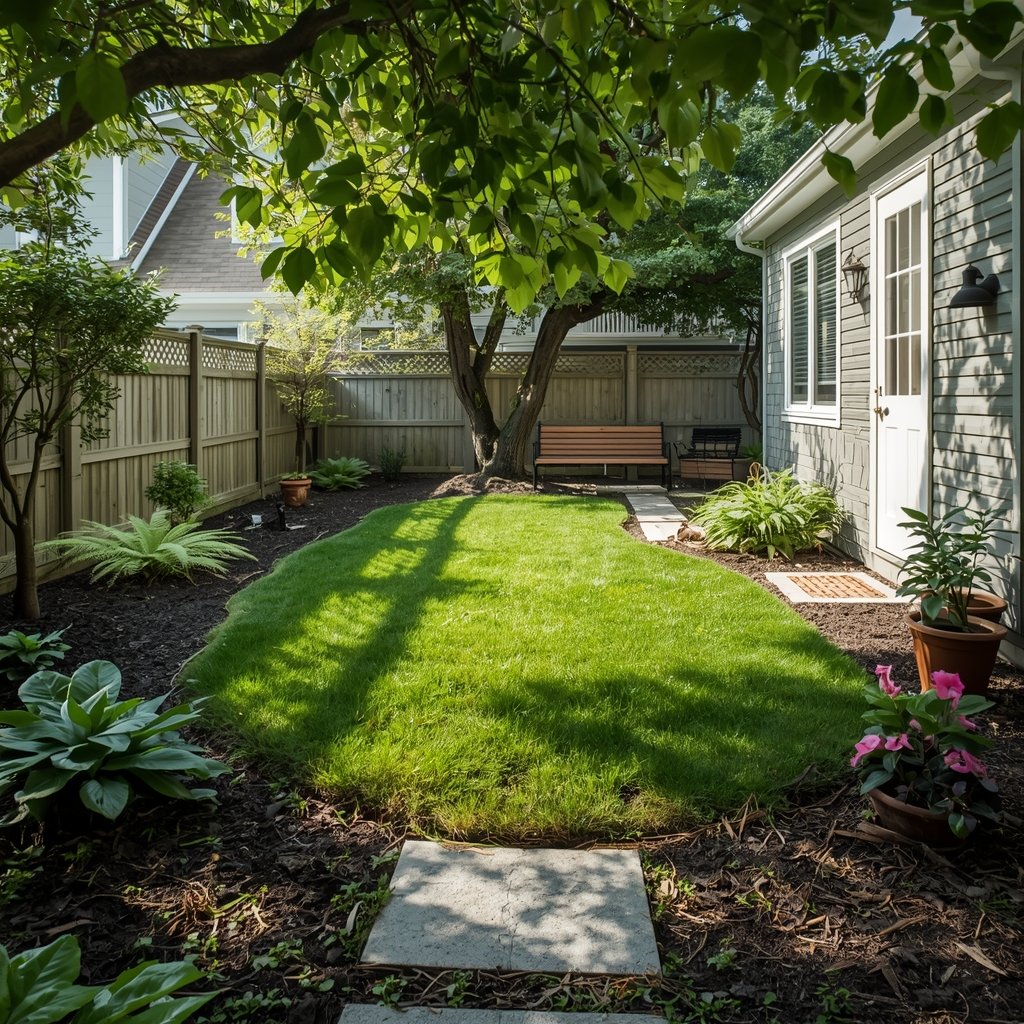
You can make a dark corner feel alive by choosing plants and layouts that thrive without much sun. Start by matching plants to the exact shade you have, then layer foliage, height, and texture to create depth and interest that lasts through the seasons. A well-planned shade garden uses the right plants, simple structure, and a few bright accents to turn low light into a design strength.
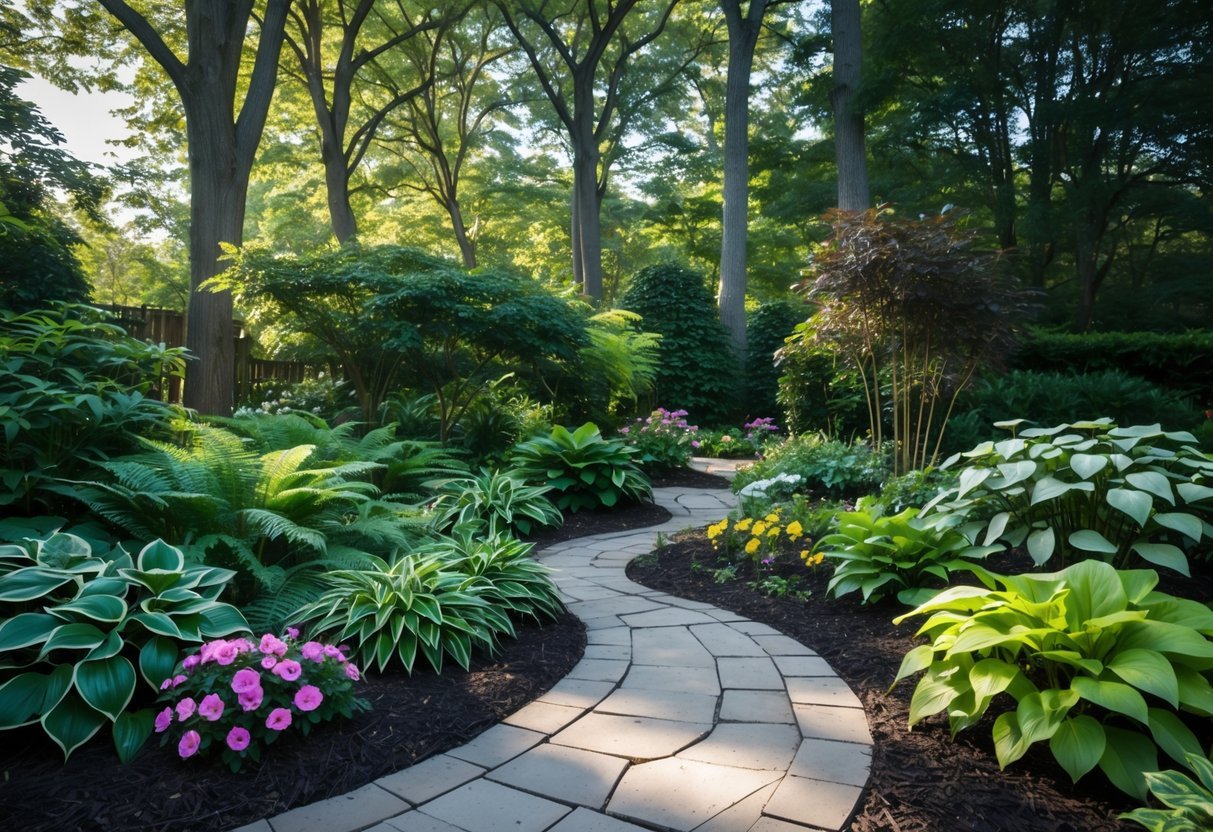
This guide shows practical layout ideas, plant picks for different shade types, and easy features to lift color and form. Use these tips to plan a low-maintenance space that looks intentional and inviting, even where sun is scarce.
Key Takeaways
- Match plant choices and placement to the type of shade you have.
- Build depth with layered textures, heights, and seasonal interest.
- Add simple features and accents to boost color and structure in low light.
Principles of Shade Garden Design
Good shade gardens start with three clear steps: measure how much light you have, pick plants suited to that light and soil, and build layers of groundcover, mid-height plants, and taller accents for year-round interest.
Assessing Light Levels
Use a simple method: carry a notebook and check light in your space at 9am, noon, and 3pm on a sunny day. Note minutes of direct sun and areas that get only dappled light or deep shade under trees.
Classify each spot as:
- Full shade: under dense tree canopy, less than 2 hours of direct sun.
- Partial shade / dappled: 2–4 hours of sun or filtered light most of the day.
- Light shade / bright shade: 4–6 hours of morning or late afternoon sun.
Also test soil moisture and drainage after a rain. Shade often means cooler, wetter soil. Mark any cold pockets or heat-reflecting walls. These details help you match plant needs and avoid trial-and-error.
Selecting Plant Types for Shade
Choose plants by both light class and soil: many shade-tolerant perennials prefer humus-rich, well-drained soil. Start with a short list for each layer: groundcovers, foliage perennials, and shade shrubs.
Examples by layer:
- Groundcovers: pachysandra, ajuga, sweet woodruff.
- Mid-height perennials: hostas, astilbes, heucheras.
- Shrubs and accents: rhododendron, hydrangea, dwarf maple.
Favor plants with variegated or textured leaves to add brightness. Group plants with similar water needs together. Avoid sun-loving annuals in deep shade; they will stretch and look weak. Amend soil with compost to improve structure before planting.
Creating Layers and Structure
Plan for three clear layers: groundcover (0–6″), midlayer (6–36″), and canopy or tall accents (36″+). This creates depth and hides bare soil.
Place groundcovers to hold moisture and suppress weeds. Use midlayer perennials for color and leaf contrast. Add taller shrubs or small trees for vertical interest and seasonal blooms.
Use repetition and odd-numbered plant groups to create rhythm. Add paths, seating, or a focal stone to guide the eye. Leave small open patches for bulbs (snowdrops, cyclamen) that thrive in shade and offer early spring color.
Inspiring Shade Garden Layouts
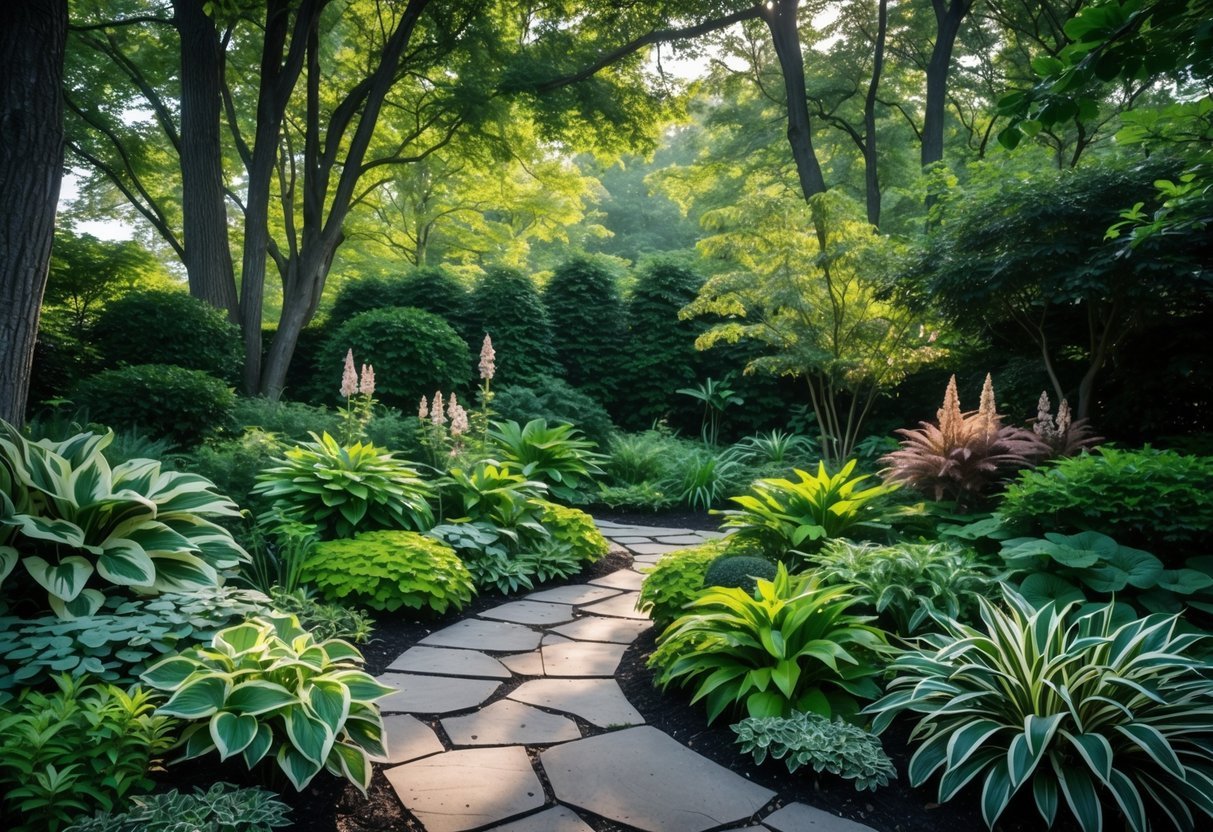
Choose plants with varied heights, textures, and bloom times. Place paths, seating, and focal points so you can enjoy views from different angles.
Woodland Retreats
Create layered planting that mimics a forest: tall trees or large shrubs, mid-height ferns and hostas, and low groundcovers like ivy or lungwort. Space trees so dappled light reaches the understory; aim for at least 10–15 feet between trunks for medium trees. Use curved mulch beds to soften edges and lead the eye.
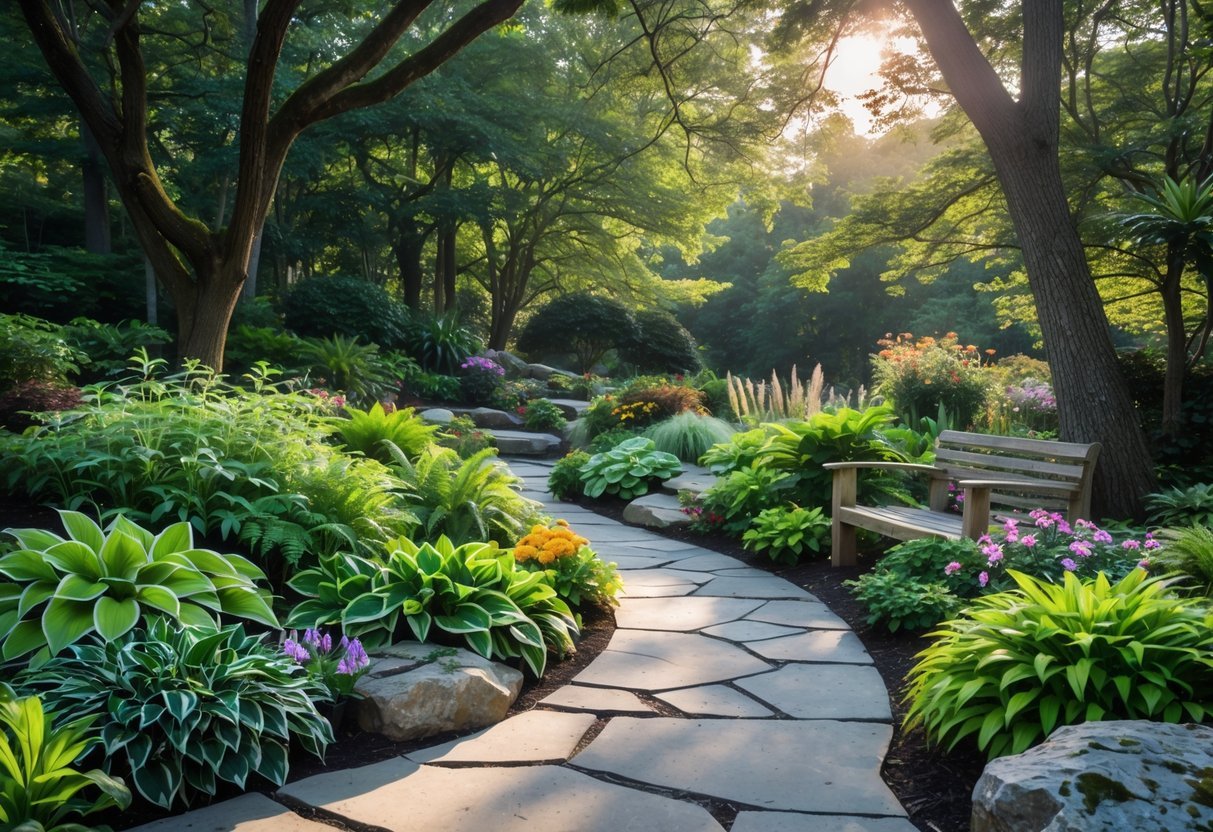
Add a winding path of bark, stepping stones, or compacted gravel about 2–3 feet wide. Position a bench or small boulder at a shaded clearing for a seasonal focal point. Include native shrubs such as rhododendron or azalea to attract local pollinators and reduce maintenance. Add a shallow birdbath or simple water feature to increase wildlife visits without needing a sunny spot.
Formal Shaded Borders
Lay out straight beds along walkways or walls using symmetry and repetition. Choose 2–3 main plant types—such as boxwood for structure, hellebores for winter interest, and astilbe for summer color—and repeat them in patterns. Keep bed edges crisp with metal or stone edging to hold formality.
Plant in groups of odd numbers (3–5) and maintain a consistent planting distance, for example 18–24 inches for perennials. Use low evergreen hedging to define the border and add winter shape. Groundcover such as ajuga or vinca minor fills gaps and keeps weeds down. Install soft, low-level lighting to highlight structure and guide movement after dusk.
Modern Minimalist Shade Gardens
Focus on a limited palette: one structural plant, one foliage contrast, and one groundcover. Use strong, simple shapes like square beds or linear planters to create a clean look. Keep material choices minimal—concrete, dark mulch, and matte metal planters work well.
Arrange plants with breathing space so individual forms stand out. For example, pair a single Japanese maple with clusters of matte green heuchera and a slate-gray gravel path. Use repetition of the same plant or pot to create rhythm. Add one sculptural element, such as a simple bench or tall ceramic urn, to serve as a clear focal point without clutter.
Color and Texture in Shaded Spaces
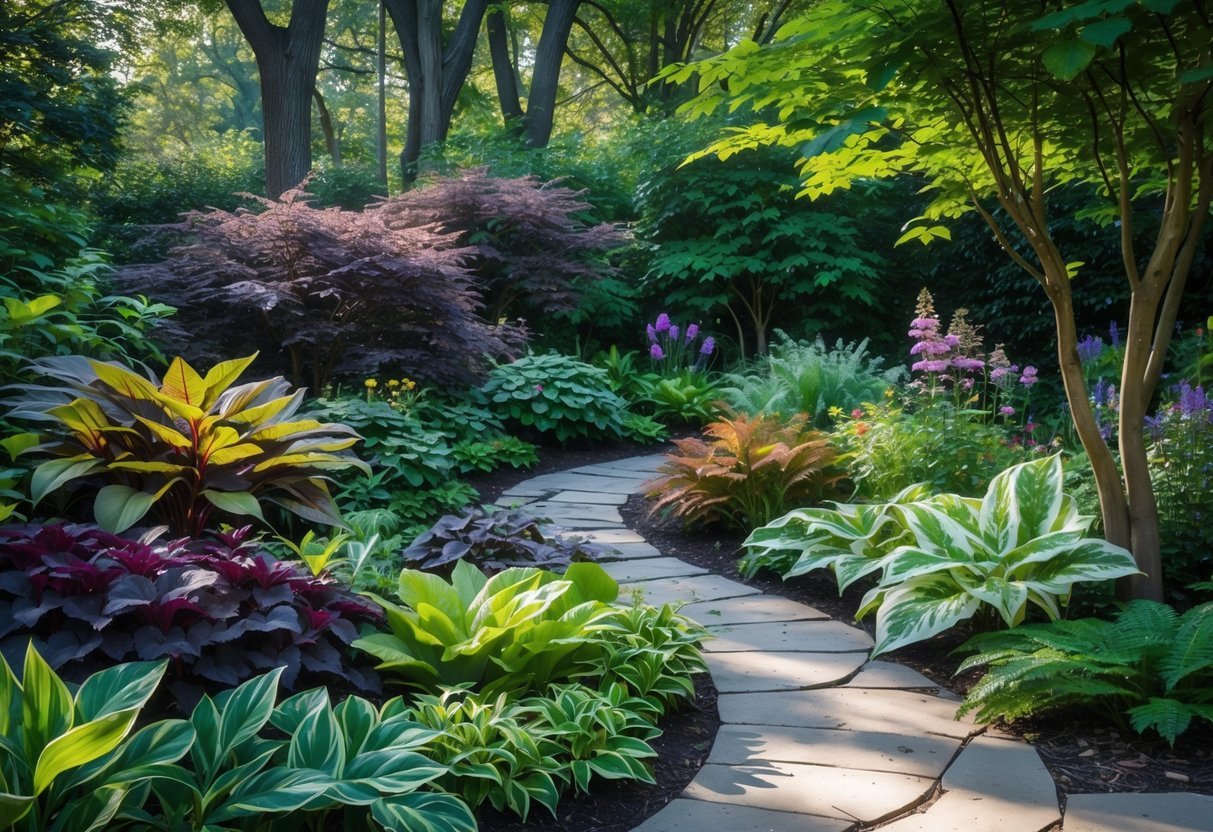
Use bold leaves, layered textures, and a few bright blooms to make low-light areas feel rich and lively. Pick plants for leaf shape, color, and season so the bed looks good from spring through fall.
Foliage Combinations
Mix broad, bold leaves like Hosta with fine, feathery ferns to create clear textural contrast. Place large-leaf plants near pathways or focal points so their shape reads from a distance. Use variegated foliage (Hosta ‘Patriot’, variegated Tiarella) to add light without flowers.
Group plants in odd-numbered clumps of 3–5 for visual rhythm. Repeat a single texture every 5–8 feet to guide the eye through the space. Add evergreens such as boxwood or Japanese holly to keep structure in winter.
Think about leaf color: chartreuse and silver reflect light, dark green recedes, and blue-green tones feel cool. Combine two or three dominant leaf colors, then add one accent color for balance.
Incorporating Flowering Shade Plants
Choose spring bulbs and early perennials to concentrate blooms when light is higher. Plant woodland bulbs like scilla and crocus beneath deciduous trees so they get sun in early spring. For summer, use geraniums (Hardy cranesbill), astilbe, and shade-tolerant begonias for steady color.
Stagger bloom times: bulbs -> spring ephemerals -> early-summer perennials -> fall asters. That sequence keeps color through the seasons. Place taller bloomers behind lower foliage to prevent hiding flowers.
Think small: single bright flowers read better in shade than large clusters. Use white or pale flowers to reflect light; soft pinks and blues also show well. Deadhead spent blooms to keep the bed tidy and encourage more flowering.
Adding Contrast With Hardscapes
Use light-colored gravel, pale stepping stones, or a small reflective water feature to brighten dark beds. Position a bench or a single focal pot with a contrasting color near a pathway to anchor the design. Materials like weathered wood or dark slate add depth and pair well with green foliage.
Create edges with low borders (brick, metal) to define planting beds and prevent foliage from looking messy. Add vertical elements—trellis, arbors, or a sculptural stake—to lift eye level and break the flatness of shade. Finally, use mulch in a muted tone to unify plantings and keep weeds down.
Enhancing Shade Gardens With Features
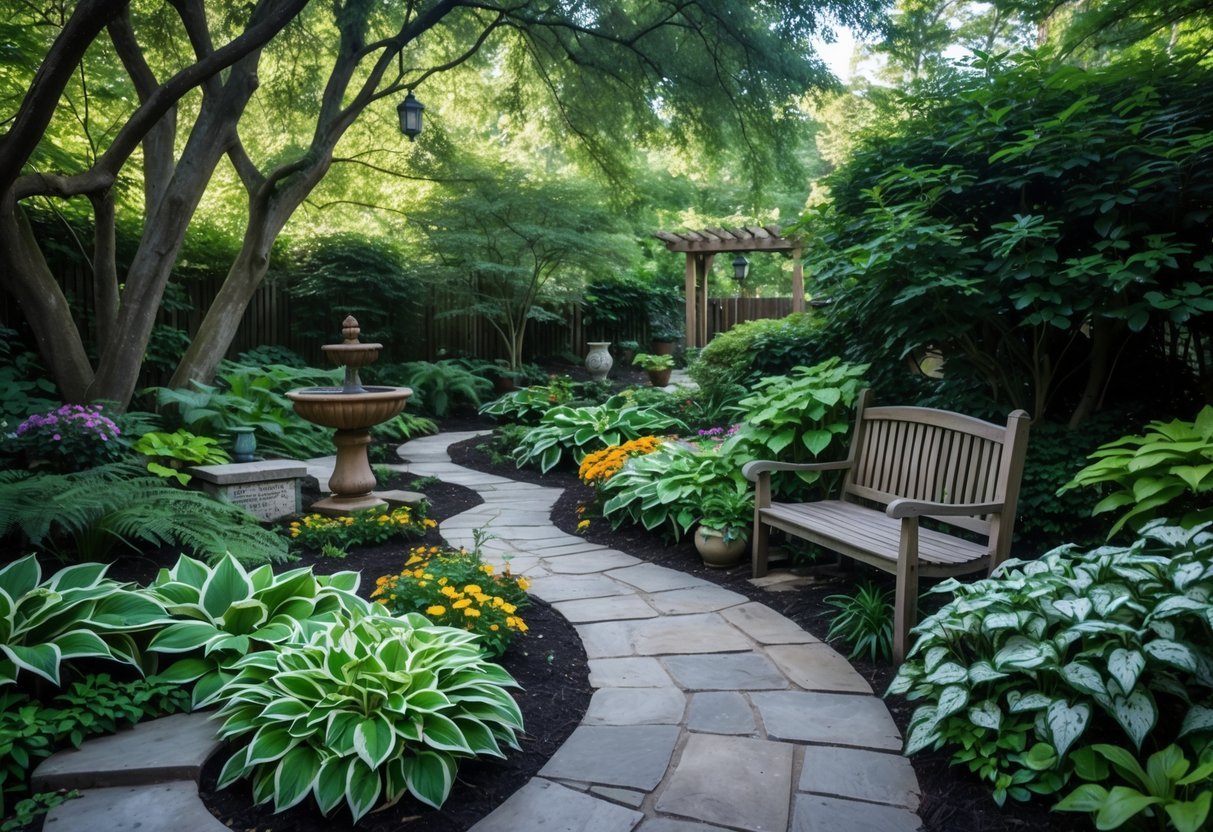
Add paths, seating, water, and art to make shaded spaces inviting and calm. Focus on durable materials, clear sightlines, and plants that tolerate splash or foot traffic.
Pathways and Seating Areas
Choose paths that stay stable when damp, like gravel with edging, decomposed granite, or textured pavers. Lay a simple 3-foot-wide route so you can pass easily and bring wheelbarrows or plant containers when needed. Add stepping stones set in shade-loving groundcover such as ajuga or moss to soften the look and reduce soil compaction.
Place seating where you get a mix of light and view—under a tree canopy edge or beside a bold-leaved hosta bed. Use weatherproof benches or a small bistro set; metal or treated wood resists moisture better than untreated wood. Add cushions in quick-dry fabric and a small side table so you can set down tools or a drink.
Consider sightlines: avoid tall shrubs blocking main views. Use low planting near seating and a taller backdrop 6–8 feet back to create a room-like feel. Include a narrow mulch strip or low edging to keep leaves off seating areas.
Water Features and Sculptures
Pick a water feature that fits scale: a 2–3 foot bowl fountain, small bubbling urn, or a shallow reflecting basin works well in tight shade. Position it where you can hear the sound from seating areas but where splashes won’t wet nearby plant crowns. Use a recirculating pump and hide tubing with stones or plantings.
Choose sculptures that add contrast in color or texture—bronze, stone, or glazed ceramics stand out against green foliage. Place art on a simple plinth or among low plants so it reads from paths and seats. Rotate seasonal accents, like a lantern in fall or a ceramic birdbath in spring, to refresh the scene.
Mind maintenance: clear leaves from pumps and basins weekly in autumn, and clean algae from stone surfaces monthly in warm weather. These small tasks keep water clear and sculptures looking deliberate rather than neglected.
Frequently Asked Questions
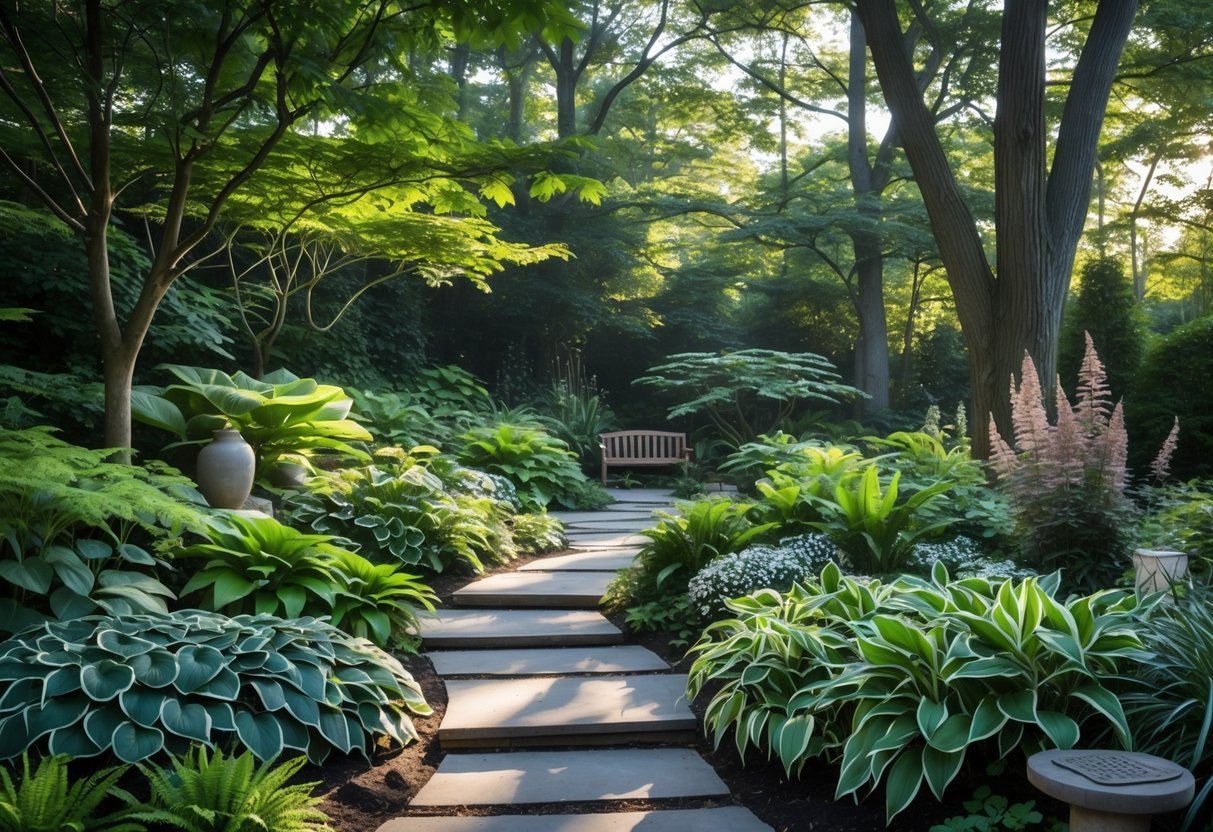
You will find plant lists, layout tips, and seasonal care steps you can use right away. The answers cover small spaces, low-maintenance choices, simple layouts, Zone 7 perennials, and where to get free plans.
What are the best plants to include in a low maintenance shade garden?
Choose plants that tolerate low light and need little pruning. Good choices include hostas, ferns (like Dryopteris), hellebores, and carex or other ornamental grasses.
Add a few resilient shrubs for structure, such as boxwood, hydrangea (shade varieties), or Japanese maple in smaller forms. Use groundcovers like pachysandra or sweet woodruff to suppress weeds.
How can I maximize a small space when designing a shade garden?
Use vertical interest to save ground area: plant taller shade-tolerant shrubs or add a trellis for climbing hydrangea or ivy. Group plants by texture and height so the space looks full without crowding.
Pick multi-season plants so you get interest year-round, and use containers to move plants where light is best. Keep paths narrow and curved to make the area feel larger.
Can you suggest some simple shade garden layouts for beginners?
Layout 1: Single focal point — place a specimen shrub or small tree in the center and surround it with three to five complementary perennials. This creates an easy, balanced plan.
Layout 2: Layered border — put the tallest shrubs at the back, medium perennials in the middle, and low groundcovers at the front. Repeat plant groups for rhythm and low upkeep.
Layout 3: Path with pockets — run a narrow path through the shade, and create small planting pockets along the sides with mixed textures. This works well for narrow or woodland spaces.
Which perennial plants are ideal for a zone 7 shade garden?
Hellebores, astilbe, and lungwort (Pulmonaria) thrive in Zone 7 shade. Heuchera (coral bells) and brunnera also perform reliably for foliage and spring flowers.
Add shade-tolerant ferns and Solomon’s seal for late-spring structure. Choose varieties labeled for Zone 7 to ensure winter survival.
How do I create a shade garden that looks good throughout all seasons?
Mix plants with staggered interest: early bulbs and hellebores for late winter, spring bulbs and brunnera for spring, hostas and astilbe for summer, and shrubs with good winter form. Include evergreens or textured bark for winter structure.
Keep beds tidy by removing dead foliage in late winter and cutting back spent stems in spring. Mulch lightly to conserve moisture and reduce weeds.
Are there any resources available for free shade garden design plans?
Many garden sites and local extension services offer free downloadable plans and plant lists for shade gardens. Search for “free shade garden plan PDF” or check your county extension website for region-specific guides.
Also look for plant lists and simple layout templates from public garden sites and botanical centers; they often include planting recipes you can copy.