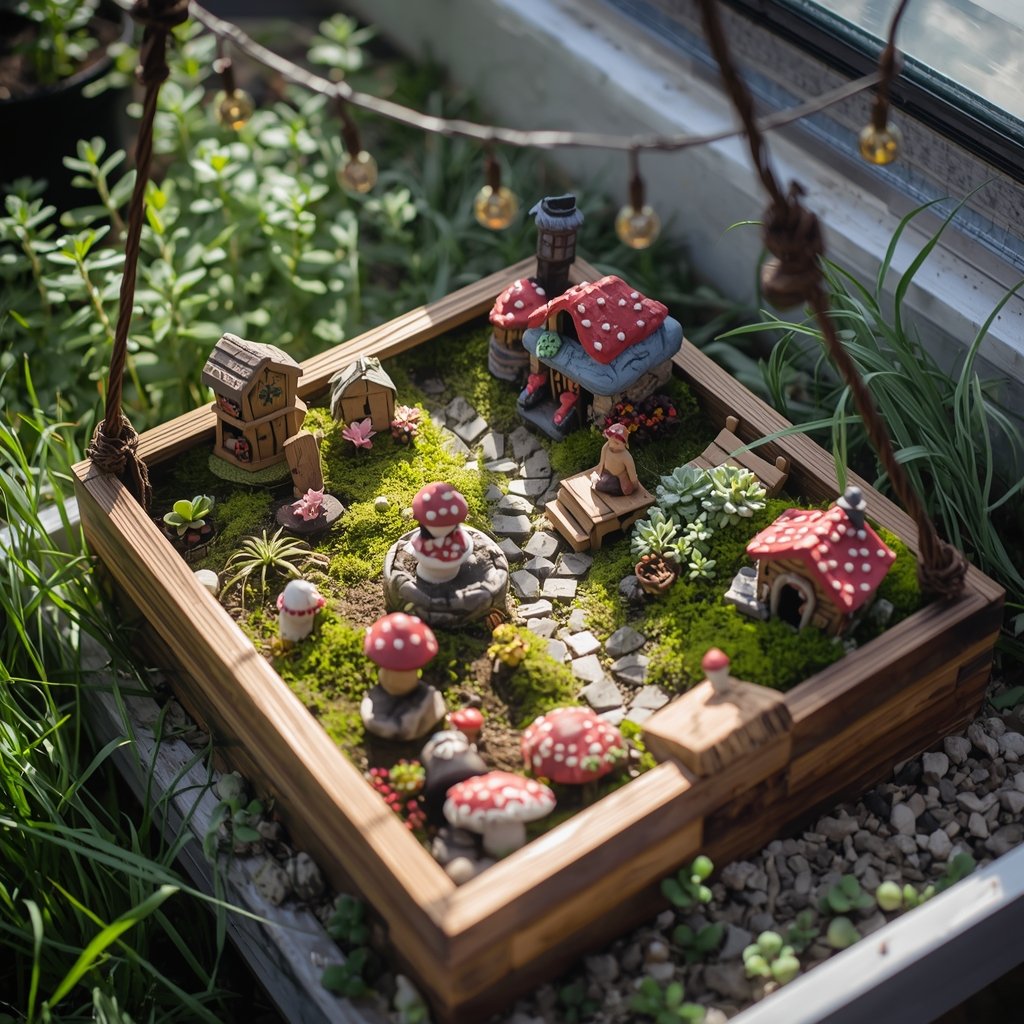
Fairy Garden Design Ideas for Enchanting Small Spaces and DIY Features
You can build a fairy garden that fits any space, budget, or skill level by mixing small live plants, tiny paths, and a few charming accents. Choose a theme, pick plants that stay small, and add simple handmade or store-bought accessories to create a cohesive, low-maintenance miniature world.
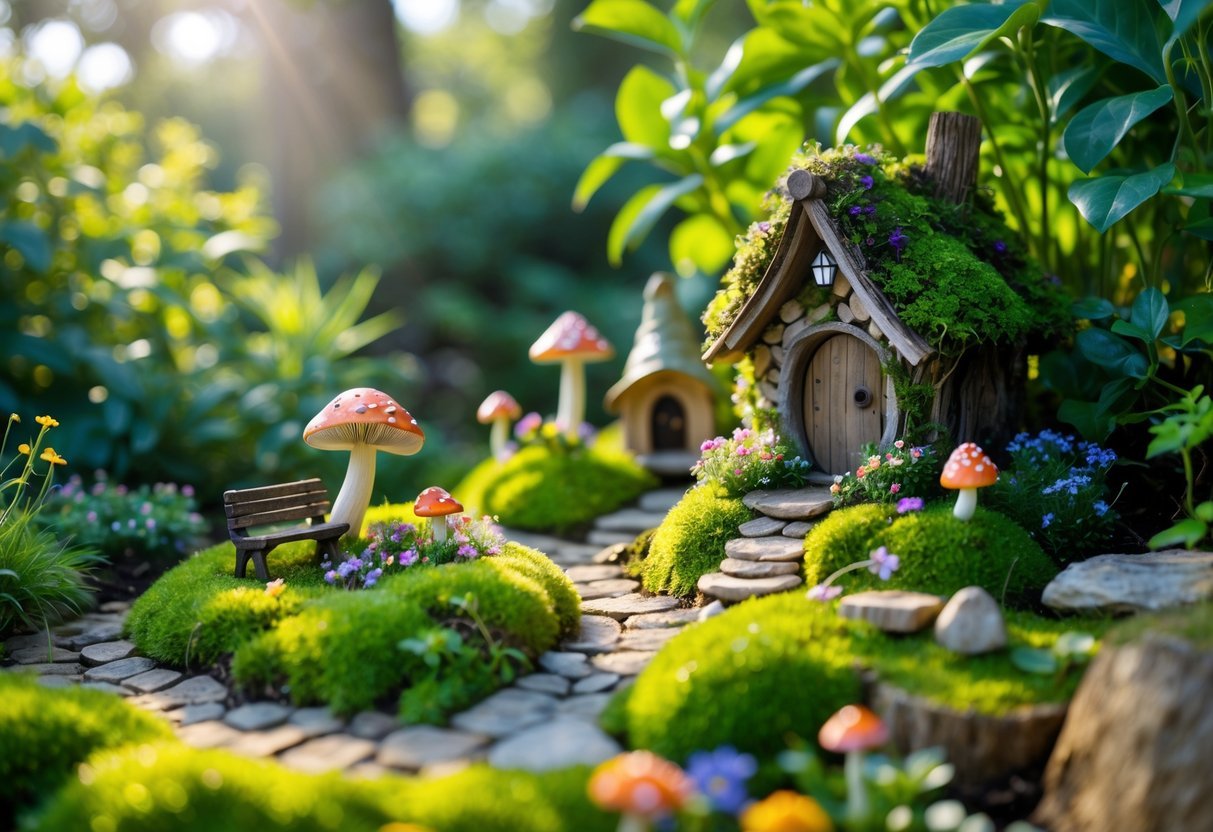
Start small in a container or a dedicated corner and experiment with textures, color, and scale until the scene feels balanced. Use stepping stones, a tiny house, and varied plant heights to guide the eye and make the space feel alive.
Key Takeways
- Aim for a clear theme and compact plant choices to keep the design manageable.
- Combine natural materials and a few standout accents for visual interest.
- Begin with a small project and build layers over time to refine the scene.
Essential Elements of Fairy Garden Design
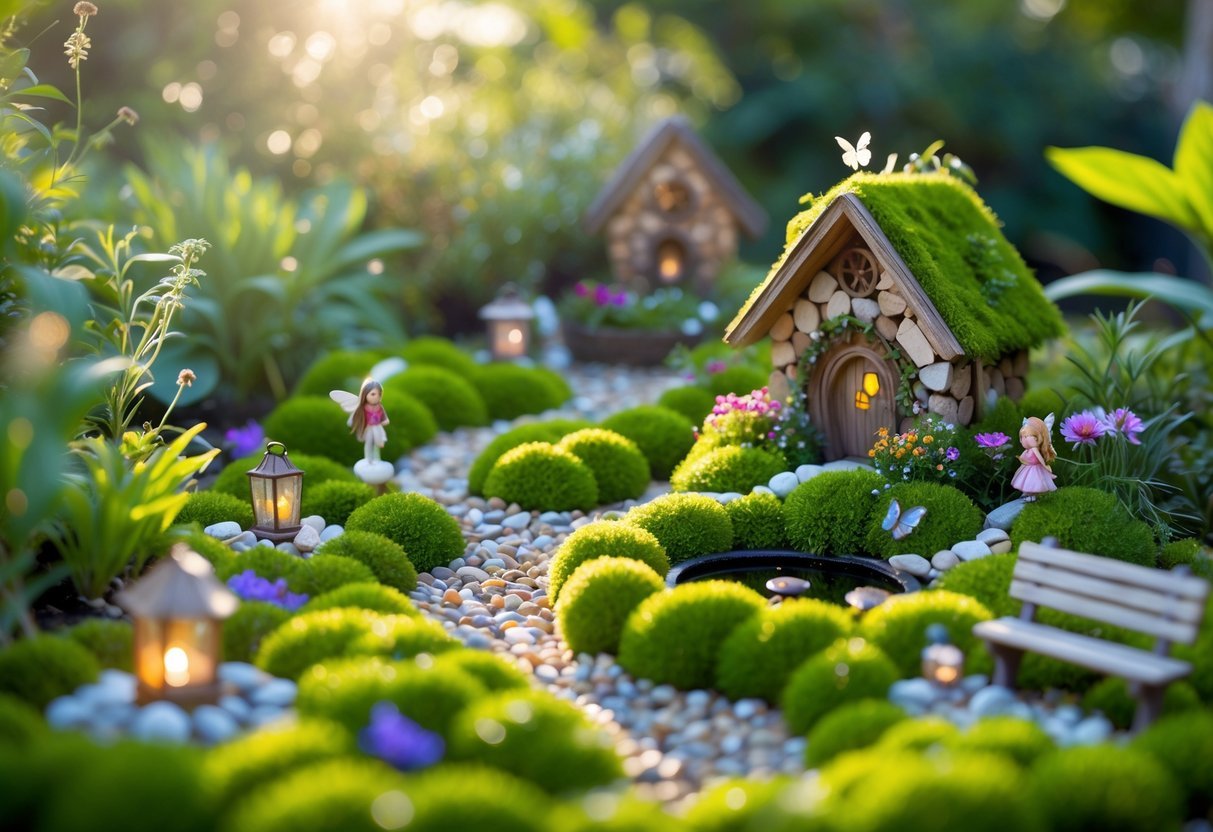
You need a clear spot with the right light, plants that stay small and easy to care for, and a few well-placed miniatures to make the scene feel real. Focus on soil, scale, and weatherproof materials so the garden lasts.
Choosing the Right Location
Pick a place that matches the light needs of your plants. South- or west-facing spots give more sun; north-facing spots stay shadier and cooler. If you use a container, place it where you can move it for seasonal light changes.
Check soil drainage before planting. Poor drainage causes root rot; add grit or a raised bed if water pools. For indoor fairy gardens, choose a spot near a bright window but away from direct heat sources like vents.
Think about viewing height and access. Place small scenes at eye level for kids or at ground level for a natural look. Leave enough room to reach in and prune or rearrange tiny pieces.
Selecting Fairy-Friendly Plants
Choose low-growing plants that keep scale with miniatures. Good options include thyme, dwarf sedum, baby tears, and small ornamental grasses. Pick plants with varied textures to suggest different “landscape” zones.
Consider growth rate and maintenance. Fast growers may need frequent trimming to keep pathways and doors visible. Use bonsai-style pruning for larger options and replace plants that outgrow the scene.
Match plants to your microclimate. Use drought-tolerant succulents in hot, dry spots and moisture-loving mosses in shady, humid areas. For containers, use a well-draining mix and fertilize lightly during the growing season.
Incorporating Miniature Structures
Scale matters: measure your largest plant or container and choose structures that look right next to it. A common scale is 1:12 (one inch = one foot) for tiny houses and furniture. Keep pathways, doors, and windows proportional.
Use weatherproof materials for outdoor pieces. Stone, ceramic, treated wood, and metal last longer than untreated paper or thin plastic. Secure lightweight items against wind with landscape adhesive or buried pegs.
Create a focal point and supporting details. Place one key structure (a house, bridge, or tree stump) and add small extras like benches, lanterns, and tiny tools. Group elements in odd numbers for a natural look and leave small open spaces for visual rest.
Creative Themes for Fairy Gardens
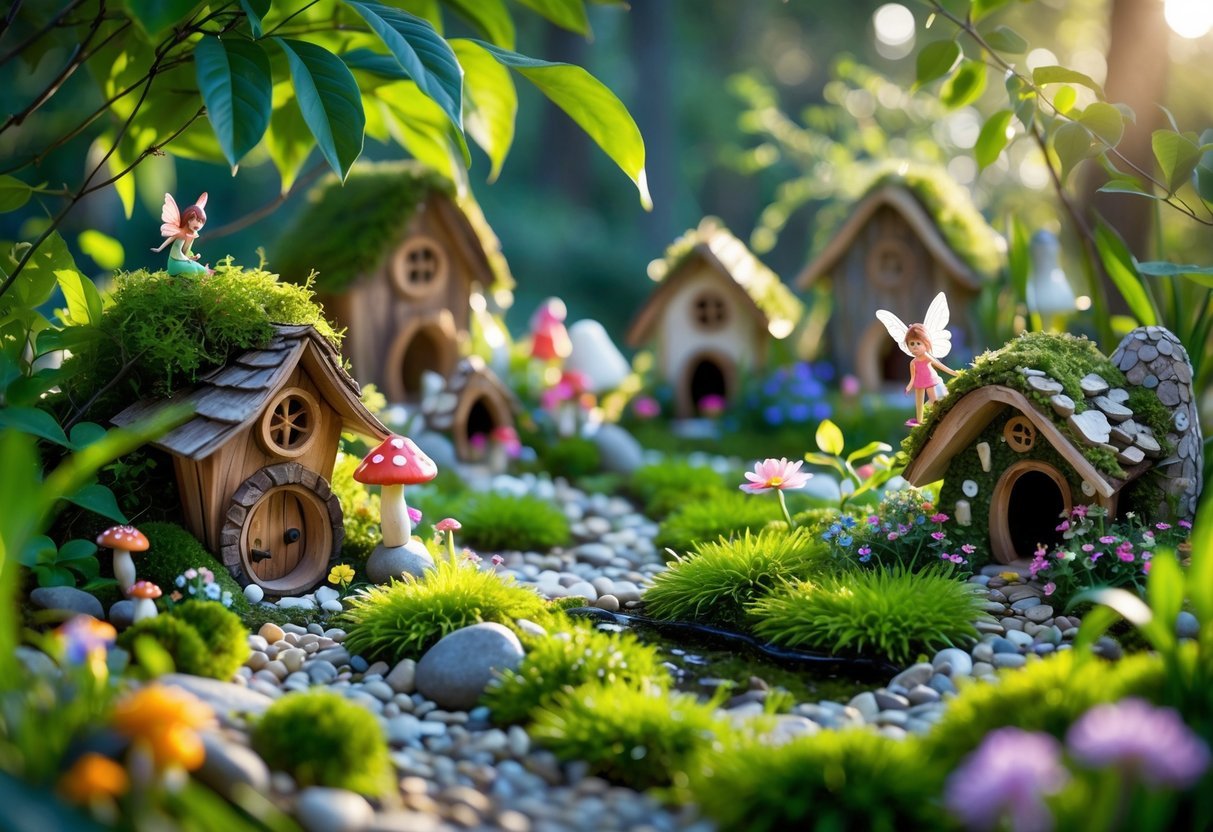
Pick a clear mood, plants, and mini features that match the style you want. Use textures, scale, and a few focal pieces to make each theme feel real and tidy.
Woodland Retreats
Create a small grove using moss, ferns, and tiny hosta or ajuga as groundcover. Add pieces of bark, pine cones, and small stones to mimic a forest floor. Use short driftwood or twig fences to define paths.
Place a miniature stump table or log bench as a focal point. Add tiny mushrooms made from painted pebbles or clay, and tuck a small bird’s nest into a low branch for detail. Choose shade-tolerant plants and keep soil moist so moss and ferns thrive.
Use muted, earthy colors—greens, browns, and soft grays—to keep the look natural. Group items in odd numbers (three or five) for balance. Finish with a narrow gravel path or stepping stones to invite the eye through the scene.
Enchanted Cottage Settings
Start with a tiny house or teacup cottage as the centerpiece. Surround it with dwarf flowering plants like thyme, dwarf lavender, or portulaca for color and smell. Clip plants to maintain scale and keep doors and windows visible.
Add painted pebble stepping stones, a small picket fence, and a mailbox or lantern to give the cottage personality. Use bright colors—pastel doors, a red roof, or yellow accents—to contrast with green plantings. Include small accessories like a wheelbarrow, tiny pots, or a miniature herb patch.
Place a small LED tea light inside the cottage for evening glow. Keep walkways clear and use low-growing groundcover near the house so details don’t get hidden as plants grow.
Seasonal Displays
Design around spring bulbs, summer annuals, fall grasses, or winter-evergreen accents to change the scene through the year. Plan containers and plant choices so you can swap pieces each season without redoing the whole garden.
Spring: plant miniature daffodils and crocus, add pastel decorations. Summer: use bright marigolds or calibrachoa and tiny sun umbrellas. Fall: include small pumpkins, ornamental grasses, and warm-toned leaves. Winter: add evergreen sprigs, faux snow, and tiny lanterns for coziness.
Keep a small storage box of seasonal props and a few modular pieces (benches, lights, tiny pots) so you can refresh the scene quickly. Rotate plants in pots to control growth and preserve the fairy-scale look.
DIY Projects and Decorative Accents
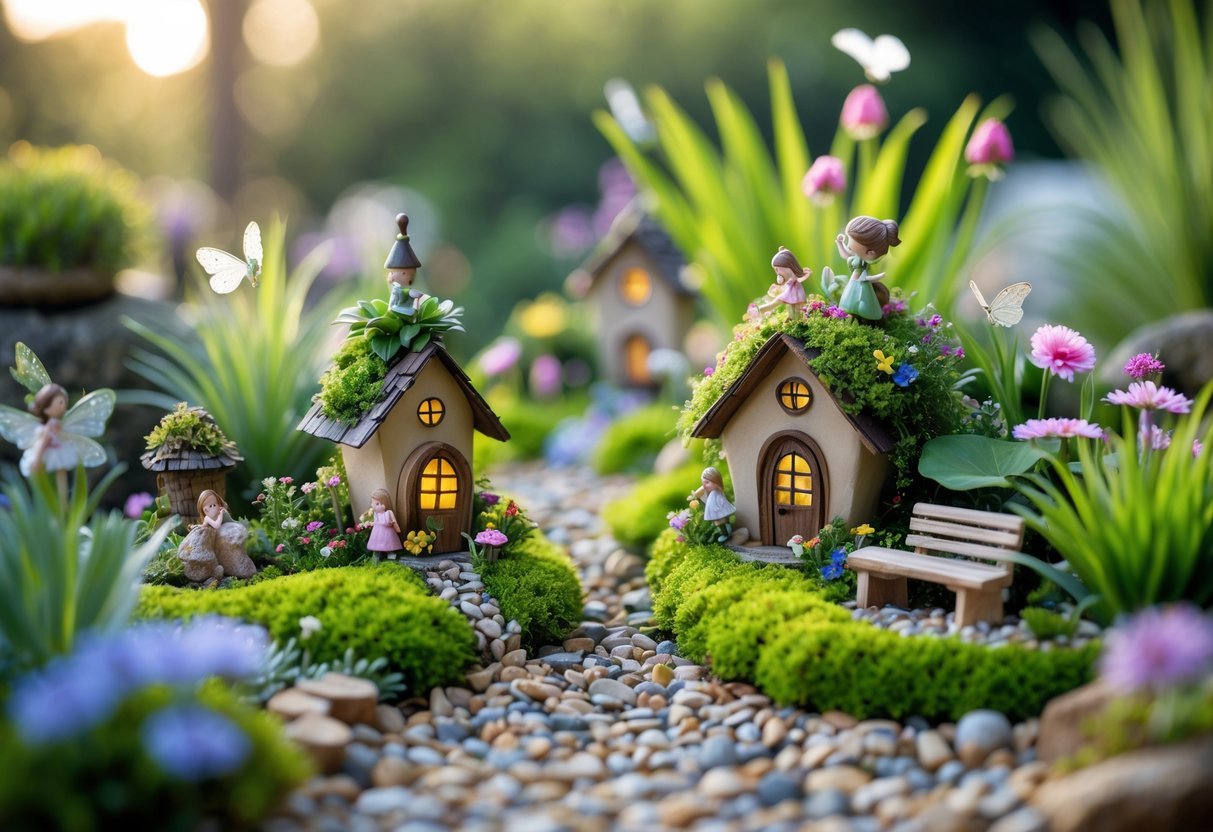
You will build small structures, create walking surfaces, and add tiny lights to make the garden feel lived-in. Focus on durable materials, simple tools, and pieces that fit the scale of your plants.
Handcrafted Fairy Houses
Use natural or recycled materials that match the style of your garden. Bark, small pieces of driftwood, cork, and broken terracotta tile work well for walls and roofs. Glue and waterproof sealant will keep joints steady; use a hot glue gun for quick fixes and outdoor-grade silicone for long-term exposure. For doors and windows, thin balsa wood or painted bottle caps give realistic scale.
Add texture with moss, small pebbles, and leaf shingles. Keep dimensions small—about 3–6 inches high for most cottage designs—so the house doesn’t overwhelm succulents or small pots. If you want a movable option, build on a flat stone or wood slice so you can lift the house for plant care.
Pathways and Stone Features
Choose stones that match the garden’s color palette and scale. Pebbles and gravel work for narrow paths; flat stepping stones or slate make clear walkways. Glue stones to a base of compacted sand or use garden adhesive for stability on slopes.
Create borders with short twigs, cut wine corks, or tiny fence pieces made from toothpicks. For a rustic look, press small stones into damp potting mix to form a stepping path. Consider a miniature dry riverbed: line a shallow trench with sand and place smooth pebbles in waves to suggest flowing water. Paths should be 1–2 inches wide for visual balance with tiny accessories.
Lighting and Magical Effects
Use low-voltage or solar micro-lights to avoid wiring. Solar fairy lights, LED string lights, and micro spotlights are weatherproof and easy to hide under moss or behind stones. Place lights near focal points: inside a house, along a path, or under a tiny bridge.
For soft glow, choose warm white LEDs and diffuse them with thin paper or frosted glass beads. Battery-operated tealights fit inside hollow logs or lanterns and are simple to replace. Add a little sparkle with glass gem accents or reflective beads placed to catch light at dusk. Keep power sources accessible for battery changes and secure any wiring with garden clips.
Frequently Asked Questions
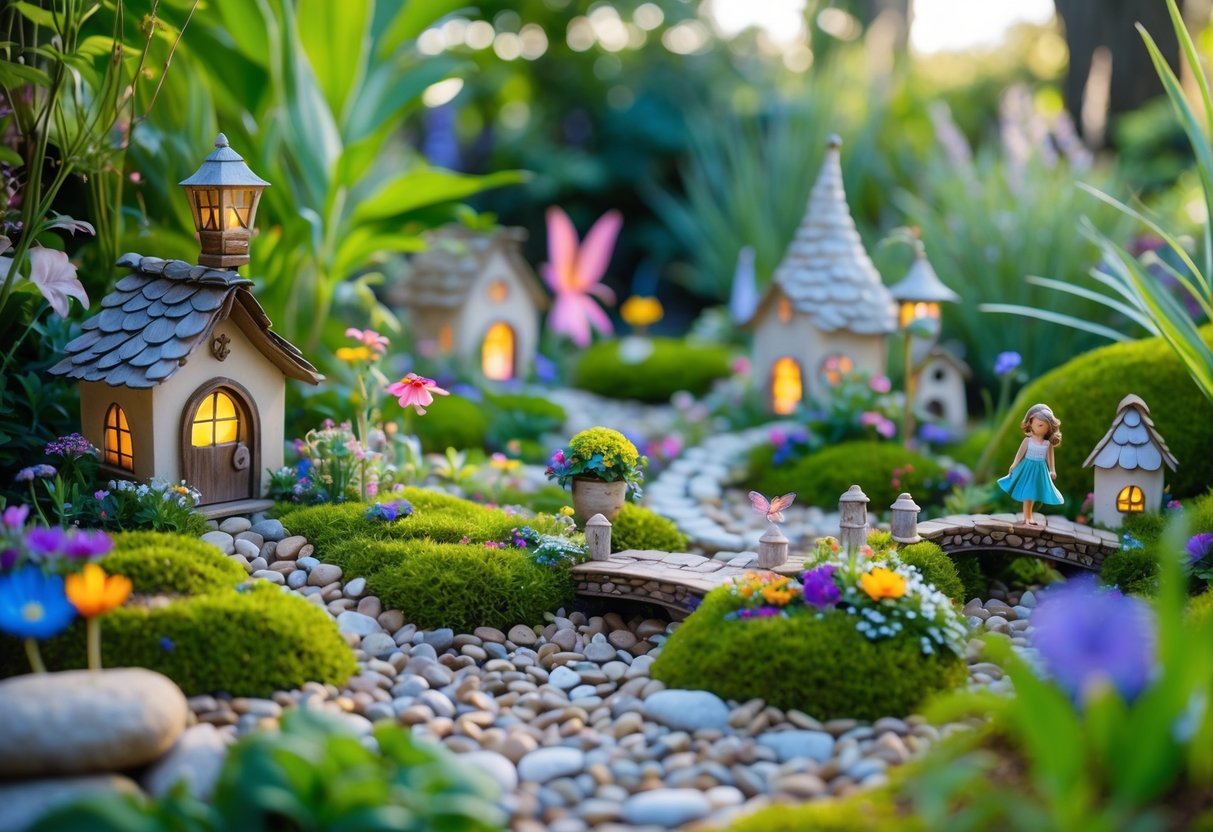
Find practical answers about plant choices, scale, materials, and layout so you can build a fairy garden that fits your space and style. Each answer gives clear steps and examples you can use today.
How can I create an adult-friendly fairy garden?
Use mature, calming plants like lavender, thyme, and small ornamental grasses for scent and texture. Add weathered materials — stone, metal accents, and antique-looking figurines — to give a grown-up, sophisticated feel.
Place seating or a small bistro table nearby so you can sit and enjoy the scene. Incorporate lighting, such as low-voltage LED path lights or warm string lights, to extend use into the evening.
What are some simple tips for designing a fairy garden?
Start with a focal point: a tiny house, a well, or a unique plant. Work outward from that point with paths, mulch, and clusters of small plants.
Use a consistent scale for accessories so the scene looks believable. Stick to three to five plant varieties to keep maintenance easy and the design cohesive.
How do I design a fairy garden on a budget?
Reuse broken pottery, twigs, and rocks for edging, steps, and mini walls. Shop thrift stores and flea markets for small props like miniature chairs or metal trinkets.
Propagate cuttings from friends’ gardens or use low-cost starter plants like sedum and baby tears. Build paths with gravel or sand instead of store-bought miniatures.
What are the best practices for designing a fairy garden in a small space?
Choose shallow containers with good drainage and compact plants like succulents, moss, and small herbs. Use vertical elements — tiny trellises or stacked pots — to add height without using floor space.
Keep paths narrow and simple to maximize planting area. Limit heavy accessories so plants get enough light and air.
Can you provide ideas for large outdoor fairy gardens?
Create themed zones: a pond area with water-safe plants, a woodland corner with ferns and hostas, and a meadow space with native wildflowers. Use larger structures like arbors, bridges, and raised beds to define zones.
Add full-size seating, winding stone paths, and mixed-scale accessories to make the space feel immersive. Plan irrigation and shade so plants stay healthy across different microclimates.
What essentials should I include in a fairy garden?
Include a clear focal point, a simple path, and a mix of low-growing plants for ground cover. Add a small water element or a dry “river” of stones for contrast.
Bring in a few accessories that match your theme, such as a tiny door, a bench, or little lanterns. Make sure containers and soil match plant needs to avoid drainage and root problems.