Garden Party Design Ideas: Stylish Layouts, Lighting, and Floral Themes
You can turn any outdoor space into a stylish garden party with a few clear choices: pick a theme that fits your mood, layer lighting and texture, and plan simple food stations that invite mingling. Choose one strong visual idea and one easy menu plan, and the rest falls into place.
You will find ideas here for mood lighting, table settings, plant-forward decor, and small activities that keep guests engaged without overwhelming you. Use what you already have, add a few seasonal flowers or lanterns, and focus on comfort and flow to make the event feel effortless and special.
Key Takeaways
- Start with a clear visual theme and a simple menu.
- Use lighting, plants, and textiles to shape the mood.
- Plan easy stations and low-effort activities to keep guests engaged.
Garden Party Themes
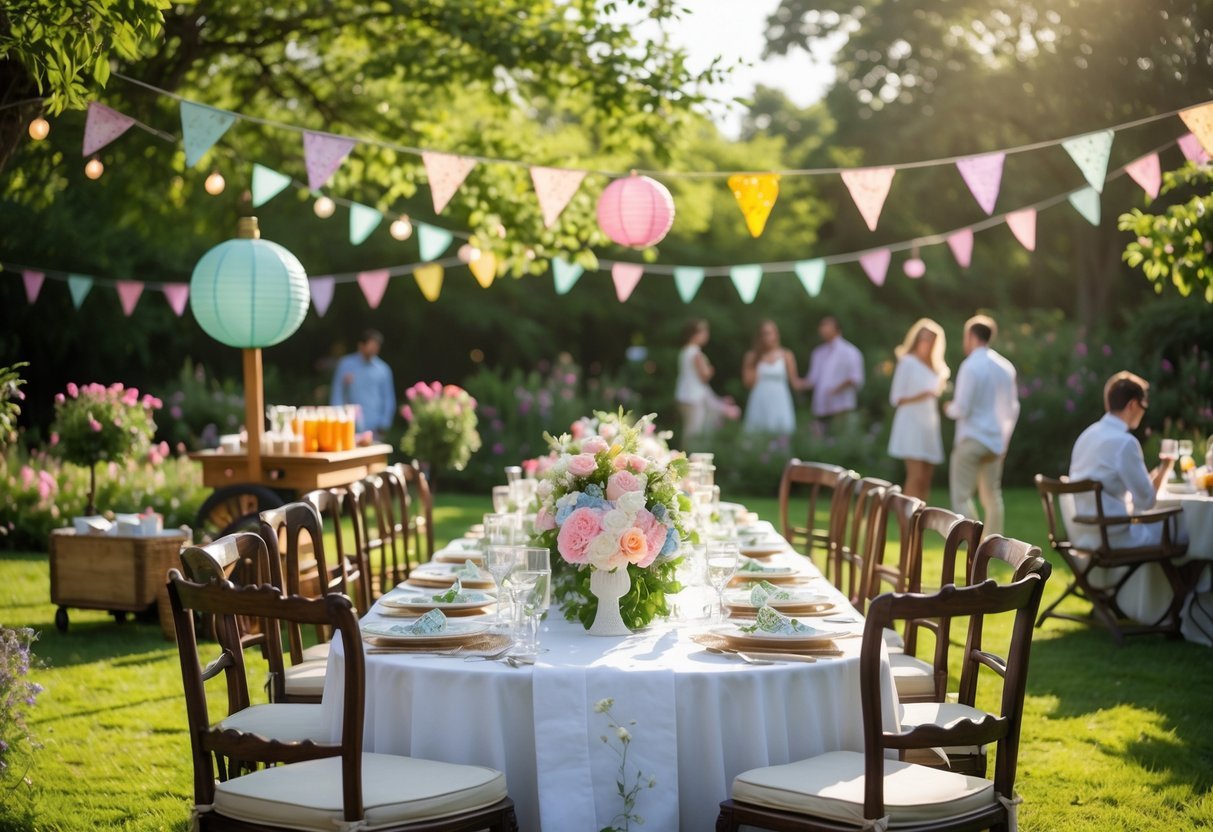
Choose a clear mood, a small palette of colors, and a few signature decor pieces to shape your party’s look and feel. Focus on lighting, tableware, and one type of centerpiece to keep setup manageable and cohesive.
Classic English Garden
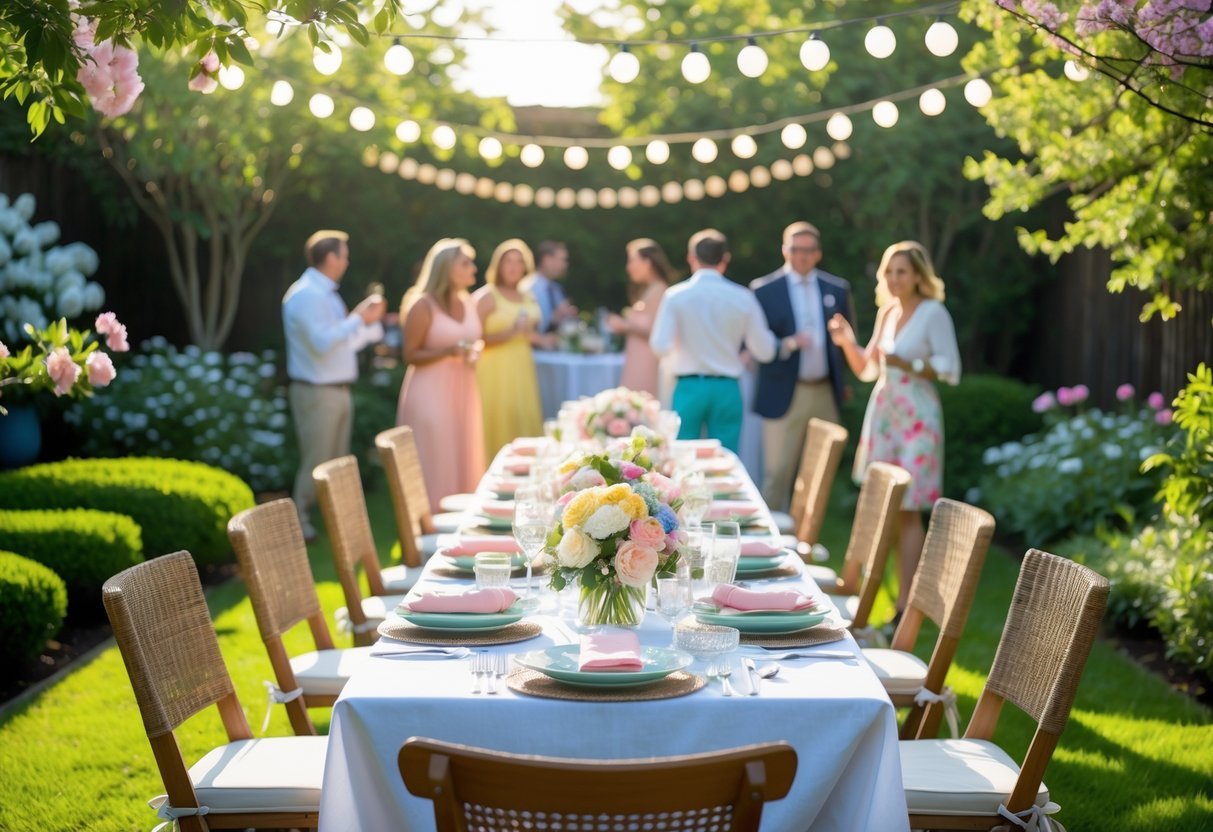
Pick soft colors like blush, sage, and cream. Use mismatched porcelain plates and linen napkins for a relaxed, lived-in look. Place loose bouquets of roses, peonies, and lavender in low vases down the table to keep sightlines clear for conversation.
String warm fairy lights or hang paper lanterns in trees for evening glow. Offer finger sandwiches, scones, and a tea station with labeled pots and small spoons. Add garden stools or wooden benches and scatter floral cushions so guests can move and mingle easily.
Tropical Paradise
Choose bold colors: teal, coral, and sunny yellow. Use large-leafed plants, palm fronds, and pineapple centerpieces to set a vacation tone. Lay a runner of banana leaves or woven mats across your table for texture.
Serve fresh fruit skewers, ceviche, or grilled fish and offer a small tiki bar with rum cocktails and nonalcoholic tropical punches. Use rattan or wicker seating and add bright throw pillows. Add citronella candles in decorative holders to control bugs without spoiling the look.
Bohemian Chic
Mix patterns, textures, and low seating to create a cozy, free-spirited vibe. Layer rugs, poufs, and floor cushions around low tables. Use eclectic glassware, brass accents, and macramé hangings to add visual interest.
Choose wildflower bouquets in jam jars and scattered tealight candles for soft light. Offer a mezze-style menu with dips, flatbreads, and small plates so guests can graze. Keep the layout informal so people can flow between seating clusters and the food area.
Seasonal Celebrations
Match decor and menu to the season for immediate cohesion. In spring, use pastel blooms and chilled salads; in summer, serve barbecue, cold drinks, and bright citrus decor. For fall, pick deep oranges and burlap, with roasted vegetables and warm spiced drinks. Winter calls for evergreens, plaid throws, and a hot cocoa or mulled wine station.
Adjust lighting and heat to the weather: string lights and tiki torches for warm nights, patio heaters or fire pits for chillier evenings. Offer a small weather station—umbrellas, blankets, or fans—so guests stay comfortable without you interrupting the flow.
Outdoor Decor Elements
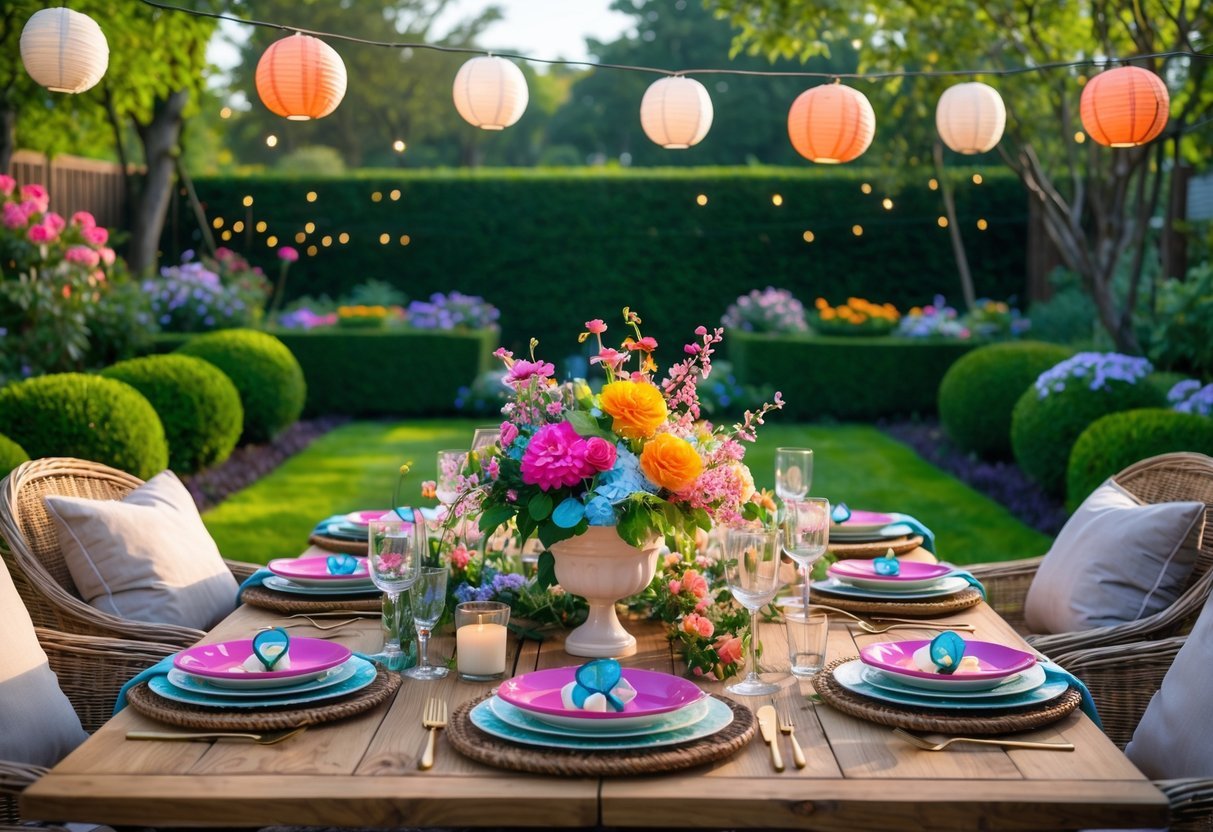
Keep focus on items that set mood and comfort: tableware that resists wind, lights placed for both path and tables, seating that balances form and function, and floral pieces sized for sightlines and weather.
Table Settings and Centerpieces
Choose table linens and weights that stay put in breezy yards. Use tablecloth clips or weighted runners. Place non-breakable plates and flatware if kids or uneven ground are present. Stack napkins or roll them with a tied herb sprig for scent and a tidy look.
Pick centerpieces that stay low enough for conversation. Aim for 8–12 inches tall or use a long, narrow runner of mixed succulents and candles. If you want taller elements, anchor them in a stable base and avoid glass in high-traffic spots. Add a small card with the flower type or care tip for guests who ask.
Use a simple checklist to keep settings consistent:
- Charger, dinner plate, salad plate
- Napkin, fork, knife, spoon
- Water glass and wine glass (if served)
- Salt/pepper and small condiments in shared dishes
Lighting Ideas
Layer lighting for safety, mood, and task areas. String lights work well over dining areas; choose weatherproof bulbs and clip them to solid anchors. Use solar path lights to mark walkways and steps to prevent trips at night.
Add focused table light with small LED lanterns or battery teasers to avoid blowing out candles. If you use candles, place them in hurricane glasses or jars filled partly with sand to stop wind and reduce fire risk. For a decorative touch, hang paper lanterns clustered at different heights above seating zones.
Consider brightness levels:
- Task (dining): warm 200–300 lux equivalent
- Pathway: dimmer, focused pools of light
- Ambient: soft string lights for a cozy glow
Seating Arrangements
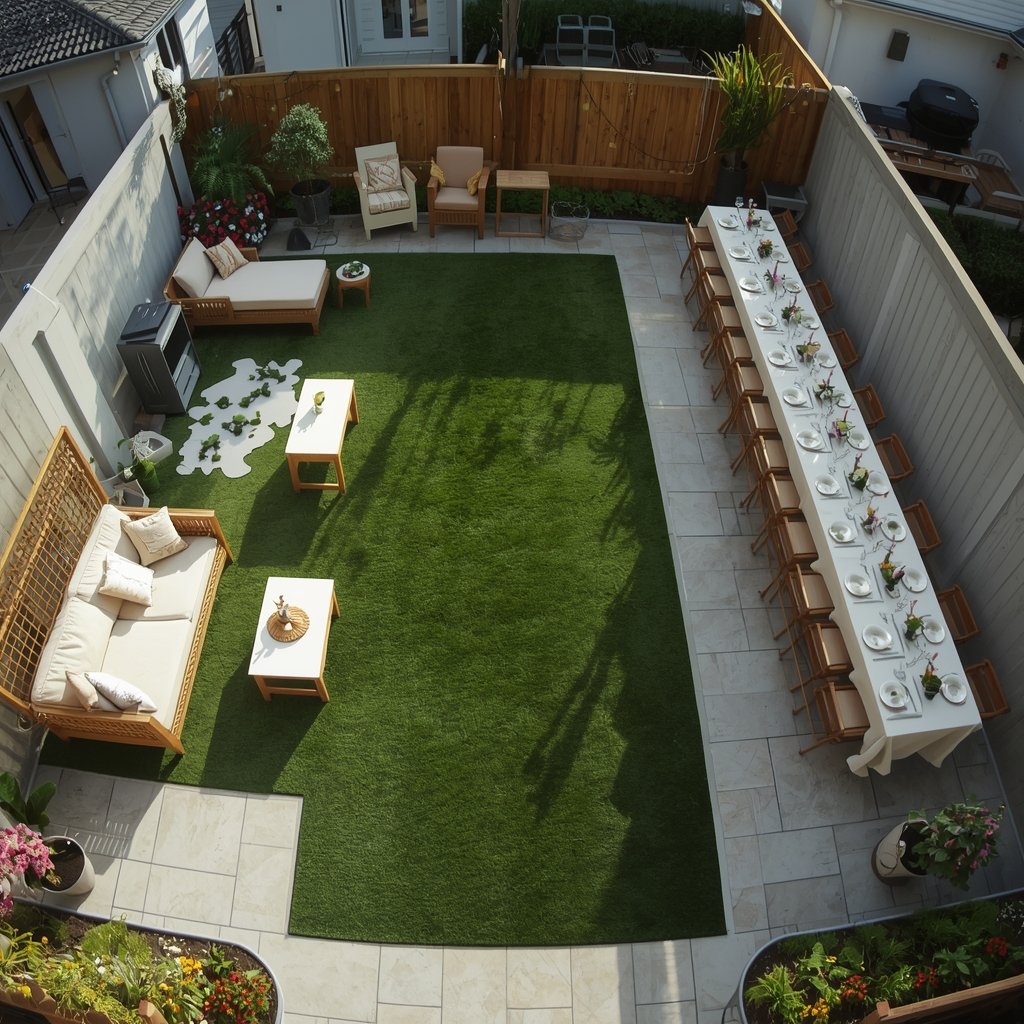
Plan seating by grouping chairs into conversation clusters and aligning guest count to table size. For a 6-foot table, reserve space for 6–8 chairs comfortably. Use benches on one side to save space and add casual flair.
Mix seating types for comfort: pair wooden chairs with a few cushioned armchairs. Provide throw blankets in cooler months and place small side tables between chairs so guests can set drinks down. Keep an accessible aisle of at least 30–36 inches for servers and guests to move.
Label or color-code seats for assigned seating. Use simple tags or ribbon to mark VIP seats or dietary preferences so guests find their places fast.
Floral Installations
Match floral scale to the setting. Use local, in-season blooms to avoid costly imports and to make arrangements last longer in heat. Combine greenery with 2–3 flower varieties to keep arrangements readable and fresh.
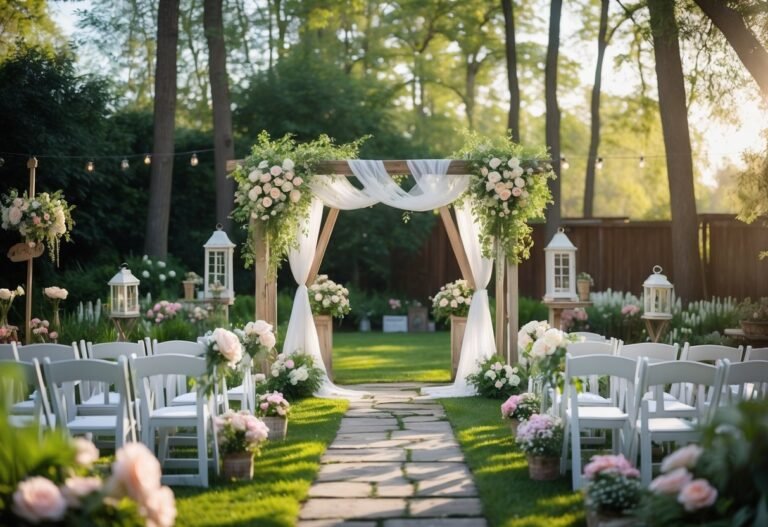
Anchor large installations like arbors or hanging garlands to structural points such as pergolas or stakes driven into the ground. Secure stems with floral wire and waterproof tape. For table flowers, choose sturdy stems (e.g., carnations, ranunculus, eucalyptus) that hold up in sun and warm temperatures.
Protect blooms from sun and wind by placing water vials or foam soaked in water inside containers. Rehydrate flowers during the event by topping vases with water and swapping out any wilted stems quickly.
Creative Food and Drink Displays
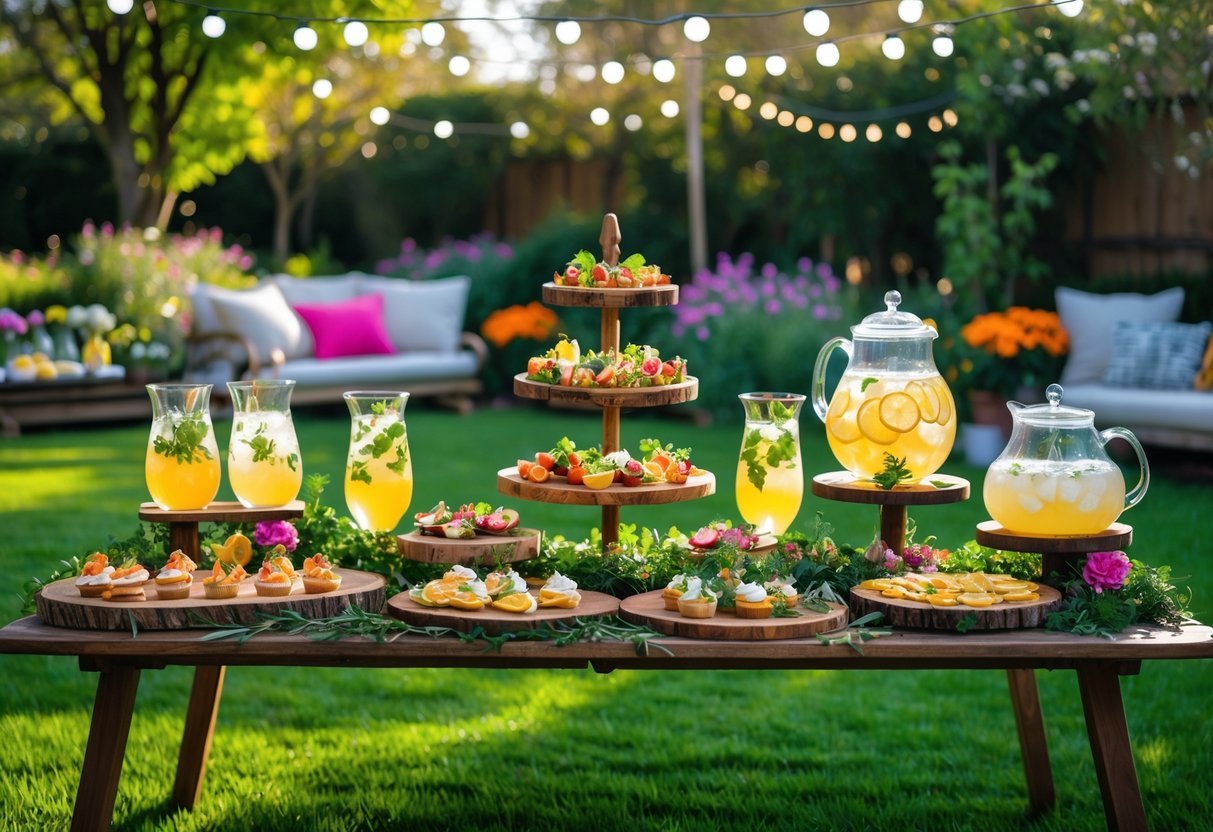
Focus on clear zones, eye-catching height, and easy flow so guests can serve themselves without crowding. Use a few statement pieces and repeat colors or shapes to tie the display together.
Buffet Table Styling
Place the buffet against a wall or along a long table to keep traffic moving. Start with plates and cutlery at one end and drinks at the opposite end. Use risers, cake stands, and wooden crates to create three heights so foods don’t blend into one flat line.
Group items by temperature and type: cold salads together, hot mains on insulated trays, and desserts on a separate stand. Label each dish with a small card noting allergens like nuts, dairy, or gluten. Add a cutting board and serving knife for breads and cheeses to keep things tidy.
Decorate with fresh herbs, edible flowers, and small potted plants for a garden look. Keep napkins within reach and provide tongs, spoons, and separate utensils for each dish. Leave a trash bowl nearby for used toothpicks and small waste to reduce clutter.
Interactive Food Stations
Set up live or self-serve stations to engage guests and reduce lines. Popular choices include taco bars, build-your-own salads, and a grilled-skewer station where you pre-cook proteins and let guests finish on a small grill or hot plate.
Provide clear instructions and a sample plate so guests know portion sizes and combinations. Offer a range of sauces and garnishes in squeeze bottles or small bowls. Keep one staff member or a confident helper at busier stations to refill items and answer questions.
For allergy safety, separate stations by major allergens and add cards that state common allergens. Use trays with ice for seafood or chilled items and insulated covers for hot foods to keep proper temperatures.
Signature Cocktails
Choose one or two themed cocktails and offer a nonalcoholic version of each. Prepare a batch in a dispenser for quick self-serve and place a smaller pitcher of the same drink behind the bar for fresh pours. Include a print or chalkboard sign with the cocktail name, main ingredients, and garnish suggestions.
Set up a garnish station with citrus wheels, herbs, edible flowers, and flavored salts. Provide a simple recipe card for DIY mixes so guests can customize strength and sweetness. Keep ice in a nearby bucket and separate glassware for alcoholic and nonalcoholic drinks to avoid confusion.
Entertainment and Activities
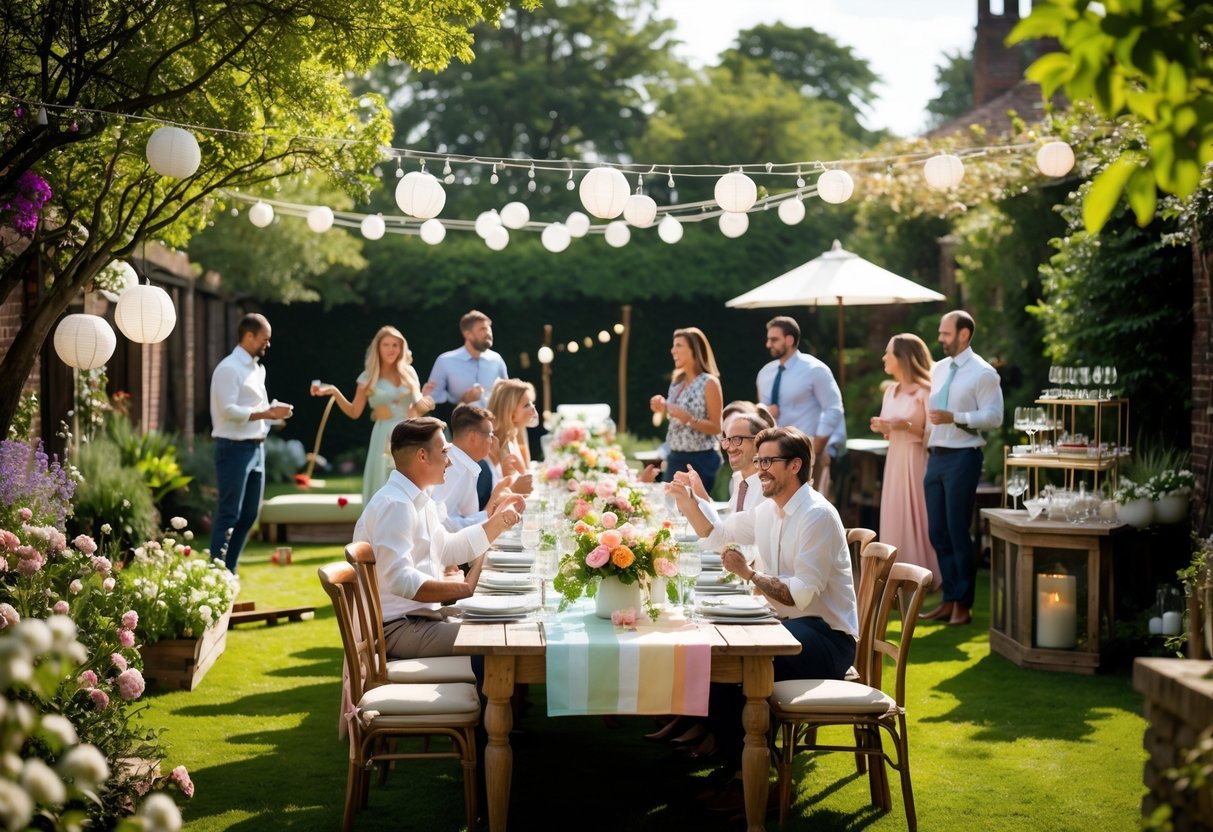
Plan a mix of sound, motion, and hands-on fun so guests stay engaged. Pick options that match your space, guest ages, and noise limits.
Live Music and Performances
Hire a solo guitarist, acoustic duo, or small string quartet depending on your vibe and budget. Ask performers for a 60–90 minute set with a short break; this keeps the flow without overwhelming conversation. Position musicians near a corner or patio to avoid blocking paths and to keep sound from carrying into neighbors’ yards.
Provide a simple sound plan: battery-powered amp for a duo, minimal mic for singers, and a tarp or canopy if rain is possible. Share a short playlist or song list with musicians beforehand so they know your preferences. If live performers aren’t available, cue a curated playlist on a speaker with two volume zones — louder near the dance area, softer near seating.
Garden Games
Choose easy-to-learn games that suit your lawn and guest mix. Classic options like cornhole, giant Jenga, and bocce are crowd-pleasers and need little setup. Place one game per 20–30 guests so players don’t wait long.
Label game areas with simple signs and clear rules. Keep spare scoreboards, marker pens, and a small bin for lost pieces. For kids, add a fairy scavenger hunt: give each child a checklist and small prizes. Always check ground surface for level play and move furniture to create safe lanes.
DIY Craft Stations
Set up one or two craft tables with clear instructions and all materials within reach. Popular stations: flower crown making, mini terrarium jars, and custom seed-packet labeling. Use trays or muffin tins to organize beads, blooms, and soil so guests can grab supplies quickly.
Offer step-by-step cards and a staffer or volunteer to help with tricky steps. Protect table surfaces with disposable tablecloths and provide wet wipes and small trash bins. Display finished samples to inspire guests and include take-home packaging like small boxes or organza bags.
Sustainable Party Design
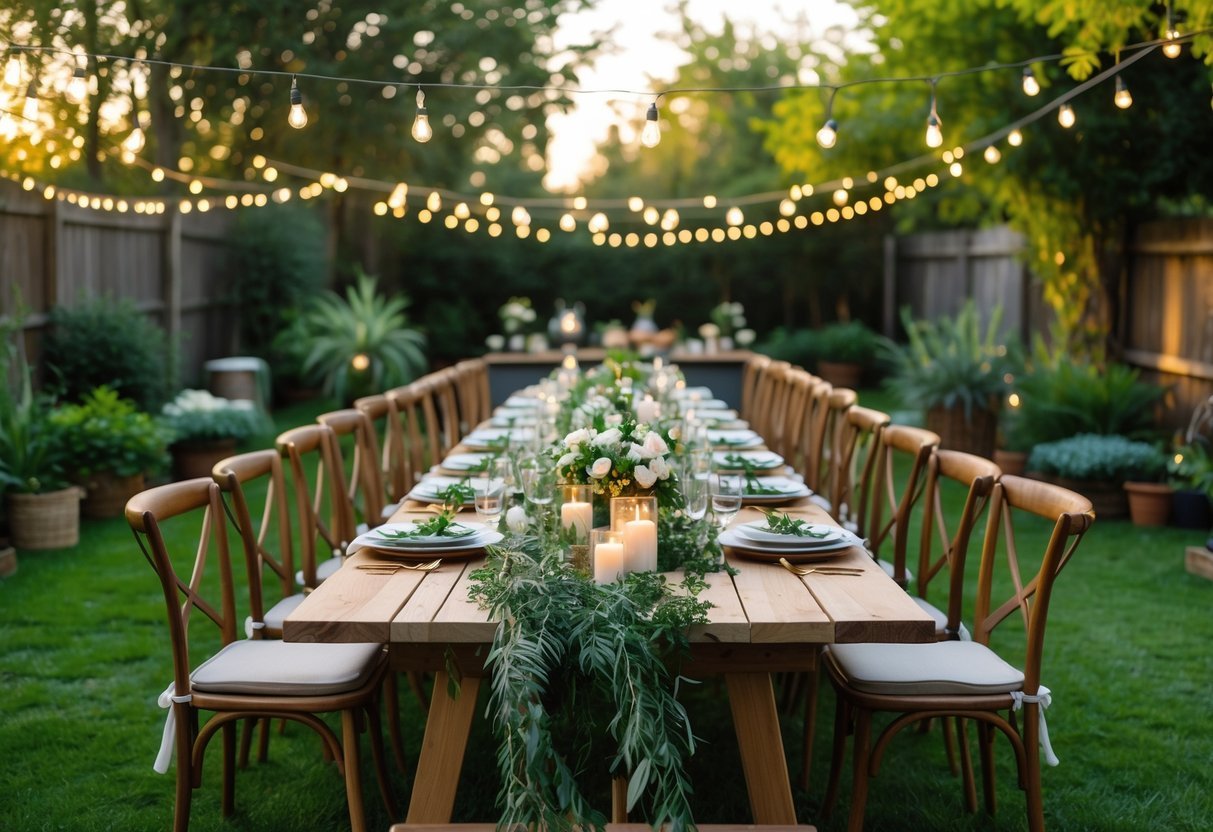
Choose items that cut waste, lower carbon impact, and still look stylish. Think reusable or compostable supplies, local blooms, and decor made from natural or recycled materials.
Eco-Friendly Decor Choices
Pick decorations that you can use again or return to the earth. Use fabric bunting, linen table runners, and macramé plant hangers instead of single-use plastic banners. For table accents, choose real potted plants, herbs in terracotta pots, or cut branches you can compost after the event.
Lighting should be LED string lights or solar lanterns; they save energy and last for many seasons. For centerpieces, avoid foam and plastic floral foam—use glass jars, ceramic vases, or a shallow bowl with a pebble base to hold stems. If you want a themed look, upcycle items like old picture frames or wooden crates and paint them with water-based paint.
Offer a clear bin for guests to return reusable items and a small labeled compost bin for food scraps and biodegradable napkins. Label materials so guests know what can be reused, recycled, or composted.
Reusable Tableware
Choose durable plates, glasses, and cutlery you can wash and reuse. Melamine or porcelain plates, stainless steel cutlery, and real glassware create a nicer feel than disposables and cut waste dramatically. Rent sets if you don’t own enough for your guest list.
If you must avoid breakage, pick thick reusable plastic or bamboo sets that you can keep for future events. Provide a washing station: tubs for rinsing, a basin with hot soapy water, and a drying rack. Label bins for “to be washed” and “clean” so volunteers or helpers can manage dishes quickly.
For drinks, use pitchers and beverage dispensers instead of single-serve bottles. Offer cloth napkins and place a small card asking guests to return their used items to the collection area.
Sourcing Local Flowers
Buy flowers from a farmers’ market or local florist who grows locally and avoids long-distance shipping. Ask for seasonal blooms—peonies in spring, dahlias in late summer, asters in fall—for better scent, color, and lower carbon impact. Local stems often last longer since they weren’t in transit for days.
If you want the lowest impact, use potted herbs and small shrubs as centerpieces that guests can take home or you can plant afterward. Tell your florist you prefer loose stems over arrangements with floral foam, and request compostable wrapping like kraft paper or burlap.
Arrange stems simply in jars, bottles, or reclaimed vases. Include small care tags with the plant names and simple watering tips if you let guests take pots home.
Frequently Asked Questions
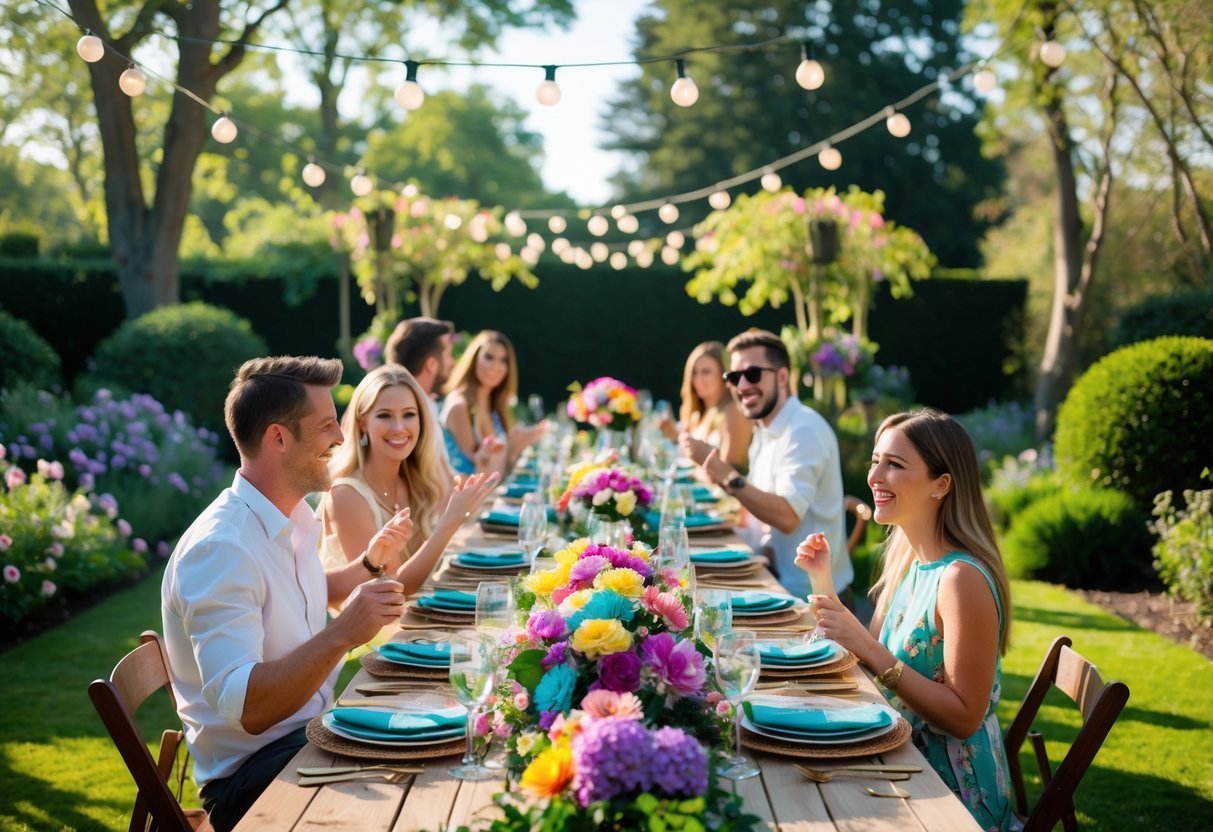
You will find clear, practical answers for decorating, DIY projects, color choices, themes, attire, and must-have items. Each answer gives steps or examples you can use right away.
How do I decorate for an elegant garden party?
Choose a simple color palette like ivory, sage, and gold. Use linen tablecloths, tapered candles in glass holders, and a few low floral arrangements so guests can talk across the table.
Add string lights or warm lanterns for soft evening light. Place matching place cards and cloth napkins to make the setting feel polished.
What are some simple yet beautiful DIY designs for a garden party?
Make mason-jar vases tied with twine and filled with seasonal blooms for quick centerpieces. Create paper lanterns or tissue pom-poms for overhead decoration using colors from your palette.
Build a DIY beverage station with labeled dispensers, fresh fruit, and a small chalkboard sign. Reuse wooden crates and crates for display to add height and texture.
Which color schemes work best for garden party decors?
Soft pastels like blush, mint, and pale blue suit daytime tea or brunch events. Neutral tones with metallic accents—cream, taupe, and brushed gold—work well for a refined evening gathering.
For bold flair, pair deep green with coral or navy with mustard. Keep one or two accent colors to avoid visual clutter.
Can you suggest garden party themes suitable for adults?
Host a vintage tea party with mismatched china, finger sandwiches, and a floral cake stand. Try a Mediterranean alfresco dinner with olive branches, citrus centerpieces, and long communal tables.
Consider a cocktail garden party with a signature drink bar and small plates. Or pick a monochrome white party for a chic, modern look.
What attire is appropriate and stylish for a garden party?
For women, pick a knee-length floral dress or a lightweight midi with low heels or dressy flats. Men can wear chinos or lightweight trousers with a collared shirt; add a blazer for evening.
Advise guests to bring a light wrap or jacket if your party runs after sunset. Recommend comfortable shoes if your lawn is uneven.
What are the essentials for throwing the perfect garden party?
Provide sufficient seating and shaded areas, such as umbrellas or a pop-up canopy, to keep guests comfortable. Stock a simple first-aid kit and insect repellent discreetly on a side table.
Plan a menu that sits well outdoors—finger foods, salads, and chilled desserts—and keep drinks cold in coolers or dispensers. Have a basic sound source for background music and check the weather forecast the day before.