Garden Pond Design: Expert Tips for Layout, Plants, and Water Features
You can turn a small corner of your yard into a calming pond that fits your space, budget, and style. A well-planned pond balances size, shape, liner and pump choices, and plant and fish selections to create a low‑maintenance, beautiful water feature.
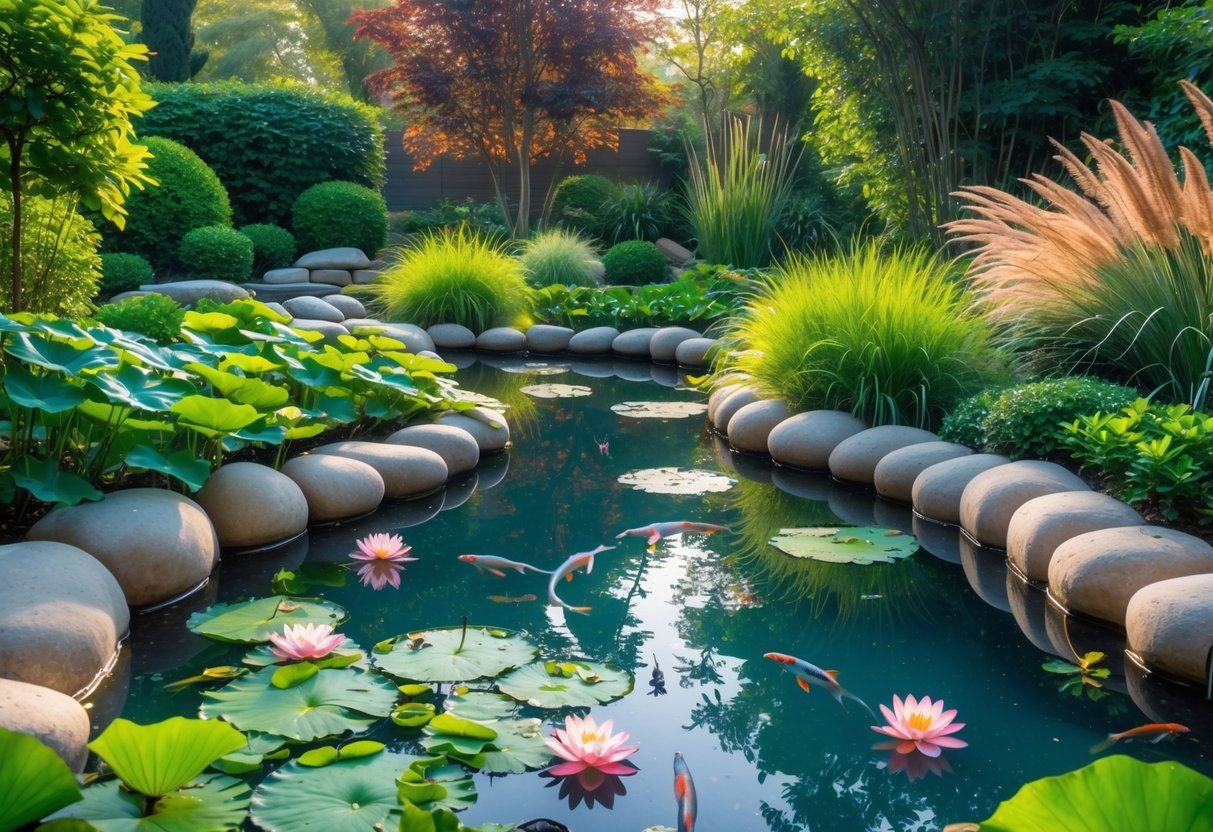
Think about how the pond will look from your favorite view, how much time you want to spend on care, and whether you want fish or native plants to attract wildlife. Small changes like stones, a fountain, or LED lighting can make a big visual impact without raising maintenance or cost too much.
Key Takeaways
- Plan a pond that fits your space, budget, and care time.
- Choose materials and equipment that match your maintenance goals.
- Add plants, stones, or a small water feature to boost beauty and wildlife.
Essential Elements of Garden Pond Design

You need a clear plan for shape, site, and depth so your pond looks good, stays healthy, and fits your yard. The next parts explain the best choices for shapes, where to place the pond, and how deep and large it should be.
Pond Shapes and Layouts
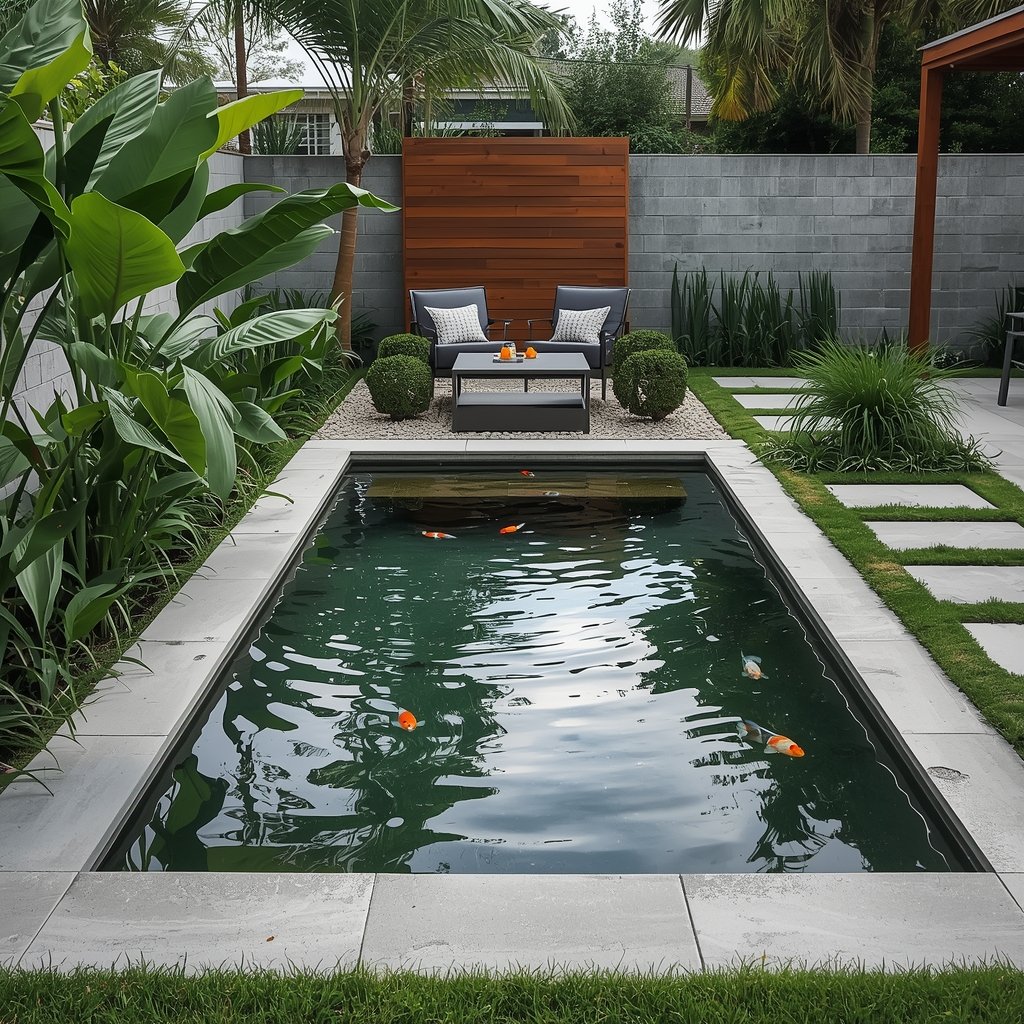
Choose a shape that matches your garden style and maintenance ability. Natural, irregular shapes blend with plants and rocks and hide liners well. Geometric shapes like circles, rectangles, or hexagons suit modern gardens and make edging and decking easier.
Plan shallow shelves around the edge for marginal plants and wildlife. Include a deep area (for fish and temperature stability) and a slope between shelves and deep zone for easier cleaning. Mark inlets and outlets for water flow, plus space for a skimmer, filter, and a pump. Sketch paths and viewing spots so you can access maintenance areas without trampling plantings.
Use a simple map:
- Shape: natural vs geometric
- Edge: rock, planted, or hardscape
- Features: waterfall, fountain, or still water
This helps you pick materials and tools before digging.
Site Selection Considerations
Pick a site with at least 4–6 hours of morning sun but some afternoon shade to limit algae and protect fish. Avoid placing the pond under large deciduous trees to prevent heavy leaf fall and root damage. Keep it away from steep slopes where runoff can carry soil into the water.
Check underground utilities and the slope of your yard. Position the pond where gravity can help with plumbing, like below the filter or pump if possible. Make sure you have room for equipment: filter, pump, skimmer, and a maintenance path. Consider sightlines from your main outdoor living areas so the pond becomes a focal point, not an afterthought.
Sizing and Depth Guidelines
Decide size by available space and purpose: wildlife pond, ornamental, or koi pond. Small wildlife ponds can be 4–8 feet across and 18–24 inches deep. Koi ponds need at least 3–4 feet depth and 1,000+ gallons for healthy fish and winter protection.
Depth affects temperature and oxygen. Deeper ponds stay cooler in summer and avoid winter kill in cold climates. Include at least one deep zone plus shallow planting shelves 6–18 inches deep. Calculate volume roughly: length × width × average depth × 7.5 = gallons. Plan reserve space for equipment and a 6–12 inch gravel layer if you use natural filtration.
Construction Materials and Methods

Choose a durable liner, stable edging, and a pump and filter sized for your pond volume and fish load. Proper installation prevents leaks, reduces maintenance, and keeps water healthy.
Liner Options and Installation
You can pick between flexible liners (EPDM or PVC), preformed shells, or compacted clay. EPDM rubber lasts longer and resists punctures; PVC is cheaper but tears more easily. Preformed shells suit small ponds under 500 gallons; they need little shaping but limit plant and depth options.
Prepare a smooth, compacted base free of rocks and roots. Lay a geotextile underlayment to protect the liner. For flexible liners, leave 10–18 inches of slack around the edges for settling, and avoid stretching; seam welding requires heat tools or professional service. Overlap and secure the liner with rocks or a buried edging trench. For clay, compact to a minimum 12-inch depth and maintain a high clay content (over 30%) to hold water.
Edging and Border Techniques
Pick edging that matches your style and function: natural stone, concrete coping, timber, or planted berms. Use flat, stable stones for walkable edges and wider shelves for marginal plants. Concrete coping provides a clean look and anchors liners well when poured over the liner’s skirt.
Bury the liner skirt 6–12 inches and backfill with soil or gravel to lock the liner in place. For a planted edge, build a shallow shelf 6–12 inches deep and fill with aquatic soil and gravel; this supports marginal plants and hides the liner. Use landscape fabric between soil and liner to reduce erosion. Secure loose stone with stainless steel pins or mortar for safety and longevity.
Filtration and Pump Systems
Size the pump to turn over the pond volume every 1–2 hours for fisheries, or every 2–4 hours for plant-focused ponds. For example, a 1,000-gallon pond usually needs a pump rated 500–1,000 GPH, adjusted for head height and plumbing resistance. Choose a pump with a trusted brand and corrosion-resistant housing.
Combine mechanical and biological filtration. Mechanical filters trap debris; place them before biological media to reduce clogging. Biological filters host beneficial bacteria on high-surface-area media like bio-balls or ceramic rings. Include a skimmer to remove surface debris and a UV clarifier if algae becomes a recurring problem. Run winter-proofing and freeze control if you live where temperatures drop below freezing.
Aesthetic and Functional Enhancements
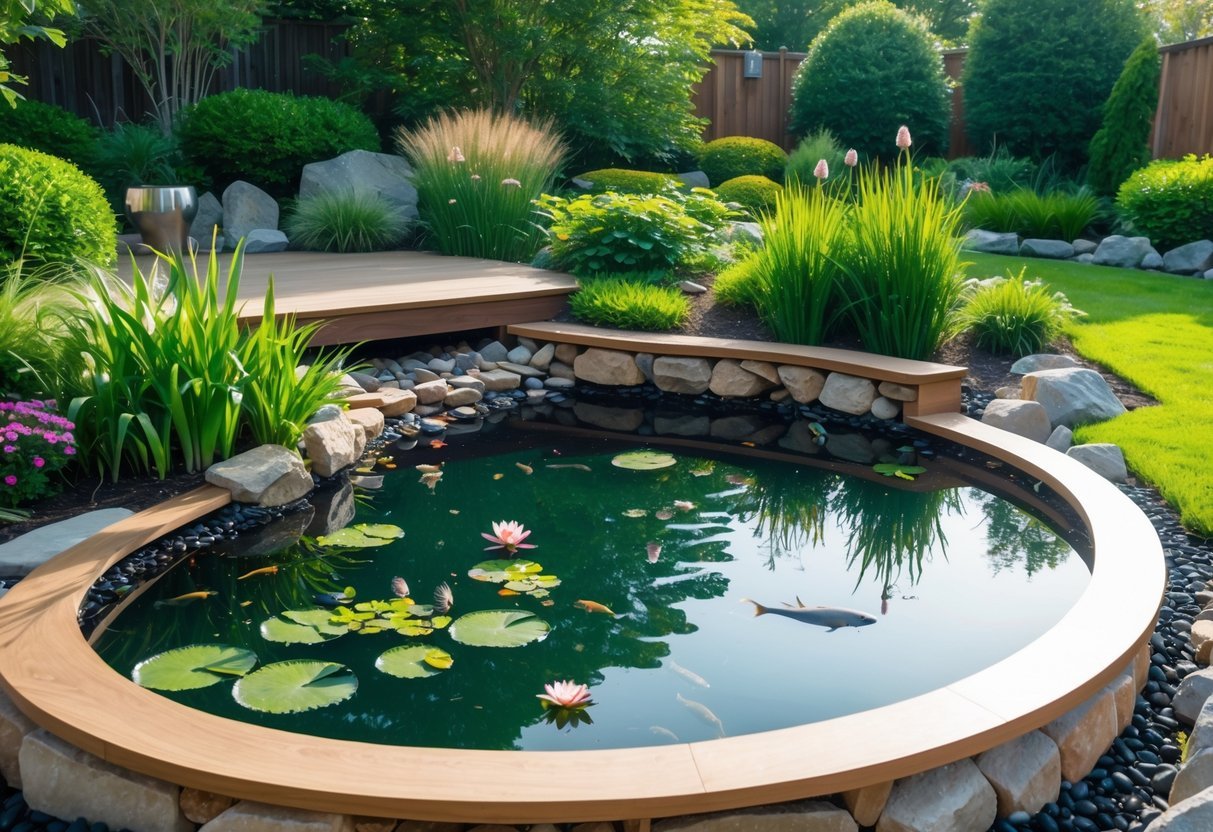
You can make your pond both beautiful and useful by adding moving water, choosing the right plants, and placing lighting where it matters. Each choice affects water quality, wildlife, and how the pond fits into your garden.
Water Features and Fountains
Add a fountain or waterfall to improve circulation and reduce algae. A small recirculating pump with a 200–800 GPH (gallons per hour) rating fits most backyard ponds. Match flow rate to pond size: higher flow for shallow, exposed ponds; lower for deep, calm designs.
Choose materials that fit your style: natural stone for a rustic look, corten steel for a modern edge. Position waterfalls where they can hide the pump and create splashing without flooding surrounding plants. Use adjustable nozzles or a multi-tier design to change sound and visual impact.
Plan access for maintenance. Install a removable skimmer or access hatch and place valves so you can winterize or divert flow without digging up the feature. Add a pre-filter to extend pump life and reduce cleaning frequency.
Plant Selection and Placement
Select plants by depth and sunlight. Use marginal plants (e.g., irises, marsh marigold) at 0–6 inches, oxygenators (e.g., hornwort) submerged at 1–3 feet, and floating plants (e.g., water lilies) to shade the surface. This mix helps keep water clear and supports wildlife.
Group plants by function: erosion control near edges, shade and algae control across the surface, and decorative specimens as focal points. Plant in mesh baskets with aquatic soil to contain roots and simplify seasonal moves.
Keep a maintenance plan. Thin fast-growing species yearly and remove dead foliage in fall to avoid nutrient spikes. Use native species where possible to support local insects and reduce care needs.
Incorporating Lighting
Use layered lighting for safety, accent, and mood. Place low-voltage spotlights to highlight a waterfall or specimen plant, and path lights along walkways. Install underwater LED fixtures for color washes that enhance night reflections.
Aim lights downward and shield bulbs to reduce glare and avoid disturbing wildlife. Mount transformer and controllers in a dry, ventilated box near the power source. Use timers or a smart controller to automate dusk-to-dawn cycles and conserve energy.
Prioritize waterproof (IP68) fixtures and GFCI protection for all electrical connections. Plan conduit runs before building the pond so wiring hides under soil or stone and stays accessible for future repairs.
Wildlife and Eco-Friendly Design Strategies
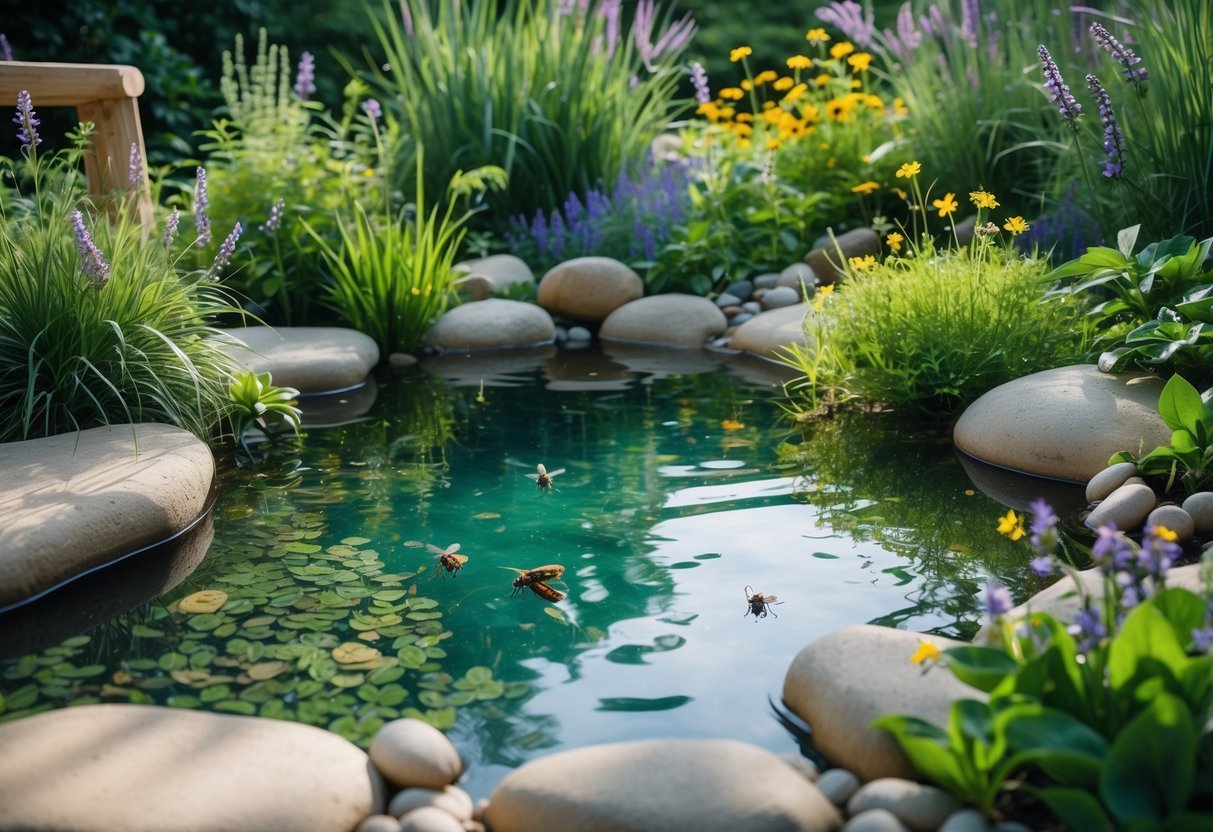
You can design a pond that supports frogs, dragonflies, and birds while using less water and fewer chemicals. Focus on plants, shelter, and natural cleaning methods to create a healthy, low-maintenance habitat.
Attracting Beneficial Wildlife
Include native plants at several depths: submerged (e.g., hornwort), marginal (e.g., cattails, iris), and shoreline (e.g., sedges, native grasses). These provide food, egg-laying sites, and cover for amphibians and insects.
Create shallow shelves (2–6 inches) around parts of the pond for wading birds and foraging insects. Add deeper zones (18–24 inches) so fish and overwintering amphibians have refuge.
Provide varied shelter: rock piles, log piles, and dense planting near the edge give hiding places for frogs and toads. Install a small flat stone or ramp for mammals and hedgehogs to access the water safely.
Avoid fish that eat tadpoles if you want more frogs and dragonflies. Use native plant seeds or plugs to establish vegetation quickly and reduce weed invasion.
Natural Filtration Approaches
Use a planted bog filter or constructed wetland area to clean water. Route pond overflow through a gravel-and-plant bed planted with reeds, rushes, and water-loving sedges. These roots trap solids and feed microbes that break down nutrients.
Combine the bog filter with a simple skimmer to remove leaves before they sink. Position the filter so water moves slowly through, giving microbes time to process waste.
Choose oxygenating submerged plants to boost dissolved oxygen and compete with algae. Limit feeding of any fish and remove excess plant debris weekly. If you add a pump, pick an energy-efficient model sized to turnover the pond volume about once every 2–4 hours.
Frequently Asked Questions
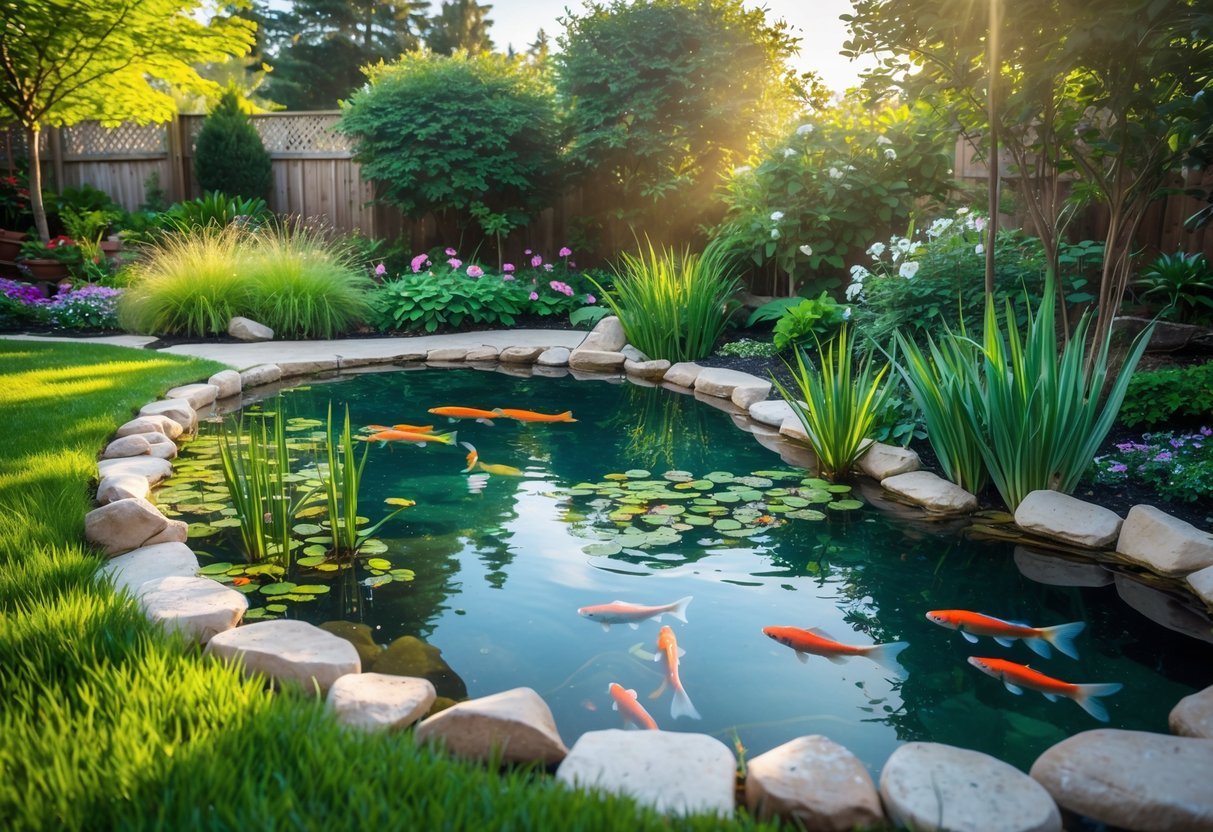
You will find clear, practical answers on pond features, size and depth, plant choices, natural cleaning methods, safety for animals, and ideal placement. Each answer gives steps you can use when planning, building, or maintaining your pond.
What are essential features to include in a garden pond for maintaining a healthy ecosystem?
Include a reliable pump and a filter sized for your pond’s volume to keep water moving and remove debris. Aim for a turnover rate that cycles the whole pond every 1–2 hours for fish ponds; smaller wildlife ponds may need less flow.
Add a skimmer or surface cleaner to remove leaves and floating mulch. Include a deep zone (for fish) and shallow shelves (for plants and amphibians) to support diverse life.
Provide aeration with an air stone or waterfall to raise oxygen levels in warm months. Add biological media in filters to host beneficial bacteria that break down ammonia and nitrite.
How do I choose the right size and depth for my garden pond based on my space and climate?
Measure your available space and leave at least 1–2 feet of working room around the pond for edging and maintenance. For small yards, a pond 4–8 feet across can still support plants and small fish.
Depth depends on climate and intended use. In cold climates, include at least one area 3–4 feet deep so fish can overwinter safely. In warm climates, 2–3 feet depth helps reduce overheating while still supporting aquatic life.
Design shelves 6–18 inches deep around the edge for marginal plants and easy access. Match pump and filter capacity to total pond volume once you set size and depth.
What are the best plants to incorporate around and in a garden pond?
Use a mix of submerged oxygenators, marginal plants, and floating plants. Submerged plants like hornwort or elodea help oxygenate and reduce algae.
Marginal plants such as cattails, irises, and marsh marigold stabilize edges and provide shade for shallow water. Floating plants like water lilies and duckweed shade the surface and lower algae growth.
Choose native species when possible to support local wildlife and reduce the risk of invasiveness. Plant in baskets or shelves to keep aggressive roots contained.
What is the most effective way to naturally keep a garden pond clean and clear?
Balance plants, animals, and filtration rather than relying on chemicals. Use a biological filter and beneficial bacteria products to break down organic waste.
Shade part of the pond surface with floating plants or marginal planting to slow algae growth. Remove excess leaves and debris with a net or skimmer weekly during heavy leaf fall.
Perform partial water changes (10–20%) seasonally or as needed, using dechlorinated water if you have tap water. Avoid overfeeding fish and do not overload the pond with too many livestock.
How can I ensure the safety of wildlife and pets with my garden pond design?
Create gradual edges and shallow shelves so small animals can escape the water easily. Add rocks or steps around the perimeter to give pets and wildlife traction.
Avoid steep banks and deep drop-offs where animals could fall in and drown. Use a light barrier of planting or a low fence if you have very young children or pets that cannot swim.
Do not use toxic herbicides, pesticides, or untreated wood near the pond. Keep water quality stable and test regularly to protect sensitive amphibians and fish.
What are the best practices for positioning a garden pond to optimize aesthetic appeal and health?
Place the pond where you can see it from main living areas and outdoor seating to enjoy it daily. Position it away from large overhanging trees to limit leaf drop and root intrusion.
Choose a spot that gets morning sun and afternoon shade to balance plant growth and water temperature. Ensure you have access to a water source and electricity for pumps and lighting.
Level ground and good drainage are essential; avoid low spots that collect runoff or run through the pond. Consider sightlines and backdrop plants to frame the pond and hide equipment like filters and skimmers.