Tropical Garden Design: A Practical Guide to Lush, Low‑Maintenance Landscaping
You can turn your backyard into a lush tropical escape without a lot of space or endless upkeep. Use big-leaf plants, bold flowers, and layered heights to create depth, then add a simple water feature or a comfy seating spot to make the space feel like a retreat.
A few well-chosen tropical plants, clear layers of height, and one focal feature will give your yard an instant tropical feel that’s easy to maintain.
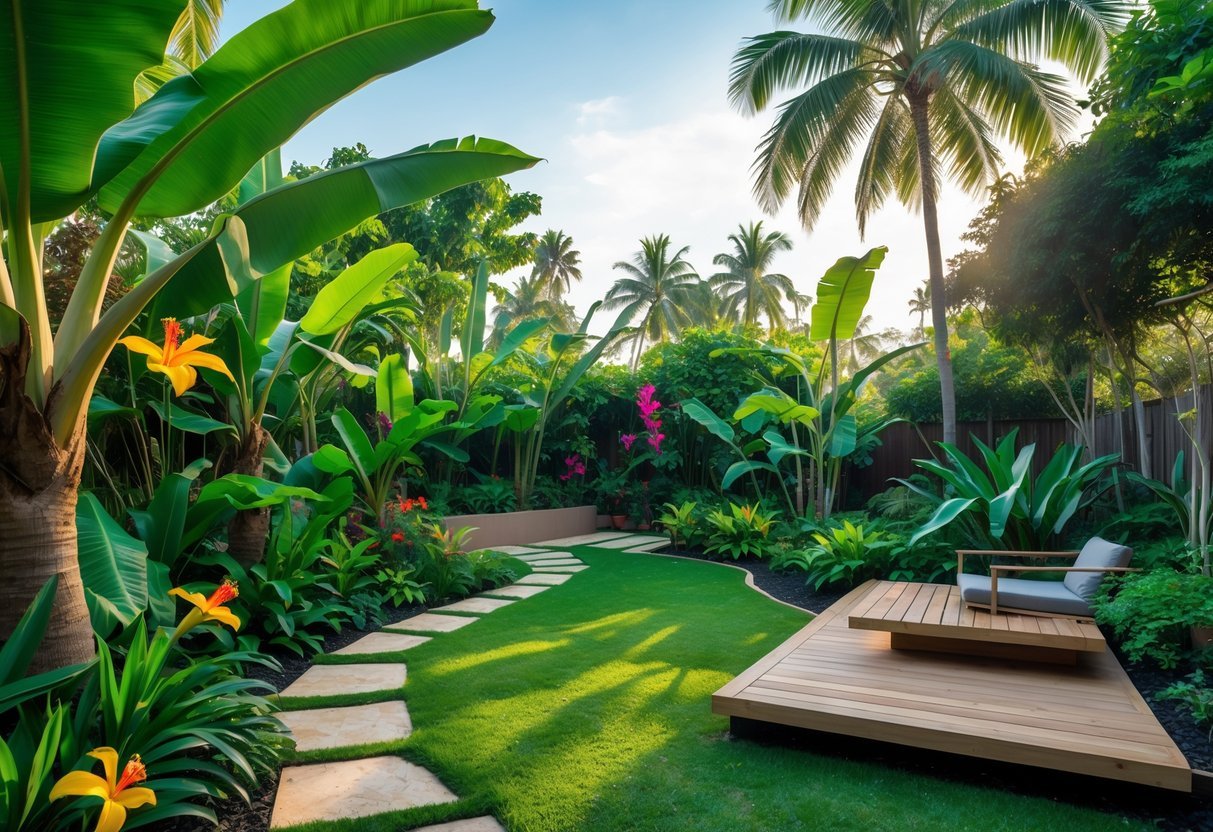
Start by planning zones for tall palms or feature plants, mid-height foliage, and low ground cover to build a dense, layered look. Add path lighting and a small water element or sculpture to draw the eye and make evenings inviting.
Key Takeaways
- Use plant layers and height to create a tropical look.
- Choose a single focal feature to anchor the space.
- Add lighting and simple water elements for ambiance.
Fundamentals of Tropical Garden Design
You will learn how to build a lush, layered space that balances large foliage, color, and practical layout. The guidance covers plant placement, hardscape choices, and the main benefits you get from a tropical backyard.
Core Principles of Tropical Landscapes
Start with structure: place tall palms or small trees at the back or center to give vertical height. Use mid-height shrubs and large-leaf perennials like elephant ears or philodendrons in front to create tiers. This layered approach makes the yard feel full without crowding pathways.
Think about rhythm and repetition. Repeat a few plant species or leaf shapes to lead the eye through the garden. Vary textures—smooth banana leaves next to feathery ferns—for contrast that reads clearly from 10–20 feet away.
Plan for microclimates. Put sun-loving plants where they get 6+ hours of sun and shade lovers under tree canopies. Add mulch and drip irrigation to keep soil moist and cut maintenance.
Key Elements and Visual Features
Focus on bold foliage, strong color accents, and simple hardscape lines. Use large-leaf plants (Monstera, colocasia), palms for vertical focus, and flowering plants (hibiscus, canna) as spot color.
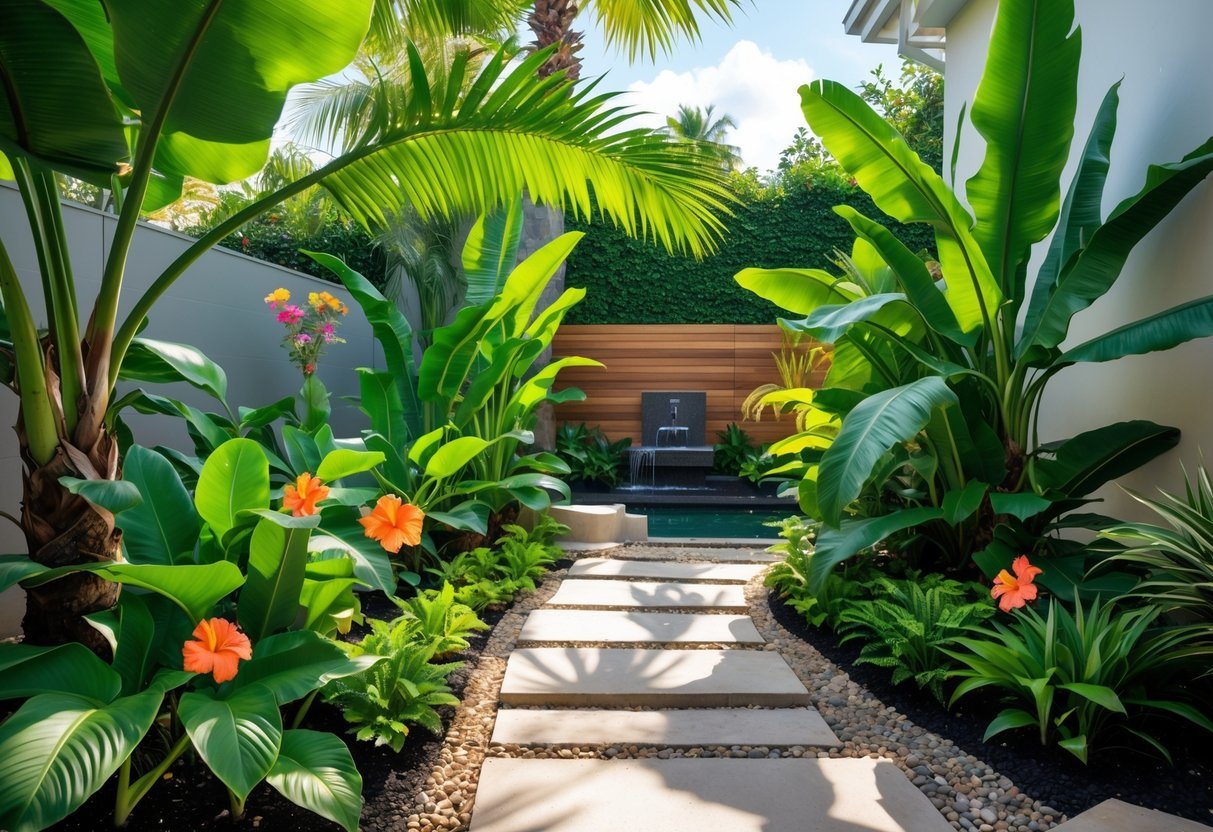
Add water elements like a small pond or bubbler for sound and humidity. Place seating areas near focal plants and water so you enjoy scent and texture. Use stepping stones or a curved path to create a sense of discovery.
Lighting matters: low, warm path lights and uplights on specimen palms extend use after dusk. Keep paths wide enough for two people (at least 4 feet) and use groundcover or mulch to reduce weeds.
Benefits of a Tropical Backyard
You gain privacy quickly because large leaves and dense planting block views and noise. The layered planting also lowers daytime temperatures near the house by shading walls and soil.
A tropical design supports biodiversity. Flowering plants attract pollinators and dense plantings provide shelter for birds and beneficial insects. You also get year-round visual interest if you choose mostly evergreen tropical species.
Finally, the sensory payoff—sound of water, scent of blooms, and varied textures—makes your yard a relaxing living space that invites frequent use.
Selecting Tropical Plants
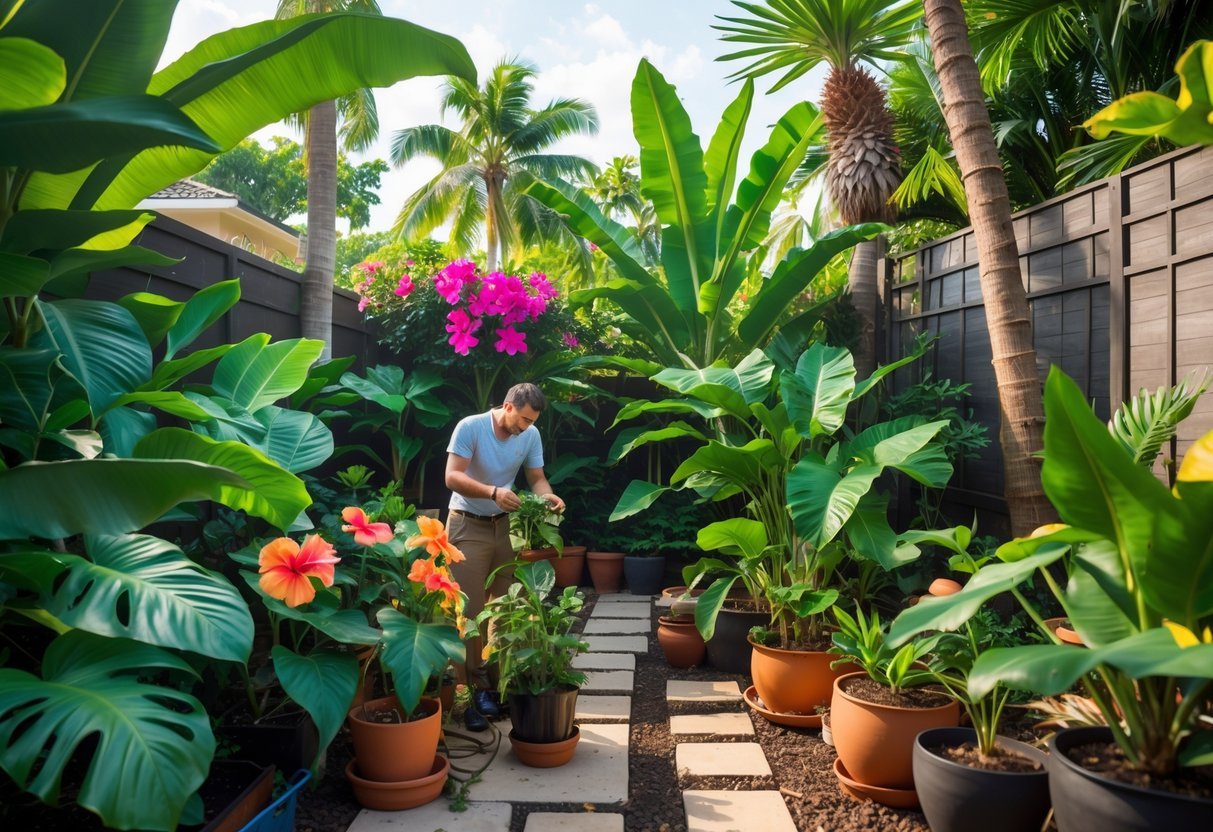
Choose plants that match your climate, sun exposure, and watering ability. Pick bold foliage, a mix of heights, and a few flowering specimens to add color and year-round interest.
Best Tropical Species for Backyards
Focus on species that do well in your hardiness zone and light conditions. For warm, frost-free areas, consider palm varieties (such as areca or pygmy date) for tall structure. Add banana (Musa spp.) for large leaves and fast growth; dwarf cultivars work well in small yards. Use hibiscus or bromeliads for regular blooms and color. For shade, choose ferns (Boston or maidenhair) and caladiums with colorful foliage. If you have partial sun, plant canna lilies and ginger (Hedychium) for flowers and texture.
Buy disease-resistant cultivars when possible. Match root space to mature size; container-grow large specimens if you need to move them. Check that plants are rated for your USDA zone or the local equivalent.
Layering and Plant Combinations
Build depth by arranging tall, mid, and ground-layer plants. Place palms or small trees at the back, mid-height plants like canna and hibiscus in the middle, and low groundcovers or ornamental grasses at the front. Use repeated groupings of three to five plants to create rhythm.
Combine textures and leaf shapes: pair broad-leafed bananas with feathery ferns and narrow ornamental grasses. Add focal points — a flowering shrub or a colorful bromeliad cluster — to draw the eye. Keep spacing wide enough for airflow to reduce disease. Use containers for accents and to introduce seasonal or tender plants.
Plant Care and Maintenance Tips
Water deeply but infrequently to encourage strong roots. Most tropicals prefer consistently moist, well-draining soil; avoid waterlogged roots. Mulch with 2–3 inches of organic material to retain moisture and suppress weeds.
Fertilize during the growing season with a balanced, slow-release feed or a fertilizer for palms and tropicals. Prune dead leaves and spent flowers regularly to keep plants tidy and to promote new growth. Monitor for pests like scale, mealybugs, and spider mites; treat early with insecticidal soap or neem oil. Move frost-sensitive plants to shelter or containers before cold snaps.
Layout and Spatial Planning
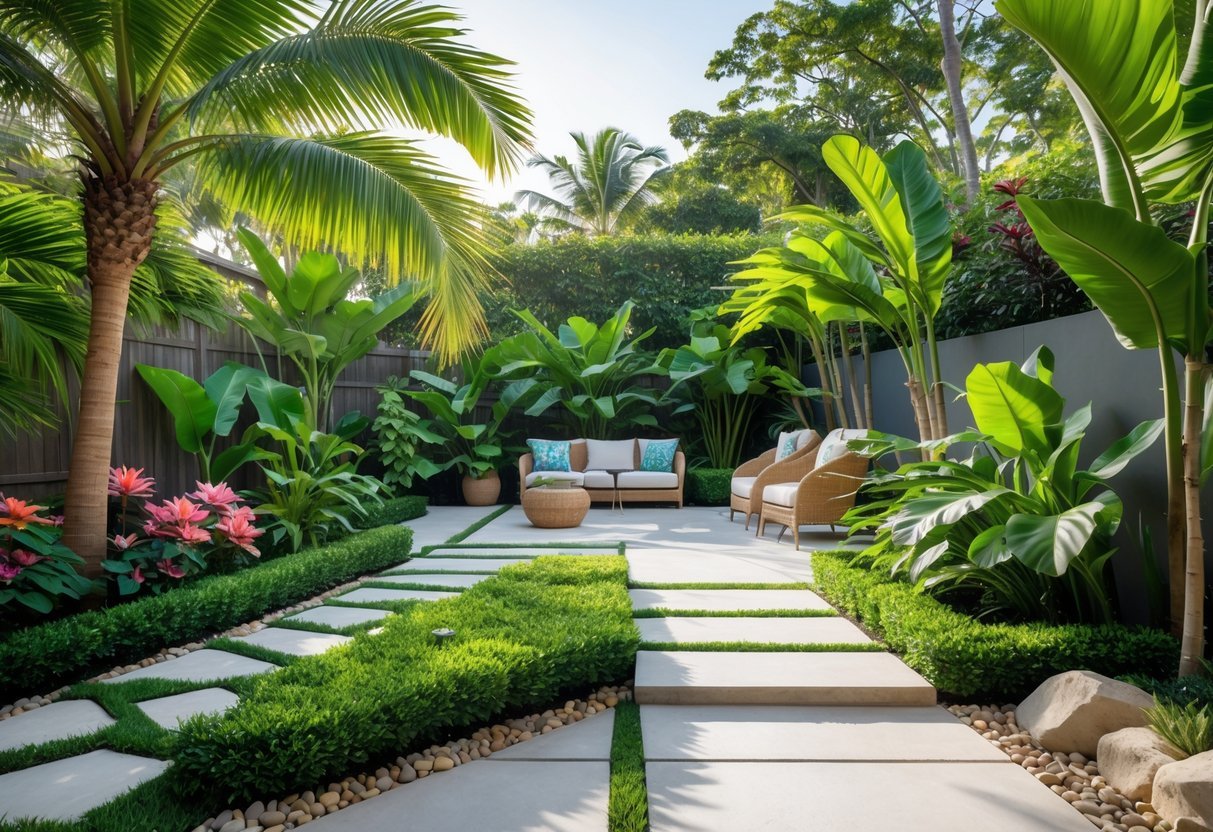
Plan paths, seating, and planting so people move easily and find quiet spots. Use layers, curves, and focal points to guide the eye and create a sense of discovery.
Creating Natural Pathways
Design curved paths that feel organic rather than straight corridors. Use materials like decomposed granite, pea gravel, or stepping stones set in groundcover to keep a soft, tropical look. Aim for a walking width of 36–48 inches for main routes and 18–24 inches for secondary paths.
Plant edges with low, dense foliage—mondo grass, liriope, or small ferns—to blur hard lines and hide joints. Add a few taller specimens, such as cannas or bird of paradise, to create tunnel-like moments and shade. Include low solar lights or lanterns every 8–12 feet to keep the path safe and atmospheric at night.
Zoning for Privacy and Relaxation
Divide your yard into zones: active (dining, grill), passive (lounging, hammock), and service (pots, compost). Place active zones near the house for easy access. Put passive zones further away, behind taller shrubs or a trellis, to block sightlines and noise.
Use screens like bamboo, hedges, or lattice with vines to form visual walls without closing the space. Keep plant heights graduated: tall screens at 6–8 feet, mid shrubs at 3–5 feet, and low groundcover under 1 foot. This layered scheme gives privacy while keeping the area lush and breathable.
Enhancing Flow and Structure
Create one or two strong focal points to anchor the layout—such as a small pond, statue, or specimen palm. Arrange paths and sightlines to lead toward these anchors. Keep circulation simple: looped routes work best because they let visitors explore without backtracking.
Balance hardscape and planting to avoid clutter. Reserve about 25–35% of the space for paved or seating areas so you have usable room for furniture. Use repeated plant species and colors to tie separate areas together and give the garden a coherent structure.
Water Features and Focal Points
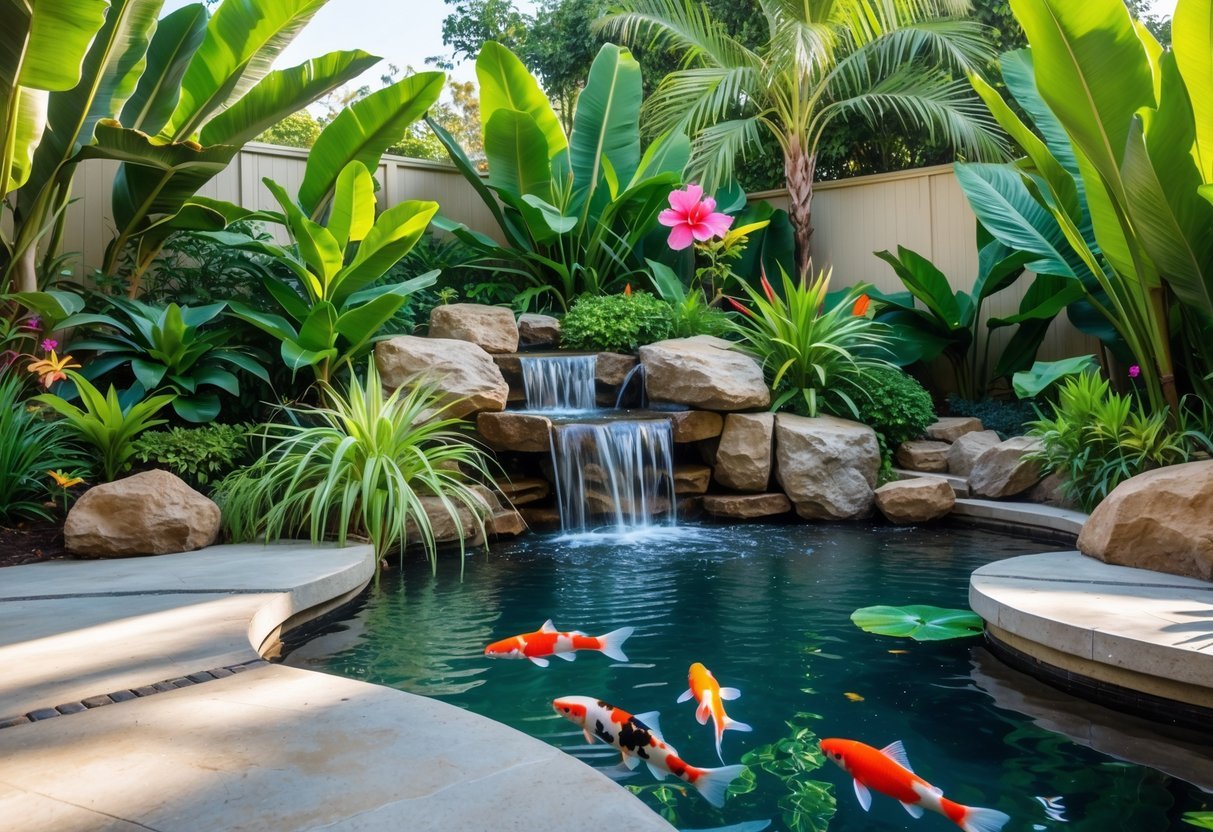
Water can set the mood, attract wildlife, and anchor planting. Choose a scale and sound level that match your space and maintenance willingness.
Incorporating Ponds or Streams
Decide whether you want still water or movement. A small pond (3–6 feet across) suits tight yards and supports lilies and dragonflies. Add a shallow shelf for marginal plants and a deeper center at least 18–24 inches for fish and temperature stability.
For a stream or cascading stones, slope matters. Aim for a gentle drop of 6–12 inches per linear foot to keep flow natural and prevent splashing. Use a hidden pump rated for the total fall and the volume of water. Line options include flexible rubber liners for curves and rigid preformed basins for simple installs.
Think about maintenance: install a leaf skimmer or surface net, provide easy access to the pump, and plan seasonal care like winterizing or netting for heavy leaf fall. Position the feature where you can see it from seating areas and where runoff won’t erode nearby beds.
Choosing Tropical Statues and Ornaments
Pick pieces that fit your garden’s scale and style. One larger statue (3–5 feet) can serve as a main focal point, while smaller ornaments work as accent pieces along paths or near plant groupings. Use materials suited to humid conditions: stone, cast concrete, and marine-grade metals resist decay.
Placement rules help the eye. Sit a statue at the end of a sightline or slightly off-center in a planting bed for balance. Pair ornaments with low planting or a spotlight to keep them visible at night. Avoid clutter: limit ornaments so each piece has breathing room.
Consider function as well as form. A decorative basin can double as a birdbath. A small raised plinth gives a focal sculpture presence without blocking plant growth. Select finishes and colors that contrast with foliage for visibility but blend with your tropical palette.
Lighting and Ambience in Tropical Gardens
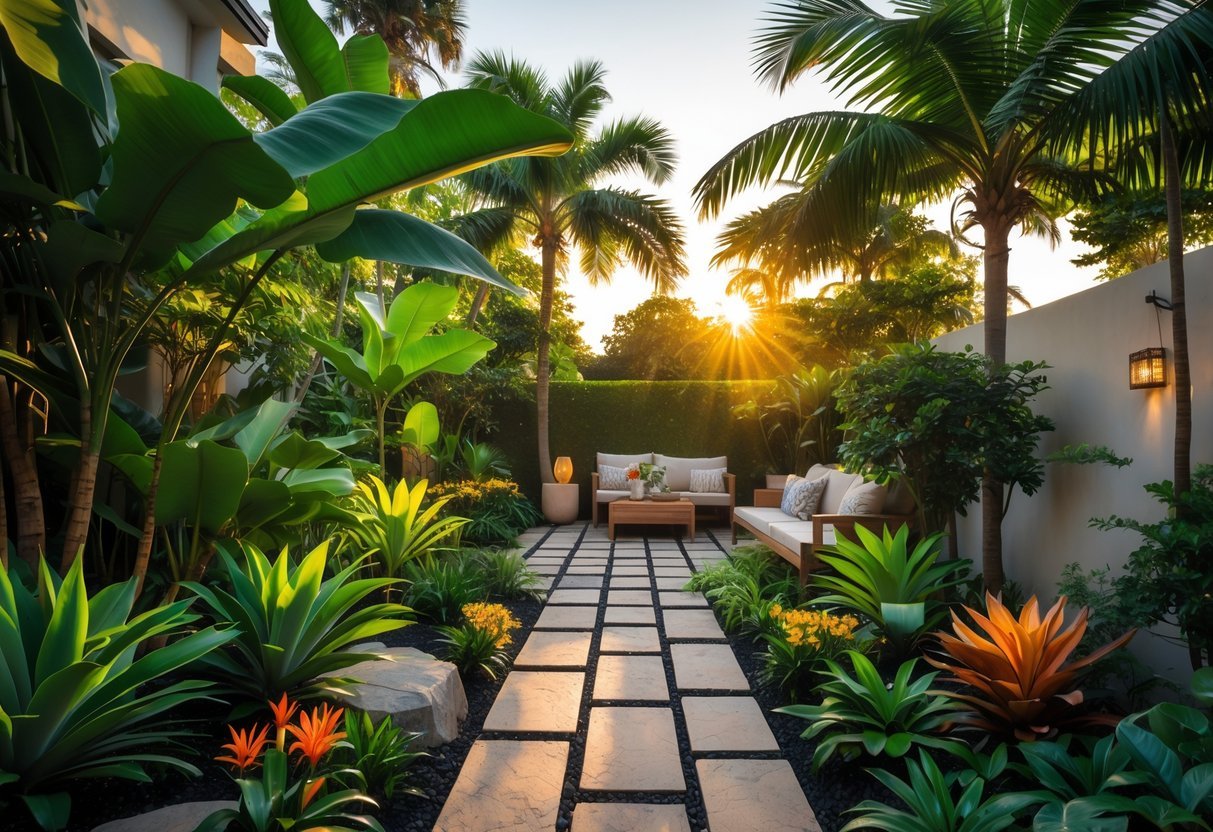
Good lighting brings out plant colors, defines paths, and creates cozy seating zones. Focus on layered light—path, accent, and ambient—and pick warm tones to keep the space inviting after dark.
Outdoor Lighting Techniques
Use three main light layers: path lights for safety, uplights to highlight palms or trunks, and downlights for seating areas. Place low-profile path lights every 6–8 feet along walkways to prevent trips and to guide sightlines. Aim uplights at the base of taller plants; use narrow-beam fixtures for single trunks and wider beams for canopy washes. Install dimmable LED fixtures so you can change brightness for events.
Power choices matter: run low-voltage lines for most fixtures and reserve hardwired circuits for higher-load items like pond lights. Use rated fixtures and connectors for wet locations. Set timers or smart controls to automate dusk-to-dawn operation and save energy.
Setting Mood With Decorative Fixtures
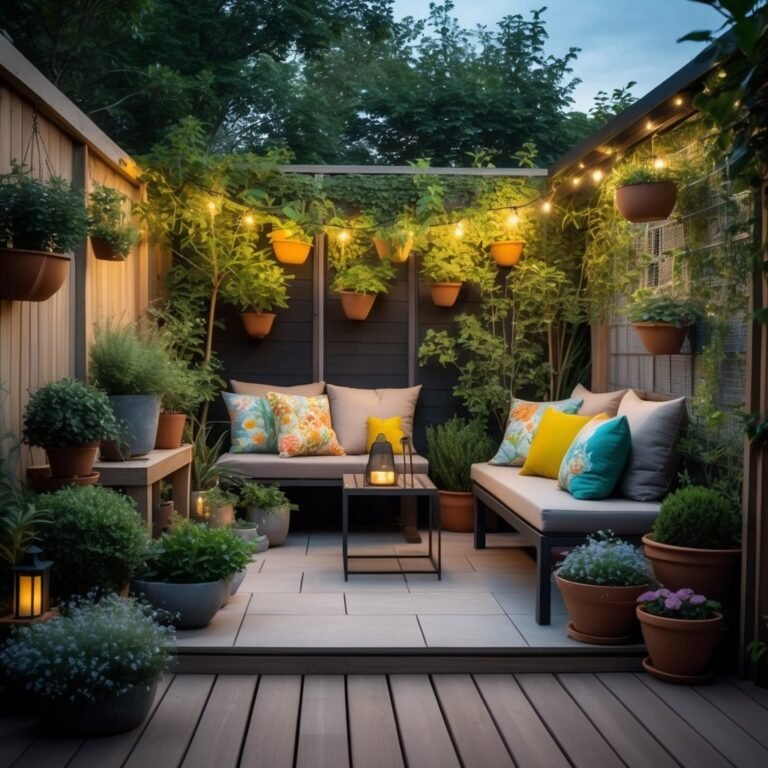
Choose warm white bulbs (2700K–3000K) to keep foliage colors natural and skin tones flattering. Add string lights over a dining area for soft, even glow. Hang a woven pendant or bamboo lantern above a seating nook to add texture and a focal point.
Use spot accents like stepping-stone LEDs or recessed deck lights to create subtle rhythm through the garden. For water features, use submersible RGB or warm-white fixtures to highlight movement without glare. Place fixtures where they remain hidden by plants or structures to keep the light itself from stealing the scene.
Frequently Asked Questions
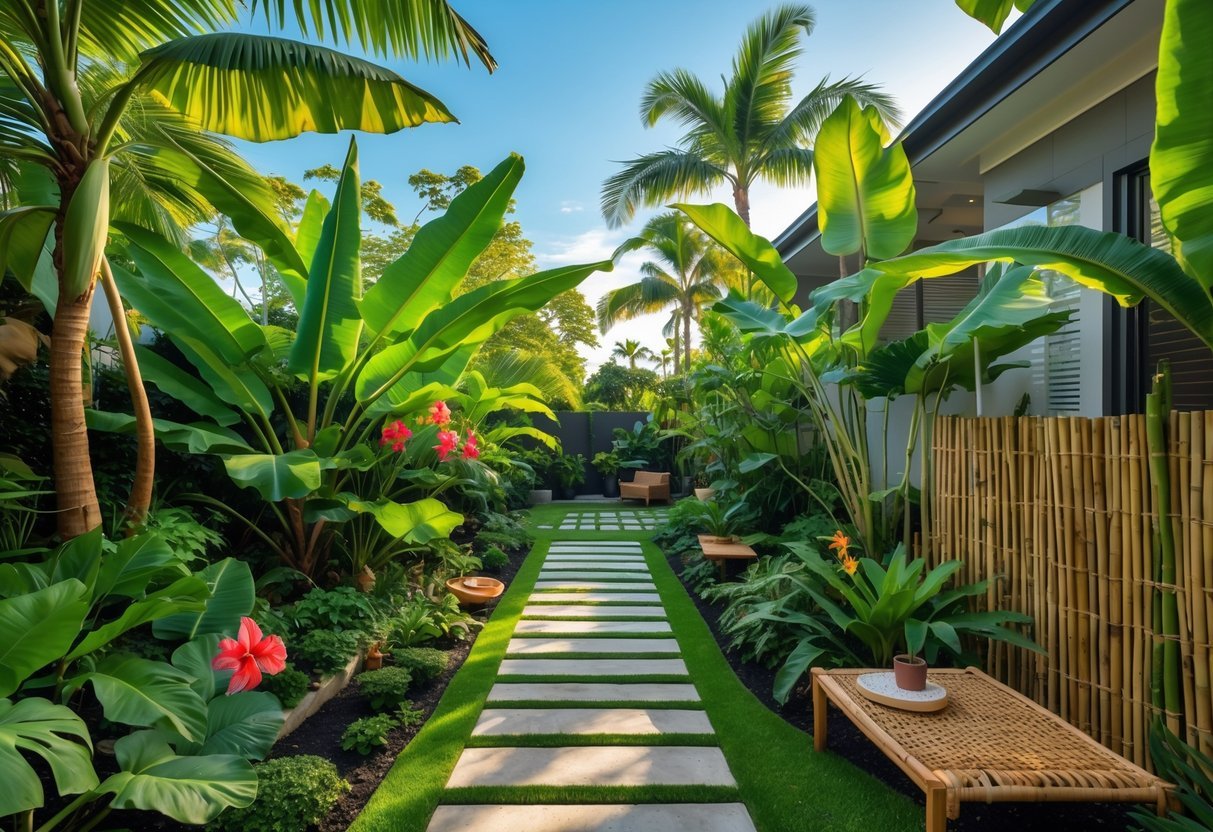
You can make a lush, tropical feel even in tight spaces by choosing bold-leaf plants, adding a water feature or container palms, and using layered planting. Focus on heat-loving, humid-friendly species, strong textures, and simple paths to guide the eye.
How can I create a tropical garden in a small backyard space?
Choose plants with big leaves and tall but narrow forms, like dwarf palms, bird of paradise, and banana varieties bred for containers. Use vertical layers: tall backdrop plants, mid-height shrubs, and low groundcovers to create depth.
Place large pots or raised beds to group plants and reduce the need for wide planting beds. A small water feature or a single large statement pot draws attention and masks noise.
Which plants are best suited for a low-maintenance tropical garden?
Select hardy, low-water-tolerance species for your climate, such as cordylines, hemp palm (Dypsis lutescens) when appropriate, and hardy hibiscus. Use native or climate-adapted substitutes that mimic tropical textures to cut down on upkeep.
Choose evergreen groundcovers and mulch heavily to suppress weeds and retain moisture. Pick plants with similar light and water needs to simplify care.
Can you provide examples of modern tropical landscape design?
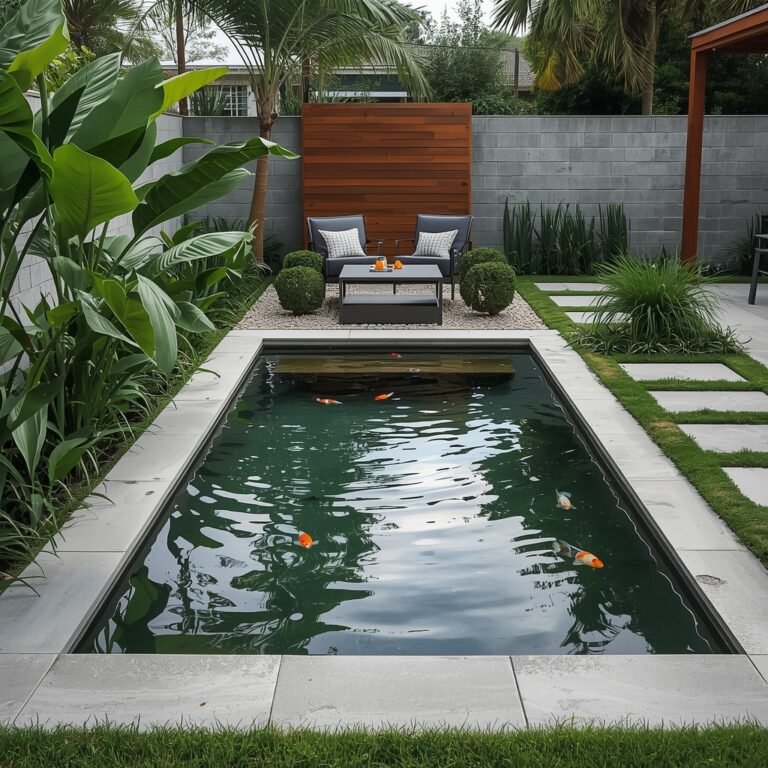
Create clean lines with paved patios and narrow planting strips filled with repeating specimens like banana palms and bird of paradise. Mix natural materials—smooth concrete, teak decking, and river rock—with dense planting for a contemporary look.
Use minimalist water elements such as a rectangular reflecting pool or a simple trough fountain. Place LED uplighting to highlight foliage shapes at night.
What essential elements are needed to make a backyard resemble a tropical paradise?
Include plants with large, glossy leaves and layered heights to mimic rainforest structure. Add humidity-friendly features: a pond or fountain, shady canopy plants, and mulched soil to hold moisture.
Use natural materials like bamboo screens, stone paths, and wood decking. Add seating in a shaded nook to create a relaxed, resort-like spot.
How do tropical landscaping principles vary between front yard and backyard applications?
Front yards often need clearer sightlines and lower plants for visibility and curb appeal. Use shorter palms, trimmed hedges, and structured beds to keep the front tidy and walkable.
Backyards can be denser and more private, with taller canopy plants, larger water features, and seating areas. You can group plants more informally in the back to create a sense of enclosure.
Which design strategies can maximize the tropical feel of a garden with limited space?
Repeat a few bold plant types to create rhythm and visual impact rather than many different species. Use mirrored or reflective surfaces to give a sense of space and place large-leaf plants near the focal point.
Install compact water features, vertical gardens, and layered lighting to enrich texture and mood without using much ground area.