7 Roof Garden Ideas to Maximize Small Urban Spaces
You can turn an empty roof into a useful, calm outdoor room that fits your needs and budget. This article shows seven practical roof garden ideas that help you save space, cut maintenance, and enjoy your rooftop all year.
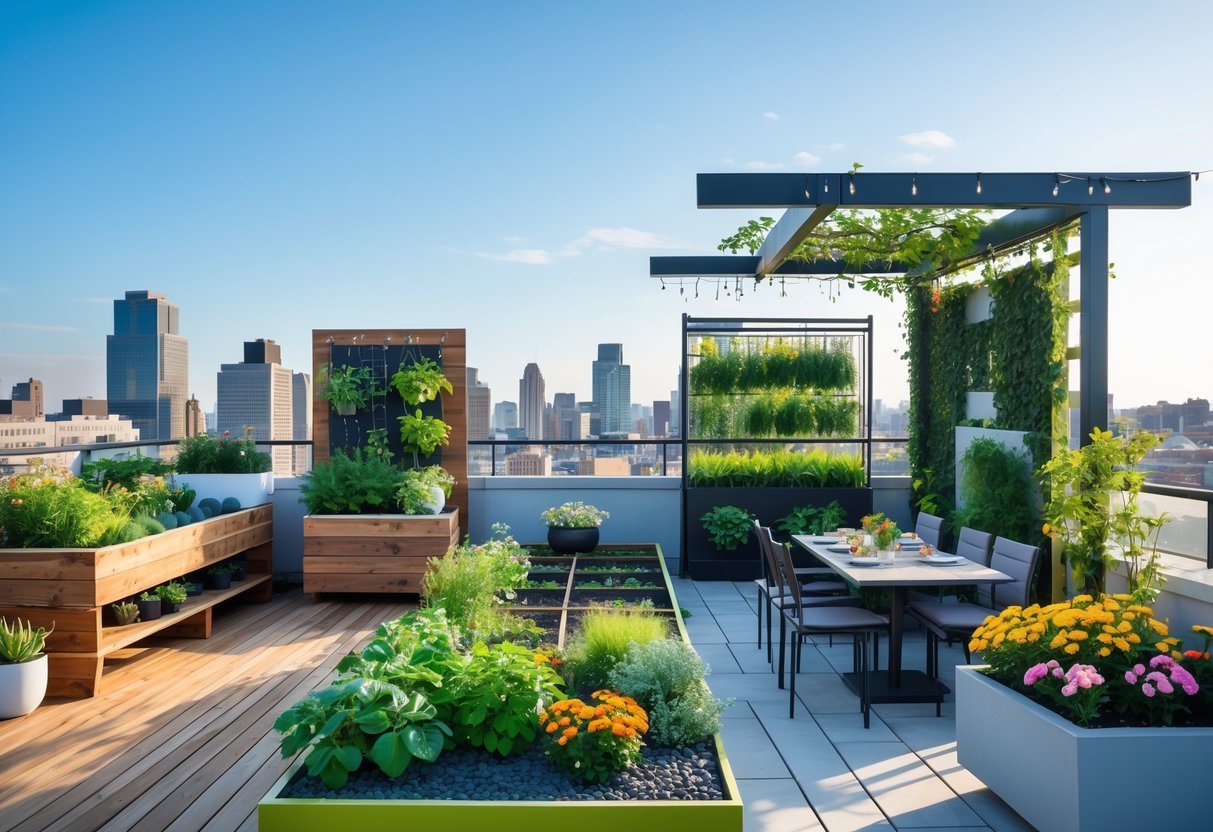
You will learn simple ways to plant, water, light, and furnish a rooftop without risking leaks or high upkeep. The tips focus on durability, comfort, and sustainability so you can build a rooftop garden that works for your life.
1) Install drought-tolerant succulents for low maintenance
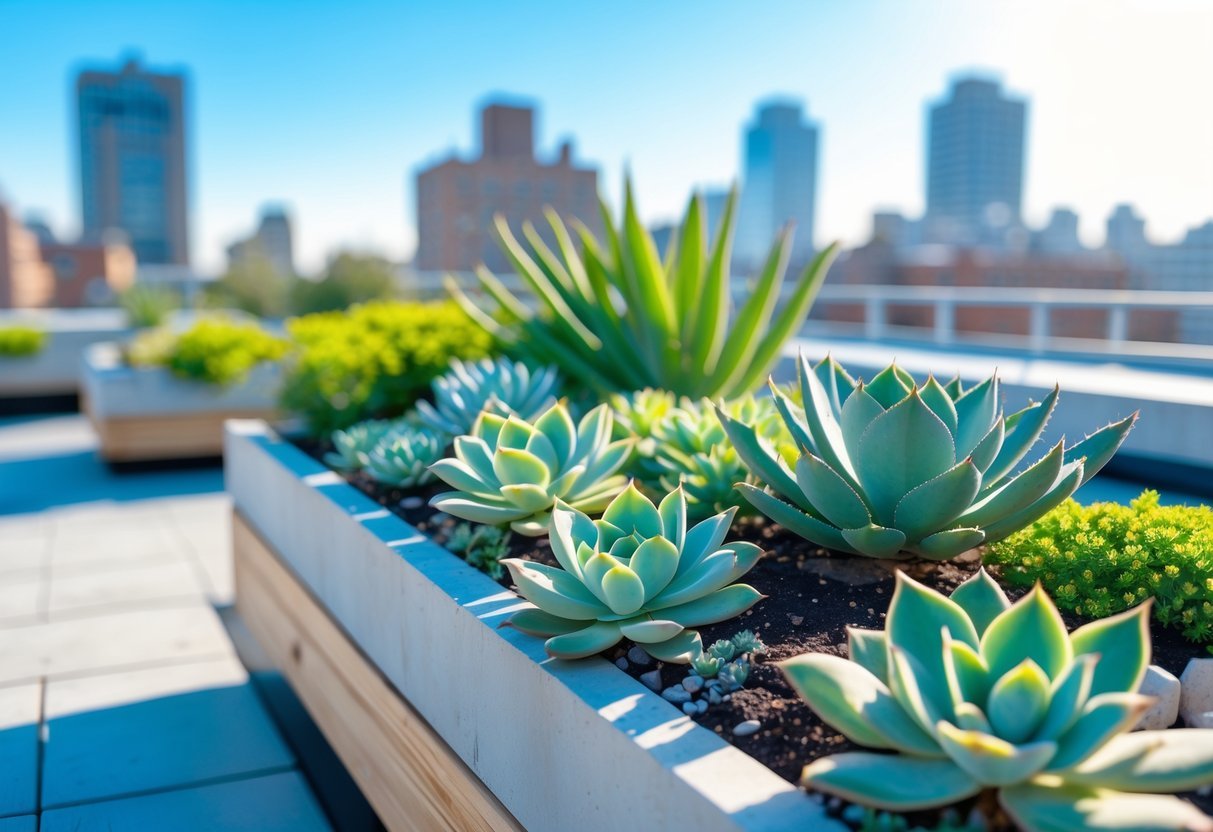
Choose succulents like sedum, echeveria, and aloe to save water and time. They store water in their leaves and handle hot, sunny roofs well.
Use a fast-draining soil mix and shallow containers or mats to prevent root rot. Group plants by water needs so you only water when necessary.
Add gravel or pumice for extra drainage and mulch to reduce evaporation. These steps keep your roof garden healthy with minimal effort.
2) Create vertical gardens with modular wall planters
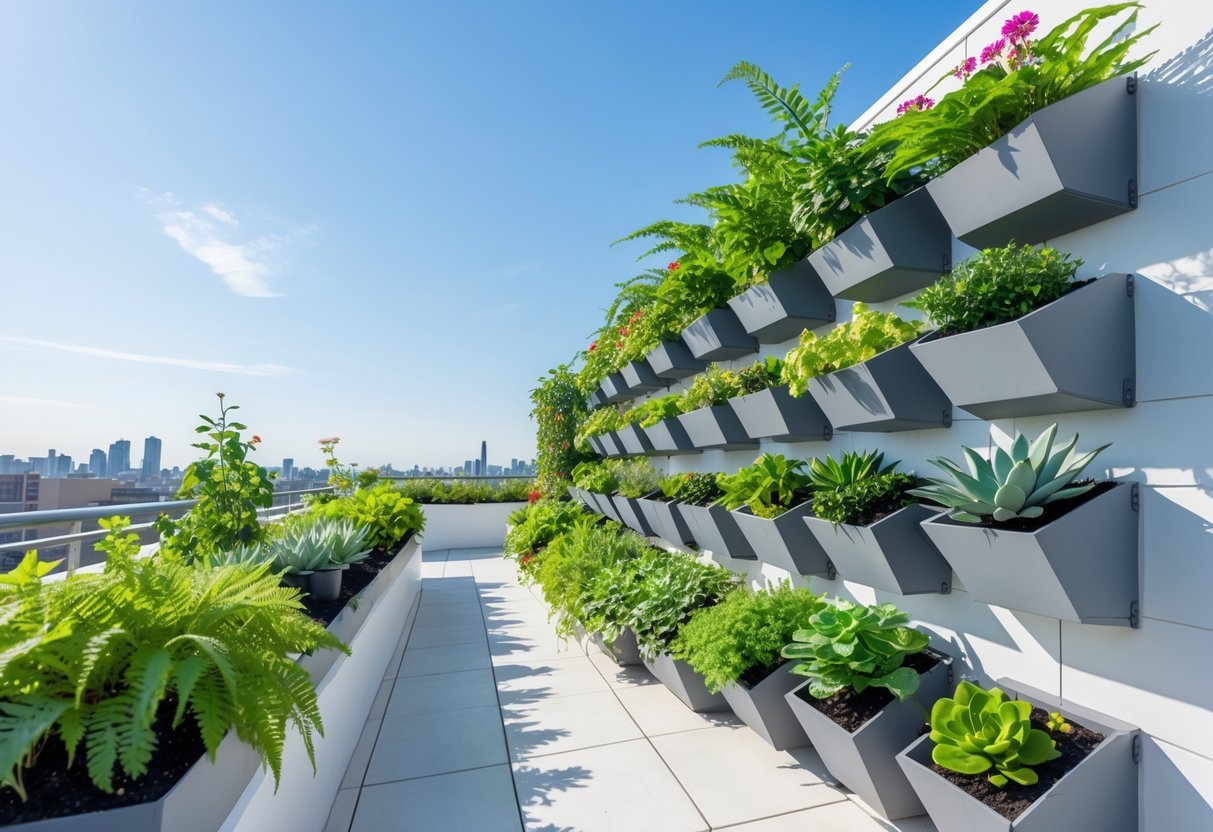
You can fit many plants on a small roof by using modular wall planters. They attach to walls or railings and stack or link to match your space and style.
Choose lightweight, weatherproof modules and plants that suit sun and wind conditions. Watering systems or drip irrigation make care easier and cut waste.
Arrange modules for visual interest and easy access. Move or add pieces as your garden grows.
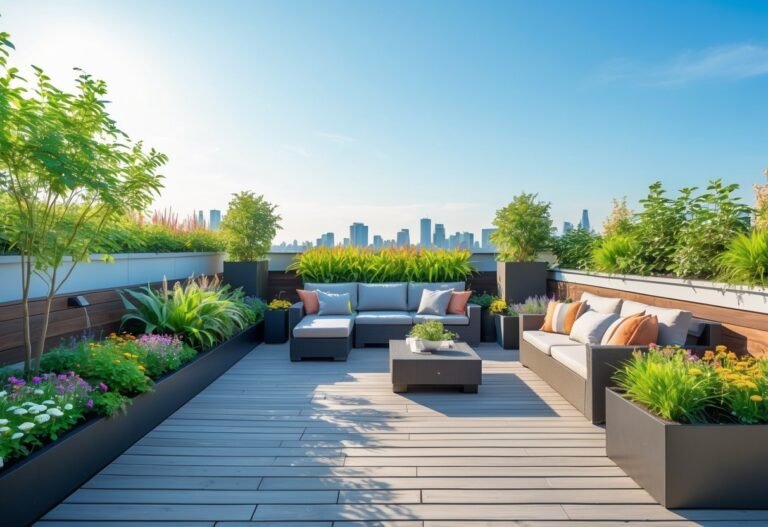
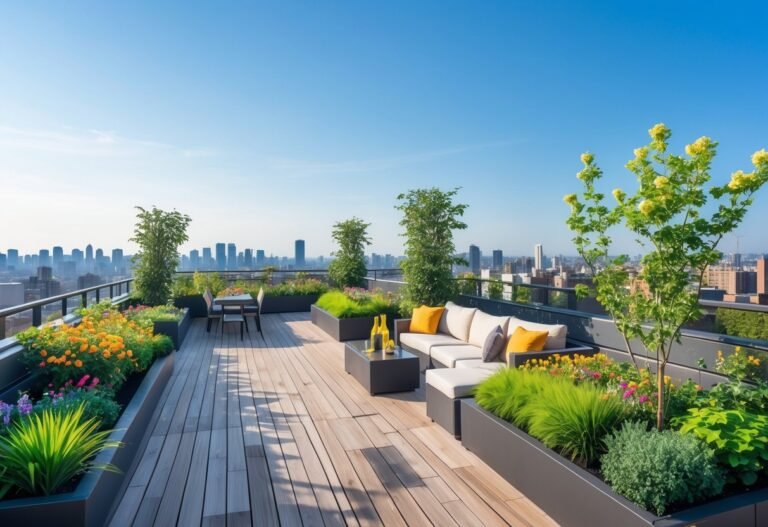
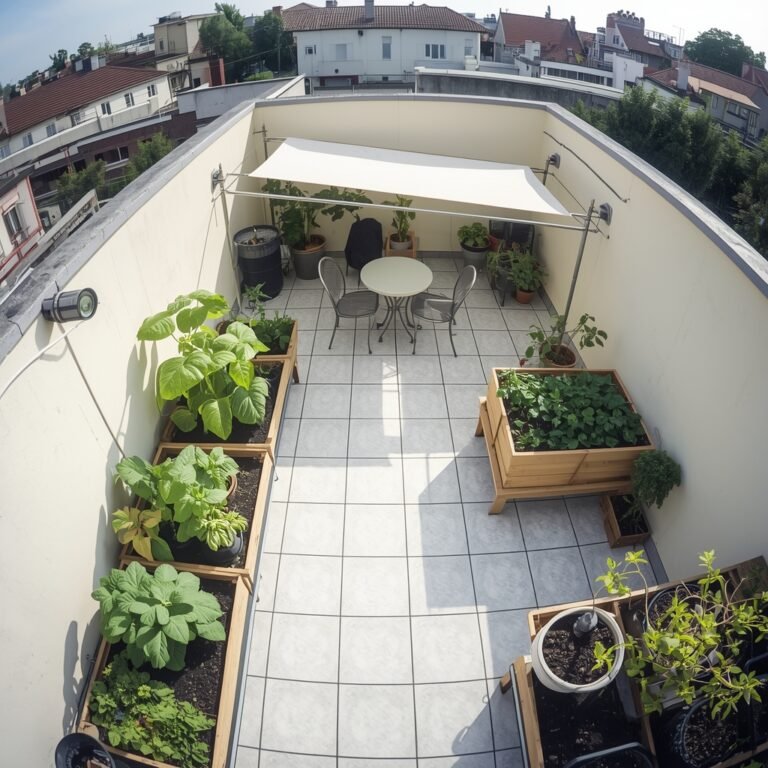
3) Use raised garden beds to maximize planting space
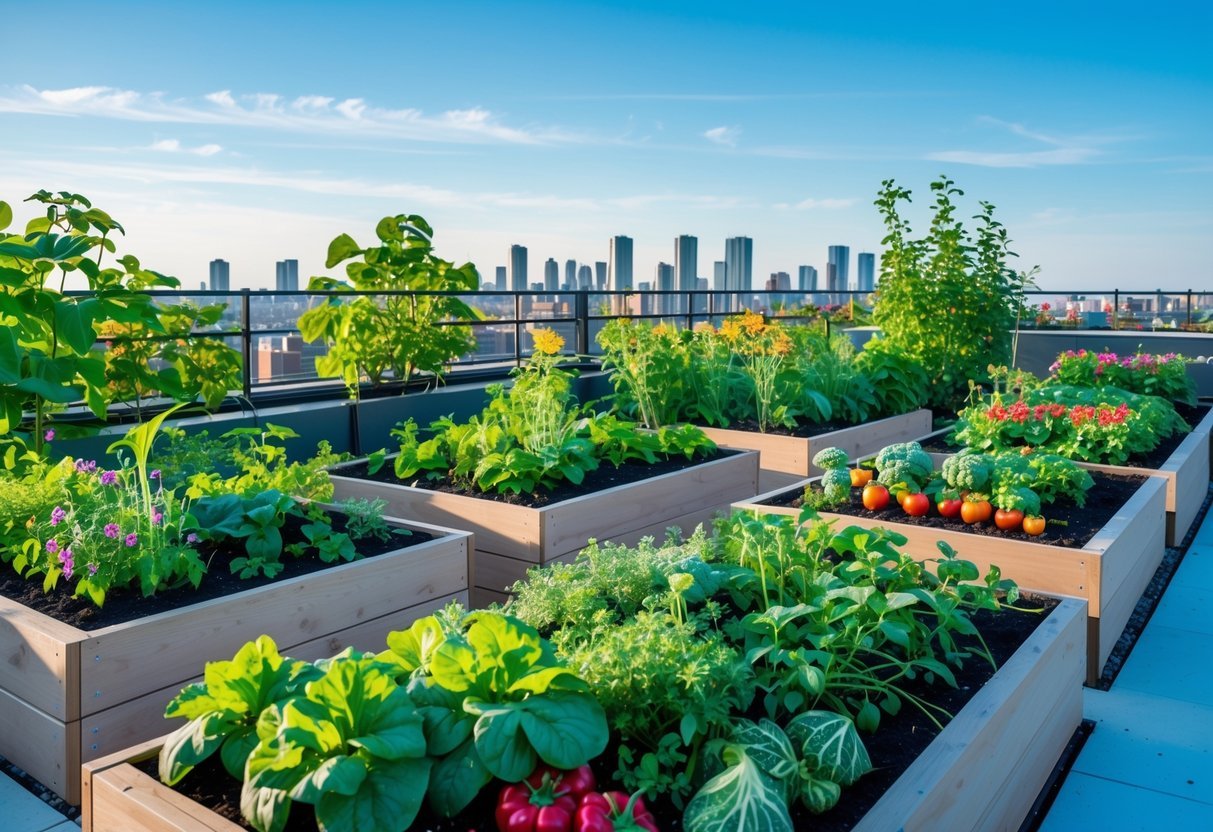
Raised beds let you grow more in a small roof area by stacking soil depth where roots need it. You get better drainage and warmer soil, so plants start earlier and stay healthier.
Choose narrow, long beds to fit walkways and access every plant without stepping on the soil. Use lightweight materials and a strong base so the roof structure stays safe.
Fill beds with a mix of compost and light soil to boost yields. Plant compact varieties and use vertical supports to add more layers of crops.
4) Incorporate built-in seating with storage underneath
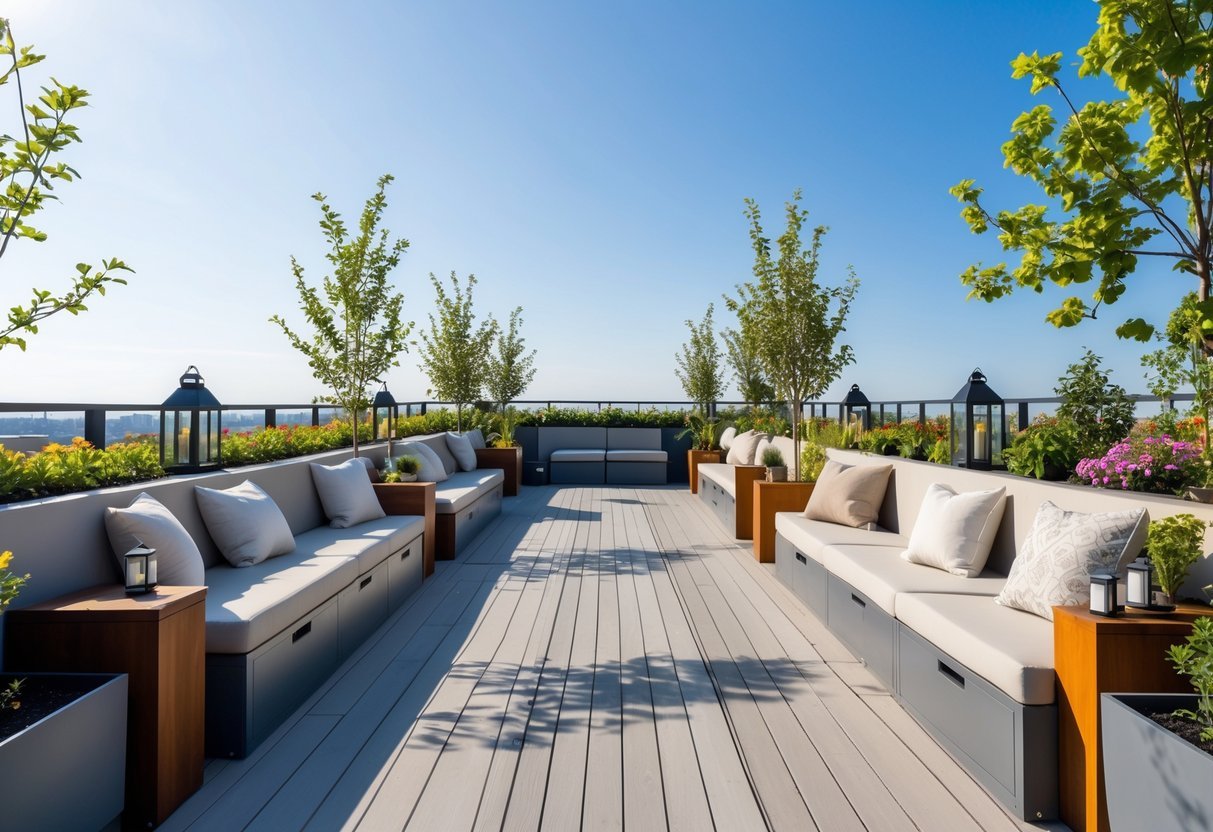
Add built-in seating to maximize space and keep your roof tidy. You get extra seating plus hidden storage for cushions, tools, or toys.
Choose durable materials like treated wood, concrete, or weather-resistant composites. Keep hinges and drainage in mind so storage stays dry and easy to access.
Design the seats to match your layout and sightlines. Low benches work for narrow roofs; L-shaped units create cozy corners for gatherings.
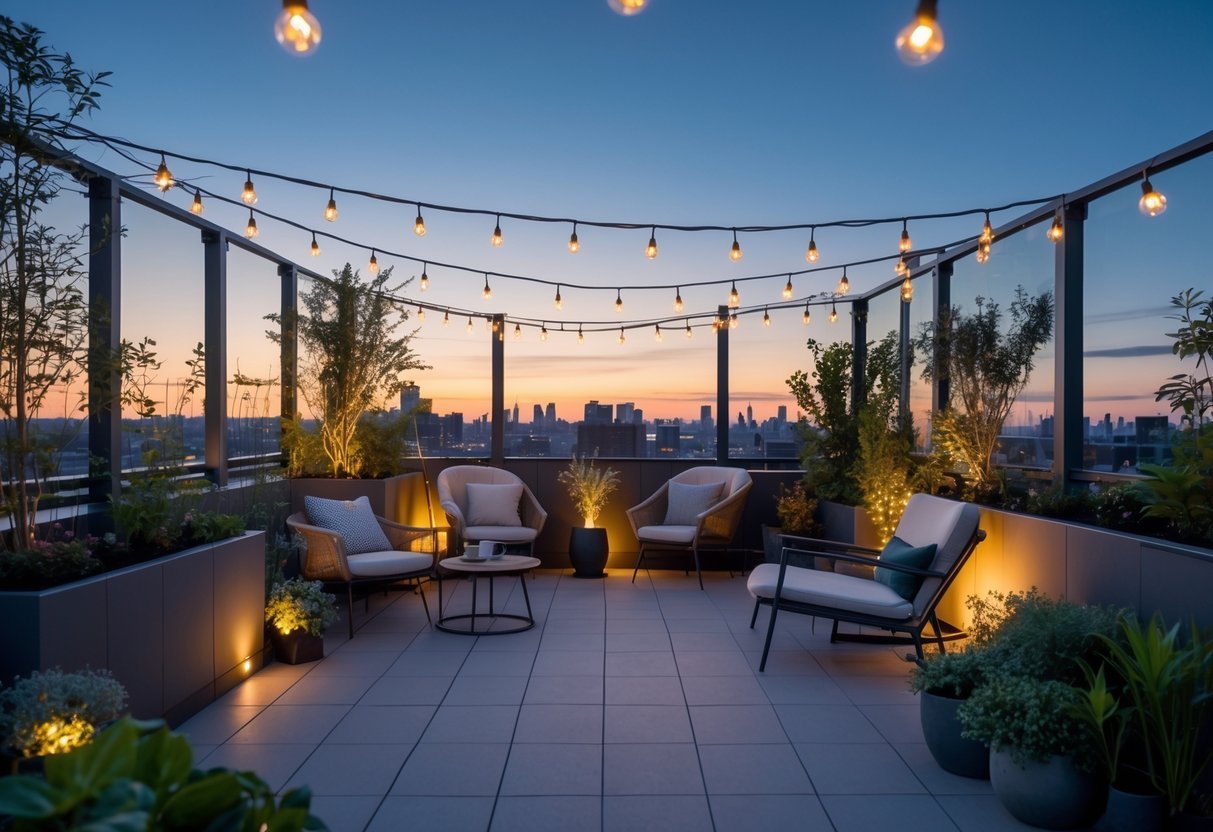
5) Add solar-powered string lights for ambient evening lighting
Solar string lights give your roof garden soft, even light without wiring or higher bills. You can drape them over railings, weave them through plants, or outline seating areas to define space and add warmth.
Choose weatherproof, low-glare LEDs and place the solar panel where it gets full sun. Check runtime and brightness to match your evening plans.
6) Integrate a drip irrigation system for efficient watering
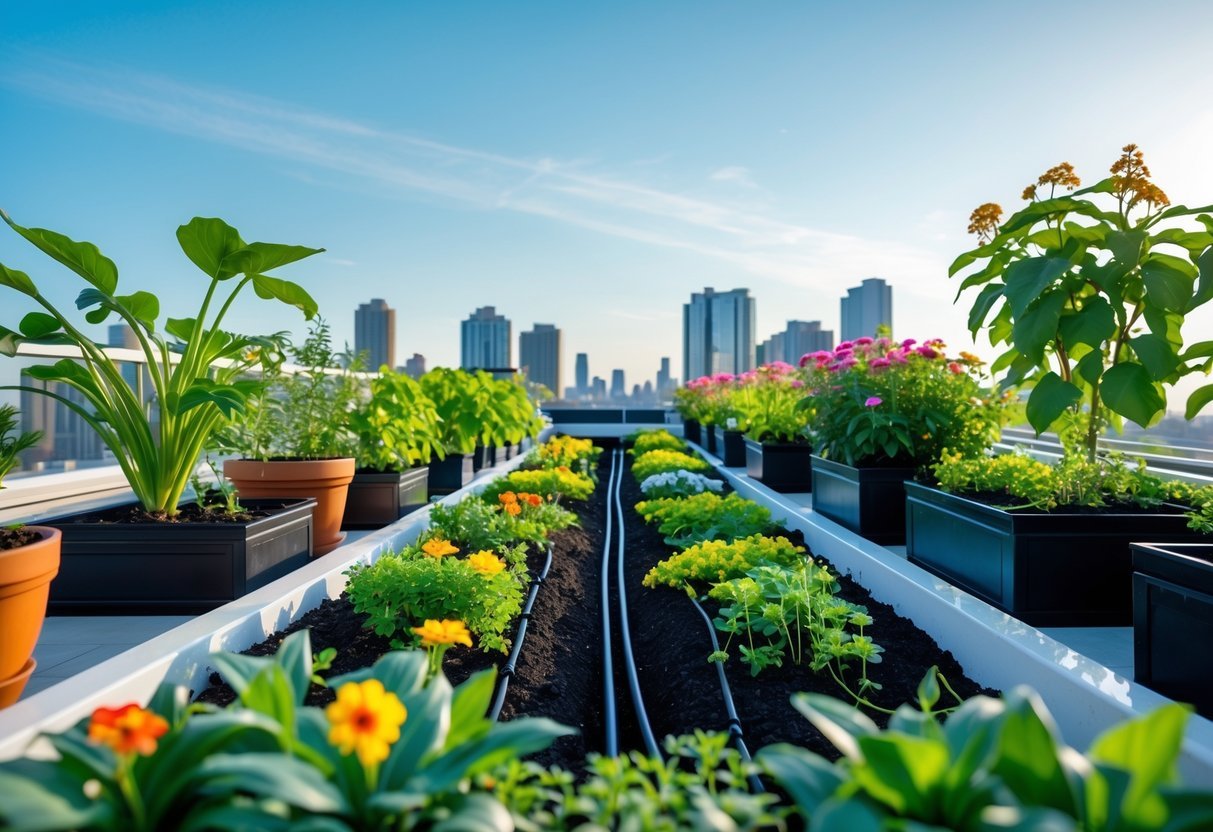
You can save water and time by installing a drip system that delivers water directly to plant roots. It cuts evaporation and reduces runoff, so your plants get more of what they need.
Choose emitters and tubing sized for your plant types and roof layout. Add a timer or smart controller to automate watering and prevent overuse.
Check filters and lines regularly for clogs or leaks. Regular maintenance keeps the system working well and protects your roof and plants.
7) Include wind-resistant grasses and shrubs for durability
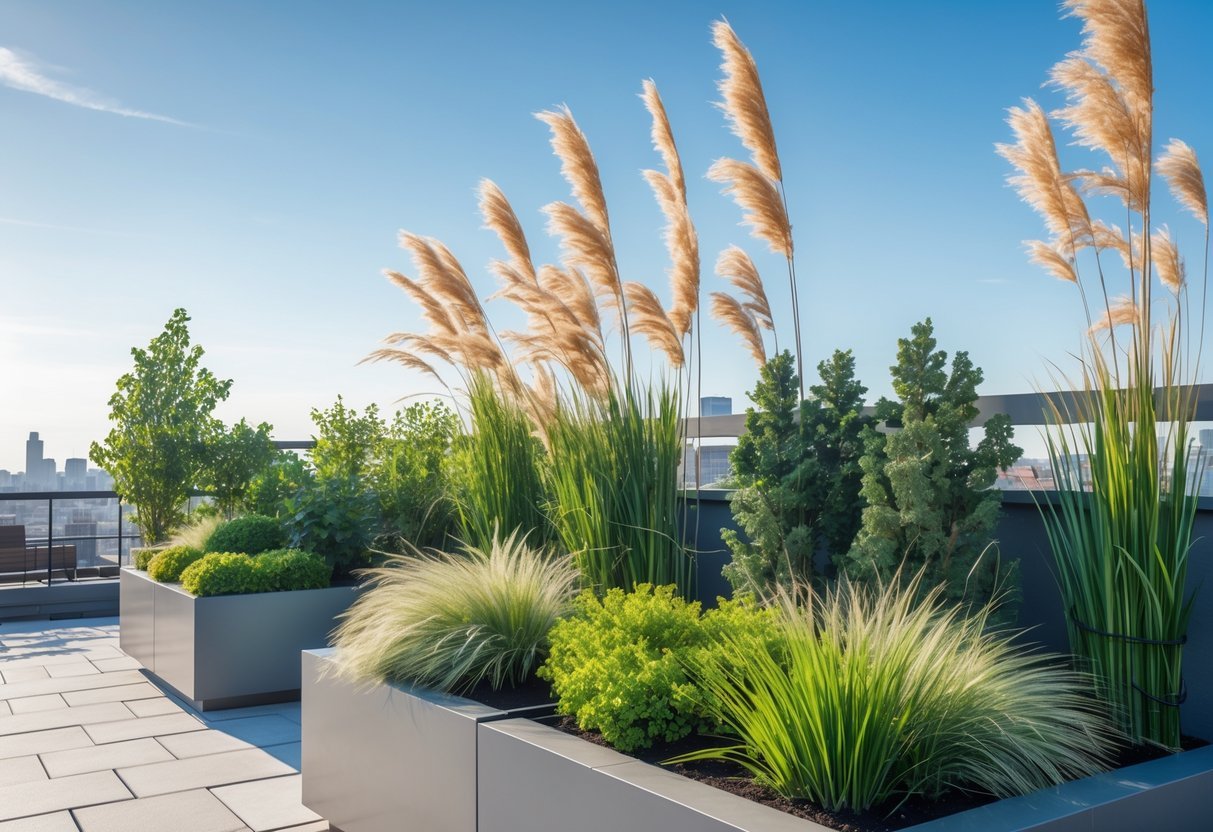
Choose hardy grasses and shrubs that bend without breaking to protect your roof garden from strong gusts. Plant groups rather than single specimens to reduce wind damage and improve stability.
Pick species with deep roots and compact growth to hold soil and resist uprooting. Native, wind-tolerant plants often need less care and survive better in local conditions.
Key Considerations for Designing Roof Gardens
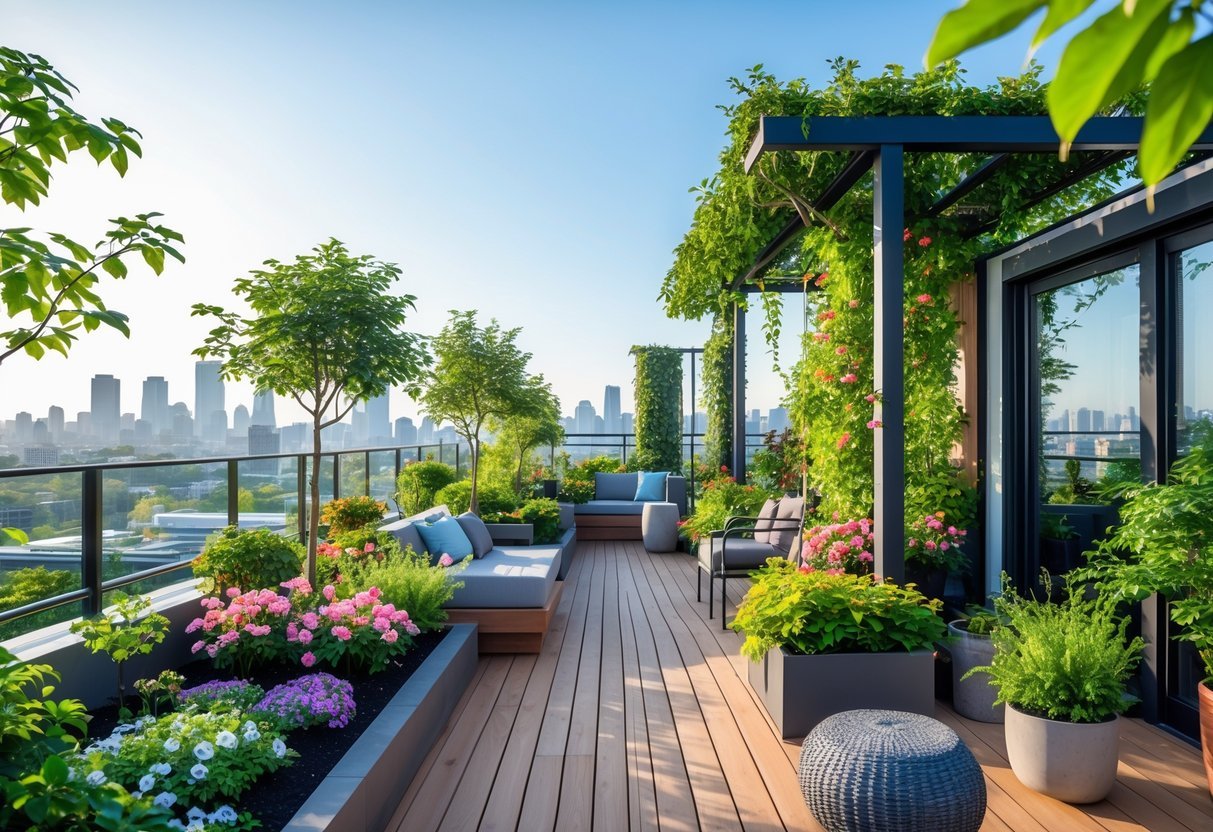
You need to check safety, water management, and material choices before you plant. These three areas determine what plants you can use, how much maintenance you’ll need, and whether your roof will last through wet and cold seasons.
Structural Safety and Load-Bearing Capacity
You must confirm your roof’s maximum live and dead loads with a licensed structural engineer. Live load covers people, furniture, and temporary items; dead load covers soil, planters, and permanent structures. Give the engineer estimated weights: saturated soil (typically 80–120 lb/ft³ for deep beds), lightweight media (20–60 lb/ft³), and hardscape elements (pavers, benches).
Ask about roof reinforcement options if loads are close to limits. Reinforcement can include steel beams, stronger decking, or reducing soil depth and using modular planters. Also check access needs for delivery and maintenance equipment and include safety features like guardrails that meet local codes.
Irrigation and Drainage Solutions
You need a reliable irrigation plan and clear drainage paths to avoid water damage. Install an automatic drip system with pressure-compensating emitters for containers and planters; it saves water and prevents overwatering. For large planted areas, use subsurface irrigation lines and a separate zone for drought-tolerant species.
Ensure layered drainage: a root barrier, protection board, drainage mat, and overflow scuppers or drains sized for heavy storms. Add a moisture sensor or smart controller to prevent run-off and alert you to blockages. Maintain drains with seasonal checks and clear debris after storms to avoid ponding.
Selecting Weather-Resistant Materials
Choose materials that resist UV, freeze-thaw cycles, and salt if you’re near the coast. Use composite decking, sealed concrete pavers, or natural stone rated for exterior freeze-thaw exposure. For planters, prefer rot-resistant wood, powder-coated metal, or UV-stable plastics with drainage holes.
Pick membranes and waterproofing systems with proven warranties for rooftop use. Use non-corrosive fasteners and stainless or coated hardware. For finishes, choose breathable geotextiles and coatings designed for rooftop use to prevent trapped moisture and membrane deterioration.
Maximizing Comfort and Sustainability
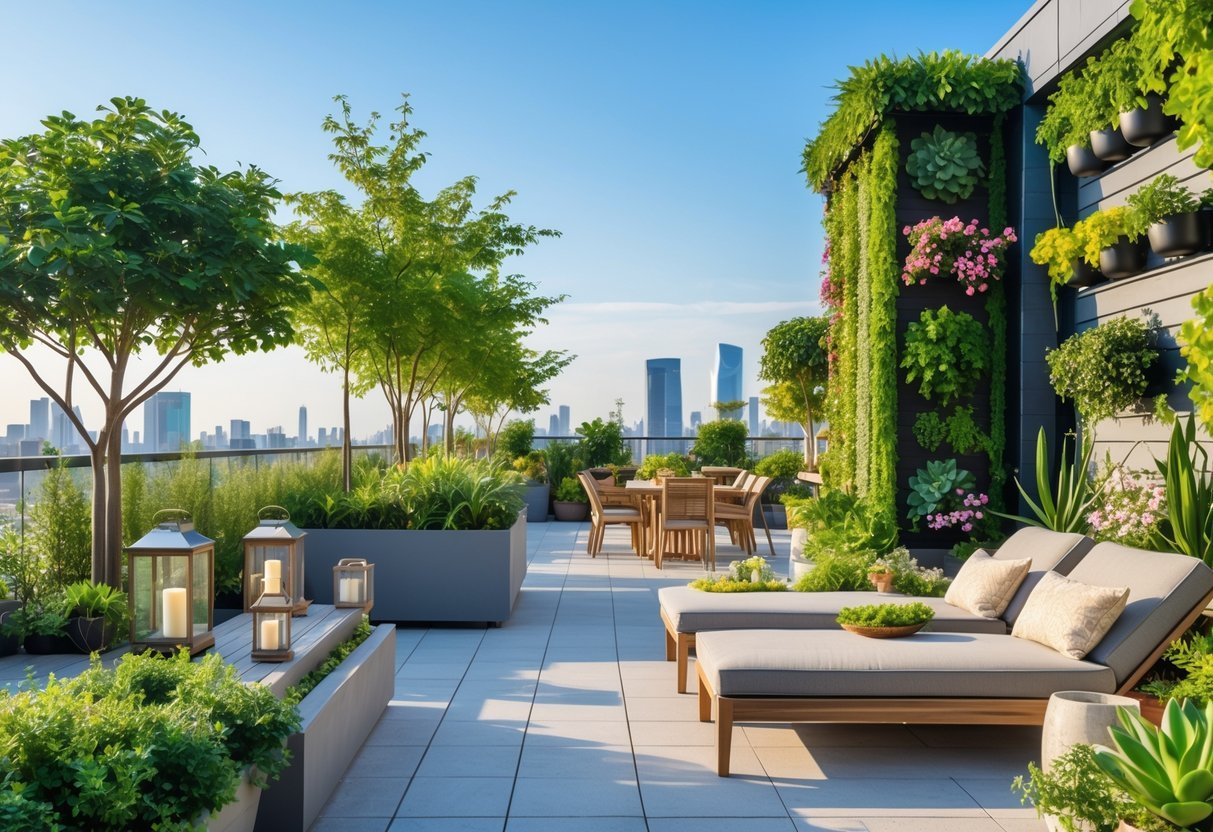
You can make a roof garden both comfortable and eco-friendly by adding the right shade, shelter, and plant choices. Focus on durable materials, water-wise plants, and features that reduce heat and maintenance.
Incorporating Shade and Shelter
Provide shade that suits your roof’s size and wind exposure. Consider a pergola with a retractable fabric canopy for flexible sun control. Choose corrosion-resistant frames (aluminum or powder-coated steel) and UV-rated fabric to avoid frequent replacement.
Use freestanding umbrellas or cantilever umbrellas where ground fixings are limited. Anchor them with ballast planters filled with gravel or soil to avoid roof penetrations. For small roofs, install a sail shade tied to existing structural points; pick high-density polyethylene fabric for breathability and heat reduction.
Add wind screens on exposed edges to keep seating areas usable. Use tempered glass or metal mesh panels at low heights to block gusts but keep views. Combine shade with cooling: place shallow water features or misting nozzles near seating, and use light-colored decking to reflect heat.
Eco-Friendly Plant Choices
Pick plants that need little water and fit your microclimate. Drought-tolerant natives, sedums, lavender, and rosemary do well in shallow containers and reduce irrigation needs. Use deep-root planters for small shrubs and compact ornamental grasses to add structure without heavy soil loads.
Mix annuals for seasonal color with perennials for low upkeep. Group plants by water need into irrigation zones and use drip lines with a pressure regulator and timer to cut water waste. Add compost to potting mixes to improve moisture retention and feed plants slowly.
Choose lightweight, recycled planters and permeable surfaces to lower your roof’s load. Avoid invasive species and pick pollinator-friendly blooms like salvia and echinacea to support urban biodiversity.
Frequently Asked Questions
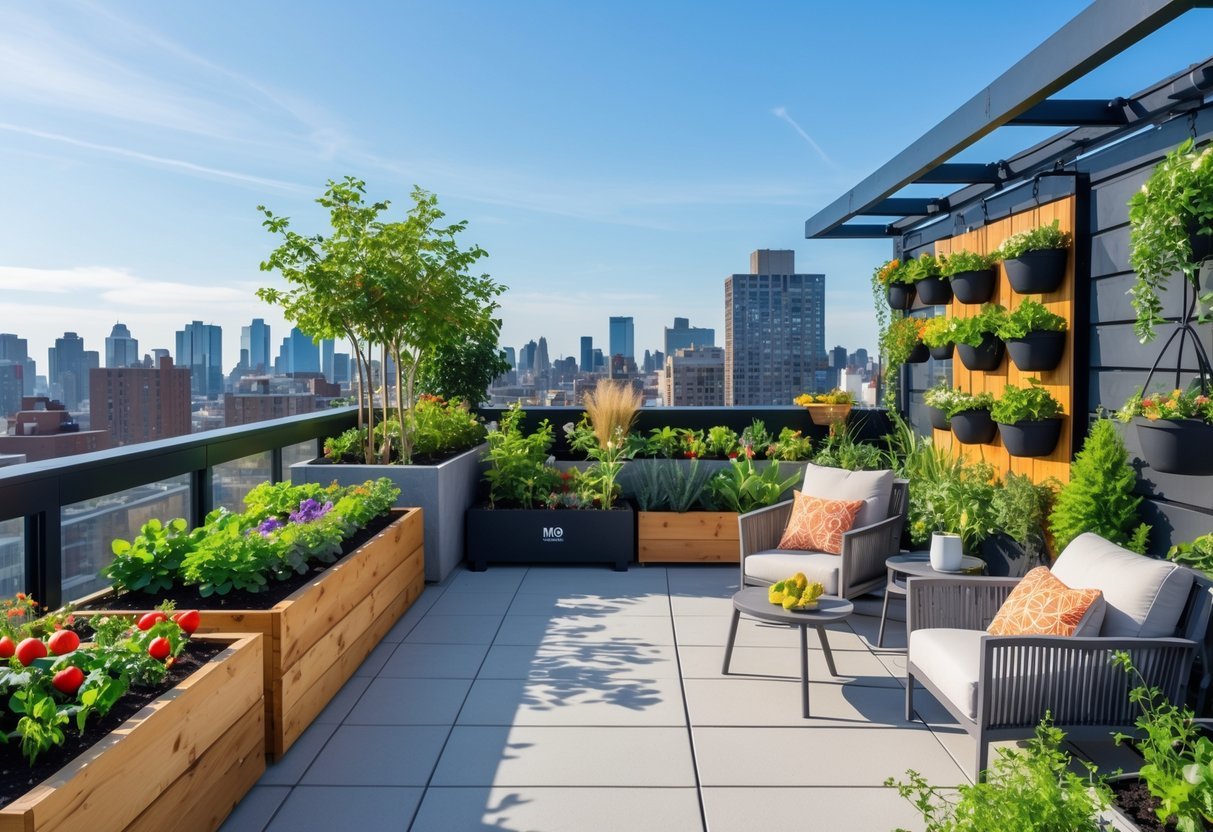
This section gives clear, practical answers about planning, building, and keeping a roof garden. Expect specifics on plant choices, space-saving layouts, upkeep challenges, rules to check, cost ranges, and how a rooftop garden affects property value.
How do you design a small rooftop garden efficiently?
Start by measuring usable area and noting sun exposure, wind, and access points. Place raised garden beds along edges to free central floor space for seating and traffic.
Use vertical gardens with modular wall planters to add planting area without losing floor space. Combine drought-tolerant succulents in shallow containers for low maintenance and water savings.
Choose built-in seating with storage under benches to hide tools and supplies. Add solar-powered string lights for evening use without extra wiring.
What are some creative DIY approaches for creating a rooftop garden?
Build raised beds from treated lumber or recycled pallets for fast, low-cost planting areas. Line beds with pond liner to protect the roof membrane.
Install modular wall planters or repurpose gutters to make vertical gardens on exposed walls. Use lightweight potting mix and plant succulents or herbs to reduce weight.
Create built-in bench seating that doubles as storage using weatherproof materials. String solar-powered lights for ambient lighting without electrical work.
What potential issues should be considered when maintaining a rooftop garden?
Check drainage frequently; clogged drains can cause water pooling and roof damage. Use container trays and well-draining soil mixes to limit excess water.
Watch for wind damage; secure tall pots and trellises and choose wind-tolerant plants. Inspect plantings for pests and disease regularly, since roof conditions can stress plants.
Plan for seasonal care—move vulnerable containers inside or use frost protection as needed. Remember that regular watering routines and light pruning keep plants healthy.
What legal considerations must be taken into account before starting a rooftop garden?
Confirm structural capacity with a licensed structural engineer to ensure the roof can carry added weight. Ask for a written load rating and follow their recommendations for soil depth and planter weight.
Check local building codes, zoning rules, and homeowner association rules for permits or restrictions. Notify building management or get written permission if you rent or share the roof.
Verify fire-safety requirements and access rules that might affect seating, storage, or hardscape features. Keep documentation of approvals and any engineering reports on site.
How does a rooftop garden contribute to the value of a property?
A well-built rooftop garden can make the property more attractive to buyers and renters who value outdoor living. Features like built-in seating, vertical planters, and low-maintenance succulents add usable space and curb appeal.
Energy-saving benefits, such as reduced heat gain, may lower cooling costs and appeal to eco-minded buyers. Quality installation and clear documentation of structural safety increase buyer confidence.
What are the typical expenses involved in establishing a rooftop garden?
Expect costs for structural assessment and possible roof reinforcement first; a structural engineer inspection is rarely optional. Planter materials, raised bed construction, modular wall planters, soil, and plants add variable costs based on size.
Installations like built-in seating, storage, and solar-powered string lights increase upfront cost but add lasting value. Factor ongoing costs for water, replacement plants, and seasonal maintenance into your budget.