7 Outdoor Patio Ideas and Guides: Practical Designs, Layouts, and Styling Tips
You want an outdoor patio that fits how you live, whether you aim to relax, entertain, or add value to your home. This article shows practical ideas and guides so you can plan a patio that looks great and works for your space. You will learn options and planning tips that help you choose the layout, materials, and features that match your needs and budget.
As you move through examples like pergolas with lights, multi-level stone layouts, built-in kitchens, and cozy fire pits, you’ll see ways to mix style with function. You’ll also get simple advice on durable furniture, landscaping for privacy, and basic maintenance to keep your patio usable year after year.
1) Cozy pergola with string lights
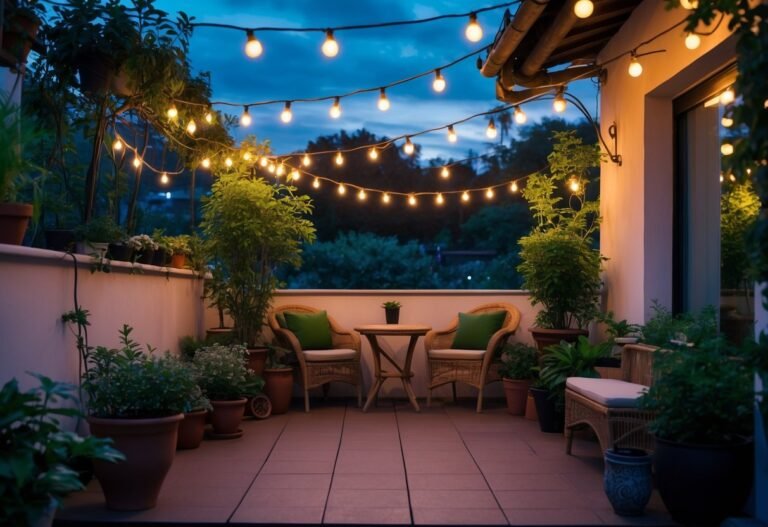
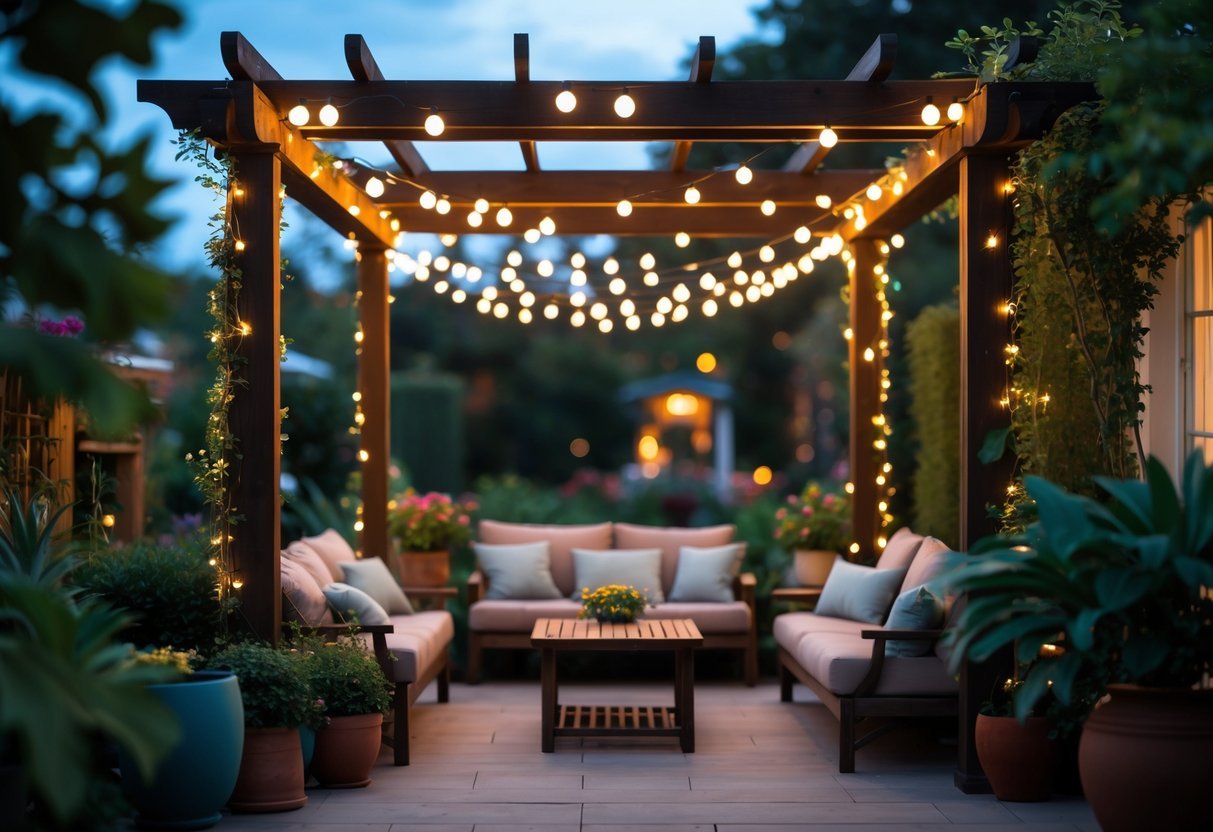
You can turn a plain pergola into a warm gathering spot by draping string lights across the beams. The lights add soft, even glow that makes evenings feel inviting without harsh glare.
Hang lights along the pergola rafters or weave them through vines for a natural look. Pair with comfortable seating and a small side table to create a simple, cozy setup for chats or quiet reading.
2) Multi-level stone patio design
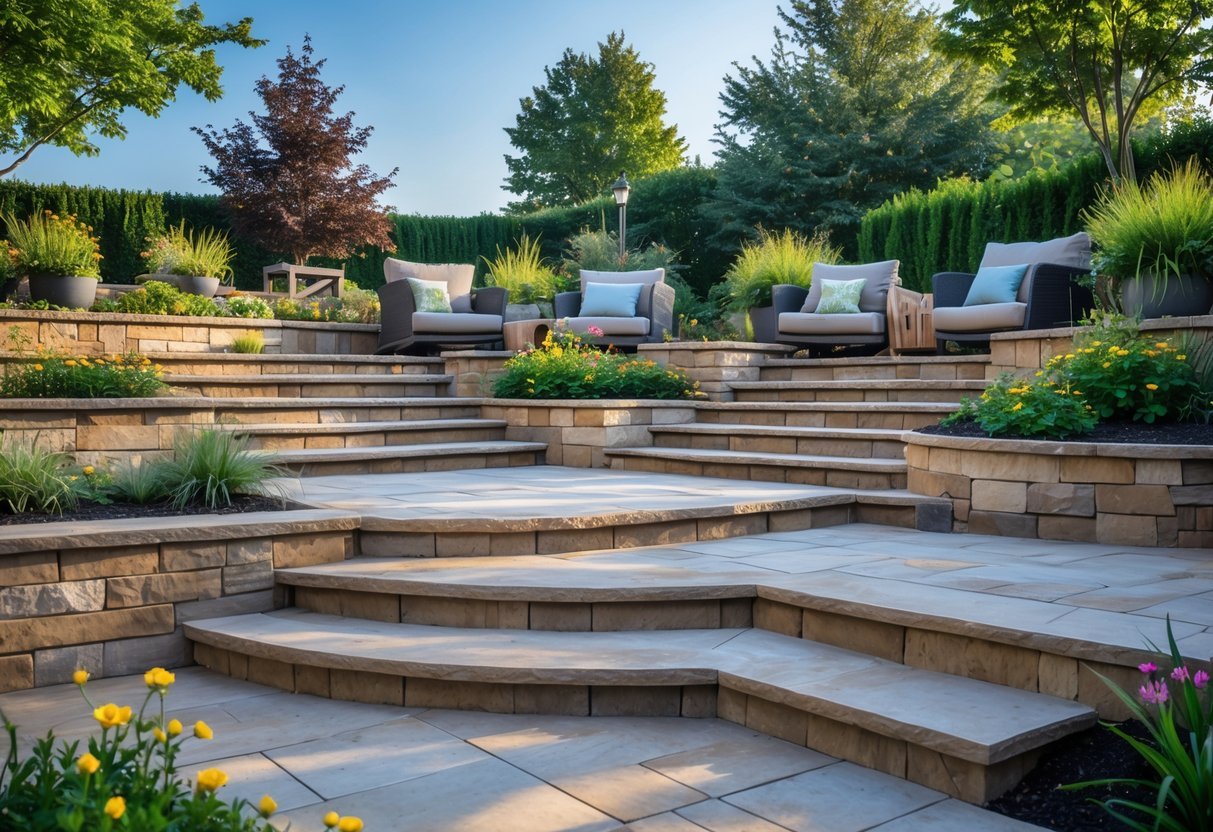
A multi-level stone patio uses steps and terraces to turn a slope into usable outdoor rooms. You can place a dining area on one level and a lounge or fire pit on another for clear zones.
Choose durable stone like bluestone or limestone and plan proper drainage to avoid water pooling. Short retaining walls add seating and define edges while keeping the look tidy.
Mix textures and sizes for visual interest, and keep step heights consistent for safety. Add low lighting along stairs to guide movement after dark.
3) Built-in outdoor kitchen and bar
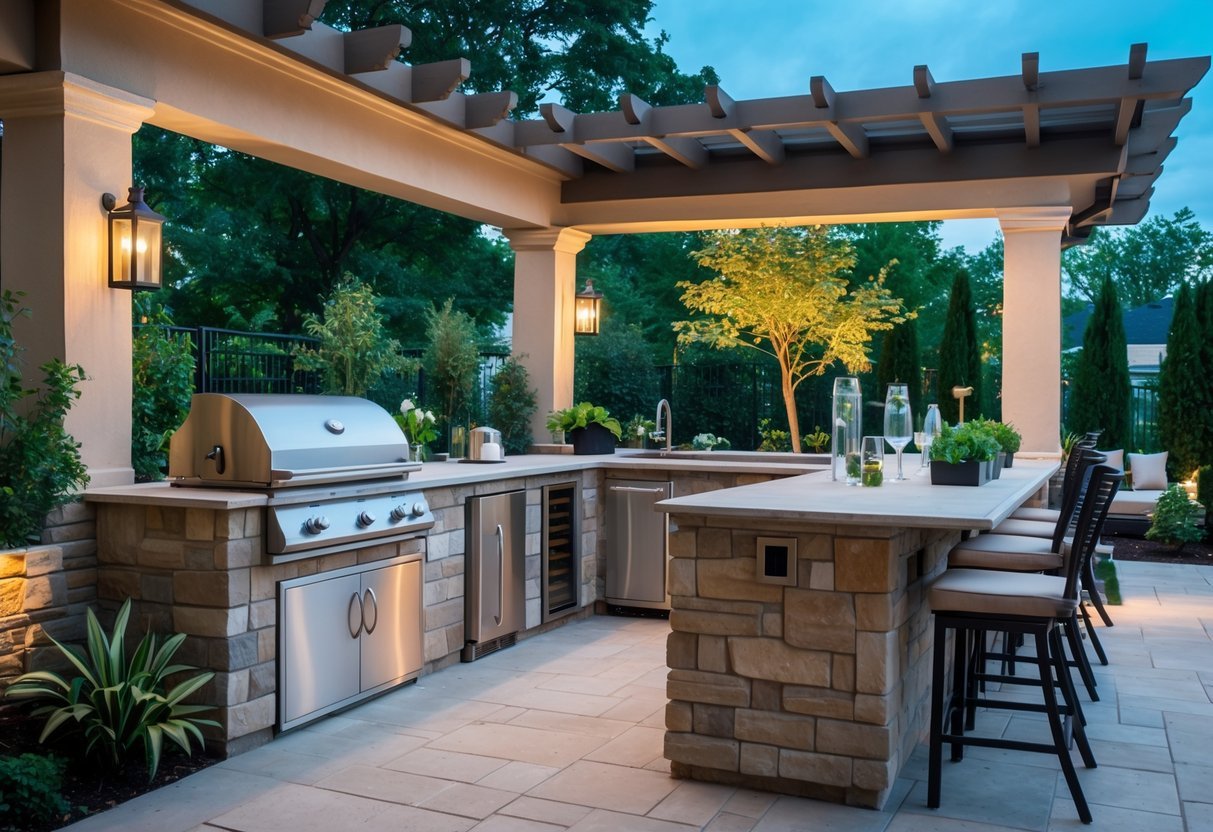
A built-in outdoor kitchen and bar lets you cook and serve without running inside. You can add a grill, sink, fridge, and counter space that match your style.
Plan for durable materials like stainless steel or stone to handle weather. Think about seating, lighting, and storage so your space works for parties and quiet nights.
4) Wooden deck with modern seating
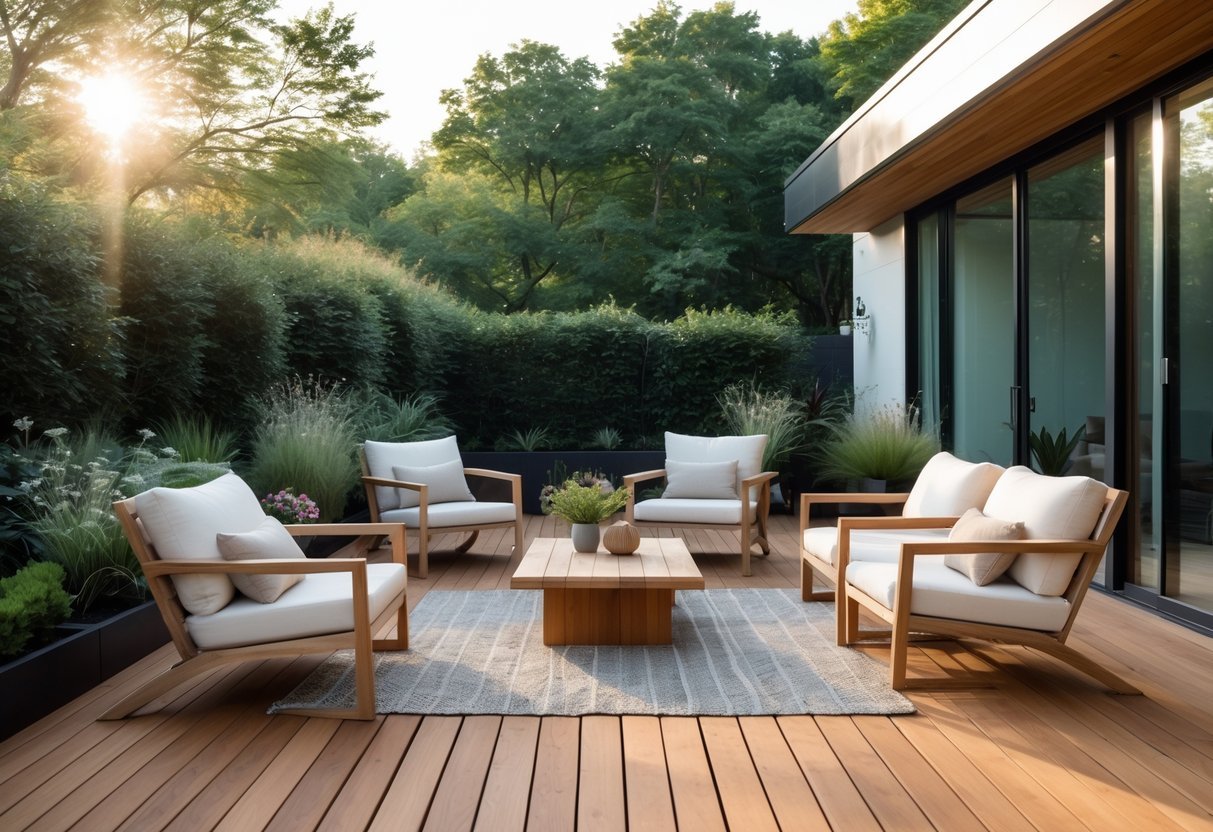
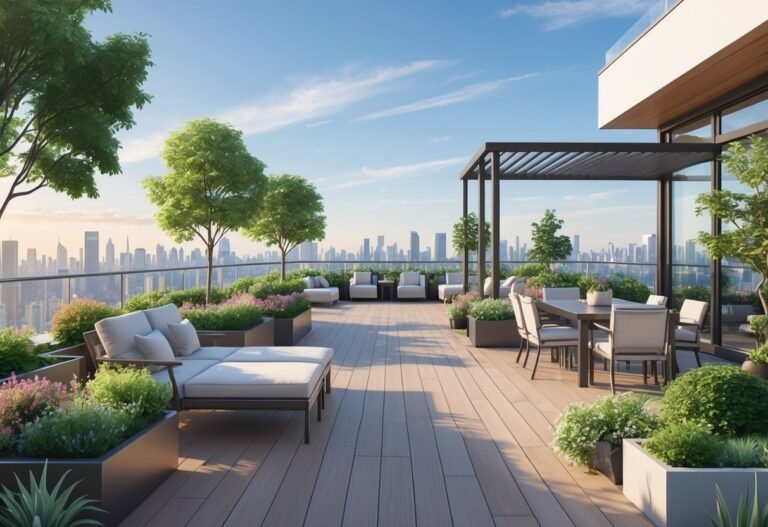
Choose clean-lined furniture in neutral tones to contrast warm wood and keep the look modern. Low-profile sofas, slatted benches, and simple metal-frame chairs work well.
Add a few textured cushions and a weatherproof rug to soften the space without cluttering it. Keep plantings minimal and pick pots with simple shapes to maintain balance.
Position seating to face a focal point like a fire pit or view. This creates a comfortable flow and makes your deck feel intentional and inviting.
5) Fire pit surrounded by lounge chairs
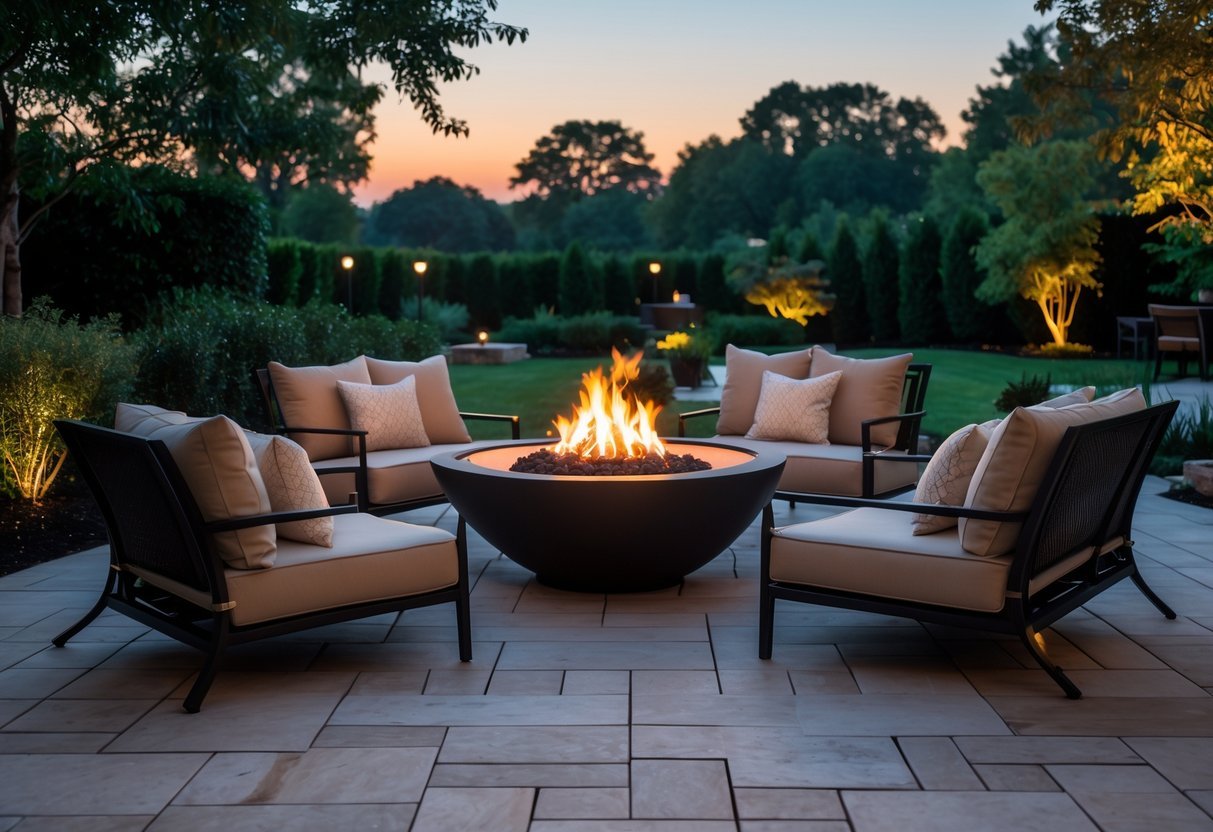
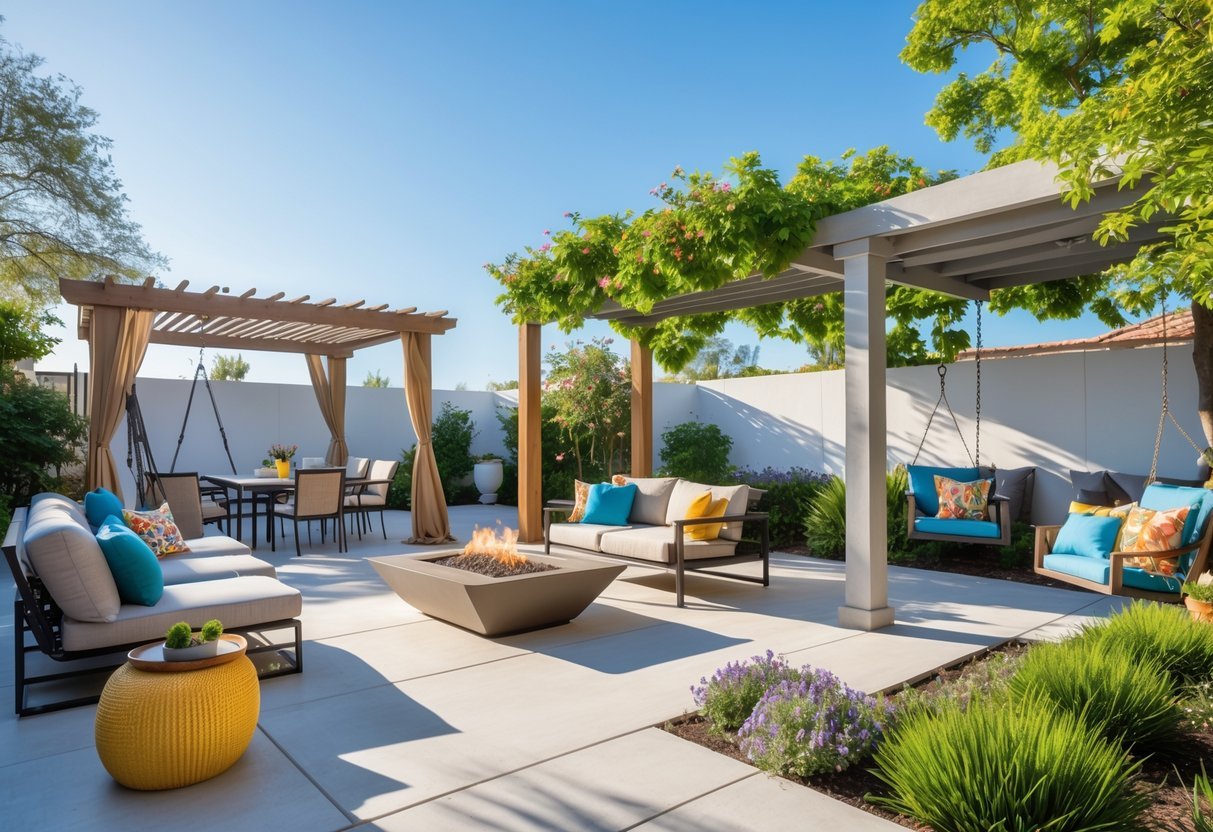
Place a round or square fire pit at the center of a small patio to create a natural gathering spot. Arrange lounge chairs in a loose circle so people can move easily and still face the fire.
Choose comfortable, weather-ready chairs with cushions and add a low table for drinks. Leave clear walking space around the pit for safety and airflow.
6) Lush landscaping with privacy screens
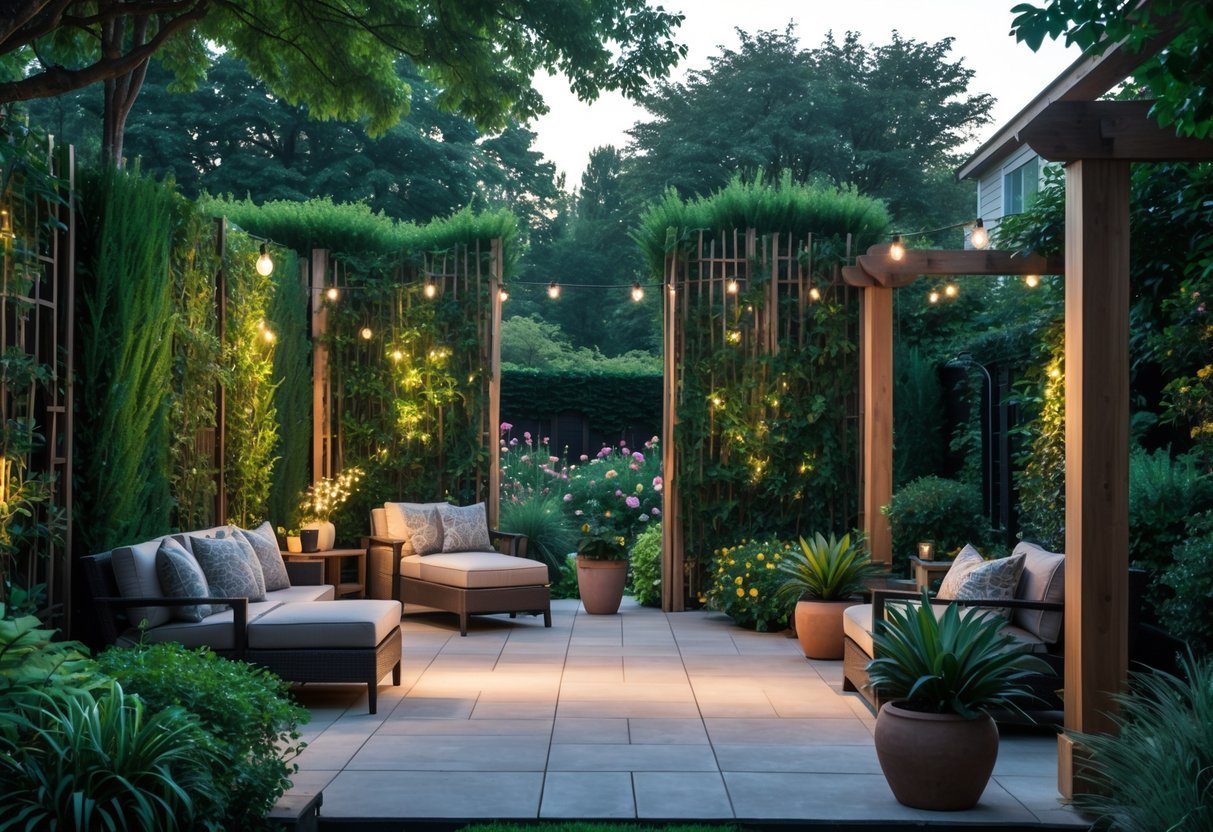
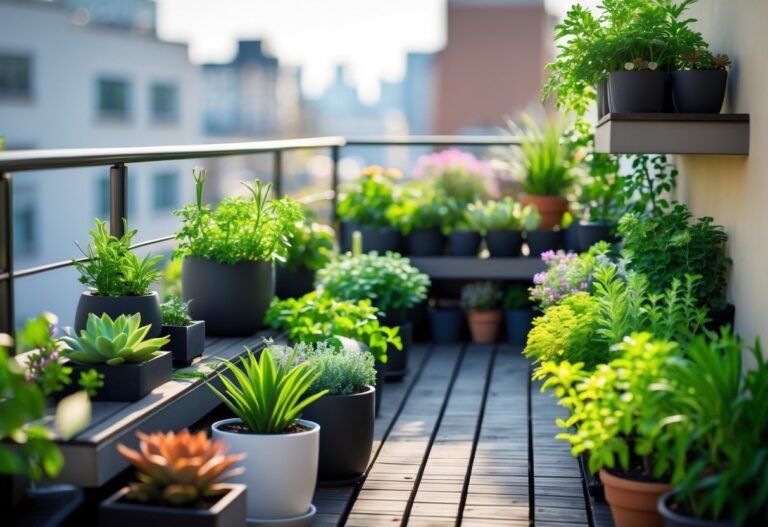
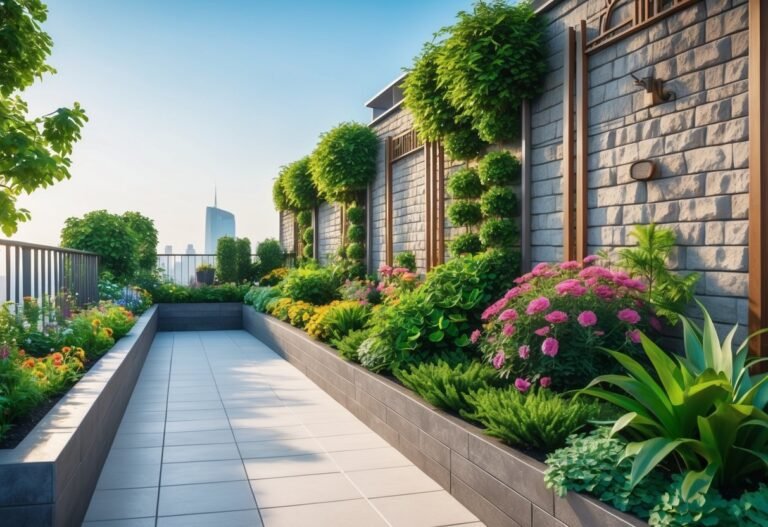
You can mix tall plants and privacy screens to make your patio feel sheltered. Use hedges, potted trees, or climbing vines for a natural green wall.
Choose screens made of wood, metal, or fabric to match your style and block sightlines. Planting evergreens or bamboo adds year-round coverage with low upkeep.
Place screens a few feet from seating to create depth and airflow. This keeps the space private without trapping heat or light.
7) Weather-resistant rattan furniture sets
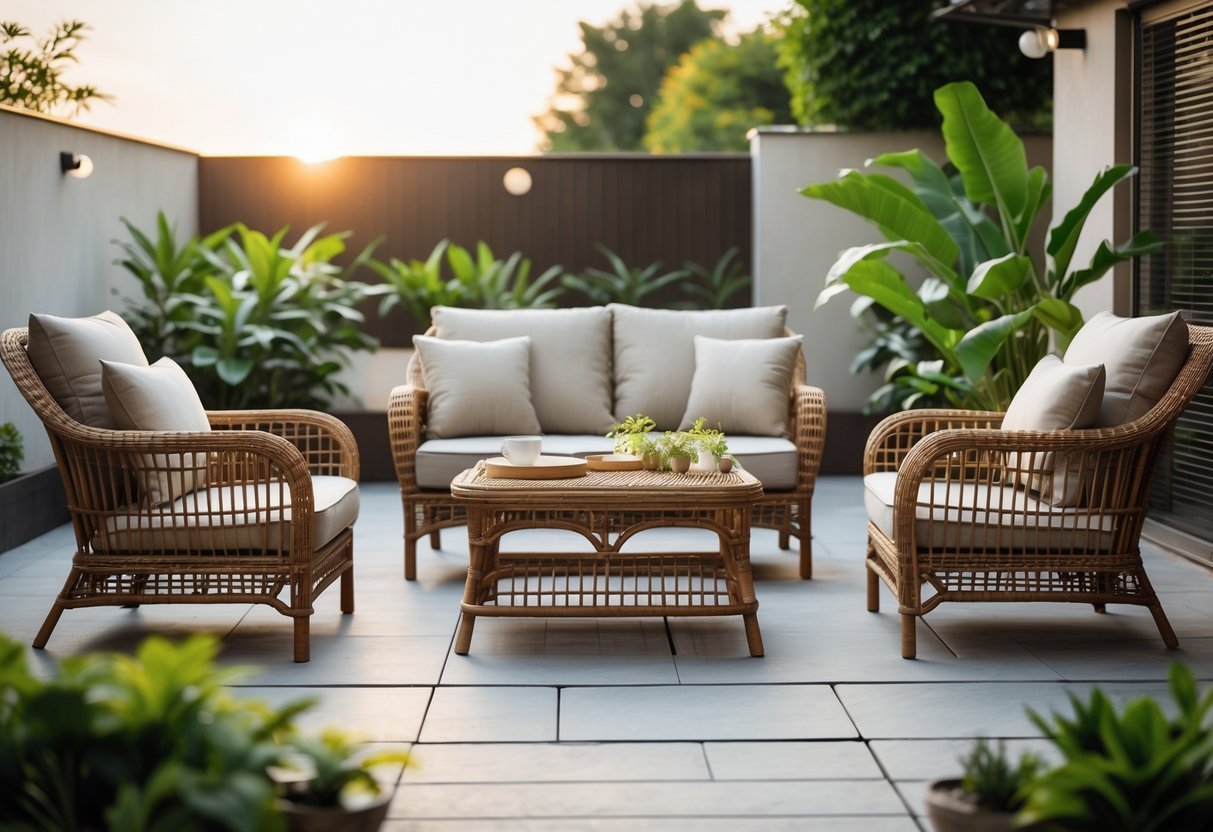
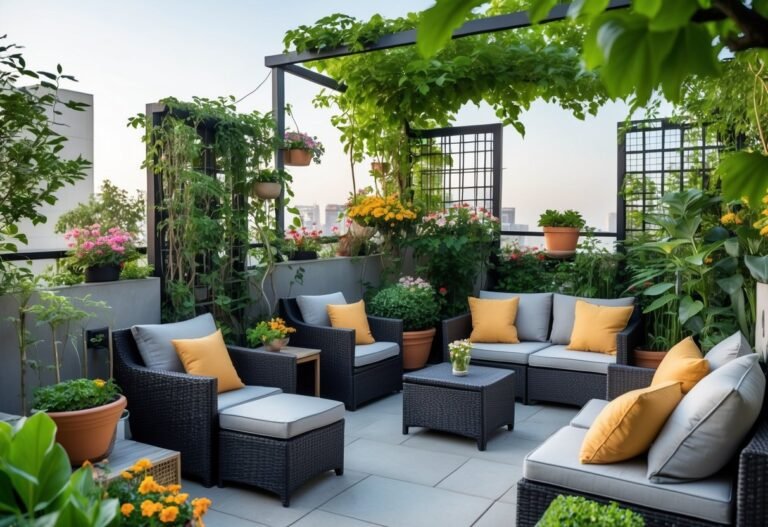
Choose rattan sets made from PE resin or all-weather wicker to resist sun and rain. These materials stay lightweight and clean easily, so you can move pieces as needed.
Look for thick cushions with removable, fade-resistant covers and a waterproof option for wet seasons. Check for a sturdy steel frame under the weave for better durability.
Arrange modular pieces to fit your space, from a small balcony to a large patio. You get a stylish, low-maintenance option that works year-round with basic care.
Key Considerations for Planning an Outdoor Patio
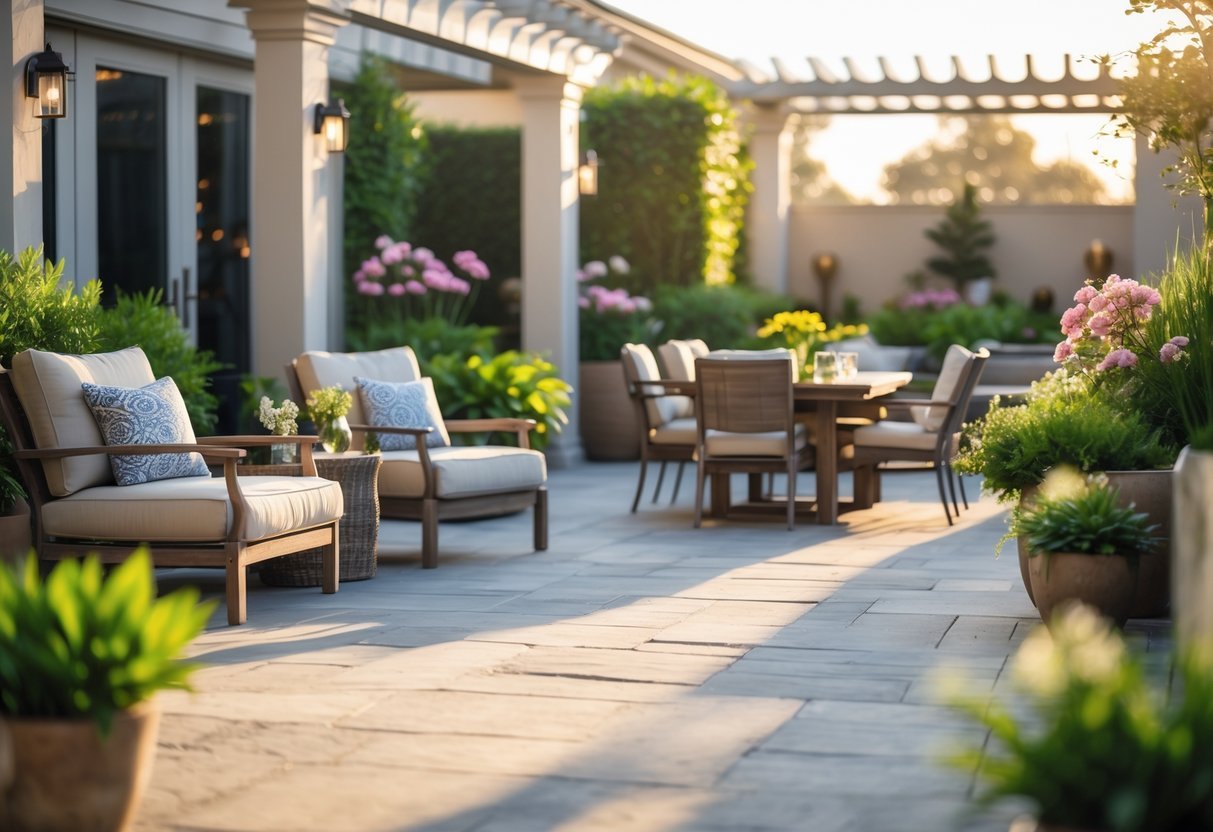
Think about where the patio will sit, what you will do there, and how long it should last. Focus on space, materials, and comfort to make choices that fit your budget and daily use.
Assessing Your Space and Needs
Measure the full area you can use, not just the flat footprint. Note house exits, slope, drainage paths, shade from trees, and any underground utilities. This helps decide patio size, shape, and if you need retaining walls or added drainage.
List primary uses like dining for six, grilling, or a quiet reading spot. Match size to function: a 10×10 ft area fits a small bistro set, while a 12×16 ft space suits a table for six. Include walkways and clearance—leave at least 3 ft around furniture for movement.
Consider sun and wind patterns by checking the yard at different times of day. Plan seating where shade or windbreaks naturally exist, or add pergolas and screens. Think about future needs, such as adding a fire pit or hot tub, and reserve space and load-bearing plans now.
Choosing Durable Materials
Pick materials that match your climate and maintenance willingness. For wet, freeze-thaw climates, use concrete pavers or natural stone with low water absorption. In hot, sunny areas, lighter-colored pavers keep surfaces cooler.
Compare pros and cons quickly:
- Concrete pavers: durable, replaceable, good for heavy use.
- Natural stone: high-end look, variable cost, needs sealing sometimes.
- Brick: classic, slip-resistant, may shift over time.
- Composite decking: low maintenance, warmer to touch in sun.
Check warranties, slip ratings, and freeze-thaw resistance for all options. Factor installation cost and lifespan—cheaper surface now can cost more in repairs. Choose finishes and grout that resist staining if you plan to grill or host food outdoors.
Maximizing Comfort and Functionality
Design zones for specific tasks: cooking, dining, lounging, and moving. Place the grill near the kitchen for easy service, but downwind from seating. Position dining within 6–10 ft of the kitchen door to reduce carrying distance.
Add layered shade and lighting for comfort. Use a solid pergola, retractable awning, or large umbrella to control sun. Install ambient lighting (string lights or wall sconces) and task lighting for the grill and paths. Aim for at least two lighting levels.
Prioritize seating ergonomics and materials that dry quickly. Choose cushions with outdoor fabric and store them in a small nearby box or bench. Include storage for cushions and tools to keep the patio tidy and usable year-round.
Maintaining Your Outdoor Patio
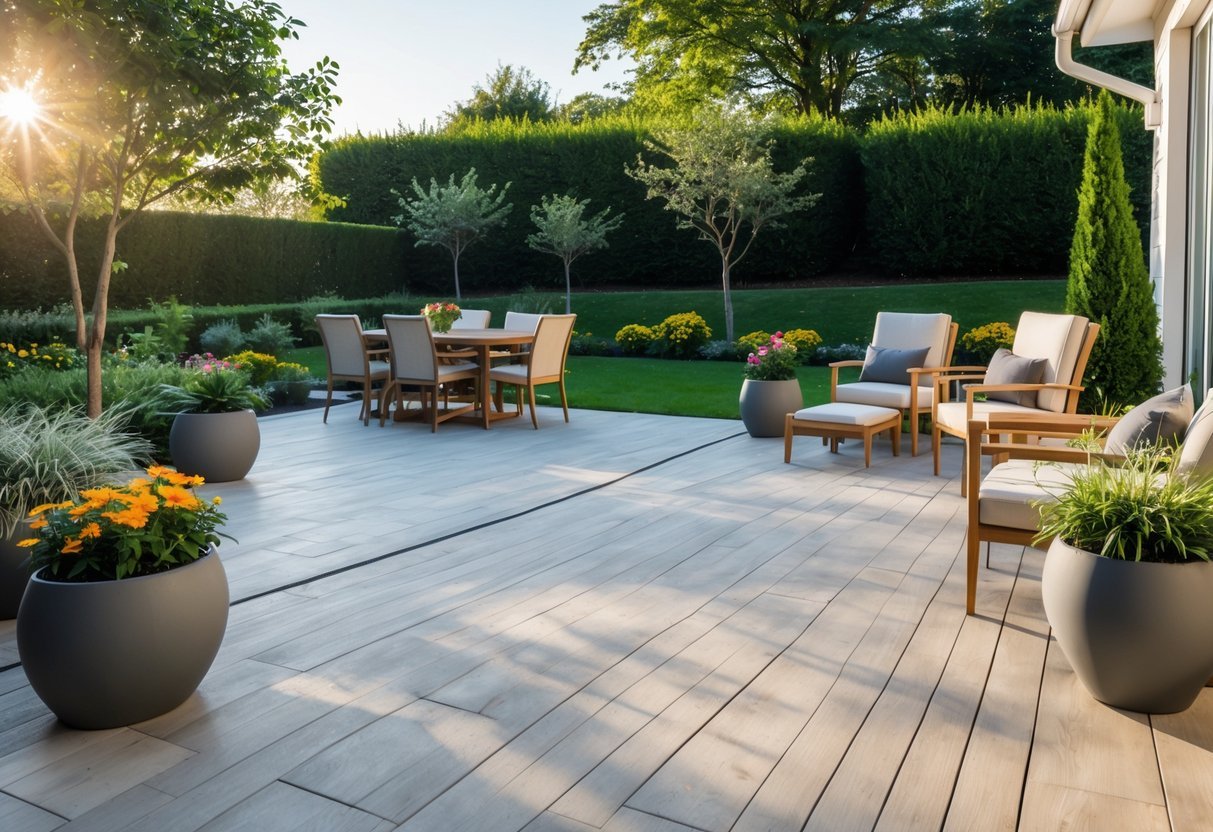
Keep your patio clean, protect furniture from weather, and plan regular repairs to extend life and stay safe. Small, scheduled tasks prevent big expenses later.
Seasonal Cleaning Tips
Sweep and remove debris weekly to stop stains and mold. Use a stiff broom for dirt and leaves, then rinse with a garden hose. For concrete or stone, scrub stains with a mix of warm water and mild detergent; use a pressure washer only on low settings to avoid surface damage.
For wood decks, sweep and wash in spring and fall. Apply a wood cleaner or diluted vinegar solution to remove mildew, then let wood dry completely before sealing. Check grout and joints on pavers or tile; reapply joint sand or grout where gaps appear to prevent weed growth.
Clear drains and gutters near the patio every season. Pool water, planter runoff, and clogged gutters cause standing water that damages surfaces and furniture.
Protecting Furniture and Decor
Choose covers that fit snugly and are breathable to prevent mold. Remove cushions and store them indoors during heavy rain or winter. If you must leave cushions outside, use quick-dry foam and fabrics labeled “outdoor” or “water-resistant.”
Treat wooden furniture with an annual coat of sealant or oil. For metal pieces, sand any rust spots and apply rust-inhibiting paint. Keep lightweight pieces anchored or stored during strong winds to avoid damage and dents.
Use plant trays and saucers under pots to prevent water stains on wood and stone. For string lights and electrical items, unplug and store them or use weatherproof fixtures and outdoor-rated extension cords.
Long-Term Upkeep Strategies
Inspect your patio structure twice a year. Tighten loose screws, check posts and railings for rot or rust, and replace any damaged fasteners promptly. Small repairs stop bigger structural problems.
Reseal surfaces on a schedule: wood every 1–3 years, stone or concrete every 3–5 years depending on wear. Keep records of maintenance dates so you know when to reseal or refinish next.
Plan for seasonal storage. Move vulnerable items like rugs, cushions, and small decor into a dry space during winter. This reduces replacement costs and keeps your patio ready for use as soon as the season changes.
Frequently Asked Questions
You will find clear, practical answers for designing small or large patios, saving money on a makeover, choosing covered patio styles, adding modern touches, and using pavers to create patterns and texture.
How can I design a small patio space effectively?
Focus on scale and function. Choose slim, multipurpose furniture like a two-seat bistro set or a bench with storage to save space.
Use vertical elements for impact. Hang plants, mount shelves, or add a narrow pergola with string lights to draw the eye upward without crowding the floor.
Keep materials simple and low-maintenance. Gravel or compact pavers work well and cost less than large stone slabs, while still letting you define zones for dining or lounging.
What are some creative ideas for a large outdoor patio?
Divide the area into distinct zones. Create a dining area, a lounge space with a fire pit, and a cooking zone with a built-in outdoor kitchen and bar.
Introduce level changes and materials. A multi-level stone patio or mixed decking and paving adds visual interest and guides movement.
Add large focal elements. A cozy pergola with string lights or a raised fire pit surrounded by lounge chairs anchors the space for gatherings.
What are budget-friendly options for a backyard patio makeover?
Choose affordable surfaces. Gravel, concrete pavers set in sand, or stamped concrete cost less than natural stone and still look neat.
Reuse and DIY where possible. Build a simple wooden deck platform, assemble modular seating, or repurpose planters to frame the space.
Prioritize a few upgrades. Focus on one statement feature—like a fire pit or string-lit pergola—and refresh the rest with paint, cushions, and low-cost landscaping.
What are the latest trends in outdoor covered patio designs?
Lightweight, open pergolas are popular. They provide shade, let light through, and work well with string or pendant lighting for evening use.
Outdoor rooms with weatherproof furniture are growing in demand. Think sofas with performance fabrics, a rug, and a mounted TV or heater for year-round comfort.
Mixed materials and clean lines lead the look. Combine wood or composite beams with metal accents and neutral-toned finishes for a modern feel.
What modern design elements can I incorporate into my patio?
Use clean geometry and minimal color palettes. Straight edges, simple furniture shapes, and greys, whites, or muted wood tones create a contemporary look.
Add tech and convenience. Install low-voltage LED lighting, a built-in outdoor speaker, and a compact outdoor kitchen or bar for easy entertaining.
Layer textures for warmth. Mix smooth concrete or pavers with wooden decking and textile cushions to keep the space inviting.
How do I use pavers to create a unique patio design?
Pick a pattern that fits your style. Herringbone, basketweave, or running bond give different visual effects; use a border tile for definition.
Mix sizes and materials. Combine large-format pavers with smaller stones or a band of contrasting color to break up large areas.
Plan for drainage and base prep. A proper gravel base and edge restraint prevent shifting and settling, keeping your multi-level stone or paver layout stable over time.