12 Flower Bed Ideas in Front of House — Confident Designs and Practical Tips
You can turn your front yard into a place that feels welcoming and shows off your style. This article gives 12 practical flower bed ideas you can use to boost curb appeal, match your home’s look, and fit the effort you want to spend.
You’ll find options for tidy, low-maintenance beds and bolder, colorful designs so you can pick what fits your yard and lifestyle. Flip through the ideas to see styles that range from classic to modern and learn which choices work best for different light, soil, and maintenance needs.
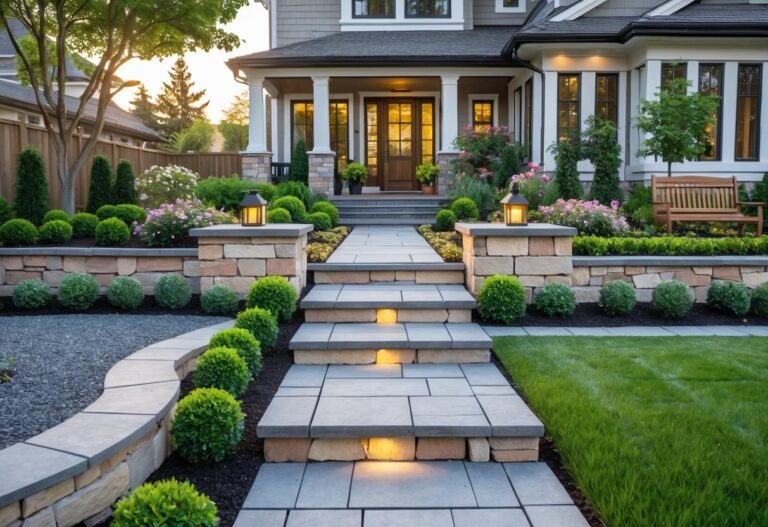
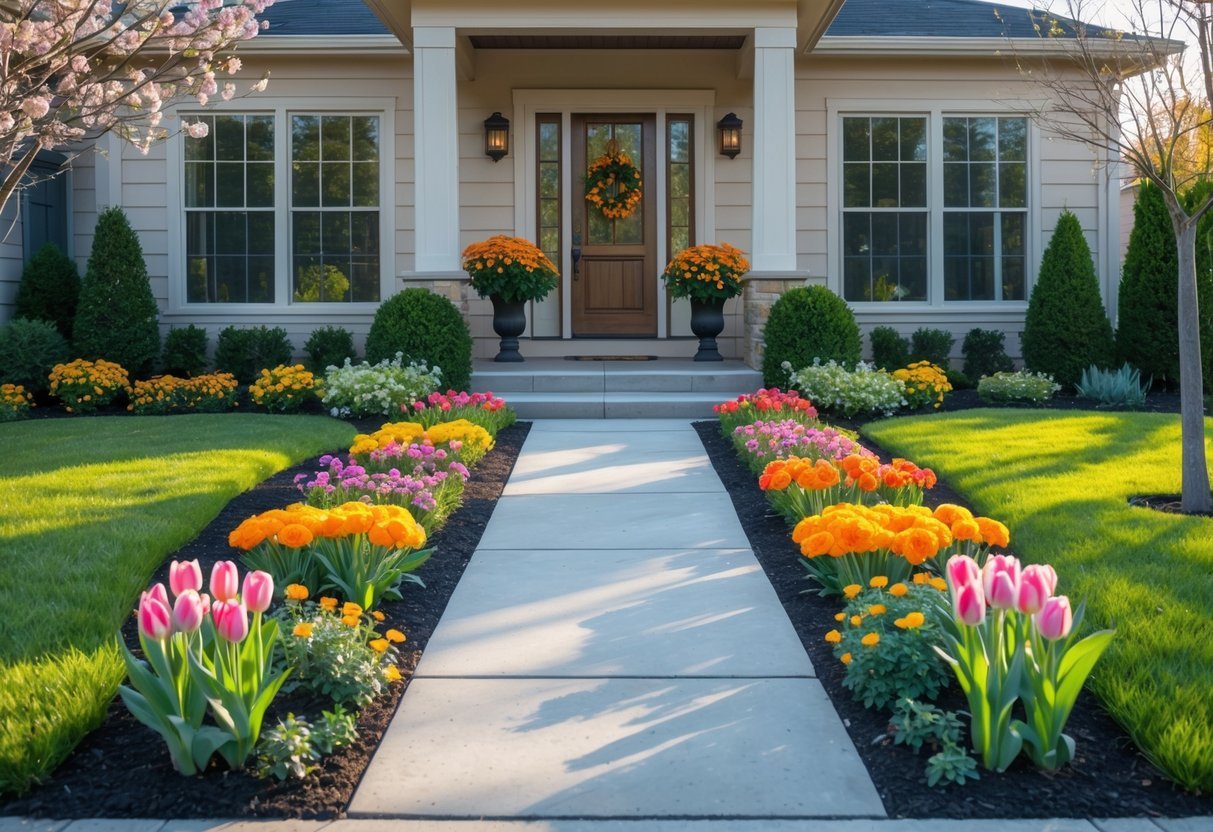
1) Symmetrical Flower Bed Framing the Entryway
Place matching beds on each side of your steps to create a balanced, welcoming look. Use perennials like hydrangeas or boxwoods for steady shape, and add seasonal blooms for color.
Edge beds with stone or metal for clean lines and low maintenance. Add solar uplights to highlight symmetry at night and guide guests to your door.
2) Curved Layered Flower Bed with Mixed Perennials
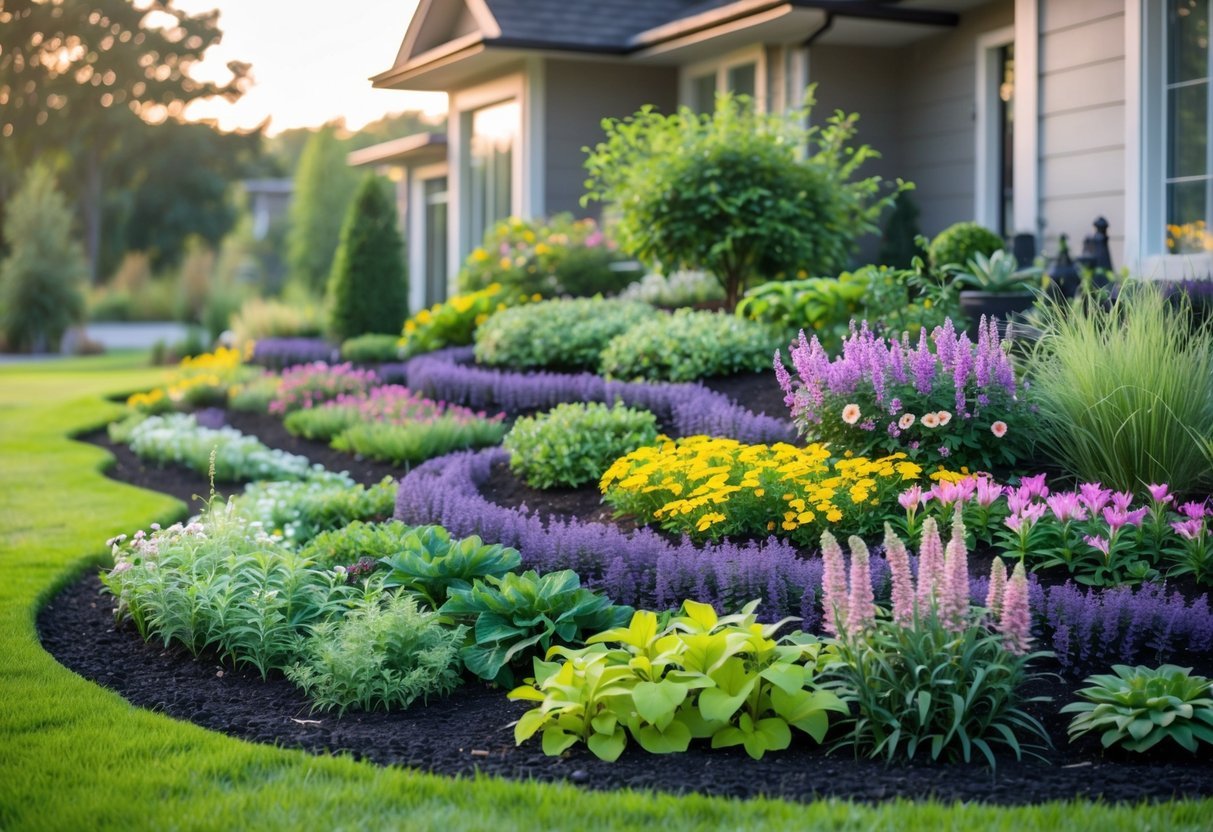
Design a gentle curve to lead the eye and soften your front yard. Use flexible edging to keep the line neat.
Plant tall perennials like coneflowers or salvias at the back, medium ones in the center, and low growers or groundcover at the front. Choose repeat-blooming varieties for steady color year to year.
Mix textures and foliage to add interest even when flowers fade. Space plants for mature size to avoid crowding and reduce future maintenance.
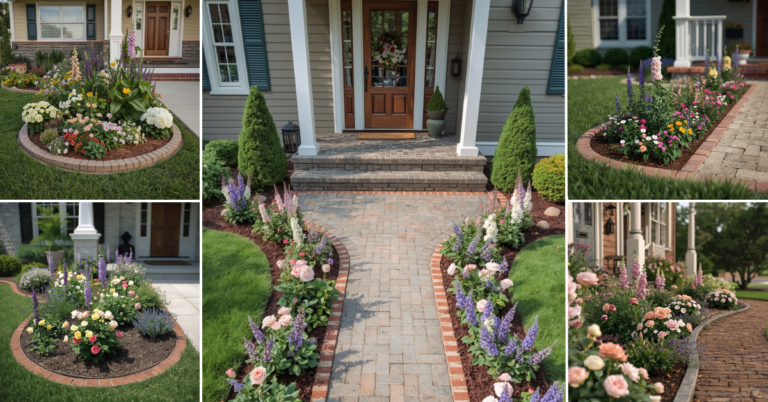
3) Colorful Cottage Garden Style Bed

You can create a relaxed, layered bed with mixed perennials, annuals, and herbs. Plant tall spires like hollyhocks or delphiniums at the back and shorter blooms like zinnias and cosmos up front.
Choose a soft, complementary color palette—pinks, purples, and creams work well together. Let plants spill over edges and avoid strict lines to keep the informal cottage feel.
Add a low picket fence or a narrow path to invite visitors. This style hides small gaps and looks full even with simple maintenance.
4) Succulent and Rock Garden Combination
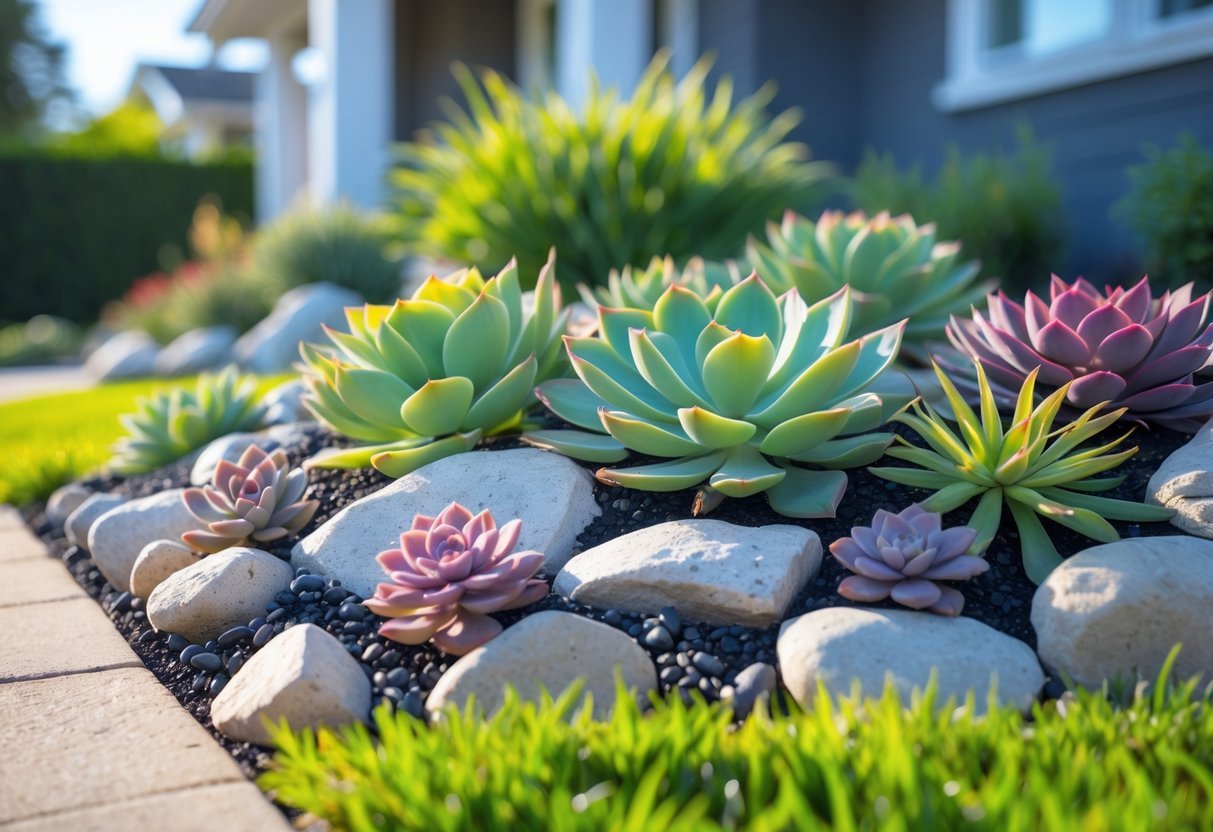
You can create a low-maintenance, drought-tolerant bed by mixing succulents with rocks. Use varied rock sizes for texture and place succulents with similar light and water needs together.
Pick hardy succulents like sedum, aeonium, or agave and space them so each plant has room to grow. Add gravel or river rock as mulch to reduce weeds and help soil drain.
Arrange focal plants near the front and smaller groundcover succulents around them for balance and visual flow.
5) Boxwood and Hydrangea Border Bed
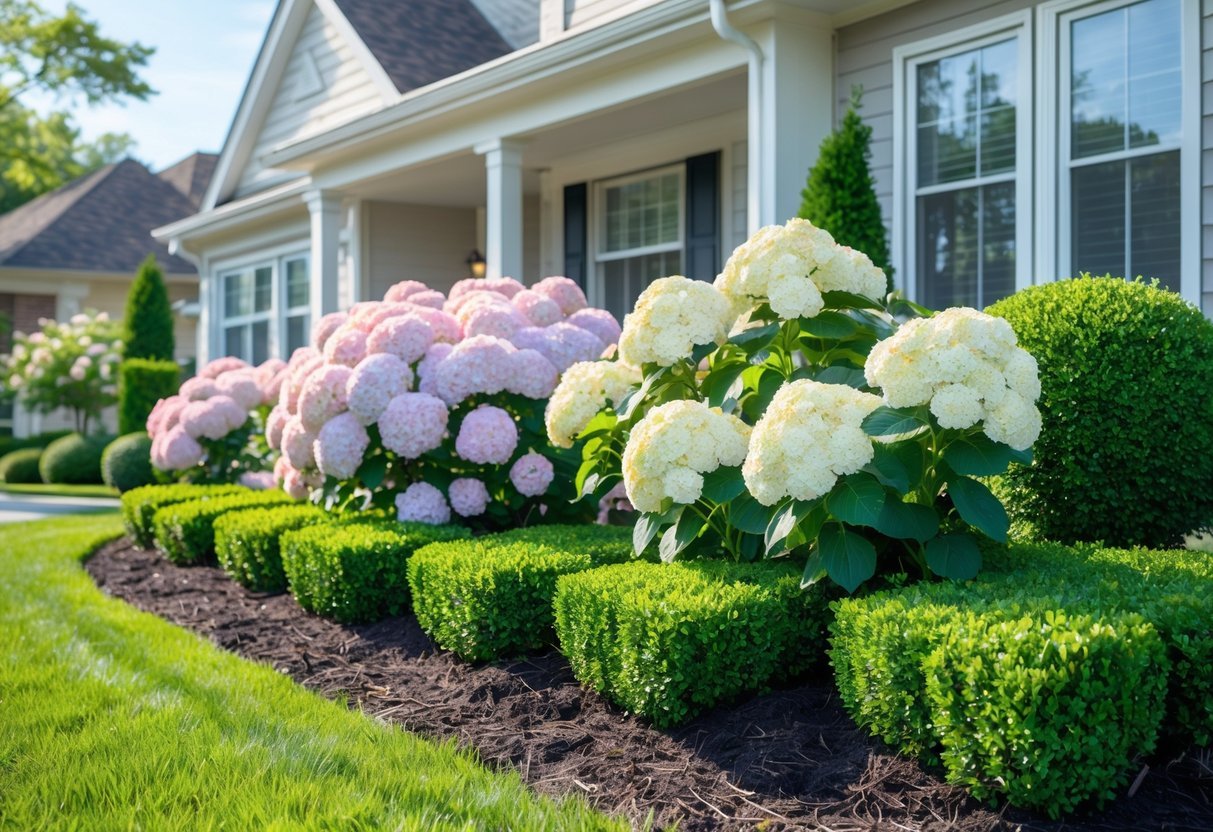
Plant a row of low boxwoods to create a tidy border that holds its shape year-round. Boxwoods give structure while hydrangeas add seasonal color and soft texture.
Space hydrangeas behind the boxwoods so blooms sit above the hedge. Choose mophead or lacecap types for big, showy flowers that complement the evergreen foliage.
Keep soil well-drained and water deeply during dry spells. Prune boxwoods lightly and trim hydrangeas after flowering to maintain a neat, balanced look.
6) Low-Maintenance Drought-Tolerant Bed
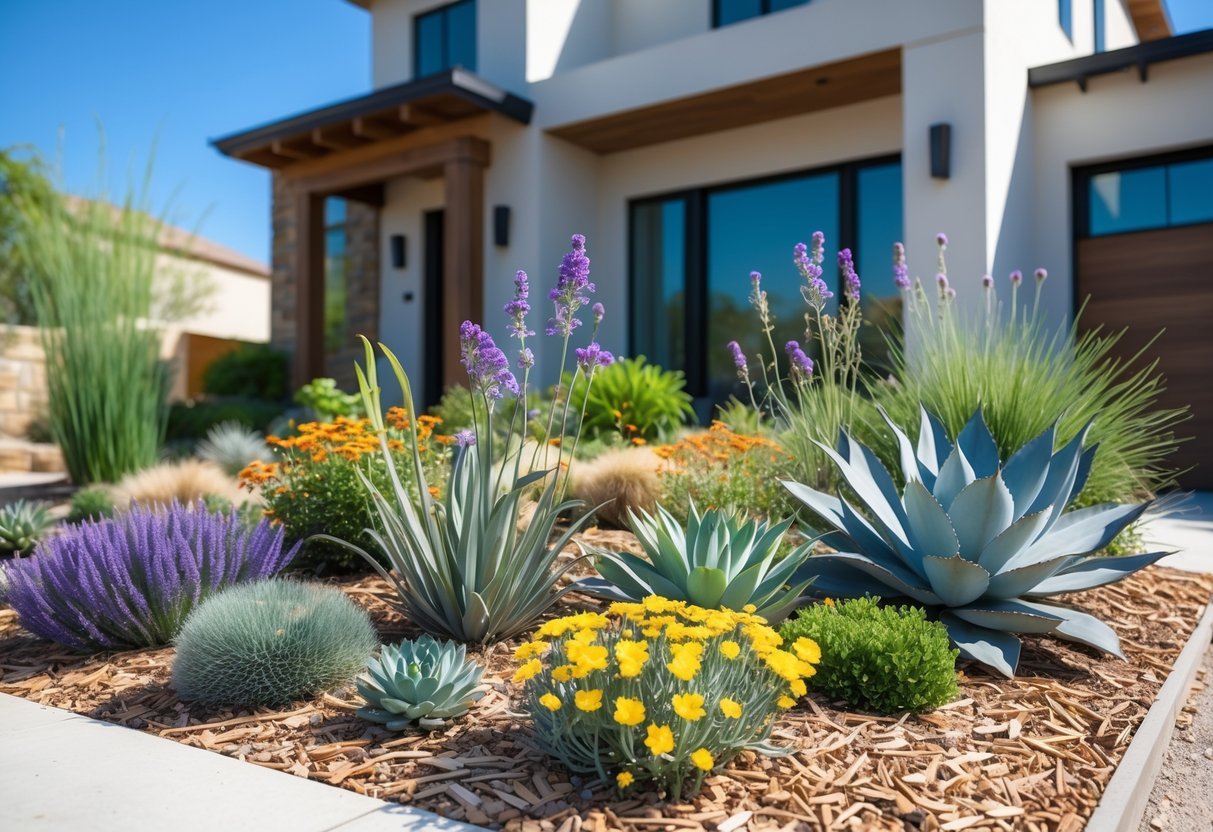
Choose drought-tolerant perennials and shrubs like lavender, Russian sage, and native grasses to cut watering needs. These plants need less care and still give color and texture.
Lay down a thick layer of mulch or decorative gravel to keep soil moist and reduce weeds. Group plants by water need so you only irrigate when necessary.
Use simple, wide planting beds with clear paths for easy access when you do need to prune or replace plants.
7) Classic Traditional Flower Bed with Tulips and Daffodils
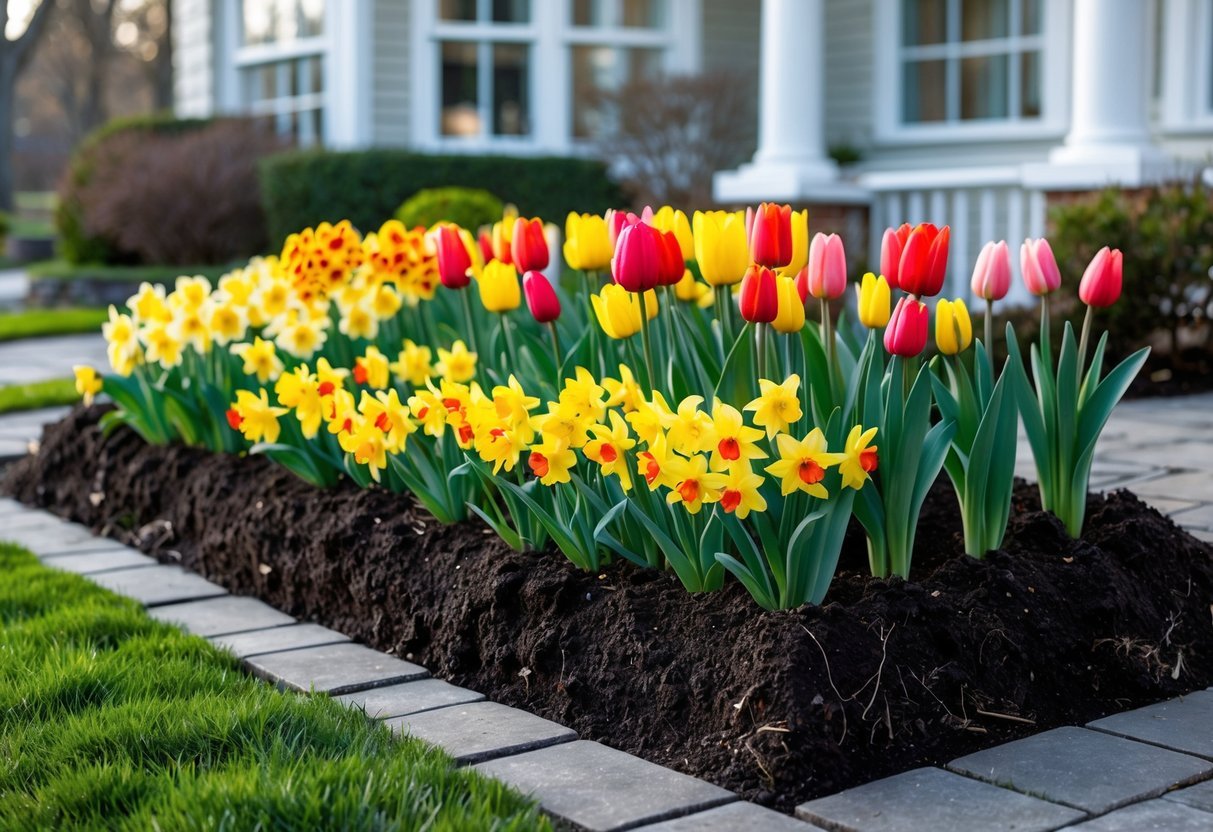
You can create a timeless front-bed by planting tulips and daffodils in groups for bold spring color.
Plant bulbs in layers—taller tulips toward the back and shorter daffodils near the front—so blooms stay visible.
Choose a sunny spot with well-drained soil and add compost before planting to improve growth.
After flowering, let foliage die back naturally so bulbs store energy for next year.
8) Modern Minimalist Bed with Ornamental Grasses
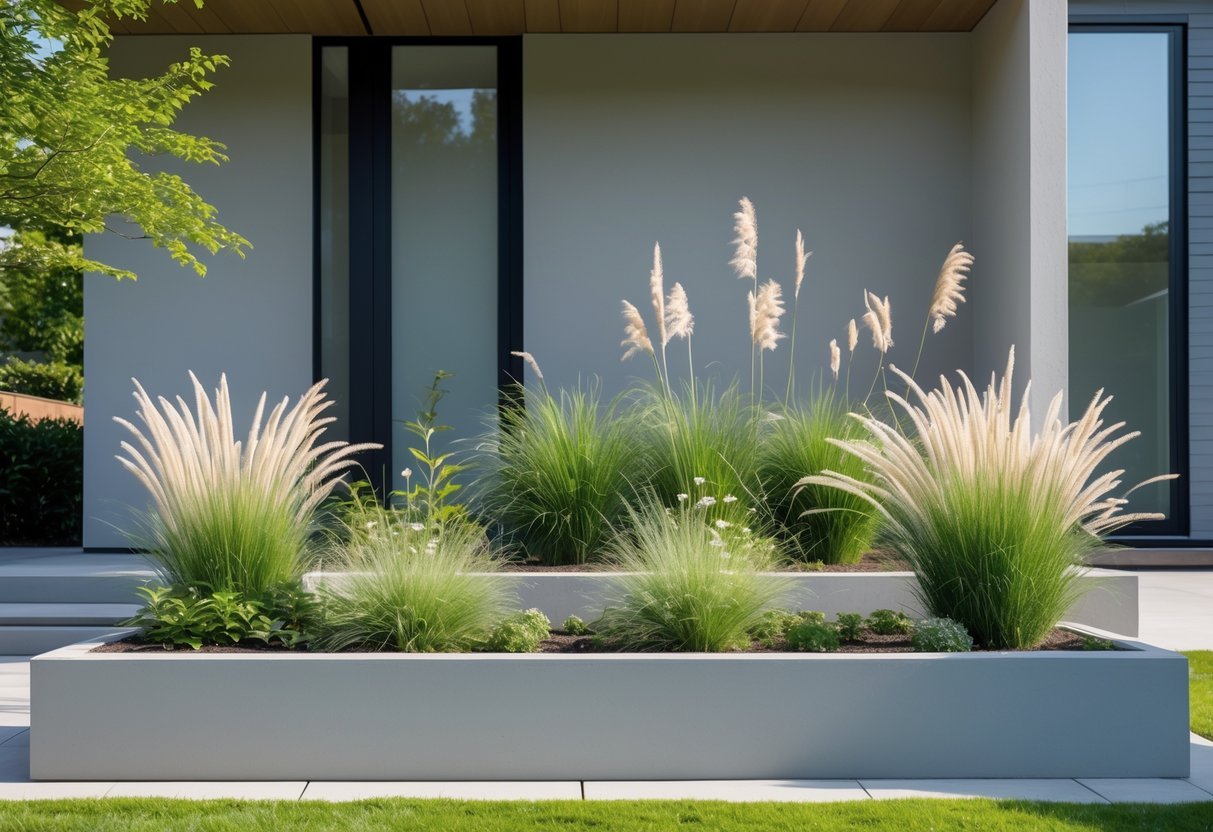
Choose a few grass varieties and repeat them to create clean lines and calm rhythm. Ornamental grasses add movement and texture without heavy fuss.
Keep the color palette simple—greens, silvers, and one accent hue if you want. Use dark mulch or gravel to highlight plant shapes and keep weeds down.
Plant in groups and allow space for mature size. That makes maintenance easier and keeps the bed looking intentional as plants grow.
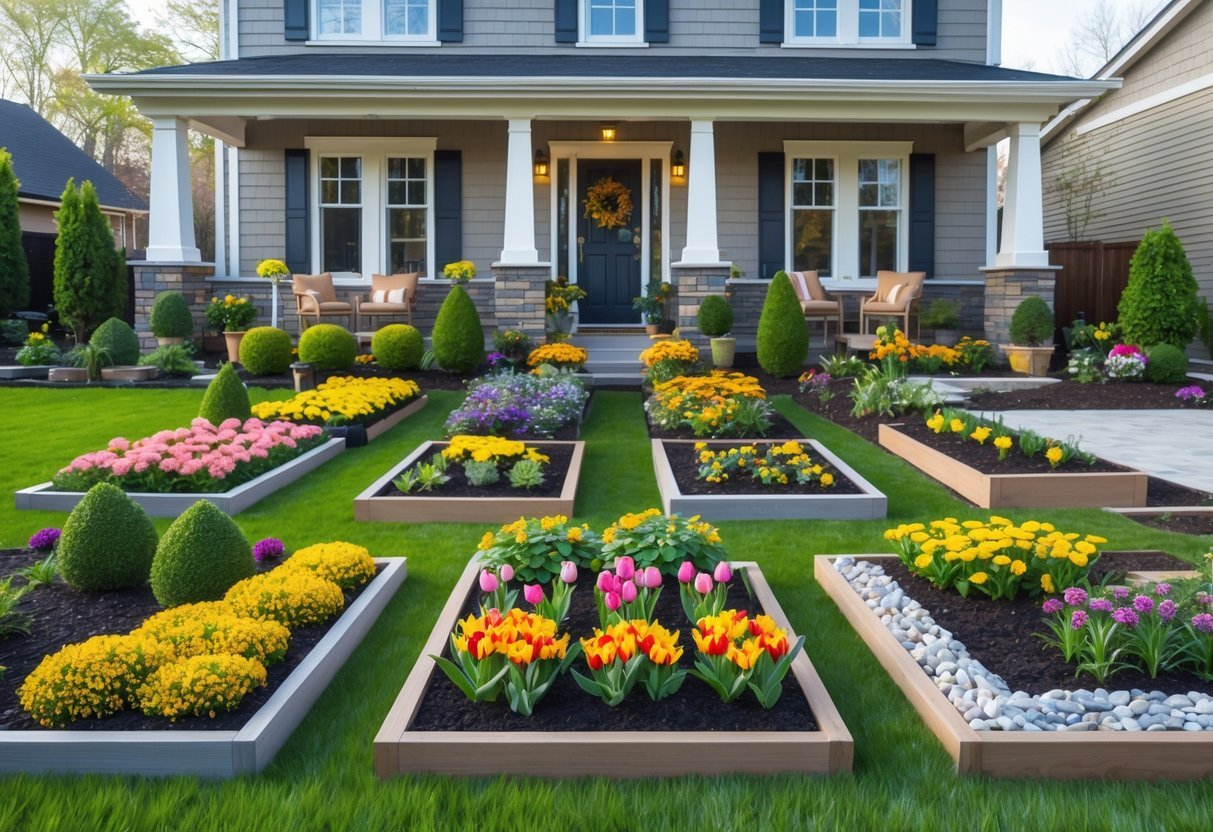
9) Raised Flower Bed with Seasonal Annuals
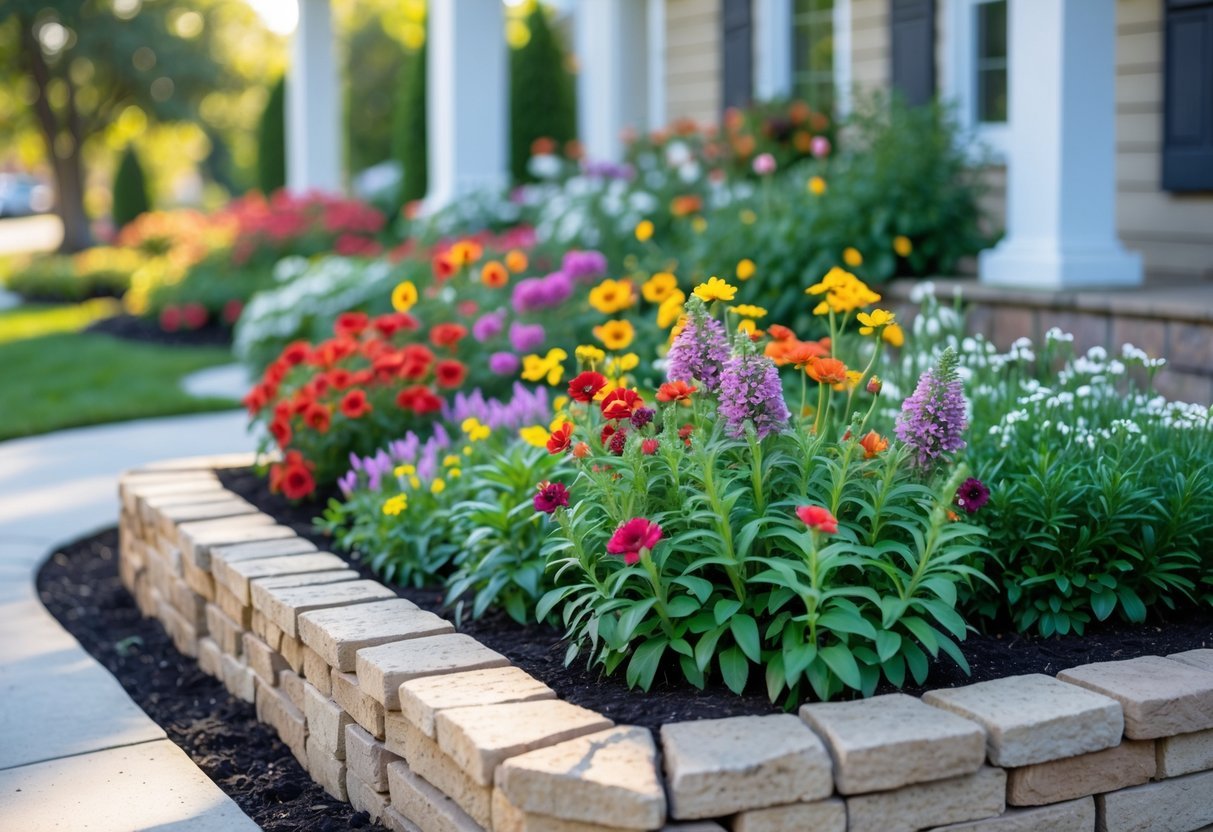
Use a raised bed to lift your planting and make it easy to change colors each season. You can swap annuals quickly for spring bulbs, summer bloomers, and fall-hardy varieties.
Choose well-draining soil and plan for good air flow to keep plants healthy. Mix heights and textures so your display reads well from the street.
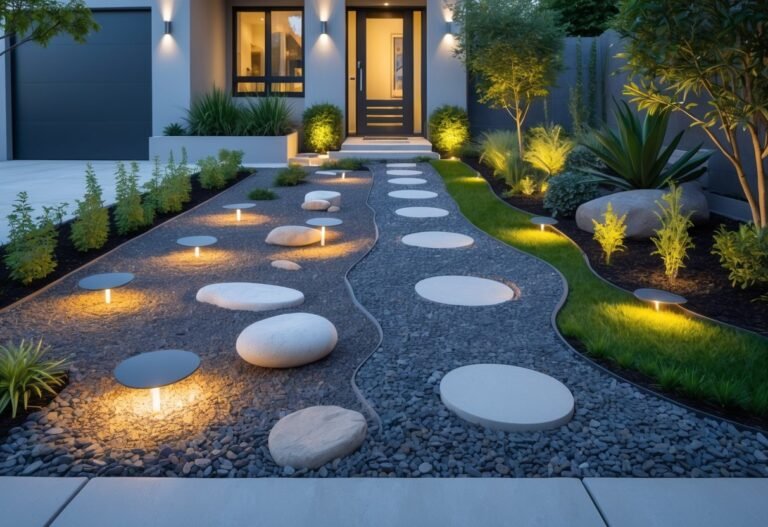
10) Edging Stone Flower Bed with Solar Uplighting
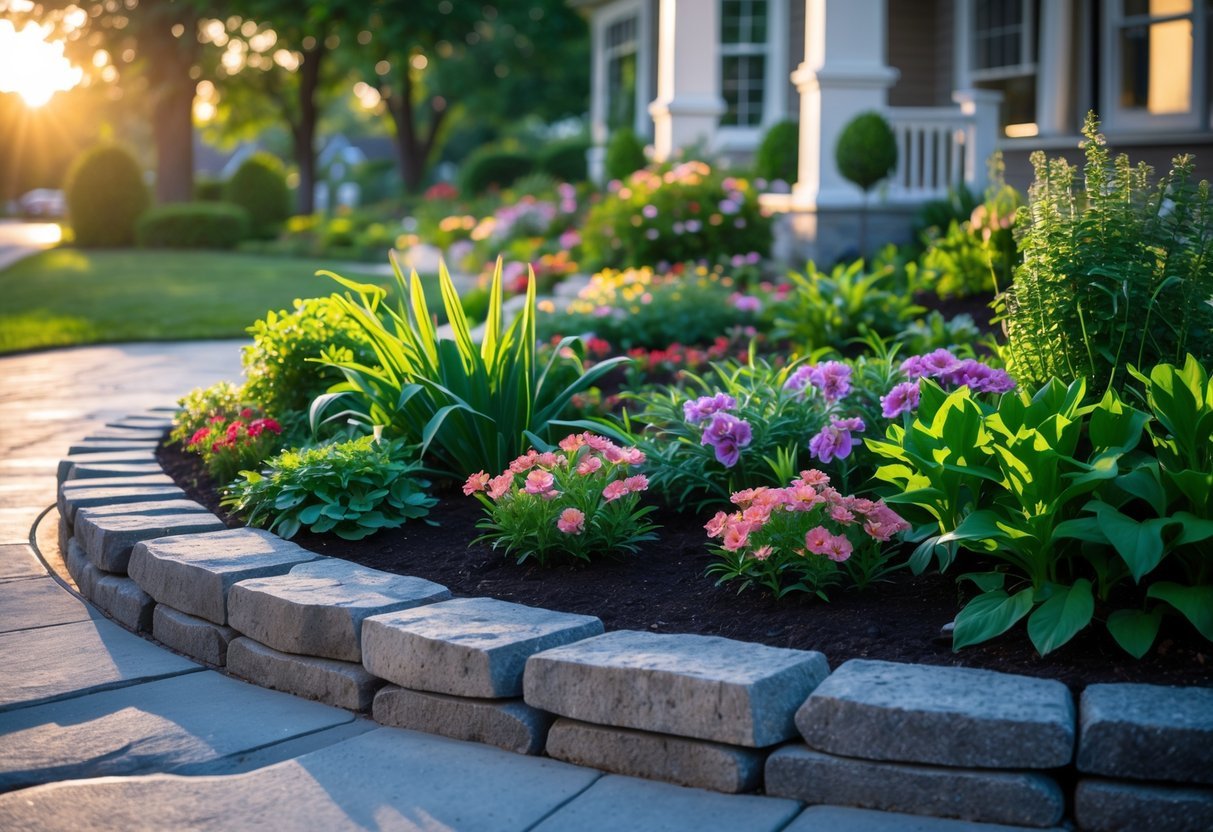
You can line stone edging around your front flower bed for a clean, lasting border. Solar uplights placed behind stones highlight texture and lift plant colors at night.
Choose low-profile solar lights that fit between stones for a subtle glow. Position them to avoid shining in windows or into neighbors’ yards.
This setup needs little wiring and low maintenance. Replace batteries yearly and keep panels free of debris for best performance.
11) Wildflower Meadow Style Front Yard Bed
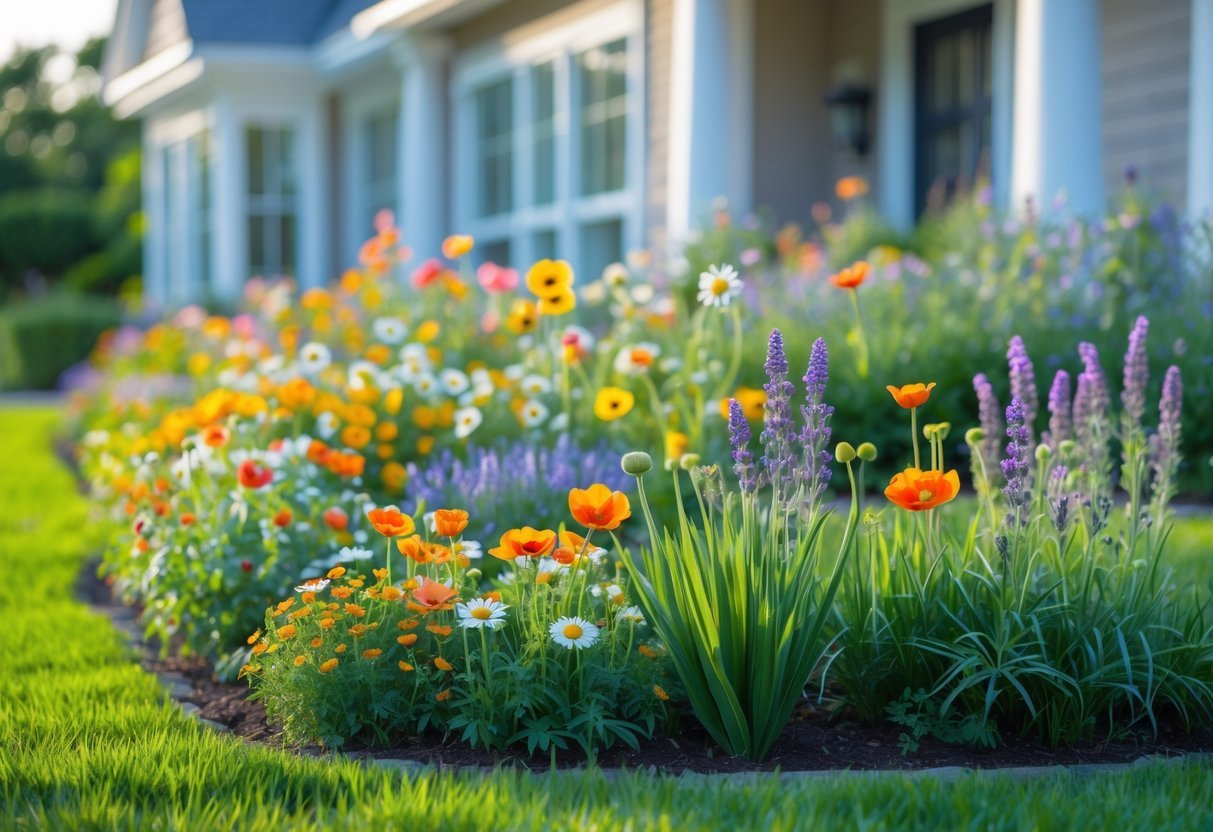
You can plant a mix of native wildflowers and grasses to create a loose, natural look that attracts pollinators.
Choose species suited to your climate and soil for lower maintenance and better survival.
Keep beds layered with taller flowers in back and short blooms near the path to preserve sightlines.
Mow or prune in late fall to help seeds set and encourage healthy regrowth next season.
12) Layered Shrub and Bloom Bed for Year-Round Interest
Choose a mix of evergreen shrubs for structure and perennials for seasonal color.
Plant taller shrubs at the back, medium shrubs in the middle, and low flowers or groundcover in front.
Pick shrubs with varied foliage and bloom times so your bed looks good each season.
Add a few spring bulbs and late-summer perennials to extend the display without extra work.
Keep spacing and soil needs in mind when you plant to avoid crowding.
Mulch and a simple watering plan will help your bed stay healthy year after year.
Choosing the Right Plants for Curb Appeal
Pick plants that match your yard’s light, soil, and the look you want. Think about mature size, bloom times, and how much water and pruning you can handle.
Considering Sunlight and Soil Conditions
First, map sunlight across your front yard for a full day. Note spots that get full sun (6+ hours), partial sun (3–6 hours), and deep shade (less than 3 hours). Place sun-loving plants like roses, lavender, and salvia in the brightest areas. Use hostas, ferns, and impatiens for shady beds.
Test your soil by feeling texture and using a simple pH kit. Sandy soil drains fast and suits drought-tolerant plants such as yarrow and sedum. Clay holds water; choose plants that tolerate wet roots like daylilies and astilbe. Amend soil with compost to improve drainage and nutrients. Match plant water needs to bed location to avoid over- or under-watering.
Use a planting map: list plant names, mature heights, and spacing. That prevents crowding and keeps beds looking neat as plants grow.
Seasonal Flower Selection
Plan for color and interest across seasons. Choose early bulbs—tulips and daffodils—for spring. Add summer bloomers like coneflowers, zinnias, and marigolds for long-lasting color. Plant mums and ornamental grasses for fall texture and late-season blooms.
Include evergreens or shrubs (boxwood, dwarf holly) to give structure in winter. Combine perennials for reliable returns and annuals to tweak color each year. Stagger bloom times by planting varieties with overlapping seasons so you always have something showing.
Label plants with bloom months and watering needs. That helps you maintain a steady display and makes seasonal care—deadheading, dividing, mulching—easier to schedule.
Design Principles for Front Yard Flower Beds
You will learn how to make beds that look intentional and work with your yard. Focus on layout, plant sizes, and how colors lead the eye.
Creating Balance and Flow
Balance means matching visual weight across your yard. Use pairs of shrubs or repeating plant groups on either side of a walkway or entry to anchor the space. Stagger heights so taller plants sit toward the back or center and shorter ones toward the front or edges. This prevents a lopsided look and keeps sight lines clear.
Flow guides a visitor’s eye and movement. Create gentle curves in bed edges instead of hard angles. Repeat a few plant shapes or colors every 8–12 feet to link areas visually. Place focal plants—like a small tree or a clump of bold flowers—at key points to draw attention and then use lower, calmer plants to lead away from them.
Incorporating Color and Height Variations
Choose a limited color palette of two to four main colors to keep your bed cohesive. Use brighter colors in small doses near the entry to attract attention. Cooler or muted tones work well along long stretches to avoid visual fatigue.
Mix tall, medium, and low plants to build depth. For example: 1) tall: ornamental grass or small shrub, 2) medium: perennials like coneflower, 3) low: groundcover or edging annuals. Repeat this vertical pattern across the bed so each viewing angle shows layers. Also match bloom times—include early, mid, and late-season plants so your bed has color through the year.
Frequently Asked Questions
These answers focus on practical designs, easy-care plant choices, and clear planting steps you can use at your own front door. They link directly to styles like symmetrical entryway beds, curved layered perennials, cottage-style mixes, succulent rock gardens, and boxwood-hydrangea borders.
What are some creative flower bed designs suitable for the front of a house?
Use a symmetrical flower bed to frame your entryway with matching shrubs and seasonal flowers on both sides.
Try a curved, layered bed that places taller perennials at the back, medium plants in the middle, and low groundcovers at the front for depth.
Build a cottage-style bed with mixed colors and bloom times for long season interest.
Make a succulent and rock garden for a modern, drought-tolerant look with texture from stones and low-growing succulents.
Use a boxwood and hydrangea border for a formal, tidy edge and large summer blooms.
Add a small island bed as a focal point if you have space between the sidewalk and house.
How can I create a low-maintenance flower bed in the front yard?
Choose drought-tolerant or native plants and group them by water needs to cut down on watering.
Use mulch to suppress weeds and reduce evaporation.
Pick long-lived perennials and shrubs (like boxwood and hydrangea) instead of many annuals.
Install drip irrigation or soaker hoses on a timer to save time and water.
What are the best plants to use in a small flower bed in front of a house?
Pick compact shrubs such as dwarf boxwood or small hydrangea varieties for structure.
Add perennials like lavender, salvia, or coreopsis for reliable color.
Include low groundcovers (creeping thyme, sedum) at the front to hold the edge.
Use one or two seasonal annuals for pop color without crowding the bed.
Can you provide examples of full-sun flower bed arrangements for a house’s facade?
Line the back of the bed with tall, sun-loving perennials like Russian sage or coneflower.
Plant mid-row salvia or daylilies and finish with low-toned thyme or sedum at the edge.
Mix textures: grasses for movement, bright perennials for color, and succulents for contrast.
Space plants to allow airflow and avoid overcrowding in hot, sunny spots.
How do I design a flower bed for the front of my house that’s both simple and appealing?
Start with a clear focal point such as a pair of small shrubs by the door or a single specimen plant.
Use three to five plant types and repeat them to create order and rhythm.
Choose a limited color palette—two main colors and a neutral—to keep the bed cohesive.
Use mulch or a simple edging to give a clean finish.
What are the steps to planting a successful flower bed in a home’s front yard?
Measure the area and draw a simple plan showing plant locations and sizes at maturity.
Test soil drainage and amend soil with compost if it’s heavy or poor.
Dig holes twice the root ball width, set plants at the same level they were in their pots, and backfill gently.
Mulch 2–3 inches thick, water deeply after planting, and set a watering schedule for the first season.