7 Balcony Vegetable Garden Design Ideas to Maximize Space and Yield
You can grow a surprising amount of fresh vegetables on a small balcony by using smart layouts, vertical containers, and the right plant choices. Choose compact varieties, stack or hang containers, and place sun-loving plants where they get the most light to maximize yield in tight spaces.
This post gives seven simple design ideas that fit different balcony sizes and sunlight levels, so you can pick the approach that matches your space and schedule. Expect easy setups, low-maintenance options, and tips to save water and boost harvests without cluttering your outdoor area.
Key Takeaways
- Assess your balcony’s light, weight limits, and space before choosing a layout.
- Use vertical planting, stacked planters, and multi-use furniture to grow more in less space.
- Pick compact or container-friendly vegetables and follow basic care to keep plants healthy.
Balcony Space Assessment for Vegetable Gardens
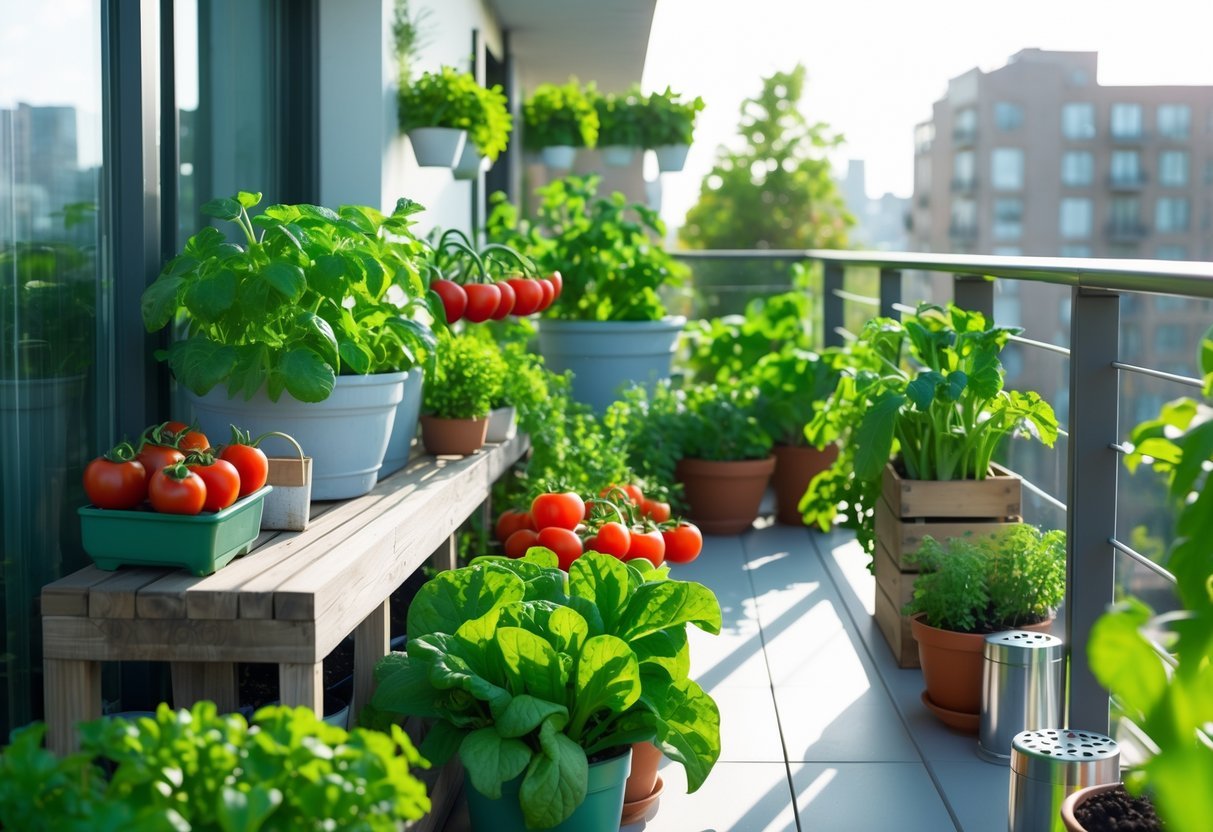
Check sunlight patterns, measure the area you can use, and know any weight limits. These details will guide plant choices, container sizes, and where to place each pot or rack.
Evaluating Sunlight and Shade Patterns
Stand on your balcony at several times: morning, midday, and late afternoon. Note where direct sun hits and for how long. Most vegetables need about 6 hours of direct sun; leafy greens tolerate 3–4 hours.
Use a simple chart to record light:
- 8–10 AM: ____ (sun/part shade/shade)
- 12–2 PM: ____
- 4–6 PM: ____
Also watch for reflected light from nearby buildings and shading from seasonal trees. If you get less sun, choose greens, herbs, and root crops that handle partial shade. If you get full sun, you can grow tomatoes, peppers, and cucumbers in larger containers.
Measuring Usable Floor Area
Measure length and width of the balcony floor and note any fixed furniture or railings you must keep clear. Subtract a 2–3 foot wide path for access so you can water and harvest without stepping on pots.
Write down dimensions and sketch a simple layout:
- Total floor: ____ ft × ____ ft
- Clear usable space after access path: ____ sq ft
Think vertical: railing planters, stackable pots, or a 4–6 ft tall shelving unit can triple planting area. Match container sizes to space — 5–10 gallon for tomatoes, 1–3 gallon for herbs — so you avoid overcrowding.
Weight Restrictions and Plant Choices
Check building rules and ask your landlord or manager about the balcony load limit. If you can’t get a number, assume a conservative limit: wet soil weighs about 50 lb per cubic foot. A single 5-gallon pot can weigh 30–40 lb when watered.
Use lightweight alternatives: plastic, fabric grow bags, or foam-based soil mixes. Choose lighter containers and fewer large, water-holding pots if limits are strict. For heavy feeders like tomatoes, use one or two large containers placed over structural supports or on the ground instead of a hanging balcony.
Create a simple weight checklist:
- Container type: ____ (plastic/fabric/terracotta)
- Pot volume: ____ gallons
- Estimated wet weight: ____ lb
Plan plant choices to match weight constraints and sunlight so your garden stays safe and productive.
Creative Balcony Vegetable Garden Design Ideas
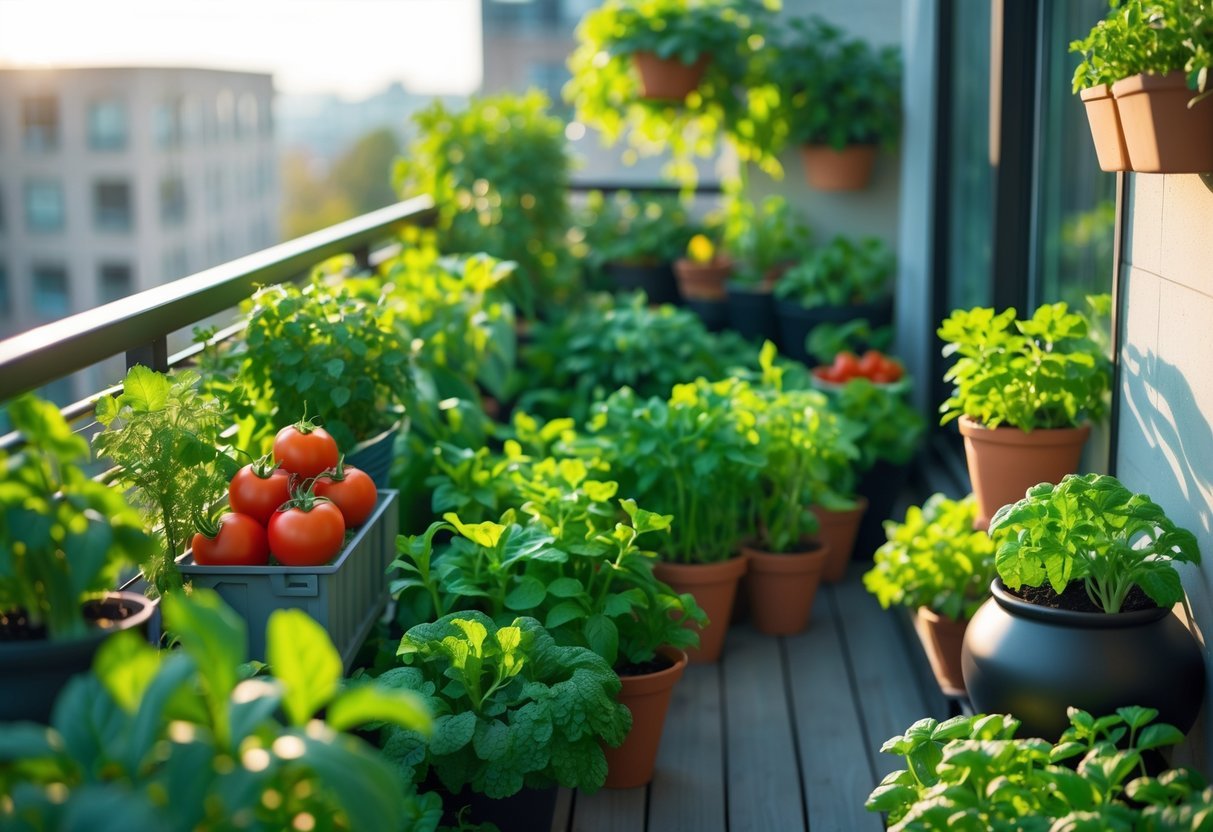
You can grow a lot in a small balcony by using vertical space, compact containers, hanging planters, and tiered shelving. Pick sturdy materials, match container sizes to plant roots, and arrange for easy watering and sun access.
Vertical Gardening Solutions
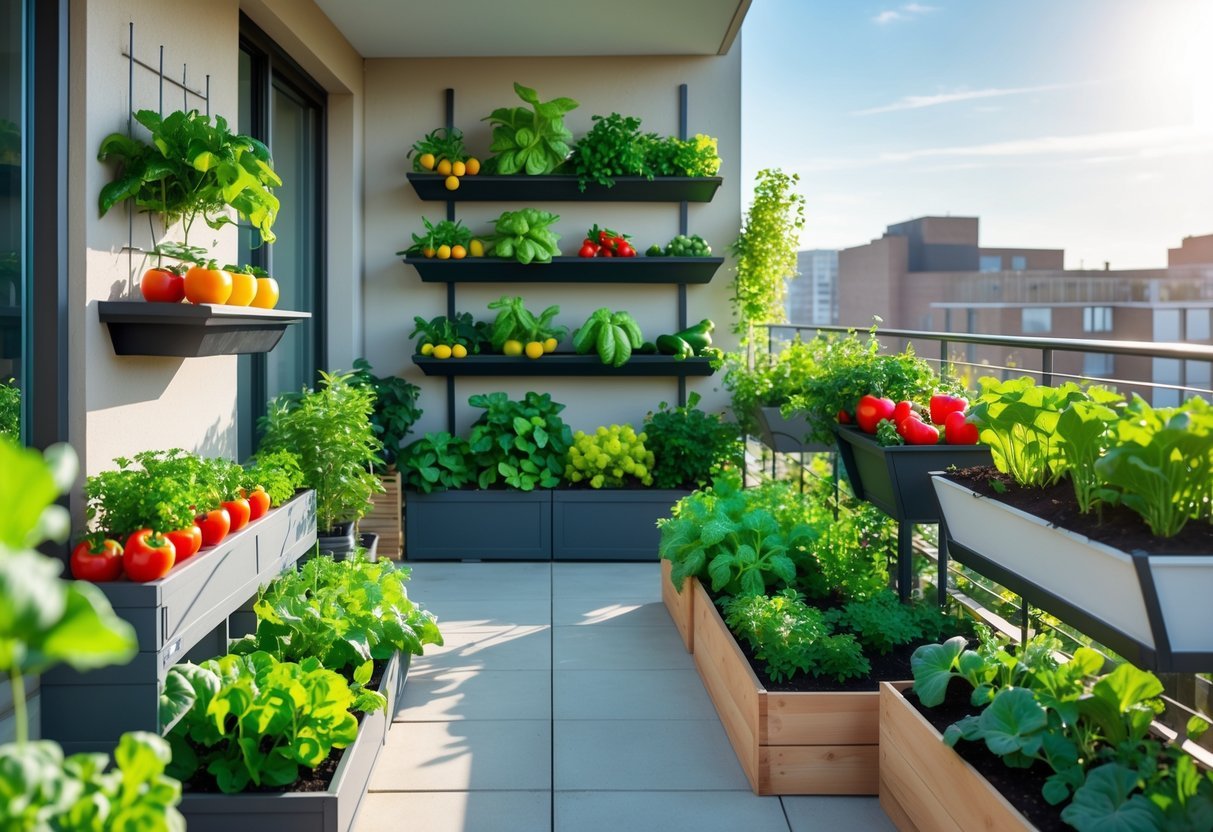
Use vertical racks, trellises, or wall-mounted pockets to grow vining and climbing vegetables. Tomatoes, pole beans, cucumbers, and peas do well on trellises. Choose metal or rot-resistant wood for frames, and anchor them to the balcony railing or wall for safety.
Install planter boxes at the base of the trellis to hold deep soil for root crops. Use 12–18 inch deep boxes for tomatoes and 8–10 inch for herbs and lettuces. Train vines with soft ties every 6–12 inches to prevent breakage and improve airflow.
Consider modular systems like stackable planters or slatted green walls if you need mobility. Add drip irrigation or a soaker hose with a small timer to save time and water evenly.
Compact Container Arrangements
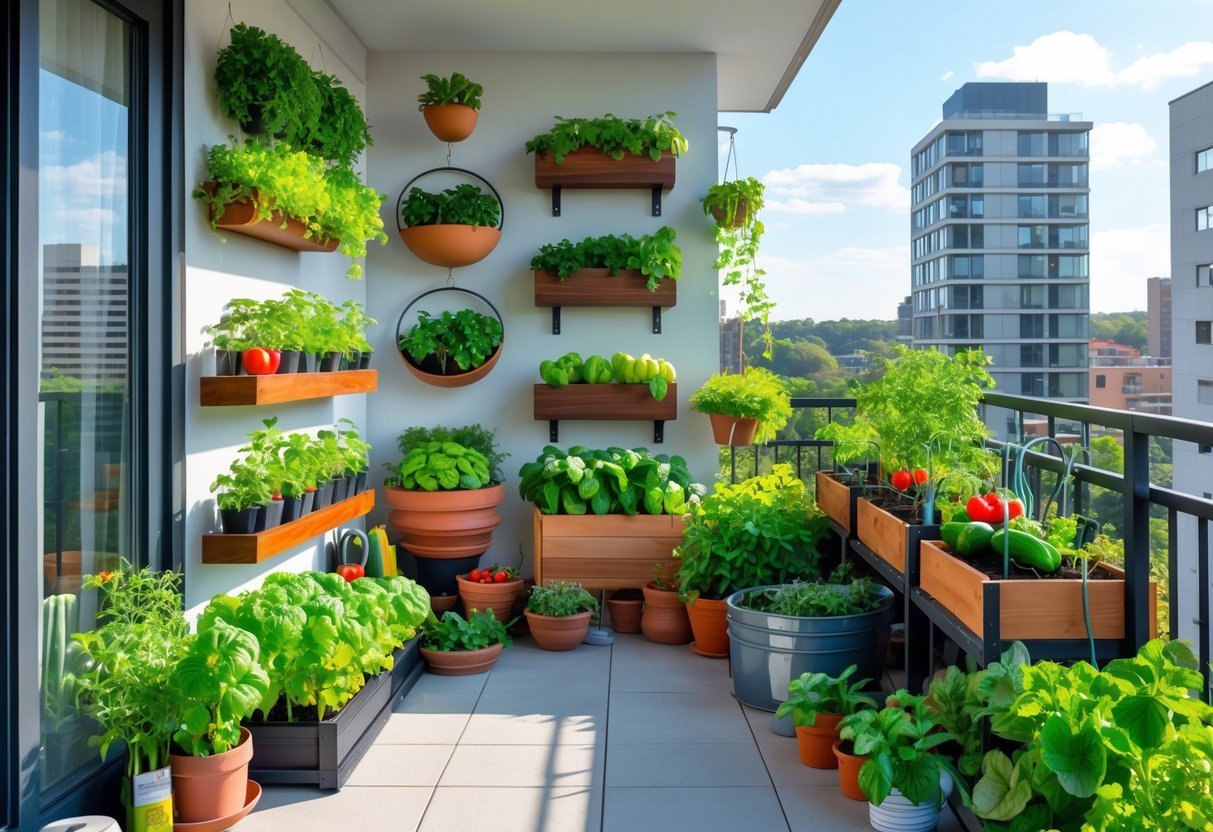
Match container size to each vegetable’s root depth and spread. Use 5-gallon buckets or 12-inch pots for peppers and dwarf tomatoes. Use shallower 6–8 inch containers for leaf lettuce, radishes, and spinach.
Group pots by water needs on a single tray or saucer to avoid over- or under-watering. Place sun-loving pots on the south or west side and shade-tolerant ones near walls. Use quality potting mix with added perlite or coconut coir for drainage and moisture retention.
Label each pot with planting dates and variety to track harvests. Rotate containers every few weeks to balance sun exposure and reduce pests that hide in one spot.
Hanging Planters for Small Spaces
Hanging planters free up floor space and create layers of growing area. Use sturdy hooks, macramé hangers, or railing planters for strawberries, cherry tomatoes, herbs, and trailing kale. Ensure each hanger supports the wet weight of soil and plants.
Choose lightweight containers like fabric grow bags or plastic half-barrels to reduce load. Use a well-draining mix and a moisture-retentive layer (peat-free options like coco coir) to keep roots healthy. Water from above until excess drains, then top up as soil dries.
Place hanging planters where wind won’t knock them. Group them at different heights for easier harvest and to create microclimates—higher for sun-loving plants and lower for those that prefer shade.
Tiered Shelving Designs
Tiered shelving multiplies planting area in a narrow footprint. Use wooden or metal shelving units with 3–5 tiers to hold pots, seed trays, and small grow lights. Put heavier, larger pots on lower shelves and lightweight seedlings above.
Measure shelf depth so pots sit securely without tipping over. Leave 8–12 inches between tiers for adequate light and airflow. If sunlight is limited, add a clip-on LED grow light on middle shelves to keep herbs and greens productive.
Design shelves with removable trays to catch water and make cleaning easy. Anchor tall shelving to the wall or railing for safety, especially in windy conditions.
Optimizing Plant Selection and Layout
Choose plants that fit your balcony’s light, space, and container size. Match compact varieties to small pots, place sun-loving crops where they get at least 5–6 hours, and keep heavier feeders in larger containers with good soil.
Best Vegetables for Balcony Conditions
Pick vegetables that stay compact and produce well in containers. Good choices include:
- Leafy greens: lettuce, spinach, arugula — quick harvests and shallow roots.
- Herbs: basil, parsley, chives — small pots and frequent use.
- Compact fruiters: cherry tomatoes (determinate or patio types), dwarf peppers.
- Root crops: radishes and baby carrots — need 6–8 inches of soil depth.
- Climbers for vertical space: pole beans and cucumbers on a trellis.
Check variety labels for “bush,” “patio,” or “dwarf.” Use 3–5 gallon pots for most single plants and 1–2 gallon pots for herbs. Rotate pots toward the sun to keep even growth.
Companion Planting Strategies
Use companions to reduce pests and improve yields. Pairings that work on balconies:
- Tomatoes + basil: basil can improve flavor and may deter pests.
- Lettuce + radish: radishes mature fast and loosen soil for lettuce roots.
- Beans + herbs: beans fix nitrogen; plant near leafy greens that need it.
- Marigolds or nasturtiums: place at pot edges to discourage aphids and attract beneficial insects.
Avoid planting heavy feeders (tomatoes, peppers) next to other heavy feeders. Keep strong-scented herbs near herbs or fruiting crops to mask scents pests use to find plants. Use small pots grouped together to encourage beneficial insect movement.
Seasonal Crop Rotation Planning
Plan by season to keep soil healthy and steady harvests. Use this simple rotation cycle for containers:
- Spring: sow quick greens and radishes, start tomatoes indoors.
- Summer: move to tomatoes, peppers, eggplant in larger pots.
- Fall: plant spinach, kale, and hardy greens for cool harvests.
- Winter: grow herbs indoors or use cold frames for hardy greens.
Empty or refresh potting mix after a heavy feeder crop. Replace one-third to half of the soil with fresh, balanced potting mix or add compost between crops. Label pots with planting dates so you track when to rotate or rest a container.
Sustainable Practices and Maintenance Tips
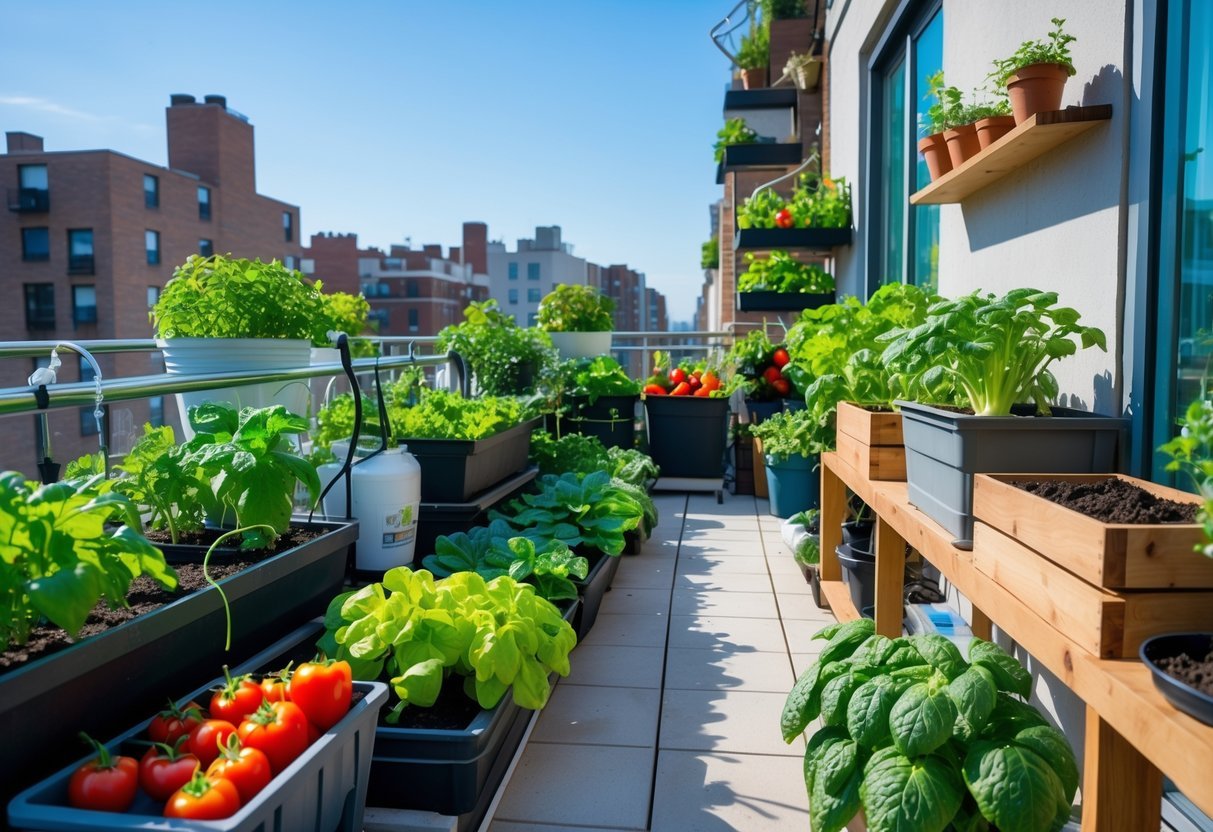
Focus on saving water, feeding soil naturally, and stopping pests without harsh chemicals. These steps keep plants healthy, cut costs, and fit small balcony spaces.
Eco-Friendly Watering Techniques
Use a watering can or a drip system to give water directly to roots. Water early morning to reduce evaporation. Aim for deep, slow watering rather than light, frequent sprays.
Collect rainwater in a small barrel or bucket if permitted. Use that for watering tomatoes, peppers, and herbs. Mark plants that need more water (leaf wilting, dry top inch of soil) and check pots every 2–3 days in hot weather.
Group pots by water needs so you don’t overwater drought-tolerant plants. Add a layer of mulch—straw, wood chips, or shredded leaves—to slow evaporation. Consider self-watering containers for busy weeks; they cut watering time and keep soil evenly moist.
Organic Soil and Fertilizer Options
Use a potting mix designed for containers—lightweight and well-draining. Blend in compost (about 20% by volume) to add nutrients and improve moisture retention. Avoid garden soil; it compacts and drains poorly in pots.
Feed plants with slow-release organic granules at planting, then supplement with liquid seaweed or compost tea every 3–4 weeks during the growing season. For heavy feeders like tomatoes, add a balanced organic fertilizer higher in phosphorus and potassium when fruit sets.
Top-dress pots with 1/2 inch of compost mid-season to refresh nutrients. Rotate crops and refresh potting mix every year to prevent nutrient depletion and soil-borne diseases.
Natural Pest Control Methods
Inspect plants weekly for pests and damage. Remove infected leaves and squash eggs by hand when you see them. Early action prevents larger infestations.
Use sticky traps for flying pests and row covers to protect seedlings. Spray a mild solution of insecticidal soap or neem oil for soft-bodied pests like aphids and whiteflies. Test on one leaf first to check for plant sensitivity.
Encourage beneficial insects by adding a small pot of alyssum, dill, or mint. These attract predators like ladybugs and lacewings. Rotate plant locations and avoid excessive nitrogen feeding, which can boost pest populations.
Frequently Asked Questions
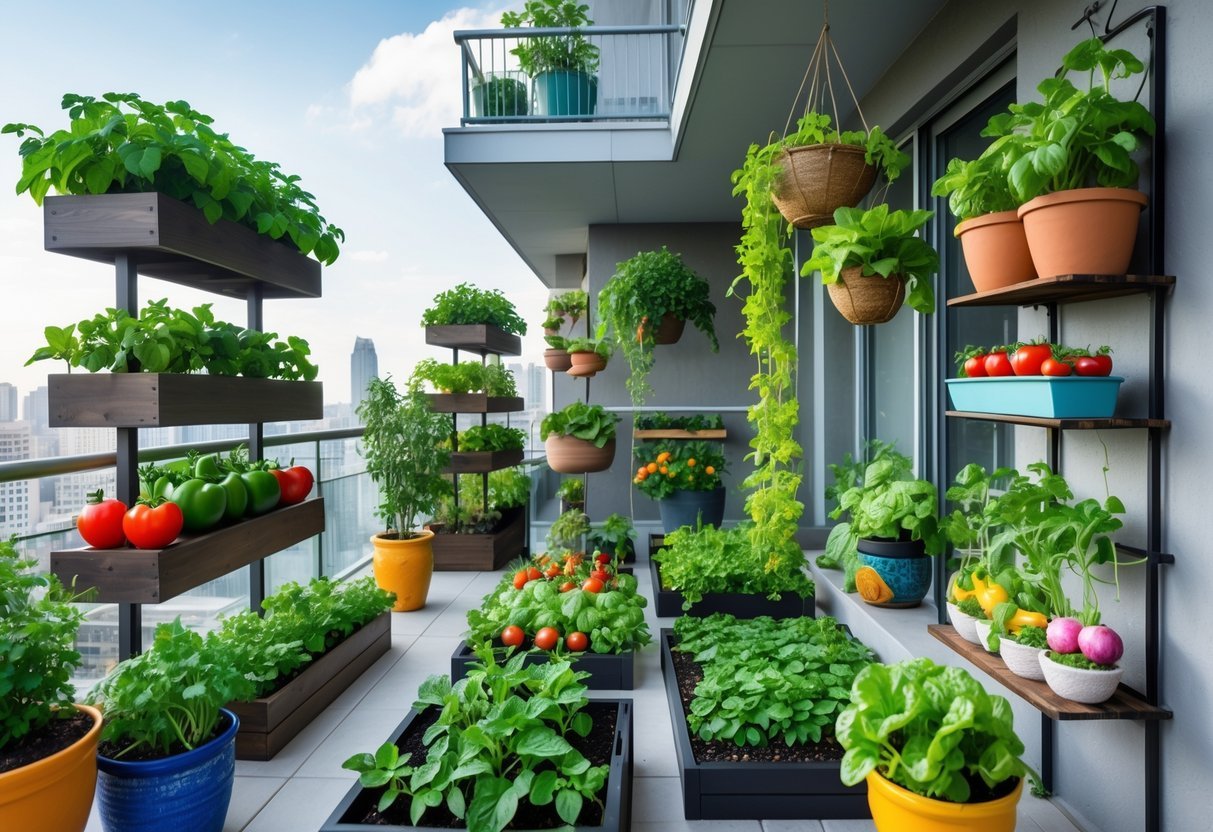
These answers focus on specific plant choices, simple care steps, cheap container options, and setup tips you can use right away to get steady harvests on a small balcony.
Which vegetables thrive in small balcony spaces?
Leafy greens like lettuce, spinach, and arugula grow fast and take little room.
Radishes, baby carrots, and scallions do well in shallow containers.
Cherry tomatoes, dwarf pepper varieties, and bush beans suit larger pots and give high yields.
Herbs such as basil, parsley, and chives work in very small containers or window boxes.
How can you create a low maintenance balcony vegetable garden?
Choose fast-growing or perennial herbs and greens to reduce replanting.
Use self-watering pots or add a layer of mulch to keep soil moist longer.
Plant in grouped drip or soaker setups to cut watering time.
Pick disease-resistant varieties and prune lightly to prevent pests and save care time.
What are some budget-friendly tips for starting a balcony vegetable garden?
Reuse clean buckets, milk crates, or wooden crates as planters.
Buy seeds instead of seedlings; they cost less and give more variety.
Share or swap seeds and cuttings with neighbors to try new plants cheaply.
Make your own compost from kitchen scraps to reduce soil costs.
What planters are most effective for apartment balcony gardens?
Long narrow troughs or window boxes fit railings and grow many herbs and greens.
Deep pots (10–15 inches) are best for tomatoes, peppers, and root crops.
Hanging baskets save floor space for vining plants.
Self-watering containers cut down on daily watering and help keep roots healthy.
How can a beginner successfully set up a balcony vegetable garden?
Start with three to five containers and a mix of herbs plus one vegetable.
Put sun-loving plants where they get at least 4–6 hours of sun and shade-tolerant ones in cooler spots.
Use a general-purpose potting mix, water when the top inch is dry, and check plants weekly for pests.
Label plants and keep a simple calendar for watering, feeding, and harvest.
Are there any perennials well-suited for balcony vegetable gardening?
Asparagus and rhubarb are perennial edibles but need large pots and several years to establish.
Herbs like rosemary, thyme, oregano, and chives are reliable perennials that thrive in containers.
Strawberries behave like short-lived perennials and produce a steady crop for a few years.